So that you may know…

the exact truth about the things you have been taught.

1 Chronicles 1-6

The very last class of my undergraduate education taught me something I’ve remembered for years. I was finishing up my minor and taking my last sociology class. I made a statement during a class presentation that earned me a grade that pushed me into a new academic rank that I thought was impossible to achieve. The presentation was on being a voice for change in society. “If we want to bring about societal change, we need to make some noise!”

I’m going to sound a tad irreverent here. I used to cringe every time a modern agent of societal change preached “Fact-check!” My disdain from the message grew with each passing day that the seemingly one-sided social sermon that I immersed myself in on an almost daily basis, was made light. The noise was bringing change but to me, it was not warranted change.

At first, noise is all I ever allowed myself to hear from the opposing side’s communication. My mind went straight to the need for taking the stick out of the opposing side’s eye. There may have been a beam in there too.

I had to turn off the noise and get myself immersed in something else because I wasn’t helping the situation. I was supposed to be the light that brought change, not the opposing societal view. Right around this time, I started digging into the various things Jesus was called. In the quiet I reacquainted myself with The Light of the World.   

Through my continued immersion in the word, I did something I had rarely done. I actually took the time to read the genealogies of Jesus, the boring stuff, in the beginning chapters of Mathew and Luke. It dawned on me.

In the quiet, I realized that the words so often skipped over were God’s fact-checks! Through these, he made certain we knew who the Messiah was, the one who would bring about the right change. It was all in there waiting to be discovered. The Messiah is exactly who God said he’d be and exactly who Jesus said he was. There are facts that lead to him in the genealogies, the lineages, the “begats”, the “in the lands of-s”, the “in the times of-s”, through the recordings of kings of kingdoms, in the astronomical signs of the times, etc. All fact-checks leading to Jesus Messiah.

The genealogies of Jesus were written by eyewitnesses of his ministry. I love the beginning of Luke:

“Since many have undertaken to compile an account of the things accomplished among us, just as they were handed down to us by those who from the beginning were eyewitnesses and servants of the word, it seemed fitting to me as well, having investigated everything carefully from the beginning, to write it out for you in an orderly sequence, most excellent Theophilus; so that you may know the exact truth about the things you have been taught.” -Luke 1:1-4

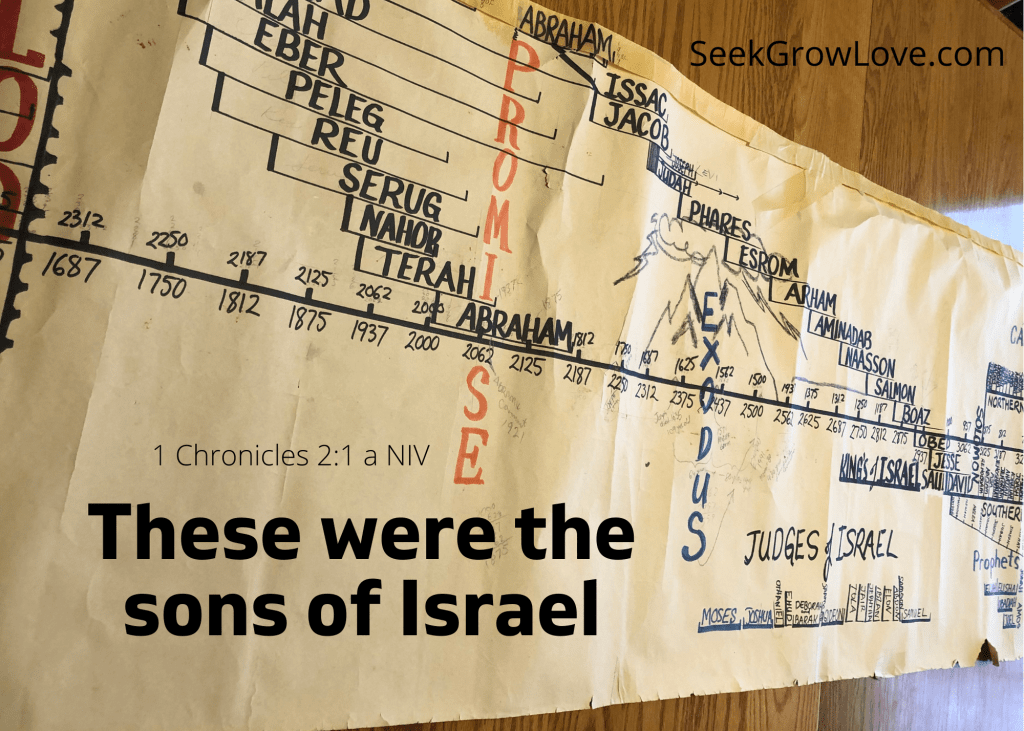
I took a little more time today reading through the genealogies recorded in 1 Chronicles chapters 1 – 6. They’re fact-checks. They can help us to be prepared with an answer to anyone who questions our faith.  

Through this experience, I have begun to listen to the opposing side before opposing them completely. I have come to value the opposing side’s pleas for fact-checking. They are right. We need truth. But we need to fact-check society as a whole – all sides.

I’m still a bit put off by the societal noise and social pressures of our time. Although it may be true that making noise may lead to societal change, it may not be what God wants for us. There were times when Jesus spoke softly and times when Jesus rebuked. There were times when Jesus was offensive and there were times when Jesus remained silent. He always did whatever he heard from his father. If I’m going to be the light of the world like Jesus, desiring to cause societal change, I need to hear Jesus and heed his statements. I need to do it his way. His way is often the unpopular way but it is the only way that’s going to bring about change that matters. 

-Juliet Taylor

Today’s Bible reading passages can be read or listened to at BibleGateway here – 1 Chronicles 1-2 and Proverbs 17
What do you want to be known for?

2 Kings 23-25; Proverbs 16

Life is fleeting. We’re all passing through this age like the grass of the field. Today we live. God holds tomorrow.

As I’ve finished the last three chapters of the book of 2nd Kings and read another chapter in Proverbs, I’ve thought about our time in this age. This age is short compared to eternity. What we do in it matters.

The lives of the final kings of Judah mattered and were recorded for us all to see. We know what each of those last 5 kings was forever known for. They can be summed up into two basic categories. A good king and evil kings.  

All but one of the last 5 kings of Judah were known for doing evil in the sight of Yahweh. If we included the whole lot of the kings of Judah and Israel to this list, there wouldn’t be a significant pendulum swing in the opposing direction towards Yahweh God.

When we come to the end of our earthly lives, what will we be known for? Will we be known for doing good or evil in the sight of God through Jesus Messiah?

The good kings, like Josiah were known for their hearts and humility, practicing obedience to God’s Law. Good kings did stumble but when they repented, they renewed their status with God.

If we want to be known for doing good in our day and age, similar qualifications apply. Good disciples of Jesus will be known for their hearts and humility, practicing obedience to the Law of Christ (aka producing fruit). 

The whole law can be summed up with one word. Love. Our “goodness” can be measured to the extent that we love as Christ loved. How did he love? He loved his God and served him alone with all of his heart, with all of his soul, with all of his mind, and with all of his strength. He loved his neighbor to the point of death on the cross.

When I come to the end of my life, I want to be known as a good disciple of Jesus Messiah. I want to hear my master say, “Well done, good and faithful servant!” If this is my heart, my life will reflect that.

-Juliet Taylor

Today’s Bible reading passage can be read or listened to at BibleGateway here – 2 Kings 23-25 and Proverbs 16

What is it that makes a person choose to follow God?

2 Kings 21-22; Proverbs 15

There seems to be a persistent theme when it comes to the kings of God’s people. There were kings who served Yahweh their God and kings who served false gods. In 2 Kings chapters 21-22, we are told a tale of two kings. The first king, Manasseh, king over Judah, did evil in the sight of Yahweh God.

Wait a minute. Didn’t we just read about a similar situation a few chapters ago? Why does history repeat itself so often? Did the people learn nothing about what it meant to follow God (or not) from their forefathers? Did they not just witness their sister kingdom of Israel being starved and then carried away into captivity because they would not listen? Or was that too far in the past to grasp? Even if their memories faded, the people of the kingdom of Judah were living out a miracle of God through the reign of Hezekiah. His consequence to following God brought his people life. Not just any life, but an abundant and prosperous life. Why wouldn’t future generations mirror his ways and follow after his God? There must be more to it than knowledge of a history of consequences.

So what is it that makes a person (or a people) choose to follow God?

Romans 10:17 says that faith comes through hearing, and hearing by the word of God. The kingdoms of God should have known the words of God. They were God’s chosen people who were given the Law of Moses. Many were taught the word of God through people close to them, such as their parents, priests, and sometimes prophets, and through repeated practice of those laws in their daily lives. God supplied them with everything they needed to do right before him. Yet we see kingdoms rise and kingdoms fall. Some kings chose to serve God, while others chose to serve other gods.

I consider myself privileged to have been brought up in a household that taught me about my God and his son from as early as I can remember. Others in our faith didn’t have this advantage. They had to hear the word from someone perhaps not as close to them later in life or discover God through his word for themselves. These types of people are my favorite people. To have such a passion for truth that they’d seek God diligently despite their lack of a foundation in the word (or despite their lack of a foundation in the one true God) amazes me. Many of these truth seekers are doing so in the face of great persecution. This is praiseworthy.   

Some “good” kings of Israel or Judah appear to have been brought up in the word of God. I believe this type of upbringing was vital to their success as a God follower, even if at times they stumbled. A good upbringing, however, is not always enough.

King Hezekiah was a God follower, an amazing pray-er, and likely a good teacher of the word of God. Yet his son Manasseh chose not to walk in the ways of his father and instead chose to do evil in the sight of God – a lot of evil. It appears that Manasseh was born during the last few years of Hezekiah’s life (the 15 extra years God miraculously granted him). It is possible that he didn’t gain a firm foundation in the word from his father before his death. After all, he was only about 12 years of age when he began his reign as king. However, we all know another 12-year-old that was always about his father’s business, so I can’t give Manasseh too much slack with a father like Hezekiah.He must have heeded his father’s words in some way, as he knew to eventually repent of his evil ways before his God. If Hezekiah had been alive to see it, I’d imagine he’d be overjoyed to see his son repent and follow after the one true God. Thank God for repentance – as there’s time for it. Manasseh’s predecessor and son, Amon, did evil in the sight of God and reigned for only 2 short years. He was actually murdered by his servants. The word doesn’t give us much indication as to why but perhaps some of the people wanted to continue with Manasseh’s later reformed ways.

Finally we come to another “good” king of Judah, Josiah, Amon’s son. Josiah’s reign began when he was only 8 years old. Based on his father’s and the majority of his grandfather’s, evil behavior, I can’t imagine that he was taught much good. Perhaps the people around him experienced a taste of the good life that came at the end of Manasseh’s reign with his repentance and instilled some good practices in Josiah. But I can’t be certain that anything was taught to Josiah regarding the word of God. The high priest of the time actually found the book of the Law some 18 years into Josiah’s reign. I’m guessing that the last one to read or hear it was Hezekiah, almost a century earlier!

When Josiah heard the word of God for the first time in his life, he tore his clothes and he wept because he knew his fathers and his people had forsaken Yahweh God. He felt guilt and knew what his kingdom deserved. He immediately sought Yahweh on behalf of himself and his people. He found a prophetess, Huldah, who spoke to him concerning God’s judgment. We see that the nation of Judah was guilty but because of Josiah’s response to hearing God’s word, they were shown mercy.

It is Josiah’s response to hearing the word of God that answers my former question. What is it that makes a person (or a people) choose to follow God?

It’s their heart and humility before the LORD.

2 Kings 22:18-20

18 But to the king of Judah who sent you to inquire of the Lord, this is what you shall say to him: “This is what the Lord, the God of Israel says: ‘Regarding the words which you have heard, 19 since your heart was tender and you humbled yourself before the Lord when you heard what I spoke against this place and against its inhabitants, that they would become an object of horror and a curse, and you have torn your clothes and wept before Me, I have indeed heard you,’ declares the Lord.” 20 Therefore, behold, I am going to gather you to your fathers, and you will be gathered to your grave in peace, and your eyes will not look at all the devastation that I am going to bring on this place.’” So they brought back word to the king.

Josiah is likened to me as those truth seekers who didn’t have a biblical advantage as part of their upbringing. Josiah goes on to be one of the greatest kings of Judah of all times. It didn’t take him years of study in the ways of God to choose to follow God once he heard his words. All it took was his humble heart.

I am currently discipling my two young boys in an effort to steer their hearts towards God. I want to do everything in my power to raise up children in the ways of the Lord so that when they must choose on their own, they’ll choose him continually, even after a stumble. It can be discouraging to think that despite their advantage, they may still fail. I can’t make them have a heart for God. They have to want him on their own. That the words of our God and his son would be written on their hearts continually is my prayer for them.

It is astounding to me that there are Josiahs out there who’ve never even heard the word of God, but once they do, their hearts will immediately be for him. Oh how I long for a heart like that. Let’s pray for each other’s hearts.

-Juliet Taylor

Today’s Bible reading passages can be read or listened to at BibleGateway here – 2 Kings 21-22 and Proverbs 15

The Enemy desires everything we have

2 Kings 19-20; Proverbs 14

In our previous readings, there were examples of two choices that could be made when faced with trouble. One could follow the one true God or follow their own god. Hezekiah was the king of Judah who chose to follow God, and we should too. However, Hezekiah was not exempt from later circumstances with choices to be made. The choice to follow God or not was – and is – ongoing.

At the end of Chapter 18, we see that Hezekiah stumbled. He accepted defeat from the Assyrian army after years of conquering and standing strong with his God. He gave the king of Assyria what belonged to his God (gold from the temple of Yahweh). Even after meeting their demands, it was not enough. The enemy desired everything of Hezekiah and his people. He desired their worship.

The king of Assyria sent armies to Jerusalem and surrounded it. The leader of the army told the people to accept defeat because their God would not deliver them from the king of Assyria. He went on to offer the people great things such as a land full of plentiful good food and drink. It could be theirs if only they would forsake their God.

This time (it was over the course of a few repeated circumstances with the same choice – following God), Hezekiah made the right choice. He prayed. He proclaimed the majesty of his God and asked that all would know that Yahweh alone was God. What a prayer. And then what a response from God! What an outcome! Yahweh heard and delivered.

Yet again, God prospered Hezekiah. While all the cities around him, even the northern kingdom of Israel, had been desolated and the people carried away into exile, God did great things in Jerusalem under King Hezekiah. The great things (good food and drink) that were offered to the people of Judah if they would just forsake their God and follow the king of Assyria became abundant in Jerusalem and a remnant was spared for years when they chose to follow God. Remarkable!

It is clear to me that Yahweh God alone wants our worship. He wants our hearts. When we are faced with a choice to follow him or not, he rewards those who choose him.

The people in Hezekiah’s kingdom were seeing defeat all around them. They knew what taking a stand against the king of Assyria might mean for them. The northern kingdom had starved to the point of eating their own dead children before they accepted defeat (as we read in other places, the king of Israel was told by God to surrender. Instead, he allowed his people to die). For Hezekiah’s people, having the temptation of a land full of food and drink dangling above them would have been hard to resist. Yet they did resist. In the face of temptation, they listened to their king and remained silent.   

I thought about Jesus when I read this passage and how he was led by the spirit to be tempted when he was hungry. The very last thing he was tempted with was being placed on a high mountain (maybe like the Asherah?) and given a choice to have all that he saw from that high place if he only worshipped the devil. Jesus said “Go, Satan! For it is written, ‘You shall worship Yahweh your God, and serve him only.’”

If our Lord Jesus was not exempt from temptation in his time of need, neither should we expect to be. We all have a choice to make. Will we serve God in our times of trouble? Will we serve God when tempted with pleasure or even with our basic needs? Know what Yahweh has done for his people when they choose him. “Have you not heard?” (2 Kings 19:25). In our time, he has supplied every need through our Lord Jesus Christ. Choose him! He has already won. If we follow him, we’ve won too. Pray like Hezekiah. Command the enemy to flee like Jesus. When difficult circumstances arise again, keep choosing God. Tell Satan to Go!

-Juliet Taylor

Today’s Bible reading passages can be read or listened to at BibleGateway here – 2 Kings 19-20 and Proverbs 14

Destroy the Asherah

2 Kings 17-18

There seems to be a persistent theme when it comes to the kings of God’s people. There were kings who served Yahweh their God and kings who served false gods. In 2 Kings 17-18, we are told a tale of two kings. The first king, Hoshea, king over Israel in Samaria, did evil in the sight of Yahweh God. During Hoshea’s reign, the king of Assyria came up against him. Instead of relying on Yahweh for help in the time of trouble, Hoshea sought the help of foreign aid and made foreign gods.

He set pillars up and Asherim (wooden symbols of a female deity) on every high hill and under every green tree. He served Idols and worshiped stars. He made the people pass through the fire (sacrificed them to gods) and practiced divination and enchantments.

Over and over again, Yahweh God tells Israel to turn from their evil ways and keep his commandments and statutes, but they would not listen. They became stiff-necked and vain and did what Yahweh God commanded them not to do under Hoshea’s leadership. They put their trust in other gods and did not fear the one true God. The next and last king of Israel did accordingly. As a result, Israel was carried away into exile. God removed them from his sight.

Then there was Hezekiah, king over Judah. He did right in the sight of Yahweh. He removed pillars and cut down the Asherah. He trusted in Yahweh God and clung to him. He kept his commandments. Yahweh was with him and wherever he went he prospered. While all the nations surrounding him were taken into captivity, Hezekiah not only withstood the forces against him, but conquered them because he put his trust in Yahweh God, listened to his commandments, and removed the false gods from his kingdom.

In our times of trouble, will we despise the word of God and serve little self-made gods like Hoshea, or will we destroy the Asherah of our lives and serve the one true God like Hezekiah? We are told by our Lord Jesus that we will have trouble in this life but to take courage because he has overcome the world. In response to trouble, we have two choices to make that can lead to two very different outcomes. We can create and rely on our own Asherah or destroy it and rely on Yahweh God alone through his son Jesus Messiah.

We don’t live in a day and age when most people are physically making objects out of wood to worship or sacrificing their children to other gods. We may however worship and sacrifice to other “gods” that we’ve made priority in our lives over Yahweh God. If we’re not careful, we may find ourselves making our personal lives our priority. We can pursue a self-indulgent lifestyle that involves making ourselves happy, making ourselves financially secure, and making ourselves feel safe. We can sacrifice our time, energy, and focus on all things not God. We’ve got to stop doing this if our desire is to serve the one true God.

Idols can be hidden. There was a time when God ordained the bronze serpent in the wilderness as a symbol of the coming Messiah. It was to be held high for all Israel to look upon and live in the face of death. Yet, we find in 2 Kings that Hezekiah destroys it. Why? Because it had become a symbol of worship beyond what God intended for it to be. What once represented the Messiah who brings life became idol worship.

Have we set up idols of influence in our lives “on every high hill and under every green tree” without even realizing it? Have we become stiff-necked and vain with our priorities and done the very thing God commands us not to do? If we have, there’s hope! Thank God we have repentance and forgiveness through our Lord Jesus Messiah. Identify the Asherah in your life, repent, destroy it, and rely on God. 

-Juliet Taylor

Hello brothers and sisters in Christ! I am thankful for this opportunity to write.  I am a Biblical Unitarian and have been for life (although I didn’t know we had a name until recently). I grew up attending fellowship based off of the teachings of the Way International Ministries. There were some years I spent listening to church online from Living Hope International Ministries, until I found a local church that believed like me. I currently attend Higher Ground Church, now affiliated with The Church of God General Conference. I’ve been with my home church for about 14 years and attend with my husband and two boys. 
We love Yahweh God, his son Jesus Messiah, and long to be with them in the Kingdom of God. Love to all and God Bless! -Juliet

Today’s Bible reading passages can be read or listened to at BibleGateway here – 2 Kings 17-18 and Proverbs 13