Able to Save Completely

OLD TESTAMENT: Isaiah 19-21

POETRY: Song of Songs 1

NEW TESTAMENT: Hebrews 7

The whole point of the letter to the Hebrews, it seems, was to show them how much better Jesus and the New Covenant were than anyone, or anything, that God used or worked through to fulfill his plan of salvation in the past. I think the writer is doing this because the Hebrews needed to hear it. In chapters 5 and 6, they were just scolded because they had become poor listeners, in need of milk like infants, instead of solid food.

I have a hunch that meant that they had heard the gospel, took it to heart, maybe applied it for a time when they were still excited about it, then slumped back into their old ways over time. They didn’t train themselves in it to distinguish between good and evil for the sake of endurance. I think they were getting sluggish and therefore falling back into their old habits/ways of life, because it’s so much easier to continue what you are used to, especially if there’s persecution for doing it God’s way. For them, their old habits were those pertaining to the law of Moses.

It’s hard for me to be too harsh however, as we’ll soon read about what they had already endured for the gospel’s sake (e.g., having their homes taken away and enduring it with joy). If people like that were in need of some rebuke and encouragement, I can only imagine what I need.

To make the point (about Jesus being better) in chapter 7, the writer applies these “better” characteristics and principles of Melchizedek to Jesus and the New Covenant, to help explain why Jesus’s priesthood in the New Covenant is far superior to the Levitical priesthood under the Old Covenant.

The writer is quick to point out that Melchizedek’s name means something that can easily be applied to, and understood of, Jesus. Melchizedek means “King of Righteousness” and he’s the king over Salem (now Jerusalem). That makes him the righteous king over the land of peace. That can easily be applied to Jesus (but he’s better). Jesus is THE king of righteousness (always doing his father’s will). He is not only going to rule over the land of peace from his father David’s throne, in Jerusalem, he’ll rule the entire world from there in peace in the kingdom age.  

Oh, and the Levitical priests served Melchizedek, so Melchizedek’s priesthood is the better priesthood (and Jesus is a priest after his order, so he’s better yet). The Levitical priests paid Melchizedek a tithe because Levi was in the loins of his father Abraham when Abraham paid it (I’ve come to expect the writers of the New Testament to talk like this; we all should). The point is—the one after Melchizedek’s priesthood is far superior to the priests after the Levitical priesthood the infant acting Hebrews were following.

Like Melchizedek’s priesthood, Jesus’s priesthood was made by God (after his exaltation). He was chosen, or made perfect by God, because he fulfilled his role in his father’s plan of salvation through his suffering. That’s much better than obtaining the priesthood based on genealogy like the Levitical priesthood.

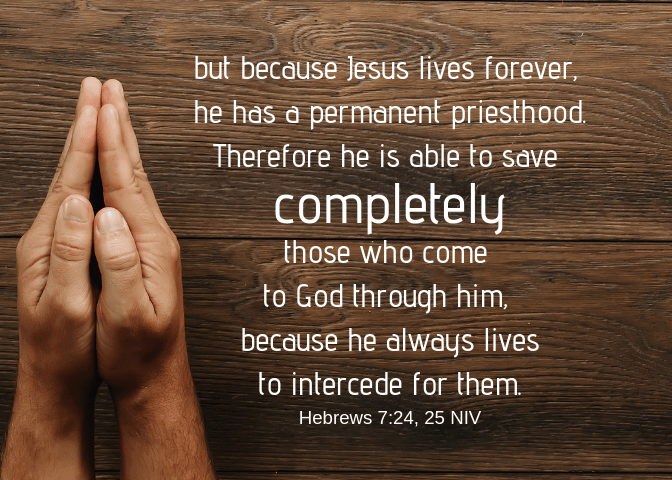
Better still, God swore an oath, that if another priest should arise after the order of Melchizedek, his priesthood would never die. That oath is fulfilled in Jesus, by the power of an indestructible life. That means that he always lives to make intercession for those who come to God through him. He’s always available to save someone. That’s much better than being after the order of Aaron, where there’s continuous turnover as each predecessor dies. And they can’t save.  

It seems like the writer to the Hebrews had some pretty profound words to share with them to get them out of their sluggish state of life. Thankfully, we have a great high priest to help us out of our sluggish state of life too. He set up a system where brothers and sisters in the body exhort each other to do good works and discipline each other when we are falling short (by training each other to distinguish between good and evil). If you’ve become sluggish, consider how great a high priest you’ve got, and get going by following him. Train yourselves as a body, with Christ as your head, to distinguish between good and evil, and then do good.   

-Juliet Taylor

Reflection Questions

1. New Testament writers often apply characteristics of people or things from the Old Testament to the New to help in their apologetics. One of these examples is that of Melchizedek. Some have interpreted that Jesus is Melchizedek incarnate. It’s nonsense, but unfortunately, we’re reading someone else’s mail over 2,000 years after it was written. We’re going to lack in some understanding as they would have understood things 2,000 + years ago. What is something you notice in this chapter that needs a little more exploration in understanding?

2. Jesus’s priesthood was made perfect by God, the Levitical priesthood was not. Perfection for a priest came after the sinless man Jesus chose to suffer and die for us, always being faithful to God’s will. Levitical priests were made priests because of their genealogy. What do you think perfection means in this chapter?

3. Hebrews 7:25 says, “Therefore He is able also to save forever those who draw near to God through Him, since He always lives to make intercession for them.” What do you think this means?
Tests & Temptations

Old Testament: Joshua 21 & 22

Poetry: Psalm 104

New Testament: Luke 4

It was the spirit that led Jesus into the wilderness to be tested. It was the devil who tempted him. God does test us, like a father tests his children, allowing us to make a choice between his will and our own, but he does not tempt us to do evil, nor can he be tempted, as everything already belongs to him and therefore wouldn’t be tempting.

God does not tempt with sin, but he does test his children so that they can learn obedience, to overcome sin and become people of character, for their own good, for their survival and for other good things he desires for us. We’ll pass the test every time if we choose his will over our own, just like his son Jesus did.

The devil’s temptations to cause Jesus to sin were cunning. With the first temptation, (Luke 4:3 “If You are the Son of God, tell this stone to become bread.”) the devil raises doubt about Jesus’s identity. He then targets Jesus’s need, his hunger, as a result of his fasting. When you are so hungry and deprived of your need to eat, it can be the most powerful time in your life because you have no choice but to cry out to God for help.

This was a very crafty temptation for Jesus, because both he and the devil knew who he was. He was the Son of God. God had already granted him authority and power, which he continued to grow in, which he could have used to meet his hunger need by performing a miracle for himself at his will. But he didn’t. Instead, his response was God’s will (Luke 4:4:  And Jesus answered him, “It is written, ‘Man shall not live on bread alone.’”).

The temptation was taken right out of God’s playbook, when he tested his firstborn son, the children of Israel in the wilderness. What is new is knowing the devil’s part in this temptation towards Jesus. Jesus goes straight to God’s will in the matter, referencing Deuteronomy 8:1-10 with his response. The testing was meant to test obedience and build the character trait of humility, as is clear from that passage.

Keep in mind though that it looks like God’s testing came after his firstborn son already tried to put him to the test by blaming him for their hardships and lack of needs in the wilderness. God is Israel’s father. He is going to take care of his children, but they needed to learn to obey and trust him. Our good God sent them bread from heaven despite their evil response because he loved them. It didn’t always fare so well in God’s response to their constant rebellion, but you can see throughout scripture that God was patient and long-suffering with his people.

The second temptation was tempting because the devil was offering the world as Jesus’s kingdom right then and there, if only he’d worship him. Satan is called the god of this world, which meant that he had the power to give Jesus the kingdom. Jesus knew through scripture that through serving God, he was going to gain the whole world and more, but he had to die first. It would have been very tempting for him to set up his kingdom straight away, without having to die first. But his response was to serve God by carrying out his will for him in his plan of salvation (Luke 4:8 Jesus answered him, “It is written, ‘You shall worship the Lord your God and serve Him only.”).

Jesus’s response came from Deuteronomy 6, where God gave the children of Israel the first and great commandment, which is to listen; Yahweh is God, Yahweh alone. Love Yahweh God with all your heart, soul, and might. They were told to do this so that they would remember him, fearing him only, and worshipping him, and swearing by his name (Deut. 6:13). They were to remember what Yahweh did, bringing them out of slavery and into the promised land to serve him. He told them these things for their good always and for their survival (Deut. 6:24).

Jesus trusted his father. He knew that God was faithful to do what he said he’d do, and he loved his father. He also knew from scripture that he had to die to be able to bring us with him. He chose us. He chose God’s will.

With the third temptation, the devil tries to provoke Jesus to prove that he is the Christ on his terms. He quotes from Psalm 91, telling Jesus that God will protect him if he performs the miracle that he wants him to do to show everyone that he is indeed who God said he was.

This is tempting because proving that he is the Son of God, the Messiah, could remove a lot of suffering from his life. Picture Jesus performing the miracle from the temple pinnacle in Jerusalem, in front of all the religious leaders. If they saw him doing this act, in front of everyone, from that location, they all would have known for certain that Jesus was the Christ. They probably would have set him up as their king, rather than trying to continuously kill him. Because Jesus chooses not to reveal his identity to anyone, except on God’s terms, it appears that like David, Jesus was always “on the run” from his enemies, because they doubted that he was the Messiah. Falsely claiming to be so was an offense worthy of death to the Jews.

But Jesus wasn’t really just “on the run” from his enemies. He was choosing to do God’s will at every step in his ministry. For the most part, he was on the move because his father told him to preach the kingdom of God to the various cities he was sent to.

The life Jesus chose was hard. He told us often that he spoke his father’s words, not his own. His father’s words were met with resistance and hate from most, except from those to whom it was given to know the things of God. Jesus’s response was the harder, but better route. He chose God’s will. He said, 12”…It is said, ‘You shall not put the Lord your God to the test.’”

This quote comes from Deut. 6:16. It references the bread incident from the first temptation. Again, we’re told what this was all about in Deut. 8:1-10. God does things his way for our own good, for our salvation, and to give us good things. But we have to trust him by doing it his way, even if his ways are harder than what we think ours will be.

If Jesus would have performed the miracle that the devil tempted him with, he would have been no better than God’s firstborn son, who put him to the test in the wilderness. They remembered their former slavery to Egypt, thinking it was far superior to their journey in the wilderness on the way to God’s promised land. The wilderness was hard. Many of them died there, never getting to see the promised land.

Similarly, if Jesus had proved to all that he was the Messiah by choosing his own will over God’s, the seemingly better route to go, he too would have put God to the test. Instead, he never blames God for his circumstances. He endures, looking at his hope, and thinking about all those he will save by choosing God’s will.

The devil left him, but only until another opportune time. Many of the things he said to Jesus make their comeback through the lips of religious leaders, as we’ll see through their interactions with Jesus in the rest of Luke’s narrative.

There were people who admired Jesus, but still doubted his identity. There were people, particularly those in his hometown, who asked Jesus to heal and perform miracles. When they don’t receive what they want from Jesus, which looks like a request for proof because of their doubt that he was the Messiah, they are denied, and they hate him for it. They attempt to push him off a cliff! Jesus doesn’t budge in following his God’s will, despite the consequences from men.

It is interesting that after the devil’s temptations, that Jesus quotes from scripture in Isaiah 61. We’ll eventually read in the rest of Luke’s narrative that Jesus lives out these proclamations from Luke 4:18-19.

Mixed in the quote is a quote from Isaiah 35 (recovery of sight to the blind). Jesus will indeed perform this miracle too. He’s even going to do it in Jerusalem, proving that he is the Son of God for many to take note of, but it will be on God’s time, and it is to the people God chooses for Jesus to reveal himself to as the Son of God, for God’s own purposes. When you read about this, and the other “Messiah” miracles, be careful to investigate the details so that you will know the exact truth about the things you are learning.

-Juliet Taylor – It’s been a joy to write again for SeekGrowLove.com and I’ve grown tremendously from doing it, so thank you Marcia! Hello Seekers! I am a Biblical Unitarian (BU) living in Tennessee with my husband, Wes Taylor, and our two boys, John and James. God has given me a BU church (Higher Ground), the best BU friend (Amy Swanson) to go through this race to the Kingdom with, an online church to fellowship with (Allegiance to the King), and a profession (Behavior Analyst/Sleep Consultant) that allows me time to study God’s word. God is good!

Questions

  1. God cannot be tempted, because there’s no way to get him to desire anything that he doesn’t already have or will have at his will, as he’s the creator of all. But he can be tested (although we shouldn’t, knowing the consequences). In what ways do people test God in our time?
  2. Similarly, God does not tempt us to sin, but he does test us like a father tests his child for her own good. In what ways do you think God has tested you?
  3. What other “Messiah” miracle does Jesus perform in Jerusalem (hint: it’s mentioned in Isaiah 35). 

John, Jesus and the Spirit of God

Old Testament: Joshua 19-20

Psalms: Psalm 103

New Testament: Luke 3

Did you know that cities of refuge were first established by God? Did you know that everything good and just has its origins from our God? Our God performs righteous deeds and judgments for all who are oppressed. Our God establishes mercy and justice, and desires that from those who fear him. But often we do not. Instead, we pervert his ways. We do what Romans chapter one says and distort his good gifts and his good intentions for us.

We don’t get what we deserve. We deserve death, or at the very least, a reprimand, like the one God gave through his prophet John the Baptist to the crowds coming to him to be baptized.

Luke 3:7-8 (NASB) 7…“You brood of vipers, who warned you to flee from the wrath to come? Therefore bear fruits in keeping with repentance.”

Psalm 103 tells us that our God 10 “has not dealt with us according to our sins, nor rewarded us according to our iniquities” (Psalm 103:10). If he did, none of us would be here.

Instead, 12 “as far as the east is from the west, so far has he removed our transgressions from us.” (Psalm 103:12). We must remember that. He pardons, he heals, he redeems. He’s compassionate and gracious, slow to anger and abounding in lovingkindness. In our New Covenant, he does this through his son Jesus. That is the God we serve. But we must also remember that he will not strive with us forever.

Can you imagine the impact our modern Sanctuary Cities would have if they functioned with God’s definition of mercy and justice at the helm? One day they will, assuming we still need them, when our righteous ruler, King Jesus returns. In the meantime, we can be Jesus’s hands and feet to the oppressed by asking our Lord Jesus what we can do.

Before the people asked Jesus what they should do, they asked the one who prepared the way before him, John the Baptist, knowing that a man from God had the authority to teach them and tell them what to do. He responds with justice because he knew what to say through the holy spirit.

His responses sound very familiar, like the responses Jesus gives during his ministry. I believe this is because it is the same spirit that is within John the Baptist that is then placed fully upon Jesus at his baptism, but to an even greater measure than it was placed on the highly respected John the Baptist. It reminds me of Elijah, being full of the holy spirit, who went before Elisha, who received an even greater measure of spirit from his God. In fact, the word tells us that John the Baptist came in the spirit of Elijah. Jesus goes so far as to tell us that John the Baptist “is” Elijah who is to come. Of course, not literally; all in spirit.

The people were amazed by John. They, 15 “were in a state of expectation and all were wondering in their hearts about John, as to whether he was the Christ.” (Luke 3:15). Of course, he was not, and made sure the people knew that the one they were looking for would not baptize them with water, but with the holy spirit.

It is Jesus whom we should look to with our questions. In Jesus we find all the fullness of the spirit of God, without measure, because God gave all power and authority to his son, with whom he is well pleased, until all enemies are made his footstools for him in the end. It is Jesus who is our salvation, a man who is mightier than John the Baptist; A man who eventually gave us the holy spirit, the power and presence of God, so that we could “be Jesus” to those who are oppressed in our day.

Unfortunately, as we look to the perverted justice system in our society, we see that there is much work to be done before our life race ends. It will never be fully just until Jesus returns and makes all wrongs right, but if we have the power now, in an even greater capacity than even Jesus was given, because now the holy spirit is given through Jesus post his death on the cross, we can keep doing the work he left for us to do.  

God told us what he desires from us throughout scripture. Everything he wants for us he wants because it is good for us, and it culminates in Jesus. If we are going to stop perverting God’s words and his will, we must repent and ask God through his son what we must do! He has made known his ways through Jesus in the New Covenant. Remember his precepts through Jesus Messiah and do them. Remember what he did through Jesus and remember what Jesus chose to do for you and I often. Jesus’s yoke is easy. Serve him by doing his will, which is God’s will. And bless the Lord oh my soul for his everlasting lovingkindness!  

-Juliet Taylor

Questions

  1. What does it mean to bear fruits in keeping with repentance?
  2. Why do you think God chooses to work through his son? In turn, why do you think Jesus chooses to work through us?
  3. What work do you think Jesus wants you to want to do for him in your life race?

Eyewitnesses to the Messiah

Old Testament: Joshua 16-18

Psalms: Psalm 102

New Testament: Luke 2

As we read through Luke, Joshua, and Psalm, let’s continue to be like Luke in carefully examining scripture. Let’s take note of the important details so that we will know the exact truth about what we are learning, like in Luke, as he lays out the facts surrounding the birth of Jesus, including when he was born, where he was born, and who was ruling and present at the time. We are left with evidence that he is indeed the Lord’s Messiah, born under the law of Moses during the first census that was taken during the reign of Quirinius as governor of Syria.

Those details are important.

As we read Joshua, let’s look for parallels between what happens there and what happens in the New Testament, like the women, daughters in the line of Joseph, who came directly to Joshua to ask for an inheritance. He granted it to them. I relate it to all the passages about women in the New Testament who are always surrounding and supporting Jesus and his ministry. Jesus grants many of them their petitions, even the ones I assume were unspoken.

As we read through Psalm 102, let’s consider what was going on in David’s life at the time of his writing. Let’s remember that although it was prophesied from an early time in his life that he would be king, he spent most of his life on the run for his life. When he finally became king, he committed one (or two) of the gravest sins with grave consequences, yet, he was still known for being a man after God’s own heart. I imagine this was due to the constant love and respect he had for God in loving and respecting the LORD’s first anointed king, King Saul, as we see him time and time again showing mercy to him.

Think of a time in your life as a Christian when you were so distraught that you forgot to eat, or drinking your wine mixed with your tears, before getting up, and carrying on, praising God for his compassion, graciousness, and consistency in your life with fear (reverence). Remember that our Lord Jesus told us that in this life, we will have trouble. If you haven’t experienced distress in this way, praise God! But know that we can expect it, especially if we’re doing our part in God’s plan of salvation, serving the word. We’re promised the age to come after enduring this age and all that that entails for the sake of the salvation of others. If we’re working for him, we may also have a target on our backs like David did. But we can take courage. Jesus has overcome the world, and so can we through him, by imitating him when met with hardships.

Notice now in Joshua that even though the children of Israel were promised the land they were conquering, with Joshua as their leader, that they still had much work to do before they were able to rest in the land that was promised to them. In order to even step foot in the land promised them, they had to drive the current residents out. Many times they failed to drive them out completely and dwelt among people who were not God’s people. Often this caused many of them to stumble.  

I relate this to sin under our new covenant through Jesus. Although we are promised the kingdom of God at the end of our life race, we still have much work to do. For one, we must drive out the sin from our lives completely, not allowing it to dwell with us. If we don’t, we may end up with a snare that costs us our lives. Thank God for repentance and forgiveness of sins.

Now let’s switch gears back to Luke chapter two. There is so much detail that shouldn’t be ignored. These details, along with the parallels between both of the major covenants, can grant us an even greater understanding of what this life is all about if we go through it all carefully. But again, the result of all the knowledge gained should lead us into new creatures, people who are made in the image of God, who become new in the image of Christ, to the glory of God if we belong to him.

The second chapter of Luke is full of people who I admire for their Godly character. I have no doubt that God hand selected them all to receive the best gift, being eyewitnesses of their Messiah Jesus.

Like unto Mary, the angel of the Lord came to a group of highly favored shepherds, bringing good news of great joy for all people. Not only one angel, but a multitude of heavenly hosts came, praising God before them for what he had done. If I am understanding their message correctly, I would say that they were among the men with whom God was pleased. It is my strive at the end of this life to hear those words from my Lord Jesus when I get the chance to meet him face to face.

When the shepherds heard these words, they went straight away to see what was made known to them. That is faith. After they fellowshipped with the new parents, they went away with the response that we should all endeavor to have after an encounter with our Messiah, which was to glorify and praise their God for all that they had heard and seen, just as it had been told to them.

Next comes Simeon, the man looking for the consolation of Israel, a devout and righteous man, with holy spirit upon him. He got what he was hungering and thirsting for when he held the Lord God’s Christ in his arms. His response was to bless God, the one who gave him what he promised him, for eyes to see God’s salvation in the face of Jesus, who would be a light of revelation to the gentiles and the glory of God’s people Israel.

Then we’re told about Anna, the prophetess, who chose to remain devoted to God’s work in the temple. Day and night she served the Lord God with fasting and prayers, after being widowed for years. At the age of 84, she met her Messiah Jesus. At that very moment, her response was to give thanks to God. She then continued speaking of Jesus to all those who were looking for the redemption of Jerusalem.

Looking at the child Jesus, we can see how he grew in wisdom. He didn’t know what he didn’t know. He had to seek it and obtain it. When he was only 12, he spent his time listening to teachers in the temple and asking them questions. He made it his business to be about his father’s business. That’s the heart of someone thirsty for the word.

The result of Jesus’s studying was a young child who had great understanding of the word, someone who had an answer that I can only assume was correct when corresponding with those well versed in the word, as they were astonished by his answers. He continued to increase in wisdom and stature, and in favor with God and men.

And finally, there is my favorite person, save Jesus, Mary, his mother. Her response to all of those Godly people and their words, including her son, was to treasure the things spoken about her son in her heart.   

-Juliet Taylor

Questions

  1. What are some petitions or unspoken prayers that Jesus grants to the women during his earthly life?
  2. What else could we relate the work of the children of Israel to with the work we must do under our New Covenant through Jesus besides driving out the sin in our lives?
  3. What characteristic do you admire the most about those who got to witness Jesus in the flesh, face to face before their death?  

The Character God Favors

Old Testament: Joshua 13-15

Psalms: Psalm 101

New Testament: Luke 1

As I carefully investigate Luke’s narrative, I take note of the encounter between Zacharias, the father of John the Baptist, and the angel of the Lord, including where the angel stands, and what he says.

I take note of Zacharias’s position and heritage, being a Levitical priest under the Division of Abijah, meaning that it is his duty to serve in the temple in Jerusalem in the 8th division, which was at the conclusion of the Feast of Passover.

I take note that Zacharias and Elizabeth are living in the hill country, perhaps the same hill country described in our reading in Joshua wherein Jabin prepared the way for Joshua’s coming as conqueror, in the same land that became Judah’s inheritance, where Mary, the mother of our Messiah Jesus, dwells (with them) for the first 3 months of her pregnancy with her baby Jesus.

I take note of the life of John the Baptist, sent by God to prepare the way for the Messiah Jesus, relating it to Moses, preparing the way in the wilderness for Joshua to take over and lead his people into the promised land.

After all that detail, likely there to teach us that Jesus is indeed the Christ, born under the law, in the way that God prophesied, with all the Old Testament parallels, I take note of where I think Luke wants our focus, after all the knowledge is obtained. 

It is the character of the two women of God that causes me to pause.

God chose to prepare the way for the Lord Messiah through two birth miracles, because two women of God chose to be faithful and humble in the presence of Yahweh God through his agent angel Gabriel.

The details are so important, but it is the character of the women of God, Elizabeth, the mother of John the Baptist, and Mary, the mother of our Lord Messiah, that we should rest our focus on after knowledge is obtained.

There is a stark contrast between the character displayed by the priest, who should have been first to bear the image of God in his response to the word of God, and the women of God in God’s presence.

Zacharias the priest is slow to be faithful, despite the significant circumstance he found himself in (despite a miracle). The angel Gabriel reminds Zacharias that he is one who stands in the presence of the Lord God, reiterating to him that his position deserves reverence and faith because of who he works for and of whose words he’s reiterating to him.

But to the woman, the angel of Yahweh, Gabriel, found the response that God desires from his people. From Elizabeth, we see faith and thankfulness. From Mary, we see faith and humility. We then see what follows women favored by God. When the two meet, Elizabeth is filled with the holy spirit after her baby, filled with the holy spirit, leaps in her womb! She prophesies regarding Mary’s response to the word of God:

Luke 1:45

“Blessed is she who believed that there would be a fulfillment of what had been spoken to her by the Lord.”

Mary’s response to this is praise to God her Savior, magnifying her Lord God through song and prophesy. Her response sounds familiar, much like some of the psalms of David, her likely ancestor.

What follows the people of character, the character of the people that God has always wanted, is exalting the Lord God, the receiving of the holy spirit (and all that comes with that), and joy!

But I take note still. There were consequences for the servant priest’s character flaw. Because of his unbelief to the angel’s words, which were God’s words, he was made unable to speak until the day when the things spoken by God’s agent angel were fulfilled.

This gave opportunity for Elizabeth to continue her faithful stance as servant to the words God spoke. It may be difficult for us to imagine how hard it would have been for her to oppose those in the temple, who chose to disrespect Elizabeth by clinging to tradition in naming the child over her words, which were God’s words. She stood firm in her faith. The people diverted their attention and respect to Zacharias, her priest husband instead.

Thankfully, the consequence from the angel led Zacharias to repentance and faithfulness. When he told the people that the child would be called John (Yahweh gives grace), the name given to him by God through his agent angel, his consequence ceased and his tongue was loosened. His response after repentance was praise to God. He too received the gift of the holy spirit and prophesied, speaking words of salvation.

But fear overtook all those in the hill country of Judea who heard of these things, perhaps due to unbelief. I imagine the fear being like the fear that overtook the people living in the hill country centuries prior, when King Jabin proclaimed the fearful news that Joshua was coming to conquer.

The details are so important, but if they don’t lead people to change, to conform to people bearing the image of God, which becomes conforming to the image of his Christ, all knowledge gained is null and void.

Let our character be the character that God has always desired, like the women, and be faithful and humble servants of the word, to believe in all the words the Lord God has spoken, which are eventually spoken through his Messiah Jesus.

-Juliet Taylor

Questions

  1. What are other important details that Luke gives us in chapter 1?
  2. In Luke 1:7, an Old Testament scripture is applied to John the Baptist. What did John do to “7…turn the hearts of the fathers back to the children, and the disobedient to the attitude of the righteous, so as to make ready a people prepared for the Lord.”?
  3. My favorite part of Mary’s response, after Elizabeth prophesies to her is, “My soul exalts the Lord” (Luke 1:46). What characteristics of the Lord did Mary find worthy of exalting? What’s your favorite part of Mary’s response?

Servants of the Word

Old Testament: Joshua 11 & 12

Psalms: Psalm 100

New Testament: Luke Intro below & Luke 1:1-4

Gospel of Luke Introduction

The gospel of Luke was written by Luke the physician (Col 4:14), who traveled with Paul.  Luke was a gentile who learned about Jesus through careful research from eye witnesses.  Luke wrote the gospel of Luke (the longest Gospel), and the book of Acts – which combined make Luke the most prolific writer in the New Testament.  

The gospel of Matthew was written to a Jewish audience, Mark was written to a Roman audience. Luke was written to Theophilus, for a Gentile audience – to assure Theophilus the truth of what he had been taught about Jesus.  Multiple times, Luke stressed that salvation was for the Gentiles.  For example, Luke 2:30-32, “For my eyes have seen your salvation, which you have prepared in the sight of all people, a light for revelation to the Gentiles and for glory to your people Israel.”

Luke highlighted Jesus’ love for and ministry to outcasts, including: immoral women, Samaritans, runaways, tax collectors, lepers, and criminals.  Luke also emphasized Jesus’ prayer life.

The gospel of Luke starts with the story of John the Baptist’s birth, and details the familiar birth of Jesus.  Luke then details Jesus’ ministry in Galilee.  The majority of the book focuses on Jesus’ heading to Jerusalem – where he knew he would be crucified.  (Luke 9:51 says, “As the time approached for him to be taken up to heaven, Jesus resolutely set out for Jerusalem.”)  Luke then records Jesus’ crucifixion and resurrection.

Luke is the only gospel to detail the story of Jesus’ joining two men on the road to Emmaus after his resurrection.  I find this story moving.  I love their response as recorded in Luke 24: 32, “They asked each other, “Were not our hearts burning within us while he talked with us on the road and opened the Scriptures to us?”

I pray that your heart will be burning within you as you let Jesus speak to you as you open the Scriptures to read the book of Luke.

-Steve Mattison

DEVOTION by Juliet

There were many who tried to compile an account about the things accomplished by the disciples of Jesus, as handed down to them by the eyewitnesses and servants of the word, but it was Luke’s compilation that made the cut.

Luke investigated everything carefully from the beginning (of Jesus’s ministry) and wrote it out in consecutive order. He wanted his reader(s) to know the exact truth about the things that he was learning, which meant that his reader could have been believing some things in error, even though his reader was learning things not too long after there were eyewitnesses to Jesus’s ministry. This should cause us to pause and be mindful of all that we know or think we know.

Truth matters. We should all endeavor to be careful to investigate everything written about and spoken by Jesus, because in him is the knowledge of salvation.

Did you notice though that Luke’s intro makes a statement we don’t often hear? He said his compilation was an account of the things accomplished by the eyewitnesses and servants of the word, or of the gospel. Whether the “word” here represents Jesus or the entirety of the gospel message, which you find in Jesus the Christ, I am not sure. What I am sure of is that if you want to be a servant of the word, the gospel, you should probably know what it is, desire it, and serve.

Do you know the word, the gospel? Do you desire it, both to know it and serve it? Do you know what it means to serve the word, the gospel? If we don’t, we should investigate it carefully, just like Luke did, to serve it rightly, in truth and without error. But that can be difficult.

The god of this world, Satan, has blinded the minds of those who will perish without the light of the gospel of the glory of Christ (2 Cor. 4:4). That’s why we have such a great commission set before us as his disciples, to make known to the world the word, which is the gospel of the kingdom of God, which is found in Jesus, who is in the image of God, which leads to salvation.

God wants none to perish, but without the knowledge of the word, the gospel, Jesus, we will perish. It is our service to the word to preach the gospel.

Notice again that Luke says, “servants of the word,” not just knowledge bearers of the word. It follows that if you are servants of the word, that your life and your character will reflect that. If you are servants of the word, then you will be a person that serves self-sacrificially, to whatever extent is needed in the plan of God, for the salvation of others.

Within our commission, we may have specific tasks that God grants us to do for him on an individual basis to accomplish his work. If we want to know what that work is, we have to get to serving. The more we do for him through Christ, the more service he will give us to do work with while his son is away.

In Joshua, we read about his service and sacrifice to God for the salvation of others, which involved conquering all the lands that God told him to conquer, to be the one through whom he would give his people of his time the promised land. But he didn’t become this servant of the words God spoke to him just because he acknowledged that what was spoken by God was true. He became this servant because of his service to do what God told him to do, reflecting his character, his faith in God to do what he said he’d do.   

In Psalm 100, we can read about one of many services that David is well known for. He brought the sacrifice of praise and thanksgiving to God when he came before him, acknowledging who his God was often, acknowledging his name Yahweh, and the work of his hands, namely, us. The byproduct of David’s service reflects his heart, his character, which is after God’s own heart.

Through Luke’s personal service and sacrifice to God through his narrative, we’ll read about our Messiah Jesus, and see his self-sacrificial service embedded in his entire life, written in consecutive order. Once his ministry began, the man didn’t even have a place to call home, as he was too busy serving others to settle in one location. His servitude and devotion to his God culminated in his final earthly work at his death on the cross, leading to the salvation of all.

Remember as we read Luke’s narrative that he was one of only 4 writers out of many whose compilation succeeded in becoming what are commonly referred to as “the gospels”. What an accomplishment! This tells me that if you want to be servers of the word, you’ve got to have a desire to do it and to do it with everything that is in you, because that’s the person you’ve become after receiving the knowledge of Christ.

As we continue on in our reading in Luke chapter 1, let’s take note of all the witnesses and servants of the word with the same careful investigation that Luke gave to his narrative. While we search for the exact truth about the things we’ve been taught, let’s examine the servitude and character of the people who were closest to Jesus, as well as the consequences that followed. After gaining the knowledge of what was accomplished by the original servants of the word, the gospel, let’s get to being the servants of the word of our generation.

-Juliet Taylor

Reflection Questions:

  1. Luke’s narrative was written in consecutive order. Do you know how the other three narratives that met the gospel cut were ordered?
  2. How are you a servant of the word?
  3. What character trait do you want to portray to others after being a servant of the word?

Jesus Explains So Much

Old Testament Reading: Joshua 9 & 10

Psalms Reading: Psalm 99

New Testament – Jesus: Luke 24

Before I knew the significance of what God did through his people of old, that everything done points to his Messiah, Jesus the Christ, Joshua was my favorite Old Testament “character.”

It was Joshua who was met by the captain of the Yahweh’s army. It was Joshua who led the children of Israel into the promised land. It was Joshua who fought the battle of Jericho, blowing trumpets and shouting as the walls came tumbling down. It was Joshua the Lord helped using hailstones to defeat his enemies, and it was Joshua, a man, whom God listened to, to make time stand still.

And yet, Joshua cannot compare to our Lord Jesus and what God has done and will do through him.

We mustn’t be foolish. We must know and understand what the prophets said about Jesus to fully understand how significant he is to us. Praise be to God through him that we can gain that wisdom through the help of the holy spirit that was poured out by him because he earned that right. Now everything made new is through him.

Jesus himself taught these things about himself after his resurrection to the men on the road to Emmaus. Beginning with Moses, he explained to them the things concerning himself in all the scriptures.

I’m going to begin explaining some things I’ve learned about him and God’s plan of salvation, beginning in Joshua.

As Joshua, the son of Nun, conquers the land promised by God, he is met with a people who are not the children of Israel, but fear Yahweh and believe that he will do for Israel what he has said, by destroying all the inhabitants of the land to give it to God’s chosen people.

These people were the Gibeonites. They deceived the leaders of the children of Israel into making a covenant with them to save their lives. The terms of the covenant granted them life as slaves in exchange for not being destroyed.

It was a mistake to not seek the counsel of Yahweh prior to entering this covenant, but we see that God continues to work with his people through their failures. They continue to break the terms of their own covenant with God time and time again, but God is forgiving and merciful, just like he is with us after we entered the New Covenant with him through his son Jesus.

Watch the parallels of this story with end time prophesy. It’s quite remarkable.

The people of Gibeon, now servants to the children of Israel, called on the name of their leader Joshua (same name as Jesus) to be saved when they came under attack by the current King of Jerusalem, Adoni-Zedek (meaning Lord of justice or Lord of righteousness; yet he was not really THE lord of justice -that is reserved for the true Lord of Righteousness, our Messiah Jesus) and the other 5 Kings of the Amorites.

God saves Joshua’s servants (Gibeonites) through Joshua (Jesus). . In a similar manner, he will save the gentiles, us, who were not God’s people, but are His after we become the servants of his Son Jesus. He confuses the enemy as Joshua pursues them and He sends hailstones to give Joshua (Jesus) the victory.

To the five Kings who went up against him, he kept them in caves covered by a large stone, sealing them in until the time is right for his people to put their enemies under their foot (literally).

On the day Joshua (Jesus) defeats the Amorites, he, a man, asks God to make time stand still, and God listens. There was never a day like it before or since the time of the writing of Joshua, a day when the LORD (Yahweh) listened to a human being. Surely the LORD (Yahweh) was fighting for Israel!

One greater than Joshua, and all those God answered in the past, is now seated at the right hand of God! Because of this, we can come to the throne room of God in his son Jesus’s name and have confidence that he will hear us, humans, too.

We are privy to know and understand the gospel as recorded in our bibles in the New Testament, which is something Jesus’s own disciples, who walked with him on earth, didn’t have. 

Let us do our part in understanding the scriptures (the Old Testament) and the words of our Lord Jesus (the gospel; the Much of the New Testament) through the spirit, to hear the words he spoke, that all things which are written about him in the Law of Moses and the Prophets, and the Psalms must be fulfilled (Luke 24:44).

Let us pray to the God of Jesus that we would not be foolish and slow of heart to believe in all that the prophets have spoken, rather, let our hearts burn within us. “Thus it is written, that the Christ would suffer and rise again from the dead the third day, and that repentance for forgiveness of sins would be proclaimed in His name to all the nations, beginning from Jerusalem (Luke 24:46-47). 

Praise be to God that the servants of his son Jesus (Gentiles) can be forgiven because God listens to a man (our Jesus), and accepts us through him.

We were a people who were not God’s people, but were grafted in through God’s son, a man whom he chose to save us through, as the mediator of a better covenant, with better promises.

I cannot wait for God to listen to the man Jesus of Nazareth again, our better Joshua, our Messiah, to make time stand still for us in the Kingdom of God.

-Juliet Taylor

Questions:

  1. What parallels do you see between Joshua in chapters 9 and 10 and Jesus regarding end time prophesy?
  2. Why is it important to know all that is spoken about Jesus Messiah in scripture?
  3. How do you feel knowing that God listens to you, a human, when you come to him in his Son’s name?

Your Part in God’s Plan of Salvation

Old Testament Reading: Joshua 7 & 8

Psalms Reading: Psalm 98

New Testament Reading on Jesus: John 20

Remember what Jesus accomplished today and all that that entails. Remember his faithfulness to finish the work God gave him on earth.

Now remember what God did. Remember that it was God’s plan of salvation to save us through his son. His right hand and his holy arm have gained the victory for Him!

God has made known to us our salvation!

The Seas and all that is in them know it and resound! The rivers know it and clap! The mountains know it and sing together for joy at his marvelous works!

Do we know it?

Do we realize that God’s plan of salvation is fulfilled through Jesus? Do we fully grasp what that means?

It means that if we are his, we are kingdom bound, and no one can snatch us out of his hand.

Salvation has been made known by God, and he’s done it through covenants. God offers the opportunity for his people to be saved by remaining faithful to the covenants he makes with them. The last, final, “goal” covenant God has made, and will make with his people, is the New Covenant through Jesus.

Before Jesus’s covenant, bringing the hope of entering into the Kingdom of God, God worked through other covenants with his people to give them good things.

It is no surprise to me that God chose Joshua (Jesus), whose name means, “Yahweh is salvation,” to bring his children into the land promised. Although it was Moses who was the mediator of the covenant that God made with them, the plan of salvation for Israel was fulfilled through Joshua.

Just prior to delivering Jericho over to them, God made another covenant with his people through Joshua. This covenant involved being faithful to refrain from taking the devoted things from the city, so that God’s people would not covet. If they violated this command, God said they would have trouble.

One man did violate this covenant, and through this one man’s sin, all the children of Israel were held liable for destruction (hmmm, sounds familiar).

God was faithful to do what he said he’d do regarding the breaking of this covenant. He turned away from his people because of the sin of one man amongst the many, and trouble ensued. But another man, Joshua, led the people to repent (hmmm, this also sounds familiar). God accepted this repentance through Joshua’s leadership, but with requirements to destroy the sin and the violator of the covenant.

After sin was removed from the people, God told his people to consecrate themselves. If they were devoted to him, he would be devoted to them (covenant language). The plan of salvation was restored for a time.

Eventually, the covenant through Moses, and most of the additional regulations that came to be through others came to an end because the people continued to violate God’s covenants over and over again. Every time God offered to make a covenant with his disobedient and obstinate people, it was an act of his mercy and grace because they rarely remained faithful to it, and he knew that. All of God’s covenants were grace covenants out of his love for his people and his desire for all to be saved.

But because of man’s constant violation of his free gift, their unfaithfulness to the covenant, or their unfaithfulness to fulfill their part of the plan, God made a New Covenant, with all mankind, with better promises, that would be fulfilled through his son, Jesus. That is what we are celebrating today.

But remember. God’s plan of salvation through the blood of Jesus is the last covenant he will offer to mankind.

To partake in the plan of salvation, we must freely choose to enter the covenant through Jesus and remain faithful to our part in the plan, as Jesus was faithful to his.

Our part in the plan is to imitate our Lord and Savior, Jesus Messiah, by keeping ourselves free from sin, and repenting when we do sin, so that we can live out a life of self-sacrifice of our will, to whatever extent is needed to save others, just as our leader Jesus did, which is God’s will.

If we do that, we will be one (in the plan of salvation) with Jesus and God. To be one with God and Jesus means that you know your role in the plan of salvation, and you remain faithful to it. Be devoted to him through his son. He will be devoted to you.

I’ve come to realize that most people don’t know the plan of salvation that God has revealed, at least not in its entirety.

There was a time when Jesus’s own disciples did not fully grasp what the plan of salvation was. In John 20:9-10, we’re told that his disciples did not even understand from scripture that Jesus had to rise from the dead, even though he had been telling them all along!

Jesus revealed this part of the plan plainly by first showing himself in his resurrected state to Mary Magdalene. He then told her more about the plan and told her to go and tell his brethren.

She was faithful to believe and do whatever her Lord required of her. Remember her character.

Jesus then revealed his resurrected self to his disciples. When those who saw him finally understood this part of the plan, they rejoiced!!!

Jesus instructed and empowered his disciples through the gift of the holy spirit to fulfill their part in the plan of salvation, which includes forgiveness of sins.

God’s plan of salvation begins in Genesis and ends in Revelation. It is fulfilled through our Messiah Jesus.

The people who know the plan of salvation live it out and preach it, so that all may be saved. They join in the purpose and plan of God through his son to save humanity, by choosing God’s will over their own.

Remember Jesus today, and that God’s plan of salvation is through him.

Let’s shout!!! Hallelujah to our God, and Hosanna to our King!

-Juliet Taylor

Question 1:  Do you know your role in the plan of salvation?

Question 2:  What other parallels between Joshua and Jesus do you see, especially related to the covenants God made with them?

Question 3:  Look into the phrase, “One with God.” Do you think it means what I think it means (one in understanding and fulfillment of the plan of salvation)?

How to Discipline

Proverbs 19

My last devotional for this week comes out of Proverbs 19:18. It says, “Discipline your son while there is hope, and do not desire his death.” After doing this for a week now, the first portion of this passage made me immediately think about Amon. Remember him? He was that king of Judah that was murdered by his servants after reigning for only 2 years. He did evil in the sight of Yahweh. His father, Manasseh, also did evil in the sight of Yahweh but eventually repented and renewed his status with God. I had commented to myself on paper, thanking God for repentance – as there’s still time for it. What if you don’t have the time like Amon? What if you don’t even know that repentance is an option? This is why we are commissioned! Find those Josiahs and let them know the good news!

Discipline your son while there is hope, and do not desire his death… Why would any good parent desire their child’s death? My studies this week have also led me to some wisdom, I think, regarding the latter portion of this verse in Proverbs. I don’t think I would have understood the latter part if I hadn’t immersed myself in the word for a week. Words mean something. This is a wise, powerful statement that lets us know we DO desire our children’s death if we don’t take action to discipline them. We’ve got a great commission in our own homes if we are parents.

I have been wanting to do a study on child-rearing for a while now. Since I desire that my children live, I started by looking into discipline as it is demonstrated in the word. I found that my idea of discipline was nothing like what discipline actually meant in the bible.

Look at the Old Testament and how God, through Moses, disciplined the children of Israel in comparison to the New Testament and how God, through Jesus disciplined.

Deuteronomy 11:1-13 (NIV)

11 Love the Lord your God and keep his requirements, his decrees, his laws and his commands always. Remember today that your children were not the ones who saw and experienced the discipline of the Lord your God: his majesty, his mighty hand, his outstretched arm; the signs he performed and the things he did in the heart of Egypt, both to Pharaoh king of Egypt and to his whole country; what he did to the Egyptian army, to its horses and chariots, how he overwhelmed them with the waters of the Red Sea[a] as they were pursuing you, and how the Lord brought lasting ruin on them. It was not your children who saw what he did for you in the wilderness until you arrived at this place, and what he did to Dathan and Abiram, sons of Eliab the Reubenite, when the earth opened its mouth right in the middle of all Israel and swallowed them up with their households, their tents and every living thing that belonged to them. But it was your own eyes that saw all these great things the Lord has done.

Observe therefore all the commands I am giving you today, so that you may have the strength to go in and take over the land that you are crossing the Jordan to possess, and so that you may live long in the land the Lord swore to your ancestors to give to them and their descendants, a land flowing with milk and honey. 10 The land you are entering to take over is not like the land of Egypt, from which you have come, where you planted your seed and irrigated it by foot as in a vegetable garden. 11 But the land you are crossing the Jordan to take possession of is a land of mountains and valleys that drinks rain from heaven. 12 It is a land the Lord your God cares for; the eyes of the Lord your God are continually on it from the beginning of the year to its end.

13 So if you faithfully obey the commands I am giving you today—to love the Lord your God and to serve him with all your heart and with all your soul—

Let’s go through this passage carefully. Through Moses, God disciplined the 12 tribes of Israel (the children of Israel). He disciplined them by first showing them his majesty, or who he was (Yahweh God!). Who he was could be recognized by the works he did (e.g., signs, miracles, plagues). He rescued them (from Egypt) and defeated their enemies (Egypt in the red sea). Along their journey to the promised land, he performed miracles to sustain them in the wilderness (e.g., manna, water from a rock). He got rid of the people among them who were insolent and tried to usurp Moses (i.e., Dathan and Abiram; Korah).

He then disciplines the children of Israel by telling them to obey the commandments they were given (i.e., obey the law of Moses) so that they would have strength to enter the promised land. He entices them to obey the law of Moses by describing how wonderful their hope is. In it, they will have long life and it will be well with them. In it, they will have good things (flowing with milk and honey). It is a land they won’t have to tend themselves (like they did in Egypt) to receive the good things in it. The good things will be sustained through heaven. To me, the last verse shows God’s heart. He cares so much about that land that he desires to give to his children.

Now let’s look at the New Testament and the discipline of God through Jesus. He pretty much does the same thing but gives greater honor and authority to Jesus since Jesus literally is the one who rescues the people.  

In the New Testament, Jesus disciplined the 12 disciples by showing them who he was (is) (The Son of God! The Messiah – pretty much described throughout the whole book of John). Who he was (the Messiah) could be recognized by the works he did in their presence. There were some pretty distinctive works he did that pointed to himself as the Messiah (i.e., Isaiah 35:5-6a “Then the eyes of the blind will be opened and the ears of the deaf will be unstopped. Then the lame will leap like a deer, and the tongue of the mute will shout for joy.).

It is Jesus himself who rescued them from their enemy (sin and death) by his death on the cross. Once seated at the right hand of God in heaven, it is Jesus who sustains them along their journey to the Kingdom of God (KOG). Post resurrection, it’s up to them (and us) to do these final things to enter into the KOG through Jesus. Jesus is the bread of life and he is the rock of our salvation who provides living water. He chastens us by pruning us along our journey (e.g., If your right hand offends you, cut it off – get rid of the people and things in your life that try to usurp Jesus as Lord of your life because they’ll prevent you from entering the KOG).

Jesus disciplines us by telling us to obey the Law of Christ (i.e., Love God and love people like Jesus loved). We need to obey these commandments so that we will have strength (through the receiving of the holy spirit) to enter the KOG.

The love of Christ compels us to obey by enticing us with the good things in the KOG, our hope. In the KOG, we will live forever with Jesus (and eventually with God himself). God will wipe away every tear from our eye; sin and death will be no more (the incorruptible crown; the crown of life). In it, we will be rewarded with good things, positional rewards based on how we built upon the foundation that was laid for us (built upon Jesus) (the crown of rejoicing; the crown of righteousness). If you’re an elder in your church, you’ll receive a crown of glory!

Once there, we won’t have to labor like we do now to enjoy the KOG. There will be a river of the water of life flowing from the throne of God and from the lamb. In it will be the tree of life on either side of the street with 12 kinds of fruit. The leaves of the tree will be for the healing of the nations. I realize that this may not all be literal. All I really know is that it will be unimaginably good and that God and my Lord Jesus will be there, so I’d like to be there too.

And then for my correlation of the last verse. I can only imagine the joy Jesus must have when he thinks about the coming KOG. It is his reward. He’ll be ruling the whole world from the new Jerusalem. I think this was God’s plan all along, with Jesus in mind as the king of his kingdom before the foundation of the world, to a people whose desire is for them whom they love.        

Going back to the Old Testament passage, we see that not all of the children of Israel were witnesses to God through Moses. Therefore, he instructs them to discipline their children who were not witnesses. An example of discipling for the children of the children of Israel who were not direct witnesses was laid out for us in Deuteronomy 11.  

Similarly, not many of us were direct witnesses to Jesus’ ministry on earth. Therefore, he instructs his disciples to discipline the rest of us who were not direct witnesses. I believe that through the power of the holy spirit however, we too can be called witnesses of Jesus, and are therefore also commissioned to discipline our children and others (the Josiahs). An example of discipling for us is laid out in the new testament, beginning with the gospels.

Can you say amen?

-Juliet Taylor

Today’s Bible reading passages can be read or listened to at BibleGateway here – 1 Chronicles 5-6 and Proverbs 19

The mouth speaks out of that which fills the heart

Proverbs 17-18

The book of wisdom says, “Death and life are in the power of the tongue, and those who love it will eat its fruit.” (Proverbs 18:21). I understand this scripture to mean that we have the power to speak words to others unto life or words unto death, so we should choose our words carefully. If we love to talk, we better make sure our speech represents who we are because we become what we speak (eat your words). Our words are death and life to our own bodies.

I keep coming back to the issue of the heart. I know we need to have a heart for God if we desire to be with him and his son in the Kingdom of God. But how do we really know if we have a heart for God? The heart can be seen in the things we do that correspond with Jesus’ commandments (love) that we must do to enter in. Works are fruit but works can be deceiving if the heart behind the works is not motivated by love. Mathew 7:15 – 23 says:

15 “Beware of the false prophets, who come to you in sheep’s clothing, but inwardly are ravenous wolves. 16 You will know them by their fruits. Grapes are not gathered from thorn bushes nor figs from thistles, are they? 17 So every good tree bears good fruit, but the bad tree bears bad fruit. 18 A good tree cannot produce bad fruit, nor can a bad tree produce good fruit. 19 Every tree that does not bear good fruit is cut down and thrown into the fire. 20 So then, you will know them by their fruits.

21 “Not everyone who says to Me, ‘Lord, Lord,’ will enter the kingdom of heaven, but he who does the will of My Father who is in heaven will enter22 Many will say to Me on that day, ‘Lord, Lord, did we not prophesy in Your name, and in Your name cast out demons, and in Your name perform many miracles?’ 23 And then I will declare to them, ‘I never knew you; depart from Me, you who practice lawlessness.’

The people speaking to Jesus in this passage are shocked that Jesus doesn’t know them. The works mentioned in this passage do outwardly appear to be good fruit. Fruit can look good on the outside but can be rotten on the inside.

It can be difficult to identify bad fruit sometimes. If you really want to know if you’re producing good fruit or not, there is one particular fruit that’s pretty transparent, at least to the people we’re around the most. Our words are a good indication of what’s in our hearts.

Here’s a similar passage from Luke’s perspective in Luke 6:43-47:

43 For there is no good tree which produces bad fruit, nor, on the other hand, a bad tree which produces good fruit. 44 For each tree is known by its own fruit. For men do not gather figs from thorns, nor do they pick grapes from a briar bush. 45 The good man out of the good treasure of his heart brings forth what is good; and the evil man out of the evil treasure brings forth what is evil; for his mouth speaks from that which fills his heart.

46 “Why do you call Me, ‘Lord, Lord,’ and do not do what I say? 47 Everyone who comes to Me and hears My words and acts on them, I will show you whom he is like: 

Jesus has a little more to say about the mouth in Mathew 12:30-37:

  30“He who is not with Me is against Me; and he who does not gather with Me scatters.

      31“Therefore I say to you, any sin and blasphemy shall be forgiven people, but blasphemy against the Spirit shall not be forgiven. 32“Whoever speaks a word against the Son of Man, it shall be forgiven him; but whoever speaks against the Holy Spirit, it shall not be forgiven him, either in this age or in the age to come.

      33“Either make the tree good and its fruit good, or make the tree bad and its fruit bad; for the tree is known by its fruit. 34“You brood of vipers, how can you, being evil, speak what is good? For the mouth speaks out of that which fills the heart35“The good man brings out of his good treasure what is good; and the evil man brings out of his evil treasure what is evil. 36“But I tell you that every careless word that people speak, they shall give an accounting for it in the day of judgment. 37For by your words you will be justified, and by your words you will be condemned.”

James gives us even more clarity about the power of our speech in chapter 3:5-12:

So also the tongue is a small part of the body, and yet it boasts of great things. See how great a forest is set aflame by such a small fire! And the tongue is a fire, the very world of unrighteousness; the tongue is set among our body’s parts as that which defiles the whole body and sets on fire the course of our life, and is set on fire by hell. For every species of beasts and birds, of reptiles and creatures of the sea, is tamed and has been tamed by the human race. But no one among mankind can tame the tongue; it is a restless evil, full of deadly poison. With it we bless our Lord and Father, and with it we curse people, who have been made in the likeness of God; 10 from the same mouth come both blessing and cursing. My brothers and sisters, these things should not be this way. 11 Does a spring send out from the same opening both fresh and bitter water12 Can a fig tree, my brothers and sisters, bear olives, or a vine bear figs? Nor can salt water produce fresh.

Are you noticing as I am that some of the scariest, most convicting verses in the bible for a supposed Christian regard our speech? We must tame our tongue. To tame the tongue we must change our hearts.

By examining our own words, we can tell if we have a heart for God or not. I think it’s a really good indication about our destiny too. If you really want to know if you are producing good fruity speech, ask those who are closest to you how they perceive your speech towards them. If they aren’t on the receiving end of your good fruity speech, that’s not good. Be prepared with your response. If you don’t like what you hear, how will you respond? Choose your words wisely.

If you know you will have trouble responding with good fruit, prune your speech! You might find it helpful to practice not saying anything at all. Proverbs is chock-full of verses that tell us that there is wisdom in keeping our mouths closed. Even a silent fool is considered wise if he keeps his mouth shut. We can use that silent time to pray for wisdom and words of life and in the meantime, practice our sacrifice of praise to God, which is the fruit of our lips that give thanks to his name.

-Juliet Taylor

Today’s Bible reading passages can be read or listened to at BibleGateway here – 1 Chronicles 3-4 and Proverbs 18