Helping Those in Need

Obadiah
Psalm 82-83

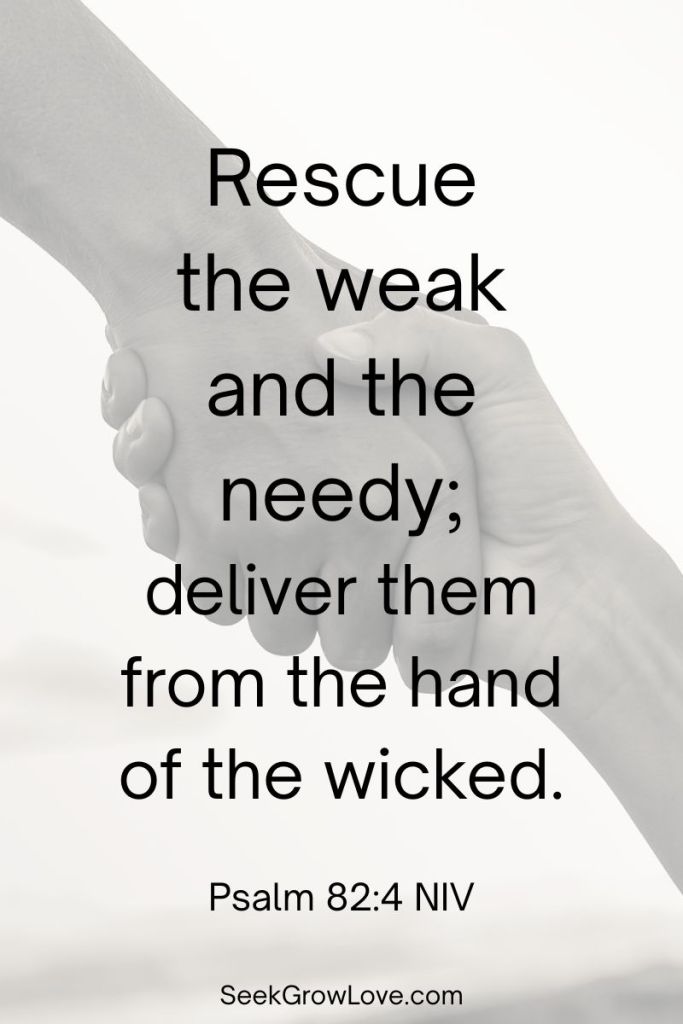
Many of the Psalms point to our hearts and minds bringing praise, glory, and honor to God.  Some also provide instruction for living, as we find in Psalm 82.  Psalm 82:3-4 says, “Defend the cause of the weak and fatherless; maintain the rights of the poor and oppressed.  Rescue the weak and needy; deliver them from the hand of the wicked.”

Providing help and justice for those in need is a theme we find throughout the Bible.  The Mosaic law supports this (Deuteronomy 10, 15, 22), the prophets support this (Isaiah 58), the gospels support this (Matthew 25, Luke 10), and the New Testament letters support this (James 1, I John 3).  As we see this theme come up in Psalm 82, we should recognize this does not stand alone within Scripture, but fits within the context of the whole.

Psalm 82 verses 3 and 4 stand in stark contrast to verse 2.  Verse 2 asks, “How long will you defend the unjust and show partiality to the wicked?”  We have a propensity to long after our own gain, which sometimes causes us to support the unjust and wicked.  This should not be the case.  Instead, we should defend the weak and fatherless, maintain the rights of the poor and oppressed, and rescue the weak and needy.

The underdog story makes for great sports.   The 1980 “Miracle on Ice” when the USA beat the Soviet Union in Olympic Men’s Ice Hockey.  The 1983 upset of North Carolina State over Houston for the NCAA Men’s College Basketball Championship.  Rulon Gardner, who won gold in wrestling in the 2000 Olympics over heavily favored Aleksandr Karelin of Russia.  These underdog stories are easy to spot, since each team or individual was clearly not favored to win.  However, in our lives, I believe it is much more challenging to spot the underdogs in life around us.

Who are the people we should be working so hard to defend, rescue, and maintain their justice?  Are they as easy to spot as the sports underdogs?  Maybe it is easy to see they are poor, or weak, or needy.  Maybe they are the people who are clearly ‘outcasts’ within our social settings because they don’t match the norms of interaction.  However, maybe they are a little harder to see, but we are still called to defend, rescue, and maintain their justice.  I think of our friends who are close talkers, who interrupt when others are speaking, or who struggle with social interactions.  Do we provide for them defense and rescue, or do we relegate them to solitude and the outskirts of our attention?  Sometimes it’s easy to see the needs of those we can help and other times it is far more challenging.

Putting Psalm 82:3-4 in action is more than giving money to a service ministry.  We can give out of our abundance but we can also show kindness to those in need around us every day.  Be encouraged to look for those in need in more diverse places around you, or in more diverse people around you!

-Michael Cisler

Reflection Questions

Who is someone you see regularly who may be weak, oppressed, or needy in ways other than financial or physical?

How can we provide support and defense for those who are socially awkward around us?

Love Covers

Proverbs 10-12

I was looking through the Proverbs in today’s reading, trying to decide what to focus on. There are just so many good ones! Proverbs is one of my favorite books, and as I meditate on different verses that hold meaning to me, I like to add artwork to them. When I look through my Bible, I’ve noticed that the ones I have marked up the most seem to have a common theme: they all have to do with how we treat others. 

I wish that was more of a focus in the world. The internet is full of comment sections heaped with insults and negativity. I’m forever grateful that my kids are homeschooled with a smaller group of Christians because my heart breaks at the stories of bullying. Videos abound of people being cruel to others in stores, on sidewalks, in restaurants, even at home with their families. Even in our churches, people can be unkind. 

The book of wisdom has a lot to say on how we treat those around us. Being kind, honest, and dependable is not only godly, but wise and leads to many benefits. 

Verse 11:10 tells us how others feel about those who are righteous and those who are wicked. Proverbs 11:13 warns against gossip, 17 teaches us that kindness to others benefits us, 22 talks about how we should be modest around others, and verses 24-26 give us the benefits of being generous. Chapter 12 speaks on how our own poor words to others can destroy us in verse 6. Verse 10 is actually about how we treat animals. Verse 16 talks about overlooking insults and not becoming immediately annoyed with others, and 25 tells us one of the benefits of using kind words. 

But I think my favorite verse about how we should interact with others is 10:12. “Hatred stirs up conflict, but love covers over all wrongs.” There are many types of people in this world, and we are bound to clash. I only have three children in my house, and they definitely don’t always get along. They don’t hate one another at all, but they sure do have some conflict. However, they also love each other. So, unless they are having a particularly bad, rotten kind of day, they aren’t purposely going out of their way to create issues. 

I don’t think many of us reading this are likely to have a lot of hatred in our hearts. I’d like to think that most people don’t. So I feel like the most important part of this verse is actually the second half. I also think it’s the most difficult. Love covers over all wrongs. Have you ever tried to love someone who has really wronged you? It’s not easy. But how much better would the world be if we covered up the wrongs done to us with love and forgiveness? 

Society would say that this type of reaction would make you a doormat or a pushover. This is a lie. Nothing takes more strength than loving those who harm you. That kind of strength comes from God. He allowed his only son to die for a lot of people who held no love for him or others. His love is that deep. Christ was willing to die for those who hated him. His love was that deep. 

As you read through the Proverbs, seeking out wisdom, I hope you see the wisdom in this: actively loving those who wrong you will make your life, and the world itself, better. My prayer for you is that you will practice treating others with patience and kindness, and that those you interact with will do the same. I pray that you see the wisdom in covering wrong with love. 

-Jenn Haynes

Reflection Questions: 

What verses speak to you today in these passages? Where is God trying to place wisdom into your life so that your path is easier? 

Think about some of your interactions with others lately. What were the best ones? How can you go and bless others the way that you were blessed? What were the worst ones? Was your reaction one of love? How can you forgive the offences and react with love? 

Power & Pride OR Loyalty & Compassion

2 Samuel 8-9

1 Chronicles 18

I bet we all have experience with someone who is prideful.  We’ve heard stories of wildly successful people, and in their triumph, they forget the people who helped them get there.  

In 2 Samuel 8, we hear about some of David’s great victories in battle- he’s at the top of his game- a picture of power and achievement.

Then, in stark contrast, chapter 9 gives us a glimpse at a softer and more compassionate side of David where he actively looks for someone “from the house of Saul to whom I can show God’s kindness?”  David remembers the promises that he made to Jonathan and, in his moment of power, chooses kindness over vengeance. David easily could’ve broken his promise and basked in his victories- instead, he extended grace to a man who could offer him nothing in return.

This act of unexpected mercy shines a light on David’s character, revealing a heart that prioritizes loyalty and compassion over pride and power.

-Hope Fletcher

Reflection Questions

  1. When have you been tempted toward the power and pride side – or deep into its territory? Have you found a good way to resist pridefulness?
  2. Who do you admire for their loyalty and compassion?
  3. Whom can you (will you) seek out to show a bit of God’s kindness to?

Who Shall Dwell on God’s Holy Hill?

Psalm 1-2, 15, 22-24, 47, & 68

Today, in Psalm 15, David gives us some great advice for living in a way that glorifies God.  The things listed here are kind of no-brainers, but are also things that I think are so simple that perhaps we tend not to think of these things as being important.  

Be honest. All the time.  And not just with the words that come out of your mouth- make sure your intentions and motivations are truthful as well.  Being honest in your heart is just as important as being honest with your words.

Don’t talk poorly about others. Even when everyone else is venting about that annoying co-worker that you all can’t stand.  Or even if it’s your dorky sibling that just won’t leave you alone.  Protect the reputation of others by holding your tongue.

Keep your promises.  Even if a more appealing offer comes up, stick with what you’ve agreed to do.  Even if it becomes costly to you, honor your agreement.  Let your “yes” be “yes” and your “no” be “no.”

Be generous with people- be compassionate and share with others without wondering how they can pay you back.

This Psalm reminds us that true Godliness is woven into the fabric of our everyday lives. It’s about choosing honesty, kindness, integrity, and generosity in every interaction, big or small. These qualities, though simple, are the very things that shape us into people who are fit to dwell in God’s presence.

-Hope Fletcher

Reflection Questions

  1. Of these four characteristics which one do you struggle with most?
  2. When have you recently missed the mark of “true Godliness”? What could you have done instead? What difference would this have made – to yourself, others and God?
  3. Next time you find yourself in a similar situation how might you steer yourself towards the “true Godliness” response?

Making a Way for You

Old Testament: Micah 6

Poetry: Psalm 85

New Testament: Luke 18:15-43

If you’re ever looking for a prayer for any occasion, the book of Psalms is the place to go. In today’s reading, we explore Psalm 85, which features a heartfelt prayer for mercy by one of the sons of Korah. It begins by reminding God of His past mercies when He restored the fortunes of Jacob, and then pleads for His compassion: “Will you be angry with us forever? Will you prolong your anger to all generations?” (Psalm 85:5-6). The Psalmist continues, asking, “Show us your lovingkindness, O Lord, and grant us your salvation” (verse 7).

The writer then reaches a comforting conclusion: “I will hear what God the Lord will say… Surely His salvation is near to those who fear Him, that glory may dwell in our land… Righteousness will go before Him and will make His footsteps into a way.”

This prayer serves as a perfect guide for times of uncertainty. Think back to the last time you faced a tough situation or crisis, perhaps due to a mistake you deeply regretted. What should be your next step? Prayer, of course. Psalm 85 reminds us that we are at the mercy of God, which is something to rejoice in. God’s righteousness goes before Him, and His footsteps create a path for us to follow. Understanding this is truly beautiful.

In our other reading, Micah 6:8 tells us, “He has told you, O man, what is good; and what does the LORD require of you but to do justice, to love kindness, and to walk humbly with your God?” Here, we see three essential virtues: justice, mercy, and humility. When faced with tough decisions or the need to recover from mistakes, we know where to turn for guidance. God provides everything we need to know – right in the Bible.

-Samantha Stokes

Reflection questions:

When faced with times of uncertainty, where in the Bible do you turn for answers?

What can you do to ensure you are walking in the path God’s footsteps have made for you?

How can you incorporate the virtues of justice, kindness, and humility into your daily interactions and decisions? 

Living Stones

1 Peter 2

1 Peter 2 5 NASB

Often, we think of our life as our own; and it is to a point. We think we just go and do what we want, when we want and no one else has any right to say anything about it. The thing we need to remember as Christians is that we have given our lives to another. We have devoted ourselves to service. As such the master to which we are devoted is constantly guiding us … Are we following?

Peter tells us to put aside ALL malice, guile, hypocrisy, envy, and slander. He suggests this will come naturally as we long for the pure word of God. This will cause us to grow in salvation and kindness. One of the best ways we can show love to one another is to show kindness to others. He says that as we have seen the kindness of God we will show kindness to others.

As His servants we are constantly being built up into a priesthood for Him. That does not mean we are going around in black shirts with white collars but it does mean we are to be serving Him with our entire being. We are called to offer sacrifices to God. Verse five of this chapter reminds me of Romans 12:1

Therefore I urge you, brethren, by the mercies of God, to present your bodies a living and holy sacrifice, acceptable to God, which is your spiritual service of worship. Romans 12:1 (NASB)

The sacrifice we offer is one of ourselves, not merely something of value to us but our entirety. We are chosen to serve Him as capable in His power, we are His possessions to serve as His people, for His glory and purposes. Peter continues to tell us that as we do what is right we may turn others to serve God as they see our actions. Also in doing right we will silence false accusations as all have seen us doing right by Him.

We are also called to respond differently than those around us. Many people are vicious toward others, especially when wronged. God is calling us, through Peter, to a better way. He has called us to be true to Him and to turn the other cheek as Jesus gave example. He reminds us that sin is no longer our master but we are now servants of Christ and his Father, our Father.

-Bill Dunn

Thankfulness and Greater Blessing

Ruth 2 13

Ruth 2:13-23

Ruth exemplified a beautiful thankful heart in the beginning of this passage. She recognizes that she is being blessed by the customs of a culture where she really has no right to reap (pun intended) the benefits. Ruth thanks Boaz for treating her with such kindness, tells him that he has put her heart at ease and hopes that she will continue to find favor in his eyes. He immediately responds to her humble heart with greater blessings that are above and beyond the custom. He invites her to eat with him — a prominent and wealthy man — as well as indicating to his servants in verse 15, As she got up to glean, Boaz gave orders to his men, “Let her gather among the sheaves and don’t reprimand her. Even pull out some stalks for her from the bundles and leave them for her to pick up and don’t rebuke her.”
When Ruth returns to Naomi with the fruit of her labor, Naomi can tell that she had been truly blessed in her work and that someone had shown her great kindness. Here we see that Boaz is actually a close relative and Naomi and she determines that he is being kind and gracious due to the familial ties.  Naomi blesses Boaz for taking notice of Ruth and encourages her to stay with Boaz’ female servants as she knows no harm will come to her while she works in his fields. I believe the most important aspect of this passage that we can take away is thankfulness and humility.  Ruth is a hard worker who also shows great thankfulness in how she speaks to Boaz.  Not in every situation are we returned greater blessing when we have a thankful heart but we are called to be thankful to God. Ruth is really living out her faith by being grateful. Take a moment to search verses in the Bible on thankfulness. The Psalms especially are riddled with praising God and being thankful to him! One way to love God more deeply is cultivating this spirit of thankfulness and gratitude. In prayer today really thank God for who HE is and what HE has done — especially through Jesus to provide a way for salvation and our hope in the coming Kingdom of God.
Praise the Lord, all nations!

    Extol him, all peoples!
For great is his steadfast love toward us,
    and the faithfulness of the Lord endures forever.

Praise the Lord! (117:1-2)

-Shelby Upton

Kind and Good

Kindness & Goodness 2

Some have referred to kindness and goodness as the twin fruits. Kindness and goodness are so closely related that sometimes it is not easy to distinguish between them. A kind person is also a good person; a good person is by nature a kind person. Both of these characteristics stem from love. Some have said that patience is suffering love; kindness is compassionate love; and goodness is ministering love.

Kindness is more about our attitude and goodness is more about the things we do for others.  Some people are born with a kind, gentle personality. This may come natural to them. But others have to lean on the power of the Holy Spirit to help them be nice.

These characteristics which are produced in us by the Holy Spirit have to do with our relationships to others. We usually think of kindness as an expression of love from one person to another, and of goodness as a quality of being pure.  It is striking that parents are forever telling their children to “be good,” but they never need to suggest the opposite to them. Being “bad” seems to come naturally.

Without the Holy Spirit within us, our nature is inclined toward that which is evil and bad. But the Holy Spirit produces in us kindness and goodness, helping us to minister to the world with the love of Jesus. What the world needs is Jesus—that means more love, kindness, goodness, gentleness, and caring generosity.

Katie-Beth Fletcher

The Earth is the Lord’s

Psalm 24

versepsalm24

I absolutely love to see God’s creation. I love the snow falling on the bare, winter trees, covering them perfectly. I love to see the sun beams shining through a forest. I love the ocean and beaches with the seemingly never-ending water and countless (for me, not God) grains of sand. I also love rocks and mountains and caves. It’s amazing how different each nature scene can be, yet, each created by God.

Not only did God make these beautiful landscapes for us to see, but He also made YOU! Psalm 24 is one of my favorite chapters because of the first verse.

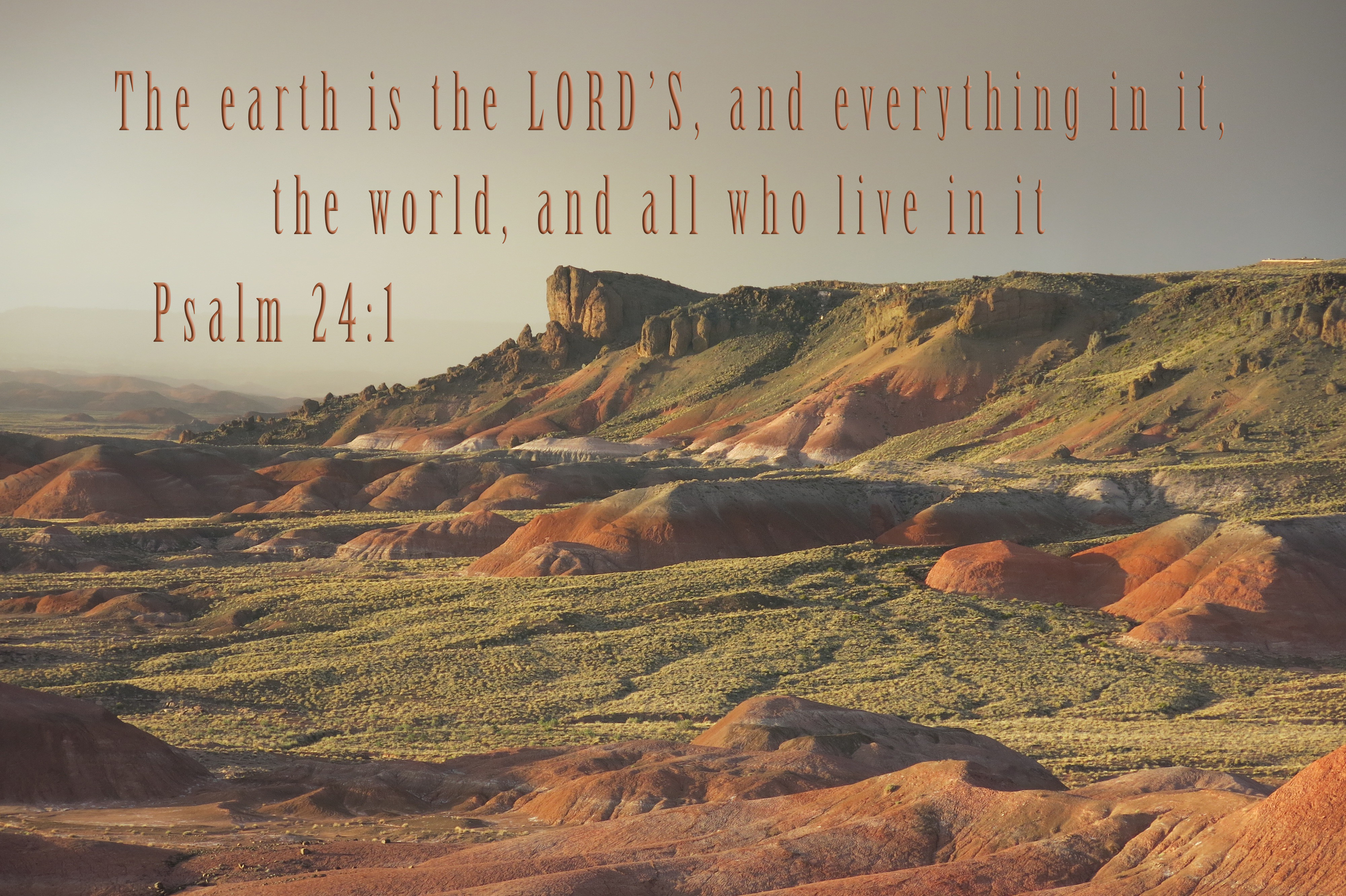
“The earth is the Lord’s, and everything in it, the world, and all who live in it;”

 I love how this verse is a great reminder of how God made the earth and breath-taking landscapes along with all the people in it. In fact, we’re created in the image of God (Genesis 1:27). Each of us are created in the image of God, which shows how we should treat others with kindness and love, because they too are made in the image of God, just like yourself.

Going back to the 24th Psalm, verse one, helps me realize that sometimes, I just need to step back and remind myself that this beautiful earth is God’s and the people that live on it, are made by God, too. Next time you get to experience new parts of the world you’ve never seen before or even the next time you look outside your window or step outside your house – see the nature you pass by every day and remember who made it. Remember who the earth belongs to. Remember that you belong to God, too, and that’s pretty special!

-Moriah Railton

Empathy & Faith

Hello everyone!

Thanks to Graysen Pack for agreeing to write our devotions for this week. Check out the email below to learn a little bit more about the topic.

Our memory verse for this week is Galatians 6:2.

*** For our email followers, follow this link if the above video is inaccessible: https://youtu.be/MZdLKkwCrec.