I love a good chocolate chip cookie! I can’t say that vending machine cookies are my favorite thing, but if I need a sugar fix, a bag of Famous Amos cookies can do the trick. However, today’s devotion and scripture contain no chocolate chip cookies (unless you would like to eat one while you’re reading).
I can’t think of any songs or poems proclaiming Amos’ greatness. He wasn’t a king, a priest, or in any elevated position. Amos 1:1 says that this not-so-famous Amos was “Among the sheepherders from Tekoa.” Even the place he was from isn’t famous to our modern-day ears. (I had to cheat a little bit to find out more about Amos by going to chapter 7). In Amos 7:14, he says, “I am not a prophet, nor am I the son of a prophet; for I am a herdsman and a grower of sycamore figs.” He didn’t speak out so he would gain fame. He spoke out because God called him to.
Once again, God shows us that he can use anyone from any background as a vessel for His word. Amos had powerful things to say, and He was willing to be God’s vessel. Some of his writings might be a little bit difficult to read and understand without knowing about the events of his day so if you need a Cliff Notes version to help you gain clarity, I recommend this video from The Bible Project.
Remember, it doesn’t matter what your age, gender, race, or education is. It doesn’t matter if you’ve been raised in the church or are just starting on your Christian journey. God can use you to further His Kingdom and share his love!
-Lacey Dunn
Reflection:
• What gifts or talents has God given you that you can use for furthering His Kingdom?
• What is one way that someone else has shared God’s word with you? What made it effective, and how can you effectively share God’s word with someone else?
As you might have noticed from previous days, I love to take time to imagine I am in a different place or time. When I visualize an event or outcome, it helps me to understand what is happening better. It deepens my understanding and my connection to whatever and wherever I am because I can see it and almost be a part of it.
My encouragement today is for you to try to visualize Isaiah chapter 6. This is one of my go-to scriptures to connect with God before prayer because it helps me to slow down, focus, and reminds me just who I’m praying to. I want to try to share with you the journey I go on with this passage, and I hope that it helps you to enter His presence in a new way.
In chapter 6, we see that Isaiah is having a vision. He says he sees, “The Lord sitting on a throne, lofty and exalted, with the train of his robe filling the temple.” This is such a strong reminder to me that I’m not just sitting down and having a chat over coffee. I’m talking to God, the creator of the universe. His presence is so vast and mighty that I imagine myself looking up in awe. He is marvelous. He is magnificent.
In my mind, I can smell the sweet but potent smell of incense burning in the temple while my eyes travel to the seemingly unending flow of the fabric of his robes. They glisten with an iridescent sheen. They are as white as newly fallen snow.
I hear the flutter of wings and look even higher up above my creator. I see creatures that are like nothing I’ve ever seen before. They have six wings and are melodically crying out, “Holy, Holy, Holy, is the Lord of hosts, The whole earth is full of His glory.” It’s almost like a chant. They repeat it over and over again, until I hear myself repeating it too. I feel centered. I feel open and at peace. Nothing else matters at this moment except my connection to my God.
I still smell the incense, but it’s now mixed with the smell of smoke. The cool stone foundations under my feet begin to tremble so much so that I fall on my face and kneel. I hear the most beautiful yet powerful voice of God.” Again, I am reminded just who I’m in the presence of. When I lay my cares and worries down at His feet, I know beyond a shadow of a doubt that He is able to take them from me. I feel His power and His love all around me as I kneel in his presence.
In my mind, I hear him speak to Isaiah, telling him to speak the words God wants to share with His people. Although I’m not given the same message to speak as Isaiah, I open my heart to God’s leading. I open my ears to His words. “Here am I. Send Me!” I say just as Isaiah had said. I wait and I listen. I feel a warm breeze wrap around me. My spine begins to tingle, and my eyes fill with tears. I am unworthy to be in the same room as my creator, and yet he desires to hear me and spend time with me. No matter is too big or small for Him to hear. He wants me to be in His presence and He wants to guide me. I am His child. This magnificent God, whose power cannot be contained, created me and has a plan for me. I am in awe, and I am humbled.
-Lacey Dunn
Reflection:
• Even if you are not a person who is able to visualize, what is one new thing you could do to deepen your connection with God today?
• If you enjoyed trying out this visualization, perhaps try out visualizing other stories such as being with God in the Garden of Eden or being on the mountain with Moses as the Ten Commandments were given.
Regardless of your political ideas and loyalties, I believe we can all agree that the world is a mess right now. War and the threat of new wars are a daily reality. Mud-slinging goes back and forth between our politicians while important issues that they should be finding solutions to go unresolved and forgotten until the next election cycle. The soaring cost of buying a home or even purchasing groceries shows no sign of significant improvement. Anxiety and stress levels are high, causing many both inside and outside of the church to feel hopeless.
And yet, we have hope! Although there is quite a bit of reading material from the Bible today, I’m going to focus on just one verse that can bring all of us hope. In the NASB 1995, Isaiah 2:4 says:
“And He will judge between the nations, And will render decisions for many peoples; And they will hammer their swords into plowshares and their spears into pruning hooks. Nation will not lift up sword against nations, And never again will they learn war.”
Imagine living in a time and place where God is our judge. Of course, he is already in our hearts, but the nations of our world don’t worship and obey him. Even the USA, with “In God We Trust” printed on our money, documents, and buildings, does not truly and wholly worship God.
Imagine no more need to create bigger and faster weapons. In verse four, by turning weapons into plowshares and pruning hooks, they are creating tools used for growth instead of destruction. Without war or the threat of war, more creativity and time could be devoted to feeding the hungry and easing each other’s burdens. No one would fear their loved ones becoming a casualty of war or going off to fight only to return as a different person because of their experiences.
I encourage you today, as we await God’s Kingdom, to seek out ways to bring good to the damaged world we live in. Regardless of the hate and dismay, help to cultivate life and renewal for your family, church, and community. Seek peace whenever possible and spread hope far and wide.
-Lacey Dunn
Reflection:
• What are ways that you can spread the hope of God’s peace to others in your family, church, school, work, community, etc…
• Take time to imagine what life will be like in God’s Kingdom. What does it look like, smell like, and feel like?
• Are you feeling hopeless? Who is someone you can talk to who can help restore your hope?
In our house, we’re movie nerds, and one of our go-to movies is “The Lorax,” based on the story by Dr. Seuss. In the movie, the Lorax is an orange furry mythical creature who tries to protect a forest full of adorable animals from a character called the Once-ler. Now, the Once-ler is a young man who is full of dreams. He wants to do good things, find success, and make his family proud. At first, he does just that! He has a successful start to his business, and things are looking great. However, in his arrogance, he goes back on his promise not to destroy the forest and begins chopping down trees, all while singing a very catchy song called “How Bad Can I Be?” The Once-ler is so blinded by his ambition that he can’t see the wrong he is doing.
The Once-ler and King Uzziah have a lot in common. He became king at a young age and sought out God’s wisdom to establish his reign. He fought to give his kingdom success, and he made his people proud. He even gained fame beyond his borders for his strength and valor. However, this fame and strength went to his head and corrupted his heart. He became proud and arrogant and dismissed the law. In 2 Chronicles 26:16, we see him enter the temple of God and burn incense on the altar of incense. It was not his right or place, even as a king, to do this. In verse 18, Azariah and eighty of his fellow priests enter the temple and rebuke him for these actions. And yet, Uzziah did not listen and repent. Instead, he was enraged and defiant, so God struck him with leprosy on his forehead. Only then did King Uzziah rush to leave God’s temple.
King Uzziah, much like other kings we have read about, started with great intentions and ambitions. Yet because of his pride, he lived the rest of his life in a separate house infected with leprosy, while his son Jotham took over running his house. Don’t follow the Once-ler and don’t follow King Uzziah. Seek and listen to wisdom.
-Lacey Dunn
Reflection:
• If you’ve never seen it, check out “The Lorax” and see if you think King Uzziah and the Once-ler led a similar life.
• Imagine you are one of the priests confronting King Uzziah. Close your eyes and picture the temple around you and breathe in the scent of incense. How does it feel to confront the king? Do you have the courage to stay and rebuke the king as Azariah did?
We all probably know the highlights of the story. Jonah was commanded to go to Nineveh, but thought he could hide from God if he fled to Tarshish. After a storm bombards their ship, Jonah confesses what he has done to his shipmates. They aren’t even followers of God and can’t believe what he has done. Jonah tells them to toss him overboard and eventually, they do and he is swallowed by a great fish sent from God. Jonah repents and is vomited out of the fish in Nineveh. He spreads God’s word and the people of Nineveh listen and repent. Jonah gets mad that God showed Nineveh compassion, gets angry about his plant dying, and begs God for death.
Today, I want to focus on Jonah’s time in the sea and in the whale. As a child, I remember being introduced to the story of Jonah. Thanks to Disney’s “Pinocchio” and its depiction of the inside of the whale, I envisioned Jonah in a vast yet watery cavern of a stomach. I thought it sounded a little fun, honestly. In my mind, he had light, could eat seafood, and just needed to hang out for a few days before his live submarine dropped him off at Nineveh. However, Jonah’s experience was nothing like Pinocchio’s.
In his prayer from the belly of the fish, he recounts his dismay as the seaweed wrapped around his head as he sank to the sea floor. He details being on the brink of death and how, in those seemingly last moments, he desperately calls out to God for help.
We can further imagine what it might have been like for Jonah, thanks to a passage from “Moby Dick” by Herman Melville. In Chapter 9 a character named Father Maple reads this hymn for the crew:
“The ribs and terrors in the whale,
Arched over me a dismal gloom,
While all God’s sun-lit waves rolled by,
And lift me deepening down to doom…..
…In black distress I called my God,
When I could scarce believe him mine,
He bowed his ear to my complaints
No more the whale did me confine….
…I give the glory to my God,
His all the mercy and the power.”
I don’t know what Jonah’s life was like before this event, but I have to imagine that this is the lowest and darkest event that he had experienced. And yet, he cried out to God and God answered. Even though Jonah made a calculated decision to run away from God, God still answered when Jonah called out. Jonah could never truly outrun God or be too damaged for God to care for. God didn’t just listen to Jonah’s cries, he saved him, redeemed him, and entrusted him to still go speak to the people of Nineveh.
In our fast-paced, chaotic lives it can be easy for us to make a calculated decision to run from God and try to hide. Inevitably, we will have a time or times in our lives when we hit rock bottom and feel as though we can see the mountains of the deep rising around us, suffocating us. But don’t lose hope! Just as God still loved Jonah no matter how far he ran, God still loves us. God can break the chains that hold us down in our distress. He offers love, freedom, forgiveness, and a purpose.
If you are feeling low or see someone around you who is struggling, it’s time to cry out to God. God loves you and has a plan for you. Let him comfort you and free you from whatever might be holding you back.
-Lacy Dunn
Reflection:
• Is there anything weighing you down that you feel like you can’t escape? If so, take some time to give your burden to God. Also, talk to a Godly friend or mentor who can help you so you aren’t alone.
• What do you think Jonah looked like and smelled like after arriving in Nineveh via whale vomit? Imagine what you might do if you saw Jonah arrive in your town/city like this.
Everyday when I get home, my sweet dog Brynleigh greets me at the door. She usually gives me a few little barks of hello and then follows me around as I settle in. This darling little corgi is so full of love and devotion, but I am not the object of her affection. When she greets me at the door, she has her orange and blue ball either in her mouth or very close by. While I’m settling in, she’s not worried about me being comfortable. She’s impatiently waiting for me to drop everything and play ball with her. She is 100% devoted to her ball and loves it more than anything or anyone on the planet. Sure she loves me or at least tolerates me in her way, but she practically worships her ball.
King Amaziah is not so different from my beloved corgi. When I see the name Amaziah, I correlate it to the word “amazing,” but we find that he wasn’t the amazing king we would hope for. It says that although Amaziah generally did right in the sight of God, he didn’t do so with a full heart. We see him go through the motions and even make some good decisions, but because his heart is not completely rooted in being a faithful follower of God, we see him fall away. We see him become proud and seemingly believe that he is, in fact, an amazing king.
After Amaziah and his army came home from battle, he didn’t give glory to God or seek His wisdom. Instead, he brought home idols that represented the gods of the sons of Seir. He didn’t just bring them home as plunder or decoration though, he actually started worshiping them. God sends a prophet who confronts him and asks in 2 Chronicles 25:15, “Why have you sought the gods of the people who have not delivered their people from your hand?” But, the amazing king just tells the prophet to stop talking. He didn’t want to hear wisdom and he certainly didn’t want to make any changes in his life.
At the pinnacle of his reign, Amaziah decides to pick a fight with King Jehoash of Israel. Jehoash dishes some major shade his way in return. Here is how I would imagine part of Jehoash’s response if it were in modern times. “Look, thanks to your massive ego, I know you think you are amazing and unstoppable but why don’t you just stay home and polish your trophies. I could crush you and all of Judah too, so don’t embarrass yourself.” In truth, I don’t know if King Jehoash’s reply to King Amaziah was meant to be as sarcastic as I’ve implied or if it was meant to be a more sincere rebuke but either way, the amazing king didn’t listen. His army was defeated, his city was plundered, and he was captured. He really should have just stayed home.
Before we start pointing a finger at King Amaziah’s downfalls and inflate our egos, let’s take a minute to see how similar we might be. Are there times that we go through the motions but don’t give our whole selves to God? Have we ever pushed away wisdom and then suffered the consequences? Of course we have. We have all fallen short, just like the amazing king.
Unlike Amaziah, my hope is that when we fall short that we would seek wisdom. When an idol gets between us and our relationship to God, my prayer is that we would be rooted firmly enough in God’s love to cast it aside. Let’s strive to be whole heartedly devoted to God who truly is amazing.
-Lacey Dunn
Reflection Questions:
• If you were King Jehoash, how might you have responded to King Amaziah’s message?
• What is a potential idol that you might have? How did it become an idol and what can you do to remove it?
• What does it look like to give your whole heart to God? Set aside some time to dig in to scripture, meditate, or have a discussion with a Godly friend about what it means to give your whole heart to God.
A few months ago, our worship team was looking for new songs for Easter services. We began practicing a song called “Rattle” by Elevation Worship, but I realized the bridge had a peculiar phrase. Here is how the first part of the bridge goes:
“My God is able to save and deliver and heal
And restore anything that He wants to
Just ask the man who was thrown
On the bones of Elisha
If there’s anything that He can’t do…”
My mind was whirling trying to remember who was thrown onto those bones, why did it happen, and what was the outcome? To my surprise, only two verses are devoted to this miraculous event. 2 Kings 13:20-21 very casually mention that in haste, a dead man was put into Elisha’s grave and as soon as he touched Elisha’s bones he was “revived and stood up on his feet.” To be honest, I would love more information. How did the man die and who was he? Did he live a long time after he was brought back to life? Did he do anything amazing with the extra time he was given? Alas, scripture doesn’t give us more details.
However, it does tell us a bit about the lives of Joash and Jehoiada. Joash was only seven years old when he became king of Judah and had a long reign. During his reign, he commanded that repairs would be made to God’s house. King Joash was ready to roll with this project and even specified they needed to do the work quickly but the priests were like,“Meh, lets do repairs another day” and didn’t get to work like they had been commanded.
Enter Jehoiada. Jehoiada was the chief priest who had even played matchmaker for Joash. Joash asks Jehoiada what the hold up is and commands him to get this project moving. Jehoiada does as King Joash commands and the repairs are finally made. Sadly, Jehoiada passes away and Joash begins listening to ungodly advisors.
King Joash was so misled by these advisors that he even has Jehoiada’s son Zechariah stoned to death. Things went from bad to worse from there. King Joash became sick and was eventually murdered by his own servants. He wasn’t even buried in the tombs of the kings because he was so reviled for his evil acts.
So what does it matter? People lived, did good, did evil and all eventually died. So what? It matters as a reminder for us to examine how we live our lives. Elisha was so connected with God that even after he was dead and buried, his bones radiated God’s power. Jehoiada was respected because he followed God’s laws and he was even buried in the area where other kings were buried. On the other hand, King Joash, although he possessed power and wealth, allowed himself to be led astray from God and died in disgrace.
I hope that we can all be a little bit like each of the men from today’s passage. Let’s be ready to take action for good like King Joash was while he was young. Let’s grow in wisdom and share it like Jehoiada did. Let’s speak the truth with passion, no matter the cost, like Zechariah did. And when we feel spiritually weak or even dead, let’s rise up and become restored with the help of our brothers and sisters in Christ, like the man thrown into Elisha’s tomb did.
-Lacey Dunn
Reflection Questions:
• You might have noticed that I didn’t bring up Jehoahaz and Jehoash. What happened as a result of their disobedience to God?
• Do you have a Godly mentor like Jehoiada in your life? If so, who are they and how do they inspire you? If not, who is a Godly person you could take inspiration from?
• Imagine that you are the guy who died and suddenly came back to life after touching Elisha’s bones. What thoughts are going through your mind? Who do you go visit first? What change do you make in your life with this new chance?
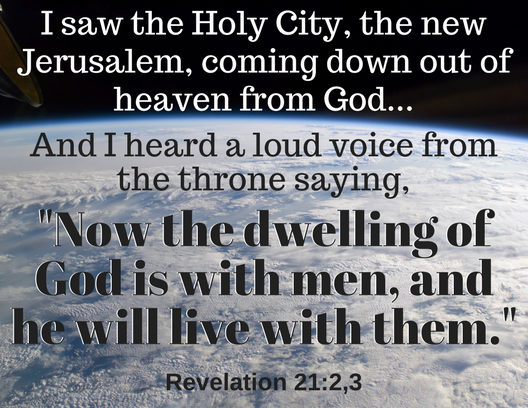
Ecclesiastes 1:9 says, “What has been will be again, what has been done will be done again, there is nothing new under the sun.” Times and technology may advance but primal human tendencies remain. The flaws that you perceive in yourself are the same flaws that King David, Peter, Elijah and so many others had to deal with. Flaws are a fact of life because we live in a flawed world. One of the reasons we so eagerly await the coming Kingdom of God is because we will finally live in a flawless Kingdom with a flawless ruler! The flaws that we combat in ourselves and others should never become our focus. Instead focus on God’s amazing perfection and promise. Today I’ll keep it short and sweet but take some extra time to focus on the reading in Revelation. Take time to really imagine it as best you can and remember that flaws are only temporary because in God’s Kingdom we will be made new and flawless.
If you grew up in church your Sunday school classes were probably full of the stories of David’s triumphs. He was the shepherd boy who killed lions, bears, Goliath and eventually became King. His triumphs were nothing short of amazing. David was even called a “Man after God’s own heart” in Acts 13:22. Yet just like the other characters we have discussed, David was flawed.
In arguably the most famous story of his flaws David ultimately caused catastrophe to befall his entire Kingdom. First off, in 2 Samuel 11:1 it says that David stayed home in his cozy palace instead of going off to war as he was supposed to. Next, since he wasn’t where he was supposed to be he saw a beautiful woman named Bathsheba bathing on her roof. Even though she was married to a man who was serving in David’s army David decided to send messengers to bring her to him. We find out in verse 5 that she became pregnant.
In an attempt to cover up what he had done David asks for Bathsheba’s husband Uriah to come home from battle but Uriah is honorable and refuses to sleep in the comfort of his home knowing the other men in his army are not able to do the same. Frustrated David sends a note with Uriah as he goes back to the battle front. The note carries Uriah’s death sentence as it commands the commander of the army to send Uriah to the front line of the fiercest battle. With Uriah out of the way David takes Bathsheba to be his wife and she gave birth to a son who later died because of David’s sin. Not only that but David was later driven out of his own Kingdom because of the sin he committed. Everyone suffered because of the flaw that David allowed himself to be entitled to do as he pleased.
David suffered for his actions and repented for it. Despite his flaws through grace God used David to establish the throne of Israel even making Jesus a decedent of David. No matter what you have done God sees your potential and can use you in amazing ways.
I think we all know someone, it may even be the person in the mirror, who seems to have the Frank Sinatra song, “I Did It My Way” playing as their anthem. I believe one such person in the Bible is Peter. Peter seemed to try to be the exception to every rule and push boundaries that the other apostles didn’t dream of.
Remember when Peter walked out on the water to meet Jesus? It doesn’t mention anyone else volunteering but Peter in faith and boldness offered to meet Jesus on the water. This is just one of many stories of Peter stepping up and speaking out. While many times his boldness was a good thing there are times the contrary was true.
In Matt 16 Jesus explained that he would suffer and be killed but Peter rebuked him! Can you imagine taking Jesus to the side and telling him that he was wrong? Jesus set Peter straight on the matter but Peter still didn’t seem to understand.
In Luke 22:31-34 Jesus tells them again that he must suffer and that they cannot go where he is going. Peter boldly proclaims that he would follow Jesus even to death. Later in the chapter (vs54-62) Peter boldly denied Christ three times just as Christ told him he would. I can’t imagine the sorrow in Peter’s heart as he looked into his Savior’s eyes knowing that he had denied that he even knew him.
Peter’s boldness when not thought through was a flaw but Jesus knew there was potential in Peter and even prayed that his faith would be strengthened so he could also help strengthen his brothers (Matt. 16:32). After Jesus’ resurrection Peter boldly spoke about the death and resurrection of Christ and proclaimed the gospel message.
God answered Christ’s prayer and helped shape Peter into an evangelist. If Peter, Jesus and God chose not to focus on Peter’s flaws that tells us that we should also choose grace and not focus on our own flaws or the flaws of others.










 Seek Grow Love