I love Jesus. I don’t just mean that in the way I have dedicated my life to him etc etc, but also in the same way you might discuss your favorite characters on TV. I love the way Jesus acts. I love his role in God’s great plan. He’s compassionate, level-headed, and kind of snarky. He’s real, he tells it like it is. I like that in my story characters, in my friends, and in my Savior.
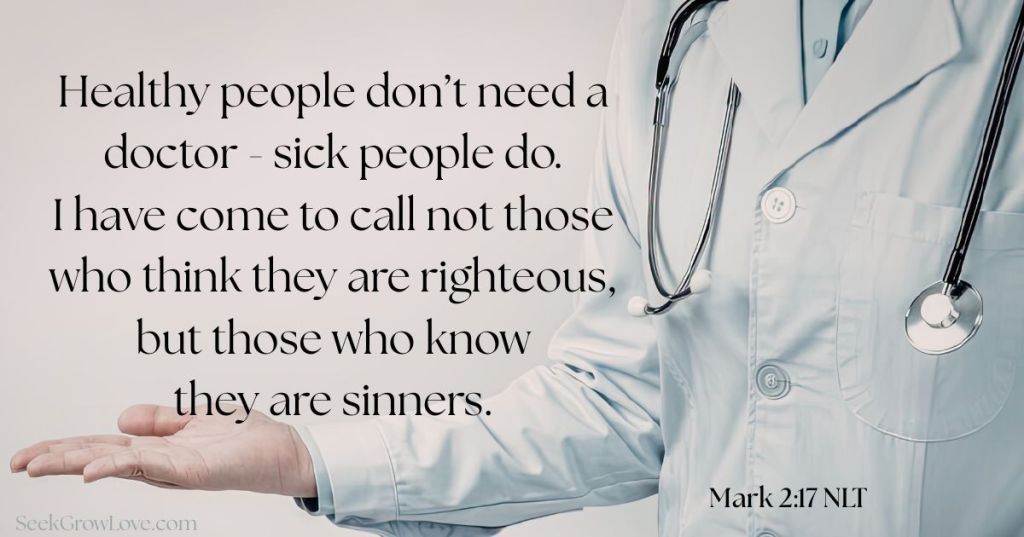
We get a real juxtaposition in our scripture, today. In Numbers 13 and 14 we see an angry God, fed up with his people’s unfaithfulness, ready to strike. Then we get this moment from Mark 2, where Jesus is eating with sinners and says “Healthy people don’t need a doctor – sick people do. I have come to call not those who think they are righteous, but those who know they are sinners.” (verse 17 NLT). It is this same God who rebuked the Israelites, punishing an unfaithful generation never to enter the promised land, that sent this Jesus in Mark 2.
I have always had a fascination with the continuity of the Bible. I like for things to make sense. I have humbly come to the realization there are simply some things about God we will never be able to comprehend or understand. Yet, I think Mark 2:18-28 helps clarify this juxtaposition between Jesus, the Law and the angry God we see in Numbers. They aren’t meant to contradict one another. Jesus says so himself in Matthew 5:17: “I did not come to abolish the law of Moses or the writings of prophets. No, I came to accomplish their purpose.” (NLT). Traditionally, the purpose of Mosaic law was to set apart God’s people from other nations, protection (we see this in many of the food and clean/unclean laws), and ultimately to show that sin needs a solution. Therefore, if the purpose of the law is to show there is a sin problem and Jesus is the accomplishment of said purpose, he must be the sin solution. This idea is supported in Mark 2 as Jesus essentially tells the Pharisees certain aspects of the law are no longer relevant as he has come to dwell amongst the people (v 18-20). In fact, now that he has come, there are new laws that should be put into practice. We can read a lot of these teachings from Christ’s sermon on the mount found in Matthew 5 – 7.
In Mark 2:22, Jesus says, “And no one puts new wine into old wineskins. For the wine would burst the wineskins, and the wine and skins would both be lost. New wine calls for new wineskins.” (NLT). Basically, Jesus is saying the old ways of doing things aren’t going to work anymore. It doesn’t mean the old ways were bad, just as the old wineskins themselves once had value. However, they are no longer needed. The Mosaic law served its purpose during its time. Jesus is here now. His teachings call for new wineskins.
He drives this point home in the final verses of this chapter. When criticized about how his disciples were spending the Sabbath day he exclaims, “The Sabbath was made to meet the needs of people, and not people meet the requirements of the Sabbath. So the Son of Man is Lord, even over the Sabbath!” (v. 27 & 28). I believe this is an example of a synecdoche, a figure of speech where the part of something is used to refer to the whole thing. In this case, the Sabbath is representative of the law. Substitute the word Sabbath with law and this becomes quite the powerful statement.
In Jesus we see how God can be “slow to anger, and filled with unfailing love, forgiving every kind of sin and rebellion. But does not excuse the guilty” (Numbers 14:18). Jesus is the answer. He is the fulfillment of Old Testament prophecies and law. It is beautiful and poetic. Best of all, it is real.
Reflection Questions
What do you love about Jesus? What do you love about God?
How would you describe the role Jesus plays in God’s great plan?
Are you more often the one who thinks they are righteous or the one who knows they are a sinner?
Do you believe Jesus is the answer? If so, how can you share the Jesus answer with others?
Prayer
Dear God, we praise You for being a God of perfect character and we thank You for Your Son Jesus. You created him with so much for us to love about him. Help us see You and Your Son clearly and Your plan of salvation that You have been working on through the ages. We know so much has been fulfilled already, and more is yet to come. Help us love You and follow Jesus well so we are ready to be his bride.
When I began reading Paul’s letter to the Galatians, I noticed that this bold man had doubts and fear that he wasn’t preaching correctly at times after his initial conversion. It took him 14 years (after an initial 3 + years to talk to Peter for 15 days) to talk to those of repute about the Gospel. I can relate.
We are called to preach the Gospel, but we don’t want to teach something that’s inaccurate if it leads others down the wrong path because lives are at stake. But that’s exactly what was happening with the Galatians.
The once fearful Paul boldly asks the Galatians who bewitched them, attempting to enslave them to a different gospel, which was a distorted gospel of Christ. The distortion was in teaching others to follow certain laws from the Law of Moses (commandments they must follow to be identified as righteous), instead of having the freedom in Christ to follow Jesus through the urging of the Holy Spirit to do God’s will. Paul goes so far as to say that the ones doing this should be accursed!
*Note, I believe the issue is not about salvation. You were saved (rescued) from sin and death and placed on the path of righteousness for the purpose of serving God through Jesus when you first believed. And you can’t “lose” your salvation. Said another way, no one can stop what was already done for you when Jesus rescued you (when you believed). But you can decide if you’ll remain on that path of righteousness (doing what Jesus says is right to do under the New Covenant terms) or not before you reach the Kingdom of God, when you’ll be saved from this present evil age.
Someone(s) was trying to lead the Galatians to look back to what was already fulfilled in Christ by teaching the Galatians to follow the Law of Moses, particularly to follow the law to be circumcised for the purpose of being made righteous, or as a member of the Jewish community. Though some may have been teaching this practice to save the Gentiles from Roman persecution that Jews were exempt from, Paul teaches them that it’s better to be persecuted for the sake of Christ than to be enslaved to the Law of Moses or to look back at our former life before Christ. We should all do well to remember Lot’s wife.
Aside from the issue dealing with circumcision, Paul recounts a similar issue when Peter was hypocritical, separating himself from eating with Gentile Christians in the presence of other prominent Jews (called “from the circumcision”). I believe this all happened after the record we read in Acts when Peter boldly recounted his experience with Cornelius, proclaiming that he was not to call any person unholy or unclean, and that God is not one to show partiality (Acts 10). This was really bad, as the rest of the Jews joined him in his hypocrisy, which led others astray.
Paul goes on to help clarify why the distorted version of the gospel was so devastating to the true gospel.
Jews by birth who now identify in Christ understand that they are not justified by the works of the law, but by faith (trusting) in Jesus the Christ (i.e., they do things that Christ says to do because they put their trust in him to tell them how to do what is good, not in Moses/the Law of Moses). But if the Jews sin under Christ, they are just as guilty as the “sinning Gentiles,” as such they defined them when under the Law of Moses (this statement makes me think that the main motive for teaching the Gentiles to become like Jews was pride).
When you entered the New Covenant with God through Jesus, you died to your old man/old ways of living (sinning). If you rebuild what you destroyed (the sinning person), you are quite the wrongdoer indeed! For Jews wanting to rebuild who they identify in via following laws from the Law of Moses, they’re sinning! They’re nullifying the work of Jesus, and even worse, teaching new Gentile Christians to do the same.
Through the Law of Moses, Paul died to the Law, so that he could live by letting Christ lead him via the Holy Spirit instead of the old man he was, who followed Moses.
The Law of Moses was beautiful, just read about what David says about it. But it should not be forced on anyone as necessary to be righteous or a child of God. If you are a Jewish Christian or a Gentile Christian who would like to engage in behaviors commanded from the Law of Moses (those that weren’t meant to separate Jew from Gentile regarding your identity in Christ) because you think if applied, they can help you live well in this age, you can, because they will, if you apply them as you would under the law of liberty/the New Covenant, like Jesus taught. But part of how to do that would be to first ask God for wisdom about them so that you’ll be led by the Spirit, and not your own will in doing them (especially so that in so doing, you won’t lead others astray with your behavior).
For example, under the New Covenant, Jesus applies a new way of thinking to many of the laws from the Law of Moses using the new commandment of love (as he loved) as motivation for all that a Christ follower should do. So, instead of abiding by a law that says don’t murder from the Old Covenant, Jesus teaches his followers not to have contempt in their hearts for their brother in the first place. If they can do that, they won’t even come close to murdering their brother.
But how does one really do that? Did Jesus just make a new law for us to follow that’s even harder to do than refraining from murder? No, he gave us wisdom about how not to murder, and that’s by not allowing contempt to be in your heart in the first place. You read about how to keep contempt out from the word, such as by acts of love towards your brother before contempt can grow, by prayer, by turning the other cheek, by gently correcting your brother, etc. Seek wisdom from God about how to keep contempt out by reading the Bible and asking him. Then don’t be surprised when you get an urging from the Holy Spirit to do what God wants you to do to keep contempt out. He is a good and faithful God who will give you the wisdom you desire when you ask.
Through Jesus, God always gets at the heart of the issues that led to the Law of Moses, to shape people into those who do good because of love for God and others. But doing good for love’s sake even under the New Covenant doesn’t save you. Christ’s works saved you. Doing good once saved keeps you on the path of righteousness.
So, we must be careful not to enslave someone with our preaching of a law from the Law of Moses that we must keep to be identified as righteous since we are under the New Covenant. We are righteous when we do what is right. What is right is what Jesus says is right to do (1 John 3:7), as opposed to what Moses said is right to do for his time, or what the other gods who the Gentiles formally served said was right to do, or what our own will desires for us to do. If you want to know what Jesus wants you to do, read his words and ask via the Holy Spirit.
A good question to ask someone who tries to enslave others to keep the Law of Moses for the purpose of identification as righteous is to ask them what Paul asks the Galatians, “Did you receive the Spirit by works of the Law, or by hearing with faith?” If the answer is the latter, don’t force a yoke on someone that Jesus carried for us.
Or ask them this, “Does he who provides you with the Spirit and works miracles among you do it by works of the Law or by hearing with faith?” The latter of course is the answer. The righteous one will live by faith, like Abraham did. Abraham did what God told him to do without a law to tell him.
The point of this letter is to overemphasize to the Galatians that identification as righteous comes by way of faith (trust) in Jesus, not by faith in Moses (via works from the Law of Moses).
*Note, under the Law of Moses, before Jesus came and inaugurated the New Covenant, the Law of Moses did keep an Israelite on the path of righteousness, because that was God’s will at the time. But it could never save. Belief in Jesus’s work on the cross saves.
We mustn’t confuse faith in Jesus with hearing only either. We know what Abraham did to receive his title as faithful, with promises to his faithful seed. He did all that God commanded him (Genesis 26:5). Jesus is that promised seed, who did all that God commanded him. God made him both Lord and Christ. If we identify as “in Christ,” because of the works he did, it follows that we who have made Jesus our Lord by definition, will do what he says. Those are the terms we entered into under the New Covenant.
Why the Law of Moses then if what God promised to Abraham was what would last forever, as opposed to what God gave to Moses? The Law of Moses was added on account of the violations of God’s commands by the Israelites, until the seed would come to whom the promise was made.
I take this to mean that the Israelites weren’t living by faith (i.e., they didn’t trust God to be faithful to them, so they weren’t faithful to do what he said). They were sinning. They needed help to get on the path of righteousness. They needed something to guide them so that they’d live in such a way that it would be well with them and they’d stop sinning. They needed God’s wisdom about how to represent him well as his children, as lights to the world, rather than allowing them to continue to rely on their own wisdom about how to live (which never ended well). Even so, they still failed to be who God wanted them to be by doing their own will, and the Law of Moses came with a heavy yoke.
But since the promised seed has come, they are no longer in need of a guide (or a guardian to keep them on track) that separates them from the rest of the world who have decided to do God’s will. Instead, both Jew and Gentile under the New Covenant receive a guide inside them, guided by Jesus via the Holy Spirit. And it’s a much easier yoke to bear.
We have something in us that urges us to do the will of God. It urges us to do God’s will when we seek wisdom about it. We seek God’s wisdom about what to do because we’ve read his book and witnessed that what God says is good for us is good. We’ve witnessed that when people chose to follow the urging of their flesh to do their own will, their fall was great.
We’ve witnessed that God’s wisdom is found in the man Jesus, not Moses, because Jesus always did our father’s will, because of his great love for everyone (even his enemies). We’ve learned that everyone who desires to be like Jesus, a person who desires God to be judge over our lives so that no harm will come to anyone, will be saved. We’ve learned that God made that man Jesus our Lord who will do the judging in the end. We learned that no one can enter who desires to do their own will because it will affect us all. See this current age as example.
We don’t want to preach something that’s inaccurate, and we don’t want to fear preaching because we may lead others astray. Let’s start by asking God for his wisdom about what we should do, look at Jesus’s words, and do the things that the word says to do to be filled with the spirit so that we can walk by it/let it lead us, just like our Lord Jesus, because we desire life for all. But don’t enslave someone with laws they must do to be righteous. Show them how to love through your good works. To do that, seek God’s wisdom (it’s found in Jesus) and follow the urging of the Holy Spirit to do his will.
Reflection Questions
1. Do you think those preaching a distorted gospel should be accursed?
2. What is right is what Jesus says is right. What is wrong?
3. How did Abraham know what was right to do without a law to tell him?
Being a Christian isn’t about being able to apply clear rules to every situation. But sometimes believers wish for more rules to go by, and sometimes they even make the mistake of trying to apply their own rules to others.
The intense dispute about circumcision reported in Acts 15:1-2 sounds like it could have taken place in the Gospels, between Jesus and some of his opponents (for example about clean and unclean food). But this argument didn’t end with a parable and an attack on false teaching. Rather the church in Antioch sent representatives to Jerusalem to discuss the issue with people who would be influential on the group from Judea that began the conflict, and so able to convince them to end it.
The idea that circumcision is necessary for Christians doesn’t carry much weight with us. But circumcision was the symbol of God’s covenant with Abram, setting him apart (Genesis 17:10‑14). To join the Jewish people men underwent circumcision. There were also examples of circumcision being put off for a time, as when the Hebrew nation went through the wilderness (Joshua 5:2‑9). So an ex‑Pharisee might have argued that a believer’s expression of faith in Jesus didn’t mean all the requirements for salvation were met, until circumcision was complete (they could even point out that Peter called for Cornelius to be baptized after he showed signs of the Spirit, he didn’t say that baptism ought to be skipped; Acts 10:47).
During the meeting at Jerusalem the discussion was about the fact that circumcision committed people to obey the law of Moses. Paul and Barnabas had already been preaching that Jesus “freed from all things which you could not be freed from through the law of Moses” (Acts 13:39). And here was being presented the Law as an add-on which believers would be unable to do, and only be troubled by attempting to do (15:5, 10, 19).
James, the half-brother of Jesus, suggested an alternative which still had four issues to avoid: things contaminated by idols, fornication, what is strangled and blood. Why these? It has been suggested that these were thought to be basic issues that would allow for Jewish believers and Gentile believers to interact and eat together. The first involved the source of food, as a lot of meat sold in the markets was provided from temples, being the extra cuts from their sacrifices. The source would not be obvious once a meal was being served but would have made a dish unacceptable for some while being fine for others. The last two items are basically the same issue – strangling an animal meant leaving its blood in it when butchering it. Again this would not be visible but would be objectionable to some diners. The remaining issue of fornication involved willingness to be involved with a variety of sexual activities, some linked to religious purposes, that were commonly accepted outside Jewish society. So James was saying in this case that the new Christians probably needed a special reminder to separate themselves from these things because of what they would have been used to.
When these four issues were put into a letter it was framed that “it seemed good to the Holy Spirit and to us to lay upon you no greater burden than these . . . . if you keep yourselves free from such things, you will do well.” (v. 28-29). The standards were not being stated in the strongest of terms. And those who started the problem are described as not having received instruction on the issue, but the point is also made that the group in Jerusalem has only now become “of one mind” about it themselves. No big accusations, no rejections. These people are still “some of our number”, and presumably they were spoken with by Judas and Silas (if they were still in the area) and guided because they didn’t understand yet. It had taken a vision to prepare Peter for his meeting with the uncircumcised Cornelius, and it took the filling of the Spirit to show that Cornelius was ready for baptism without circumcision (Acts 10:47). And we aren’t that clear how widely Peter had been going around reporting on his experience since then trying to spread awareness of his new insight so that others would be up-to-date on the standards regarding Gentiles. Change can be slow.
The issue of food sacrificed to idols comes up again in Paul’s writings, more than once. 1 Corinthians 8, for example, says that a person’s conscience should determine how they behave on this issue. This does not mean it is unimportant. Revelation 2:20, in one of the seven letters to the seven churches, reports the condemnation of a false prophet for leading astray some of Jesus’ disciples. One of the offenses the prophet committed was causing them to eat food sacrificed to idols (presumably in violation of their consciences).
The chapter has another sad note, because some time after having returned to Antioch Paul and Barnabas found they could no longer work together due to disagreeing over whether to trust John Mark anymore. He had left them once and Paul didn’t want to let him work with them again (Acts 13:13). Maybe Paul considered that Mark had “put his hand to the plow and looked back,” and was not fit for the kingdom (Luke 9:62). The thing is, I’m not sure how many people start off “fit for the kingdom.” Eventually Paul and Mark worked together again, and Paul valued him greatly (2 Timothy 4:11).
Lord, please let your peace rule over our hearts even in our disagreements. Please help us not to quarrel with each other, whatever the provocation. Let us show that we care for each other, and be willing to give up our own interests for each other rather than fight. Let us care even if we are angered to commit to become calm and truly give our attention each to the other, and to care for and honor each other. Let us not lie to one another, and let us believe each other. Let people truly recognize that we belong to you because of how we love. In the name of your son Jesus I ask this, Amen.
-Daniel Smead
Questions:
We have simple goals as Christians, like to love and to bring peace. (I didn’t say “easy goals.”) How often do you find yourself converting your goals into following rules? How can you fight against that impulse?
Do you think that the discussions in Acts 15 ended the disputes about circumcision in the church?
The conflict between Paul and Barnabas divided their efforts and had them cover different areas. Do you think that their conflict was beneficial? Or do you think if they had gotten along better God would also have done equally great things through them?
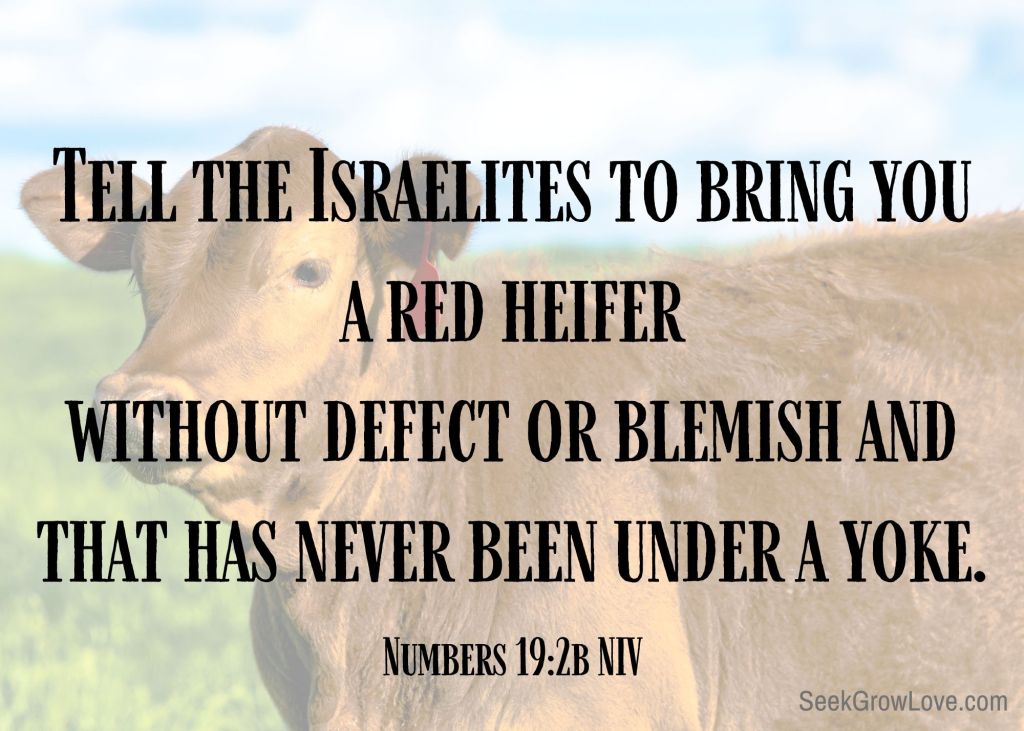
Numbers 18-19 continue laying out God’s specifics for his tabernacle with things like priestly duties, purification procedures, and one topic covered in detail in Chapter 19 is the sacrifice of the red heifer. This sacrifice is unique from others, and worth taking the time to look at a bit. The sacrifice of the red heifer was different than other animal sacrifices laid out in the law of Moses.
For one, this was a female animal instead of male. Also, this one was to be slaughtered outside the camp, burned in all of its flesh and blood (and dung!) with a few specific additions to the fire including cedar, hyssop, and scarlet wool. (Interestingly, I realized that I now have some hyssop popping up that I planted last year, and I added cedar shavings to the garden this past week. But, no scarlet wool and no red heifers around here!). It seems this sacrifice was extremely specific and unique, and definitely similar to some things we see in Jesus’s sacrifice for us. If you want to read more about the symbolism and foreshadowing from the red heifer to Jesus, it is certainly out there. And, without looking too hard, we can definitely see connections including Jesus being killed in all of his flesh/blood outside of the temple, being perfectly flawless, being offered hyssop on the cross, being a sacrifice for our sins the way the red heifer was for the Israelites, etc., etc.
Evidencing that Old Testament stories are still relevant for us today, according to the Temple Institute, five blemish-free red heifers from Texas arrived in Israel in September 2022. Some view this acquisition as a step forward to the functioning of the new temple and related to Bible prophecy. No matter what, it is interesting to see how this reading from Numbers is still related to current events, and humbling to think what Jesus was willing to sacrifice for all of us.
“My little children, I am writing these things to you so that you may not sin. And if anyone sins, we have an Advocate with the Father, Jesus Christ the righteous; and he himself is the propitiation for our sins; and not for ours only, but also for those of the whole world.” (I John 2:1-2, NASB)
-Jennifer Hall
Reflection Questions
How was Jesus’ sacrifice different from the red heifer sacrifice – and different from all the other Old Testament sacrifices? What do all these sacrifices have in common?
What can we learn about God through our Bible reading today?
In Acts 15 we see a fundamental theological question that the early church had to answer, and how they went about handling the situation. Jesus’ ministry, death, and resurrection represented a radical change in how mankind interacted with God. We no longer need to sacrifice for our sins because Jesus is the perfect sacrifice, and has fulfilled the law and the prophets. The problem is that the Law of Moses was the very foundation of basically all of Jewish culture and when Jesus ascended it was not completely clear to the apostles as to what to do with the Law of Moses. Because Christianity started in Jerusalem and then spread out from there to the rest of the world the early Christian leaders all came from a Jewish background and some of them tried to force their culture and the Law of Moses onto the new Gentile believers. To them this would seem natural because in their mind this is how you interact with God and what he expects from you, and has been for over a thousand years. They had not caught up completely with all of the changes that Jesus brought. The way I picture this is like a person who messed up their leg and needs to walk on crutches for a while, and then after the doctor performs a surgery that completely fixes their leg they decide to continue to use the crutches after that, and then also try to convince their friends that they should start to use crutches too even though that isn’t necessary at all and will only inhibit your friends. This is basically the conclusion that the early church leaders come to and they tell the gentiles that they do not need to follow the Law of Moses because it would hinder the gentiles from coming to God. They also tell the gentile believers that they need to make sure that they are not participating in the aspects of their old gentile beliefs that might cause issues for them. Just as the early church leaders saw that the Law of Moses would be a stumbling block to other people, they saw that aspects of the idol worship in many gentile areas would be a stumbling block as well.
I think it is very important that we recognize that there are many aspects of our modern secular American culture that are going to be stumbling blocks for our spiritual walk, and that we need to leave many of those things behind if we are going to devote our lives to Christ. This is not easy and was a very divisive issue in the early church, and has the potential to be divisive in our churches today. Some things as seemingly small as the use of drums and guitar in a church service can be very contentious in some churches. This passage also shows us how Paul dealt with the issue so as to not cause division. He was one of the first people preaching to the gentiles and had not had a lot of contact with the early church leaders in Jerusalem. Instead of trying to handle this issue by himself and decree what he knew the Holy Spirit was telling him he went to Jerusalem and discussed with the church leaders and showed them that God was working in the gentiles and that was proof that they did not need to follow the Law. Once they agreed this helped to legitimize Paul’s message and began the process of unifying the Church on this issue.



 Seek Grow Love