Turn Away and Live

Sunday

Acts 3-19

No matter who you are, everyone has a cause or topic that they are passionate about, whether it be about social concerns, politics, or sports teams. I too am zealous for a particular topic: the gospel. For many years I thought I knew about the gospel, until I attended Atlanta Bible College, where for the first time in my life I read for myself how the New Testament described the message that is central to the Christian faith. However, I soon realized that many professing Christians were confused or ignorant about the gospel that our New Testament teaches. This is the inspiration behind this week’s devotions.

The components to the gospel message are: repentance, the kingdom of God, the cross, the resurrection, and obedience. Nobody, including yourself, has to possess a full scholarly understanding of each topic, but some knowledge of each is essential. The first component we’ll look at today is repentance.

Repentance is a word not used commonly today; however, it is widespread in the Bible. To repent is turn away from an aspect of your life that is not godly and pursue God’s way. Repentance is not a feeling and it’s not something you say. Repentance is action. The very first word of Jesus’ public ministry was “repent”:


“From that time Jesus began to preach and say “Repent, for the kingdom of heaven is at hand” – Matt. 4.17


“The time is fulfilled, and the kingdom of God is at hand; repent and believe in the gospel” – Mk. 1.15


Jesus speaks of repentance elsewhere in the gospels:


“I have not come to call the righteous, but sinners to repentance” – Lk. 5.32


“I tell you in the same way, there will be more joy in heaven over one sinner who repents than ninety-nine righteous persons who need no repentance” – Lk. 15.7


“I tell you no, but unless you repent you will all likewise perish” – Lk. 13.3


The desire of Jesus, is for those who hear his words to repent of their sin and turn to God. Repentance is intimately tied with the kingdom of God, which we’ll look at tomorrow. The reason a person should repent is because the kingdom is coming. An event when all evil will end and evil doers will be done away with (Rev. 21.8).


Forgiveness and repentance are sometimes confused as being the same thing, however they’re not. Take for example two sermons Peter preaches in the book of Acts:


“Peter said to them, ‘Repent, and each of you be baptized in the name of Jesus Christ for the forgiveness of your sins; and you will receive the gift of the holy spirit” – Acts 2.38


“Therefore, repent and return, so that your sins may be wiped away, in order that times of refreshing may come from the presence of the Lord…” – Acts 3.19


In other words, forgiveness is predicated on repentance. Or to say another way, without repentance there can be no forgiveness. Forgiveness is something we can say and ask God for, while repentance is our action in response to God’s forgiveness in Christ. We can ask for forgiveness many times, but do our actions reflect the plea we make to God?

What is in your life that you need to repent from? Porn, lying, seeking validation from other people, not honoring authority, selfishness, gossip, manipulation? Pray and ask God to bring things to mind that you need turn from. God strengthens you through his spirit to turn from these things and offers forgiveness and mercy when you fail. Repentance must be a part of the gospel message that you present to someone.

-Jacob Rohrer
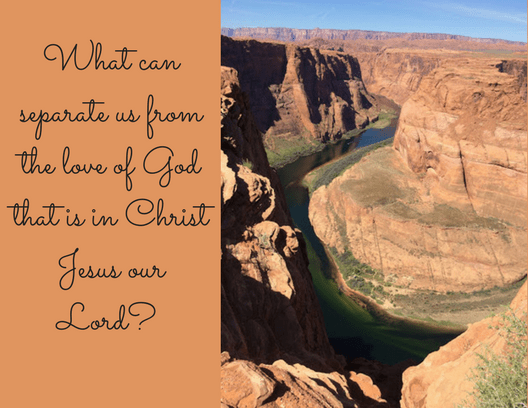
Separation

What can separate us


Romans 8:35-39         Who can separate us from the love of Christ? Can affliction or distress or persecution or famine or nakedness or danger or sword? As it is written: Because of you we are being put to death all day long; we are counted as sheep to be slaughtered. No, in all these things we are more than conquerors through him who loved us. For I am persuaded that neither death nor life, nor angels nor rulers, nor things present nor things to come, nor powers, nor height nor depth, nor any other created thing will be able to separate us from the love of God that is in Christ Jesus our Lord.

What can separate me from the love of God in Christ? Romans 8 says, “nothing,” but I have my doubts.

I bet I prayed “The Sinner’s Prayer” twenty times growing up. I was always so afraid I’d missed something, or paranoid I’d somehow nullified my salvation since the last time I said the magic words. After walking with Jesus, I now know: there is nothing magical about it.

My words don’t save me. Jesus saves me. My response is to repent of my sins and believe He saves me.

We focus on the exact words we said, the exact time and place we knelt. We make our coming to Christ about our circumstances rather than our Savior. It was never about what I was doing. It was always about what He did for me.

The depth of our need for Jesus is so vast that even our act of coming to Him is flawed, but He is never surprised by this. He knows us fully and loves us still. He came to make everything right, including our half-heartedness and our ill intentions.

Come as you are and bare your soul. Cry out like David cried out in Psalm 51, confessing honestly and openly before the God who made you and promises to make you new, who loves you and stands ready to save. Then come back day after day. Walk daily in the grace you first received, knowing there is nothing you can do or not do to reverse the rescue the cross secured.

-Jennie Montgomery

Gumdrops and Kittens…or Not?

Joel

joel.png

Wednesday, April 12

Let’s be honest, when God sent prophets to His people, they didn’t come with messages of gumdrops and kittens.  Joel is no different.

  • For the day of the Lord is near; it will come like destruction from the Almighty.
  • Let all who live in the land tremble, for the day of the Lord is coming. It is close at hand—
  • The day of the Lord is great; it is dreadful. Who can endure it?

God’s judgement is no joke.  But (thankfully) He is also a kind and compassionate Father.

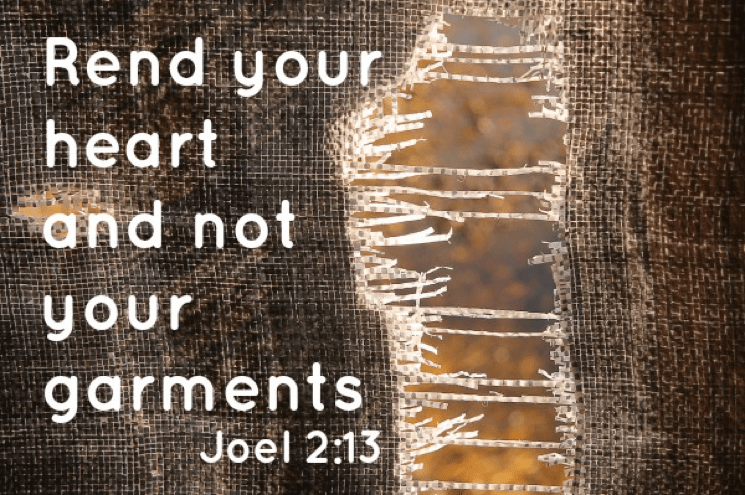
Joel 2:13 says,

Rend your heart
    and not your garments.
Return to the Lord your God,
    for he is gracious and compassionate

Living in a different culture, we miss some of the meaning here.  Have you ever been so angry that you threw something (or wanted to)?  It’s kind of the same idea.  Grief so overwhelming that you pull at your hair, your clothes…you are beside yourself.  In Jewish culture, tearing one’s garments was a common outward sign of tremendous grief.

But here, Joel is calling for more than an outward sign.  He’s telling the people that God wants an inward change more than….

….more than going forward on ‘decision night’

….more than posting a touching quote on Facebook

….more than acting holy around your parents and church friends

Our Father is merciful and kind, but he cannot tolerate sin.  Like most prophets, Joel gives two options:  Repent or Reap the Consequences.

-Susan Landry


Responding to the Glory of God


Ezekiel 43-44

IMG_0009

Sunday, April 2

How should we respond to God’s glory?

To be able to answer this question, we should know what God’s glory is. A simple definition is His character, holiness, and excellence revealed. It is the essence of God on display.

In today’s passage, we read about Ezekiel experiencing God’s glory in a vision. He hears the voice of the LORD (Yahweh), which sounds like “the roar of rushing waters,” sees the land “radiant with his glory,” and witnesses the glory of Yahweh filling the temple (Ezek. 43:1-6).

You and I will likely never get the opportunity to receive a vision from the Almighty in which we can see His glory in such an amazing fashion. But God has revealed aspects of His character, holiness, and excellence to us in several ways. In these we can experience the glory of God and respond to it.

God has revealed Himself through His creation. This idea is called Natural Revelation. Romans 1:20 says “For since the creation of the world God’s invisible qualities—his eternal power and divine nature—have been clearly seen, being understood from what has been made, so that people are without excuse.” When one looks at nature it is difficult, at least for me, to believe that everything seen came about by chance and was not designed by an intelligent being. While Natural Revelation doesn’t tell us much about who God is, it does show a great deal about what He is capable of and how great He is.

God has also revealed Himself through the scriptures. What Natural Revelation leaves out about who God is, the Bible fills in much more. The writers of each book in the Bible were inspired by God through His holy spirit. They rely stories of the wonderful things He has done and inform readers of what He can do, and some even reveal what He will do in the future. The Bible offers a large portrait of the greatness and goodness of God, but doesn’t give a complete picture. Not until we dwell with Him in His kingdom will we experience the full weight of His glory.

God has revealed Himself through His son. The apple doesn’t fall far from the tree is an expression often used to illustrate how a son is very much like his father, this could be said of Jesus. But more accurately it would be said that the apple doesn’t fall from the tree at all, it is essentially still part of the tree. Jesus is the exact representation of His father. If we want to get a better picture or understanding of God, the best thing we can do is to simply read the Gospels that tell of Jesus. The character of Christ is the character of God. The attributes Jesus exhibits are the same of his father. The glory of God is seen in His son.

The question still remains, how are we to respond to God’s glory?

I think our response should be twofold.

(1) We should be reverent. God is not like us. He is perfect. He is holy. He has great power. He created the world in which we live and, when we messed it us, had a way to make it right again. So, he deserves to be praised. He is entitled (it is his right) to be worshiped. This reverence we have for God should lead to not just passive adoration, but active glorification. We can stand in church and say God is great, but if we think this to be a great truth, it should move us to give our lives to him and serve him everyday of our lives.

(2) We should be repentant. When I say God is holy this means two things: he is set apart and he is pure. We, as human being who engage in sin, are not pure and we tend to act the same as everyone else, making us not set apart. That being said, we are called to be holy as God is holy. The first step towards holiness is repentance. We must forsake our sin and choose Jesus instead. He is the only one who can make us holy.

As you read our passage for today, as you go outdoors and see the beauty that is nature, and when you read about Jesus in the gospels, think about how you should respond. After all, you’re experiencing God’s glory.

-Joel Fletcher

Joel Fletcher is a former student of ABC. He currently lives in Minnesota with his wonderful wife Stephanie. He likes to read boring non-fiction books, watch boring baseball, and hang out with his NON-BORING wife in his free time. He is planning on teaching a class at FUEL this year (its topic will not be boring).

Reminded

Jeremiah 5-8

jeremiah7_3

Tuesday, February 28

In chapters 5-6 we see God punishing His people for their sins.  He continues to have their blessings taken from them.  They never thought God would punish them instead they believed he would do nothing (5:12).

All thru 5-6 they receive punishment but not destruction (5:18).  God has promised He will not leave them but He is a good Father who disciples His children.  Are you in the midst of discipline?  Do you need to recognize the wakeup call God is sending?

Homes lost and fields destroyed in Jeremiah might look like relationships damaged and hurt feelings in your life today.  Take inventory of what God is doing in your life.  You might be neglecting Him and He wants to get your attention.

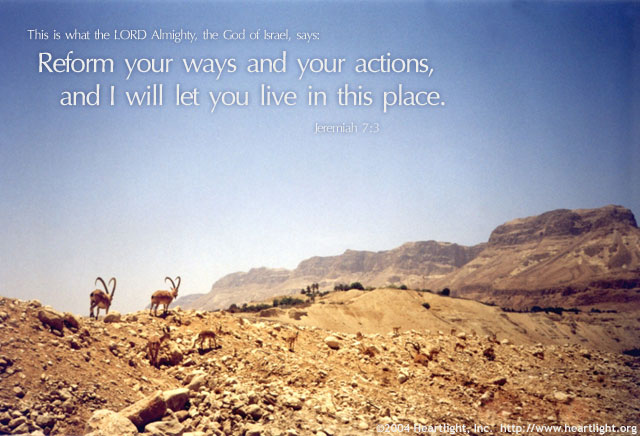
Jeremiah chapters 7 & 8 begins Jeremiah’s first temple sermon (vs.2) (another is found in chapter 26 that I am sure you will hear about later).  God was fed up and starts to name the sins against him (vs. 6,19), especially at His temple becoming a den of thieves (vs.11).  The whole point of this message is that even if they would repent now God would keep the conquerors from coming (3,7).  They must reject the lies such as the false hope that peace is certain, based on the reasoning that the LORD would never bring destruction on His own temple (vs.4).  They must turn from their sins (3,5,9) and end their hypocrisy.

Is their something you are involved in that if you stopped now you could still be okay?  Do you recognize the dangers in continuing in your sins?  The longer you wait the worse it becomes.  Repent today.

-Andy Cisneros

(Photo credit: http://www.verseoftheday.com/en/07032016/)

The Worst of Kings and the Best of Kings – Works Together for Good

2 Chronicles 33-34

romans_8-28

Saturday, December 3

Yesterday’s reading ended with an ominous sentence, “His son Manasseh succeeded him.” Manasseh might very well be the worst king of Israel. He sacrificed his own son as a burnt offering to a pagan god. He killed the prophet Isaiah. Yet when God punished him, he repented and tried to defeat the evil that he had done. However, his son was also evil, but then his grandson Josiah was one of the best kings ever in Israel.


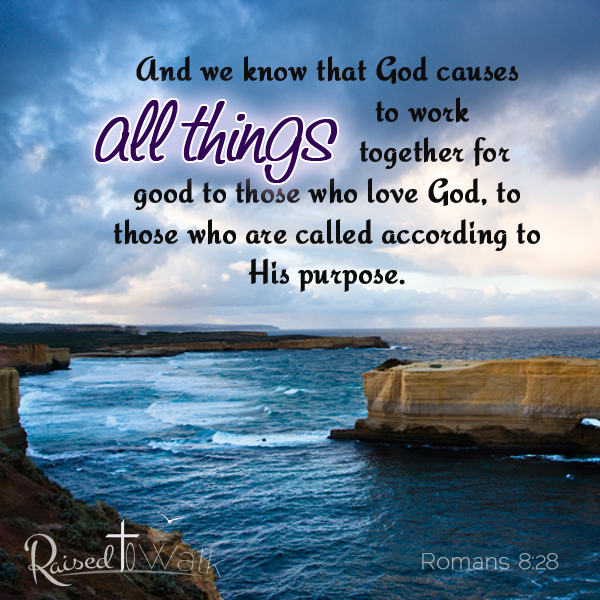
A brief point I’d like to make on this passage: good things can create an opportunity for bad, while good can come out of bad. That sounds odd,  doesn’t it? Yet Hezekiah’s extended life, a gift from God, allowed him to produce Manasseh as an heir. Yet from the degeneration of the kingly line that began with Manasseh and continued with his son, came the best king of Israel. The point is that we cannot make predictions based on circumstances, but God will work for good whenever people will be open to him, regardless of how bad the people around them have been.


I thought of this often during the current election. People predicted dire consequences if either candidate was elected. Everyone of them could happen, but these are all human circumstances. Regardless of whether your candidate is elected or not, the only good that we can count on is what happens when people place their trust in God and act faithfully. Everything else is just a matter of circumstance.


Let’s finish this week by looking at the good that can happen when people respond to God in obedience. As unusual as it might seem, it appears that by the time of Josiah, God’s people were living by tradition rather than actually reading the Holy Scriptures. While doing the right thing and restoring the Temple, the priest Hilkiah found the book of the Law. Josiah was immediately convicted when he read these words and responded by bringing his life and the kingdom of Judah in line with the law of God. Great things happened because of it.


I really appreciate the opportunity to write these devotions this week. It thrills me that you are taking the time to read the word of God. There are many things that are difficult to understand, but good things will happen when we are obedient to the things that we do understand. One thing that I’m certain of is that obedience to what we know is the accelerator of Christian growth. In other words, we are all at different levels of spiritual maturity, but we can all grow by living the life that God reveals to us.

-Greg Demmitt

If and Then

2 Chronicles 5-7

2-chron-7-14

Friday, November 25

Sitting by my nephew tonight during our Thanksgiving meal I witnessed a typical ‘If and Then’ moment. “If you finish your turkey, then you can have dessert.” It’s a generally easy concept to understand and often times harder to live. Do you recall “If you eat of the tree, then you will surely die?”

These chapters in Chronicles hold many if and then scenarios. The Temple is built and praise is lavished upon God and Solomon alike. God offers that if the people who are called by his name keep their covenants then he will bless them. If the people reject him and break covenant with Him, then he will turn away from blessing them.

In the beginning God walked with His son. His creation. His love. God was not interested in Kings and Temples. What He desired was a one on one relationship with individuals. God relented and gave Israel a King. God allowed the Temple to be built, but it was not His plan, but David’s.

In Chapter 6:20 Solomon instructs the people to pray toward the Temple. God is being put into a box where He can be contained in the mind of Solomon and as a result the people of Israel. Solomon was creating a divide between men and his creator. God always lets us know He is longing for intimate contact and consistently seeks ways to bring us back into a relationship that centers on looking toward Him.

Solomon’s Prayer of Dedication over the temple is worth the read. There is more ‘if’ and ‘then’ bargaining going on. Most end with if (when) you sin, then turn again to God and repent. He wasn’t referring to a turning toward the Temple where he surmised God would dwell, but turn toward God’s goodness and mercy and see His rightness against any sin or ‘wrongness’.

God specifically told David He did not need or want a house built, that His preference was to walk with the people as they traveled about. God inhabited the praises of His people as they worshiped at the Temple, but the Temple was more about Israel’s need to have a place to point toward than a place where God wanted to dwell. God replies to Solomon’s prayer of dedication over the Temple with a response of His own. After many ‘if’ statements regarding specific behaviors and consequences God ends with a popular verse all of us have heard.

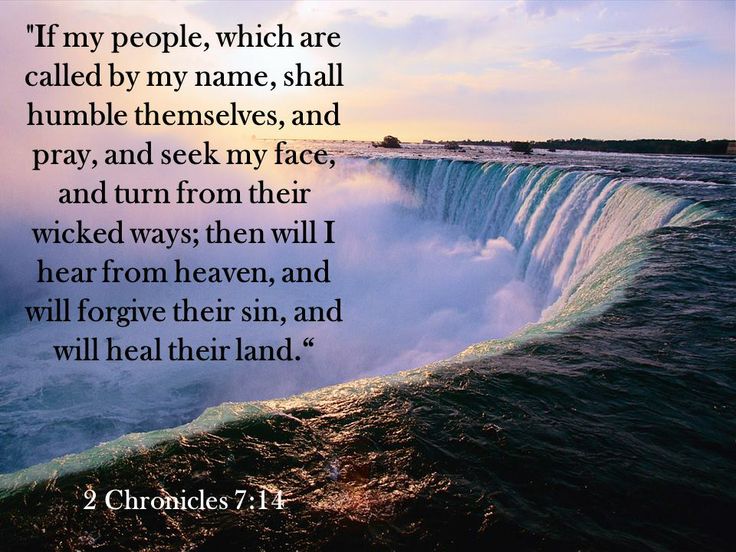
II Chronicles 7:14~ If My people who are called by My name shall humble themselves, and pray, and seek My face,  and turn from their wicked ways; Then will I hear FROM HEAVEN , and will forgive their sin, and will heal their land.”

The if and then list that finishes out the chapter describes in detail the consequences of following after other gods and building idols for them to dwell among them. God wants to walk with us daily, just as He did in the beginning of time with Adam and Eve. Anything that prevents taking that daily walk or trying to box God into a safe space to visit occasionally is simply an idol and false worship.

‘If’ and ‘then’ is still at work in our lives today. If you call upon His name, then He will hear and begin the healing that needs to take place. God is still looking for a place to live. Make room in your life today.

-Glennis Walters