Where are you Walking?

OLD TESTAMENT: Jeremiah 7-9

POETRY: Psalm 115

NEW TESTAMENT: 1 John 1

Have you ever felt completely at home someplace? Maybe it was your family of origin, maybe it was your first home on your own, maybe it was the first home you shared with someone special, like your spouse or a close friend. I hope that you have experienced that feeling.

We want to feel at home in our relationship with God and with our Lord Jesus (and of course, with each other!). But sometimes, our brokenness, shame, and guilt get in the way of our feeling “at home” with God and others. Thankfully, the Bible tells us how to remedy this situation.

In the beginning of 1 John, John talks about this “at home” feeling using the word “fellowship.” The word for “fellowship” basically means to share together or to participate together or to have close friendship with someone. We want to feel close to God, to Christ, and to each other. Those of us in church communities want to feel this closeness especially with those we are in community with on a regular basis. Living this way brings a special sweetness to life that is unlike any other feeling.

Unfortunately, we don’t really experience this fellowship or “at home” feeling to the fullest extent possible in this life. Why? One reason is because, when we sin, our sin makes us feel distant from God.

1 John 1:6-10 (ESV)

6 If we say we have fellowship with him while we walk in darkness, we lie and do not practice the truth.

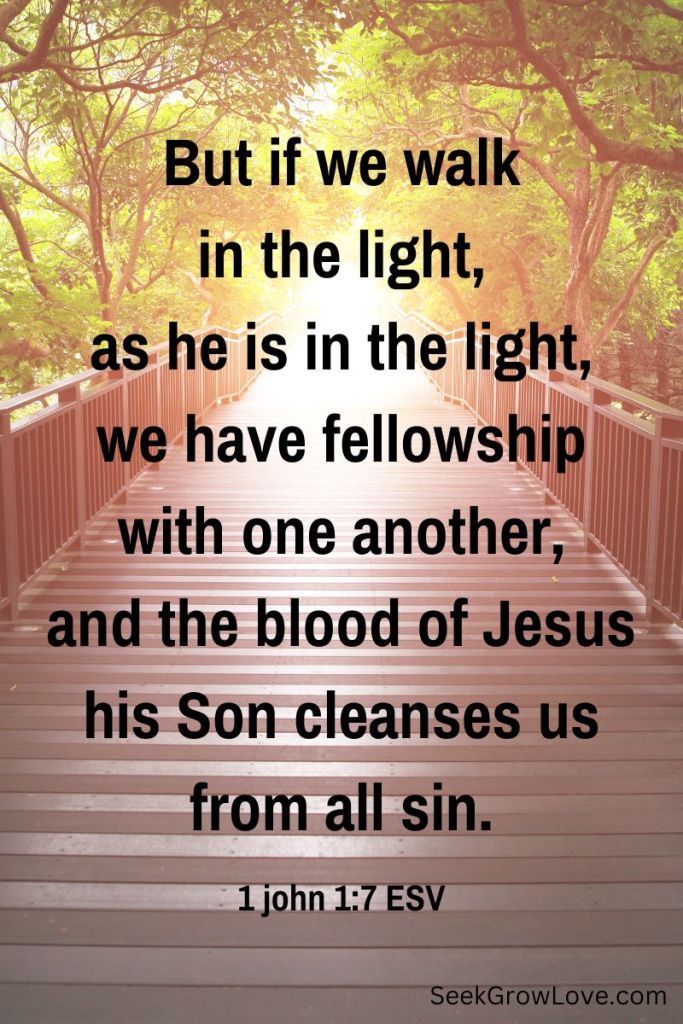
7 But if we walk in the light, as he is in the light, we have fellowship with one another, and the blood of Jesus his Son cleanses us from all sin.

8 If we say we have no sin, we deceive ourselves, and the truth is not in us.

9 If we confess our sins, he is faithful and just to forgive us our sins and to cleanse us from all unrighteousness.

10 If we say we have not sinned, we make him a liar, and his word is not in us.

Walking in darkness is having our lives saturated with sin. Christians should not live this way. Christians are called to become more and more like Jesus every single day through the power of the holy spirit. This is called “walking in the light.” Walking in the light does not mean that we will never sin again ever in this life, but rather that we will not practice sin.

So, how do we restore this fellowship with God when we do sin? Verse 9 tells us to confess our sins. One often overlooked fact about verse 9 is that it says that God does not hesitate to restore us. It says instead that God is “faithful and just.” We can trust God to forgive us and restore us because He has been faithful through the ages. And when He does so, He is acting in a just way, because Jesus has paid the penalty for sin at the cross.

Forgiveness by God is an act of justice accomplished through Jesus our Lord. 

We have a lot to be thankful for!

-Will Barlow

Reflection Questions

Have you ever experienced the “at home” feeling? What conditions made you feel safe and at peace?

    Do you have any parts of your life that are “walking in darkness”? What do you need to confess to bring them back into the light?

    What are the benefits to those around you when you are walking in the light?

    Today’s Idols

    OLD TESTAMENT: Jeremiah 5 & 6

    POETRY: Psalm 115

    NEW TESTAMENT: 2 Peter 3

    Have you ever stopped to think about idolatry? In the ancient world, many groups of people would literally make statues out of wood or metal. They would sacrifice animals to these idols. They would pray to these made up, created things.

    The Psalmist talks at length about the silliness of such behavior, especially in the context of worshipping the actual Creator of the Universe:

    Psalm 115:3-7 (ESV)

    3 Our God is in the heavens; he does all that he pleases.

    4 Their idols are silver and gold, the work of human hands.

    5 They have mouths, but do not speak; eyes, but do not see.

    6 They have ears, but do not hear; noses, but do not smell.

    7 They have hands, but do not feel; feet, but do not walk; and they do not make a sound in their throat.

    The point is clear: idols look like they can speak, see, hear, smell, feel, walk, and talk, but they cannot. They offer something that is not real. It’s a mirage. It’s a false comfort. Worshipping that way is meaningless.

    What does this have to do with us, you might ask? I don’t have an idol in my house. I don’t worship to anything made with hands.

    Friends, I wish that was true. We still have idols today. They don’t frequently look like human images made of silver or gold. Perhaps they are other people. Perhaps they are the rectangular boxes we carry around in our pockets. Perhaps it’s our favorite sports team. Maybe it’s our job or our family. There are always things that vie for our allegiance and our attention.

    Unlike the ancient idols, many of these things are not bad in themselves, as long as we walk in a balanced way. The balance begins, however, with total devotion to King Jesus. Full stop. End of story.

    When we live unbalanced lives, we might find ourselves feeling more and more unsettled, anxious, or depressed. Living the way that God wants us to live does not guarantee a life free from those things, for sure, but the point remains: when our life is unbalanced, we get negative results. Just like the ancient people sacrificing to blind and mute forms of their own creation, we sometimes get too caught up in worldly things that take our minds in directions that are unhealthy and unhelpful.

    As the Psalmist reminds us, the Lord is our help and shield. The Lord is the One who blesses us. The Lord is the one who is worthy of worship and honor. We shall praise the Lord!

    -Will Barlow

    Reflection Questions

    Do you have things in your life that are idols or cause you to be unbalanced? What can you do to get back in balance?

      Can you think of a time when you came out of a longer period of darkness and into light? How did that feel?

      Can you think of a friend that has an obvious idol in their life? What can you do to help them find better balance? (Maybe telling the story from your answer in #2 could be a place to start.)

      A Kingdom Promise

      OLD TESTAMENT: Jeremiah 3 & 4

      POETRY: Psalm 115

      NEW TESTAMENT: 2 Peter 2

      What are you tempted to do when things get bad? Especially in the USA right now, it seems like everyone is divided, the country is full of anger, and Christianity is on the decline. What’s going on? Is there any hope?

      Looking through Scripture, we can find examples of difficult times for the people of God. Jeremiah chapter 3 is one such example. In the beginning of the chapter, God talks again and again about how corrupt and faithless the people of Israel and Judah have been. God uses the language of divorce, sexual immorality, and idolatry to describe the past mistakes of Israel and the current status for Judah. The problems were obvious. The solution also seemed obvious — return to the Lord. And not only did God declare that this was the right answer — He actively called for His people to return to Him.

      But what did the people do?

      Reading the rest of the book of Jeremiah, we know that they did not return to the true worship of Yahweh, at least before the exile.

      Nevertheless, the middle of Jeremiah 3 should catch our attention. The story does not end with the faithlessness, corruption, and sin.

      Jeremiah 3:15-18 (ESV)

      15 “‘And I will give you shepherds after my own heart, who will feed you with knowledge and understanding.

      16 And when you have multiplied and been fruitful in the land, in those days, declares the LORD, they shall no more say, “The ark of the covenant of the LORD.” It shall not come to mind or be remembered or missed; it shall not be made again.

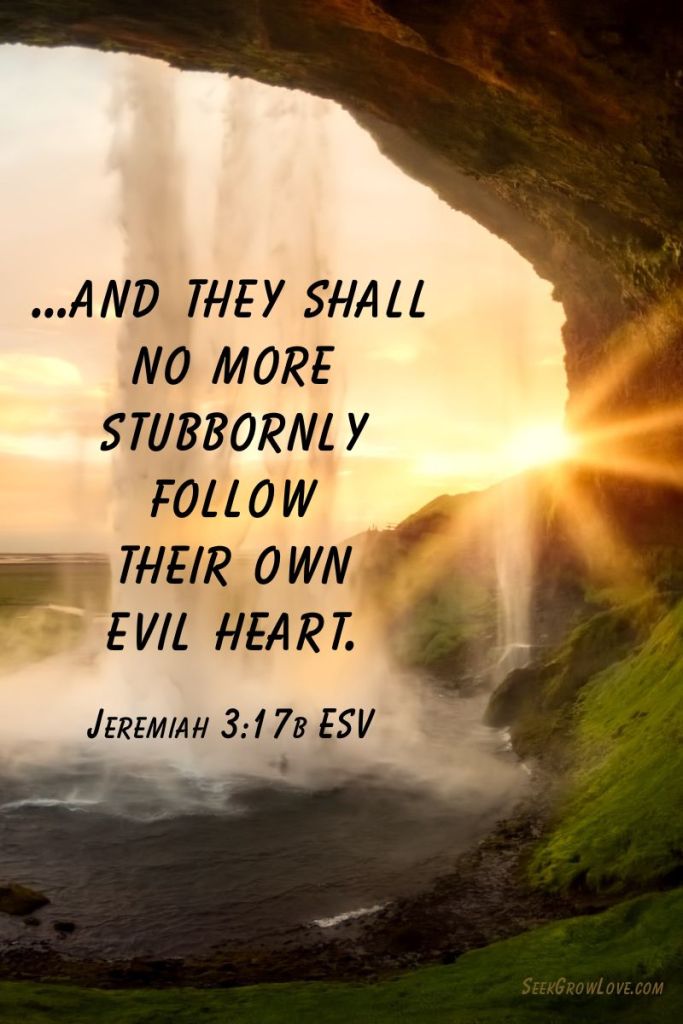
      17 At that time Jerusalem shall be called the throne of the LORD, and all nations shall gather to it, to the presence of the LORD in Jerusalem, and they shall no more stubbornly follow their own evil heart.

      18 In those days the house of Judah shall join the house of Israel, and together they shall come from the land of the north to the land that I gave your fathers for a heritage.

      The story ends with the goodness of God. No matter what, God will send good shepherds, most importantly the Good Shepherd, Jesus. All nations will come to worship God in the holy city of Jerusalem. The people of God will be reunited again. This is a kingdom promise, a kingdom promise located in the darkest period of the history of the people of God.

      Friends, that is our lesson for today: no matter how dark the world gets, no matter how hopeless our future seems, the kingdom is coming. The King is returning.

      Instead of focusing on the darkness around us and the turmoil (war, politics, etc.), let’s focus on God and on the hope we have for the future. And let’s share that with others, too.

      -Will Barlow

      Reflection Questions

      Self assessment: how are you feeling with all that is going on in the world today?

        What can you do to be a brighter light in the midst of this darkness?

        How can you stay anchored in the hope of the return of Jesus while also paying appropriate attention to the things of the world?

        Standing for God

        OLD TESTAMENT: Jeremiah 1 & 2

        POETRY: Psalm 115

        NEW TESTAMENT: 2 Peter 1

        Have you ever thought that it was too hard to stand for God in the middle of this dark world? Have you ever feared ridicule that kept you from sharing your faith with someone? I know that I have thought both of these things at times in my life.

        One example in Scripture that serves to encourage us in this category is Jeremiah. Jeremiah served as a prophet in one of the darkest days for the people of God, beginning his ministry right before the exile into Babylon. Jeremiah 1 chronicles the “call” of Jeremiah to serve God.

        Jeremiah 1:4-5 (ESV)

        4 Now the word of the LORD came to me, saying,

        5 “Before I formed you in the womb I knew you, and before you were born I consecrated you; I appointed you a prophet to the nations.”

        God tells Jeremiah that He knew him before he was born! Not only that, God called Jeremiah to be a prophet before he was born. What an incredible calling! And Jeremiah would need this kind of encouragement and consolation, because the people of God at this point in history were not inclined to listen to the Lord’s instruction. In fact, Jeremiah’s whole life would be filled with heartache and sorrow as he fulfilled his role as a prophet to the people of Judah in this time before and during the exile.

        Jeremiah, just like Moses and many throughout the Bible (and perhaps some of us, too!), argued with God’s choice. God responds with the only words that Jeremiah needed to hear (and the only words that we often need to hear):

        “Do not be afraid of them, for I am with you to deliver you.”

        They continue talking — God shows Jeremiah some visions. At the end of the chapter, God reiterates this simple word to Jeremiah:

        “They will fight against you, but they shall not prevail against you, for I am with you, declares the LORD, to deliver you.”

        Jeremiah faced many challenges in his life. He was tempted to be discouraged at every turn. And yet, in his darkest moments, he could remember the simple words that God told him the day that he was called:

        “I am with you.”

        Today, you can rest knowing that God is with you, just like He was with Jeremiah. We may face different types of battles than Jeremiah did, but the same God that was with Jeremiah is with us. He will deliver us.

        -Will Barlow

        Reflection Questions

        What do you notice in your mind and body when you face opposition? Do you tense up, get angry, feel intimidated? How can you acknowledge and hold space for these feelings while also living your faith out the way that you desire to?

          What can you do to be more intentional to stand for God bravely as Jeremiah did?

          Have you ever argued with God when He has asked you to do something? What did you do? What can you learn from that experience?

          Shepherd the Flock & Be Watchful

          OLD TESTAMENT: 2 Chronicles 35 & 36

          POETRY: Psalm 115 (all week)

          NEW TESTAMENT: 1 Peter 5

          What is the best way to lead others in the church? What is the best way to follow church leadership?

          At the end of 1 Peter, Peter gives some exhortations to leaders in the church and then to the general assembly. His exhortation to leadership, while brief, is powerfully meaningful:

          1 Peter 5:2-3 (ESV)

          2 shepherd the flock of God that is among you, exercising oversight, not under compulsion, but willingly, as God would have you; not for shameful gain, but eagerly;

          3 not domineering over those in your charge, but being examples to the flock.

          Leaders in the church are commanded to shepherd the flock not by abusing authority but by being examples. Peter is repeating what Jesus taught him years before (see Matthew 20:25-28). Jesus served others in love, showing everyone how to live a godly life. He did not collect taxes, lead an army, start a big corporation, or run for President (or Caesar, not that it was a democracy!), but even if he held a prominent worldly position, he would not have led through fear or domination.

          How many times has this gone wrong in the history of the Christian church? How often are leaders tempted to lead this way? As a pastor, knowing how common this problem is leads me to greater personal reflection and humility. My job is to serve willingly and eagerly and to be a good example to the people in our congregation. That sounds simple and straightforward, but the other way is tempting. Leaders, we must keep the servant’s towel wrapped around our waist at all times!

          Peter goes on to admonish the whole assembly to be humble, to cast anxieties to God, and to be watchful. Each of these dispositions is important. First, humility is a foundational Christian attribute. It’s like the key to the door of growth. Humility says, “I don’t know everything yet. I can still learn more.” Everyone in the church should be humble before God and before the Scriptures. There is always more to learn. There is always more to live.

          Second, we are to cast our anxieties to God. This world is full of trouble and brokenness. All of us experience anxiety from time to time. We must remember that God cares about every aspect of our lives. What a crazy thing to believe, but it is true — the Creator of the Universe wants a relationship with you! God cares for you!

          Finally, we are to be watchful. There are influences of darkness in the world around us (see: anxieties above). The powers of darkness, led by the adversary/devil, have built systems to damage our faith and lead us into temptation. Just as our Lord Jesus taught, we seek God instead. He will deliver us from evil, and the promise is, that as we resist, the devil will flee (see also James 4:7).

          -Will Barlow

          Reflection Questions:

          1. (Leaders) How do you stay humble and focused on serving the people around you?
          • (Non-leaders) What can you do if you are concerned about your leaders and how they are behaving?
          • Are there things in your life that need more watchfulness or resisting the powers of darkness? What can you do to strengthen your resolve in those categories?