New Testament: Ephesians Intro – coming this afternoon because sometimes two posts are better than one
When we decided to name our children, I thought long and hard about the meaning behind each of their names. It was more than picking a cute name out of a book, or making sure they weren’t one of eight of the same-named kids in their class, or avoiding mispronunciations throughout the whole of their life. My thoughts were more along the lines of a Bible name. Well not directly from the Bible, like my names Aaron & Jonathan, but something with a deep, and sometimes, literal meaning. For example:
Adam – Son of the earth
Moses – Taken from the water
Esau – Red & hairy
David – Beloved
Peter – Rock
Yeshua (Jesus) – Deliverer.
What qualities would their name evoke or how might their name be prophetic? We ended up landing on Oliver Ace – Peace & unity, Matilda Claire – Strength & clarity, and Violet Lou – Wisdom & esteemed. While each of their fulfillments is to be determined, I believe that God, indeed, has a plan for their name.
Watching the actions of Elisha throughout the course of 2 Kings, we see time and time again the fulfillment of the name to which he was called, “God is Salvation.” In Chapter 4, as a vessel of God in faith, Elisha provides for a widow, saves prophets from being poisoned, feeds 100 with scraps, and brings a child back to life. In each of these instances, God, through his agent Elisha, is salvation. God will provide when you are in need. God will save you from harm. God will use your offering to multiply the blessing. God will raise your very life from the grave. Elisha is aptly named.
What is your name? Yes, your name may have a rich meaning, or it could be you were named after your mom’s favorite band that had two hit songs and then was never heard from again. It could be you were named Hannah, not because your parents wanted you to have favor or grace, but because your dad was obsessed with palindromes. It might be impossible to live out these names in such a way, and it could be that my own children’s names are simply names. So instead, let us take time to focus on the names which God calls those who put their hope and trust in Jesus Christ:
A chosen generation & royal priesthood: “But you are a chosen generation, a royal priesthood, a holy nation, His own special people, that you may proclaim the praises of Him who called you out of darkness into His marvelous light.” – 1 Peter 2:9
Children of God: “See what great love the Father has lavished on us, that we should be called children of God! And that is what we are! The reason the world does not know us is that it did not know him.” – 1 John 3:1
Heirs: “If you belong to Christ, then you are Abraham’s seed, and heirs according to the promise”. – Galatians 3:29
His workmanship: “For we are His workmanship, created in Christ Jesus for good works, which God prepared beforehand that we should walk in them.” – Ephesians 2:10
Mine: “I have called you by your name. You are mine.” – Isaiah 43:1
These names, as well as many, many more (redeemed, blessed, chosen, victorious, etc.) become our prophecy, our inheritance, and our fulfillment. May God bless us all to fully live out the calling of our names, much like Elisha.
-Aaron Winner
Reflection Questions
Does your name have a calling you are trying to live out? If you could choose any name for yourself – or your children – what would you choose and why?
What do we learn from Elisha about himself and about his God? What do people learn about you and about your God from watching and knowing you?
Which of the names God has chosen for those who chose Him and His Son mean the most to you? Why? What does it show you about God?
Mema Ballard owned a set of Encyclopedia Britannicas … or is it Encyclopedias Britannica? That is exactly the kind of question one my be tempted to look up in an encyclopedia. Technically, it’s the latter, but she only owned one Encyclopedia, with multiple volumes. It felt like no matter what question we wanted answered, all we had to do was look in the Encyclopedia and boom! Question answered. Crisis of unknowing averted. “All’s right in the world.”
When I entered college, I thought of the Bible much the same way. One library of books, containing multiple works, and if I came with a question, I would have it answered as soon as I learned to know where to look.
It sure would be nice if the editors of the Bible just put it all into easy-to-read statements of fact and doctrine. Why use all this narrative, all these stories, all these symbols? Poetry; why, couldn’t that lead to interpretation, discussion, and, horror of horrors, more questions?
Obviously, it does.
And yet God did not inspire an encyclopedia. He inspired a library of books that pokes and prods and needles as much as, or much more than, it answers and comforts and assuages.
If we are asking, “what can we know about death and the Kingdom at the end of the age”, and we turn to Revelation 20 (conveniently at the end), suddenly a lot of questions crop up.
Which angel comes down and binds Satan?(20:1) Why does Satan need to be released? (20:3) Why is this the only chapter where the dead in Christ are raised in a resurrection apart from the rest of the dead (20:5), and why is this the only chapter where the 1000 year reign of Christ is spelled out in clear detail (20:4, 6)? How could people who saw immortals ruling over them, as is implied, think that they stood a chance, and join forces as “Gog and Magog,” against the “camp of the saints and the beloved city”? (20:8-9)
I think these questions do have answers; for some, they are complicated, and for others, I don’t know them.
Should I say that again?
I don’t know everything.
Questions unanswered, hurtling directly into the unknown, and I feel the anxiety all around.
Do you sometimes feel the same way? That you don’t know everything and the things you do know you aren’t sure about?
You don’t have to know everything, because we can’t.
But we can know one thing with absolute certainty,
We know the ONE who does know everything.
Which angel? An angel sent by the God who controls all things and cannot lose to Satan. Satan is ALREADY defeated, one day he will be bound.
Satan’s release and turning away of the nations? God gives everyone a choice to believe, and people can make the choice to not believe.
The 1000 year reign and two resurrections?
I don’t know everything, but I know that if we place our hope in Jesus, we receive eternal life. (John 17:3) We can and should argue, teach, and debate theological and doctrinal points, because they are important.
But those are secondary to trusting in the Messiah for salvation, and living the way Jesus showed us to live. Because those who do not give in to the sins of this world, and live for the will of God (20:4), they will be blessed. And they are blessed in this way : “Blessed and holy is the one who shares in the first resurrection! Over such the second death has no power, but they will be priests of God and of Christ, and they will reign with him for a thousand years.” (Rev. 20:6)
Do you believe? Because if you do believe, there is just one more thing I know.
Revelation 21:3-4 “Behold, the tabernacle of God is among men, and He will dwell among them, and they shall be His people, and God Himself will be among them, and He will wipe away every tear from their eyes; and there will no longer be any death; there will no longer be any mourning, or crying, or pain; the first things have passed away.”
I know I want that experience.
No death.
No grief or crying.
No pain.
Every tear of sorrow wiped away.
God with us.
I know I want that for you.
And, even with all your questions, you know you want that too.
Because that is good news.
That’s gospel message.
That’ll preach.
Amen.
-Jake Ballard
Reflection Questions
Describe the ONE that you know with absolute certainty. What do you learn about Him in His words? What do you still want to learn about Him?
Why do you think God inspired the Bible as it is, rather than to be like an encyclopedia?
How often do you think about what happens at/after death or what will happen at the end of this age? What is the benefit of studying what the Bible says about these topics?
Jake Ballard is pastor at Timberland Bible Church. If you’d like to hear more from him, you can find Timberland on Facebook (https://www.facebook.com/TimberlandBibleChurch/ ) and on Instagram (https://instagram.com/timberlandbiblechurch?igshid=t52xoq9esc7e). The church streams the Worship Gathering every Sunday at 10:30. Besides studying and teaching God’s word, he is raising three beautiful children with the love of his life, is a big nerd who likes fantasy (right now, Harry Potter), sci-fi (Star Trek), and board games (FrostHaven). If you’d like to reach out to talk Bible, talk faith, or talk about your favorite nerdy things, look Jacob Ballard up on Facebook (https://www.facebook.com/jacob.ballard.336 ) or email him at jakea.ballard@yahoo.com. God bless you all!
Bible Trivia : The Apocalypse is an apocalypse; the genre of Revelation is not “prophecy” in the strictest sense, but a genre called “apocalypse”.
There is a LOT of prophecy in Revelation. I think Revelation shows us a picture of the future of the cosmos and the end of this age. However, “apocalyptic literature” is a genre that details events, both of the current day and in the future, with a ton of metaphor and allegory. Apocalypse uses symbolism to teach people that God is acting in history. The authors of this genre also usually view this world pessimistically and declare that a new world is coming quickly.
In fact, along with Revelation (which we will talk about tomorrow), the book of Daniel is also considered “Apocalyptic”, especially the visions, chapter 7 forward. At the very end of this book, we see a glimpse into the end. I won’t try and explain in a daily devotional the significance of the archangel Michael, the two men speaking at the River, or the specific length of days at the end. (And to be clear, if I had a large book to write to explain it, there is a lot of disagreement and debate about the full meaning of some parts of this book; all my thoughts are just another disciple adding their musing to what the church has said for centuries.)
But there are a few things I would like to point out about chapter 12 that I can say with much more confidence.
First, in verse 2, the author uses a common expression, “many”, to mean “everyone.” In the end, all will be raised. This one resurrection pictured is to be raised to life and raised to judgement. Everyone’s life will be opened up on display before the Messiah. In Hebrews 9:27-28, we read “And just as it is appointed for man to die once, and after that comes judgment, so Christ, having been offered once to bear the sins of many, will appear a second time, not to deal with sin but to save those who are eagerly waiting for him.” After death comes judgment for all, but those who eagerly wait for Christ will be saved. Some will come up to life, those who have done good will come out to the resurrection of life. (John 5:29) Some will come out to everlasting shame and contempt, those who have done evil to the resurrection of judgment. (John 5:29, again) Those who do not receive life, who do not do the work of God by believing in the name of Jesus (John 6:29), will receive the opposite of life. Those of whom the Messiah is ashamed, whom God contempts, they will not receive the life of the Messiah, or be in the presence of the God who is the source of life.
Second, those whose name are written in the book will be delivered. (12:1) To experience this, you must be numbered among the wise. After the coming of the Messiah, it is not being wise on our own, and certainly not being wise in our own eyes, but being wise by trusting in Him who is the wisdom of God. (1 Corinthians 1:24) Not only should we trust in the Jesus the Messiah, but we should “turn many to righteousness”. (Daniel 12:3) We turn many to righteousness when we preach the message of the Kingdom, when we “make disciples by going into the world, baptizing them, and teaching them all Jesus has commanded.” (Compare Matthew 28:19-20, Mark 16:15-16, Acts 1:8)
Third, and finally, you can be like Daniel. Daniel was told point blank by the angel “you will rest” (die) “and then at the end of the days you will rise to receive your allotted inheritance.” (Daniel 12:13) My friend, if you place your trust in Jesus, if you believe that he died to bring you into relationship with God, that he reigns from heaven at the right hand of God over the church, and that he is coming to reward those who follow his will by the power of the spirit he gives, the words spoken to Daniel, “you will rise to receive your allotted inheritance”, are spoken to you. You WILL have eternal life, the promise of God, given by Christ (Romans 6:23), and confirmed by the Spirit. (Ephesians 1:14)
And that is anything but trivial.
-Jake Ballard
Reflection Questions
Does the order of events matter – in a story, criminal trial, math problem or God’s plan of salvation?
Is the information given to Daniel (including the order of events) widely accepted and believed today? Why or why not? What is different from many ideas held today? What is not mentioned in Daniel 12? Why do you think it is not mentioned?
Are you prepared for the return of Jesus the Messiah? Why or why not? Is there anything God wants you to do before you rest, rise and receive? If so what? And when, where, how will you do it?
I find euphemisms to be imprecise. Usually, they are used to make taboo topics a bit easier to discuss in public, because saying words with plain meanings are just too forward.
There’s the innocuous “over the hill.” (People just get old, and that’s OK. “Gray hair is a crown of glory” Prov. 16:31)
There are quite a number of euphemisms to describe the most intimate act of marriage, which are understandable, because sex is often uncomfortable to talk about.
My least favorite are the ways we try to cover over the fact of death. “Passed on” and “crossed over” both imagine death as a journey. When I’m gone, please say “Jake has kicked the bucket”, because that phrase is stupid and I love it.
But the Bible, strangely, does something similar. Death, the cessation of life, the moment when our bodies cease to self-renew, our brains cease to function, and we cease to exist … is called sleep.
And this is not uncommon. At the death of David, he was said to sleep and join his fathers. (1 Kings 2:10, compare Acts 13:36) Daniel speaks of those “who sleep in the dust of the earth.” (Daniel 12:2) This is extremely common in the New Testament, starting in the life of Christ, where he speaks of those whom he is about to raise as sleeping and waking up, when they clearly died, like the young woman (Matthew 9:24, Mark 5:39, Luke 8:52) or Lazarus (John 11:11). Some saints, at the death of Christ, were raised to life again, after mentioning that they were sleeping. (Matthew 27:52) The language of sleep is continued by the early church. Stephen, dying a violent death of martyrdom, “falls asleep.” (Acts 7:60) Peter uses this euphemism in 2 Peter 3:4; Paul, in 1 Corinthians 15:6, 51, and 1 Thessalonians 5:10.
But, the Bible as the word of God and Christ as the Word of God, teach us something even while using this euphemism. Instead of concealing death from what it is, the Bible and Christ use this as a metaphor that makes more clear what death entails, not less.
In 1 Thessalonians 4, Paul is instructing his dear friends who were grieving the death of loved ones. He wants them to understand their situation, so when he uses the phrase “those who have fallen asleep,” it is used to bring MORE clarity to the subject of death. But, how does it bring this clarity? What does sleep teach us about death? In sleep, when we are at our most tired, we do not dream; we just go down and wake back up, with no memory of the time between. It seems that this is what the lessons we have been going through this week teach us. In Ecclesiastes 9, there is no memory, no work, no knowledge. Death is the cessation of a person but one that is sleep-like. The brain stops firing. Humans are not a kind of spirit-being inside their body but intimately connected to it. So when we die, we cease to be. That is why Lazarus could not tell us about his “afterlife” experience. There was none. And why is it such good news that Jesus was attested by God and raised to life (Acts 2) and how Paul can prove this by the word of over 500 people, and by his own experience, and the continued experience of the church (1 Corinthians 15). Death is not a passage on to a better place, but a time of cessation. When Christ is raised to life, he comes back. That’s good news.
Death is like a sleep we don’t remember.
Sleep is resting and waiting.
For some, it is waiting for reward; for others, punishment.
Daniel 12:2 says in it’s fullness “And many of those who sleep in the dust of the earth shall awake, some to everlasting life, and some to shame and everlasting contempt.” Yes, death is a sleep, but like sleep, human death is a sleep from which all will be awakened. But not to a human life again and again, as in Eastern reincarnation, nor a spiritual life in some other place, as with many Western Mythologies. Daniel promises that all people will be raised and judged. We know now that those who are in Christ are those who will receive the gift of eternal life (Acts 2). We are told that whether we live or die, we belong to the Lord (Romans 14:8), and the reason can be found back in 1 Thessalonians 5. Paul twists together the metaphor of being awake with both being alive and being holy, and the metaphor of sleep with both being dead and being unholy. But whether we live or die, whether we are awake or asleep, let us remain spiritually awake and holy (5:9-10), and when the trumpet call blasts out across the cosmos (4:16), we will be raised or we will be changed. That’s good news.
When I have lost family members or friends, people tried to encourage me with the idea of them partying among the angels, or, less vividly, at perfect peace. Very often, people were saying (without meaning to say it), “If you grieve, you wish your loved ones weren’t happy.” However, 1 Thessalonians 4 says that we will not grieve AS THOSE WHO HAVE NO HOPE. Because we know the reality and pain of death, that those who have died are gone from us in sleep, that death was never meant for any of us but a curse from a fall, that it is an enemy that will be defeated, we can live like Jesus.
At the grave of our friends and loved ones, we can cry.
Jesus gets that.
And then, we can take encouragement in the truth that they will one day hear the call of the trumpet, the voice of the archangel, and their Lord, their Savior and their Friend will pull them out of the grave.
Death could not hold him.
Death can not hold our loved ones in Christ.
And, in Christ, death cannot hold you.
So let’s trade our euphemisms for the euangelion;
Trade our “nice words” for the Good News.
-Jake Ballard
Reflection Questions
Can you think of some euphemisms for death that are not supported by Scripture? Where do those ideas come from?
Why does Paul want to correct ignorance regarding death, resurrection and the return of Jesus? Why does it matter what one believes about these topics?
In this devotion I will use words like “philosophical” and “deconstruction” and will even translate a Latin phrase. However, these are not scary concepts, and they are infinitely practical. So please bear with me. This is centrally important.
In our world today, there are many people “deconstructing.”
“Deconstruction” is a term from Jacques Derrida, a postmodern philosopher, which means, basically, picking apart every idea and belief we have to find the core, deep, central “dialectic”, words that are opposites (e.g., “being” and “nothing”) and hierarchy of ideas (e.g. that “being” is better than “nothing”). In a nutshell, Derrida believed we must pull apart an idea until we see what is at the “bottom”. Derrida believed that at base, every idea had opposing words or thoughts that in turn governed how we thought (like “being” and “nothing” governing our idea of “existence”). He believed these words, in opposition and conflict, were needed to make sense of the world, but we need to be aware of them.
However, the “Destruktion” of Derrida has changed.
Today, when people say they are deconstructing, it is almost exclusively of “traditional” Christian values and beliefs. The approach they take to marriage, LGBTQ+ issues, abortion, and other “hot-button” or political topics usually pushes people to reexamine their moral understanding of scripture AND their belief in the factual claims of the Bible. Many have “deconstructed” and no longer believe in large parts of scripture: from famous YouTubers, to our best friends, to some of us reading right now.
Latin, though a “dead” language, is used a lot to convey ideas that might otherwise be clunky. (e.g., “E.G.” comes from “exempli gratia”, or “for example”, which doesn’t really prove my point , i.e., that Latin helps with clunky phrases (“I.E” stands for “id est” or that is.))
“Sine qua non” is a phrase that means “without which, nothing”. The sine qua non is the most essential element of any political body, philosophical system, or religious doctrine; if you take away the sine qua non, that thing no longer functions, it ceases to be what it was.
In 1 Corinthians 15, Paul expresses to the Corinthians the sine qua non of Christianity. Paul says that it was of first importance that Christ died for our sins. That he was buried. That he rose. And that he appeared to many disciples.
However, the rest of the chapter focuses primarily, not on his death, but on the resurrection. Paul indicates a couple things to his readers.
If there is no resurrection, Christ has not been raised.
If Christ has not been raised, we misrepresent God, because the Christian faith says God raised him.
If Christ has not been raised, then we should be pitied above all other people.
If Christ has not been raised, then our preaching is in vain, and our faith is futile, and we remain in our sins. (v.12, 17) In short, the Resurrection is the sine qua non of the Christian faith.
Paul is talking to people who were deconstructing. We can almost hear them speaking through the years. “Well, I held to the resurrection for a long time, but I think I have finally given it up. Why believe in something so backwards, so barbaric, so physical? I think it must have been a spiritual raising. Or, possibly, no real resurrection at all, but that the Christ-Spirit that pervades the universe now lives in our hearts.” Paul is saying “you are losing the essential quality of the faith!” This is THE central point!
Today, you or someone you know might be deconstructing for a number of reasons.
You want “freedom” from the “ancient oppressive norms.”
You want “reality” instead of “naive wish fulfillment.”
You want “truth” rather than “the superstitious ideas of barbaric goat herders.”
But Paul is not claiming that you must believe in oppressive norms that crush the spirit of people, nor is he saying that he believes the reports of people he has never met, nor did he even want Jesus to be raised from the dead.
Paul, in a book that every scholar agrees comes from his own pen, claimed that he saw the man named Jesus who then changed his life. Then Paul, who had nothing to gain and everything to lose, gave up EVERYTHING, nearly died multiple times, to preach about Jesus to people who would often try to kill him. Paul did this all with sophistication and love that preclude the possibility that he was insane.
The resurrection is a fact.
Paul is saying that he would like his readers to trust Jesus; not Paul, not the church, Jesus.
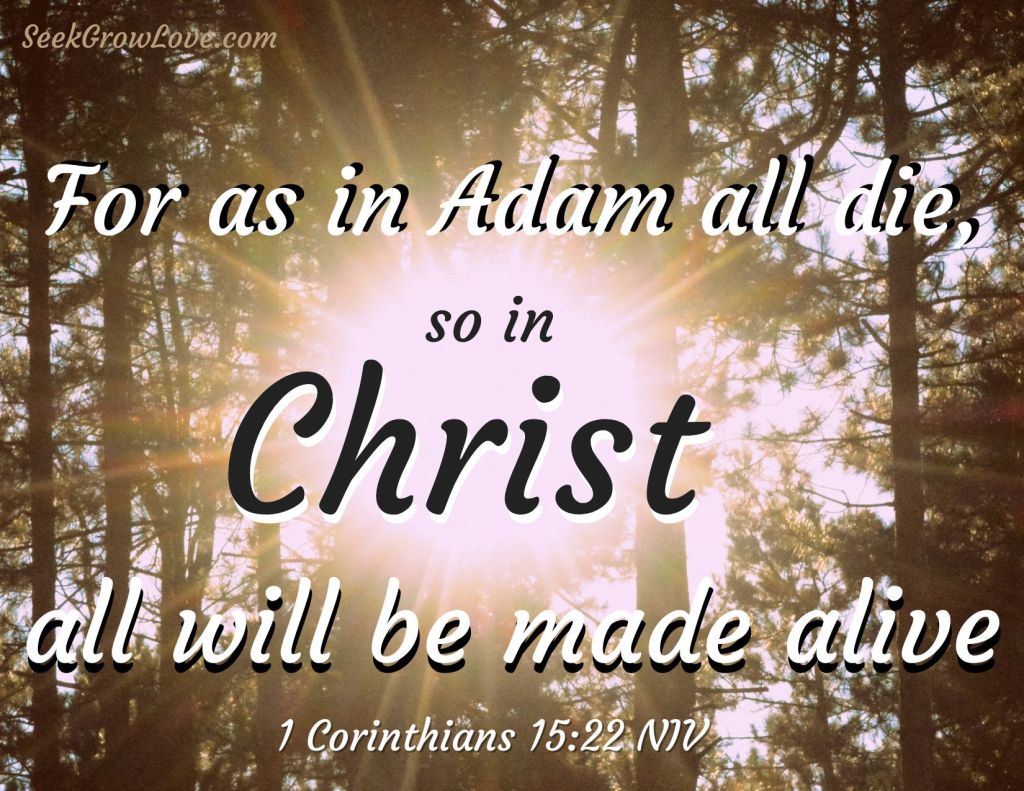
Jesus, the one who gives freedom, because he gives us a new life now and a new life in the world to come. As in Adam all die, so in Christ all will be made alive.
Jesus, the one who is the bedrock for reality, and the cornerstone of the new kingdom of God. Christ at the end will “reign until he has put all his enemies under his feet.”
Jesus, the fountain of truth, the one who can say “I am the way, and the truth, and the life.”
The Christian faith comes with a lot of question marks.
Those hot buttons issues are *hot* for a reason.
The Bible *is* frustrating. So many people have claimed it says different things! And when we actually read it, often the Bible tells us that the best way to live is the opposite of the way we are living right now.
Your questions, your doubts, are pulling at your heart because the world is messy. And dark. I’ve been there too. Where questions and doubt are big, and I feel like I am at the bottom. I look up at the questions wondering “why would I hope? could life get better? wouldn’t it just be better if I wasn’t here?” Too much loss, too much pain, too much death.
“The last enemy to be destroyed is death”
Paul is not playing at wish fulfillment, norms or superstitions. The Jesus he met, the Jesus Christ-followers met, the Jesus the church has met, has led to the fitting conclusion that “death is swallowed up in victory.” Death is no longer victorious. Death can no longer sting. Because we have been given victory.
I have been given victory.
And you have been given victory, if you choose to accept it.
God is not scared of your questions. He is not scared of your doubts. He is not scared of your failures.
What God wants to do is to give:
To give you victory that conquers your failures. Yes, you’ll still make mistakes, but always moving closer to God rather than in circles of pain.
To give you hope, purpose, and passion that will bolster your faith in doubts. You may still ask questions, and you will need other people to sharpen your beliefs, but always moving closer to the God of all comfort.
To give you the Spirit who teachings us all things and guides us into all truth in our questions. You will still have questions but it is no longer the project of deconstruction, of “Destrucktion” where every belief is torn down, but where in the end, they are built anew of Christ the Solid Rock.
In short, “Thanks be to God, who *gives us the victory* through our Lord Jesus Christ.”
-Jake Ballard
(If you need someone to pray for you today, or to hear your questions and doubts, or to tell you it’s gonna be OK, please consider emailing Jake Ballard (jakea.ballard@yahoo.com) or text at (937-561-1000), or find him on Facebook (https://www.facebook.com/jacob.ballard.336_) or Instagram (@jakea.ballard). However, the best thing you can do, is find a local pastor you trust, and speak to them in person. God bless you all.)
Reflection Questions:
Do you believe in the resurrection of Jesus? If so, why? How would you describe it to someone who has never heard of the resurrection? If not, why not?
If you believe in the resurrection of Jesus, does that prompt you to live your life differently? If so, how?
What is the timeline of events Paul gives in 1 Corinthians 15?
What is the final verse of 1 Corinthians 15 and how can you put it into practice?
Yesterday, we read about the resurrection of Lazarus. John actually structures the first part of his book (chapters 1-12) around seven signs that Jesus is the Messiah, with the power of raising Lazarus as the seventh. Peter points out that Jesus was attested to the people of Israel by God through those mighty works and wonders and signs. (Acts 2:22) However, while most commentaries talk about the seven signs, I would contend that the resurrection of Jesus himself is the eighth sign of his Messiahship. Acts 2:24 “God raised [Jesus] up, loosing the pangs of death, because it was not possible for him to be held by it.”
What an amazing verse! Not that Christ could struggle against and eventually overcome death, but that it was not possible for death to hold him.
What an amazing savior! Christ had every right as the Son of God to rule as king and call upon legions of angels to defend him, but instead he chose to willingly submit himself to the plan of God.
What an amazing God! God gave us a salvation through the death of Christ that we could never earn, and gave us a hope through the resurrection of Christ that is greater than any we could ever imagine!
Luke wrote Acts based on the eyewitness testimony of those who not only followed Jesus when he was alive, but saw him when he had been raised. God raised up Christ, and all these fishermen and tax collectors and sinners in Acts 2 experience in and participate in the miracle of new life through the Holy Spirit now. Because Christ has been raised to life and is at the right hand of God, we are able to praise him with the Holy Spirit speaking through us, extolling the greatness of our God and his Christ.
If you want this new life that begins now to continue forever, you need to follow the commands of Peter in Acts 2:38 : “Repent and be baptized every one of you in the name of Jesus Christ for the forgiveness of your sins, and you will receive the gift of the Holy Spirit.” “The Spirit marks us as God’s own. We can now be sure that someday we will receive all that God has promised. That will happen after God sets all his people completely free. All these things will bring praise to his glory.” (Ephesians 1:14, NIrV)
What an amazing gift! The Spirit given to us through baptism is the teacher, guide, helper, and empower-er of the people of God so that we can do God’s will in the world.
What an amazing promise! The Spirit guarantees that we will one day be raised from the dead, like Christ!
What an amazing Spirit, the power of God!
What an amazing Savior, Jesus Christ our Lord!
What an amazing God, The Father of Jesus, YHWH alone!
Amen!
-Jake Ballard
Reflection Questions
Do we too often forget how amazing God’s plan and his words are? What do you find amazing in Acts 2?
What does it mean to you that Jesus is the Messiah? What does it mean to you that death could not hold him?
Perhaps you’ve never heard the term, but I know you’ve seen the book. Or books.
Don Piper claimed to spend 90 Minutes in Heaven (6 million copies), while Bill Wiese had the greater misfortune of spending 23 Minutes in Hell. (Unfortunately only 1 million copies sold)
Heaven is for Real sold more than 10 million copies by 2014, and it’s movie earned $101 at the box office that same year.
However, not every book can be a winner. After his story being told by his father in The Boy Who Came Back From Heaven, Alex Malarkey denied that he ever went to heaven, that he had any memory of it. He claimed he said those things because it gave him attention.
For a while in Christian writing, everyone seemed to be claiming that they had had near-death experiences, out-of-body experiences, and visited heaven and hell.
I’d like to tell about one of these stories from the Bible.
I’d like to, but I can’t.
In John 11, Lazarus, a good friend of Jesus, a person who believes (like his sisters Mary and Martha) that Jesus is the Messiah, dies. Jesus goes to Bethany, having already told his disciples that Lazarus was dead and that he was going to bring him back to life. He speaks to the sisters of Lazarus. He weeps over the death of his friend. Then he goes to the tomb. Though Mary protested that they should not remove the stone (“Lord he stinketh” John 11:39 KJV), Jesus told her that if she would believe she would see the glory of God. After declaring the glory of God in prayer, Jesus said “Lazarus, come forth.” And out of the grave came the dead man. They unbind the man so that he can move freely.
Then Lazarus writes long scrolls called “Four Days in Sheol”, signs a theater deal, and makes hundreds of talents on the royalties. Because if anyone walks through the pearly gates, it’s a personal friend and follower of the Messiah.
… OR …
The only other time Lazarus gets mentioned again is in chapter 12 when “the Jews” decide to try and kill Lazarus along with Jesus because Lazarus was a walking, talking, breathing, LIVING reminder of the power of God on display in Jesus Christ.
Please don’t miss that this is the point of the story! Jesus is not simply a healer, not simply a bringer of resurrection. Jesus is the resurrection himself.
Jesus said to Martha, “I am the resurrection and the life. The one who believes in me will live, even though they die; and whoever lives by believing in me will never die. Do you believe this?” (John 11:25-26)
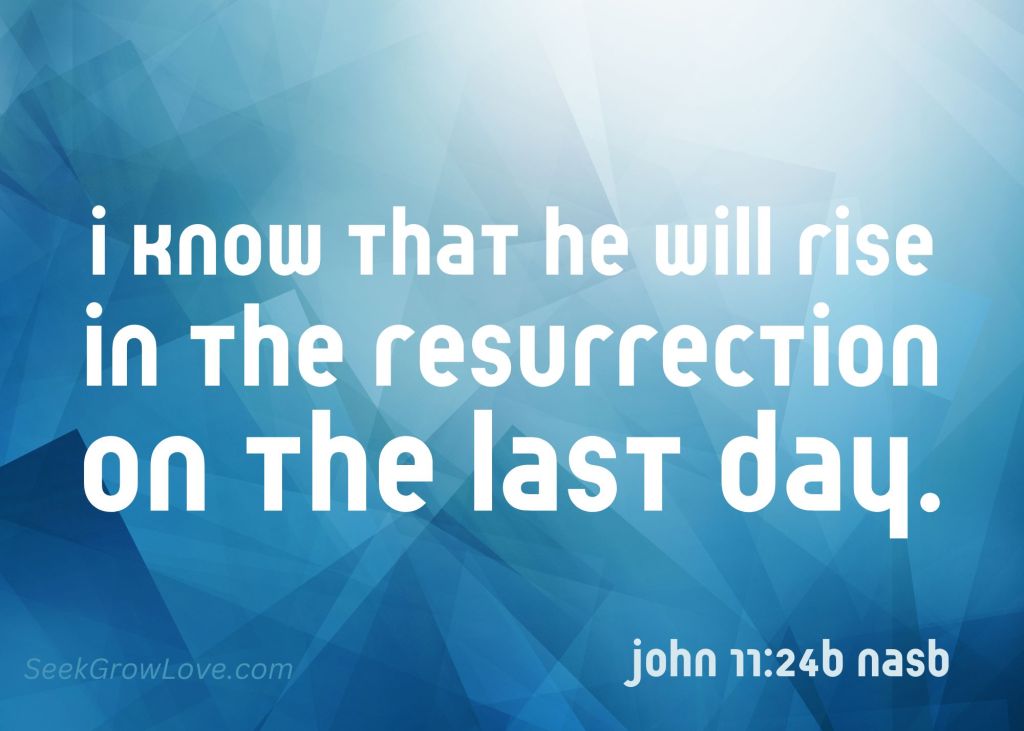
Christ promises those who believe in him that they will live, even though they die. But this resurrection is not taking place now, as if there is some sort of eternally present resurrection. Jesus’ statement that he is the resurrection is made in response to Martha. She had just said to him, “I know he will rise again in the resurrection at the last day.”
What we need to see is that Martha is not wrong. She knew about the timing of the resurrection of every believer; she just didn’t realize the blessing that was about to happen to her.
If it is true that the dead cannot praise God (Isaiah 38:18), if it is true that there is no work, planning, knowledge, or wisdom in the grave (Ecclesiastes 9:10), then maybe we should take to heart the deafening silence of Lazarus. He didn’t tell us anything because their isn’t anything that we need to know beyond what Jesus has said about himself in this chapter. We shouldn’t be waiting to fly away to glory when this life is over, but instead, we will be raised by the Resurrection and the Life Himself when this age comes to an end. Christ will open the book of life, and if we put our trust and hope in him, he will read our names.
Now that’s a book worth reading. The Resurrection is For Real.
-Jake Ballard
Reflection Questions:
What does it mean to you that Jesus IS the resurrection and the life?
Do you have a hope in the resurrection on the last day (of this age) like Martha did? If not, is there more study you can do about this hope – not in heaven tourism books but in God’s book.
One artist recently crooned the words “I’m not important and neither are you, so let’s do whatever we wanna do. Bask in our cosmic insignificance, soak up this blip we’re livin’ in, ‘cause nothing matters anyway. Isn’t that great?” He goes on to say “I don’t mean to be a downer. I don’t even think it’s sad.” The idea behind the song is that because nothing we do really matters, we can do whatever we want and know that in the end we haven’t really changed the course of the universe or the planet. It’s a prime example of Generation Z’s gleeful, enthusiastic nihilism. (“Nothing matters, let’s party!”)
Sometimes, we mistakenly read some of the words of the Teacher of Ecclesiastes in the same light. The Teacher’s point in Ecclesiastes is not that everything is meaningless. (Eccl. 1:2) Instead, we should translate the word meaningless differently. If you read Eccl. 1:2, you might read “meaningless”, “pointless”, “vanity”, or “futility”. The Hebrew word behind these translations is “havel/hevel”, which means smoke or vapor; something like the mist of the morning that disappears. It is not necessarily pointless, but transitory, fleeting, impermanent. The real point of Ecclesiastes is in chapter 1, verse 3 : “What does a person gain from all of his labors under the sun?” What lasts? What’s eternal? What is not “hevel”?
In chapter 9, the author makes the sobering and realistic comment that humans, the entire person is “hevel”. Both righteous and wicked, good and evil, all will experience the same life (9:2), a life of a bunch of crazy events, and then death (9:3). The author says it’s better to be alive than dead, and we should eat and drink (9:7), dress in white and take care of our bodies (9:8), and enjoy the people we love (9:9) in response to our view of death. Is the Teacher just as Nihilistic as our Gen. Z artist? Does nothing matter anyway, everything is meaningless, so let’s party as we wring some joy out of it?
NO! “The righteous and the wise and their deeds are in the hand of God.”(9:1) Go, eat, drink “for God has already approved what you do.” (9:7) The author of Ecclesiastes gives a spiritual but real view of this world. Spiritual, because God is at the center of the lives of the good, but real because death is the end of the ride here. The dead “know nothing”.(9:5) There is “no work or thought or knowledge or wisdom in Sheol [that is, the realm of the dead] (9:10). The author is serious about life. It is important to live it well, but also to enjoy it, because whatever death is, it is NOT life. The author of Ecclesiastes doesn’t give us reincarnation, nor does he tell us that we will live in a new world, nor is there any mention of heaven or hell. Death is the end.
Until it isn’t. Because if the point of Ecclesiastes is “what lasts?” The answer is found in chapter 12. Verses 13-14, “The end of the matter; all has been heard. Fear God and keep his commandments, for this is the whole duty of man. For God will bring every deed into judgment, with every secret thing, whether good or evil.” Fearing God, keeping God’s commandments, that is what lasts. And then humans are judged. That every deed is brought into judgement is one of the strongest implications of the future resurrection in the Old Testament. Our lives now, every choice we make, sets us on a path to joy or despair, life or death, seeing the face of God or God turning his face from us. For those who have placed God at the center of their lives, God will approve of what they do.
Humans are hevel, but humans are also the only things that will last. Humans are fleeting and temporary but some, those who follow Jesus the Messiah, the one sent from God, and keep his commandments, will one day be eternal, be those which last.
“I’m not important and neither are you.” Yes, we are both hevel and made eternal by grace.
“So let’s do whatever” God wants us to do.
“Bask in” love of the Father and the Son. “Soak up” the grace and blessings of the world that we are living in.
Because, we matter. Infinitely.
Isn’t that great?
-Jake Ballard
Reflection Questions:
How does one’s view of death contribute to their philosophy of and actions in life?
What is the Teacher of Ecclesiastes’ view of death? How is it similar and/or different from yours?
Paul’s 3-month stint on Malta feels like a fever dream. Paul, the crew, and his fellow prisoners aboard the ship find refuge on a not-so deserted island, Malta. The indigenous people of Malta welcome their cold and wet selves with open arms and “unusual kindness” (Acts 28:2), building a fire to warm them. As Paul tends to the fire, a venomous snake bites him. The people of Malta are quick to assume that he is a murderer getting the justice he deserves. Of course, Paul just shakes the snake off like it’s no big deal. Miraculously, Paul doesn’t drop dead and his wound doesn’t even swell. Having witnessed this miracle, the people are now convinced that Paul is a god.
After three days of enjoying the Maltese hospitality, Paul visits a man who was sick to minister to him:
It happened that the father of Publius lay sick with fever and dysentery. And Paul visited him and prayed, and putting his hands on him, healed him. And when this had taken place, the rest of the people on the island who had diseases also came and were cured (Acts 28:8-9, ESV).
What was an unplanned setback turned into an opportunity for healing and sharing the gospel. God had a purpose for this season—the same season that Paul could have overlooked as an unnecessary and unpredictable setback on his journey to share his testimony in Rome.
Joseph, who was no stranger to suffering and had a life full of mishaps, once declared:
As for you, you meant evil against me, but God meant it for good, to bring it about that many people should be kept alive, as they are today (Genesis 50:20, ESV).
In the same way, God meant Malta for good. Paul’s influence seems to have changed the entire trajectory of this little island. Now, in modern times, it seems half the island is named after Paul. The little island off the coast where Paul supposedly washed ashore, the cave where Paul supposedly stayed, cathedrals, catacombs, and parishes each boast his name. Historians have found that the timing of Paul’s visit lines up very closely to the timing of Malta’s adoption of Christianity. Skeptics find this link uncanny; I find it divine.
There is purpose in every season, even when you can’t yet see it. Just like He did with Paul, God is redeeming parts of your story. Where you see setbacks, He sees opportunity.
-Mackenzie McClain
Reflection Questions:
The people of Malta were “unusually kind” to Paul and his fellow shipmates. Who in your life needs your unusual kindness?
How have you seen God redeem parts of your story? How has he turned setbacks, failures, or heartbreaks into good?
What parts of your story can you still surrender to God?
I spent an embarrassing amount of hours taking silly personality quizzes on the Internet in my teenage years. I took quizzes like: Which dog breed are you? Which celebrity hunk are you must compatible with? How unlucky are you? If Paul were to take that last quiz, his result would be VERY UNLUCKY.
Acts 27 finds Paul VERY UNLUCKY—a prisoner, awaiting his trial, sailing towards Rome in a howling storm. Earlier in the voyage, Paul had foreseen the danger of traveling so late in the year (after the fall fast) and recommended against it, but his concerns were overlooked. Quickly, the storm turns from bad to really, really, really bad. In the height of the storm, in an effort to stay afloat, they dump much of their cargo, including their tackle and later even their provisions.
Beaten, starving, hopeless, and stranded in the middle of the ocean, Paul encourages his fellow men with these words… but only after a quick “I told you so” (It’s such a juicy line, who could resist? Not even Paul).
“Yet now I urge you to take heart, for there will be no loss of life among you, but only of the ship. For this very night there stood before me an angel of the God to whom I belong and whom I worship, and he said, ‘Do not be afraid, Paul; you must stand before Caesar. And behold, God has granted you all those who sail with you.’ So take heart, men, for I have faith in God that it will be exactly as I have been told” (Acts 27:22-25, ESV).
Paul’s peace under pressure is the fruit of his faith that God will do what he says. God himself told Paul that he would stand before Caesar in Rome. Therefore, Paul will stand before Caesar in Rome. No storm can stop the fulfillment of God’s word.
Paul’s peace under pressure reminds me of Jesus, who just days before his biggest storm leaves his followers with this message:
“I have said these things to you, that in me you may have peace. In the world you will have tribulation. But take heart; I have overcome the world.” (John 16:33, ESV).
Like Paul, and Jesus before him, we can have peace in the midst of storms. You will face trials and tribulations; some days you will be downright VERY UNLUCKY. Yet, no matter the magnitude of the storms we encounter God promises victory. Take heart!
-Mackenzie McClain
Reflection Questions:
Paul uses God’s word to encourage those who are defeated. Who in your life needs encouragement—needs to hear God’s promises?
How can you remind yourself of God’s promises when you are in the midst of a storm?





 Seek Grow Love