Five Women

Matthew 1 and Luke 2:1-38

Devotion by Telva Elwell (SC)

Matthew begins the New Testament with the genealogy of Jesus Christ the Messiah to confirm that he was the prophesied direct heir to King David’s throne. Because we so often sleepwalk through this genealogy, we almost miss five names. Five names that belong to women— Tamar, Rahab, Ruth, Bathsheba, and Mary.  It was not customary to include women in genealogies, so we are left to wonder why Matthew included them.

TAMAR

 Hers was a sad, terrible story of grief and sin.  Genesis 38 recounts her story.  She first married Judah’s oldest son, who was so wicked the Lord took his life. At that time, if a woman’s husband died, her deceased husband’s brother would marry her to provide for her and keep her in the family. So, Judah arranged for Tamar to marry his second son, who, unfortunately, followed in his brother’s footsteps and was put to death by the Lord.  Judah promised Tamar that she could marry his third son when he grew up, but Judah had lied.  Tamar was in great need, so she developed a plan and deceived Judah by disguising herself as a prostitute.  Her plan worked, and Tamar became pregnant with twins. When Judah was told that his daughter-in-law was pregnant through prostitution, he ordered her to be burned. But, as the story unfolded, Judah realized that Tamar was the prostitute he had bought. Not a pretty story, but Judah confessed and took responsibility for his sins, and said, “she is more righteous than I, since I did not give her to my son Shelah.” (Gen 38:26)  

 The story of Tamar and Judah demonstrates that God can use the most scandalous circumstances for His purposes. Tamar became the first women mentioned in the genealogy of the Messiah, where Tamar and Judah’s son, Perez, became the father of Hezron. (Matt 1:3) The lineage of Jesus continued, despite a bump in the road.

RAHAB The HARLOT.

 Everyone knew her profession. She was that Canaanite prostitute living in Jericho. Throughout the Bible she was known as Rahab the harlot.  Even in the faith chapter she is called Rahab the prostitute. (Heb 11:31)

But Rahab was also known for something else, something much more important.  She was the one who kept the Israelite spies safe in her home in Jericho when they were sent by Joshua to spy out the land. (Josh 2) She willingly lied to the King of Jericho about the whereabouts of the spies, jeopardizing her own safety, because “the Lord your God, he is God in the heavens above and on the earth beneath.” (Josh 2: 11) How often do we judge people by things that don’t matter—their appearance, their house, their wealth, or their “job”, when what we need to focus on is their faith, and that God can redeem anyone.  Even a prostitute. That is what the coming of the Messiah was all about—redemption.

 “Salmon the father of Boaz, whose mother was Rahab.” (Matt1:5)

RUTH

There are so many words that you could use to describe Ruth.  Faithful, selfless, caring, giving, devoted, loving, reliable, unwavering, a Moabite.

Ruth’s husband had died, and there were no more sons of Naomi for her to marry.  Even Naomi’s husband had died.  There was no way for Naomi to provide for Ruth.  So, Naomi gave Ruth permission to return to her native home where her family could provide for her.  She refused.  Why? Because Ruth loved Naomi with a steadfast love. “Wherever you go, I will go; wherever you live, I will live.  Your people will be my people, and your God will be my God. Wherever you die, I will die.” (Ruth 1:16,17). She promised to love and care for Naomi until the end. She did not have to do that.  She was free to return home. She chose to stay.

 In God’s perfect timing and plan, Ruth, the Moabite, was blessed with a husband by the name of Boaz.  They had a son named Obed, who had a son named Jesse, who had a son named David. (Matt 1:5)

BATHSHEBA

If you take a quick glance through the genealogy, you will not notice the name of Bathsheba. That is because Bathsheba is referred to as Uriah’s wife. “David was the father of Solomon, whose mother had been Uriah’s wife.” (Matt 1:6) Bathsheba was the wife of Uriah. You probably remember that story.  As the story goes, Bathsheba was the faithful wife of Uriah.  King David spotted her one day out on a roof top and desired her.   Since David was the King, what the king said or wanted must be obeyed.  She obeyed him, and in the end, King David arranged for Uriah’s murder to cover his sin.  Eventually David married Bathsheba, but it is heartbreaking that King David’s life is marred by adultery and murder. Yet it demonstrated how desperately Israel and David needed the promised Messiah, and how desperately we need him too, “because he will save his people from their sins.” (v21)

“David was the father of Solomon, whose mother had been Uriah’s wife.” (Matt 1:6)

MARY

She was willing. She was humble. She believed in God.  She submitted to God’s will and plan.  She was young, and she was a virgin. Miraculously, she was a mother—the mother of Jesus who was called the Messiah.

Mary’s story of the virgin birth of Jesus was improbable if it weren’t for the working of the Holy Spirit. But it is true.  Soon the whole world would know.

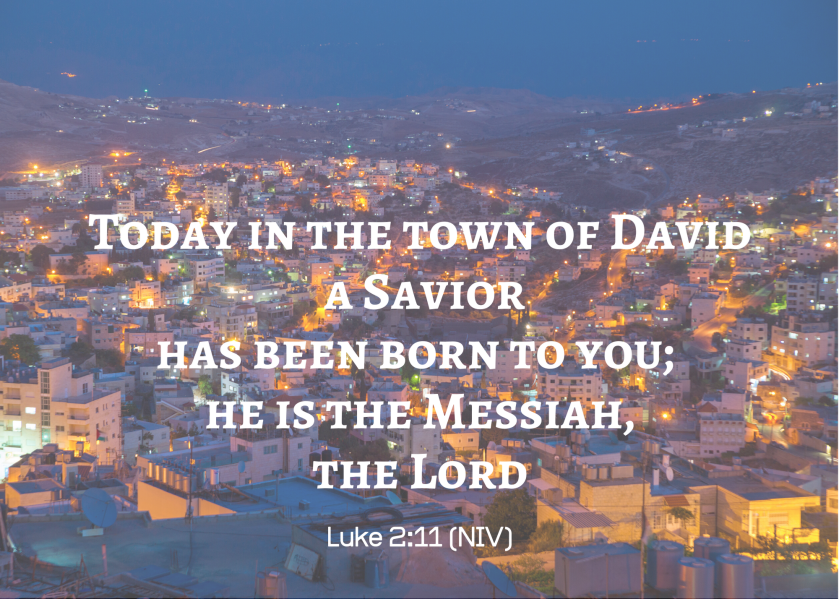
 In the quiet of the night shepherds were in the fields taking care of their sheep, when suddenly an angel of the Lord appeared to them awakening them out of their drowsiness.  They were terrified.  But the angel said, “Do not be afraid.  I bring you good news that will cause great joy for all people.  Today in the town of David a Savior has been born to you; he is the Messiah, the Lord.” (Luke 2:8-11) Then “suddenly a great company of the heavenly host appeared with the angel, praising God and saying, ‘Glory to God in the highest heaven, and on earth peace to those on whom his favor rest.” (Luke 2: 13-14) The shepherds traveled to Bethlehem, and there they saw the baby Jesus, surrounded by Joseph and Mary, his mother.  After seeing Him, they testified to what they had seen, and all who heard it were amazed at what the shepherds told them. (Luke 2:16-18) Very soon the whole world would know.

“And Jacob the father of Joseph, the husband of Mary, and Mary was the mother of Jesus who is called the Messiah.” (Matt. 1:16)

It is true.

Reflection Questions

Question One:  Why do you think that Matthew included the names of these women in the genealogy of Jesus, when it was not customary to do so? Which story was your favorite? Why?

Question Two:  How do you think Matthew intended these stories of these five women to impact your understanding of the coming Messiah?  Which of the five stories had the most impact on you? Why?

Question Three: Do you think that the instances of adultery, prostitution, and murder were just happenstances or planned? Did those sins ruin the story line of the Messiah or make it more meaningful? How does that impact what you believe about the fulfillment of the purposes of God?

Question Four: What about your life?  Do you have skeletons tucked away in your closet that keep you from working out the plans and purposes of God in your life?  Can you now break free from that after hearing the stories of Tamar and Judah, Rahab the Harlot, or Bathsheba and David? 
“I believe; help me in my unbelief.”

Luke 1 and John 1:1-14

If you have been reading with us from the beginning of the year – welcome to the New Testament!

Devotion by Telva Elwell (SC)

Malachi had last spoken 400 years ago and had promised that the Messenger would come.  “Behold, I send my messenger, and he will prepare the way before me.”  Surely Zechariah, as a priest, knew this well. But to put it mildly, God caught him off guard one day.

Zechariah was busy in the Holy Place offering incense, a duty Zechariah was permitted to do only once in his lifetime, when suddenly out of nowhere, the angel Gabriel stood by the altar. Of course, Gabriel had to calm Zechariah, because he was focused upon his task and not expecting Gabriel’s visit.  “Fear not,” he said. Not only did Gabriel’s presence startle Zechariah, but the news he brought was also startling.

Gabriel told him that Zechariah and Elizabeth, his wife, were going to have a son!  One would expect this to be good news for Zechariah because Elizabeth and Zechariah had been praying for a child for many years. Zechariah did not believe such a thing possible because he was an old man, and his wife was advanced in years as well. (Luke 1:18) This story was reminiscent of Abraham and Sarah, for God had also said that He would give them a son in their old age.  “Abraham fell on his face and laughed.” (Gen 17:17) 

Before he could even grasp the idea of having a son in his old age, Gabriel told him to name his son John, and that John would grow up to be God’s prophet to show Israel God’s son.  “And he will turn many of the children of Israel to the Lord their God, and he will go before him in the spirit and power of Elijah to turn the hearts of the fathers to the children, and the disobedient to the wisdom of the just, to make ready for the Lord a people prepared.” (vs16-17) (Mal 4:5) I understand that this was a lot to take in. But none of it was new to him. He was well acquainted with the promises of God as told by Malachi and other Old Testament prophets. This was the day, the time, that Zechariah, the priest, was looking forward to.   What a blessing and privilege to be the father of the much-anticipated Messenger who would turn the children of Israel to God. But something got in the way of that for Zechariah.

Instead of rejoicing, Zechariah demanded proof that this was even possible.  Even though an angel, who stands in the presence of God, came to deliver this good news, Zechariah believed this was all nonsense.  He wanted proof—not just a proclamation of an angel of the Lord.  “How can I be SURE of this?” he asked. (vs18) Gabriel gave him proof in the form of punishment. “I am Gabriel. I stand in the presence of God, and I was sent to speak to you and to bring you this good news. And behold you will be silent and unable to speak until the day that these things take place, because you did not believe my words…” (vs19,20) Zechariah was struck dumb, (v20) and quite possibly deaf. (v62)    

When Zechariah finished his priestly duties, he walked home to his faithful wife, and in time, she conceived. For nine months his words did not come, and his world was silent.  Every waking moment of every day, Zechariah was reminded of his unbelief.

I would be remiss in not mentioning Mary. Gabriel also brought her unexpected news. Although young, a virgin, and unmarried, she was also going to have a son—God’s Son, the Messiah. Her response was unlike Zechariah’s.  Instead of demanding proof that this could happen, she humbly submitted to God’s plan as His servant. “Behold I am the servant of the Lord; let it be to me according to your word.” (v38) While Zechariah sat silently with his thoughts running rampant in his head, Mary rejoiced in prayer and song. (vs.46-55)

 In time, Elizabeth gave birth to a son.  Relatives and neighbors and friends heard the good news and rejoiced with her. Then something truly miraculous happened.

By custom Jewish boys were circumcised eight days after birth, at which time a name was given to the child. The expectation was that this child would be named Zechariah, after his father, but Elizabeth said his name would be called John, just as Gabriel had told Zechariah. It was unusual not to name the son after his father or another family member, so Zechariah was asked what he wanted the child to be called.  Zechariah asked for a tablet and wrote the words, “His name is John.” (v63) That name, John, means God is gracious. When Zechariah penned the baby’s name, “John” on his tablet, he was declaring his belief in God’s faithfulness and grace, and affirming Gabriel’s message to him concerning his son, John. A simple thing, yet profound. Because God is gracious, Zechariah’s tongue was immediately loosed. (v64) Because God is gracious, He did not forget or abandon Zechariah, even when he did not believe.  That does not mean that it is okay to not believe.  We need to believe God. But when we struggle, God is there.   

Belief and unbelief are often at war with one another in our lives.  Sometimes we struggle to believe, much like Zechariah, and then other times we simply believe without doubt or question, much like Mary.  When we struggle, sometimes it is the small things that awaken our faith and cause us to believe—like a new baby named John

That same small baby, named John, awakened the faith of the children of Israel years later when as a man he “came as a witness, to bear witness about the light that all might believe through Him.”  (John 1:7)

Reflection Questions

Question One:  Why do you think God chose to make Zechariah a mute as punishment for his unbelief?

Question Two:  Why do you believe Zechariah struggled to believe God?  Are there times when you struggle to believe God?  Why? When?

Question Three: Right now, where are you in your belief?  More like Zechariah, the high priest, or more like Mary, the young virgin? 

Question Four:  In Mark 9:24, a man came to Jesus and said: “I believe; help me in my unbelief.” How can someone say, I believe, and at the same time ask for help in overcoming unbelief? Do you believe this was the situation with Zechariah?  Is this your situation on occasion?

Ask Not for Justice, but for Forgiveness

Nehemiah 13 and Malachi 1-4

Devotion by Telva Elwell (SC)

Oh, how Nehemiah must have wished for a happy ending.  Jerusalem seemed to have been on the right track. The people were singing songs of praise and worship as they marched on the newly rebuilt wall of Jerusalem.  Joy filled the streets of Jerusalem and the hearts and souls of the people.  Fast forward to the future by about 11 or 12 years, and during that time the people had jumped off the wall and were up to their eyeballs in the filth of sin and rebellion to God and His laws.  Nehemiah had gone back to Shushan to his previous position, but when he heard the news of the sad state of affairs in Jerusalem, he returned to Jerusalem once again.  How could things have gone so terribly wrong?

If Nehemiah had prepared a list of things the people were doing wrong, it would have looked something like this.

Things you are doing wrong:
Nehemiah 13
  1.  You are mixing it up with outsiders like the Ammonites, and Moabites, who are enemies.
  2. You are allowing Tobiah to live in a large room in the temple.  Eliashib, a high priest, has given him a room because one of his relatives was married to Sanballat’s daughter, and Sanballat and Tobiah were friends.  (I know, it’s a bit confusing.  But we all know who Sanballat and Tobiah are, and this just can’t be good.)
  3. Tobiah is literally living in a room of the temple dedicated to the storing of the offerings used by the Levites.  (Umm, not good.  Where are the offerings kept now?)
  4. Where ARE the offerings?
  5. You are allowing your daughters and sons to marry people from Ashdod, Ammon and Moab, which you promised NOT to do.  Many of their children even speak foreign languages.
  6. You have stopped paying taxes!  You have stopped giving tithes and offerings to the priests and can’t even provide wood for the altar. (13:32-39). (Guess that is why “room” previously used for storage and offerings had opened up for Tobiah in the temple.)
  7. You are working and selling on the Sabbath, which you promised not to do! (10:31).
  8. Need I continue?
Signed:  Nehemiah

Sounds like Nehemiah had his work cut out for him.  Apparently so did Malachi, the prophet.  Malachi’s words against the people of Israel sounded hauntingly similar to Nehemiah’s words when describing the sins of the people of Israel.

Things you are doing wrong:
  1. You doubt the love of God (Mal 1:1-5) (see also Deut. 6:4,5).
  2. The priests are cheaters who offer polluted, lame, sick and blemished offerings to God (1:6-14).
  3. You divorce your wives then marry pagans (2:1-16).
  4. “You have wearied God with your words saying, everyone who does evil is good in the sight of the Lord, and He delights in them” (2:17-3:6).
  5. You are thieves.  You are keeping your tithes and offerings (3:1-8).
  6. “You have spoken against God by saying that it is vain to serve Him, and what is the profit of keeping His commandments? You call the arrogant blessed” and say that “evildoers prosper”. (3:13-15)
  7. You ask, “Where is the God of justice?” (2:17)
        Signed:  Malachi, the Prophet

What Israel did not realize was that they did not need justice as much as they needed forgiveness.

Whereas Nehemiah took a more hands on approach to the problems, even to the point of throwing furniture, hitting and cursing certain men, and pulling hair from their heads (Neh 13:25), Malachi would debate them, beginning with an accusation, then Israel would dispute that accusation, but in the end, God would have the final word. 

Israel demanded to know “Where is the God of justice?”  What they wanted was justice for their wicked enemies and they wanted it now. They claimed that “everyone that doeth evil is good in the sight of the Lord, and He is pleased with them” (2:17). How can a just God do such things?

And so, God Almighty responded! “I will send my messenger, who will prepare the way before me. Then suddenly the Lord you are seeking will come to his temple; the messenger of the covenant, whom you desire, will come. (3:1) He then asked a question: “Who can endure the day of His coming, and who can stand when He appears?” (3:2) For “He will purify the sons of Levi and refine them like gold and silver” (3:2,3) “So I will come to put YOU on trial…says the Lord Almighty.” (3:5).

This is not where Israel expected the debate to go. They wanted God to deal with their enemies now. Instead, Malachi is telling them that they need to be cleansed and purified now.

 “Return to Me, and I will return to you.” (3:7) Will they accept that cleansing?   Will they return to Him?  Will they accept His forgiveness? Oh, how Nehemiah and Malachi must have longed for the people to return to God, and “to assemble with fasting, and with sackcloth and earth upon them.  And for the seed of Israel to separate themselves from all strangers, and stand and confess their sins, and the iniquities of their fathers”, as they did when the wall was rebuilt. (9:1-2).

Hope and a Promise

God, the God of Justice, assured them that He will take care of the evil ones.  “Surely the day is coming; it will burn like a furnace. All the arrogant and every evildoer will be stubble, and the day that is coming will set them on fire,” says the Lord Almighty. “Not a root or a branch will be left to them.  But for you who revere my name, the sun of righteousness will rise with healing in its rays.  And you will go out and frolic like well-fed calves.  Then you will trample on the wicked; they will be ashes under the soles of your feet on the day when I act,”’ says the Lord Almighty. (4:1-3) But for Israel it depended upon them deciding now which group they belonged to—the arrogant and evildoers, or those who revere His name.

 “Return to Me”, He pleads.

 He then ends with this promise: “I will send the prophet Elijah to you before that great and dreadful day of the Lord comes.  And he will turn the hearts of the parents to their children, and the hearts of the children to their parents” (4:5).

 As for us, just like Israel, it all depends upon taking accountability and confessing our sins because He is faithful and just and will forgive. (1John 1:9)

Reflection Questions

  1. Did jealousy play a role in the sins of Israel?  If so, does it still play a role in our lives and sin today?
  2. Why do you think it was so easy for Israel to fall back into sin repeatedly?  Were they sincere when they walked the wall of Jerusalem singing praise and thanksgiving?
  3. Do you find it difficult to stay away from sin?  Why?  Can you relate to Paul’s struggles in Romans 7:7-25? In what ways?

Joy in the City

Nehemiah 11-12 and Psalm 126

(saving Nehemiah 13 for tomorrow)

Devotion by Telva Elwell (SC)

The wall and the gates of Jerusalem had been rebuilt. (Nehemiah 6:15) Leadership and positions of service had been filled. Israelites were moving in to occupy the city of Jerusalem. (Nehemiah 11) The stage was set for a celebration!

It was time!

The dedication of the wall of Jerusalem attracted people to come to Jerusalem to be present for the dedication of the wall of the city.  What a huge crowd that came that day!  The Levites came to celebrate the dedication with gladness, thanksgiving, and singing.  Cymbals, harps, and lyres were played in great celebration.  In addition, singers came from the areas around Jerusalem, and other surrounding areas.  The singers had even built for themselves villages around Jerusalem.  The priests and Levites purified themselves and the people.  All the celebrants were spiritually prepared and excited!  Let the celebration begin! (12:27-30)

Nehemiah then brought the singers and musicians up onto the wall.  What excitement must have stirred through the crowd when they mounted that wall that many thought impossible to rebuild!  The city must have exploded with songs of praise and thanksgiving as Nehemiah instructed one half of the singers to sing songs of praise, accompanied by the blast of trumpets and other instruments created by David, the man of God.   He sent them to march south on the top of the wall, along with Ezra the scribe.  As they marched, they sang loudly with whole hearts overflowing with praise.  Likewise, the second choir was sent to march north on top of the wall, along with Nehemiah.  They sang and worshiped and praised the great God who had done mighty works in Jerusalem.  The two choirs then met at the house of God where they gave thanks and presented sacrifices to their great God. They rejoiced! “For God had made them rejoice with great joy. And the joy of Jerusalem was heard far away.” (v. 43)

One of the Songs of Ascent was probably song.  Psalms 126, one of those songs, has such meaningful words for such an occasion as this:

“When the Lord turned again the captivity of Zion, we were like them that dream. Then was our mouth filled with laughter, and our tongue with singing; then said they among the heathen, The Lord hath done great things for them.  The Lord hath done great things for us; whereof we are glad.  Turn again our captivity, O Lord, as the streams in the south.  They that sow in tears shall reap in joy.  He that goeth forth and weepeth, bearing precious seed, shall doubtless come again with rejoicing, bringing his sheaves with him.”

Yes, the joy of Jerusalem was heard far away, but how that joy must have stung for some.

Throughout the celebration of praise and thanksgiving to God, this message was being seen and heard by those outside the congregation of the Israelites.  There were a few familiar faces and names of people among the foreigners who probably wanted to hide in embarrassment.  And it was all because of the completion of the work at Jerusalem on the 25th day of Elle (6:15).  “All the nations around us were afraid and fell greatly in their own esteem, for they perceived that this work had been accomplished with the help of our God” (6:16).  Even their enemies and naysayers believed that what they were hearing with their ears and seeing with their eyes, was indeed proof positive that God was with Jerusalem and that He had caused the wall and gates of the city of Jerusalem to be restored! (Ps. 126:2)

Flash back several weeks earlier when word spread throughout the region that the wall was being rebuilt. Sanballat and Tobiah were up to their mischief trying to discourage and hinder the work of the Jews in rebuilding the wall.  They teased; can these feeble old Jewish men even build these walls themselves?  Will they sacrifice? They knew it would take more than a few prayers to rebuild the wall.  Could they even finish it?  They laughed at the materials they were using, calling the stones rubbish, because they were broken and burnt.  They jeered, “How could anyone build anything out of trash?” (4:2) And yet, they built it!  There it stood on this great day of dedication after its completion. So, with God even feeble old men can accomplish great things!  Yes, they were able to finish the wall with God’s help!  Even burnt stone dug from the rubble could become a strong wall!  Sanballat and Tobiah probably heard the praise, the trumpet blasts, the loud songs of worship that day and cringed. But what may have been worse was seeing the wall standing strong, and the people standing strong and thankful upon that wall—that very wall that Tobiah declared would fall in a heap if even one fox went up on to the wall. (4:3). This was just what Nehemiah prayed to God to do…to “turn their taunt on their own heads” (4:4). What a testimony to God and the power of prayer!   Now a multitude of people stood upon the wall and sang out praises to the One true God for the whole world to hear!

What are you doing to make sure that your wall stays strong, and that songs of praise to the One true God can be heard in your part of the world?

Reflection Questions

  1. What is praise?  How important is expressing praise in your prayers to God?  What things do you praise God for?  Is there a relationship between expressing praise to God and feeling joy in your life?
  2. What is the difference between praise and thanks?  Or are they the same thing? Do you share your thanksgiving and praise with others?
  3. What did Paul mean when he said, “In all things give thanks?  (1 Thess. 5:18) Does giving thanks remove fear and worry from your life? How do you incorporate giving thanks in your life when you feel overtaken and undone by loss or grief?

Amazing Grace

Nehemiah 8-10

Devotion by Telva Elwell (South Carolina)

This chapter, Nehemiah 9, contains the longest prayer in the Bible.  No, prayer is not a contest, but sometimes it takes a lot of words to get things off your chest.  Other times it only takes a few words to speak your heart to God.  When Jesus hung on the cross, he only needed 10 words— “Father, forgive them for they know not what they do.”  But in Nehemiah’s day in Jerusalem, it took a lot of words to get everything out so that God’s people could express their forgiveness and experience restoration.

And so, they prayed.

Sometimes we need to express our heart in different ways.  In Nehemiah 9 it is written that the people expressed their sin, their shame, and their remorse in many ways.  They fasted; they wore sackcloth and ashes.  They threw handfuls of dirt on their heads; they separated themselves from others; they confessed their sins along with the sins of their ancestors. They even signed a binding contract promising obedience to God.  All of these things were important, but it was what they expressed from their hearts that was probably the most meaningful. Often those feelings are expressed without words, but with tears. Peter remembered Jesus’ prophesy, “Before the rooster crows, you will deny me three times,” and after his third denial, Peter “went out and wept bitterly” (Matt 26:75). (See also Rom. 8:26). Tears speak a language our tongues cannot.  Nehemiah understood.

When Nehemiah received the report from his brother, Hanani, that the Jewish remnant was in “great trouble and disgrace” and that “the wall of Jerusalem is broken down and its gates have been burned with fire…he sat down and wept…” (1:3.4)

And then he prayed:

“I confess the sins we Israelites, including myself and my father’s family have committed against You. We have acted very wickedly toward You. We have not obeyed the commands, decrees and laws You gave your servant Moses.” (1:6,7)

As I read this prayer, I noticed that these people acknowledged failing their God six times, by disobeying and betraying Him.

  •  “Our fathers acted presumptuously and stiffened their neck and did not obey your commandments. (9:16)
  • “They had made for themselves a golden calf and said, “This is your God…” (9:18)
  • “They were disobedient and rebelled against You and cast your law behind their back and killed your prophets…and they committed great blasphemes.” (9:26)
  • “They did evil again before You.” (9:28)
  • “Yet they acted presumptuously and did not obey your commandments but sinned against your commandments.” (9:29)
  • “Even in their own kingdom, and amid your great goodness that You gave them, and in the large and rich land that You set before them, they did not serve You or turn from their wicked works.” (9:35)

And six times they came crawling back, probably wrapped in their sackcloth and covered with dirt and grime.  Each time they acknowledged the goodness and greatness of God!

  • “But You are a God ready to forgive, gracious and merciful, slow to anger and abounding in steadfast love, and did not forsake them.” (v17)
  • “You in your great mercies did not forsake them in the wilderness.” (v19)
  • “Forty years You sustained them in the wilderness, and they lacked nothing.” (v21)
  • “According to your great mercies You gave them saviors who saved them from the hand of their enemies.” (v27)
  • “Many times, You delivered them according to your mercies.” (v28)
  • “Nevertheless, in your great mercies You did not make an end of them or forsake them, for You are a gracious and merciful God.” (v31)

He did not forsake them.

 But when will He despair of their sins and wickedness?  When will God decide He has had enough?  When will He turn His back on His people?  When will He turn His back on ME?  When will He stop listening to MY prayers of confession?  Never.  Because that is who He is! He is “a forgiving God, slow to anger and abounding in love.” (9:17) “Nevertheless, in your great mercies You did not make an end of them or forsake them for You are a gracious and merciful God.” (9:31).

“For He will never leave you or forsake you,” (Duet.31:8) NEVER. So, every time that you mess up and dishonor God, pray.  Because God forgives.

 Every time.  

Reflection Questions:

  1. The people choose to fast when they prayed.  Have you ever fasted when you prayed?  Did it ever change the experience for you?  If you have, what kind of occasions do you think are appropriate for fasting and praying? 
  2. Why do you think the Jews acknowledged God’s greatness and mercy in their prayer of forgiveness? 
  3. Remember Judas’ sin of betrayal of Jesus and later his suicide?  Did he show signs of regret?  If so, was that the same as confession?  Do you think the outcome would have been different if he had confessed, as the Jews did, and then acknowledged the mercies of God?  Or was he just too depraved?  Did he feel he was beyond being forgiven? Was he too ashamed?  Have you ever felt that way?

Slinging Trash

Nehemiah 4-7

Devotion by Telva Elwell (South Carolina)

Have you ever been ridiculed, called embarrassing names, laughed at, or pretty much just made to feel like you just wanted to crawl in a hole?  Suppose you were doing something important and putting your whole heart into it. Did you want to throw your arms up in the air and give up? If this has happened to you, you are in good company. The weapon of ridicule has been around for a long time. Remember the Day of Pentecost when the disciples were called “drunks” (Acts 2:13), and later when Paul the Apostle was called a “babbler” (Acts 17:18).   Those doing good and important things may feel ashamed or discouraged and thus abandon their work.  Sadly, many times ridicule does work, but not in the case of the Apostles, Paul, or even Nehemiah.

You might ask, why do people resort to such hurtful behavior?  The answer is simple: They have no other weapons.  They may “sling trash” simply to be mean or hurtful, or they may be trying to discourage you from your good work. Such was the case of Nehemiah. Let’s look at how he responded to the ridicule he experienced.

Nehemiah had given up a lot to go to Jerusalem, but he was on a sacred mission.  He was going to do the impossible and rebuild the wall of Jerusalem and rebuild the gates.  If he had submitted a resume for this job, he probably would not have gotten the job.  After all, he was a cupbearer. A cupbearer, for goodness sake!  He was not someone who was handy with building tools and blueprints.  He was the perfect candidate to receive ridicule and fail.  If Paul was a “babbler” and the other apostles were “drunks”, then Nehemiah was a “babbling drunk” — except for the fact that he was getting the job done.

Sometimes seeing someone accomplish a task, especially a huge task, makes people angry, fearful, and jealous.  Enter Sanballat, Tobiah, and Geshem.  (Neh. 2)  These three musketeers had a mission also, and it was in direct conflict with the mission of Nehemiah.  If this was a play, they were the discouragers and naysayers.  They heard about the mission to restore Jerusalem and were determined to oppose the work.  And they began immediately.  Nehemiah had just given the peptalk to his workers when these three discouragers showed up.  Nehemiah reports, “they jeered at us and despised us”, then they asked, “What are you doing?  Are you rebelling against the King?” (2:19) Their tactic was ridicule and then tossing in seeds of doubt and false accusation for good measure.  How would Nehemiah respond? How should he respond?

Nehemiah’s choices were: One: ignore the ridicule or, Two: Debate with the men and try to convince them that they were wrong.  Nehemiah chose neither.  He simply told them like it was. He told them (1) The God of Heaven will make us prosper. (2) His servants will arise and build. (3) You have no portion or right or claim in Jerusalem. (2:20).  For a while Nehemiah’s words to them seemed to work.  The Jews were able to accomplish much and build back the gates of Jerusalem. (chpt 3).  But do you really think that the three musketeers were done?  If so, think again.

Sanballat and his foolish friends found it necessary to somehow end the work of the Jews in Jerusalem because they feared them and what they might do to them.  If Jerusalem was made strong, they would be weak (and less wealthy). Seeing the gates of Jerusalem being rebuilt caused them fear and anxiety.

So, once again, Sanballat and his sidekicks took out their childish games playbook and began calling the Jerusalem builders names.  They attempted to taunt them by calling the workers “feeble” implying they were miserably weak old people.   They continued their name calling by implying they were also stupid people because they were building a weak and worthless city wall. Tobiah undoubtedly thought he was funny and clever when he suggested that the wall was so weak that if a fox walked on it, the wall would tumble to the ground.  (4:1-3) Truthfully, many of the builders were discouraged, but they persevered. 

 Nevertheless, Nehemiah prayed, “Turn back their taunt on their own heads.” (4:4) Eventually, their taunts will come back to haunt them, just as Nehemiah prayed.

 “So, they built the wall…” (4:6)

Sanballat and his buddies continued to attempt to hinder Nehemiah’s work on the wall by various means, but at each turn their attempts were met with defeat.  Nehemiah continued to lead the work, and he ignored the childish mischief.  The insults, the rude name calling, the ridicule—the trash slinging failed to work! 

“So, the wall was finished on the twenty-fifth day of the month of Elul, in fifty-two days!” (6:15)

The next time you feel you are being pursued by troublemakers as you do the work that God has given you to do, remember Nehemiah.

 And remember 52 days.

Reflection Questions

  1. Have you ever been the victim of someone’s unkind words?  How did those words make you feel?
  2. How did you respond?  Did you throw unkind words right back at them?  What is the best way to respond?
  3. Do you think Nehemiah responded properly?  If he had responded by returning insult for insult, arguing, debating, or giving up the work, how would the builders have felt and responded?  How would the trash slingers feel?

Ask Me if I Care

Nehemiah 1-3

Devotion by Telva Elwell (South Carolina)

When someone says, “Ask me if I care”, it is generally said in a sarcastic manner, leading us to believe that this individual does not care.  “Why would I care about that?”  (That situation does not affect me.)  “What’s the point?” (Nothing is going to change.) “I have better things to be concerned about.”  (My life is more important.)  “My life is good, so why should I worry about someone else’s troubles?” (Let everyone take care of their own business.) I bet every one of us has said or thought these things at least once in our lives.  I know I have, and sadly, I felt justified in feeling that way.

It was probably an ordinary day in the life of Nehemiah, if there was such a thing for Nehemiah.  After all, he was the cupbearer for a powerful king.  He stood in his presence every day, making sure his needs were all taken care of. It was a cushy job with a lot of perks and great benefits. Lucky Nehemiah, right?   But along comes his dear brother, Hanani, to visit Nehemiah.  It was good to see him, I am sure, but Nehemiah’s life was about to be upended in an unexpected way!  Perhaps foolishly Nehemiah inquired about the Jews (his people) who had survived the exile and the condition of the city of Jerusalem, expecting good news or maybe a simple answer like, “Oh, things could be better” with a shrug of the shoulders.  End of discussion.  Instead, what he heard was, “The remnant there in the province who had survived the exile is in great trouble and shame.  The wall of Jerusalem is broken down, and its gates are destroyed by fire.” (1:3).  Was this Nehemiah’s problem?  After all, it had happened a while ago and now Nehemiah had a great position with the King and lived 800 or more miles away from all of that. Kind of like, out of sight, out of mind. How easily, and perhaps justifiably, Nehemiah could have wished them the best and continued living his happy life.  Who would have blamed him? We would have done the same. Right? Deep inside, Nehemiah might be thinking, “Why would I care about that?”

Instead, however, as soon as Nehemiah heard their words, he “sat down and wept and mourned for days and continued fasting and praying before the God of Heaven.” (vs 4) It is hard to deny the fact that Nehemiah was filled with sorrow and empathy.  But does he really care?  How far will this caring take him?  What can he really do anyway, being that he is working for a powerful king in Persia many miles away from Jerusalem?

Nehemiah could not let it go.  He had to do something. This is where it got tricky for Nehemiah.  He could not just say, “I can’t do anything to help.”  He could not just say, “My work in the palace is more important.”  He had to do something.  So, he went to the King to get his permission to take a leave of absence and to go to Jerusalem. That was the tricky part because the King had every right to refuse his request. Through the work of the Lord, however, the King granted him permission.  Then, because he was ill-prepared to rebuild the wall of the city, he would have to figure out how to accomplish that, and how to lead the band of survivors in that task.  Nehemiah was willing to leave the safety and comfort of the palace for living in a ruined city.  He did so, without excuses as to why he could not build the wall and gates of Jerusalem, and he did it in 52 days because of his faith in the God of Heaven! He did it because he cared.

It is safe to say that we will never be faced with such a monumental task.  Such a task comes seldom, and only to a man like Nehemiah.  But we are faced with important tasks, nonetheless.  People are hurting, they have needs, they need a gentle hand, a listening ear, they need someone to pray for them and with them, or maybe your church has a Sunday School class without a teacher.

We are not Nehemiah, but we can be like him.

We can care.

Reflection Questions

1. Are there times when it is okay to genuinely not care?  Are caring and doing inseparable?  Are there times when it is okay not to help?  Does that mean you don’t care?

    2. What are your first thoughts when you are asked to help with something important?  Do you first think about all the reasons that would make you unable to help? Are all those reasons real or just excuses?  Or do you first consider the ways/solutions that would make you able to help? Is prayer part of your process?

    3. How would have things turned out if Nehemiah had decided he really didn’t care or simply did not want to help?

    We Need More Ezras

    Ezra 7-10

    Devotion by Carla Hardy (Michigan)

    The name Ezra comes from a Hebrew word that means “help.” Ezra was a man of integrity, trusted by the king. Most importantly, though, Ezra was a man of God. He committed himself to knowing the Word of God. In Ezra chapter 7, verse 10, it says, “For Ezra had set his heart to study the Law of the Lord, and to do it and to teach his statutes and rules in Israel.” So not only did Ezra study the Word, but he lived it out so he could share his knowledge and heart with others – in this way he embodied what it truly means to be a helper. 

    Paul says in 1 Timothy 4:2 to “preach the word; be ready in season and out of season; reprove, rebuke, and exhort, with complete patience and teaching.” This is exactly what Ezra did. He knew the Word so he could then go out and teach it. When Ezra is sent by the king to Jerusalem, he finds the Israelites in bad shape. They had been disobedient to God, neglecting all of His ways. Ezra was equipped and ready to handle this unexpected discovery because He knew God’s word inside and out. He set about helping the Israelites find their way back to God. He was a true leader; he cared about people, lifted them up, prayed for their repentance, taught them the Word, and showed them how to live out a life of faith. 

    In all areas of my life, I want to be like Ezra. I pray and hope people see me as someone with integrity, someone they can trust. I want to know God’s word and keep it in my heart, so I am prepared to help in all seasons. Above all, I want to share God with others and proclaim His goodness, mercy and love.

    Reflection Questions:

    1. Have you committed yourself to knowing the Word? How do you study it? How do you best commit it to your heart?
    2. Have you ever known a great leader? In what ways was this person like Ezra? What wisdom did that person impart to you?
    3. This world needs more Ezras. How can you be more like Ezra today in your walk with God?

    Pride’s Downfall

    Esther 5-10

    Devotion by Carla Hardy (Michigan)

    Proverbs 16:18 says: “Pride goes before destruction, and a haughty spirit before a fall.” I think the perfect poster child for this proverb is none other than Haman, the villain of the book of Esther. 

    Haman had a lot of plans, didn’t he? He plotted and schemed and thought he had everything locked in. He was the king’s right hand man and proud to be in that position. 

    But, when his true colors were revealed to the king, he was taken down. And he fell hard. 

    We might look at Haman’s story and think, “Of course! I saw that coming. If only he’d read Proverbs 16.” But, as we see in Jesus’s words in Matthew 7, sometimes we can’t see the log in our own eye. 

    I’m not immune to feeling prideful. It comes out in me sometimes, and I’m willing to bet that it comes out in you, too. It’s so easy to spot and talk about someone else’s sin. But it’s not easy when we have to face our own. 

    So when we feel pride creeping in, what do we do? Psalm 73:26 says, “My flesh and my heart may fail, but God is the strength of my heart and my portion forever.” Every good thing we have, every good thing we are…is God’s. He is the source, and recognizing that we can do nothing apart from Him is humbling. And it halts pride right in its tracks. 

    Reflection Questions:

    1. Have you ever had, or witnessed in someone else, a downfall from pride?
    2. How do we protect our hearts against what Proverbs 16:18 warns us about? Is there a Scripture that speaks to you about this? 

    For His Purposes

    Esther 1-4

    Devotion by Carla Hardy (Michigan)

    Sometimes (usually in the midst of a scuffle with technology) I wonder if living in 2025 is really for me. Maybe I would have been more suited for life in the 1800s, living life on the prairie. But then I remember how much I love indoor plumbing. 

    I kid, but in all seriousness I wonder, do you ever feel this way, too? Why are you placed in the here and now? For me, feeling equipped doesn’t always come easy. My guess is that you often feel the same. The world moves quickly and so much is happening…and sometimes I feel a bit helpless. What can I even contribute to the story? Where is my place here?

    I bet this, in part, is what Esther wrestled with when Mordecai relays to her in chapter 4, verse 14, “And who knows whether you have not come to the kingdom for such a time as this?” 

    At first, she was in fear of her life, knowing that if she approached the king she would likely be put to death. In no way did she feel prepared to do what Mordecai asked of her – as if she was in a position to approach the king as anyone special. But, when Mordecai reminds her of what is at stake, she is convicted and courageously decides to take action. 

    I want to confront my insecurities and fears like Esther. Whether I’m facing a small task or a life-altering one, I want to show up for God. Because He told me, I know that I am made in His image, and He has placed me here, in this place and at this moment, for His purposes. I want to be an instrument He can use to further His Kingdom. How about you?

    Reflection Questions:

    1. Have you ever felt inadequate or out of place? What did you do in response to that? 
    2. Has there been a time in your life when you were called to be brave, like Esther, beyond your own strength? How did you experience God in that moment?
    3. What is God calling you to do today? How can you be courageous and embrace what He has for you?