
-Devotion by Jeremy Martin (TN)
The restoration of a people is a beautiful thing. When the (1st) temple was destroyed in @587/586 BC and the people were taken captive and led off to Babylonia as a result of their sins, they languished there for 70 years. The return happened in waves: Zerubbabel went to start rebuilding the Temple (@538BC), Ezra went later and restored the law (@458BC), and then Nehemiah returned (@445BC) and rebuilt the wall, the infrastructure, and finished restoring the law to Israel (with Ezra). Tying prophecy to history is sometimes confusing and can be very subjective depending on your interpretation and understanding. One of the things that confused me initially is that the Jewish year has 360 days in it, our calendars today have 365 days in it. Over time that can skew calculations, but keep in mind that the OT prophecies (as most scriptures) were written for ancient Jews. That’s important to keep in mind, particularly to keep a correct context and exegesis when interpreting scripture: the target audience was (at least initially) the Hebrews, God’s chosen people.
The ancient Jewish understanding of God is very clear in this exceptionally beautiful prayer of repentance by the people in Nehemiah 9. To help give yourself that same understanding, I highly recommend that if you have a bible that translates the name of God as “THE LORD” (all capital letters), highlight that every time you come across it. Then, somewhere on that same page write a note “YHVH”, the sacred and holy personal name of God, and highlight that. Note that this will not be a quick task, because the personal given name of God occurs about 7000 times in the Old Testament, more if you count the abbreviated “Yah” or compound titles like “YHVH Tzevaot”. The correct pronunciation of this is debated (The V is thought to be pronounced like a W in ancient Hebrew), but the important thing to remind yourself every time you come across it is that this is a personal name, not a title, and it’s the name God asked to be identified by (in Ex 3:15) “forever”.
Chapter 9, v1-3 gives a very, very important description of how the people approached God, one that we should take to heart when we’ve transgressed and are seeking to return to His favor: humble yourself . These folks fasted, humbled themselves, and confessed their sins. They called upon God by name (v5) and blessed the name of God. Then they pronounced this critical statement of faith that was central to the entire faith of all Jews: “You alone are Yahweh“, and followed with a list of accomplishments and deeds that God had done (v6-15). They continue on and confess their sins (v16-31), and then while acknowledging their own guilt and the righteousness of God in punishing them for it, they ask for mercy (v32-37), and ask to enter again into a covenant with God (v 38, and then all of the specifics of the covenant are listed in Chapter 10 in it’s entirety).
In Nehemiah c9v27 about 3/4 down the verse it says: “You gave them saviors, and they (the saviors) saved them (the Israelites).” (LSB translation). So, who sent them saviors? God did, we see throughout scriptures that God interacts with His creation through agents, but that even though the agent may have physically performed the task, it was God who caused it. So who saved them? God did, again, because He sent the saviors (the judges, in this instance). Even today, we understand that if a subordinate performs an action on behalf of their superior’s direct orders, it was actually the superior that caused the action to occur. The Jewish folks have a legal term for this, called “shaliah” (see 1/27/26 devotion). It’s critical to understand this concept in order not to misinterpret or misunderstand scripture.
Here’s a good example of why: in Titus 3:4 it says “4 But when the kindness and benevolence of God our Savior appeared,” (REV) , and then down a little bit further in Titus 3:5-6 it says, “5 he saved us, not because of righteous works that we ourselves did, but on the basis of his mercy, through the washing of a new beginning and renewal by the holy spirit, 6 which he richly poured out on us through Jesus Christ our Savior” (**Note that I’d originally had the LSB pulled up, but switched to the REV for this quote because the LSB evangelical bias was showing pretty strongly: holy spirit had been capitalized, and “which” had been incorrectly translated as “whom”, attempting to nudge the readers in a specific direction of interpretation.). In the above comparison, we see that God is stated as being our savior, and then Jesus is stated as being our savior. Does that point to a hidden “complex” understanding of God then?
Certainly not. We understand that when God sends an agent, the credit for the actions of that agent are reflected to God, since God sent them. While we can absolutely say that Jesus (the) Christ is our Savior due to his obedient submission and sacrifice, we can also absolutely say that God is our Savior because He sent Jesus. God initiated the action, Jesus performed the action. Jesus himself explains this to us, saying that God sent him about 30 times in the book of John alone. This is very clearly explained throughout scripture. I sometimes find myself getting a bit passionate about this very simple scriptural understanding, particularly when later traditions are presented to me as biblical truths, and particularly in a “church” environment. That can be dangerous, though.
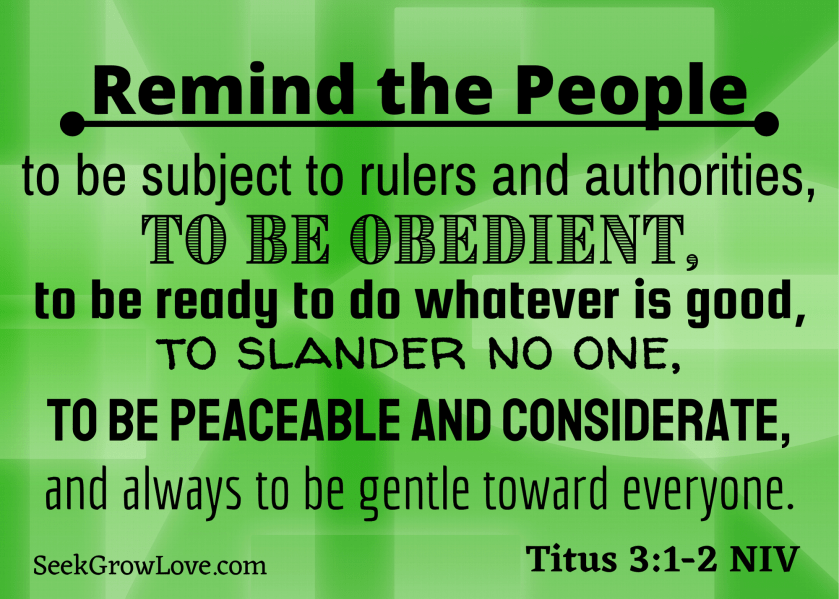
That same passion is probably exactly what allowed men’s hearts to be corrupted, and to torture and murder fellow believers, when they believed differently. We see in Titus 3:8 that: “those who have put their trust in God will apply themselves to good works” and in Titus 3:9 that we should “avoid foolish speculations and genealogies and strife and fighting about the law, because they are unprofitable and pointless.”. Our focus should be on doing good works. We’re just humans. Regardless of what you believe, how are you acting on that belief? This scripture tells us that we should be more concerned about performing good works in God’s name. I absolutely believe that scriptural truths are important, but I also don’t want to be the most correct theologically understanding guy that didn’t make it into the kingdom because I didn’t act with love towards my fellow creation.
So what is the perfect balance? It’s tricky. We see from scripture that our priority should be to trust in God, and to focus on performing good deeds to the glory of God. That being said, it’s also important to understand scripture properly, because “God seeks those who worship Him in spirit and truth” (John 4:23-24), and I believe it’s a very good thing to share our understanding: provided we can do it in love. Humbly, gently, with overwhelming concern and patience, and considering others to be greater than ourselves: but also firmly, and unwaveringly, using the scripture as our foundation. Pray to God, and He will grant you wisdom. In the meantime, if you’re not sure on how to proceed, focusing on good works will show where your heart is to those around you. It will take time, patience, love, and God’s wisdom to affect any changes in understanding that are deep and meaningful. Be a light to the world around you, don’t beat up the world around you with your light, but let it shine.
REFLECTION QUESTIONS:
- Have you put your trust in God, or are you still trying to run things your way?
- What good works have you done this week?
- Do you plan your good works, or just wait for opportunities? Why?
- Which is more important to you: a correct understanding of scripture, or the correct implementation of the scriptures you understand? Why?
PRAYER
Father God, grant me the heart to do Your will here on the earth, in a manner that pleases You. Help me to love as deeply as You’ve loved us, and to share my faith in a manner which honors and pleases You. Help me to be humble, and to follow Jesus’ example. In Jesus name, Amen.

