The start of 1 Thessalonians 5 shares the promising truth of Jesus’s return. We can rest assured as children of light and look forward to Jesus’s glorious return that will usher in the Kingdom of God. This mindset of being children of light or being light itself is shared in the following passages:
“For you were formerly darkness, but now you are Light in the Lord; walk as children of Light.” Ephesians 5:8
“You are the light of the world. A town built on a hill cannot be hidden. Neither do people light a lamp and put it under a bowl. Instead they put it on its stand, and it gives light to everyone in the house. In the same way, let your light shine before others, that they may see your good deeds and glorify your Father in heaven.” Matthew 5:14-16
“But you are a chosen race, a royal priesthood, a holy nation, a people for his own possession, that you may proclaim the excellencies of him who called you out of darkness into his marvelous light.” 1 Peter 2:9
Our identity is found within the Bible. We can find peace and hope in our identity. You are a child of light. You are light through Christ. This means you are filled with the love and goodness of God, and your life has been sanctified through Christ’s sacrifice on the cross. What you have read about in the last few devotionals are all centered around living out this light. Living in a manner that brings glory to God by shining your light to all those around you.
I grew up going to Midwest Family Camp every year. One of the most important items I would pack would be a flashlight. The walk from the tabernacle to the girls’ yurts was long and dark at night so that flashlight made it less likely to trip and fall over uneven ground. One of my friends would commonly forget her flashlight so most years we would walk together sharing the light. It would have been selfish to have kept the light to myself and it would have caused her to stumble and fall without it. The same applies to the light we have received from Christ. It is not something to be hidden under a bushel, we have to let it shine, let it shine, let it shine. Allow the identity you find through Christ to shine forth to those around you.
Take Solomon as an example of this. Was he a perfect guy? Absolutely not. But as you read in today’s readings his actions and skills shined brightly to those around him. The queen that visited Solomon saw how much God cared for His people through the actions of Solomon. She recognized the glory of God because of Solomon. He did not hide the light that God had given him. Solomon worked hard and would always point his work back to God, like you have read in the last few days of 2 Chronicles. God’s light and love shines through all His children. Don’t hide it!
-Makenna Landry
Reflection:
1- What has been the main takeaway of 1 Thessalonians?
2- How has King Solomon’s life served as an example to you?
3- What is one way you can shine your light to those around you?
1 Thessalonians 4 continues in the instruction of how believers should be living. Paul commends the people in Thessalonica for doing well in following God’s commands and encourages them to do even more. Paul writes that God calls us to sanctification. Sanctification means to be made clean or holy. God calls us to be clean and holy. He provides this cleansing through Christ’s death and resurrection. Hebrews 10:10 says “By this will we have been sanctified through the offering of the body of Jesus Christ once for all” (NASB95). This verse is in the midst of a passage that expresses that Jesus’s sacrifice is sufficient for us and there will be sanctification and forgiveness through his sacrifice. It aligns with what Paul writes confirming that we have been made clean from our sins through Christ.
In the 2 Chronicles reading for today, some of that same theme of cleansing/forgiveness of sin can be seen. God appears to Solomon after the finishing of the temple and tells Solomon that He will be present in the temple. In 2 Chronicles 7:14, God says “and My people who are called by My name humble themselves, pray and seek My face, and turn from their evil ways, then I will hear from heaven, forgive their sin, and heal their land.” God has often reminded His people that He will forgive their sins. In the time of Solomon, the cleansing of sins was sought through prayer with an animal sacrifice. Hebrews shows that the sacrifices are no longer needed because of Christ and 1 Thessalonians encourages how to live out this cleansing of sins.
In 1 Thessalonians 4:9-12, Paul discusses one of the ways to live a sanctified life. Paul reminds the readers to love one another which God has taught them previously. In the case of the Thessalonians they were doing well with showing this brotherly love to those around them. Because they are doing well, Paul encourages them to love even more. What a high praise to have received from Paul and great encouragement to continue not only in doing well but to do it even more! If Paul wrote you a letter inspired by God, would he praise you for the love you show others or would he need to teach you what it means to love those around you?
1 Thessalonians 4:11 says, “to seek to lead a quiet life, to mind your own business, and to work with your hands, as we commanded you” (HCSB). This reminds me of Hebrews 12:14 which says, “Pursue peace with all men, and the sanctification without which no one will see the Lord” (NASB95). A quiet life that pursues peace with all people can be a difficult life to lead. Living a quiet life that is minding your own business and seeking peace with those around you is centered around living out our sanctification. Through our forgiveness, we are called to love those around us which looks like living quietly, minding our own business, and seeking peace.
If you’re in any social setting where people are involved, it can be difficult to both love them deeply and also mind your own business while trying to pursue peace. Everyone has something that you won’t like about them. It might annoy you and get on your nerves. It could be anything from a difference of beliefs or political views, to the way someone pronounces a specific word. It’s really easy to get frustrated and lash out at someone who is annoying you, but that is not living out our sanctification. When a moment comes where you are feeling frustrated, annoyed, upset, or angry with someone, try to take a moment to remember the two verses from the previous paragraph. When in a place of disagreement or frustration, seeking peace and loving the person takes priority over being right and having your way. Showing grace and forgiveness will display the forgiveness you have received. It will also allow the person to feel loved and cared for.
-Makenna Landry
Reflection:
How do you live out sanctification in your life?
When someone is getting on your nerves or you come to a disagreement, how do you seek to live peacefully and quietly with them?
“The LORD reigns, He is clothed with majesty” Psalm 93:1a
We have a great and majestic God. The Psalm from today’s reading is short and straight to the point: God reigns forever. He reigns over the world and our lives. Chaos may seem to have a tight hold on the world today, but ultimately God still reigns and His plan for the future Kingdom will unfold. What is the attitude that we have as we await the kingdom?
Do you recognize the work of God in your own life? It’s easy to fall into a mundane routine of our lives, living each day the same and simply going with the flow of life. In these moments of routine, we are likely to miss God’s mighty hand working within our lives. When life is peaceful and easy, we tend to forget to lift our eyes to God in praise and thanksgiving.
A family favorite film in my household growing up was the movie Miracle. This movie tells the true story of the U.S. hockey team that participated in the 1980 winter Olympics. It was a ragtag team of college students who didn’t always get along with one another and some of them weren’t the most talented hockey players that the coach could have chosen for his team. The movie recounts the events of Team USA being demolished by the Russia hockey team, who were known as the best hockey team in the world, before the Olympic games even began. The Russia team was confident in their own individual skill and didn’t see Team USA as a threat. However, with training and dedication, this team of college students was able to miraculously have victory over the Russia team during the Olympic games because they relied not on their own skills but on the skills of the team and the guidance of the coach. When we have a lot of success in our life or our life is simply going peacefully, we tend to become confident in our own abilities like Team Russia. We think that by sheer skill we can conquer anything on our own. This is not the case. Our success in life is from God and the peace we feel in good times is a precious gift not to be wasted by relaxing into the good times. King Solomon was seeing a lot of success as king. In the Old Testament passage from today, he had finally completed the temple and instead of praising his own ability and focusing on his own skill like Team Russia, he praised God. He recognized the building of the temple was not something done by himself alone. It was accomplished through the work of man following the instructions and will of God much like Team USA following the instructions of their coach.
“He said, “O LORD, the God of Israel, there is no god like You in heaven or on earth, keeping covenant and showing lovingkindness to Your servants who walk before You with all their heart; who has kept with Your servant David, my father, that which You have promised him; indeed You have spoken with Your mouth and have fulfilled it with Your hand, as it is this day.’” – 2 Chronicles 6:14-15
King Solomon recognized the goodness and provision of God in the work of the temple. Take a moment to note the different descriptive terms Solomon uses to describe God and what He has done for the people. How have you seen these things in your own life?
-Makenna Landry
Reflection Questions
What is the attitude that we have as we await the kingdom?
Do you recognize the work of God in your own life?
Take a moment to note the different descriptive terms Solomon uses to describe God and what He has done for the people. How have you seen these things in your own life?
Yesterday, we looked at being imitators of Christ and allowing our faith to reflect positively in the lives of others. Remember the verses about the fruits of the spirit from the devotional yesterday? Those are the start of reflecting our faith positively in the lives of those around us. Paul said in 1 Thessalonians 2:6-7, “nor did we seek glory from men, either from you or from others, even though as apostles of Christ we might have asserted our authority. But we proved to be gentle among you, as a nursing mother tenderly cares for her own children.” Paul is explaining how they shared the gospel with the people of Thessalonica. He shared with great gentleness and care. In the following verse he talks about having a fond affection for the people. As an imitator of Christ, Paul shared the gospel in love, gentleness, and care. Both Paul and Christ cared for the people they ministered to. They didn’t command authority over them, they walked alongside those they taught.
Jesus said in Matthew 20:28, “just as the Son of Man did not come to be served, but to serve, and to give his life a ransom for many.” He is explaining to his disciples that his role was to serve the people and to give his entire life to them. Jesus many times flipped the worldview of being the best and greatest to showing that humility and service was above all most important. Paul recognized this about Christ and imitated this selfless and humble lifestyle.
Think of the person who has had the largest impact on your spiritual walk. Is this person controlling, authoritative, and pushy? OR does this person show how much they care for you as an individual and show you through grace and mercy the life and death of Jesus? I know for me it is the latter of the two. My parents were always my strongest examples of what a life following Christ should look like. They loved the people within their church even when it was hard. They went out of their way to help whenever there was a need. They never forgot to say I love you to everyone they cared about. Having a deep care and love towards people will help them trust you and it will allow them to see God’s faithful and never failing love.
Psalm 92:1-2 says, “It is good to give thanks to the LORD and to sing praises to Your name, O Most High; to declare Your lovingkindness in the morning and your faithfulness by night.” Growing up with siblings, it was a lot easier to find things to be mad at them about than to be thankful for them about. A sibling cleaned the bathroom but moved your brush so instead of focusing on the good they did, you yell at them about touching your stuff. Does that show your sibling you care about them and are thankful for what they do, or does that say something opposite?
Right about now you might be wondering why I pulled the two verses from Psalm 92. Let me explain. When we focus on the negatives in life, it makes it hard to find anything positive and that will reflect in how we speak and act around others. This doesn’t serve as a good example and it definitely won’t show that we greatly care for those around us. Instead, we should have an attitude of praise. Psalm 92 is a psalm full of praise and it reflects on the good God has done. If we thank God for His lovingkindness in the morning and praise Him for His faithfulness at night, our attitudes will slowly shift from one of negativity to one of positivity. When we look for God’s goodness throughout our day, we likely will look for the goodness in those around us as well. In order to selflessly serve like Christ and to impact people like Paul with his gentleness and care, we should have a heart overflowing with praise to help focus on all the good that is in our lives.
Recently, the movie Inside Out 2 came out. If you have had the chance to watch it or the first film, we see the huge role Joy plays in the lives of people. In the second film, Joy wonders if growing up means being less joyful. The world isn’t a joyful place and it will push us towards locking our Joy deep within ourselves. In the film, it made Riley hurt her friends and not connect well with the people around her. Joy is a needed emotion that will help us find the good in life.
-Makenna Landry
Discussion Questions:
1: What are ways you can show people you care deeply for them?
2: Why is caring deeply for people important?
3: Are you letting Joy be your main focus or are other negative emotions clouding your view of those around you?
Key Verses: “You also became imitators of us and of the Lord, having received the word in much tribulation with the joy of the Holy Spirit, so that you became an example to all the believers in Macedonia and in Achaia.” – 1 Thessalonians 1:6-7
In 1 Thessalonians 1, we see Paul praising the church of Thessalonica due to their receptiveness of the gospel message and their life changes that came from following the Word of God. Instead of living in sin, they turned their lives around to honor God and their example was seen by other believers. Those in Thessalonica were not the only ones who had a pivotal life change due to their faith. Take the author of this letter, Paul, as an example. He had been a devout Jew who persecuted the Christians and attempted to put a stop to the spread of the gospel message. After being confronted by Christ on the road to Damascus, Paul had a pivotal life change that would impact people for generations. To this day, Paul and his inspired writings shape the lives of people around the world.
This pivotal life change that the people in Thessalonica experienced and that Paul had experienced due to their faith in God and His son Jesus, wasn’t uncommon. God has been working in the lives of His people since the beginning of the world. In the reading of 2 Chronicles today, we see a life change God grants to King Solomon. Even the King of another nation recognized the gifts and talents God himself had given Solomon. The gifts of wisdom and knowledge shaped King Solomon’s reign and allowed the kingdom of Israel to prosper. What an impressive life change for King Solomon.
God continues to grant gifts to His believers and change the lives of those who follow Him. Galatians 5:22-25 says, “But the fruit of the Spirit is love, joy, peace, patience, kindness, goodness, faithfulness, gentleness, self-control; against such things there is no law. Now those who belong to Christ Jesus have crucified the flesh with its passions and desires. If we live by the Spirit, let us also walk by the Spirit.” When we repent from our sins and commit our lives to Christ, there is a pivotal life change that happens. We are granted the holy spirit as a gift that produces good fruit and spiritual gifts in order to be imitators of Christ. It is a slow work in progress to hone your skills and to produce the positive fruit of the spirit, but it will be worth it! Each person has been called to be an imitator of Christ and to dedicate their life to God. The way we spend our time, the things we say, and how we treat other people will serve as an example of our faith. Those in Thessalonica lived as imitators of Christ producing good fruit that was seen by those around them. King Solomon was recognized by the gifts God had granted him because of his faith. How are you impacting those around you? Can you be seen as one imitating Christ, standing in your faith, and working with your spiritual gifts granted by God? Reflect on these things as you go about your day today.
-Makenna Landry
Reflection Questions
How have you been changed by your faith?
What does it look like to imitate Christ? If others started imitating you – what would they start doing? What would they stop doing? Are there any more changes you want to work on in your own life, with the help of the holy spirit, to be imitating Christ Jesus better?
Just like Makenna asked: How are you impacting those around you? Can you be seen as one imitating Christ, standing in your faith, and working with your spiritual gifts granted by God?
Scripture: “David assembled all the leaders of Israel and all the leaders of the tribes and the commanders of the divisions that served the king and the commanders of the thousands and the commanders of the hundreds and the officials in charge of all the property and livestock of the king and his sons, together with the officials and the mighty men, and all the seasoned warriors, at Jerusalem.” — 1 Chronicles 28:1 (LEB) “So teach us to number our days that we may gain a heart of wisdom.” — Psalm 90:12 (LEB) “Devote yourselves to prayer, being watchful in it with thanksgiving.” — Colossians 4:2 (LEB)
In 1 Chronicles 27, we see David’s meticulous organization of the military and administrative divisions of Israel. This structure ensured that the kingdom functioned smoothly and effectively. David’s leadership shows the importance of planning and preparation in carrying out God’s work.
Chapters 28 and 29 highlight David’s preparations for the construction of the temple. Although David was not permitted to build the temple himself, he gathered materials, made plans, and charged Solomon and the people to carry out the task. David’s forward-thinking mindset underscores the value of preparing for the future and investing in God’s work, even when we may not see the final outcome.
Psalm 90:12 calls us to live with an awareness of the brevity of life: “So teach us to number our days that we may gain a heart of wisdom.” David’s actions in these chapters reflect this wisdom, as he uses his final days to ensure that Israel is prepared for the future and that God’s temple will be built.
Colossians 4:2-18 emphasizes the importance of prayer and watchfulness. Paul encourages the Colossians to be devoted to prayer and to be thankful. This devotion to prayer is essential for effective leadership and preparation, as seen in David’s reliance on God throughout his life.
David’s detailed organization of Israel’s military and administrative divisions highlights the importance of structure and planning in achieving God’s purposes. David’s preparation for the temple, even though he would not build it, teaches us the value of investing in God’s work for future generations.Psalm 90’s call to number our days encourages us to live wisely and make the most of our time, as David did in his final acts. Colossians 4:2 reminds us to be devoted to prayer, a crucial aspect of effective leadership and preparation.
Like David, we do not always see the results of our work. Our Lord teaches us, though, to number our days and live with wisdom, making the most of our time for His purposes. Serve the Lord with a heart of wisdom and a spirit of prayer, investing in His work for future generations.
-Jeff Ransom
Reflection Questions:
How can you apply the principles of organization and planning in your own life and service to God?
In what ways can you prepare for the future and invest in God’s work, even if you may not see the final outcome?
How can Psalm 90’s call to number our days inspire you to live more wisely and purposefully?
What steps can you take to deepen your devotion to prayer, as encouraged in Colossians 4:2?
Scripture: “David and the chiefs of the service also set apart for the service the sons of Asaph, Heman, and Jeduthun, who prophesied with lyres, with harps, and with cymbals.” — 1 Chronicles 25:1 (LEB)
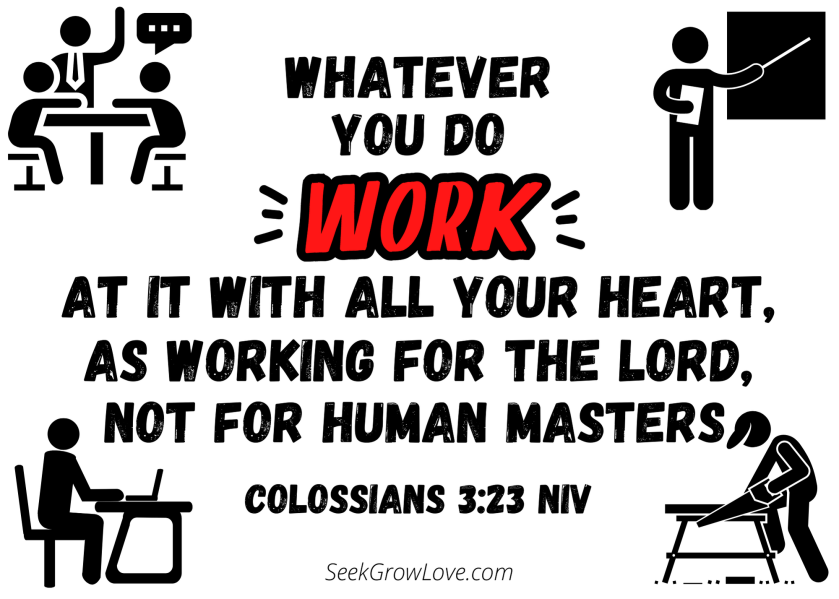
“Whatever you do, work at it with your whole being, for the Lord and not for people, because you know that from the Lord you will receive the reward of the inheritance. Serve the Lord Christ.” — Colossians 3:23-24 (LEB)
“Blessed be the Lord, the God of Israel, from everlasting to everlasting! Amen and Amen.” — Psalm 90:2 (LEB)
In 1 Chronicles 25, David and the leaders set apart the sons of Asaph, Heman, and Jeduthun to prophesy with musical instruments. Their dedication to worship through music is a powerful example of using one’s talents for the glory of God. This act of worship was not just about playing instruments; it was about prophesying and communicating God’s messages through music. Through music, they made Him known!
1 Chronicles 26 outlines the responsibilities of the gatekeepers. Their role was crucial for maintaining the sanctity and order of the temple. These gatekeepers demonstrate that every role in God’s house, whether seen or unseen, is significant and valuable. These chapters highlight the importance of worship and service in the life of God’s people. They remind us that every task, whether musical, administrative, or protective, no matter how menial or mundane, is an act of worship when done for the Lord.
Colossians 3:23-24 continues this message as it encourages us to work heartily for the Lord, not for human masters. This perspective transforms our daily tasks into acts of worship. Whether we are serving in the church, at home, or in our workplaces, doing our work for the Lord gives it eternal significance.
Psalm 90 reminds us of God’s eternal nature: “Blessed be the Lord, the God of Israel, from everlasting to everlasting! Amen and Amen.” In our worship and service, we acknowledge the everlasting nature of God and our place in His eternal plan.
The organization of musicians and gatekeepers in 1 Chronicles shows that both worship and practical service are vital in God’s kingdom. Every role, whether public or behind the scenes, is important. Colossians 3:23-24 reminds us to do everything wholeheartedly for the Lord. This attitude turns everyday tasks into meaningful acts of worship. Psalm 90’s focus on God’s eternal nature encourages us to see our service and worship in light of eternity. Our actions have lasting value when done for God.
These are great examples of dedication and service to God. Through them, perhaps, we will all be more inclined to use our talents for His glory and to see every task as an act of worship, to live with an eternal perspective, acknowledging His everlasting nature.
-Jeff Ransom
Reflection Questions:
How can you use your talents and skills to worship and serve God in your daily life?
In what ways can you adopt an eternal perspective in your work and service?
How does understanding that you are working for the Lord, not just for human recognition, change your attitude toward your daily tasks?
In the final portion of the book, Solomon turns to remind his readers to think often of their Creator early in life before all the “evil days” come. His point is not to just think of God when you are young, but the need to establish the foundation of one’s life in their youth. The phrase “evil days” probably refers to old age (and eventually death). As life goes on, there is more opportunity for trouble and adversity. Old age has its host of difficulties and struggles. One’s youth is often thought of as the best of times, and during that period of life it is good to develop the habit of remembering the Creator before the days of “evil” come. That doesn’t mean that older individuals cannot “remember” the Creator. Solomon is simply asserting that this practice is best formulated and built into the foundation of life at an early age before life’s complications arise and produce much turmoil and frustration.
Verses 1-7 is a whole poem that focuses on the remembrance of one’s youth and the pleasures of life that a young person is able to enjoy in contrast to the gradual decline of physical abilities and the dulling of the senses with age, a relentless progression ultimately toward death. To be “afraid of heights” and the “terrors…in the road” refer to the weakening of the body and the feebleness that accompanies aging to where a person cannot defend themselves. The “almond tree will blossom” is likely a figurative reference to the graying of one’s hair with age, like the white blossoms of the almond tree when it is in season.
The complicated saying that the “grasshopper will be a burden” likely represents small activities and simple tasks; when you are old even the smallest endeavors can seem difficult. Furthermore, when one’s “desire will fail” perhaps refers to sexual desire, but if that is true, by metonymy it refers to the failing of the physical body in general. And the “age-long home” is the place, after the failing of the body, when a person goes to the grave.
Verse 8 is a large inclusion (i.e., bookends) restating the thesis that Solomon presented at the outset of the book in 1:2, ““Utterly pointless,” says the Sage. “Everything is pointless!”
The change in voice to the 3rd person (i.e., “the Sage”) perhaps indicates that a narrator is giving an epilogue to the foregoing discourse (chs. 1:1-12:7). This epilogue functions to frame the previous discourse and Solomon’s investigation.
The summary of what Solomon discovered is that to submit to and obey God is what it means to truly live as a human being. It might be difficult to understand why Solomon asserts the “pointlessness” of life so heavily and exposes it in so many facets of life under the sun. His approach can appear to lean toward doubting everything or concluding that nothing ultimately matters (i.e., nihilism). But the pointlessness of everything he saw has driven him in the end to a deep piety and dependence on God. To understand that everything that happens under the sun has no ultimate significance or meaning only draws out the fact that meaning must reside outside of life under the sun and the work that humans do. In the face of all the oppression, injustice, uncertainty, and death in life, the Sage finds the only true meaning in life is humbling oneself before the Almighty Creator and remembering that he is God, and we are not. Our role as creatures is to worship and obey the one who makes everything and to not try and control or manipulate life, because everything we can try and do on our own is ultimately pointless. The only ultimate meaning is found in relation to the Ultimate Being whose breath fills the world and whose hand spans the universe. It is to him that we are accountable and will be judged for everything we do, whether good or evil.
So, let’s live for Yahweh and trust in him and not in our own understanding. We are weak and finite creatures, and our meaning and purpose in life can only be discovered through an obedient and faithful relationship with our God and Creator. This is the wisdom of the book of Ecclesiastes.
-Jerry Wierwille
Reflection Questions
If you were to write a book of wisdom – what would your conclusion be? Where did you learn this “wisdom” from? Do you think God would agree with your conclusion?
Regardless of your age, what changes have you seen in yourself as you have grown older? How does growing older affect your wisdom? What changes in your relationship with God would you like to see as you keep growing older? What can you do to bring this about?
What challenges do you find in Ecclesiastes 12? Will you rise to these challenges?
Life is uncertain. That seems to be the theme that Solomon focuses on in this chapter. His first statement seems quite enigmatic, “Cast your bread on the waters; for you may find it after many days.” “Casting one’s bread on the waters” may be a metaphor for maritime trade, and what one might “find after many days” could refer to the revenue that comes back to the person after the goods are sold. The numerical proverb in verse 2 could suggest the wisdom in diversification of cargo on different ships, so that if something happened to one ship, the entire shipment won’t be lost. The reasoning for this is that a person cannot know “what evil may happen on the earth,” referring to unforeseen disasters and circumstances in the future.
Another imagery that is used is that of clouds that are full of rain (v. 3). The imagery is meant to depict the randomness of life and the unpredictability of events. The implicit idea that the imagery represents is the uncertainty of disasters or bad things that will negatively impact one’s life. We have no control over where a cloud will drop its rain. We know that clouds bring moisture, but the definitiveness of when and where that will take place is outside the ability of a person to know. We are simply subject to the randomness of weather patterns. Now, ultimately we know that weather is not truly random, but it is impossible for us to know all the factors that play into the weather and the behavior of clouds.
A modern expression that captures this same idea is: “That’s the way the cookie crumbles.” No one can predict how it is going to happen. But when it does, then that is how it happens.
Next an agricultural illustration is used describing farmers and how the inevitable randomness can cause one to be paralyzed by the inability to know the future. If a farmer tries to predict when the wind will be favorable for planting, they will never sow their seed because the wind might change at any moment. In addition, the farmer who stares at the clouds in order to predict when it will be dry to harvest will never gather the crops because it might rain before the harvest can be completed.
As one scholar summarizes the point of v. 4, “…one cannot use the possibility of misfortune as an excuse for inactivity. Someone who is forever afraid of storms will never get around to working his field. The Teacher in effect says, ‘Just face the fact that things may go wrong, but get out there and do your work anyway.’” (Duane A. Garrett, Proverbs, Ecclesiastes, Song of Songs, [Vol. 14, The New American Commentary], 338)
We humans are vastly ignorant about the inner workings of life and of God. In this verse, Solomon is stressing that fact but using the developing fetus in a womb as a clear example of something we know nothing about. One of the great mysteries of human existence is how life comes together in a fetus as it forms in the womb. We have no idea how “spirit” (i.e., life) enters the bones of a baby.
This example of human ignorance is being used to make the point that even though we don’t understand how many things in life really work, we should not let a lack of knowledge paralyze us into inactivity.
Thus, while trying to figure out what is going to come in the future is not profitable, we should still act wisely and take reasonable chances in life, unlike the skeptic and fearful who will not move forward in life even if the opportunity is there.
This illustration is compared then to the “work of God” in the world. Solomon describes God as the one who “makes everything.” The reference is to the operations of creation (e.g., gestation). God causes the sun to rise and the rain to fall, just as he gives life to the fetus and causes it to grow in the womb. And so, in the same way that we don’t understand how certain things happen, like a pregnant woman who is trusting God that the baby will develop as God designed, so also all future plans must likewise be put in the hands of God. We ultimately cannot control success or failure. We must simply do our best and trust God with the rest (i.e., the outcome).
In light of the general ignorance about life and the work of God, Solomon encourages the reader to work hard in the face of uncertainty, even if we don’t understand what is going to happen. He instructs farmers to “sow your seed,” meaning go out and plant the crops, and “do not withhold your hand,” meaning don’t refrain from working. Finish the job!
We have no idea whether something will turn out good or bad. We have to wait and see. Maybe one thing will work, and another will fail, or perhaps both will work, or both will fail. But one thing we can be sure of, if we don’t do anything, then nothing will ever happen.
“Light is sweet” appears as a mismatched metaphor. How can “light” be tasted. Here “light” is likely a metonymy of association referring to the perception of light by the senses of one who is alive. Thus, it refers figuratively to “life” and represents a living person (cf. Job 3:20; 33:30; Ps 56:14). This is the opposite of “darkness” which represents “death.” And “sweet” is a metaphor of taste referring to a pleasurable experience, not actual tasting with one’s mouth. This figuratively represents something that is good and delightful. Furthermore, “to see the sun” refers to being alive and able to work and do something “under the sun.” The idea is that being alive is “good” and something to be enjoyed.
Verse 8 provides the reader with encouragement to rejoice in life no matter what age a person might be. But that rejoicing is to be accompanied by an awareness that life is filled with “darkness” and that everything that happens cannot be explained or give ultimate meaning to life. Sometimes bad things happen, and no explanation can be offered to explain them. Thus, attempting to know the reason why everything happens is not possible, and therefore, it is “pointless.”
Solomon is advancing the premise that joy should accompany a person throughout their life, but life is not solely one of bliss and ease, it is also filled with hardship, pain, and various evils. And this is why he returns to the idea of “joy,” and now in more forceful terms, he flat out instructs the reader to “Rejoice!” The instruction is not meant exclusively to be directed or applied exclusively to young people. What is meant by the expression is for “joy” to become a set pattern early on in one’s life.
The phrase “let your heart cheer you…walk in the ways of your heart…in the sight of your eyes” uses the terms “heart” and “eyes” as organs of desire, and they refer to one’s inner yearnings and inclinations. The exhortation is not to follow whatever impulses one has regardless if they are immoral or reckless. Rather, one is to pursue desires and the joy they bring into life with the awareness of God’s impending judgment over everything you do.
Lastly, with God’s judgment in mind, a person should not allow the frustrations of life to incumber their pursuit of joy. We must not let the enigma of life and the unexplainable and uncontrollable realities weigh down our rejoicing in life. On the other hand, a person must not let their desires draw them into evil either. Pursuing one’s desires often can lead to wickedness and sin. Thus, one must be diligent about avoiding temptations that arise from the desires in our flesh. So, despite the human condition, we are to overcome the troubles that the “pointlessness” in life brings and focus on the joy that we can experience in the midst of it.
-Jerry Wierwille
Reflection Questions
Have you ever used the possibility of misfortune as an excuse for your inactivity? If so, what might Solomon say to you?
“Pursuing one’s desires often can lead to wickedness and sin.” How have you seen this in your own life? What desires? What wickedness and sin? How can you protect against this? Should some desires be changed? How? Should you go about pursuing some desires in different ways?
Even with the unknowns and the difficulties in life, how can you still pursue and show joy?
Ecclesiastes chapter 9 ended with an expression of the power of foolishness: “Wisdom is better than weapons of war; but one sinner destroys much good” (9:18).
Here in verse 1, the premise of 9:18 is now carried forward. The principle that is being addressed is that a little bit of a bad thing (e.g., foolishness) can completely ruin a good thing. The modern saying “A fly in the ointment” contains the same wisdom and is used to represent how something small (or seemingly insignificant) can have a powerful or far-reaching effect. There are many small things that can produce a powerful effect.
We have another modern proverb to convey the same idea, “One rotten (bad) apple spoils the barrel.” This is a truism as we now know because of microorganisms (e.g., mold, bacteria, yeast), which tend to have a permeating effect. Once they are introduced, they will continue to spread until they have affected every part of the substance and adjacent substances.
Foolishness and sin are often likened to a foul stench, such as Proverbs 13:5—“A righteous person hates a deceptive word, but a wicked person will become a stench and display his shame.” Clearly the “stench” in Proverbs 13:5 is the speech (i.e., words) of the wicked person (i.e., fool). What Solomon has in mind is likely the words of the “sinner” in 9:18, not just the person. Thus, what he is saying is that it only takes a few foolish words to bring about a whole world of destruction. Furthermore, a fool cannot conceal their foolishness, but clearly demonstrates it each time they open their mouth or do anything.
While a ruler or person in authority is not immune to foolishness, verse 4 does not seem to be closely connected with the previous verses but offers advice on how to act in the presence of those with authority. Previously, Solomon had advised that a person follow the command of the king and not argue with him (8:2-9), it seems that he is saying the opposite here. However, the present context is not about opposing the king, but how to deal with him when he is angry with you. To walk out on the king in his anger will only incite him to be even more angry with you. Rather, Solomon suggests to change how you interact with him; it is wise to use a “calm” demeanor, as that can reduce his anger and offense against you.
Part of Solomon’s observational dilemma is that what he sees in the world is perplexing and out of order with what he thinks should be the case. When he sees, “Foolishness is set in many high positions, while the rich sit in a low place. I have seen servants on horses while officials walk on the ground like servants.” The point of Solomon’s examples is to say that if foolishness is in charge, then the world will be upside down and wisdom won’t work as expected.
In another way of looking at the world, Solomon notices that things can happen to the best of us (i.e., skilled and knowledgeable in their craft). One way to see Solomon’s point is that being a skilled expert does not remove all potential danger or guarantee success. The other way is that a skilled expert will fail if they don’t properly apply their knowledge.
Foolishness has a progression to it. The beginning is foolishness (v. 13), but the foolishness deteriorates the situation into becoming “hurtful madness.” Foolish words harm both the speaker and the listener, but a fool is oblivious to this. It seems that the fool has a false perception of understanding or control over life that they don’t recognize how they are stumbling further into foolishness and disastrous consequences.
The delusional consequences of the fool are further elaborated by depicting him as forgetting how to go to a city where he presumably works or needs to go to sell goods. The effort of the fool is compounded by the fact that he does not even have the basic understanding of how to carry out business. And thus, the fool’s effort must be multiplied because of his lack of sense about where he needs to go. To run a successful industry requires knowledge about trade and commerce, and the fool is deceived into thinking they can be successful without it.
If a foolish leader will bring about disorder and chaos, in vv. 16-17 Solomon now contrasts the consequences of foolish leadership with the advantage of wise leaders.
Solomon identifies in verse 16 two detrimental qualities of leadership: being immature and being neglectful. “Feasting in the morning” implies that when leaders should be tending to the business of the kingdom (i.e., in the morning), they instead are reclining to eat. This does not refer to breakfast but a large-scale banquet typically involving entertainment, music, and drinking wine.
The concluding phrase of verse 19 might be the most difficult of the chapter. On the surface, the verse seems to be advocating a sensual lifestyle of eating, drinking, and using money to satisfy one’s desires and enjoy the luxuries of life.
While the phrasing is a little difficult and the Hebrew offers a high degree of latitude in meaning, it seems that what Solomon is affirming is the need to have money in order to buy food and wine and other provisions for enjoying the simple aspects of life that Solomon has been endorsing all along.
Solomon closes with a warning about how to conduct oneself in the presence of a king (or any authority figure). He warns about the dangers in cursing the ruler or person in authority, even in one’s thoughts or “sleeping chamber” (i.e., in secret). The point of the warning is that the danger of consequences is not worth the risk. The king is sovereign and can issue severe punishments. We have a modern saying that expresses the same admonition: “The walls have ears.” The warnings are hyperbolic (e.g., exaggerated) because no one can know another person’s thoughts. But the emphasis is to be overly cautious about how you act and what you say about a ruler or person in authority. You never know who might be listening; and you don’t want to be caught and suffer the consequences.
-Jerry Wierwille
Reflection Questions
What examples can you give of how a little of a bad thing can spoil a good thing? Can you think of a time when you tried to let just a little bit of a bad thing in and it led to big problems and a lot of spoilage? What could you have done differently to lead to different/better results?
What verse do you like best in Ecclesiastes 10? What wisdom do you find in Ecclesiastes 10?





 Seek Grow Love