“But can God Love Me?”

Old Testament: 1 Samuel 11 & 12

Poetry: Psalm 67

New Testament: 2 Corinthians 10

If you’re like me, that is, *if you are human*, then you have made mistakes. Some of those mistakes are major; not just a small white lie, but sins that harm others and put us out of sync with God. Sometimes, when we make those big sins, we feel like God could never forgive us, could never love us. The words of Samuel to the Israelites from the end of 1 Samuel 12 should give us hope in those moments.

“Do not fear.” “It is a dreadful thing to fall into the hands of the living God” (Hebrews 10:31), and we should not excuse the sins we commit. The first command given to the Israelites is to not let fear make them flee from the Lord. Instead, we should listen more closely to God than ever. If we recognize our sin, we also recognize that God’s ways are higher than our own, and  his ways are better than the ways of the world. If we flee from God, we turn toward things that cannot give us hope, cannot give us a future, cannot redeem us. As Samuel says, they cannot profit or deliver. They are futile. 

This all seems very good. “Maybe our sin wasn’t so bad”… we might say, foolishly. God does not ignore your sin because he is ignorant of it, or because he doesn’t care. Instead, “God will not abandon His people *on account of His great name*.” God has chosen a people to be his own possession. In the ancient world, it was Israel, those who were born from the line of Abraham, Isaac, and Jacob, children of the promise. Today, he has also chosen a people, also those born according to a promise, but now, it is all who have a faith like Abraham’s, who trust God like Isaac, who believe and wrestle with the Lord like Jacob, those who choose to trust in the final and ultimate descendant of the Patriarchs, Jesus Christ. God has made you a part of his people when you trusted in Jesus. Now, the reality is that we are not merely performing the law, but the law of God has been enacted in the life of Jesus, and by connecting with him, we both enact the law and go beyond it to the truth Christ taught! Christ taught us the truth of God, Christ showed us the life that God wants us to live, Christ died so that we might have life. “Consider the great things the Lord has done for you.” It is now more true than ever. Our sin was nailed to the cross with Christ. It was so terrible it cost Christ everything and he willingly paid it all. 

We are called to avoid sin, and we are warned by Christ himself that if we live wicked lives, his words will judge us in the last day. But now, if we do sin, we do not need to fear because we have an advocate who loves us, who gives us a spirit who can change us from the inside out, so we might stop sinning and stop desiring to sin. That is the glory and the power of living in the age of grace, of living in the shadow of the cross. 

“As for me, far be it from me that I should sin against the Lord by ceasing to pray for you.”

And so, this day and every day, may you be blessed as you “Seek, Grow, Love”. Far be it from me to cease praying for you!

-Jake Ballard

Reflection Questions

  1. Do Not Fear: We are commanded “do not fear” again and again in scripture. We are even told that perfect love drives out fear. But the fear of the Lord is the beginning of wisdom. Moreover, Jesus did not encourage his disciples out of their fear when they were in awe and terrified when the winds and waves obey him. With all those confusing passages in mind, what is the Christian relationship with fear? What should we fear? What should we not fear?
  2. Consider the great things the Lord has done for you: Make a list throughout the day today of all the blessings that God has given you. What are the big, great amazing things, and what are the small, everyday good. Consider them all and see that the Lord is good. 
  3. Far be it from me…: Would you take the next few minutes, and pray earnestly, for those who are reading Seek Grow Love. Pray for the blessings of God to be upon them. Amen. 
By Choice, By Prophecy, By Lot

Old Testament: 1 Samuel 9 & 10

Poetry: Psalm 66

New Testament: 2 Corinthians 9

Before David, Saul becomes king of Israel. 

How does a person become king? 

Romulus, the “first king” of Rome, supposedly built Rome with his followers and then asked for the consent of the people who lived in the city. I guess being raised by wolves is helpful in courtly duties. 

Arthur Pendragon pulls a sword from a stone, whether his horse was simply two halves of a coconut or Merlin’s owl spoke. 

T’Challa took a heart-shaped herb and fought a Panther I think? I don’t quite remember that movie. 

“Charles the Third, by the Grace of God of the United Kingdom of Great Britain and Northern Ireland and of His other Realms and Territories, King, Head of the Commonwealth, Defender of the Faith”, boringly, inherited it from his mother. 

At least one of those kings is fake, the historicity of two others are greatly debated, and personally, I still have my doubts about Charles. 

How does someone become king?

In 1 Samuel 8:19-20, the people cried out for a king. 

In 1 Samuel 9, Saul is chosen by Samuel. 

In 1 Samuel 10:20-24, Saul is chosen by lot. 

In 1 Samuel 11:14-15, *Saul* is chosen by the people.

So, how did he become King? 

People’s choice award? 

Pulling the short straw?

One old guy’s decision?

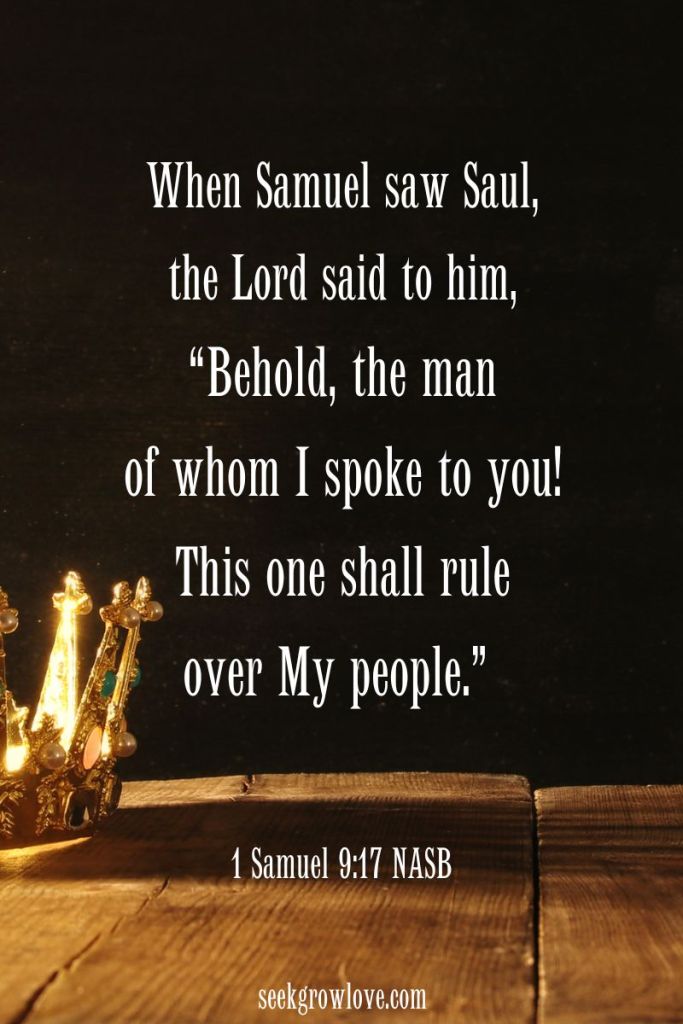
Saul’s reign is not because the people demanded it, or because Saul got lucky at dice (or pot shards). God is involved in the process. In 1 Samuel 9:17 is was not Samuel but GOD who chose Saul. 

In every authority, in every government, this is true. “Let every person be subject to the governing authorities. For there is no authority except from God, and those that exist have been instituted by God.” (Rom. 13:1) It is clear that God does not approve of every leader and certainly not of their actions. God lets humans make their bad and destructive choices (including, in democracies, choosing bad leaders). Then he works with, and in spite of, those choices. God works to bring about glory for himself; he works toward the coming of the Messiah and his Kingdom. 

Saul was given an opportunity by God to be a person who would bring God’s plan into fruition. God took Saul from chasing donkeys to ruling a nation. God gave Saul every opportunity to be a ruler “after God’s own heart” and yet Saul chose to disobey. 

Kings, rulers, presidents, emperors are only ruling because God has given them the opportunity; the opportunity to obey or disobey, to listen to his voice and to his commands. The same choice he gives to each of us.

Remember, no matter who sits upon any throne, any seat, or behind any desk…

God is on his throne and in control.

-Jake Ballard

Reflection Questions

  1. Preempting “Godwin’s Law”: “What about Hitler?” “What about Mao?” “What about Pol Pot?” Yes those leaders were truly awful. Still, Paul wrote Roman’s to the people who were in the heart of one of the most powerful, most militaristic empires the world has ever known. Paul died by beheading in Rome, and yet he still was inspired by God to write Romans. What is the Christian response to wicked leaders? How much should we obey leaders who are acting against our values? (Maybe check Acts 5:27-32 to compare to Romans 13)
  2. The Lion from Benjamin?: From prophecy in Genesis (Gen. 49:10), it seems like a Benjaminite should never have been king. We see God chose Saul. Now a question for you to chew on for a long time, why Saul? David was a man after God’s own heart and a descendant of Judah. Was Saul always destined to failure? Why THIS choice? (There is not a clear cut reason in scripture, but having read through this chapter, what do you make of it?)

A Tale of Two “PKs”

*Old Testament: 1 Samuel 7-8

Poetry: Psalm 66

New Testament: 2 Corinthians 8

As a preacher with kids, married to the daughter of a preacher, who was the son of a preacher, I know a fair share of PKs. You’ve heard the term, or maybe something like it : preacher’s kid, pastor’s kid. It is at once a purely descriptive term and a stereotype; his father is a pastor, so he must have problems. I think any such stereotypes are untrue; again I am married to a pastor’s daughter and have my own! But, the stereotype comes from somewhere. Often kids of prominent figures must do more than the average kid to “find themself” and feel like they are being defined by their family of origin. This can lead to precocious behavior and rebellion. I have also heard sad stories of men and women who “gave everything to the church,” to the work they were called to do, forget that their first calling was to their home, to love and raise their children first. 

The sad truth is that, whatever the reason, Samuel’s faith didn’t make it to his sons. Preacher’s kids (prophet’s kids?) through and through, they fit the unfortunate stereotype. They did not follow the ways of their father. We can’t know if Samuel did everything he could and they rebelled or Samuel was absent and they didn’t have the chance to learn. But they were dishonest and greedy. They were being set up to be the next leaders (judges) of Israel, but Israel did not want them. 

Remember the pattern of Israel through Judges. The nation of Israel is oppressed and cries out to the Lord. The Lord provides a judge to crush their enemies and guide them well. Israel thanks God but over time loses sight of his ways. They disobey God and turn away from him and he causes a nation to go in and remind them to follow him. So a nation goes in to oppress Israel and the nation of Israel cries out… and the cycle repeats. The time had come however, when the Israelites didn’t want to rely on the Lord for their deliverance. They want to have a king, a Powerful King (PK) to rule over them. 

Why? Because, though the people of Israel might think they are avoiding those who are greedy and rebellious, the greedy rebellion is happening as they speak: they are rebelling against God by asking for a Powerful King over them. How? Didn’t God want them to have a king? Maybe, in his own time and in his own way, he would bring about a king after his own heart without the elders asking for it, but it was the motive of the elders that was terrible. The elders say “Behold, you have grown old, and your sons do not walk in your ways. Now appoint a king for us to judge us like all the nations.” (1 Samuel 8:5) They say “God, we don’t want to rely on you. God, we don’t want you to be our king and to speak to us through prophets. God, we want to have a king like everyone else!”

We don’t want to be special. To be different. To stick out. We want to be like everyone else. And God hears their hearts “They have not rejected you, but they have rejected me from being king over them.” Samuel warns them kings are powerful, kings are harsh… “Davids” will be the exception; “Sauls” will be the rule. But they say “There shall be a king over us, that we may be like all the nations, that our king may rule us and go out and fight our battles.”

Why talk about prophet’s kids and powerful kings? Both are a rejection of the best God has for us; the sons of Samuel rejected the words of their father and lived lives that were corrupt and evil and despised. They had the opportunity to lead the people of Israel, to be remembered as a judge over God’s people, and they squandered it. But the elders fared no better. Rather than asking for a word from the Lord, they want to get away from God being their only king and have a king like everyone else, to be like everyone else. 

May you today accept that you are called to be different, and accept Jesus Christ as the King who rules over you, to make you different, unique, and not like everyone else.

May you not rebel against the good things taught to you by your parents or parents in the faith. When you learn true thing about the Lord, from whatever source, may you honor it, and not reject the good things that come to you from those who came before. 

May rebellion and rejecting God be far from *us* today. 

The Lord help us, judge us and lead us. Amen.

-Jake Ballard

Reflection Questions

  1. Faithful Kids: Who were your parents in the faith? Was it your mom and dad? An aunt or uncle? A friend or pastor or youth worker? What did they teach you that stuck with you? If they are still alive, do they know the impact they had on you? Reach out and let them know how their life impacted your own!
  2. Not like Everyone Else: How many times have you wished to be like everyone else? That your clothes, your hair, your face, your nose, didn’t make you stick out? That the way you walked or talked or believed didn’t make you weird? The message from scripture is to embrace the weird way Jesus calls us to because normal doesn’t seem to be working! It’s weird to have a full life, a hopeful life, a passionate life. That’s weird… and it’s what Jesus offers!
  3. A Good King: Jesus has the right and ability to take everything, but I have found that the more I give to Jesus, the more he gives back to me. I give him my home for his use, but I have been given the home of every believer who shows hospitality. I give him my money for his use, but I know that if I need support, I will find It. I give him my very life, and he gives me a life worth living. Will you let the good king have all that he demands? Will you be ready to receive the blessings that he will give in return?

“My God is Bigger than Your God!”

Old Testament: 1 Samuel 5-6

Poetry: Psalm 65

New Testament: 2 Corinthians 7

Did you know Marduk had fifty names? 

It’s OK if you don’t, because most people wouldn’t because we don’t normally know the number of names of ancient gods of dead civilizations. 

But Marduk had fifty!

Two of my kids have four names, and sometimes that feels like three too many!

Why did he have that many?

Because scholars rarely agree on anything, there are many different reasons for this, but there was a common idea in the ancient world that what happened in the physical world was merely an echo of what was happening in the spiritual world. When Babylon took over other cities, they would claim that the god of Babylon, that is, Marduk, had defeated the god or gods of the city or tribe they just defeated. Marduk got a lot of name because Babylon overcame many enemies and they merged together the defeated gods with the great god so that he supplanted even their chief deity by the end of the poem of creation of the Babylonians. 

The school-yard-like taunt between the ancient nations was “My god is bigger than your god!”

This is where we make it to our story today. The Philistines worship a god named Dagon/Dagan, and so when they defeat the Israelites, they wheel the Ark into the temple of Dagon. Because he is bigger, better and stronger than YHWH; right? At least, that’s what the Philistines think. But the destroyed, worshipping statue of their god boasts different things. 

The Old Testament is full of imagery of the great power of God over other “gods.” In the Exodus, God is powerful over the Egyptian deities; he turns off Ra and brings low Pharaoh, among others. In the exile, God is shown to be powerful over his foes in both the last part of Job (where YHWH is subtlety compared to many gods) and in the return from exile, where his people walk free in the year he declared he would bring them back. Here in 1 Samuel, Dagan “worships” God by falling prostrate before him, and the Philistines, while trying to taunt and control God, decide the ark is more trouble than it’s worth.

Some ancient gods have no reality at all; the power of other gods seem to come from demons. (1 Corinthians 10:20) But no matter their reality, their falsehood, their existence or the lack thereof, 

Our God is greater. 

Our God is better. 

“My God is better than your god!” And he actually is!

-Jake Ballard

Reflection Questions:

  1. Marduk. Enlil. Baal. Zeus. Jupiter. There are many gods of the ancient world that claim the title of top God. How can we know there can be only one true God? How would you talk to a friend who is open to the existence of multiple gods or even multiple pantheons of gods? How would you tailor your message to speak to them.
  2. We shouldn’t ignore the two different plagues. Why did the Philistines have a plague affect them? Why did the people of Beth Shemesh have a plague affect them? What do these two plagues teach us about God?

God on Call?

Old Testament: 1 Samuel 3-4

Poetry: Psalm 64

New Testament: 2 Corinthians 6

I want to be very clear from the outset: YHWH, the God who created everything, who spoke the universe into existence, who watches the explosions of supernovas and the random dance of  each of the electrons in the subatomic particles, THIS God is *on your side*. YHWH (usually written as LORD in the Bible) is a *someone* who has relationships, not just a power or a force; he loves you and wants to be with you in the Kingdom, the eternal life after death on the Earth made new. To that end, God gave us his son Jesus of Nazareth, to die in our place and for our sins so that we could be forgiven and live eternally. God did not have to do that but he did because he is on our side, even when we haven’t been on his. 

BUT

God is not “on call”. 

Have you ever wondered why witchcraft was banned in Israel? (Ex. 22:17, Lev. 19:26) Part of it is that God wanted the Israelites to have a clean break with everything that was in the land of Canaan before them. But there was an ancient belief that by practicing witchcraft, humans could control the supernatural. When God revealed that he is the only God, then witchcraft was a presumption that humans can control God, that we can make demands on the Almighty. This was still the assumption of the culture all the way to the time of the early church (see Simon the Sorcerer in Acts 8:9-24).

Read 1 Samuel 4:2-4 again. The Israelites are defeated by the Philistines. At that point, they probably should have prayed to know the will of the Lord. They could have sacrificed and cast the urim and thummim to discern the wise solution. But what they actually did was to try and control God. “Let’s take the Ark, and it will deliver us!” Or, said another way, “God certainly won’t let us lose if we carry his Ark into battle; he’ll have to let us win!” They don’t look to the God who would deliver them; they were looking to the tools that were used to remind them of God. 

We don’t have the Ark today; maybe it was melted down by the Babylonians, or maybe it was taken to Ethiopia, or maybe it’s on Oak Island. No one knows, and it doesn’t really matter. We don’t want to fall into the same trap that the Israelites did. We shouldn’t presume that God will do what we desire, even though he is on our side. 

Today, we don’t march with the ark, but we think of God in wrong ways. Some of the WRONG ways to think about God are:

  • God is a loving grandfather, who dotes upon his grandkids and makes sure to sneak them candy or a crisp $5 bill when mom and dad aren’t looking. The grandkids may not ask, but they do expect. 
  • God is a genie, who will grant our wishes when we believe hard enough and pray long enough. 
  • God is a vending machine; we put in the “belief” and “prayer” coins and God spits out the requested deliverance. At this point, God has lost all personality.  

What happens to those who presume to demand God show up when and how they desire? Death, destruction, pain, and despair. (1 Samuel 4 is a depressing chapter!)

But there is a better word for you. God is on your side, and you approach him as a father that has the best plans for you, even though that may be painful work to make you full and complete. You must approach him as God, believing that he will work all things for good and knowing that the ultimate good of the universe is His glory and our worship, not our happiness or comfort.  You must approach him as God, that hears and responds to the prayers of his people, but not beholden to us to work like a machine at his request. 

May we honor the God who is not controlled by us, but is on our side!

Questions

  1. If you do not know the saving power and love of God, seek that out today. God REALLY is on your side. He loves you deeply, he wants the best for you, and he knows what you need better than even you do. Will you trust in him to bring you to life and salvation?
  2. How have you treated God in ways other than God deserves to be treated? Have you thought of God as your grandfather, or your genie, or your vending machine? Maybe some other way that you make demands of God? If you have, how can you repent, and trust in God without demanding anything of him?
  3. “God’s ultimate goal is his glory, not your happiness.” This is one of the hardest truths to accept when pride and the flesh is still being worked out of us. How can we give God the glory and worship he deserves, and not get hung up on our own desires, preferences, and pleasures?

Jake Ballard

1 Samuel – Day 1

Old Testament: 1 Samuel 1 & 2

Poetry: Psalm 63

New Testament: 2 Corinthians 5

People have done so many word studies on the Bible that, based on the translation and the parameters, we know almost everything there is to know about word usage. Take, for example, this link : https://public.tableau.com/app/profile/ken.flerlage/viz/BibleWordAnalysis_0/Books

The guy who made this “tableau” was simply trying to understand all world religions, starting with the Bible; similar to the way someone might analyze the words of a politician to see if they should vote for him or her. What I found fascinating is that if you focus on 1-2 Samuel, the word “Samuel” is used 126 times. The guy the books are named after only shows up that many times, and only a little bit after he dies. I also don’t mean he is *mentioned* after he dies, I mean he literally *shows up*. However, besides “Lord” there is one word used more than any other:

David. 484 times. “Lord” is only used 517. 

Over the next two weeks, we are going to focus on the story of the kingdom of Israel and the earliest part of the story of their kings.

But today, as you read about Elkanah, Hannah, Peninnah, these baby-mamas and their baby-drama, it is important to set the scene for the next few books. The life of Samuel, born to Hannah and raised in the temple, was a time of transition. The people of Israel have been led for hundreds of years (something between 350-410 years) by judges. Judges were men and women who were divinely empowered to rule the people of Israel after they cried out to the Lord. And they ruled well. But the problem, as the Israelites will come to see it, is that Israel is not like the other nations. They wanted a king upon the earth, so that they could look like everyone else. But, in doing so, they rejected God, who was to be the only king who would reign over them.

So, through Samuel, God institutes the first kings of Israel. While this is not the path God wanted for his people (as we shall see), God, ever good and ever wise, allowed his people to make this choice and then used their choice, their rebellion, their sin, to be a way that he would show his glory. He took the people of Israel turning their back on him and worked it into his plan to bring about the Messiah. The judges ruled through empowerment, but the kings ruled through birthright. God indicated that the Messiah would be the child of King David. You have just finished reading Ruth, and God used this Moabitess in order to bring about the Great King of Israel, even the man after God’s own heart. God is in the business of using things we would never think to use in order to bring about greater things than we could ever imagine; he is an artist that strikes the canvas with a color that at first doesn’t look right, but with the right blending, the right technique, and the right eye, turns what seems to be a mistake into a work of art. 

We have two weeks to cover 1 Samuel, the Kingdom of Israel, and King David. 

Let’s begin. 

  1. Comparing Judges and Kings: While it’s true that God did not want his people to have a King (because they were rejecting God’s Kingship), the book of judges itself does not paint the kingship in a bad light. Read Judges 17:6, 18:1, 19:1, and 21:25. Why does the author use the specific refrain we read in those verses? What is the king implied to bring?
  2. Faith History: Jesus’s family tree includes the neglected Tamar, the harlot Rahab, the Moabite Ruth, the survivor of assault Bathsheba, and the many murderers, liars, cheats and swindlers that make up everyone’s family tree. What stories about your history can you bring to the foot of the cross because it doesn’t define you? God does not care where you came from, only the faith you have today.
  3. Personal History: While it should not cause us to misbehave on purpose, it is an encouraging thought that God can take even our mistakes and use them for our good. What are parts of your life that you would like to forget? Parts that when you tell your story you leave out? The power and goodness of our God and the love and grace of Jesus means that even those parts can become cause for joy about what God has done in spite of our evil, or the wickedness or brokenness of the world. 

-Jake Ballard

Changed into a Different Person

Old Testament: 1 Samuel 9 & 10

Poetry: Proverbs 6

New Testament: Acts Introduction below

Saul was looking for Samuel and Samuel was looking for Saul but for different reasons! At first, Saul was looking for his father’s donkeys, and Samuel for the king of Israel – then, all was found. Not only was Saul (tall and handsome) anointed the first king of Israel, but the Spirit of God came upon him. It even says, “He’d be turned into another man (1 Samuel 10:7) … God gave him another heart.” (10:9) Imagine to go looking for donkeys and to be anointed the first king of Israel, what a shocking surprise! Honestly, I’m not too surprised he was hiding amongst the equipment. That’s probably where I would’ve been too. But the LORD knew right where he was and whom He had chosen.

Sometimes things turn out differently than we’d planned, actually a lot of times. My motto around the house is we need to be flexible or we’ll break as our plans are often shifting. 😊 After the time of the judges, authorities will shift to kingship. Yet, ‘Thus says the LORD God of Israel: I brought up Israel out of Egypt, and delivered you from the hand of the Egyptians and from the hand of all kingdoms and from those who oppressed you. But you have today rejected your God, who Himself saved you from all your adversities and your tribulations; and you have said to Him, ‘No, set a king over us!’” (10:17-19) It is sad that the people rejected God as their king and yet God was gracious and granted them one anyhow.

“These are six things the LORD hates, yes, seven are an abomination to Him:

A proud look,

A lying tongue,

Hands that shed innocent blood,

A heart that devises wicked plans,

Feet that are swift in running to evil,

A false witness who speaks lies,

And one who sows discord among brothers.”  (Proverbs 6:16-19)

“My son, keep your father’s command, and do not forsake the law of your mother.

Bind them continually upon your heart; tie them around your neck,

When you roam, they will lead you; when you sleep, they will keep you;

And when you awake, they will speak with you.

For the commandment is a lamp, and the law a light. Reproofs of instruction are the way of life.” (6:20-23)

Amen!

-Stephanie Schlegel

Reflection Questions:

  1.  Is there something in our lives that we’re failing to acknowledge God for doing for us? Let’s keep a thankful heart and thank Him for three things that happened today.
  2. Are we aware of the 7 things God hates and hopefully not doing any of them?
  3. Are we keeping God’s ways close to us throughout the day and letting them guide us even while we lie down to sleep?

Acts Introduction

The Book of Acts, also known as The Acts of the Apostles, is a sequel to the Gospel of Luke.  Luke, a physician who traveled with the apostle Paul, wrote both.  In fact, Luke wrote more of the New Testament than any other author, including Paul.  The book of Acts covers the period of time from just after the resurrection of Jesus until just before the death of Paul, and tells the history of the early Church.  Because the story about Paul ends abruptly with his house arrest and awaiting trial before Caesar, it’s likely the Book of Acts was written at that time, likely around 62 or 63 AD.

The first half of the Book of Acts focuses primarily on Peter, who taught mostly Jews, while the last half is about Paul, who taught mostly Gentiles.  Luke detailed the expansion of Christianity from being centered in Israel, to reaching worldwide (in the known world of that day).  Luke recorded several sermons, from Peter’s on the day of Pentecost, to Stephen’s, and multiple of Paul’s.  By using the word “we” in parts of the second half of the book, it is obvious that Luke traveled with Paul.

From Chapter 1, we can see several things the early church believed:

  • The reality of Jesus’ resurrection (Acts 1:3a)
  • The promise of the coming kingdom (Acts 1:3b)
  • The power of the Holy Spirit (Acts 1:8)
  • Jesus will return the same way he left (Acts 1:11)
  • Prayer was important, and they spent lots of time in prayer (Acts 1:14)
  • They believed in God’s leading (Acts 1:24-26)

Some of the more well-known information in Acts includes:

  • Jesus’ ascension into heaven (Acts 1:7-11)
  • The Holy Spirit being poured out on the Day of Pentecost (Acts 2)
  • Peter and John healing a crippled beggar (Acts 3)
  • Peter and John before the Sanhedrin (Acts 4)
  • Ananias and Sapphira (Acts 5)
  • Stephen’s sermon and the stoning of Stephen (Acts 7)
  • Philip and the Ethiopian (Acts 8)
  • Saul’s conversion (Acts 9)
  • Peter and Cornelius (Acts 10)
  • Peter’s miraculous escape from prison (Acts 12)
  • Paul’s missionary journeys (starting in Acts 13)
  • etc.

As you can see, Acts is a very exciting and well-known book.

I love Acts 4:13, which says, “When they saw the courage of Peter and John and realized that they were unschooled, ordinary men, they were astonished and they took note that these men had been with Jesus.”  As you study the book of Acts, and ask God to fill you with the Holy Spirit, I pray that people will notice you and be astonished, and will take note that you have been with Jesus.

-Steve Mattison

A King?

Old Testament: 1 Samuel 7 & 8

Poetry: Proverbs 5

New Testament: Luke 24

The men of Kiryat Jearim (City of the Forests) came and took up the ark of the LORD and brought it into the house of Abinadab on the hill where it stayed for 20 years. We could actually look out our window and see this site where the ark had been. Now there is a monastery and church built on top of it, called the Lady of the Ark. Oddly a large statue of Mary standing on the ark is visible from a distance. There is a spring nearby amongst the houses, which would’ve made it a good place to live with a water source. And yes, the hill country of Jerusalem can get snow once or twice a year, and it’s fun! 😊

“Samuel spoke to all the house of Israel, “If you return to the LORD with all your hearts, then put away the foreign gods and the Ashtoreths from among you, and prepare your hearts for the LORD, and serve Him only; and He will deliver you from the hand of the Philistines.” (1 Samuel 7:3) (Applies to modern day relics too!) So, the Philistines were subdued. Samuel judged Israel all the days of his life. (7:15) However, like Eli, Samuel’s sons did not walk in his ways and perverted justice causing the people to ask for a king like the other nations. After warnings the people still insisted on a king to judge them and God allowed them as they’d rejected Him as their king.

Later on, there was a messianic king rejected in Jerusalem. Luke 24 ends with Jesus being raised from the dead. And interestingly, that same day two apostles were traveling to a village called Emmaus, which is 7 miles from Jerusalem. Many believe this to be the site of Kiryat Jearim where the ark resided, as it’s 7 miles from Jerusalem!

As they walked along the way, he said to them, “O foolish ones, and slow of heart to believe in all that the prophets have spoken! Ought not the Christ to have suffered these things and to enter into His glory? And beginning at Moses and all the prophets, he explained to them in all the Scriptures the things concerning himself.” (Luke 24:25-27) Wouldn’t that have been a good listen of what Jesus explained?!

Later on, he was “carried up into heaven. They worshipped him, and returned to Jerusalem with great joy, and were continually in the temple praising and blessing God. Amen.” (24:51,52)

-Stephanie Schlegel

Reflection Questions

  1. Do we recognize and honor God and Jesus as kings in our lives?
  2. Do we accept and turn to them for authority in our lives or reject them and turn to others?

Think About It

Old Testament: 1 Samuel 5 & 6

Poetry: Proverbs 4

New Testament: Luke 23

Things don’t always go as planned. The Israelites thought taking the ark of the covenant with them into battle against the Philistines would cause them to win, except the ark was captured and taken by their enemies!  For 7 months the ark remained with them. They said, “The ark of the God of Israel must not remain with us, for His hand is harsh toward us and Dagon our god.” (1 Samuel 5:7) God sent deadly destruction in their cities and plagues of tumors. The Philistines sent the ark back on a cart. It was the wheat harvest when the people of Bet-Shemesh rejoiced to see the ark’s return. EXCEPT, the LORD struck many who looked inside to see what was in the ark of the covenant. And the men of Bet-Shemesh said, “Who is able to stand before this holy LORD God? And to whom shall it go up from us?” (6:20) Thus the Israelites in Bet-Shemesh were ready to depart with it also! God is all powerful and holy and should be treated as such.

Here is a picture of Bill teaching students (20+ yrs. ago;) on Bet-Shemesh with the valley in the background where the ark of the covenant would’ve come up from the Philistines. Also, one can see how there would’ve been wheat fields nearby. (The hometown of Samson is on the hill in the distance). It’s so neat how most of the biblical sites still hold their same name today, 1,000s of years later! It’s evidence to show these are real events that occurred.

Some of these rarer Bible stories are found in the Arch Book children’s series, and they’re even written in rhythm. There are 134 different volumes. I don’t have all of them but many over the years. They can make nice gifts to family or friends. 😊

Take firm hold of instruction, do not let go; keep her, for she is your life.

Do not enter the path of the wicked, and do not walk in the way of evil.”

(Proverbs 4:13,14)

My son, give attention to my words: incline your ear to my sayings.

Do not let them depart from your eyes; keep them in the midst of your heart.

For they are life to those who find them, and health to all their flesh.

Keep your heart with all diligence, for out of it flows the springs of life.”

(Proverbs 4:20-23)

 -Stephanie Schlegel

Reflection Questions:

  1. Are their areas of our lives we need to reexamine that we’ve slacked off on?
  2. Maybe certain instructions we’ve slowly been letting go of that we need to take ahold of again?
  3. Are their others we need to forgive that we haven’t? On the cross Jesus prayed, “Father, forgive them, for they do not know what they do.” (Luke 23:34)

Obedient – and Disobedient – Sons

Old Testament: 1 Samuel 3 & 4

Poetry: Proverbs 3

New Testament: Luke 22

Obedient and disobedient sons! We choose obedient, right?!  Eli had some disobedient sons that most seemed to know about, and God told that to Samuel. That they “made themselves vile and he did not restrain them.” (1 Samuel 3:13) But “Samuel grew, and the LORD was with him.” (3:19) After the Israelites were defeated in battle against the Philistines, they decided to bring the ark of the covenant to battle to save them from their enemies. However, the Israelites were defeated and the ark of the covenant taken away. Eli (98 years old) sat by the gate waiting for news, only to hear the bad report of his two sons dead and the ark captured causing him to fall over backwards breaking his neck and dying. What a tragedy.

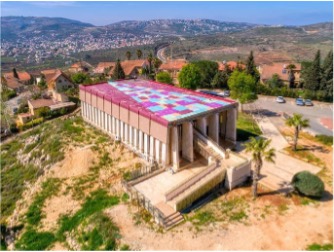
It’s still possible to see the ancient site of Shiloh today! They are excavating it. It’s interesting to know that the tabernacle resided here for 369 years (longer than the US has been a country) during the time of the Judges. This is where Hannah would’ve come to pray asking for a child, and where Samuel served, in the hill country of Jerusalem. (The tabernacle was longer in the hill country than in the desert!) In 1978, modern Israelis established a community here of Jews and now has 5,000 residents.  They built a synagogue for their place of worship, resembling the tabernacle which was there for so many years.

Also, interesting in the Proverbs of Solomon he exhorts his son, “Do not forget my law, but let your heart keep my commands, for length of days and long life and peace they will add to you. Let not mercy and truth forsake you; bind them around your neck, write them on the tablet of your heart, so find favor and high esteem in the sight of God and man.” (Proverbs 3:1-4) Most people quote the next verses 5 and 6, which are important, but I’ve for so long appreciated the verses prior and following those verses!


Do not be wise in your own eyes: fear the LORD and depart from evil. It will be health to your flesh, and strength to your bones.”  (3:7,8)

My son, do not despise the discipline of the LORD, nor detest His correction; Just as a father the son in whom he delights. Happy is the man who finds wisdom.” (3:11-13)

In the New Testament we can see the ultimate obedience of the Son of God in his time of difficulty in the face of death. “Father, if it is Your will, take this cup away from me; nevertheless, not my will, but Yours be done.” (Luke 22:42) Jesus was obedient until death.

-Stephanie Schlegel

Reflection Questions

  1. Are we struggling with any kind of disobedience that needs to be corrected today? It’s good to do a search and see if we need to be corrected and be willing to make that change.
  2. How can we teach the wisdom of Proverbs (and the rest of the Bible) to our children, grandchildren, and the children/youth and even adults of our church community? What happens when we don’t?
  3. What do we learn about the Heavenly Father in our Bible reading today? What do we learn about His Son Jesus?