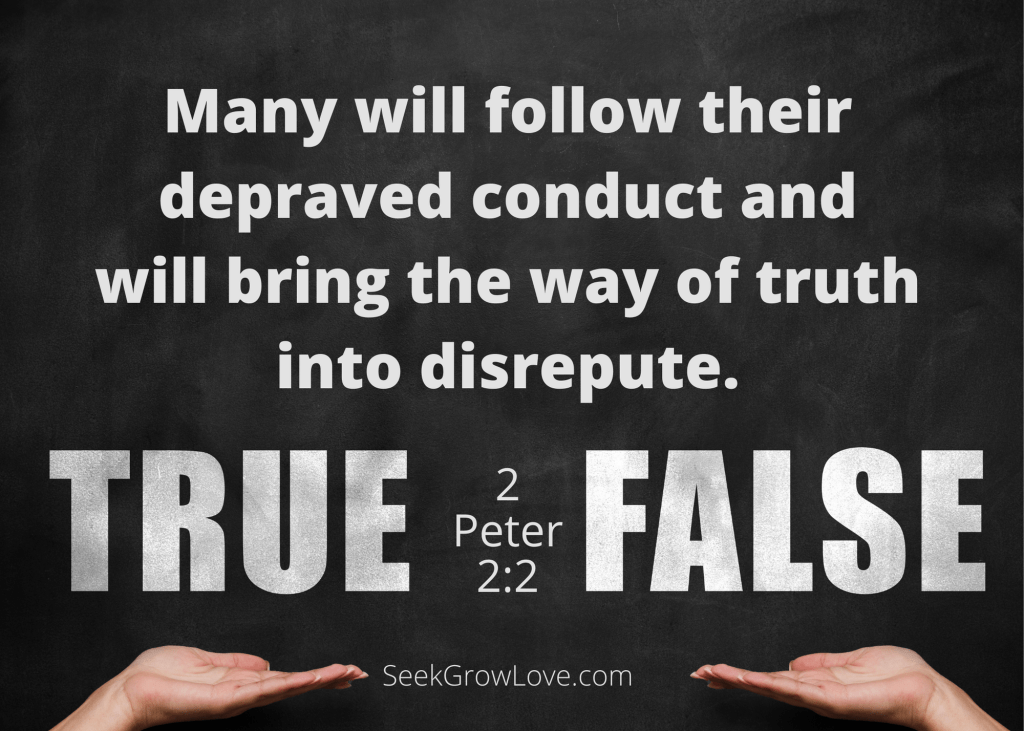
2 Peter 2 – Twice

Job 42

Psalm 103

2 Peter 2

-Today, for a devotion on 2 Peter 2, why not post 2 devotions? And how about 2 devotions from 2 brothers serving in Minnesota….

Here’s a devotion by J.J. Fletcher, originally posted Thursday, October 13, 2022

Peter draws to attention the fact that in the history of Israel, false prophets arose among the people and the same thing will happen in the church age… False teachers will arise, so we must be on the watch. If many will follow, we must be watchful and call out these false teachers as to prevent as many people as we can from falling into these destructive teachings. In thinking of what modern teachings this applies to we could put “Word of Faith” or “Prosperity” teachings into this category. We could also think about the many “liberal” denominations that reject the sexual ethics of scripture and the “evangelical” teachers that often seem to conflate (at least in the way I see it) being a Christian with voting for a particular political party. We need to make sure that we stand in the word and do not allow ourselves to be deceived and exploited, but also we must stand in the gap (Ezekiel 22) and do what we can to keep others from being deceived and exploited.

Peter then delves into ideas concerning judgment and preservation of righteous people standing up in the midst of wickedness. If God will rescue Noah and Lot, will he not also rescue some of us from perishing in this present age of wickedness? Of course, God does not keep all of his people from perishing (for reasons that are known to him and not us… i.e. Stephen and many of Jesus’ disciples), but he does in many instances deliver his people out of dire straits. Not only will he in many instances rescue us, but those who stand in wickedness stand in punishment. While we may not see the unrighteous handled in ways that we desire, we must recognize that God deals in his own ways (Isaiah 55:8-9). Peter then writes of the ways of deceivers and references Balaam (see Numbers 22 to begin his story) as he is pointing out many of the traits of these wicked opponents of God.

Peter states that those who depart from the corruption of the world and come to Jesus, but then depart from him and return to deception are worse off than they were at first. Can we wrap our minds around that? It’s better to have never known Jesus than to come into that saving knowledge and then depart from him. That makes it all the more important for us to keep in Christian community and to have people who can speak truth into our lives when we stumble and fall short in our pursuit of righteous living. The self-deception that comes from a lack of self-control is more than just a minor issue, it can cost us everything (abundance now, but more importantly, that abundance that we can embrace in the coming Kingdom).

We just got a new puppy about a month ago, so when I read Peter’s reference to a dog returning to its vomit, it gives me an all too clear visual of what that means. Our dog ate a couple of our children’s socks and had a miserable night (gagging constantly) and then when my wife took him out in the morning he proceeded to puke them up (it was Sunday morning, so in the rush of things getting ready to leave for church, the socks remained on the ground). When I took the dog out after several hours in the kennel, what did he do? He went right for one of the socks and tried to eat it (I got rid of it this time). Later that day (or the next), he got lucky(?) and ate the second sock… I’ll spare you the details of the next morning… The socks were bad for my puppy (he got lucky all things considered), but that did not stop him from going after them. Sin can be the same way for us, even though things are bad for us (and even when we absolutely recognize this), we often return to it (or at the very least are enticed by it) which makes it ever more important that we stay vigilant (constant vigilance!) in abiding in our lord Jesus, because without his advocacy and without the helper that he will send, i.e. the spirit of God, his father) , we are done for.

-J.J. Fletcher

Reflection:

1. What do I need to be most on the guard for? What types of deception might entice me to neglect my faith in Jesus and his kingdom message?

2. Why do the promises of false teachers often sound so sweet? Do they play around with scripture and make it sound like it is saying something that it is not? What can we do to limit the voices of deception that are lurking not only in the shadows, but out in the limelight?

And here’s a devotion by Joel Fletcher, originally posted October 15, 2023

“For it would have been better for them never to have known the way of righteousness than after knowing it to turn back from the holy commandment delivered to them.” 

2 Peter 2:21 (ESV)  

An idea stitched through today’s readings is that the God of Heaven prefers human behavior that is good and has an aversion to human behavior that is bad (to put it mildly). The Maker of mankind pays attention to both the wicked and the righteous (Proverbs 15:3). God sees all that happens on earth and, although all bad is wrong from His perspective, there seems to be a certain kind of action that uniquely draws His ire: people, who “speak on behalf of God”, using their influence to persuade others to evil–such people are called false prophets and false teachers (Jeremiah 23:16-17, 2 Peter 2:1). How do we avoid becoming like these people and live in a way that pleases our Maker? 

Looking through the whole of scripture, one will discover that nearly all the people God employed for His purposes displayed humility (or were first humbled), while those whom God rejected or stopped using were dragged down by pride. When Jesus ministered in Judea and the surrounding regions, he embraced people who were stereotypically seen as bad (or, unrighteous) and opposed those who were known (and self-described) as good (or, righteous). While it is true that those whom Jesus befriended did bad things and those whom Jesus antagonized did good things, the defining distinction between the two was humility (in the former) and pride (in the latter).  

The religious leaders of first-century Jerusalem saw themselves as righteous men who had things figured out–they needed no one to save them. The outcasts, meanwhile, longed for salvation–both from the Roman overlords and their own sinfulness. In other words, the people who embraced Jesus saw him as a doctor and themselves as the sick, while those who rejected him, saw Jesus as an instigator and themselves as the people preserving the peace. If one denies they have a problem, one cannot get the help needed.  

There is a conundrum for the Christian: we are called to do good works (Ephesians 2:10) and to represent Christ on God’s behalf (2 Corinthians 5:10), but we are also warned that one who has claimed to be a Christian (maybe even one who has been an effective evangelist) can come to a place where, because of their pride, it would have been better if they had “never known the way of righteousness” (2 Peter 2:21). How do we avoid this state, while being faithful to our calling? 

From what I see from scripture, the best antidote to getting on God’s bad side is to live in, with, and by humility. First, by fearing, above all (with reverence, awe, and worship) Yahweh. Second, by recognizing Jesus as the only way to the Father, to life eternal, and to the good life. Third, by recognizing that, while this knowledge radically changes lives, it doesn’t make one superior to anyone else. 

You can, with great fervor, study your Bible for countless hours every day, and do all the spiritual practices prescribed or implied by the text, but it won’t make you any better off…unless you are aware and live as though you need a doctor and view Jesus as that doctor. The religious leaders of Jesus’ day didn’t recognize the great physician because they didn’t acknowledge their sickness. If we want to make sure we don’t go down that same dead-end road, if we don’t want to get scolded or labeled as a false teacher, we must take our humble medicine every day.  

Reflection Questions

  1. Do you realize your need for a doctor and Savior? How does Jesus provide what you need?
  2. What happens to those who once knew they needed Jesus, but then are puffed up with pride and go their own way?
  3. What steps can you take to stay humble (or first become humble)? In what areas of your life do you most frequently run into the problem of pride? How can knowing this help you in the future?

Prayer

Dear God, I thank You for Your words of truth, love, and warning. Help us to be devoted to who You are, what You desire, and to Your Son and Coming Kingdom. May we not be led astray by false teachers, covetousness, or returning to our sin and past selves. Help me see and speak and represent Your truth. Give me a heart of humility that magnifies Your name and boasts only of Christ and all he has done, is doing, and will do for his faithful, truthful church. Is his name I pray, Amen.
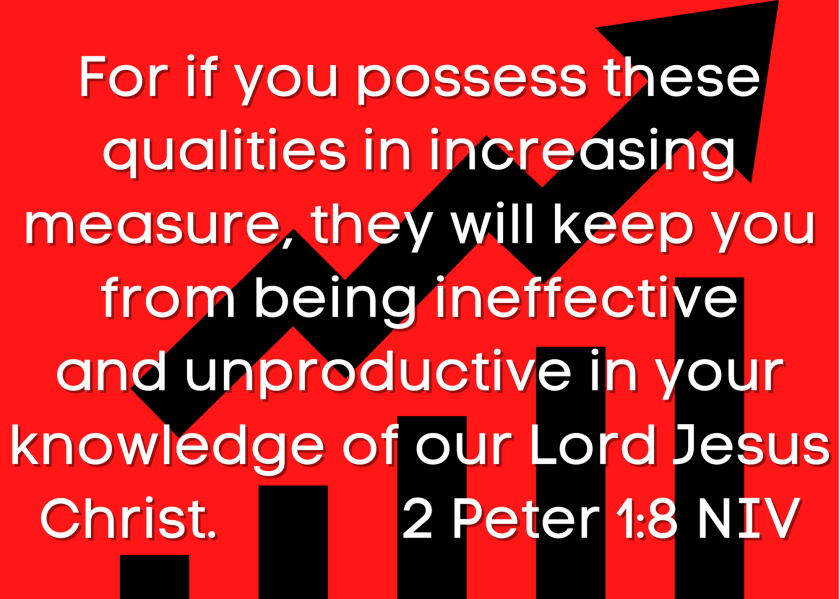
Adding More and More

Job 40-41

Psalm 102

2 Peter 1

-Devotion by J.J. Fletcher (MN)

(2 Peter 1:5-10 ESV) …make every effort to supplement your faith with virtue, and virtue with knowledge, and knowledge with self-control, and self-control with steadfastness, and steadfastness with godliness, and godliness with brotherly affection, and brotherly affection with love. For if these qualities are yours and are increasing, they keep you from being ineffective or unfruitful in the knowledge of our Lord Jesus Christ. For whoever lacks these qualities is so nearsighted that he is blind, having forgotten that he was cleansed from his former sins. Therefore, brothers, be all the more diligent to confirm your calling and election, for if you practice these qualities you will never fall.

In contrast to the list of negative attributes to avoid in the second chapter of 1st Peter, we see in the first chapter of 2nd Peter a list of attributes that we should aspire to. Believe, absolutely, but belief must be supplemented with action. Virtue = moral excellence; let your character be representative of Christ. As one called to redemption in the name of Jesus, your motivations and behaviors should be indicative of Jesus’ righteousness (he is your righteousness, so honor it with your lifestyle). As we strive for moral excellence, we should seek to understand. 

Sir Francis Bacon coined the term “knowledge is power.” Knowledge gives us an advantage. Simply hearing that we should behave in a certain way is one thing, but studying the scriptures to understand WHY we should behave a certain way is more powerful and compelling. As someone who grew up in the 90’s, “The More You Know” PSA’s come to mind. To be discerning in addressing the many challenges of life, the knowledge and understanding of scripture is crucial.

Our knowledge gives us a basis to exercise self-control. Having an understanding of scripture gives us a metric by which to measure our behavior. If we know what we should do, then we can aspire to behave that way and recognize where we might fall short. Our salvation is not based on our works or actions, but our works/actions speak, or bear witness to our faith. If the way we behave is supposed to point others to Jesus, then we should be passionate about being self-controlled. If we can’t manage our emotions or behaviors, what message is that sending to others about our faith and character?

Add to your self-control steadfastness; this is understood as endurance or staying power. It is one thing to exercise self-control for an hour, a day, a week… Even someone who is convicted or passionate about something can get worn down or discouraged over time; so we continually need to renew our minds and evaluate ourselves.

Godliness can be understood as the way that we submit and respond to God and the way that we look at and respond to his creation, namely that which is created in his image (spoiler alert, that means people). Brotherly love (or affection) and agape: general love, care, concern, and treatment of people in general, are the logical and spiritual outpouring of our submission to God’s will in the way that we relate to and treat others.

Lacking these characteristics is tantamount to blindness, but practicing them is indicative of absolute victory. We don’t have to be perfect in our execution, but we need to strive for all of them in our behavioral orientation.

J.J. Fletcher is a 2009 graduate of Atlanta Bible College and has been pastoring Pine Grove Bible Church  (Brooklyn Park, MN) since 2017. He has been married to Hope (Kirkpatrick) for 18 years and has 4 children.

Reflection Questions

  1. Why is just having faith not enough?
  2. Virtue, knowledge, self-control, steadfastness, godliness, brotherly affection, and love. Why is having just a bit of any of these not enough? What would it look like to add more and more of each of these qualities?
  3. Is one (or two) of these harder for you than the others? How could you especially focus on that/those? Is there something to get rid of in order to make it easier to build more of this/these qualities?
  4. When have you been blind – missing these? How does your blindness affect your relationship with God? How does it affect your relationship with others?

Prayer

Dear God – I praise You for being the One True God – perfect in all your qualities. Forgive me for the times my faith is incomplete and blind. Help me see where I need to add on more and more that I will be effective and fruitful. And help me do what is pleasing to You, living like Jesus. In his name I pray, Amen.

Preventing a Fall

2 Peter 1-3 & Jude

Yesterday we reposted a devotion on 2 Timothy about Guarding the Faith and Fanning it into Flame by Jeff Fletcher. One way Pastor Jeff did this (and his wife Karen continues to), is with their 11 children. Today we will be reposting not one, but two devotions from not one, but two of Jeff and Karen’s sons who are both ministering in Minnesota. Thank you, Fletchers, for sharing lessons from God’s Word with us through SeekGrowLove!

Devotion on 2 Peter 1

by JJ Fletcher – originally posted on October 12, 2022 for SGL

We have great and precious promises that have been made that will enable us to become partakers of the divine nature! As Jesus put on a new nature in his resurrection from the dead, so shall we when through faith, we endure through life’s many challenges and inherit the promise of the coming Kingdom of God.

Hebrews 11:1 says that “…faith is the assurance of things hoped for, the conviction of things not seen.” As we have faith that God will restore all things (Acts 3:21), upon our faith we must add virtue: meaning good quality of life or uprightness – not simply believing but living out our lives as something that reflects the nature of God’s goodness, justness, and righteousness. After believing and living a changed life, we are to add knowledge to that; we should always be striving to learn from God’s inspired word and learn from his spirit as it is active in us… And more than that, seek after his spirit that we might become more in line with his will and come to a greater understanding of its importance and how beneficial it is to us to walk in his ways.

Following the call to add knowledge, we encounter again the call to be self-controlled! It really does seem that much of what we read in scripture hinges on self-control and that circles back to our need to not stifle the spirit in our lives. If one of the elements that the fruit of the spirit brings forth in our lives is self-control, then we ought to do whatever it takes to drive away any behaviors that might cause God’s spirit to depart from us (Judges 16, 1 Samuel 16). Self-control allows us to endure – to stay on the course – as Paul might say, “to run the race”. We have to endure through all of the challenges and temptations that life throws at us, and we must allow the motivation of our hope, our uprightness, and the self-control that we are enabled to have through God’s spirit carry us through.

As we endure, we ought to have a reverential feeling or devotion to God, that’s what the Greek work translated godliness indicates. As we experience God’s goodness and see how His spirit works in us, we should feel more and more awe and reverence to our creator… After all, He put the plan into place that leads us into a life that transcends the brokenness that sin imparts on our lives – even though we sin and are affected by sin, God’s directives lead us onto a path that (through Jesus) casts that sin aside and draws us into community with him.

And as all these things are ingrained into our life, the part that affects others the most is the cherry on top… We are to have brotherly affection (love) as a defining characteristic in our lives! Love and care for one another as believers will lead us to speak into one another’s lives and help us when we hit rough patches. Even the most spiritually minded people hit dark periods in their lives (google the dark night of the soul). If we love our brothers and sisters in Christ, we will take the time to come alongside them, to care for them, to call them out, to admonish and encourage – brotherly affection means being intimately involved in the lives of our faith family – not being apathetic or half-hearted. We need to invest in each other as Christ has invested in us through his sacrifice (sometimes we must be self-sacrificial).

These qualities keep us from being ineffective witnesses and fruitless workers. We must be bearing the fruit of the word implanted in us (James 1) and strive to be effective ministers to the lives of those who are hurting and struggling. Peter says that whoever lacks these qualities is so nearsighted that he is blind! Yikes… lacking these qualities as I read this means that we cannot see beyond ourselves, and that it a tremendous problem when one of our chief goals is to preach the gospel to all creation.

If we take these qualities to head and practice them diligently it says we confirm our election (or being chosen out) into beneficiaries of the grace of God. Also, it says if we practice these things we will never fall. So, practice these things so that you may have entrance into the eternal kingdom of our Lord and Savior Jesus Christ (v11).

J.J. Fletcher lives in Minnesota with his wife and four children. He is the pastor at Pine Grove Bible Church.  

Reflection:

1. Think about how Jesus exemplified all these characteristics listed in verses 5-7. If he had not exemplified all these things, would he have had the wherewithal to endure through his father’s plan of salvation through him? How can we expect to live exemplary lives if we do not take these characteristics to heart.

2. Think about the first 6 items listed (faith, virtue, knowledge, self-control, steadfastness, and godliness) and the final one: brotherly affection/love. What do the first 6 produce without the 7th? We’re designed (as individuals and as a church body) to be in community, how might we be rendered fruitless and ineffective if we excel at the 6, but lack the 7th?

AND – A Devotion on 2 Peter 2

by Joel Fletcher – originally posted Oct 15, 2023 for SGL.

“For it would have been better for them never to have known the way of righteousness than after knowing it to turn back from the holy commandment delivered to them.”  2 Peter 2:21 (ESV)  

An idea stitched through today’s readings is that the God of Heaven prefers human behavior that is good and has an aversion to human behavior that is bad (to put it mildly). The Maker of mankind pays attention to both the wicked and the righteous (Proverbs 15:3). God sees all that happens on earth and, although all bad is wrong from His perspective, there seems to be a certain kind of action that uniquely draws His ire: people, who “speak on behalf of God”, using their influence to persuade others to evil–such people are called false prophets and false teachers (Jeremiah 23:16-17, 2 Peter 2:1). How do we avoid becoming like these people and live in a way that pleases our Maker? 

Looking through the whole of scripture, one will discover that nearly all the people God employed for His purposes displayed humility (or were first humbled), while those whom God rejected or stopped using were dragged down by pride. When Jesus ministered in Judea and the surrounding regions, he embraced people who were stereotypically seen as bad (or, unrighteous) and opposed those who were known (and self-described) as good (or, righteous). While it is true that those whom Jesus befriended did bad things and those whom Jesus antagonized did good things, the defining distinction between the two was humility (in the former) and pride (in the latter).  

The religious leaders of first-century Jerusalem saw themselves as righteous men who had things figured out–they needed no one to save them. The outcasts, meanwhile, longed for salvation–both from the Roman overlords and their own sinfulness. In other words, the people who embraced Jesus saw him as a doctor and themselves as the sick, while those who rejected him, saw Jesus as an instigator and themselves as the people preserving the peace. If one denies they have a problem, one cannot get the help needed.  

There is a conundrum for the Christian: we are called to do good works (Ephesians 2:10) and to represent Christ on God’s behalf (2 Corinthians 5:10), but we are also warned that one who has claimed to be a Christian (maybe even one who has been an effective evangelist) can come to a place where, because of their pride, it would have been better if they had “never known the way of righteousness” (2 Peter 2:21). How do we avoid this state, while being faithful to our calling? 

From what I see from scripture, the best antidote to getting on God’s bad side is to live in, with, and by humility. First, by fearing, above all (with reverence, awe, and worship) Yahweh. Second, by recognizing Jesus as the only way to the Father, to life eternal, and to the good life. Third, by recognizing that, while this knowledge radically changes lives, it doesn’t make one superior to anyone else. 

You can, with great fervor, study your Bible for countless hours every day, and do all the spiritual practices prescribed or implied by the text, but it won’t make you any better off…unless you are aware and live as though you need a doctor and view Jesus as that doctor. The religious leaders of Jesus’ day didn’t recognize the great physician because they didn’t acknowledge their sickness. If we want to make sure we don’t go down that same dead-end road, if we don’t want to get scolded or labeled as a false teacher, we must take our humble medicine every day.  

Joel Fletcher lives in Minnesota with his wife and two small children. He is involved with youth group and worship music at Pine Grove Bible Church.  

Reflection Questions

  1. Do you realize your need for a doctor and Savior? How does Jesus provide what you need?
  2. What happens to those who once knew they needed Jesus, but then are puffed up with pride and go their own way?
  3. What steps can you take to stay humble (or first become humble)? In what areas of your life do you most frequently run into the problem of pride? How can knowing this help you in the future?

Needed Reminders

2 Peter 3

Friday, October 14, 2022

“I am stirring up your sincere mind by way of reminder” (2 Peter 3:1 ESV).

Not every letter written has the same intent. Some of the New Testament letters are written to address very clear and direct issues (I think of Paul addressing specific sexual immorality in 1st Corinthians 5). Sometimes they are multi-faceted – some specific – some more general teaching or correction. What Peter writes here makes another point – even if there is nothing specific that may need to be corrected, reminders are still valuable and necessary. When we aren’t reminded about things, we can lose track or lose sight of what is ahead of us… We can become passive, apathetic, or incredibly distracted. The tyranny of the urgent can cause us to put things on the backburner, and if you are like me, it can be hard to remember to pull them back to the front. Sometimes we just need to have our attention drawn to what we need to be doing in the present or near future (like when you think you are signing up to write devotions for October of 2023, but it’s really 2022). Much of what I view my role as in pastoral ministry is reminding people what scripture says – sometimes I address actual needs that I see in the body, but typically it is looking at a text, reminding my congregation of what it says, and then trying to highlight its significance in its historical context and how it is significant for us today.

In verse 3, Peter states that scoffers will come in the last days… I bet each one of us knows someone that would fit that description (maybe many people). You probably can’t turn on the tv, or radio, or fire up the old interwebs for very long without finding someone speaking out against or mocking a scriptural worldview. Why are they scoffing? Because a biblical worldview does not mesh with their sinful desires, and they must push back at it or try to discredit it in some way to justify their way of living (or to clear their conscience).

Peter points out that the promise of “this ‘coming'” (2 Peter 3:4) has been spoken about for a long time, but where is this promised day that things will begin to be set right through God’s anointed one? He says that they deliberately overlook in part that the world has existed for a long time, and that God has passed judgement before, but now God’s judgement is being stored up (and in the grand scheme of time, Jesus’ ascension isn’t that far back). Our conception of time is different than that of God and while sometimes we may wonder why this delay of the Parousia is happening, we must recognize this fact that Peter lays before us: God is not slow, but is merciful! God is not willing that any should perish, but he desires all to come to repentance (and he gives us so many opportunities to do so!). It would, however, be unwise to be cognizant of this fact and delay our repentance, because if we have placed that on the backburner, we might get distracted and forget to bring it back to the front. We don’t want to diminish the urgent need for repentance and reconciliation… If we are not paying attention to the things of God, we will be caught off guard, but if we are watching, we will be ready when he sends his son like a thief in the night and starts the restoration of the earth.

I’ll leave you with a few of the final verses or the chapter to reflect on.

“Therefore, beloved, since you are waiting for these, be diligent to be found by him without spot or blemish, and at peace. And count the patience of our Lord as salvation, just as our beloved brother Paul also wrote to you according to the wisdom given him, as he does in all his letters when he speaks in them of these matters. You therefore, beloved, knowing this beforehand, take care that you are not carried away with the error of lawless people and lose your own stability. But grow in the grace and knowledge of our Lord and Savior Jesus Christ.” (2 Peter 3:14–18 ESV)

-J.J. Fletcher

Reflection Questions

  1. What reminders do you find in 2 Peter 3 that you needed to hear this week? What important things have you slid to the backburner that could use your attention today?
  2. What does God’s patience, mercy and timing mean to you?

Deception

2 Peter 2

Thursday, October 13, 2022

Peter draws to attention the fact that in the history of Israel, false prophets arose among the people and the same thing will happen in the church age… False teachers will arise, so we must be on the watch. If many will follow, we must be watchful and call out these false teachers as to prevent as many people as we can from falling into these destructive teachings. In thinking of what modern teachings this applies to we could put “Word of Faith” or “Prosperity” teachings into this category. We could also think about the many “liberal” denominations that reject the sexual ethics of scripture and the “evangelical” teachers that often seem to conflate (at least in the way I see it) being a Christian with voting for a particular political party. We need to make sure that we stand in the word and do not allow ourselves to be deceived and exploited, but also we must stand in the gap (Ezekiel 22) and do what we can to keep others from being deceived and exploited.

Peter then delves into ideas concerning judgment and preservation of righteous people standing up in the midst of wickedness. If God will rescue Noah and Lot, will he not also rescue some of us from perishing in this present age of wickedness? Of course, God does not keep all of his people from perishing (for reasons that are known to him and not us… i.e. Stephen and many of Jesus’ disciples), but he does in many instances deliver his people out of dire straits. Not only will he in many instances rescue us, but those who stand in wickedness stand in punishment. While we may not see the unrighteous handled in ways that we desire, we must recognize that God deals in his own ways (Isaiah 55:8-9). Peter then writes of the ways of deceivers and references Balaam (see Numbers 22 to begin his story) as he is pointing out many of the traits of these wicked opponents of God.

Peter states that those who depart from the corruption of the world and come to Jesus, but then depart from him and return to deception are worse off than they were at first. Can we wrap our minds around that? It’s better to have never known Jesus than to come into that saving knowledge and then depart from him. That makes it all the more important for us to keep in Christian community and to have people who can speak truth into our lives when we stumble and fall short in our pursuit of righteous living. The self-deception that comes from a lack of self-control is more than just a minor issue, it can cost us everything (abundance now, but more importantly, that abundance that we can embrace in the coming Kingdom).

We just got a new puppy about a month ago, so when I read Peter’s reference to a dog returning to its vomit, it gives me an all too clear visual of what that means. Our dog ate a couple of our children’s socks and had a miserable night (gagging constantly) and then when my wife took him out in the morning he proceeded to puke them up (it was Sunday morning, so in the rush of things getting ready to leave for church, the socks remained on the ground). When I took the dog out after several hours in the kennel, what did he do? He went right for one of the socks and tried to eat it (I got rid of it this time). Later that day (or the next), he got lucky(?) and ate the second sock… I’ll spare you the details of the next morning… The socks were bad for my puppy (he got lucky all things considered), but that did not stop him from going after them. Sin can be the same way for us, even though things are bad for us (and even when we absolutely recognize this), we often return to it (or at the very least are enticed by it) which makes it ever more important that we stay vigilant (constant vigilance!) in abiding in our lord Jesus, because without his advocacy and without the helper that he will send, i.e. the spirit of God, his father) , we are done for.

-J.J. Fletcher

Reflection:

1. What do I need to be most on the guard for? What types of deception might entice me to neglect my faith in Jesus and his kingdom message?

2. Why do the promises of false teachers often sound so sweet? Do they play around with scripture and make it sound like it is saying something that it is not? What can we do to limit the voices of deception that are lurking not only in the shadows, but out in the limelight?

It All Adds Up

2 Peter 1

Wednesday, October 12, 2022

“His divine power has granted to us all things that pertain to life and godliness, through the knowledge of him who called us to his own glory and excellence, by which he has granted to us his precious and very great promises, so that through them you may become partakers of the divine nature, having escaped from the corruption that is in the world because of sinful desire. For this very reason, make every effort to supplement your faith with virtue, and virtue with knowledge, and knowledge with self-control, and self-control with steadfastness, and steadfastness with godliness, and godliness with brotherly affection, and brotherly affection with love. For if these qualities are yours and are increasing, they keep you from being ineffective or unfruitful in the knowledge of our Lord Jesus Christ. For whoever lacks these qualities is so nearsighted that he is blind, having forgotten that he was cleansed from his former sins. Therefore, brothers, be all the more diligent to confirm your calling and election, for if you practice these qualities, you will never fall. For in this way there will be richly provided for you an entrance into the eternal kingdom of our Lord and Savior Jesus Christ.” (2 Peter 1:3–11 ESV)

We have great and precious promises that have been made that will enable us to become partakers of the divine nature! As Jesus put on a new nature in his resurrection from the dead, so shall we when through faith, we endure through life’s many challenges and inherit the promise of the coming Kingdom of God.

Hebrews 11:1 says that “…faith is the assurance of things hoped for, the conviction of things not seen.” As we have faith that God will restore all things (Acts 3:21), upon our faith we must add virtue: meaning good quality of life or uprightness – not simply believing but living out our lives as something that reflects the nature of God’s goodness, justness, and righteousness. After believing and living a changed life, we are to add knowledge to that; we should always be striving to learn from God’s inspired word and learn from his spirit as it is active in us… And more than that, seek after his spirit that we might become more in line with his will and come to a greater understanding of its importance and how beneficial it is to us to walk in his ways.

Following the call to add knowledge, we encounter again the call to be self-controlled! It really does seem that much of what we read in scripture hinges on self-control and that circles back to our need to not stifle the spirit in our lives. If one of the elements that the fruit of the spirit brings forth in our lives is self-control, then we ought to do whatever it takes to drive away any behaviors that might cause God’s spirit to depart from us (Judges 16, 1 Samuel 16). Self-control allows us to endure – to stay on the course – as Paul might say, “to run the race”. We have to endure through all of the challenges and temptations that life throws at us, and we must allow the motivation of our hope, our uprightness, and the self-control that we are enabled to have through God’s spirit carry us through.

As we endure, we ought to have a reverential feeling or devotion to God, that’s what the Greek work translated godliness indicates. As we experience God’s goodness and see how His spirit works in us, we should feel more and more awe and reverence to our creator… After all, He put the plan into place that leads us into a life that transcends the brokenness that sin imparts on our lives – even though we sin and are affected by sin, God’s directives lead us onto a path that (through Jesus) casts that sin aside and draws us into community with him.

And as all these things are ingrained into our life, the part that affects others the most is the cherry on top… We are to have brotherly affection (love) as a defining characteristic in our lives! Love and care for one another as believers will lead us to speak into one another’s lives and help us when we hit rough patches. Even the most spiritually minded people hit dark periods in their lives (google the dark night of the soul). If we love our brothers and sisters in Christ, we will take the time to come alongside them, to care for them, to call them out, to admonish and encourage – brotherly affection means being intimately involved in the lives of our faith family – not being apathetic or half-hearted. We need to invest in each other as Christ has invested in us through his sacrifice (sometimes we must be self-sacrificial).

These qualities keep us from being ineffective witnesses and fruitless workers. We must be bearing the fruit of the word implanted in us (James 1) and strive to be effective ministers to the lives of those who are hurting and struggling. Peter says that whoever lacks these qualities is so nearsighted that he is blind! Yikes… lacking these qualities as I read this means that we cannot see beyond ourselves, and that it a tremendous problem when one of our chief goals is to preach the gospel to all creation.

If we take these qualities to head and practice them diligently it says we confirm our election (or being chosen out) into beneficiaries of the grace of God. Also, it says if we practice these things we will never fall. So, practice these things so that you may have entrance into the eternal kingdom of our Lord and Savior Jesus Christ (v11).

-J.J. Fletcher

Reflection:

1. Think about how Jesus exemplified all these characteristics listed in verses 5-7. If he had not exemplified all these things, would he have had the wherewithal to endure through his father’s plan of salvation through him? How can we expect to live exemplary lives if we do not take these characteristics to heart.

2. Think about the first 6 items listed (faith, virtue, knowledge, self-control, steadfastness, and godliness) and the final one: brotherly affection/love. What do the first 6 produce without the 7th? We’re designed (as individuals and as a church body) to be in community, how might we be rendered fruitless and ineffective if we excel at the 6, but lack the 7th?

Remember

2 Peter 3

Have you ever played any memory or matching games? Our family likes to watch Braingames, where they discuss different scenarios that “trick the mind.” Some will use colors that play tricks on the brain, others will use shapes to make you think a longer line is actually shorter, still others will show you tricks to better remember something. 

We tend to forget things easily, as a result we have found that it is easier to remember if we recap our tasks at the end of a conversation or email. Our family emails will usually end with a bullet point list of the main points of the email. We have even begun doing this with some of the emails we send to those outside of our family as well. 

The third chapter of 2 Peter is kind of a bulleted list reminding his readers of the main points he has brought to their attention. He reminds his readers of the the importance of the words spoken by the prophets and the commandments of the Lord. This is the foremost reminder that he gives seeking for his readers to focus their lives on these. He says mockers will come and they will ask, “Is your Lord ever actually going to return?” If you have been a Christian for very long you have probably been asked a similar question, or even thought about similar questions yourself. Peter reminds us that God operates outside of our understanding of time. What seems like a long time to us is like a day to Him. He also reminds us that the apparent delay is not so much slowness as it is patiently waiting for as many as will to come to repentance and form a relationship of hope and love with our Lord. 

Remembering these things should cause us to think of the kind of person we should be. We should be people that are consistently looking for opportunities to further His Kingdom work and bring others to Christ. We should be living holy and godly lives while keeping our eyes on the things of God rather than the things of this world. I will never forget the many times I have heard Dr. Joe Martin proclaiming, “ITS ALL GONNA BURN” as he talks about the earthly things he dreams of (his Toyota Tundra). We all have material possessions that we hold dear and that we dream of one day having, the fact of the matter is that ITS ALL GONNA BURN and that’s okay! When it burns at the coming day of the Lord we will receive eternal life. We will be in the presence of our LORD and His Son! We will be seeing the new heaven and new earth! There is NOTHING in this creation that can compare with how amazing that will be!

REMEMBER:

  • The words spoken by the prophets. (Verse 2)
  • The commandment of the Lord and Savior. (Verse 2)
  • Mockers will come with their mocking. (Verse 3)
  • God is patient, NOT slow. (Verses 8 & 9)
  • Its all gonna burn! (Verse 12 & Dr. Joe)
  • We are awaiting something FAR BETTER!!! (Verse 13)
  • Be diligent in your faith and actions. (Verse 14)
  • Grow in grace and knowledge of our Lord. (Verse 18)

-Bill Dunn

Read or listen to today’s Bible reading plan passages at BibleGateway.com here – Ezekiel 13-14 and 2 Peter 3

FALSE

2 Peter 2

We do NOT like to be told our actions are wrong or that our understanding is false. Many people today fight against the idea that there even is “true or false”, “fact or fiction”, and “right or wrong”. The Bible, however, very clearly teaches us that there is a difference between each of these. 

In 2 Peter 2 we read that there have always been people, and even angels, teaching what is not correct and there have always been consequences for these false teachings. There are angels “held for punishment”, the ungodly caught in a worldwide flood, and cities reduced to ashes all as a result of teaching and living by what is NOT TRUE. 

The good news is that we have the option to read and understand what is TRUE. Verse 9 tells us that God “knows how to rescue the godly!” This is incredible news as we read about the destruction of the ungodly false teachers and prophets. When we teach we need to be certain that what we are teaching is the truth we find in the Bible. When we make choices we need to be sure they are guided by these same truths and NOT by the false teachings of the world. 

Peter even tells us that the false teachers will promise freedom, while being enslaved by their own false teachings. It is possible to get away from the grips of these false teachings but it is not always easy to stay away. Peter describes it by quoting Proverbs 26:11, “A dog returns to its own vomit…” this is quite the disgusting thought but it is quite accurate. A dog will return to eat what its body has already rejected and a pig will go roll in the mud after it was just cleaned off. We tend to do the same thing, hopefully not literally! Temptations and the false teachings of the world are not easy to resist but Paul told us in 1 Corinthians 10:13 that God will give a way out of any temptation we face. That way out may not be easy, it may not be pleasant, but it will be there; and it will be far better for us. 

Don’t be like a dog or a pig! Avoid the false teachings this world has to offer and live your life in the freedom that can only be found serving The LORD God Almighty and His Son, Jesus the Christ!

-Bill Dunn

Today’s Bible reading passages can be read or listened to at BibleGateway.com here – Ezekiel 11-12 and 2 Peter 2

Growing

2 Peter 1


As we begin reading Peter’s second letter we find that he is writing “to those who have received a faith of the same kind as ours, by the righteousness of our God and Savior, Jesus Christ.” That means he is writing to you and I as well! 

We find that God has granted us knowledge of Him along with “precious and magnificent promises” allowing us to escape the corruption in the world. As we look around we can see corruption at every corner. We see corrupt leaders, corrupt organizations, even corrupt friendships.

How do we escape the corruption of this world? Peter tells us in verses 5-8 we are to be diligent to allow our faith to supply moral excellence. However we do not stop there. We are to be in constant growth and that will lead us through to knowledge, self-control, perseverance, godliness, brotherly kindness, and love! This is a truly amazing list that can guide you through the troubles of each day. 

Although we each fall short and make mistakes, we are told that if we practice these things we will never stumble. It isn’t too difficult to show brotherly kindness, self-control, and even perseverance on occasion, but to maintain these things constantly is much more challenging. When we struggle we should expect our brothers and sisters to remind us of the calling that has been given to us.

Tomorrow we will look at what Peter has to say concerning the behavior of many and how it affects the judgement of others. 

-Bill Dunn

Today’s Bible reading plan passages can be read or listened to at BibleGateway.com here – Ezekiel 9 & 10 and 2 Peter 1

Twice Written, Twice Shy(ing away from sin)**

Jude & 2 Peter

Today, I would encourage you to read the material (Jude, 2 Peter) BEFORE the devotion, if you don’t already do that. Go do that. This can wait. 
You may be saying to yourself, did I just read the same thing twice?  They are very similar.*


I’ve written this before, but in scripture, when something is repeated, IT IS IMPORTANT. In Ancient Cultures, reading wasn’t the norm. The people in the time of Jesus and before were oral cultures, and repeating oneself in written form was a way to emphasize important points. What’s happening in Jude and 2 Peter is God “repeating himself” for our benefit. 

Jude and 2 Peter are both focused on false teachers bringing in destructive teachings among the people of God. Jude tells us that these people “creep” in “secretly”. They are teaching two general ideas : they are denying Jesus as Messiah and Master and they are turning grace into immorality and sensuality. These are twin ideas. These people were declaring that Jesus was not the only one who could save us from our sins (Messiah) and had no place in telling us what was right and wrong (Master). The false teachers seemed to have held the view that sin was not “real”; there was not one thing that was right and another that was wrong, but all were saved by the grace of God, and all would be permitted to spend eternity with him. All action was permitted. 


We are still talking about the ancient world, though I know how similar it sounds to our own. Jude and Peter are warning us to not be seduced by these ideas. Instead, FIGHT for the faith. Don’t let those who would water down the gospel win. In love, speak truth, the whole truth and nothing but the truth. You contend because those who are teaching these false things are bound for destruction. THEY should have known better, but YOU DO know better. Don’t let others go down this same path, but watch out for yourself. Peter says to live with all godliness and righteousness. Jude says to build yourself up in faith and keep yourselves in the love of God. 


My brothers and sisters, may you see in Jude and 2 Peter faithful authors speaking to the same truth : there will always be someone trying to convince you that Jesus is not the Messiah, and their way to live is the best (either by adding commandments or removing standards). May you turn away from these false teachers. May you see two testimonies about the dangers of these heresies and sins, and may you make sure to be doubly cautious before following an unknown teacher. 

-Jake Ballard
—————————————————————————————————*If you would like to see a pretty decent analysis of why they are similar, you can read this article here : http://exegeticaltools.com/2020/05/15/the-literary-relationship-between-2-peter-and-jude/ The author of this devotion does not necessarily endorse everything said on the site (of course) or even the implicit conclusion of the article. (I think Jude wrote first, and Peter copied and riffed on his writing.)
** To the Tune of Last Christmas by WHAM! (Merry Christmas Eve)

Today’s Bible passages can be read on BibleGateway here – 2 Peter & Jude

Tomorrow we will read 1st John.