Unexpected Moments

Luke 2

Friday, December 9, 2022

Sheep are stinky. 

Consequently, shepherds stink. 

Tending sheep, especially overnight, was a pretty thankless job, and took a toll on a lot of those who did it. Shepherds were not very well thought of by those who had more respectable agrarian jobs, or those who worked in the city. 

But God chose them to be the first ones to know the messiah is born. They saw him in the manger after the angels made their Christmas announcement!

Old people who spend their days alone can sometimes be weird. 

In fact, some of the best people are the old weird people who spend most of their time in prayer to God. The family of Jesus are accosted when they take him to be consecrated on the eighth day. Simeon and Anna may have been well respected, but they were still both older, and both a little weird. 

But God chose them to be among the first to share the message of the Messiah. They spoke the message, Simeon ready for death, knowing the Messiah had come!

The story of Jesus is full of unexpected moments like this. You didn’t see shepherds shouting out with joy, speaking to all who would listen. You didn’t see Simeon and Anna stopping families to talk on the way to the temple. You didn’t see a twelve year old boy going toe-to-toe, blow-for-blow with the religious scholars of the day. 

But God chose these moments, these people, these places, to give us a clue that in the rest of Luke we’re going to see unexpected moments. 

With the familiarity of the passage at Christmas, it may seem common place. But as you read Luke 2 today, remind yourself again just how radical *and strange* the birth of Christ was. May you find comfort in the fact that no matter if you are

Old

Young

Weird

Normal

Or even stinky

God is choosing you to believe in Christ this Christmas. It is up to you to choose to believe. 

-Jake Ballard

Reflection Questions

  1. What do you find most surprising in Luke 2?
  2. Do you believe in Christ? How will that change your day, season and life?

MERRY CHRISTMAS!

Luke 1

Thursday, December 8, 2022

I love Christmas. 

Does that really need an explanation? What’s not to love about a time of year where we get to celebrate Jesus? Celebrate the Messiah who is and brings us hope, peace, joy, and love? Celebrate with cookies and pies and presents and parties? It is a joyous time of year, both for the cultural wrappings and baggage, (which is fine*!) but also for the Church traditions, teachings, giving, serving, and singing! 

The story of the birth of Christ, however, doesn’t begin in the Hill Country of Judea, as much as Linus from  A Charlie Brown Christmas would have you believe. Instead, Luke, author of the most chronologically accurate account of the life of Christ**, brings us farther back than Matthew, and tells us about the announcements of coming births of John and Jesus to their respective mothers. 

To be fair, today’s reading is 80 verses long! That’s long! I want to give you rapid fire thoughts and questions as the devotion for today:

Theophilus means in Greek “Friend of God.” While there may have been a person who commissioned the work from Luke, it could also be a title. Are you the friend of God to whom Luke is writing? Do you need to hear an accurate, orderly account of the life of Jesus to know with certainty the things you have been taught?

Both Zechariah and Mary respond to Gabriel, the messenger angel, with a similar question: How can this be? However, there are a few differences. Zechariah is a older man, a husband, a priest, that is a leader of the people, working in the temple. Mary is a young woman, unmarried,  virginal, still probably in the house of her mother and father until her time to be wed to Joseph had come. Gabriel (but really, God) expected Zechariah to comply, to say “Lord I believe” and to follow through on the promise of God. Mary growing up in an agrarian society, would know that in her current state, babies would be impossible to come by. 

When God announces his plan to you, do you trust that he will follow through? How much of him have you seen? Are you overlooking miracles? However, know that he isn’t mad when you ask him how to accomplish the (what appears to be) impossible. You too may just need the Holy Spirit to do the impossible. Are you willing to say “I am the Lord’s servant. May your word to me be fulfilled”?

A quick note, without a question, is that John, in the womb of Elizabeth, responded to the Messiah. Elizabeth thinks her baby is a person before he is born. 

Final thought – Both Mary and Zechariah sing their joy to God. Take some time today and ponder what song you would sing if you could sing it. The lyrics don’t have to be perfect or rhyme. Their doesn’t need to be a meter, or pitch. But what would you sing to God to give him glory? Or, find a song that shares your heart, and sing that to God, thinking of all the blessings he has given you. 

No matter the song in your heart, starting today, have yourself a merry little Christmas now. 

-Jake Ballard

* The wise men weren’t at the manger, but that’s OK! Use that to teach people about Jesus!

**In the author’s correct and very humble opinion.

QUESTIONS

See Above!

How do you fit into His story?

Luke 24

The Easter Story is one of the most beautiful stories ever written, and the best part is, it’s even true! It is a part of a plan written by God and fulfilled through Jesus by his obedience to death on the cross all those years ago. There was purpose in this suffering: so that the sins of the world could be forgiven. There is purpose in every season. Likewise there was purpose in his life of ministry and ultimately purpose in his resurrection. All the seasons of his life brought about God´s perfect and pleasing will. God can use anything and everything for His good. Even pain and suffering. Even a blood-stained cross. Even the death of His precious son.

Jesus knew what he was called to do and he followed through, he died on the cross for our sins. For three days the world was without hope. At the time they all believed that a Savior would come with sword and shield to bring victory over the Romans. It would then make sense that they would reject Jesus as their Messiah because his entire life and tragic death was the exact opposite as how they expected their Savior to come. Thankfully though, God gives us what we need not what we think we want. 

Although Jesus´ disciples were plainly told all the things that were to take place including the hope of Jesus´ resurrection, there was no anticipation of his return because they had forgotten that God´s plans are larger than life- even larger than death, Jesus´ death. They hoped that Jesus would be the one to redeem Israel. Not only did he redeem Israel, but the world, just not in the way they believed it would happen. 

Someone asked me recently what my passions were. But it got me thinking, how do my passions and talents fit together into God´s grand plan? How do I fit into His story? The women who first found the tomb empty were staying focused on doing their ministry. Likewise the disciples all took part in the Great Commission, being witnesses of all that had happened. After Jesus´ ascension they set out to spread the gospel even to the point of becoming martyrs. How can I use where I am in life and who I am in Christ to further God’s plan?

Jesus entrusted his entire life- even life itself- into God´s hands. And it wasn´t without God´s response to Jesus´ obedience. The process is like the call and response section in the back of the hymn books. Back and forth between God and His people. It started in the beginning with God when he created the world and everything in it and brought forth the plan of salvation. Jesus already did his part by dying on the cross, and is now continually interceding for us to God. It’s our turn to call on God and turn our life into a living sacrifice in order for Him to respond in immeasurable ways. Jesus submitted to God´s will and God answered by raising him from the grave. In the same way I believe we as Christians are expected to follow the example Jesus set before us of obeying God´s calling for our life. Use the God-given talents and the passions he has placed on your heart to live for Him, serving Him wholeheartedly. And in God´s timing, His will and His ways will prevail.

-Makayla Railton

Today’s Bible reading passages can be read or listened to at BibleGatewayJoshua 1-2 and Luke 24

Now What?

Luke 23:26-56

Imagine this: one day, a man approaches and asks you to follow him. Perhaps he astonishes you with a miracle or shows you undeserved kindness. Bewildered and intrigued, you leave everything behind to follow him. For three years, you have no home nor income, but you witness incredible miracles—from calming storms to raising a dead man to life. You yourself were given authority to drive out demons, cure diseases, and proclaim the coming Kingdom of God. This man turned your brokenness into purpose; finally you belong. Then, in a chaotic turn of events, the man is called a criminal and is nailed to a cross. You deny him and watch him die. 

But all those who knew Jesus, including the women who had followed him from Galilee, stood at a distance, watching these things. (Luke 23:49) 

The day following Jesus’s death must’ve been a quiet one for his followers. His body was still buried, lifeless. They were grieving for the man they loved, but also probably for the way their lives would inevitably change. They were left wondering, Now what?

That same question still applies to us today: Jesus died, so now what? Every year, we dedicate a weekend to remembering Jesus’s death and subsequent resurrection. We grieve the way he suffered and rejoice in his triumph over sin and death. Jesus’s sacrifice should change the way we live our lives! Yet, it’s too easy to forget about the weight of his suffering and significance of his victory as we return to our normal lives. 

As you await tomorrow’s celebration of Jesus’ resurrection, find a quiet moment to  reflect upon this question: 

“Is what you’re living for worth Christ dying for?” -Leonard Ravenhill

I have been crucified with Christ and I no longer live, but Christ lives in me. The life I now live in the body, I live by faith in the Son of God, who loved me and gave himself for me. (Galatians 2:20)

-Mackenzie McClain

Today’s Bible reading passages can be read or listened to at BibleGateway – Deuteronomy 33-34 and Luke 23:26-56

Funhouse Mirrors

Luke 23:1-25

Have you ever looked at yourself through the mirrors in a funhouse? Maybe they made your legs appear shorter or your figure much rounder. Of course, just because the mirror makes you look one way doesn’t mean that you actually look like that. Sometimes people seem to see us through funhouse mirrors; they get a distorted image of who we actually are. 

Jesus, too, was often seen through funhouse mirrors. Many people perceived him to be a traitor and criminal. Yet, standing in front of the mirror was actually the begotten Son of God, the promised Messiah. 

After Jesus’s arrest, he stood before government and religious officers, as was customary. Jesus was beaten by the guards, accused by the leaders, and ridiculed by the crowds. It’s a disgustingly difficult chapter to read because of the undeserved nastiness towards Jesus.  

So Pilate asked Jesus, “Are you the king of the Jews?”

“You have said so,” Jesus replied. (Luke 23:3)

Jesus didn’t deny Pilate’s allegations. If I were Jesus, I would probably burst into tears shouting, “It’s not fair!” After all, he had never sinned, nonetheless committed a crime worthy of death on a cross. Yet, he continued to refrain from defending himself. 

He (Herod) plied him with many questions, but Jesus gave him no answer. (Luke 23:9)

Jesus’ goal wasn’t to appease man but to please God. God already saw the real Jesus, the one standing in front of the mirror. Let us learn from Jesus’ example: You don’t have to get the last word. It’s okay to be misunderstood. There’s no need to get even. You have nothing to prove. 

Because God sees you—the real you. 

I’m an open book to you; even from a distance, you know what I’m thinking. You know when I leave and when I get back; I’m never out of your sight. You know everything I’m going to say before I start the first sentence. I look behind me and you’re there, then up ahead and you’re there, too—your reassuring presence, coming and going. This is too much, too wonderful—I can’t take it all in! (Psalm 139 from The Message)

-Mackenzie McClain

Today’s Bible reading passages can be read or listened to at BibleGatewayDeuteronomy 31-32 and Luke 23:1-25

Known & Loved

Luke 22:39-71

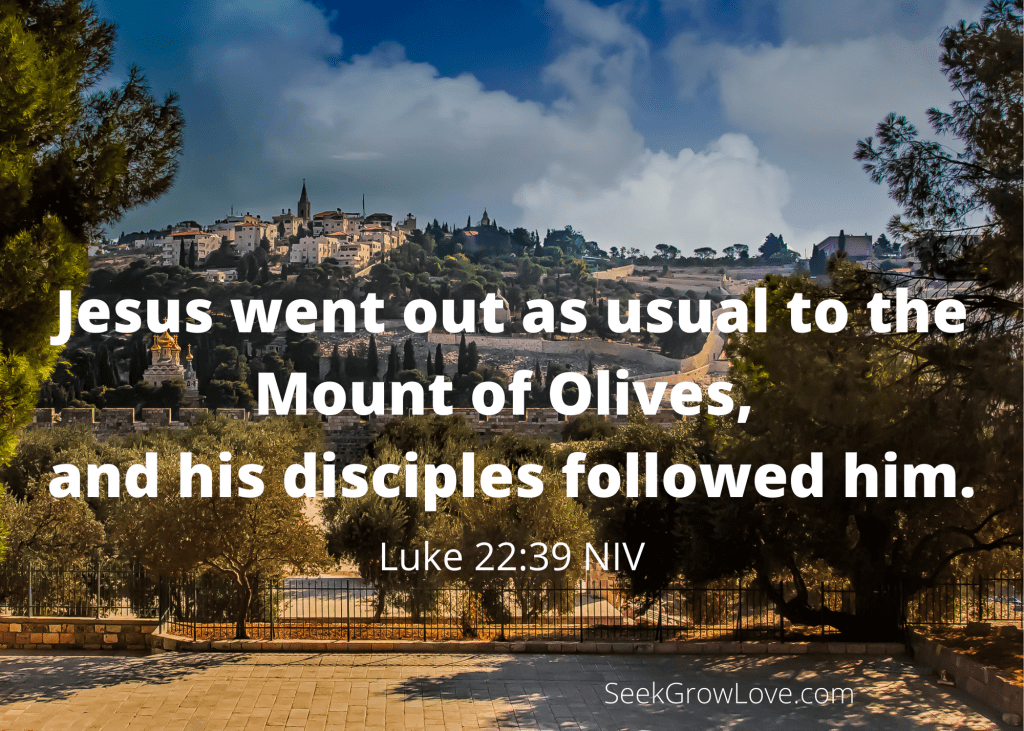
After Jesus finished the Passover meal with his disciples, he retreated to the Mount of Olives, which is just outside of Jerusalem, to pray. While there, he was arrested by a crowd led by Judas, one of his own disciples. Jesus’s choice to stay at the Mount of Olives was significant for two reasons: 

  1. Jesus knew Judas would betray him. 

In a previous conversation among the disciples, Jesus predicts that one of the twelve would betray him, even calling out Judas by name (John 13). The very night of the Last Supper, he makes a similar remark: 

“The hand of him who is going to betray me is with mine on the table” (Luke 22:21). 

  1. Judas knew Jesus would be at the Mount of Olives. 

During the week leading up to Jesus’s death, he and his disciples had spent every night at the Mount of Olives: 

Each day Jesus was teaching at the temple, and each evening he went out to spend the night on the hill called the Mount of Olives” (Luke 21:37). 

Judas surely knew where Jesus would be on this particular night, yet Jesus didn’t try to hide. 

Instead, Jesus invited Judas to his table to eat dinner together. 

Jesus stayed the night in the very place Judas knew he would be. 

You and I were a lot like Judas. We were full of ugly thoughts, misguided intentions, mixed-up priorities, and shameful feelings. Jesus saw our filthy sin, yet he invited us into his presence to give us freedom from it. The greatest irony is that the person who knows our flaws best, loves us the greatest. 

You are fully known, and yet you are deeply loved.

But God demonstrates his own love for us in this: While we were still sinners, Christ died for us. (Romans 5:8)

-Mackenzie McClain

Today’s Bible reading passages can be read or listened to at BibleGateway here – Deuteronomy 29-30 and Luke 22:39-71.

The Not Last Supper

Luke 22:1-38

God is an epic story-teller. One trick up every story-teller’s sleeve is repetition, only each new repetition brings a new twist. The story in today’s chapter is titled, The Last Supper, implying that other suppers preceded it. 

The first meal of this kind is found in Exodus; the Israelites were captive to Pharaoh in Egypt, who worked them ruthlessly.  God sent a series of plagues to convince Pharaoh to let His people go, which would culminate in the death of all firstborn sons—people and livestock alike. To save the Israelites from this horrific plague, God gave specific instructions to Moses and Aaron:

“On that same night I will pass through Egypt and strike down every firstborn of both people and animals, and I will bring judgment on all the gods of Egypt. I am the LORD. The blood will be a sign for you on the houses where you are, and when I see the blood, I will pass over you. No destructive plague will touch you when I strike Egypt.” (Exodus 12:12-13)

The Israelites with the blood of the lamb slathered on their door frames were safe, as the angel of death passed over their houses. God ordered the Israelites to commemorate the day God saved Israel, and they did so every year. 

Over one thousand years later, in the week leading up to Jesus’ death, Jesus celebrated Passover with his disciples in Jerusalem. This time, there was a new twist. Jesus gives new meaning to the emblems eaten that meal: 

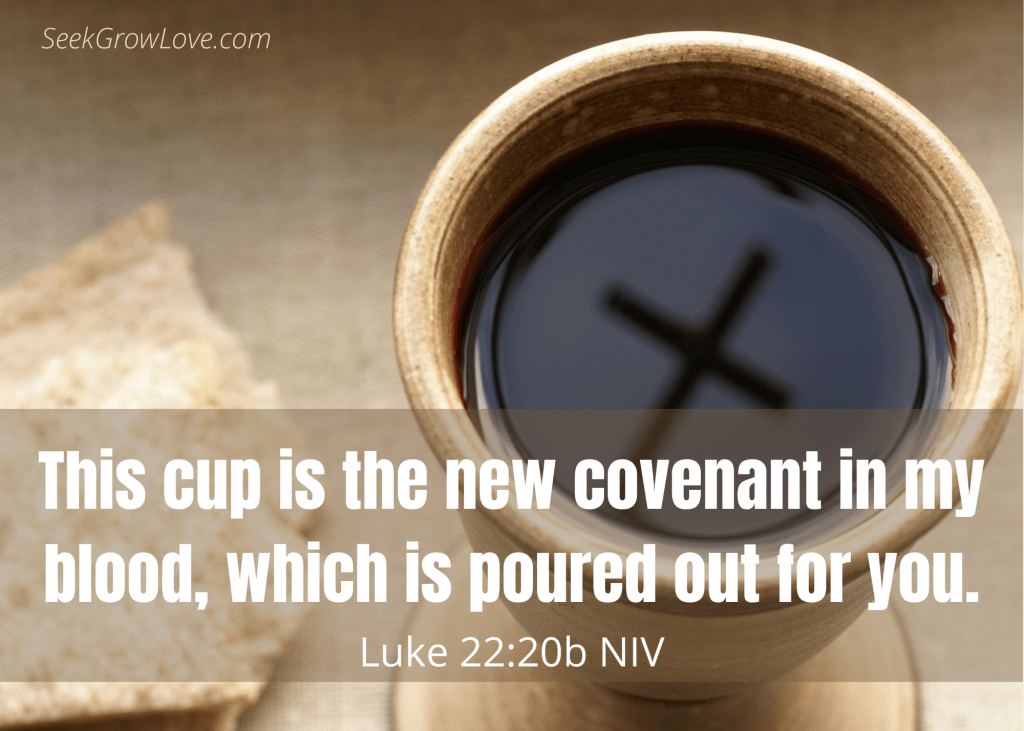
And he (Jesus) took bread, gave thanks and broke it, and gave it to them, saying, “This is my body given for you; do this in remembrance of me.” In the same way, after the supper he took the cup, saying, “This cup is the new covenant in my blood, which is poured out for you.” (Luke 22:19-20).

Jesus’s body was given for you, his blood poured out for you. His sacrifice marks a new covenant in which Jesus’ death atones for the sin of the world: 

Behold the Lamb of God who takes away the sin of the world. (John 1:29)

Have you ever read a story in the Bible with a hint of jealousy, wishing you, too, could have witnessed that moment? I know I have. I had a seat at that table with Jesus, eating and drinking, hearing his wisdom, and honoring his upcoming sacrifice. The good news for us is that “The Last Supper” isn’t really Jesus’s last supper: 

And he (Jesus) said to them (the disciples), “I have eagerly desired to eat this Passover with you before I suffer. For I tell you, I will not eat it again until it finds fulfillment in the kingdom of God.” (Luke 22:15-16)

It’s another feast with another twist. This time we’ll be eating and drinking in physical communion with Jesus, but in the Kingdom of God. I am excitedly awaiting that day, but in the meantime we have the honor of commemorating Jesus’ sacrifice regularly through Communion. The next time you take Communion, do it in remembrance—and in sweet anticipation—of all Jesus has done and is yet to do. 

-Mackenzie McClain

Today’s Bible reading passages can be read or listened to at BibleGateway here – Deuteronomy 27-28 and Luke 22:1-38

Sour Gummy Worms & Copper Coins

Luke 21

My young cousin got a bag of sour gummy worms for Christmas this past year. The following week, he carried the bag along everywhere he went, proudly savoring each lick. He loved those sour gummy worms! At the end of the week, he tried to give me his precious worms; of course, I declined because I don’t delight in stealing candy from children. As he was leaving my house, he hid the candy in my bedroom because he wanted me to have them. He didn’t have much to give, but he gave all he had and did so sincerely. 

Luke describes a similar encounter Jesus had with a poor widow at the temple: 

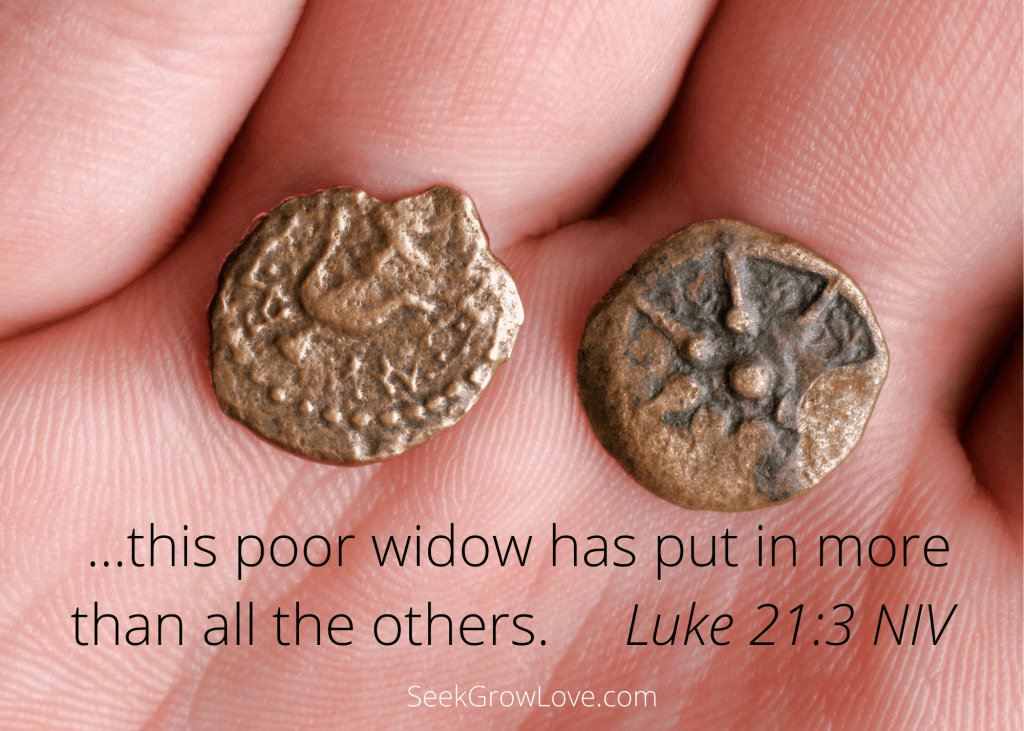
As Jesus looked up, he saw the rich putting their gifts into the temple treasury. He also saw a poor widow put in two very small copper coins. “Truly I tell you,” he said, “this poor widow has put in more than all the others. All these people gave their gifts out of their wealth; but she out of her poverty put in all she had to live on.” (Luke 21:1-4)

We know three things about the woman mentioned: she was poor, she was a widow, and she gave a small amount of money to the church. Her story isn’t flashy and her name isn’t even mentioned. Yet, she honored God by giving the little she had. And you know what? Jesus said her gift was greater than all the others. 

Jesus had spent the past day discussing the intricate details of religious rules and hypothetical situations. They were concerned with religion, but perhaps not the conditions of their hearts. Their attitudes are juxtaposed by the poor widow whose heart was generous and faithful. By the world’s standards, the poor widow’s actions were foolish. She should have used the money to feed her family and allowed the Jews with more money to support the church. In God’s eyes, her giving was a reflection of her faith, and I am sure her family didn’t go hungry that night.

To be clear, God doesn’t need your money—neither your time nor gifts. 

I could have bought my own bag of sour gummy worms at the gas station down the street. In the same way, God can accomplish anything and everything by his own accord. However, He still wants your sour gummy worms, copper coins, and anything you have to give. 

God wants your trust.

God wants you to participate in the mission of the Church. 

God wants to bless you. 

-Mackenzie McClain

Today’s Bible reading passages can be read or listened to at BibleGateway here – Deuteronomy 25-26 and Luke 21

Jesus’s Mic Drop

Luke 20

Remember the king that was greeted with palm leaves and shouts of hosanna yesterday? Today, we see him bombarded with questions meant to entangle him. The religious elite were threatened by Jesus—by his growing popularity, his radical views of religion, and his claim to be the Messiah. The teachers of the law and Pharisees tried to make Jesus stumble.

Keeping a close watch on him, they (the teachers of the law and chief priests) sent spies, who pretended to be sincere. They hoped to catch Jesus in something he said, so that they might hand him over to the power and authority of the governor (Luke 20:20). 

The religious elite were trying to make Jesus stumble through an intense line of questioning, just like the lawyers do to criminals on TV. Of all the questions thrown in Jesus’ direction, I find this question most interesting: 

Is it right for us to pay taxes to Caesar or not? (Luke 20:22)

It’s a lose-lose question. If he sided with Caesar, he would be in trouble with the Jews; if he sided against Caesar, he would be in trouble with the Romans. Instead of pleading the fifth or requesting to see his lawyer, he answered with the perfect solution. Since it’s Caesar’s image on the denarius, that is to be given back to Caesar. However, whatever is God’s should be given back to God. 

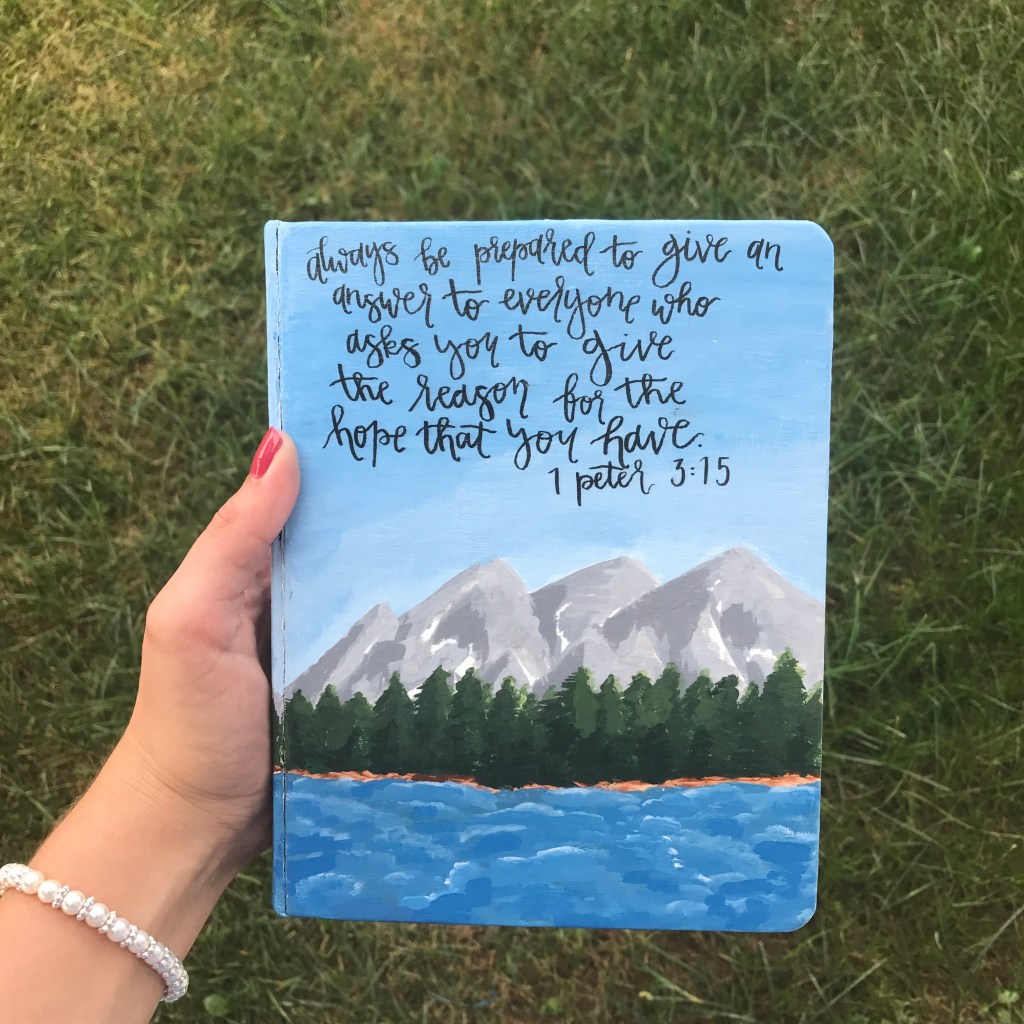
His answer is so profound yet simple that it literally silences the crowd—better than any answer given by a fancy attorney on TV. Jesus spent the first thirty years of his life preparing for interactions like this one. He was so in tune with God’s spirit that the perfect words just seemed to flow out of his mouth effortlessly. In the same way, we should prepare ourselves to answer tough questions and defend our faith—this includes praying for wisdom and understanding, studying truth, and committing scripture to memory. As a reminder of just that, I painted the following verse on the cover of my Bible: 

Always be prepared to give an answer to everyone who asks you to give the reason for the hope that you have (1 Peter 3:15). 

Paul likens scripture to a sword, but we must wield it well in order to enact its power. Every time I open my Bible, I want to grow more confident in my faith so that I can rise to the defense of it and share it with others. 

How will you build up your defense? 

-Mackenzie McClain

Today’s Bible reading passages can be read or listened to at BibleGateway here – Deuteronomy 23-24 and Luke 20

Best Parade Ever

Luke 19

I love to plan parties! I’m usually up late the night before a big party getting all the details just right—making signs, assembling favors, and arranging decorations. Meanwhile, my God plans parades centuries in advance! He planned the famous parade we commemorate each year on Palm Sunday: Jesus’ triumphant entry into Jerusalem. 

Daniel received a vision about Jesus’ journey to Jerusalem, about 600 years before it was to happen: 

“Know and understand this: From the time the word goes out to restore and rebuild Jerusalem until the Anointed One, the ruler, comes, there will be seven ‘sevens,’ and sixty-two ‘sevens.’” (Daniel 9:25) 

It’s important to note that the ‘sevens’ described by Daniel are each periods of seven years. The math makes my head spin (not everybody used the same calendar back then… talk about confusing!), but historians have found Daniel’s vision astonishingly accurate. The time between the issue to rebuild Jerusalem went out (Nehemiah 2) and Jesus’ triumphal entry into Jerusalem is just as God said it would be, to the very year. God’s timing is perfect and His plans always prevail. 

In the book of Zechariah, the world’s best party planner gives even more insight into how this day would unfold:

Rejoice greatly, Daughter Zion! Shout, Daughter Jerusalem! See, your king comes to you, righteous and victorious, lowly and riding on a donkey, on a colt, the foal of a donkey.” (Zechariah 9:9)

And so it came to be—Jesus rode into Jerusalem on a donkey. The gospels contain several descriptions of that bitter-sweet day—Matthew 21, Mark 11, Luke 19, and John 12. Up until this point, Jesus kept his status as the begotten Son of God a secret, urging his disciples not to reveal his identity to anyone (Matthew 16:20). On that day, however, his disciples shouted among the masses, “Blessed is the king who comes in the name of the Lord!” (Luke 19:38)In that same city, in that same week, the cries of “Hosanna!” would turn into shouts of “Crucify!”

As we wave our palm leaves at church this morning, remembering Jesus’ triumphal entrance into Jerusalem years ago, let us also remember the parade still to come. Close your eyes and imagine the grandeur of Jesus’ second coming—the roar of the trumpets, the raising of the dead, and the overwhelming noise of centuries worth of believers worshipping at the feet of Jesus. No more death, no more crying, no more pain:

And I saw the holy city, new Jerusalem, coming down out of heaven from God, prepared as a bride adorned for her husband. And I heard a loud voice from the throne saying, “Behold, the dwelling place of God is with man. He will dwell with them, and they will be his people, and God himself will be with them as their God. He will wipe away every tear from their eyes, and death shall be no more, neither shall there be mourning, nor crying, nor pain anymore, for the former things have passed away. (Revelation 21:2-4)

God’s timing is perfect and His plans always prevail. 2,000 years ago Jesus journeyed to Jerusalem to die. Soon he will return to Jerusalem again to bring life everlasting.

Hosanna in the highest!

-Mackenzie McClain

Today’s Bible readings can be read or listened to at BibleGateway here – Deuteronomy 21-22 and Luke 19