Can’t Throw Stones

*THEME WEEK – PETER – Luke 5

Poetry: Psalm 13

Old Testament: Ezra Intro – see below

This week many are gathering for a week of FUEL – a youth and young adult camp of the Church of God. Our theme for the week matches FUEL’s theme of Peter and our writers this week will all be participants and staff at FUEL. Have a great week seeking God, growing faith and loving more and more!

The past few weeks, I have been thinking about this a lot. We are so quick to cast stones when someone hurts us, or we find something out about someone that we think is wrong or sinful. I have seen this in myself recently. I have been quick to judge people when I don’t agree with their opinions or beliefs. I was very excited to have an opportunity to write about Luke 5. The story about Jesus choosing his first disciples has always been one of my favorites. But I never took the time to read deeper into it.

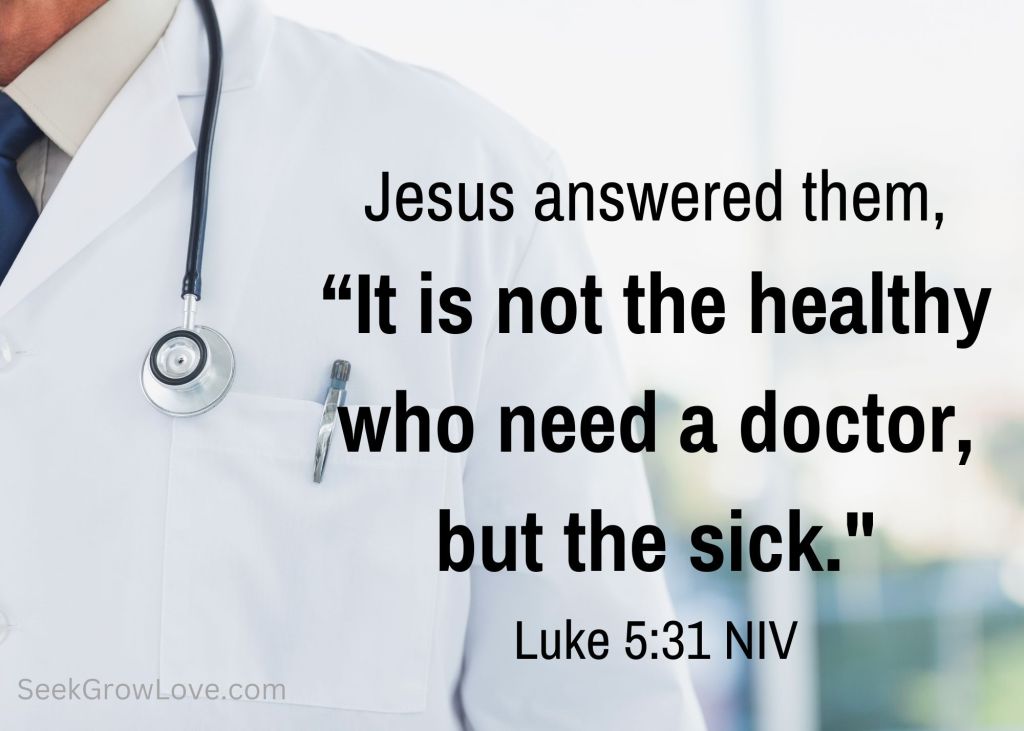
Luke 5: 31

Jesus replied to them, “It is not those who are healthy who need a doctor, but those who are sick. I have not come to call the righteous, but sinners to repentance.”

In this verse, Jesus is speaking to the Pharisees who are watching Jesus have dinner with tax collectors and sinners. In this time, it was crazy and unheard of to associate with these types of people, because they were considered unclean. But Jesus responds and says it is not the healthy who need a doctor, but the SICK.

We are to have the same attitude as Jesus and realize that we ourselves are sick. We have all at one time sinned. Jesus has come and brought us, the sick, out of our sickness so that we can do the same for others.

He shows the same act in Luke 5:8-11

When Simon Peter saw this, he fell at Jesus’ knees and said, “Go away from me Lord, for I am a sinful Man!” For he and all those with him were amazed at the catch of fish they had taken, and so were James and John, Zebedee’s sons, who were Simon’s partners.

            “Don’t be afraid,” Jesus told Simon, “From now on you will be catching people.” Then they brought the boats to land, left everything, and followed him.

Jesus called to the lost. He went to the darkest places to reach people and has instructed us to do the same.

It is hard to reach out to people sometimes. Especially when we know their past. But how can we judge someone, when Jesus comes to us and says, “You are forgiven.” It says in James 2:10

For whoever keeps the entire law, and yet stumbles at one point, is guilty of breaking it all.

We all know that we have sinned before, we are all sinners, but Jesus calls us – to love each other, and show everyone who HE truly is, WASH THEIR FEET.

Wash the sinner’s feet. Love them and serve people as Jesus would serve. We are all sinners, no matter what it may be, we have all fallen short somewhere.

Jesus washes the feet of his disciples in John 13:1-5. He is free of sin, and yet he washes their feet. In this time, washing of someone’s feet was an act of service. Jesus was willing to serve everyone no matter who they were. We are called to do the same.

It is easy to judge and to say, well I couldn’t do that for this person because… (You fill in the blank). I have done it. I have judged people whether that be at work, or even when I was in school. I have judged and said, “Well that person is too far gone. There’s no way I could forgive them.” But the truth is, that everyone deserves Christ’s love. We are called to be free of judgement and full of love and forgiveness.

 You can’t wash feet and throw stones. We can’t do both.

Instead choose to wash the feet of everyone you can, not literally, but be kind and show them Christ’s love.

-Hannah Eldred

Reflection Questions

  1. When have you judged someone else and believed them to be too sick (in their sins) for Jesus to cure? How have you been proved wrong? What examples from the Bible and people you know prove that Jesus heals sinners and changes lives?
  2. Jesus called Peter to catch people not fish. What is Jesus calling you to do? What might you have to leave behind (as Peter left behind his fishing boats and nets)?
  3. How can you – will you – show others the love of Christ this week?

Ezra Introduction

The book of Ezra was written by a man named Ezra who was a Godly scribe and priest – a direct descendant of Aaron the first high priest.  The book starts with the decree of the Persian King Cyrus proclaiming the Israelites could return to Jerusalem and build a temple for God.  This was prophesied in Jeremiah 25:12; 29:10; 50:1-5; and Isaiah 44:28-45:5,13.

The first half of Ezra details the people who returned, and then describes the fits and starts of building the temple, along with the stiff opposition to building that temple.  (It took 23 years to rebuild the temple.)

Once the temple was built, the Israelites needed priests to perform sacrifices and teach God’s laws to the people.  It was at this time that Ezra went from Babylon to Jerusalem in a second wave of returning exiles along with priests, Levites, singers, gatekeepers, and temple servants.  

I love the description of Ezra found in 7:10, “Ezra had devoted himself to the study and observance of the Law of the LORD and to teaching its decrees and laws in Israel.”

We see a glimpse of his faith in Ezra 8:21-23, “There, by the Ahava Canal, I proclaimed a fast, so that we might humble ourselves before our God and ask him for a safe journey for us and our children, with all our possessions.  I was ashamed to ask the king for soldiers and horsemen to protect us from enemies on the road, because we had told the king, “The gracious hand of our God is on everyone who looks to him, but his great anger is against all who forsake him.”  So we fasted and petitioned our God about this, and he answered our prayer.”

The second half of the book talks about addressing the sin in Israel, culminating in people’s confession of their sins and their pledge to live according to God’s laws.

I’ll close with Ezra 10:6, “… he [Ezra] ate no food and drank no water, because he continued to mourn over the unfaithfulness of the exiles.”

How often have you been this distressed over your own sins, let alone the sins of people who claim to follow God, or even the sins of our nation?  

-Steve Mattison
Living Godly Lives in a Godless Age

Old Testament: 2 Chronicles 34-36

Poetry: Psalm 12

New Testament: 2 Timothy 3-4

            During this week’s readings we’ve seen examples of many ways and reasons that people turn away from God.  We’ve also seen how people can be a complicated mixture of both faithful and obedient to God but also can lose their grip on faith and obedience through pride or greed and lose their intimate connection to God.

            Throughout scripture, God shows himself to be merciful, slow to anger, and abounding in love and forgiveness.  He is a God of second chances (and 3rd, 4th, and 5th chances).  Yet he is also a holy and just God and brings down the rod of discipline upon the people he loves to correct their corrupt ways when they refuse to repent.

            On this final day of the week, these Scriptures show us some pretty remarkable things about God’s patience and mercy, and also the dangers to neglecting the Word of God.

            Josiah began to reign as King of Judah at the tender age of 8.  When he was a young lad of 16 he began seeking God.  He decisively began to rid Judah of idols.  He arranged to have the temple repaired.  As the workers were working in the temple, cleaning out the relics in the back halls and storage units they came across a dusty old book.  It looked old and probably hadn’t been read for centuries.  It turns out that the dusty old book was the Bible, as it was constituted at the time of Moses.  It contained the teaching and laws that Moses recorded based on what he received from God along with the history of God’s people going back to creation.  King Josiah asked that it be read aloud to him.  As he listened to God’s word being read, he was overcome with horror.  He tore his robes.  As he heard God’s word being read he realized how far astray they had gone from doing God’s will. 

            Josiah called for a prophet of God to come and tell them what God was going to do.  He was going to bring his judgment against the people of Judah, there would be a disaster that was unprecedented.  However, King Josiah would be spared because of his love and faithful obedience to God.  God said: “Tell the king of Judah, who sent you to inquire of the Lord, ‘This is what the Lord, the God of Israel, says concerning the words you heard:  Because your heart was responsive and you humbled yourself before God when you heard what he spoke against this place and its people, and because you humbled yourself before me and tore your robes and wept in my presence, I have heard you, declares the Lord.  Now I will gather you to your ancestors, and you will be buried in peace. Your eyes will not see all the disaster I am going to bring on this place and on those who live here.’” (2 Chronicles 34:26-28)

            Josiah led the people to renew the Covenant.  He led them in celebrating the Feast of Passover which had not been celebrated since the time of Samuel.  He continued to purge the nation of its idols.  Josiah was rewarded for his humility and faithful obedience to God’s covenant. He was permitted to live out his life with the nation in peace.  In this instance, God is both gracious to Josiah for his humble and repentant heart, but he is also just and requires that Judah suffer the consequences for their disobedience.

            After Josiah died, there was a rapid succession of kings, who each “did evil in the eyes of the Lord.”  God continued to send prophets to warn his people to repent, but they would not listen. “Furthermore, all the leaders of the priests and the people became more and more unfaithful, following all the detestable practices of the nations and defiling the temple of the Lord, which he had consecrated in Jerusalem.  The Lord, the God of their ancestors, sent word to them through his messengers again and again, because he had pity on his people and on his dwelling place. But they mocked God’s messengers, despised his words and scoffed at his prophets until the wrath of the Lord was aroused against his people and there was no remedy.” (2 Chronicles 36:14-16)

            God gave second and third and fourth and fifth chances, but finally they were so hardened and disobedient that he had no choice but to let them be taken away into exile.

            Josiah was a man of God living in a broken and sinful world.  He did his best to lead others toward faithfulness and trust in God, but ultimately they rejected God and faced the consequences.  God showed mercy to Josiah for the sake of his humility and faithfulness.

            Like Josiah, we can be men and woman of God living faithfully in a broken and sinful world.  We can take heart, God sees our faithfulness and humility as we repent of our sins and turn to Jesus Christ and walk in obedience to Christ.  We have no guarantee that life will be easy as we live godly lives in a godless age.  In fact, we are warned that it will be hard.

            “In fact, everyone who wants to live a godly life in Christ Jesus will be persecuted, while evildoers and impostors will go from bad to worse, deceiving and being deceived. But as for you, continue in what you have learned and have become convinced of, because you know those from whom you learned it,  and how from infancy you have known the Holy Scriptures, which are able to make you wise for salvation through faith in Christ Jesus. All Scripture is God-breathed and is useful for teaching, rebuking, correcting and training in righteousness, so that the servant of God may be thoroughly equipped for every good work.” -2 Timothy 3:12-17.

            Sadly, in Josiah’s day, the Bible was lost for hundreds of years in the back of the temple.  We are blessed, we have access to God’s word to read and study and obey…. But do we?

-Jeff Fletcher

Reflection Questions

  1.  How do you suppose God’s people completely lost God’s word for hundreds of years?  Could that happen again in our age?
  2. Josiah humbled himself and repented. In what areas of your life do you need to humble yourself and repent?
  3.  As a result of this week’s devotions, what one change are you committed to making in your life?

The “Dones”

Old Testament: 2 Chronicles 31-33

Poetry: Psalm 11

New Testament: 2 Timothy 1-2

It’s Friday.  Have you stuck with me so far?  We’ve tackled some challenging subjects this week.  Most of the subjects have had to do with things that lead us away from God- from fear to pride to greed.  So many things have the potential to turn our hearts away from God.  It can be disheartening at times.

We talked earlier this week about the fastest growing religious group in America, the nones- those who say they have no religious affiliation or faith.  Today, I want to address another group, the Dones.  The Dones are people who have been highly committed believers, perhaps very active in Churches and ministries who have gotten to a place in their lives where they are just done.  Maybe they are a pastor or Church leader who has poured out their life and energy into helping others and then experienced resistance or mistreatment, or other forms of suffering and they simply said “I’m done” and walked away from their ministry or their church.

I know.  If you are a committed leader in the church and you get frustrated by people who treat you badly, it’s tempting to give up and say I’m done.  These people aren’t necessarily abandoning their faith in God to pursue a sinful lifestyle of adultery, drunkenness or debauchery.  They simply quit gathering with other believers in worship.  They might pray and read their Bibles in the comfort of their living room or back porch, but they aren’t in the fray with their sleeves rolled up active in ministry any more.  They are frustrated, depleted, disillusioned and disheartened and they are done with ministry or church or religion.

A couple of today’s texts address this.  Psalm 11 addresses the challenge of disillusionment in the people of God.  It asks the question: “When the foundations are being destroyed, what can the righteous do?”  Some Christians have worked hard to help build the Church, make disciples and take a stand against sin and unrighteousness in the world, but as we look at what’s happening, the world seems to be winning and the Church is losing ground.  We are seeing some of the foundations of basic morality crumble – basic issues of what is right and wrong, what it means to be a human person as a male or female created in the image of God, the meaning of the covenant or marriage and family – all of these basic elements of faith and life are being contested and undermined.  The very foundations of society are being undermined right before our eyes.  It’s easy to become disheartened and give up.

Psalm 11 says: “How then can you say to me, ‘Flee like a bird to your mountain.’”  In other words, the temptation in the face of all of these attacks against the Church and God and morality and our ministry could be to simply fly away like a bird to the safety of the mountain, far from the battle.  Go stick your head in the sand.  Give up. Become apathetic about religion or God or the Church and ride the clock out.  Or throw yourself headlong into achieving worldly pleasure or success (see yesterday’s devotion on money and happiness.)

Psalm 11 gives this following reminder when the temptation arises to fly away.

“In the Lord I take refuge.”  Our refuge is in God, not in running away to safety away from the battle.  Remember our reminder from earlier this week when God sent his prophet to Jehoshaphat- “The Battle belongs to the Lord”  Let us take refuge in God, but let us not run away from the battle.

“The Lord is in his holy temple; the Lord is on his heavenly throne.”  Trust that God is still there.  God hasn’t gone anywhere.  God hasn’t abandoned us and flown away, he’s there, he’s watching, he’s engaged and he’s working his plan through us, through the church, through the proclamation of the gospel.  We can keep doing what we are called to do because we know that God is still on the throne.

“For the Lord is righteous, he loves justice; the upright will see his face.”  God cares about what is right and just and good and that day will come when we will be at rest and peace.  In the mean time, we may experience our share of suffering while we serve God.  But we trust that the day is coming when we will see God’s face and receive our full blessing.

And just a word from the reading in 2 Timothy.  Paul uses the word suffering many times in this reading.  Paul knew a thing or two about suffering.  Much that he wrote came while he was sitting in a prison cell somewhere suffering because of his faith in Jesus Christ.   For Paul, suffering was not something to be avoided at all costs but the price of doing business as a disciple of Jesus.  Paul wore his suffering as a badge of honor.  He considered it a privilege to be able to suffer while serving Jesus in ministry.  I admit that I haven’t quite hit that level of faith yet.  I’m not a fan of suffering and I don’t like it when my ministry efforts are met with resistance or failure.  I don’t like seeing people that I tell about Jesus reject Jesus or see formally faithful FUEL attenders or church members join the ranks of Nones and Dones.  But I do recognize that Jesus warned us that being his disciple in this sinful world has costs and challenges and can be painful.   After nearly 40 years of ministry, I have a few scars of my own.  But I’m not ready to fly away and join the ranks of the Nones and Dones.  I share Paul’s faith: “That is why I am suffering as I am. Yet this is no cause for shame, because I know whom I have believed, and am convinced that he is able to guard what I have entrusted to him until that day.” (2 Timothy 1:12)  I hope that you know him too and are convinced.  Keep yourself in the faith.

-Jeff Fletcher

Reflection Questions

  1.  Do you know any Nones or Dones?  Have you tried asking them to join you as part of an active faith community?  If not, will you?
  2. Have you ever been tempted to join the ranks of the Dones?  What has kept you from flying away?
  3. Are you in danger of becoming a Done?  What steps do you need to take to stay fully committed and connected to a body of believers?

Read this BEFORE you Get Rich!

Old Testament: 2 Chronicles 29 & 30

Poetry: Psalm 10

*New Testament: 1 Timothy 6

            In 2022 a record was set as Americans lost more than 60 billion dollars in casinos and online betting.  American’s spend about 100 billion dollars a year buying lottery tickets.  I read a news article today that said as much as 200 Billion dollars in Covid relief money was stolen by fraud during the Covid paycheck relief program.  Over the next few months and years there will be trials as those who have been arrested and charged with fraud will have to face the consequences of their actions. 

What is the motivation for people to get rich by any means, including gambling, stealing and other types of fraud.  Does having more money make you happier?  A number of studies have been conducted in recent years to determine if there is a correlation between how much money one makes and their level of happiness.  One 2010 study by economist Daniel Kahneman found that after a certain amount of having basic financial needs met, having more money doesn’t improve your level of happiness.  The amount he found at the time was $75,000.  A more recent study found that making more money can have a slight affect on happiness, but really not enough to make a significant difference.  That researcher, Matthew Killingsworth from the Wharton Business School found that up to a certain amount your happiness might increase, but that your life is much better spent focusing your attention on other things to really improve your sense of well-being. He says: “people probably overemphasize money when they think about how well their life is going.”

The reward of short term happiness one might feel for having more money by winning the lottery, hitting the jackpot, or ripping off the Government by fraud, or even by wearing yourself out at work or working multiple side jobs to make more money isn’t worth the negative consequences of those behaviors. The negative outcomes more than offset any happiness gains one might have by having more money.

I love how psychologists, economists and other highly educated people are finally getting around to proving what God’s word has been saying for thousands of years.

In today’s reading in Timothy Paul warns: “But godliness with contentment is great gain. For we brought nothing into the world, and we can take nothing out of it. But if we have food and clothing, we will be content with that. Those who want to get rich fall into temptation and a trap and into many foolish and harmful desires that plunge people into ruin and destruction. For the love of money is a root of all kinds of evil. Some people, eager for money, have wandered from the faith and pierced themselves with many griefs. (1 Timothy 6:6-10)

Paul contrasts the benefits of godliness with contentment with basic food and clothing vs. the risks and consequences of those who desire to get rich due to their love of money.  Love of money and pursuit of riches are a trap that are destructive to people’s lives.  The love of money leads to all kinds of evil behavior and is a cause of some believers wandering away from their faith in God.

This week we’ve talked about different things that cause us to abandon faith in God including fear in the case of Jehoshaphat or pride in the case of Uzziah.  Here Paul warns that plain old greed can lead you away from faith in Jesus Christ.

What is the solution.  Learn to be content.  This corresponds with what John the Baptizer said in Luke 3:14 when soldiers came to him: “Soldiers asked, ‘What about us? What should we do?’ He answered, ‘Don’t cheat or harass anyone, and be satisfied with your pay.’”

Jesus was pretty smart and gave some great wisdom about money in Matthew 6:24-33

“No one can serve two masters. Either you will hate the one and love the other, or you will be devoted to the one and despise the other. You cannot serve both God and money.”

“Therefore I tell you, do not worry about your life, what you will eat or drink; or about your body, what you will wear. Is not life more than food, and the body more than clothes? Look at the birds of the air; they do not sow or reap or store away in barns, and yet your heavenly Father feeds them. Are you not much more valuable than they? Can any one of you by worrying add a single hour to your life?”

 “And why do you worry about clothes? See how the flowers of the field grow. They do not labor or spin. Yet I tell you that not even Solomon in all his splendor was dressed like one of these. If that is how God clothes the grass of the field, which is here today and tomorrow is thrown into the fire, will he not much more clothe you—you of little faith? So do not worry, saying, ‘What shall we eat?’ or ‘What shall we drink?’ or ‘What shall we wear?’ For the pagans run after all these things, and your heavenly Father knows that you need them. But seek first his kingdom and his righteousness, and all these things will be given to you as well.”

            I know that many who are reading this today are young people, perhaps in college or just beginning careers.  It’s natural to want to make enough money to meet your basic living needs- for food, shelter, clothing, healthcare and to give to help those in need.  Proverbs 30:8-9 offers this simple but wise prayer:

“give me neither poverty nor riches;

    feed me with the food that is needful for me,

  lest I be full and deny you

    and say, “Who is the Lord?”

or lest I be poor and steal

    and profane the name of my God.”

Lord, provide me with my basic needs so that I won’t be tempted to steal food to stay alive, but also please don’t give me too much so that I might be tempted to forget you.  In our striving for the happiness that we think wealth will gain for us, we may so badly wreck our priorities that it completely derails our faith.  If we value money too much, we might not be tempted to steal, but we may be tempted to steal from God by choosing to work on Sundays instead of going to Church.  Or working so hard the other 6 days a week that Sunday is our only day to sleep in or do work around the house and so we can’t make time for God or Church.

A life spent chasing after riches will likely leave you spiritually poor.  So budget your time and your priorities wisely and don’t make financial wealth the primary driver of your happiness and meaning.

-Jeff Fletcher

Reflection Questions

  1. How much money do you think it would take to make you happy?
  2. How can the love of money tempt you to wander away from your commitment to Jesus Christ?
  3. What should Christians’ attitude be about gambling?  The Bible doesn’t explicitly condemn gambling, but can gambling be participated in without greed/love of money?  How would you answer that question to someone who asked you if it is okay for Christians to gamble?

The Power of Pride

Old Testament: 2 Chronicles 26-28

Poetry: Psalm 9

New Testament: 1 Timothy 5

            I just realized something today.  I’m getting kind of old.  I know this comes as a shock to most of you who know how young I look (wink wink, nudge nudge).  Seriously, I’ve been alive during all or part of the presidencies of 12 different US Presidents, from JFK to Joe Biden- and several of them served 2 terms. Yikes!  To borrow from an old Clint Eastwood western, some of those presidents have been good, some have been bad and some have been ugly.  As we read through Chronicles and see the history of the kings of Judah, we could make the same observations, some were good, some were bad and some were down right ugly when it comes to their faithfulness to God

            Amaziah was one of the ugly ones. After defeating his enemies in battle he took their idols as plunder and brought them back and worshipped them.  A major no-no.  God really, really hates idolatry and gets very jealous when his people start worshipping other things as god or the ultimate in their lives.  In fact, in 2 Chronicles 25 (see yesterday’s reading) God punished Amaziah by having him routed in war against Israel, and then his own people assassinated him.  He was decisively rejected by both God and his kingdom.

            In today’s reading from 2 Chronicles we see that Amaziah’s son Uzziah followed him as King.  Uzziah was young, only 16 when he began to reign.  He got a great start because he sought God.  He found a godly teacher, Zechariah, to show him the way of God and he intentionally tried to do things God’s way as he ruled over Judah.  Because of his faithfulness, God blessed Uzziah with a prosperous reign: “as long as he sought the Lord, God made him prosper.” 2 Chronicles 26:5 

            Today’s reading shows how successful Uzziah was while he followed God.  His army grew more powerful, he defeated their enemies. He fortified his territory. His fame spread and other nations brought him gifts acknowledging his power and success.  His country did well agriculturally as their herds and flocks grew and their vineyards were productive. 

            The blessings were really flowing for King Uzziah and he was on top of the world and felt really good about his accomplishments.  He had not made the same terrible mistakes that his father Amaziah made, there was no hint of the worship of idols under Uzziah’s rule.  But…unfortunately, as often happens in times of prosperity, Uzziah grew proud.  He started thinking that he was “all that and a bag of chips.” (do they still say that or is that from 20 years ago… I’ve lost track).  Anyway, he was FULL of himself.

            Let me back up a minute.  Going back to the time of Moses as leader of Israel there was a strict division of labor among God’s people.  You had judges and later Kings, who did the political leading, and you had the priests who oversaw the religious rituals.  Sometimes the lines got a little blurry and there was some overlap as with Samuel who was both a priest and a judge.  But by the time Kings were instituted it was clear that the Priests were the only ones allowed to go into the temple and offer sacrifices.  Offering sacrifices was a no go for the King.  King Saul had previously gotten himself in hot water for offering sacrifices (See 1 Samuel 13 for more details).  In short, Uzziah should have known better.

            Unfortunately, King Uzziah let his success lead to pride which led to his downfall.  “But when he was strong, he grew proud, to his destruction. For he was unfaithful to the Lord his God and entered the temple of the Lord to burn incense on the altar of incense.” 2 Chronicles 26:16  Uzziah was doing what was forbidden for a king, to usurp the priestly role of  burning incense on the altar of the temple.

            The priests were horrified at what King Uzziah was doing and they stopped him (it took 80 of them).  Uzziah became enraged that they challenged him.  He was unwilling to stand down even with 80 priests telling him “no”.  So then God intervened and instantly struck him down with leprosy.  Leprosy was a skin disease that rendered the leper ceremonially unclean.  Uzziah was instantly cut off from temple worship and was made an outcast.  He had to leave his palace and remained an outcast until his death.

            What a sad and tragic end to the reign of a king that had begun so well.  Uzziah, as a young man had seen how bad his father had been as he pursued idols.  Uzziah sought the Lord, was faithful, God blessed and prospered him and all was well, until he gave in to the deadly sin of pride. 

            Why is pride a sin?  In the US June was just celebrated as Pride Month.  I was reminded of this literally everywhere I went.  When I turned on my computer at the hospital where I serve I was reminded that it was pride month.  I watched a baseball game featuring the Baltimore Orioles hosting the Seattle Mariners and there were rainbows and pride flags on the field, in the stands and surrounding all of the player stats.  Pride is celebrated in the world today as a wonderful and glorious thing.  But the Bible hasn’t changed- Proverbs 16:18 still says: “Pride goes before destruction, a haughty spirit before a fall.”Proverbs 16:8.  Whether it’s being proud to tell everyone that you are gay, or being proud of your accomplishments as king, pride is destructive. 

Pride is a deadly sin because it causes us to focus on who we are and what we accomplish and take our eyes off  of who God is and what he accomplishes.  Pride is a subtle form of idolatry.  Instead of worshipping another god in the form of a statue or object, pride is the worship of ourselves.  Uzziah was full of pride so he thought he was above following God’s law that said only priests could go into the temple and offer sacrifices on the altar.  Pride leads one to reject God’s laws and God’s authority to tell us what we can and what we cannot do which is ultimately a rejection of God as God.  If, in my pride, I tell God that I don’t have to listen to him, he has no authority over an area of my life, then I’m turning myself into my own idol.  That’s exactly what Adam and Eve did in the Garden of Eden.  It’s what Uzziah did in the temple, it’s what we do whenever we say, “I know that God has said this is wrong, but I reject God’s authority to tell me what I can and cannot do with my body, my life.”   Pride has caused the deaths of untold millions of people, including unborn babies.  Pride has caused countless people to turn away from their faith in God and from following Jesus Christ in order for them to follow their own “truth” about who they are and what they think should be right.

Uzziah was punished by God with leprosy which caused him to lose his access to both worship and to his role as king.  He died miserable and alone.  That’s where pride usually leads.  We need to avoid pride like the plague.

-Jeff Fletcher

Reflection Questions

  1.  Why do you think God was so harsh and immediate in striking King Uzziah with leprosy.  After all, he’d been pretty faithful up till that point in his life?
  2. What do you think of the ways that Pride has been exalted in our culture?  Can you see any ways that pride could be leading toward societal destruction?
  3. What are the danger areas of pride in your own life?  Is there an area where pride could be leading you away from God.  Are there any areas where you reject God’s teaching in  your life and you are proud of it?

Losing Loyalty

Old Testament: 2 Chronicles 23-25

Poetry: Psalm 8

New Testament: 1 Timothy 4

            I love baseball.(If you don’t please hang in there, you’ll still see the value in this illustration)  I used to play baseball all the time when I was a child.  I went to my first professional baseball game with my Dad when I was just 5 years old- the Seattle Pilots were playing the Washington Senators. (Fun fact, neither of those teams exist anymore and if you do some detective work you can figure out what year this was as the Seattle Pilots only existed for 1 season).  I say this because today is the 2023 baseball All-Star game. 

            When I first discovered baseball, the Washington Senators were the closest team to my Virginia home and my Dad brought me to several games. So I became a Senators fan.  But then disaster struck and the unthinkable happened, the owner of the Senators moved the whole team away from Washington to Texas. No more Senators.  What would I do with my baseball loyalty?  The next closest team was the Baltimore Orioles so we began going to Orioles games and I became a big Orioles fan.  This was easy to do because in the 1970’s the Orioles were the best team in baseball.  They were in 4 World Series from 1969-1979 and had some of the best players in baseball.  They were fun to watch and they won a lot.

            Time went on.  I moved away from home to attend college and got busy, got married, had children, and moved overseas for a while, I still watched baseball but didn’t have a lot of time to be a fan or follow my team closely or go to many games.  During this time the Orioles sadly went from being one of the best teams to one of the worst.  They became harder to get excited about.  My Orioles fandom began to waiver.  Then, a miracle happened.  The Montreal Expos moved to Washington DC and became the Washington Nationals.  After more than 30 years, DC had a baseball team again.  Not long after, I moved back to Virginia to pastor a church and work as a hospital chaplain.  Now there were 2 baseball teams nearby, the Nationals and the Orioles and I could watch both games on local tv.  I began to follow both.  The Nationals kept getting better and better, the Orioles kept getting worse.  So by the late 2010’s I was pretty much a Nationals fan and looked upon the Orioles with pity.  And then the Nationals had their miracle season and won the World Series in 2019.  Life was truly great!  And then Covid happened.  Even baseball got canceled for most of 2020.  After the Covid shortened year the Nationals franchise collapsed and they  got rid of all their great players like Max Scherzer and Juan Soto.  Meanwhile, the Orioles went through a rebuild and suddenly they were a really good team again, the tables were turned and they were fun to watch while the Nationals were the team to be pitied.  As of now, I find myself watching more Orioles games than Nationals.  I’m still a Nationals fan, but very half-hearted on most days.

            Sorry, that’s a long set up and if you’re not a baseball fan, thank you for hanging in there with me.  The point is that my baseball loyalty has gone through periods of waxing and waning, with shifting loyalties.  When you have no options, you have to stay with your team through thick and thin, the good times and bad times. (I know some of you are football fans who follow the Lions or the Browns so you’ve had to stay loyal to terrible teams for 50 years… good for you).  When you have options- Orioles and Nationals, the temptation is greater to pay more attention to the winner, the more successful team.

            What does this have to do with today’s readings?  1 Timothy 4:1 says: “The Spirit clearly says that in later times some will abandon the faith…”. Paul is here warning Timothy that even as followers of Jesus, there is the danger of letting go of our allegiance to Jesus Christ as our Lord.  This rarely happens in an instant.  Just like with my baseball fandom, where I slowly, gradually shifted my loyalty from the Orioles to the Nationals, it didn’t happen instantly.  It was a process that I didn’t really even notice happening, but little by little I found myself caring less about my fan commitment to one team and more to another.  Now, in the big picture, baseball doesn’t matter and it makes little difference to my life if I’m an Orioles fan or a Nationals fan (but if I ever cheer for the Yankees, put me in a home because I’ve lost my mind.)

            But the danger of losing our loyalty to God our Father and Jesus Christ our savior and the Kingdom of God as being first in our hearts has eternal consequences.  I’ve been around long enough to see Paul’s warnings to Timothy actually happen to people I know.  I’ve seen students who attended FUEL faithfully, know their Bible, do Bible quizzing, and excel at their knowledge of the scriptures abandon their faith.  I’ve even known people who served as leaders of the church, even a few pastors who went from preaching and teaching God’s word every week to walking away from their faith in Jesus Christ. 

            Sadly, I’ve experienced it even in my own family, people who I love the most, reject the faith of God’s Word.  For most, this didn’t happen overnight.  A thousand little decisions over time happened until one day they realized that they no longer loved or followed or even believed in God or God’s word or Jesus’ way.  Maybe it was making moral compromises and they could no longer sustain the cognitive dissonance of saying one thing but doing another.  Maybe it was adopting a worldly ideology of the meaning of persons or identity and finding it incompatible with God’s word and then choosing to reject God’s word instead of their worldly ideology.  Maybe it was because they grew bored with God and became captivated by the shining idols of the world.

            The Fastest growing religious segment in the United States over the past 20 years is the “Nones”.  People who say they have no religious loyalty or affiliation.  This is heartbreaking.

            Paul warned that people would abandon the faith in large numbers.  We see it happening today.  I don’t want it to happen to you or any of the people I care about.

            Here are a few suggestions I would offer to help you avoid joining the ranks of those who are abandoning the faith.

            Remember, no one is immune: “So those who think they are standing need to watch out or else they may fall.” -1 Corinthians 10:12. Never assume that “it could never happen to me.” It can happen to anyone.

            “Fix your eyes on Jesus”. Hebrews 12:2.  Jesus started his ministry with the words “Follow Me”.  Later he said, “I am the way”.  If you want to get where you want to go, you need to keep your eyes steady on the one who knows the way and how to get there, Jesus.

            “These things happened to them as examples and were written down as warnings for us, on whom the culmination of the ages has come.” 1 Corinthians 10:11.  Pay attention to the examples of how it happened in Israel.  Remember all these Old Testament passages we are reading, including this week’s stories in 2 Chronicles of how even good people like King Jehoshaphat can make compromises that lead them and their people away from God.  Read the Bible and learn from their examples of what NOT to do to stay faithful.

            Don’t give up on going to Church. “Let us hold unswervingly to the hope we profess, for he who promised is faithful. And let us consider how we may spur one another on toward love and good deeds, not giving up meeting together, as some are in the habit of doing, but encouraging one another—and all the more as you see the Day approaching.” Hebrews 10:23-25.  The church is not perfect, I get it.  Christians aren’t perfect, I get it.  Sermons can be boring at times, I get it.  Other options for how we spend our time on the weekends can be very attractive, I get it.  But don’t give up on Church.  Don’t give up meeting with other believers.  We need others to help us stay faithful to God and not abandon our faith. 

            Don’t adjust your faith and beliefs to accommodate the values of the world.   “You adulterous people! Do you not know that friendship with the world is enmity with God? Therefore whoever wishes to be a friend of the world makes himself an enemy of God.” James 4:4.  As the world is moving further away from a Biblical worldview and God honoring teachings we cannot follow the world, because the world will move us away from loyalty and faithfulness to God.

            Who will get my ultimate loyalty, the Nationals or the Orioles?  Who cares?  In the scope of eternity it doesn’t matter.  Who will get YOUR ultimate loyalty, Jesus Christ or The World?  That matters more that ANYTHING. Don’t abandon your faith.

-Jeff Fletcher

Reflection Questions

  1.  Why do you think, especially among people under 30, so many are abandoning their faith?
  2. What is the biggest temptation/danger area in your life that could lead you toward abandoning your faith?
  3. What positive steps will you begin to take TODAY to make sure that you continue to follow Jesus faithfully?

Itchy Ears and Slow Learners

Old Testament: 2 Chronicles 20-22

Poetry: Psalm 7

New Testament: 1 Timothy 3

            Ever since I was a little kid I’ve had trouble with my ears.  I had surgery on my ears several times before I was 8.  I almost completely lost the hearing in my right ear- before the surgery the doctor told my parents that the infection was so bad when he got in there he might have to completely remove the contents of my ear rendering me completely deaf in that ear.  Fortunately, he was able to save my hearing.  But I’ve still had struggles.  The most irritating thing for me these days is my ears are itchy inside.  When they start itching I pull out the q-tips and scratch away—such sweet relief.  But then the next morning they itch again.  I went to my ear, nose and throat doctor and he looked inside and asked, “How often do you use q-tips?”  “Every day,” I said.  “You need to stop!”  And he explained the reason why.  Your ears naturally produce oils to keep them lubricated so they don’t dry out.  When you use q-tips it removes the oils, your ears dry out and become irritated… and itchy.  The thing I do to relieve the itchy ears – q-tips, is the cause of them continuing to be itchy.  The solution.  Stop using q-tips for a few days, allow the oils to return and lubricate the ears, and they will stop itching.  If I could just trust him and endure a few days of itchy ears without q-tips, then they would stop itching.  Problem solved.

            The first few days were miserable.  They itched so bad.  All I wanted to do was use a q-tip to scratch, but I resisted.  After a few days, sure enough just like the doctor promised, the itching stopped.  I had learned something new that made my life better.  Until I forgot.  Old habits die hard.  I took a shower and used a q-tip to dry out my ears (he told me to use a hair dryer instead).  The scratching felt familiar and good, and pretty soon my ears dried out and got itchy again.

            Change can be hard.  I can be a slow learner about some things, like q-tips and itchy ears.  In today’s reading we see Jehoshaphat could be a slow learner about some things as well.  In yesterday’s reading we saw that he got into trouble when he violated God’s instruction and entered into an unequal alliance with the king of Israel, and how it led to some problems.  Jehoshaphat learned a lesson, repented of his actions and things became better for a while.  He learned to trust God instead of trusting in an alliance with Israel’s idol-worshipping King Ahab.

            In today’s reading, we see how fully Jehoshaphat learned that lesson and learned to trust God.

            First, Jehoshaphat receives a report that a vast army of Ammonites and Moabites and others are coming to attack.  Jehoshaphat becomes “alarmed” at the news.  Does he reach out to the Israelites to become his allies?  That’s normally what would happen. (My ear itches, I’ll do what I always do and grab a q-tip).  But Jehoshaphat learned a valuable lesson in the last story.  So instead of entering into an alliance which God has forbidden, he decides to ask God for guidance.

            Jehoshaphat calls for a fast and all the people of Judah came together to seek God’s guidance.  They prayed to God: “God, we don’t know what to do, our eyes are on you.”  Notice it says all the men, women, and children stood before God in an act of humility, reverence, and solidarity, seeking his guidance and direction.

            Then something amazing happened. God answered them.  The Spirit of God came on Jahaziel, the prophet, who then brings a word from God. The message is clear: “Don’t be afraid or discouraged for the battle belongs to God.  Trust that God will defend you against your enemies.”  God instructs them to go toward their enemies, stand firm, and then watch what God will do.  Israel responded by worshipping and praising God with singing.

            What happened next? God set an ambush against them and then, the enemies of Judah all turn on each other and destroyed each other.  The people of Judah came to the overlook as God instructed so that God could show them the destruction of their enemies.  They collected the plunder and it took them 3 days to haul the plunder back to Judah.  As a result, their other enemies were afraid of God. God gave Jehoshaphat peace. (No more itchy ears when you follow the doctor’s orders and quit using the q-tips).

            But old habits are hard to break sometimes.  Jehoshaphat forgot to remember. Jehoshaphat made another alliance, and again there were consequences: “Eliezer son of Dodavahu of Mareshah prophesied against Jehoshaphat, saying, ‘Because you have made an alliance with Ahaziah, the Lord will destroy what you have made.’ The ships were wrecked and were not able to set sail to trade.” 2 Chronicles 20:37.  Out came the q-tips again.

            Jehoshaphat isn’t the only slow learner.  This, it turns out was a pattern for generations of God’s people.  God would give people instructions, the people didn’t fully trust God and tried to do things their way, God sent consequences to discipline them, the people didn’t like the consequences so they repented and started obeying  God.  Things got better for the people…. Until they once again forgot to trust God and tried to do things their own way and the cycle repeated itself over, and over and over again.

            Fortunately, God was patient with slow-learning Jehoshaphat, and with slow-learning Judah.  Fortunately, the same God is also patient with us.  Psalm 103:8-12 reminds us:

“The Lord is compassionate and gracious,
    slow to anger, abounding in love.

He will not always accuse,
    nor will he harbor his anger forever;

he does not treat us as our sins deserve
    or repay us according to our iniquities.

For as high as the heavens are above the earth,
    so great is his love for those who fear him;

as far as the east is from the west,
    so far has he removed our transgressions from us.”

            Through Jesus Christ God mercifully provides us with a saving way to turn from our faithless and disobedient ways, to learn to trust and follow God’s ways.  Learning to trust God fully is a journey that can take time.  We still are tempted to grab that q-tip and begin scratching away at those itchy ears.  But if we can learn to simply trust God’s ways, no matter how itchy the ears or scary the invading armies might seem, we can trust and know that God will show us a way to peace and joy (and unitchy ears.)

-Jeff Fletcher

Reflection Questions

  1.  Why do you suppose Jehoshaphat’s “itchy ears” was his difficulty depending on God and not alliances with other kings?
  2. What are some of your “itchy ear” areas where you have difficulty trusting God’s ways and try to do things your way (which usually makes things worse?)
  3. What is one step you can take today toward trusting God in this area of your life?

Alliances with Unbelievers

Old Testament: 2 Chronicles 17-19

Poetry: Psalm 6

New Testament: 1 Timothy 2

“Should you help the wicked and love those who hate the Lord?”  This is a pretty challenging question that comes straight from today’s reading from 2 Chronicles 19:2 NIV.  One of the questions that comes to mind for me is “help the wicked do what?”  The second question is, “Why shouldn’t I love those who hate the LORD?”  After all,  Didn’t Jesus tell us that we are supposed to love everyone, including our enemies? (Matthew 5:44) Shouldn’t godly people treat others with love, even unbelievers, even those who have rejected God? 

One of my ministry settings is as a hospital chaplain.  Recently I visited a patient who informed me as soon as I walked into their room that they were an atheist, but that they still wanted to talk to me, they were going through an emotional crisis and they needed help.  This was a person that didn’t simply hate the LORD but actually denies the existence of God.  As a Chaplain, as a pastor, and as a Christian should I have NOT helped the patient?  Should I have NOT loved the patient since they do not love God?  I’ll tell you the rest of the story at the end. Let’s look at the context of this quote in today’s reading and see what God reveals to us about himself.

The story is about Jehoshaphat (isn’t that a great name).  It literally means YHWH has judged.  At the time of today’s reading in 2 Chronicles 17-19 Jehoshaphat was the king of Judah.  Judah and Israel were at one time one nation comprised of 12 tribes that descended from Abraham, Isaac, and Jacob.  Israel was a strong and united nation during the reigns of kings David and Solomon, but after Solomon died the nation of Israel was divided by a civil war.  The Northern Kingdom of Israel, and the Southern Kingdom of Judah separated with Judah’s capital in Jerusalem where the temple of God was.  Jehoshaphat was the king of Judah and ruled from Jerusalem.  He was an heir of King David and was generally a good and faithful ruler who avoided the worship of idols.  Ahab was the King of Israel and he did not remain faithful to YHWH, the God of Israel, and led his people into the worship of idols which was strictly forbidden by God.

A common practice at the time for smaller nations was to enter into alliances with other nations against their enemies.  God had made it clear to his people that he did not want them entering into political alliances with nations that practiced idol worship.  In today’s reading, it says that Jehoshaphat entered into an alliance by marriage with Ahab and Israel.  This was a violation of God’s commands and led to all kinds of trouble for Jehoshaphat and the Kingdom of Judah.  Now that they were in an alliance Ahab wanted Jehoshaphat to go to war with him against their enemies.  The problem was that God was not in favor of this because of Ahab’s unfaithfulness.  Jehoshaphat was wise enough to ask one of the prophets to seek God on the question.  Of course, Jehoshaphat should have known the answer- God did not want him to enter into an alliance with Ahab to begin with, he certainly wouldn’t want Jehoshaphat to fight in battle alongside Ahab, a battle which Ahab was destined to lose and where he would be killed.

After Ahab was indeed killed in battle as the prophet warned, Jehoshaphat returned to his palace where another prophet of God, Jehu, came to him and asked our opening question-“Should you help the wicked and love those who hate the Lord?”  The answer here was clearly “no, you should not enter into a political alliance with a king and a nation that have rejected God and his teaching.  No, you should not give your son to be married to the idolatrous king’s daughter as the law clearly taught that God’s covenant people should not marry with idolatrous people who do not believe in God.

The prophet was not saying that God’s people should never help a non-believer or should never act in loving ways to people outside of the faith community.  The law taught that we should love our neighbor (Leviticus 19:18).  What the prophet was saying is you should never enter into a formal alliance with one who has rejected God and the teachings of God.  The Apostle Paul would express this to followers of Jesus in 2 Corinthians 6:14 “Do not be yoked together with unbelievers. For what do righteousness and wickedness have in common?”  One obvious example of this would be marriage.  If you are a Christian you should not enter into a committed relationship with one who has denied or rejected Jesus Christ as savior or God as our Father.  Believers should not marry unbelievers.  If you’re driving down the road and you see your non-believing neighbor with a flat tire, you can stop and help her change her tire, but you can’t marry her.  You might do a favor or otherwise show kindness and love to unbelievers, but it would be potentially very spiritually dangerous to enter into a business alliance with one who has rejected God and godly values.

Jehoshaphat was basically a good man and a good king, but he got into trouble when he violated the clear teaching of God’s law by entering into a political alliance by having his son marry the idolatrous, god-rejecting king Ahab’s daughter.  It might be the savvy and politically expedient thing to do, but it was spiritually deadly.

If you are committed to following God and God’s values, you can and should show love and kindness to everyone, including believers, but don’t join them or make commitments that will compromise your values and dedication to Jesus Christ.

Now for the rest of the story.  The atheist and I talked for an hour.  When I left they said, “I think I might want you to preach at my funeral.”  A week later they came back to the hospital and asked the nurse to have me come and visit. We talked for another hour.  Before I left they said, “I’m not so convinced that God doesn’t exist, is it okay if I visit your church?”  We can and should show kindness and grace and caring love to everyone, including unbelievers, just don’t enter into committed relationships with them, until they give their lives to Jesus too.

-Jeff Fletcher

Reflection Questions

  1.  Beyond dating and marriage, what are some other potentially damaging ways a Christian today might bring themself spiritual harm by entering into an alliance with one who has rejected God?  How might this impact educational or career decisions?  Investment decisions? What political candidates we support?
  2. How would Jesus want you to love your non-Christian neighbor without entering into a dangerous commitment to one who does not share your values?
  3. As Christians, we are called to pray for and obey our governments unless they demand that we violate our commitment to God, how is that different from supporting a political candidate who clearly has rejected God’s teaching either by what they profess or how they live?

Bio- This week’s devotions are written by pastor Jeff Fletcher.  Pastor Jeff has been a participant at Fuel for over 40 years.  He is a pastor and hospital chaplain in the Shenandoah Valley of Virginia and is a doctoral candidate for Integrative Mental Health at Vanderbilt Divinity School in Nashville.   He is married to Karen, father of eleven, and grandpa/papa to 15.  He likes reading, watching baseball, and making delicious pulled pork in the smoker.

A Prayer of Praise from Paul

Old Testament: 2 Chronicles 14-16

Poetry: Psalm 5

*New Testament: 1 Timothy 1

     Today I want to break down a single verse in praise to God and consider what Paul was getting at:

“Now to the King eternal, immortal, invisible, the only God, be honor and glory forever and ever. Amen.” (1 Timothy 1:17)

     We are quite ready to think of God as a king, since we are so familiar with the language of God’s kingdom from the Old Testament, but God is rarely called “king” in the New Testament. I see Matthew 5:35, here, 1 Timothy 6:15, and Revelation 15:3. The fact that Paul is choosing to use this language at all probably means he is doing something special, trying to point to attributes of God he feels the Ephesians should be dwelling on.

     You may recall that New Testament Greek has no word meaning “eternity.” But that concept has been put into English translations where people thought it sounded right. It has been suggested that the history of these insertions was aided by some unhelpful translations of the Greek in Jerome’s Vulgate Latin (back in the fourth century), affecting how later versions were produced. (For example, Revelation 10:6 has a phrase which in the Vulgate is something like “there will be no more time” rather than “there will be no more delay”.) So, the first words of praise in 1 Timothy 1:17 are more like “Now to the King of the ages.”

     It has been pointed out before that when the Bible begins it never tries to explain who God is, it assumes the existence of God. There is no great effort put in to describe God as “eternal” in the sense philosophy attaches to that word. It seems obvious that God is beyond the scope of the universe God created, and we accept that God is beyond our understanding. Romans 16:26 is a text with a similar sort of feel.

     The next term used to describe God is given in the NASB as “immortal.” In 1 Corinthians 15:53 Paul uses two images to describe how our frail bodies will change with resurrection. In the NASB it says we need to “put on the imperishable” and “put on immortality”. Another way to express those ideas might be to put on “incorruption” (the inability to decay) and “immortality” (the inability to die). The term Paul used in 1 Timothy 1:17 was the one for incorruption or imperishability. Paul referred to God this way one other time, in Romans 1:23. When Paul returned to praising God in 1 Timothy 6:16 he used the other term from 1 Corinthians 15:53, and described God as “immortal,” so the letter does use both words. I guess the NASB put the wrong word in chapter one because they wanted to have a more commonly understood term.

     The third term applied to God is “invisible.” The Greek term itself simply takes the word for “visible” and puts “a” at the start to negate it. This kind of word construction happens a lot with terms we are familiar with, like “amoral,” or “agnostic” (“not knowing”). With this word the meaning is a bit ambiguous, maybe saying “invisible,” maybe saying “unseen.” This is another case where Paul returns to the topic in 1 Timothy 6:16. The word is used just a few other places in the New Testament: Romans 1:20, Colossians 1:15 and 16, and Hebrews 11:27.

     The fourth point Paul makes is that God is the only God. This is classic Jewish theology, basic day-one stuff. Abraham understood this, Moses stated this clearly in Deuteronomy 6:4. The language Paul uses to describe it I could transliterate in English letters as “mono Theo” – “one God,” close to how monotheism gets its name. For similar language elsewhere in the New Testament you could look at John 5:44, 17:3; Romans 16:27; Jude 4. Of course, other passages of scripture establish that God is the only God, just with different words.

     By the way, if you are using a translation that has the phrase “only wise God” and wondered about that, I checked on it in my book that tries to track all the differences in the Greek manuscripts for the New Testament. The committee that produced the book figured that difference pretty certainly got into the text for the King James Version (and thus all the translations that follow from it) by way of a copyist who was remembering the phrasing in Romans 16:27. There are manuscripts from too many lines of transmission without the extra word to think that it was originally in 1 Timothy 1:17. But it is still obviously a legitimate way that Paul wrote about God so there is nothing wrong with the phrase.

     The fact that Paul called for “honor” to be given to God brings up John 5:23, where we are told that those who do not honor the son do not honor the Father who sent him. It also brings up John 8:49, where Jesus says that he honors his Father.

     That God receives “glory” brings up Romans 16:27, where Paul calls for God to receive glory – and that glory was to come to God through Jesus Christ. Also Philippians 2:11, “that every tongue will confess that Jesus Christ is Lord, to the glory of God the Father.”

     The phrase given as “forever and ever” is more like “to the ages of the ages” – as there was no word for eternity to use so this is casting the intention far into the future.

     “Amen” – “truly,” or “so be it.” Please be careful what you say Amen to, because it is supposed to mean you are agreeing, and that is supposed to matter.

     I suspect that Paul thought his audience would be familiar with a lot of scripture, so it may be necessary to follow up on some of the references I listed to get all the meanings he intended them to see. Particularly it may be necessary to read part of chapter six before everything ties together, as I suspect Paul intentionally linked these two parts to each other.

     The single verse we have examined is a prayer, seeking to exalt God. I can’t be sure whether breaking it down this way has caused you to gain insights, but I figure it was worth a try once. Now please put it back together again and take the time to pray Paul’s prayer. Give it time and heart. It’s short, you can say it more than once if you choose. You don’t have to use the words your Bible version offered, you have enough words to choose from now to put it in the terms that make sense to you. And if it strikes a chord with you, maybe you will even choose to memorize it. Amen.

Reflection Questions

  1. Why do you think Paul put a prayer into the middle of his letter to Timothy?
  2. Why do you think Paul emphasized, in his prayer, that God was the King?
  3. How often do you pray to God with just praise? How often with prayers that are not your own words? Have you had experiences of prayer in the past that you look back on with great joy, but that you just haven’t taken the opportunity / effort / whatever to put back into your life recently?

Daniel Smead

Physically Strong – but – Spiritually Weak

*Old Testament: 2 Chronicles 10-13

(my apologies, chapter 10 was supposed to be included yesterday)

Poetry: Psalm 4

New Testament: 1 & 2 Timothy Intro below

     Today we again check in on the history of the ancient kings, with 2 Chronicles 11-13. The twelve tribes of Israel were just split into two nations, confusingly known as Israel (to the north) and Judah (to the south). Civil war would have broken out but God sent a message: “You shall not go up or fight against your relatives; return every man to his house, for this thing is from Me.” (11:4). It is good that the Lord prevented bloodshed in this case, and that the people were prepared to listen, but it could almost be seen as comical: ‘don’t fight, chalk this one up to me and just draw a new border.’

     King Rehoboam of Judah didn’t assume peace would last, he began preparing fortresses and weapons. It did him no good at all because he prepared physically, and not spiritually. “When the kingdom of Rehoboam was established and strong, he and all Israel with him forsook the law of the Lord.” (12:1). Just five years into his reign he lost his grip on what really mattered – his relationship with God. He barely restored the connection in time, humbling himself before God when Shishak of Egypt and his allies attacked. Still, they took “everything” from God’s own temple treasuries, and those of the palace (9).

     Rehoboam should have spent more time reading the copy of the Law which, as the king, he was supposed to be guided by (Deuteronomy 17:14-20). That book lists a whole series of curses that God promised to bring on the nation if it abandoned Him, and He worked through them over the years. But God accepted Rehoboam’s humility, and He held back from further destruction in his lifetime (1 Chronicles 12:10-12). The books of kings show that only a quarter of the kings of Judah were viewed with favor by God, so you might consider that the nation just limped along.

      In comparison none of the northern leaders had God’s favor, though we hear less about them in the Chronicles than in the books of the kings. We do read here that the Levites left for the south when it became clear that King Jeroboam of Israel had no interest in proper worship of God. That choice was folly on his part, of course. He feared that if the people worshipped at the Jerusalem Temple they would be influenced toward loyalty to Judah’s king while they visited there, so he provided golden idols for the people to worship in his territory (1 Kings 12:26-33). But that meant severing them from true worship, their history, and any hope for righteousness.

     We do see signs for hope in these chapters. God acts to defend the people, and He guides them. Those from out of all the tribes who wanted to worship God gathered into the southern kingdom (11:16-17), where the Temple was, which provided a faithful remnant of the nation. During most of its history the city of David may have been only a shadow of what it was intended to be, but it was at least a rallying symbol for the people – the covenant with David had been made and it would be fulfilled, no matter how far from it any individual king might be.

            We can imagine a better history, one where Solomon did not allow the nation to go into idolatry, and the nation was not split in two (1 Kings 11:29-39). Or where Jeroboam remembered the terms under which God gave him the kingdom of Israel, and he did not abandon the worship of God. I could keep giving suggestions, but is there much point in reimagining the Bible with Israel ruled by people who followed God perfectly? Wouldn’t that mean it was the kingdom we are waiting for? Solomon understood better than that when he prayed at the dedication of the Temple: “When [your people] sin against You (for there is no man who does not sin) . . . if they return to You with all their heart and with all their soul . . .then hear from heaven, from Your dwelling place, their prayer and supplications, and maintain their cause and forgive Your people who have sinned against You.” (2 Chronicles 6:36, 38, 39). We all sin, and we need to have a way back to God. That’s why God kept offering us systems that provide them.

Lord, thank you for allowing your power and your mercy to be shown to us in so many accounts of the history of your people in the Bible. I am glad to be able to learn from their experiences, though I am also glad I have not needed to wrestle with some of the choices they had to make. Please help us to view these events with wisdom, to compare passages carefully to gain from the connections that exist among them, and let our memories serve us well when it is fruitful to draw on what we have learned. And I thank you, Lord, that one day we will see the perfect version of what was hinted at in these texts, a Temple that cannot be attacked by armies, a King who will never deny you, a nation undivided and fully committed to your will. Until that day, let me serve you in the world I have. Amen.

-Daniel Smead

Reflection Questions

  1. Do you think Rehoboam replaced the golden shields of Solomon with bronze ones so it would look like he still had that great wealth, or to remind himself of the wealth he had lost, and the humility he needed to maintain (2 Chronicles 9:15-16; 12:9-11)? In what ways can we develop our humility to help ourselves have a good relationship with God?
  2. Deuteronomy 17:17 said that Hebrew kings were not to have many wives. What changes do you think it would have made if the kings had followed that rule? Why do you think they may have thought it unimportant to follow that rule? Are there things you think God wants you to do but which you have decided not to do, for now, or for reasons you think are good enough?
  3. If you intended to fight a battle, do you think the spiritual or the physical is the more important area to prepare? Do you apply that to all areas of your life?

1 & 2 Timothy Introduction

Paul wrote First and Second Timothy to Timothy, Paul’s “true son in the faith”.  

In 1 Timothy, Paul wrote to warn Timothy against false teachers in Ephesus – where Timothy was serving.  Paul gave many instructions for running a church, including rules and actions for overseers and deacons, even those who shouldn’t teach or have authority.  Paul also stressed the importance of holy living. 

Paul wrote 2 Timothy while Paul was in prison awaiting execution.  This was his farewell letter in which he also asked Timothy to come quickly to visit.  Paul tried to encourage Timothy to live a holy life and remain faithful despite persecution.  He strongly stressed living a holy life and gave warnings about godlessness in the last days.

Here are some well-known passages in 1 and 2 Timothy:

  • 1 Tim 2:5 “For there is one God and one mediator between God and men, the man Christ Jesus”
  • 1 Tim 4:8 “For physical training has some value, but godliness has value for all things, holding promise for both the present life and the life to come.”
  • 1 Tim 4:12 “Don’t let anyone look down on you because you are young, but set an example for the believers in speech, in life, in love, in faith, and in purity.”
  • 1 Tim 4:16 “Watch your life and doctrine closely.  Persevere in them, because if you do, you will save both yourself and your hearers.”
  • 1 Tim 5:6-7 “But godliness with contentment is great gain.  For we brought nothing into the world, and we can take nothing out of it.”
  • 1 Tim 6:10 “For the love of money is the root of all kinds of evil. Some people, eager for money, have wandered from the faith and have pierced themselves with many griefs.”
  • 2 Tim 1:12 “…I know whom I have believed, and am convinced that he is able to guard what I have entrusted to him for that day.”
  • 2 Tim 2:2 “And the things you have heard me say in the presence of many witnesses entrust to reliable men who will also be qualified to teach others.”
  • 2 Tim 2:15 “Do your best to present yourself to God as one approved, a workman who does not need to be ashamed and who correctly handles the word of truth.
  • 2 Tim 3:16-17 “All scripture is God-breathed and is useful for teaching, rebuking, correcting and training in righteousness, so that the man of God may be thoroughly equipped for every good work.”
  • 2 Tim 4:2-3 “Preach the Word; be prepared in season and out of season; correct, rebuke and encourage – with great patience and careful instruction. For the time will come when men will not put up with sound doctrine.  Instead, to suit their own desires, they will gather around them a great number of teachers to say what their itching ears want to hear.”

I hope to eventually be able to say, like Paul did in 2 Tim 4:7-8, “I have fought the good fight, I have finished the race, I have kept the faith. Now there is in store for me the crown of righteousness, which the Lord, the righteous Judge, will award to me on that day – and not only to me, but also to all who have longed for his appearing.”  I hope you will be able to say this too.

-Steve Mattison