The Hope of the Passover Fulfilled

OLD TESTAMENT: EXODUS 11-12

POETRY: PSALM 23

NEW TESTAMENT: MATTHEW 21:28-32

One of my favorite movies growing up was Dreamwork’s The Prince of Egypt. I loved the music and the story, though it was slightly embellished for dramatic effect. In the movie, Moses and Rameses are the best of friends in addition to being brothers. As plagues ravage Egypt, Moses and Rameses face off against each other, asking each other “Is this what you wanted?” The Bible never talks about Moses and Rameses being close or caring for one another. But, I do think the movie captures what happened to Egypt. 

Egypt destroyed by the plagues in Dreamwork’s Prince of Egypt

As the Israelites gathered up their belongings after the Passover, they walked through a city in complete ruins, statues falling over and temples broken. God had triumphed over Pharoah and the Egyptian gods, and now the Israelites were on their way to freedom. 

The Passover lamb (another sheep reference) is a preview of both the law and the sacrifices that would be required for our sins and the ultimate fulfillment of the law in the sacrifice of Jesus on the cross. Our Matthew readings for the week show Jesus as he grows nearer to the time of the cross. In fact, Jesus enters Jerusalem in Matthew 20 to celebrate the Passover. 

In Matthew 26:17-30, Jesus celebrates the Passover with his celebrates. He breaks bread with them and then tells them that he will not have the Passover banquet again until the kingdom of heaven (Luke 22:14-18). The wedding banquet of the lamb is the hope that we have in the Kingdom (Revelation 19, Matthew 22) – that are sins are passed over forever, as we are raised up incorruptible in a new heavens and a new earth (1 Cor. 15:52). The Passover was a sign of salvation to the Israelites, a testament that they were to observe for generations to come. We can read about the Passover today and be reminded of what is to come in the kingdom. 

We should want to shout in jubilee, believing in the miracle of God rescuing us from the bondage of sin and shame. 

Matthew 21:28-32 leaves us with a caution. As we look forward to this coming kingdom, we want to be the ones who are faithful to the end. The parable draws a distinction between the brother who said he was going to work and the brother who actually worked. In the grand scheme of things, it doesn’t matter how much you talk about Jesus if you don’t actually follow him. You have to leave your life in bondage to sin and go forward to your new life in Freedom. Your life must change. The new focus of your life should be to work for the good of the kingdom of God. 

Psalm 23 ends in this way, 

“You prepare a table before me

    in the presence of my enemies.

You anoint my head with oil;

    my cup overflows.

Surely your goodness and love will follow me

    all the days of my life,

and I will dwell in the house of the Lord

    Forever.”

We see another table set, another banquet, a foreshadowing of the Passover fulfilled, the marriage feast. David trusts completely in God, even in the midst of his enemies. The final words – the sweet hope of David – is to dwell in the house of the Lord forever. The desire of David’s heart is not those green pastures, those quiet waters. The true desire is to be in the presence of God, and the beautiful thing is that being in the presence of God leads to places of beauty and comfort – maybe in this life but definitely in the kingdom. 

May that be the desire of our hearts: To long for the marriage supper of the Lamb. 

~ Cayce Fletcher

Cayce writes about discipleship, productivity, and homemaking at her blog https://amorebeautifullifecollective. You can find her latest post on creating a theme of the year here. You can also listen to A More Beautiful Life Collective Podcast on Apple Podcasts, Spotify, YouTube, or wherever you listen to podcasts. 

REFLECTION QUESTIONS

  1. How do you think the Israelites felt as they left Egypt? How do you think the Egyptians felt? 
  2. Which brother are you in the parable of the two sons? The worker or the talker? 
  3. What do you hope for most in the coming kingdom? What are you most excited about? 

SGLCalendar2024DOWNLOAD

Who are you following? 

OLD TESTAMENT: EXODUS 9-10

POETRY: PSALM 23

NEW TESTAMENT: MATTHEW 21:1-27

The showdown between Moses, God, and Pharaoh’s hard heart escalated in our reading today. What God said would come to pass did: Pharaoh continued to harden his heart again and again despite the plagues that came upon Egypt. At one point, the officials said, “How long will this man be a snare to us? Let the people go, so that they may worship the Lord their God. Do you not yet realize that Egypt is ruined?” (Exodus 10:7). We see the same cycle repeated. At first, Pharaoh was completely unyielding. But, as harsher and harsher plagues were brought upon the people, Pharaoh began to consider letting the Israelites go. 

Exodus 9:15-17 says, “For by now I could have stretched out my hand and struck you and your people with a plague that would have wiped you off the earth. But I have raised you up for this very purpose, that I might show you my power and that my name might be proclaimed in all the earth. You still set yourself against my people and will not let them go.”

Hail rained down and wiped out everything in the fields. Pharaoh finally said, “This time I have sinned. The Lord is right and my people are wrong” (v. 27). It would seem like the plagues could finally stop right? Pharaoh finally humbled himself and was willing to let the people go. After the plague stopped, Pharaoh changed his tune. His heart was hardened, and he refused to let the people go. 

He followed this same cycle of refusing, repenting, hardening his heart, and refusing again with the plague of locusts and darkness. Reading through this story, you might wonder why Pharaoh didn’t see that by hardening his heart, he didn’t gain anything. In fact, he led his nation into ruin with his pride. If he had just let the people go, he would have saved everyone from a lot of pain and suffering. 

It’s interesting to consider that the pharaoh was considered a god by the Egyptian people. Pharaoh is so rash, foolish, and fickle, compared to the God of the Israelites. Pharaoh kept deciding to do something and changed his mind once his feelings changed. Would that be a god you want to follow? 

In Psalm 23, we read about how God, as our shepherd, leads us on right paths. Lysa TerKeurst describes this scene: 

“We might imagine lush green hills like you’d find in Ireland, but David’s reality was the steep, rocky, dry Judean hills. Hills that had to be carefully traveled in order to get to the water and vegetation waiting in the valleys below.

Shepherds leading their flocks also had to be cautious about the timing of their trips. Hard rains could quickly lead to flash floods in a gorge. When a shepherd knew a storm was coming, he wouldn’t allow the sheep to be down in the gorge because they’d drown; instead, he’d wait patiently until the storm passed to lead his flock down to drink. So not only did sheep have to trust where the shepherd was leading them; they had to trust the when of his leading.

The Hebrew word for “paths” in Psalm 23:3 referred to well-worn or deep ruts that were actually good ruts, important because they marked the safest paths. While these paths could be formed by one shepherd over time, it’s more likely they were formed by other shepherds who’d gone before — generations of shepherds wisely walking the same paths. Even today, you can literally look at the hills in Israel and see paths the shepherds have been walking for generations.”

Valley of the Shadow of Death

The showdown in Exodus draws a distinction in leadership, sovereignty, and control between God and the Egyptian gods. The God who proved to be the true God – the one who was the most powerful and in control – was the Israelites’ God. 

The world’s leadership mimics that of Pharaoh’s. Culture is fickle and promotes rash, foolish behavior. If you follow the world’s leading, you will end up being led to destruction. When we follow God, we are walking in the sure and right paths. The paths that don’t lead to danger, but instead lead to life.

Who are you following today? 

~ Cayce Fletcher

Cayce writes about discipleship, productivity, and homemaking at her blog https://amorebeautifullifecollective. You can find her latest post on how to seek the kingdom of God everyday here. You can also listen to A More Beautiful Life Collective Podcast on Apple Podcasts, Spotify, YouTube, or wherever you listen to podcasts. 

REFLECTION QUESTIONS

  1. Describe the differences between Pharaoh and Moses. And, between the Egyptian gods and Yahweh.  
  2. How does it change your understanding of Psalm 23 when you consider the actual terrain of Judah? How does picturing the rocky, steep hillside help you to recognize your need for a shepherd? 
  3. What is the difference between the leadership of God and the leadership of the world? Where does following the leadership of God end? Where does following the leadership of the world end? 

SGLCalendar2024DOWNLOAD

For His Name’s Sake

OLD TESTAMENT: EXODUS 7-8

POETRY: PSALM 23

NEW TESTAMENT: MATTHEW 20:17-34

Yesterday, we focused on trusting in the faithfulness of God despite the challenges, troubles, and obstacles we face. Moses struggled with that trust and confidence that God would be faithful as he saw the increased oppression of the Israelite people. He asked the question, “Why?” Underlying this why was the sentiment: ‘Why – if you could free your people from this oppression – why wouldn’t you, God?’ 

We often ask God the same question. ‘Why – if you could intervene and alleviate the suffering of the world – why wouldn’t you, God?’ The answer to this question that we read in Exodus may ruffle the feathers of our modern sensibilities, but it does not make it any less true. 

We see a pattern through the story of the Israelites that God foretold what the story of the Israelites would be, including even the suffering they would face. Abraham was told about the 400 years the Israelites would spend in Egypt. The suffering of the people as slaves was foretold. And, Moses was told about the hardening of Pharaoh’s heart which would ultimately lead to the Israelites plundering the Egyptians on their way to freedom and the Promised Land. 

This makes us bristle because, in the modern world, our comfort, safety, and happiness are the greatest good. Nothing else is as important as those things. Honor, virtue, courage, and grace are deemed unworthy if they get in the way of our pursuit of these modern ideals. So, when we read that the Israelites would be forced to endure hardship, slavery, death, and injustice, we just can’t believe it. Why would a good God do this? 

God actually tells us why this happened. In Exodus 7:5, God says, “The Egyptians will know that I am the Lord when I stretch out my hand against Egypt and bring the Israelites out of it. The Egyptians will know that I am the Lord when I stretch out my hand against Egypt and bring the Israelites out of it.” God did these things for his name’s sake. The plagues spoke to the glory of God. They demonstrated that ‘God was god, and there is no other’ (Isaiah 45:5). 

The values of comfort, safety, and happiness are not esteemed in the Bible. In fact, the greatest good turns out to be the glory of God, which is exactly what God has brought about with the plagues. His name was made great. 

When we read this emphasis on making God’s name great, we may have some concerns. Some may even say that God is egotistical because he desires for us to glorify him, for us to worship him, and desires to make his name great. 

The basis for greatness and glory can only be found in God. 

When God commands us to worship him foremost in our lives, he is actually establishing boundaries for our worship that will keep us from sin and heartache. When we step outside God’s created order, we fall prey to greed, selfishness, and an endless pursuit of desires and addictions that do not lead to fulfillment or joy. We have a belief in faux modesty in our culture. Though in practice we exalt ourselves daily, we say that don’t. We place that same value of faux modesty on God, and so, we question when God seems to buck against that value. 

John Piper said, “Does my opposition to God’s God-centeredness reveal that my supposed God-centeredness is just a cover for wanting myself at the center, and the use of God to endorse that because he is so centered on me?” 

Who is at the center of your world? Is it God or is it yourself? Is your life’s work to make great the name of God or your own? 

For a more in-depth look at how the plagues depict Yahweh vs. Egyptian gods, read this previous SeekGrowLove post by Sean Finnegan

~ Cayce Fletcher

Cayce writes about discipleship, productivity, and homemaking at her blog https://amorebeautifullifecollective. You can find her latest post on prayer here. You can also listen to A More Beautiful Life Collective Podcast on Apple Podcasts, Spotify, YouTube, or wherever you listen to podcasts. 

REFLECTION QUESTIONS

  1. How did the plagues make God’s name great? 
  2. In Psalm 23, God “guides me along the right paths for his name’s sake” (v. 3). How does guiding us along right paths give glory to God? 
  3. Matthew 20:20-28 tells the story of the mother of Zebedee’s sons coming and asking for Jesus to exalt James and John in the coming kingdom. Jesus responds by stating, “You know that the rulers of the Gentiles lord it over them, and their high officials exercise authority over them. Not so with you. Instead, whoever wants to become great among you must be your servant, and whoever wants to be first must be your slave— just as the Son of Man did not come to be served, but to serve, and to give his life as a ransom for many.” How does becoming a servant bring glory to God and make his name known? 

SGLCalendar2024DOWNLOAD

Choosing to Believe in God’s Faithfulness

OLD TESTAMENT: EXODUS 5-6

POETRY: PSALM 23

NEW TESTAMENT: MATTHEW 20:1-16

Moses overcame the excuses we read about in Exodus 3-4. He traveled to Egypt and met Aaron in the wilderness at the mountain of God. Together, they went and told the people. “The people believed, and when they heard that the LORD had paid attention to them and that he had seen their misery, they knelt low and worshipped” (Exodus 4:31). 

I wonder what Moses thought would happen next. He had spoken to the people, and due to the signs Moses had shown them, they believed that God would deliver his people. Did they think it would happen right away? Did they think that Pharoah would just let them go? What did Moses think? Was he prepared for a resounding no? 

Moses went and told Pharaoh to let God’s people go, but Pharaoh responded, “Who is this God that I should listen to him?” Pharaoh’s response was to make the Israelites labor harder. God had told Moses at the burning bush that “the king of Egypt will not allow to go, even under force from a strong hand” (Exodus 3:19). Even so, it seems like Moses begins to doubt that God will do what he said he will do as he sees Pharaoh make the Israelites’ lives even harder. 

The Israelites begin to complain, saying that it would be better if Moses had never come (Exodus 5:19-21). Moses cries out to God, “Why, Lord, why have you brought trouble on this people? Is this why you sent me? Ever since I went to Pharaoh to speak in your name, he has brought trouble on this people, and you have not rescued your people at all.” (Exodus 5:22-23). Those old insecurities pop up again as Moses repeatedly tells God, “If the Israelites will not listen to me, why would Pharaoh listen to me since I speak with faltering lips?” (Exodus 6:12, 30) 

Moses had the promise of God to fulfill his covenant with Abraham. God said he would deliver the people. But, Moses began to doubt as he looked around at his current circumstances. He tells God, ‘You haven’t even rescued your people at all. You’ve made things worse.” 

We often fall prey to a certain kind of prosperity gospel preaching. We believe that if we work for God and do what he asks, we will see big returns right away. No waiting. No fussing. No pain. No problems. 

This is simply not the way God works. When we act in faith, we know that eventually, we will see a return for what we are working towards. However, that return is not promised to be quick or readily apparent. We work for a lifetime, and with the benefit of time and wisdom, we can look back and see the faithfulness of God. It is a fruit that takes decades not days. A fruit that may not be seen until the Kingdom. 

When Moses didn’t see immediate results, he began to doubt God’s intentions, his power, and his goodness. (Even though he was told that Pharaoh would have a hardened heart!) We have also been told that “in this world, we will have trouble” (John 16:33). How often do we doubt God’s intentions, his power, and his goodness in the face of the trouble of the world? 

We can “take heart” because Jesus has overcome the world!

~ Cayce Fletcher

Cayce writes about discipleship, productivity, and homemaking at her blog https://amorebeautifullifecollective. You can find her latest post on remembering God’s story in our lives here. You can also listen to A More Beautiful Life Collective Podcast on Apple Podcasts, Spotify, YouTube, or wherever you listen to podcasts. 

REFLECTION QUESTIONS

  1. Do you think Moses expected Pharaoh to let the Israelites go right away? Why or why not? 
  2. How do you persevere in your calling in the midst of setbacks and ‘troubles’? What are some practical ways you can stay encouraged to “keep fighting the good fight?”
  3. What is a past example of God’s faithfulness that you can remember when you face troubles in the future? 

SGLCalendar2024DOWNLOAD

Those Dangerous Excuses

OLD TESTAMENT: EXODUS 3-4

POETRY: PSALM 23

NEW TESTAMENT: MATTHEW 19

My son is fully in his threenager stage of life. Our days go something like this: 

“Jonah, go wash your hands. It’s time for dinner.” 

To which he responds, “Mama, I’ve already told you three [pronounced like tree] times. I’ve already washed my hands, and I’ll eat when I’m done playin’.” 

You can imagine my response to this. Let’s just say I have plenty of opportunities for correction and discipline throughout the day. 

Many times, I can recognize my own voice in what he says. What I say, he repeats in his cute toddler-growing-up way. In the conversation I mentioned before, his main goal was to keep playing, so he was just saying whatever he thought would lead to that outcome. He has a tendency to want to keep doing whatever he is currently doing. So if he’s playing, he wants to keep playing. If he’s at church, he wants to stay at church. If he’s at home, he wants to stay at home. This means starting the next activity involves a lot of excuses as to why he can’t quit what he’s doing and move on to the next thing, even if there are good things in store for him when he does. 

In today’s passages, we read about several excuses given as to why someone couldn’t follow through with what they were asked to do. In each case, the excuses were made because the person didn’t want to leave their comfort zone and change their life. 

In Exodus 3-4, Moses was leaving his flock to go find the lost sheep. On the way, he saw a burning bush. The LORD spoke to him there, calling him to go shepherd the Israelite people as they left Egypt and traveled to the Promised Land of Canaan. Moses gives a series of three excuses. He first asked what he should do if the Egyptians didn’t listen to him – probably thinking that it was a lost cause to go and try to ask the Egyptians to give up their unpaid labor. Then, he says that he is not a good speaker, calling himself “slow of speech and tongue.” Finally, he just comes right out and says, “Lord, please send someone else.” 

To each of these excuses, God responds with a resounding, “Go, I will be with you!” God doesn’t point to what Moses was capable of. Instead, he draws Moses’ attention to what he – God – can do through Moses. For the first excuse, God shows how Moses will be able to do wonders through God’s power. In the case of the second excuse, God points to how he is the creator. He will teach Moses what to say. In the last pleading excuse, God gives a helper to Moses in Aaron to be a mouthpiece for him. 

To each of Moses’ excuses, God gives a clear path forward, showing how he in his might and power will make what he has said come to pass. 

Our passage in Matthew 19 repeats this theme of excuses. The rich young ruler had attempted to live righteously, following the law. Jesus told him that he lacked one thing: He needed to sell his wealth and give to the poor. The rich young ruler went away sad, probably full of excuses. He didn’t want his life to change. 

We have been called ourselves. When we hear the gospel, we must change. When we hear God’s leading in our life, we must act. But, all too often, we are filled with excuses. We don’t want to leave our comfort zone, and we think of a million reasons why this is the case. 

Today, don’t focus on why you think you cannot accomplish something for God, or why you think you cannot move forward in faith. Instead, focus on what God has done and will do for you. Trust that he will lead you to “green pastures” and “quiet waters.”

~ Cayce Fletcher

Cayce writes about discipleship, productivity, and homemaking at her blog https://amorebeautifullifecollective. You can find her latest post on biblical ideas creating an ideal schedule here. You can also listen to A More Beautiful Life Collective Podcast on Apple Podcasts, Spotify, YouTube, or wherever you listen to podcasts. 

REFLECTION QUESTIONS

  1. Moses was asked to go down to Egypt, but he didn’t want to go because he felt inadequate. Have you ever felt inadequate when you have been asked to do something for God? How can you overcome those inadequacies and act in faith? 
  2. What excuses have you given when it comes to following Jesus in faith? 
  3. Psalm 23 focuses on how God, as a good shepherd, leads to good things. What are some good things to which God has led you in your life? 

SGLCalendar2024DOWNLOAD

In Need of a Shepherd

OLD TESTAMENT: EXODUS 2

POETRY: PSALM 23

NEW TESTAMENT: MATTHEW 18:21-35

The hot, dry desert sun beat down on the reddened backs of the laborers, scars crisscrossing their backs from where the whips had cracked. Generations after generations of Israelites had born and died as outcasts and slaves in Egypt, living as foreigners and aliens in a pagan land. They had been the victims of genocide, their babies torn from their arms and murdered. The only sin the Israelites had done to the Egyptians was existing and multiplying. It was the Egyptians’ fear that caused them to mistreat the Israelites and make their lives bitter. 

Yesterday, we considered how we were like sheep that had gone astray. The theme of sheep and shepherds runs deep throughout the Bible. Abel was the first shepherd and his sacrifice was the one that God preferred. Noah, Abraham, and Isaac all were wealthy with livestock, but the next patriarch who is described primarily as a shepherd is Jacob. He builds his wealth through gathering up the speckled and spotted sheep of Laban. These vast herds of sheep followed his family to Egypt where the Israelites settled in the land of Goshen nestled in the Nile Delta. Shepherds were detestable to the Egyptians at that time. The Nile Delta was actually the best in the land for their family. 

Jacob’s family lived in peace and grew to be a mighty numerous nation. After years and years in the land, the Egyptians turned against them and began to subjugate the Israelites with forced labor. “The Israelites groaned because of their difficult labor, they cried out, and their cry for help because of the difficult labor ascended to God. God heard their groaning, and God remembered his covenant with Abraham, with Isaac, and with Jacob. God saw the Israelites, and God knew” (Exodus 2:23-25). 

The Israelite people needed a shepherd. They needed someone who would come and deliver the people from the misery of their Egyptian enslavement to a better life. During this time, I’m sure that they dealt with doubt. They may even have dealt with unbelief, feeling that nothing would ever change in their lives. 

But, they had the truth of the promise of the covenant of God to fall back on. Abraham was told in Genesis 15:13-16 that his descendants would be foreigners and aliens, enslaved and oppressed, for 400 years. God ended this prophecy by saying, “However, I will judge the nation they serve, and afterward they will go out with many possessions.” 

In Exodus 2, we read that God saw and knew the Israelites’ groaning and misery. At that moment, he was setting in motion a plan to deliver his people and bring to pass the deliverance of them to the promised land of Abraham, Isaac, and Jacob. 

That plan would be fulfilled with none other than a shepherd boy (or old man- since Moses was close to 80 at the time). Moses was away finding a lost sheep when he encountered God in the burning bush. A type of our savior, he went to rescue the Israelites and save them from their enslavement. 

Moses would go from being a shepherd in the land of Midian to a shepherd of God’s people. 

~ Cayce Fletcher

Cayce writes about discipleship, productivity, and homemaking at her blog https://amorebeautifullifecollective. You can find her latest post on cultivating good habits here. You can also listen to A More Beautiful Life Collective Podcast on Apple Podcasts, Spotify, YouTube, or wherever you listen to podcasts. 

REFLECTION QUESTIONS

  1. Why are sheep and shepherds such an important and repetitive theme throughout the Bible? What is God trying to teach us about ourselves by using this pattern? 
  2. Abraham was told the prophecy that his people would live in enslavement and oppression through no fault of their own. We read about the effects of this enslavement in our scripture today. How do you make sense of suffering in light of the sovereignty of God?
  3. Read John 10:11-18. In John 10:11,  Jesus says, “I am the good shepherd.” How is Jesus a good shepherd to us? 

SGLCalendar2024DOWNLOAD

We all like sheep have gone astray

OLD TESTAMENT: EXODUS 1

POETRY: PSALM 23

NEW TESTAMENT: MATTHEW 18:1-20

Earlier this year, my husband and I went to visit a sheep dairy farm (yes – that’s a thing!) near our house. We spun wool, petted the sheep, and ate some cheese. One of my son’s favorite parts was watching the sheep dogs herd the sheep, seeing all the twists and turns they took into the corral. 

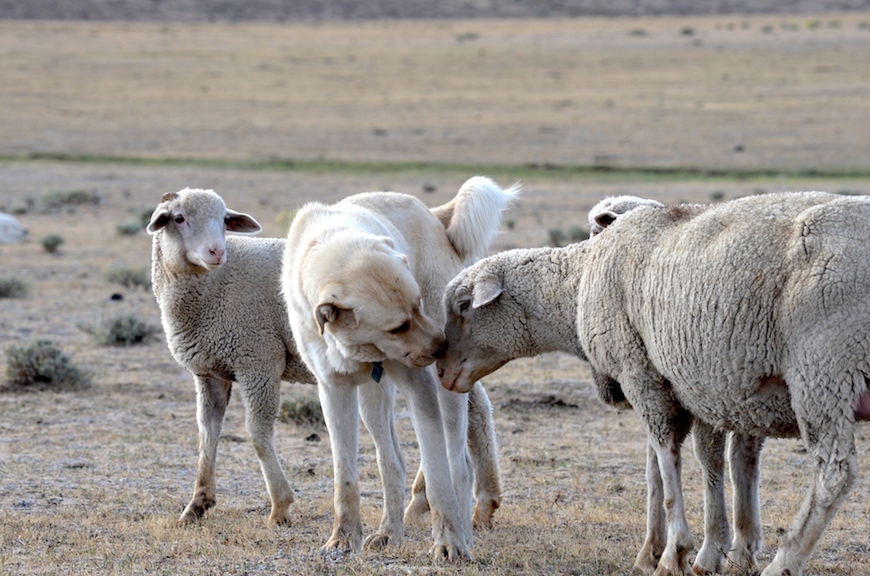
What I didn’t realize is that when you want to get sheep, you really need two different types of dogs. You need a herding dog, like a Border Collie, Corgi, or Australian Shepherd, and you need a guardian dog, like a Great Pyrenees. The herding dog lives with the owner of the sheep and learns how to work the sheep. The guardian dog lives with the sheep. The sheep become part of its pack and for good reason. Sheep are easily hunted down by coyotes, (sometimes) bears, and even stray dogs. 

guardian dog
Guardian dog with his ‘pack’

Growing up, my grandfather had a herd of goats – similar in temperament to sheep – that were attacked by a pack of stray dogs. Out of the 40 in his pack, there were only a few left, who dealt with shock (a sometimes fatal aftereffect). The common saying in circles of sheep owners is that sheep are always looking for a reason to die. Whether that’s escaping from a fence, getting sick from their food, or predators, it takes a watchful eye – from a guardian dog or a shepherd – to care for these wooly beasts. 

This week, we will dwell on Psalm 23, a beautiful passage that describes how the Lord is our shepherd. The undercurrent of the passage is the resounding hope that we have in the good that God has in store for us despite the dangers that we face in our everyday lives. Some of the dangers, the dark places of the valley, are made up of sickness and the brokenness of the world. But, some of the dangers are caused by our own tendencies to wander off the path that God has laid for us. 

Our passage in Matthew contains the parable of the Lost Sheep. In this parable, Jesus emphasizes how there is much rejoicing in heaven when one lost sheep is found. The sheep had wandered away, looking for some way to die out of the watchful eye of the shepherd, but the shepherd wandered through that valley of the shadow of death and brought the sheep back to the flock. 

We are that sheep who wanders. And God, in his grace, has brought us back. How has this happened? Isaiah 53:8 says, “We all, like sheep, have gone astray, each of us has turned to our own way; and the LORD has laid on him the iniquity of us all.” This prophecy speaks to the role Christ would play in our salvation because God has saved us by placing our sins onto Christ. 

God is the Redeemer. He brings salvation to his people. We will see this ring true in our reading from Exodus this week. You may feel like your life is bitter and full of groaning under the weight of your sin, but God is a good shepherd. He will rescue you if you trust in him. 

~ Cayce Fletcher

Cayce writes about discipleship, productivity, and homemaking at her blog https://amorebeautifullifecollective. You can find her latest post on celebrating the Christian year here. You can also listen to A More Beautiful Life Collective Podcast on Apple Podcasts, Spotify, YouTube, or wherever you listen to podcasts. 

REFLECTION QUESTIONS

  1. What are some similarities between ourselves and sheep?  
  2. What is the point of the parable of the lost sheep? Do you rejoice when another one who was ‘lost’ is found again? 
  3. Can you think of a time when you felt bitter over your life circumstances? Did you handle that season with faith or doubt? 

SGLCalendar2024DOWNLOAD

Stop! And Just Listen to Him…

Old Testament: Genesis 49 & 50

Poetry: Psalm 22

New Testament: Matthew 17

We live in a very busy culture in America. For those that are students, you are expected to fill your schedule with 8-hour school days, additional homework when you get home, some extracurricular activity after school, and then sometimes a part-time job on the side. Then, you are also expected to have some time on Wednesdays and Sundays to give to God at the church. For adults, if you aren’t spending at least 40 hours at work, plus some additional overtime, you feel like you didn’t accomplish much. Although, you also have to prioritize keeping up on your house, caring for your family, finding some sort of hobby to enjoy yourself, and also dedicating some time to serving at your church. If we have any “dead time” in our schedule, we feel like we wasted our day.

Did Jesus intend for us to be this busy as disciples? Did he want us constantly running, even when it comes to serving him?

In our passage today in Matthew 17, Peter acts very much like we do. On the top of a high mountain, as Jesus is transfigured before him, James, and John, and they are witnessing a glimpse of what the kingdom of God will be like with Moses and Elijah, Peter immediately wants to jump into action by building some shelters for these great heroes of the faith. At that moment, God speaks up (which is VERY rare in the Bible) and says to simply listen to Jesus, His beloved son. God stops Peter from acting too quickly and slows him down so that he can truly embrace what is happening in front of his eyes: He didn’t want Peter missing the moment by doing something about it.

We are encouraged today that discipleship with Christ isn’t only “doing” something for him: sometimes it is simply “being” in Jesus’ presence and listening to his voice (does this sound like Mary and Martha in Luke 10?) One of my “life-verses” right now has been Mark 3:14, which I used to read over without really reading it. It states, “And Jesus appointed twelve, so that they would be with him and that he could send them out to preach.” Did you catch that? The first thing that a disciple is supposed to do is “be with Jesus”, even before we “do” anything for him. We need to understand that time spent “with” Jesus fuels everything else we “do” for him. We need to re-learn Jesus’ words in John 15: “I am the vine, you are the branches; he who abides in me and I in him, he bears much fruit, for apart from me you can do nothing… abide in my love.” (John 15:5, 9)

Brothers and sisters, break away from the rat-race of life today and do what Jesus commanded us to do first: sit and listen to his voice. Spend some time today simply “being” with Jesus, realizing that you can do nothing without this dedicated time with your Savior. He loves you as you are, not for what you do for him: abide in his love today.

Talon Paul

Reflection Questions

  1. Is being with Jesus and listening to him important to you? Why or why not? 
  2. If it is, how can you make time to be with Jesus and listen? What can you rearrange (or eliminate) in your day to make a better space of time to listen?

What is the Gospel?

Old Testament: Genesis 47 & 48

Poetry: Psalm 21

New Testament: Matthew 16

If you were asked what the gospel is, what would you say?

Most Christians today would tell us that the gospel is primarily about Jesus dying for our sins and rising from the dead. While that is certainly good news, and necessary for our salvation (see 1 Corinthians 15:3-4), is that the entire story? Our passage today tells us something different, in a verse that is usually “skipped over”: it is Matthew 16:21, which states that “from that time Jesus began to show his disciples that he must go to Jerusalem, and suffer many things from the elders and chief priests and scribes, and be killed, and be raised up on the third day.” If Jesus only started talking about his death and resurrection in chapter 16, what has he been talking about the previous 15? We are already halfway through Matthew: are we missing something important that Jesus meant to share with us?

If we return to the beginning of Jesus’ ministry in Matthew, we read that after his baptism and temptations in the wilderness, Jesus began preaching about the kingdom of God/heaven: “From that time Jesus began to preach and say, ‘Repent, for the kingdom of heaven is at hand.’” If you look back throughout Matthew, almost everything that Jesus talked about revolved around the kingdom of God. In another book, the Gospel of Luke, Jesus clearly tells us that his primary purpose in ministry was to teach about the kingdom of God: “I must preach the kingdom of God to the other cities also, for I was sent for this purpose.” (Luke 4:43)

It is an unfortunate reality that many Christians today are completely unaware of what Jesus taught concerning the kingdom of God: they have only been introduced to his death and resurrection. A friend of mine was at a pastor’s conference and asked a group of pastors what the gospel was. Of course, they answered as most people would, that the gospel is about Jesus dying and rising for our sins. Then my friend directed them to Luke 4:43 that we just read, and they were stumped. Remember, these were PASTORS, and they had no clue about Jesus’ kingdom message…

Brothers and sisters, Jesus’ death and resurrection are crucial parts of our salvation: we have no hope of being saved without it. However, we shouldn’t neglect the largest message of Jesus’ entire ministry: the kingdom of God. I want to encourage you today to skim through Matthew and find out what Jesus says about the kingdom of heaven/God. You may be surprised at how often it shows up and how important this kingdom is.

So I’ll ask you again, what is the gospel? May you find the truth that Jesus revealed to us today.

Talon Paul

REflection Questions

  1. What do you find Jesus teaching about throughout Matthew? 
  2. What is the danger in missing what Jesus taught?
  3. If you were asked what the gospel is, what would you say?

Additional Requirements

Old Testament: Genesis 45 & 46

Poetry: Psalm 20

*New Testament: Matthew 15

I have been involved in many food service jobs over the years, including food delivery. There was one particular food delivery job that I will never forget because of the absurdity involved with my employer. I had signed up to simply deliver food from restaurants for a company that was like a local GrubHub or UberEats. Things went along smoothly for the first month, until my employer got a wild idea: he wanted to deliver the local newspaper as well (he was nervous about losing business because of larger companies coming into town). For the second month, I was taking on a newspaper delivery route, as well as taking food orders when I could (sometimes working 12-hour days). It didn’t take long before I left that job because it wasn’t what I signed up for: my employer was adding requirements to the job that were not agreed upon from the beginning.


Does this happen in church too? When it comes to eternal life and being saved, do we add requirements that were not originally stated by Jesus or the apostles? Jesus encountered this in our passage today with the Pharisees and scribes. They were teaching that one must wash their hands before eating in order to be “pure” before God, something that is called the tradition of the elders. While washing your hands is still a good practice, there was nothing in the Old
Testament that ever stated this as a requirement: God was not requiring this to be in His presence, but men were. They were seeking control over the people and adding requirements that were not original.


Unfortunately, the Church today oftentimes does the same thing: adding requirements for salvation that were not original. For example, the Nicene Creed (325 AD) that is recited at many churches today states that Christians must believe that Jesus is “true God from true God, begotten, not made, consubstantial with the Father…” There isn’t a single verse in Scripture that
describes Jesus in this way, but it is a required belief for salvation in many churches today. Not only that, but there are usually cultural expectations in many churches that are required for fellowship, such as the clothing you wear or the way you have your hair put up.


What does Scripture say about salvation? “If you confess with your mouth Jesus as Lord, and believe in your heart that God raised him from the dead, you will be saved.” (Romans 10:9) Many might call me a minimalist, but I don’t believe Jesus intended salvation to be complicated: it’s difficult to make him the Lord of our lives and do what he says, but it’s not complicated. It is supposed to be simple enough for a child to understand (Matthew 18:3).

Reflection Questions

  1. What church traditions are alive around you that are beyond Scripture?
  2. What have you been taught is required, even if it’s not found on the lips of Jesus or the apostles?


Talon Paul