In Need of a Shepherd

OLD TESTAMENT: EXODUS 2

POETRY: PSALM 23

NEW TESTAMENT: MATTHEW 18:21-35

The hot, dry desert sun beat down on the reddened backs of the laborers, scars crisscrossing their backs from where the whips had cracked. Generations after generations of Israelites had born and died as outcasts and slaves in Egypt, living as foreigners and aliens in a pagan land. They had been the victims of genocide, their babies torn from their arms and murdered. The only sin the Israelites had done to the Egyptians was existing and multiplying. It was the Egyptians’ fear that caused them to mistreat the Israelites and make their lives bitter. 

Yesterday, we considered how we were like sheep that had gone astray. The theme of sheep and shepherds runs deep throughout the Bible. Abel was the first shepherd and his sacrifice was the one that God preferred. Noah, Abraham, and Isaac all were wealthy with livestock, but the next patriarch who is described primarily as a shepherd is Jacob. He builds his wealth through gathering up the speckled and spotted sheep of Laban. These vast herds of sheep followed his family to Egypt where the Israelites settled in the land of Goshen nestled in the Nile Delta. Shepherds were detestable to the Egyptians at that time. The Nile Delta was actually the best in the land for their family. 
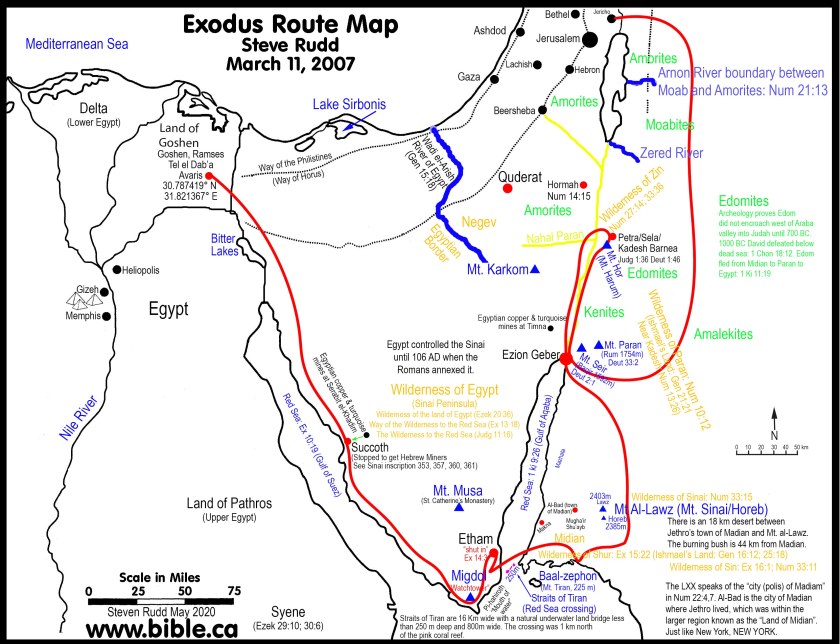
Jacob’s family lived in peace and grew to be a mighty numerous nation. After years and years in the land, the Egyptians turned against them and began to subjugate the Israelites with forced labor. “The Israelites groaned because of their difficult labor, they cried out, and their cry for help because of the difficult labor ascended to God. God heard their groaning, and God remembered his covenant with Abraham, with Isaac, and with Jacob. God saw the Israelites, and God knew” (Exodus 2:23-25). 

The Israelite people needed a shepherd. They needed someone who would come and deliver the people from the misery of their Egyptian enslavement to a better life. During this time, I’m sure that they dealt with doubt. They may even have dealt with unbelief, feeling that nothing would ever change in their lives. 

But, they had the truth of the promise of the covenant of God to fall back on. Abraham was told in Genesis 15:13-16 that his descendants would be foreigners and aliens, enslaved and oppressed, for 400 years. God ended this prophecy by saying, “However, I will judge the nation they serve, and afterward they will go out with many possessions.” 

In Exodus 2, we read that God saw and knew the Israelites’ groaning and misery. At that moment, he was setting in motion a plan to deliver his people and bring to pass the deliverance of them to the promised land of Abraham, Isaac, and Jacob. 

That plan would be fulfilled with none other than a shepherd boy (or old man- since Moses was close to 80 at the time). Moses was away finding a lost sheep when he encountered God in the burning bush. A type of our savior, he went to rescue the Israelites and save them from their enslavement. 

Moses would go from being a shepherd in the land of Midian to a shepherd of God’s people. 

~ Cayce Fletcher

Cayce writes about discipleship, productivity, and homemaking at her blog https://amorebeautifullifecollective. You can find her latest post on cultivating good habits here. You can also listen to A More Beautiful Life Collective Podcast on Apple Podcasts, Spotify, YouTube, or wherever you listen to podcasts. 

REFLECTION QUESTIONS

  1. Why are sheep and shepherds such an important and repetitive theme throughout the Bible? What is God trying to teach us about ourselves by using this pattern? 
  2. Abraham was told the prophecy that his people would live in enslavement and oppression through no fault of their own. We read about the effects of this enslavement in our scripture today. How do you make sense of suffering in light of the sovereignty of God?
  3. Read John 10:11-18. In John 10:11,  Jesus says, “I am the good shepherd.” How is Jesus a good shepherd to us? 

SGLCalendar2024DOWNLOAD

We all like sheep have gone astray

OLD TESTAMENT: EXODUS 1

POETRY: PSALM 23

NEW TESTAMENT: MATTHEW 18:1-20

Earlier this year, my husband and I went to visit a sheep dairy farm (yes – that’s a thing!) near our house. We spun wool, petted the sheep, and ate some cheese. One of my son’s favorite parts was watching the sheep dogs herd the sheep, seeing all the twists and turns they took into the corral. 

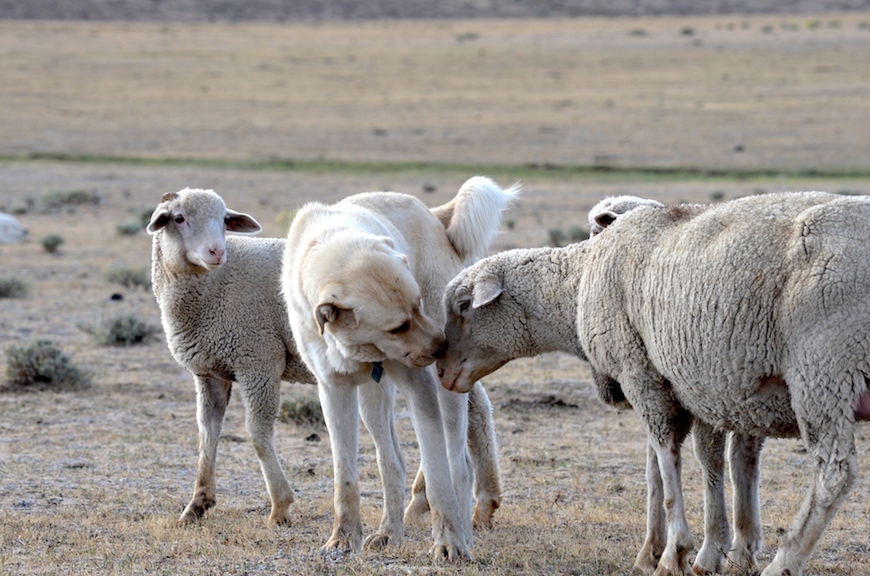
What I didn’t realize is that when you want to get sheep, you really need two different types of dogs. You need a herding dog, like a Border Collie, Corgi, or Australian Shepherd, and you need a guardian dog, like a Great Pyrenees. The herding dog lives with the owner of the sheep and learns how to work the sheep. The guardian dog lives with the sheep. The sheep become part of its pack and for good reason. Sheep are easily hunted down by coyotes, (sometimes) bears, and even stray dogs. 

guardian dog
Guardian dog with his ‘pack’

Growing up, my grandfather had a herd of goats – similar in temperament to sheep – that were attacked by a pack of stray dogs. Out of the 40 in his pack, there were only a few left, who dealt with shock (a sometimes fatal aftereffect). The common saying in circles of sheep owners is that sheep are always looking for a reason to die. Whether that’s escaping from a fence, getting sick from their food, or predators, it takes a watchful eye – from a guardian dog or a shepherd – to care for these wooly beasts. 

This week, we will dwell on Psalm 23, a beautiful passage that describes how the Lord is our shepherd. The undercurrent of the passage is the resounding hope that we have in the good that God has in store for us despite the dangers that we face in our everyday lives. Some of the dangers, the dark places of the valley, are made up of sickness and the brokenness of the world. But, some of the dangers are caused by our own tendencies to wander off the path that God has laid for us. 

Our passage in Matthew contains the parable of the Lost Sheep. In this parable, Jesus emphasizes how there is much rejoicing in heaven when one lost sheep is found. The sheep had wandered away, looking for some way to die out of the watchful eye of the shepherd, but the shepherd wandered through that valley of the shadow of death and brought the sheep back to the flock. 

We are that sheep who wanders. And God, in his grace, has brought us back. How has this happened? Isaiah 53:8 says, “We all, like sheep, have gone astray, each of us has turned to our own way; and the LORD has laid on him the iniquity of us all.” This prophecy speaks to the role Christ would play in our salvation because God has saved us by placing our sins onto Christ. 

God is the Redeemer. He brings salvation to his people. We will see this ring true in our reading from Exodus this week. You may feel like your life is bitter and full of groaning under the weight of your sin, but God is a good shepherd. He will rescue you if you trust in him. 

~ Cayce Fletcher

Cayce writes about discipleship, productivity, and homemaking at her blog https://amorebeautifullifecollective. You can find her latest post on celebrating the Christian year here. You can also listen to A More Beautiful Life Collective Podcast on Apple Podcasts, Spotify, YouTube, or wherever you listen to podcasts. 

REFLECTION QUESTIONS

  1. What are some similarities between ourselves and sheep?  
  2. What is the point of the parable of the lost sheep? Do you rejoice when another one who was ‘lost’ is found again? 
  3. Can you think of a time when you felt bitter over your life circumstances? Did you handle that season with faith or doubt? 

SGLCalendar2024DOWNLOAD

Stop! And Just Listen to Him…

Old Testament: Genesis 49 & 50

Poetry: Psalm 22

New Testament: Matthew 17

We live in a very busy culture in America. For those that are students, you are expected to fill your schedule with 8-hour school days, additional homework when you get home, some extracurricular activity after school, and then sometimes a part-time job on the side. Then, you are also expected to have some time on Wednesdays and Sundays to give to God at the church. For adults, if you aren’t spending at least 40 hours at work, plus some additional overtime, you feel like you didn’t accomplish much. Although, you also have to prioritize keeping up on your house, caring for your family, finding some sort of hobby to enjoy yourself, and also dedicating some time to serving at your church. If we have any “dead time” in our schedule, we feel like we wasted our day.

Did Jesus intend for us to be this busy as disciples? Did he want us constantly running, even when it comes to serving him?

In our passage today in Matthew 17, Peter acts very much like we do. On the top of a high mountain, as Jesus is transfigured before him, James, and John, and they are witnessing a glimpse of what the kingdom of God will be like with Moses and Elijah, Peter immediately wants to jump into action by building some shelters for these great heroes of the faith. At that moment, God speaks up (which is VERY rare in the Bible) and says to simply listen to Jesus, His beloved son. God stops Peter from acting too quickly and slows him down so that he can truly embrace what is happening in front of his eyes: He didn’t want Peter missing the moment by doing something about it.

We are encouraged today that discipleship with Christ isn’t only “doing” something for him: sometimes it is simply “being” in Jesus’ presence and listening to his voice (does this sound like Mary and Martha in Luke 10?) One of my “life-verses” right now has been Mark 3:14, which I used to read over without really reading it. It states, “And Jesus appointed twelve, so that they would be with him and that he could send them out to preach.” Did you catch that? The first thing that a disciple is supposed to do is “be with Jesus”, even before we “do” anything for him. We need to understand that time spent “with” Jesus fuels everything else we “do” for him. We need to re-learn Jesus’ words in John 15: “I am the vine, you are the branches; he who abides in me and I in him, he bears much fruit, for apart from me you can do nothing… abide in my love.” (John 15:5, 9)

Brothers and sisters, break away from the rat-race of life today and do what Jesus commanded us to do first: sit and listen to his voice. Spend some time today simply “being” with Jesus, realizing that you can do nothing without this dedicated time with your Savior. He loves you as you are, not for what you do for him: abide in his love today.

Talon Paul

Reflection Questions

  1. Is being with Jesus and listening to him important to you? Why or why not? 
  2. If it is, how can you make time to be with Jesus and listen? What can you rearrange (or eliminate) in your day to make a better space of time to listen?

What is the Gospel?

Old Testament: Genesis 47 & 48

Poetry: Psalm 21

New Testament: Matthew 16

If you were asked what the gospel is, what would you say?

Most Christians today would tell us that the gospel is primarily about Jesus dying for our sins and rising from the dead. While that is certainly good news, and necessary for our salvation (see 1 Corinthians 15:3-4), is that the entire story? Our passage today tells us something different, in a verse that is usually “skipped over”: it is Matthew 16:21, which states that “from that time Jesus began to show his disciples that he must go to Jerusalem, and suffer many things from the elders and chief priests and scribes, and be killed, and be raised up on the third day.” If Jesus only started talking about his death and resurrection in chapter 16, what has he been talking about the previous 15? We are already halfway through Matthew: are we missing something important that Jesus meant to share with us?

If we return to the beginning of Jesus’ ministry in Matthew, we read that after his baptism and temptations in the wilderness, Jesus began preaching about the kingdom of God/heaven: “From that time Jesus began to preach and say, ‘Repent, for the kingdom of heaven is at hand.’” If you look back throughout Matthew, almost everything that Jesus talked about revolved around the kingdom of God. In another book, the Gospel of Luke, Jesus clearly tells us that his primary purpose in ministry was to teach about the kingdom of God: “I must preach the kingdom of God to the other cities also, for I was sent for this purpose.” (Luke 4:43)

It is an unfortunate reality that many Christians today are completely unaware of what Jesus taught concerning the kingdom of God: they have only been introduced to his death and resurrection. A friend of mine was at a pastor’s conference and asked a group of pastors what the gospel was. Of course, they answered as most people would, that the gospel is about Jesus dying and rising for our sins. Then my friend directed them to Luke 4:43 that we just read, and they were stumped. Remember, these were PASTORS, and they had no clue about Jesus’ kingdom message…

Brothers and sisters, Jesus’ death and resurrection are crucial parts of our salvation: we have no hope of being saved without it. However, we shouldn’t neglect the largest message of Jesus’ entire ministry: the kingdom of God. I want to encourage you today to skim through Matthew and find out what Jesus says about the kingdom of heaven/God. You may be surprised at how often it shows up and how important this kingdom is.

So I’ll ask you again, what is the gospel? May you find the truth that Jesus revealed to us today.

Talon Paul

REflection Questions

  1. What do you find Jesus teaching about throughout Matthew? 
  2. What is the danger in missing what Jesus taught?
  3. If you were asked what the gospel is, what would you say?

Additional Requirements

Old Testament: Genesis 45 & 46

Poetry: Psalm 20

*New Testament: Matthew 15

I have been involved in many food service jobs over the years, including food delivery. There was one particular food delivery job that I will never forget because of the absurdity involved with my employer. I had signed up to simply deliver food from restaurants for a company that was like a local GrubHub or UberEats. Things went along smoothly for the first month, until my employer got a wild idea: he wanted to deliver the local newspaper as well (he was nervous about losing business because of larger companies coming into town). For the second month, I was taking on a newspaper delivery route, as well as taking food orders when I could (sometimes working 12-hour days). It didn’t take long before I left that job because it wasn’t what I signed up for: my employer was adding requirements to the job that were not agreed upon from the beginning.


Does this happen in church too? When it comes to eternal life and being saved, do we add requirements that were not originally stated by Jesus or the apostles? Jesus encountered this in our passage today with the Pharisees and scribes. They were teaching that one must wash their hands before eating in order to be “pure” before God, something that is called the tradition of the elders. While washing your hands is still a good practice, there was nothing in the Old
Testament that ever stated this as a requirement: God was not requiring this to be in His presence, but men were. They were seeking control over the people and adding requirements that were not original.


Unfortunately, the Church today oftentimes does the same thing: adding requirements for salvation that were not original. For example, the Nicene Creed (325 AD) that is recited at many churches today states that Christians must believe that Jesus is “true God from true God, begotten, not made, consubstantial with the Father…” There isn’t a single verse in Scripture that
describes Jesus in this way, but it is a required belief for salvation in many churches today. Not only that, but there are usually cultural expectations in many churches that are required for fellowship, such as the clothing you wear or the way you have your hair put up.


What does Scripture say about salvation? “If you confess with your mouth Jesus as Lord, and believe in your heart that God raised him from the dead, you will be saved.” (Romans 10:9) Many might call me a minimalist, but I don’t believe Jesus intended salvation to be complicated: it’s difficult to make him the Lord of our lives and do what he says, but it’s not complicated. It is supposed to be simple enough for a child to understand (Matthew 18:3).

Reflection Questions

  1. What church traditions are alive around you that are beyond Scripture?
  2. What have you been taught is required, even if it’s not found on the lips of Jesus or the apostles?


Talon Paul

An Appetizer

Old Testament: Genesis 43 & 44

Poetry: Psalm 19

*New Testament: Matthew 14

If you’ve ever been to the Texas Roadhouse restaurant, there is one thing you can always count on: bread and cinnamon butter. This is provided before every meal as a free appetizer, and on more than one occasion, we’ve had enough to be full by the time our actual meal arrived (the same can be said of the breadsticks at Olive Garden). Those rolls were not the meal, and were never intended to be the only thing you enjoyed: however, it gave you a taste of what was to come later, and whet your appetite for more (if you had enough room left in your stomach).

Our passage in Matthew 14 reminds me of our experiences at Texas Roadhouse: it offers us a “taste of what’s to come” in the kingdom of God. There were many people following Jesus at the time, and they were hungry from their journey of traveling after him: so Jesus miraculously offers them enough bread and fish to feed 5,000 men (probably about 10,000 people when you include women and children). What Jesus was doing was showing them what the kingdom of God was going to be like, as he was talking to them about its splendor. In Isaiah 25:6-9, we learn that the kingdom of God will be a time of tremendous feasting and the end of hunger forever: Jesus gives the crowd a foretaste of what this incredible moment will be like by doing this miracle for them.

There are two cautions that all Christians should be aware of when it comes to the kingdom of God. First, there are some Christians who are only focused on the kingdom of God in the future. While we still wait for the kingdom to come fully, we are able to presently experience some of it NOW and offer that to others (notice that Jesus invited his disciples to perform this miracle first). We are able to enjoy some of the kingdom of God’s blessings now, through the power of the Holy Spirit in our lives, as we anxiously await to experience it fully in the end when Jesus comes. We should never neglect the fact that “the kingdom of God is in our midst” when we have Christ dwelling inside of us (Luke 17:20-21).

The second caution for Christians is living too much in this life without having a hope for the future reign of God’s kingdom. Jesus is very clear: the kingdom of God will not come fully until he returns (Matthew 25:31-40). While we can experience an “appetizer” now, it’s not the full meal: never fill up completely on the blessings of this age, but look forward with hope towards the future when Jesus returns. We should LOVE his appearing in the clouds, longing for that day to come soon (2 Timothy 4:8). We need a balance of now and then: living for the future kingdom today, with hope that it is coming soon.

Do you look forward to Jesus’ return and the kingdom of God? How can you enjoy it today?

Talon Paul

Reflection Questions

  1. Do you look forward to Jesus’ return and the kingdom of God?
  2. How can you enjoy it today?
  3. How can you help feed (spiritually and/or physically) those who are hungry for more of Jesus and those in need of an appetizer of the coming glorious feast in the kingdom of God?

Your Hometown

Old Testament: Genesis 41 & 42

Poetry: Psalm 18

*New Testament: Matthew 13:53-58

When I moved away from my home in Illinois to Atlanta Bible College (12 hours away), I was equally excited and nervous. I longed for adventure and to see the world outside of my hometown, especially since there were only about 1200 people in the town I graduated from. However, I gained much more from having stepped outside my comfortable realm of family and friends: I gained eternal life in Jesus Christ. I had to get away from my comfortability to see my need for Jesus, for I wasn’t even a Christian at that point (a non-believer going to a Bible college still sounds silly to me, but it is what happened). However, I always had the intention of returning home one day with my newfound knowledge, and hopefully reaching the troubled friends that I used to run around with… but I still haven’t made it back yet…


I believe God has been deliberately keeping me from returning back to my old stomping grounds because of Jesus’ statement in our passage today: “A prophet is not without honor except in his hometown and in his own household.” See, I’ve had the opportunity offered to return home and even pastor my home church: TWICE. And yet, both times that I’ve been offered, there was something going on that prevented it from happening. Having to say no both times was a definite challenge, complete with tears and pain, especially having our son being a distance from his grandparents, but there was definitely divine protection involved.


Ask yourself this: if Jesus couldn’t do it, do you think you can? I used to reason in my head that Jesus didn’t really mean what he said: but I was wrong. If Jesus was even rejected by his own people, why would I assume that I would be any different? Would the friends and family that saw me partying in high school automatically start listening to me about eternal life and morality? Would my parents and grandparents automatically start listening to me about how to live?
Would they be convinced that my life had changed, or would they only remember what I used to be like? As painful as it is to admit, sometimes the last people who we can convince are family and former friends, like Jesus… and yet, we’ve gained so much more by choosing his path. We have new friends and family all throughout the world, all those who have made the same decision we have: choosing Jesus. He is fulfilling his promise in our lives that he made to Peter in Matthew 19:29, granting us a hundred times as much in this life and in the age to come.


My encouragement to you today is to consider exploring what options are out there that Jesus is drawing you towards. It is scary and challenging some days, but the benefits far outweigh the negatives. There is a large world out there that needs you and what Jesus has instilled in your heart: don’t be afraid to leave home and pursue the kingdom of God.


Talon Paul

Reflection Questions

  1. Are there times when you have already stepped out of your comfort zone and beyond your hometown circle of family and friends to pursue the kingdom of God and share with others? If so, what was the hardest part for you? And, what blessings have you received from doing so?
  2. Are there some people you can practice giving more honor to, perhaps from your own town or family?
  3. Where might Jesus be calling you to go with the message of the kingdom? What are the challenges and the advantages to going beyond your current hometown and family? 

Cast Your Net Wide

Old Testament: Genesis 39 & 40

Poetry: Psalm 17

New Testament: Matthew 13:47-52


There is a sharp difference between commercial fishing and recreational fishing. With recreational fishing that we are all more familiar with, we are selective in the bait we choose and try to reel in one fish at a time: depending on what type of fish you want to catch, you will choose to use something different. For example, if you want to catch catfish like I did when I was younger, you’ll have more luck using stinky chicken liver than ordinary worms (I can tell stories of how bad that stuff can stink up a truck). But commercial fishing is very different: you are trying to catch as much as possible with a net, and will sort out whatever garbage after you have pulled it in. Commercial fishermen are not selective (except in what area to fish in): they cast their net wide and hope for the best.


Jesus compares the kingdom of God/heaven to this type of commercial fishing: at the end of the age, the angels will draw up everybody and then sort them out. The kingdom of God is not seeking individual fish, but casting its net over EVERY potential fish, because every person has a chance at having eternal life. Unfortunately, as with commercial fishing, some are going to be bad and reject the offer Jesus came to bring: they will reap the consequences of their decision
in the end. However, that is the nature of commercial fishing and the nature of the kingdom of God: allowing everyone to have a chance in the net, and letting the angels sort it out in the end.


Jesus called us to be fishers of men and participate in his fishing expedition (Matthew 4:19): however, he was calling us to be like commercial fishermen rather than recreational. We are expected to cast our net of the gospel WIDE, offering it to whoever we come across, not being selective about who gets to hear it. While we recognize that there will be some people who reject our message (and maybe persecute us), we are doing our duty by offering them the
chance of eternal life. Unfortunately, we often pick-and-choose who we think should hear the gospel for various reasons, rather than “being ready in season and out of season” (2 Timothy 4:2) for the person who comes across us. We need to remember our calling as fishermen and put aside our personal preferences.


Ask yourselves these questions today:


1. Are your nets ready? (Do you understand the gospel yourself?)
2. Are you willing to step out onto the boat? (Are you moving towards the people rather than sheltering inside?)
3. Are you prepared for the fish you might encounter along the way? (Are you ready for anybody to accept the message, even if they seem “less desirable” in your eyes?)


– Talon Paul

When Giving it All is a Wise Investment

Old Testament: Genesis 37 & 38

Poetry: Psalm 16

New Testament: Matthew 13:44-46

Some of my favorite commercials have come from the Klondike Bar ice cream company. Their catchphrase is “What would you do for a Klondike?”, followed by some of the most extreme examples of people doing something to get their ice cream bar. One of my favorite commercials involved a man willing to shave off one of his eyebrows and looking ridiculous for the ice cream (I apparently am not willing to do much, because I’ve never actually eaten one).


We are asked a similar question in our devotion today, but not involving ice cream: this involves the kingdom of God. In Matthew 13, the kingdom of God is compared to two gentlemen willing to sell everything that they possess to acquire it, like a hidden treasure or a precious pearl. They recognize two things: the kingdom of God is something of tremendous value, and that everything they own cannot compare with its marvelous wonder. Although they are sacrificing much, they are making the wisest investment of their life. Imagine if you had the opportunity to possess a winning lottery ticket that would give you 100 million dollars: all it would take is to sell all your possessions… would you take that deal? Would that lottery ticket not be able to buy back everything you had and more?


See, Jesus also promised that if we give our lives for the kingdom of God, we would receive a hundred times as much in this life and in the next age (see Matthew 19:27-30). He wasn’t asking us to simply give up everything just because he felt like it: he promised infinitely more than we could ever imagine, if we would simply trust him and follow his kingdom-way. You would
be making the wisest investment of your life if you chose the kingdom of God over every possible path that this life has to offer, and you would gain much more than this life could ever offer. So, “What would you do for the kingdom of God?” What are you willing to risk for eternal life?


Perhaps a more direct question is in order as well: “What are you NOT willing to risk for the kingdom of God?” We all have something we hold dear, whether that be personal possessions, a deeply-held family connection, or a desired career path. There are some things that will be difficult to let go of to pursue Jesus and the kingdom of God, but that’s the point: he wants you FULLY committed, willing to give him everything because he gave everything for you. This is something that we must consistently ask ourselves and reflect on what we are holding back from our Lord.


What would you do for the kingdom of God?


Talon Paul

Reflection Questions

  1. Both men in today’s parables recognized the kingdom of God as something of great value. What value do you place on the kingdom of God? Why?
  2. What have you already given up to pursue Jesus and the Kingdom of God?
  3. What are you having a difficult time letting go of in order to gain the kingdom of God? 
  4. Explain how giving it all can be a wise investment.
  5. What is the wisest investment you can make with your day today, and with the week ahead of you, if you are fully committed to living for the kingdom? 

Change Your Garments

Old Testament: Genesis 35 & 36

Poetry: Psalm 15

New Testament: Matthew 13:31-35

Genesis 35 begins with God telling Jacob to go to Bethel and make an altar there to “the God who appeared to you when you fled from your brother Esau.” God is reminding Jacob of what He has done for him in the past. Do you remember what Rachel did a few chapters back? She stole her father’s idols! Jacob’s household STILL has these foreign gods in their possession. The very first commandment in the Ten Commandments (which will be) given to Moses is “You shall have no other gods before me”. What have Jacob’s people done? They have sinned! 

I find this next part so interesting. In verses 2 and 3 Jacob gives instructions to his people. He says “put away the foreign gods that are among you and purify yourselves and change your garments.” This is repentance. Did Jacob say that they could keep the idols in their spare room and ignore them? NO. They took everything that was an idol or connected to paganism and buried them in the ground. They cast the items of sin out of their midst. Then, after turning away, they purified themselves and changed their clothes. 

One commentary makes an interesting point about the garments. There are multiple places in scripture where garments symbolize the character of people. How interesting is it that Jacob told his people to change their garments, almost like a physical way to visualize the heart change of repentance? This gives even more depth to the verses that say things like “put on Christ” or “put on the new self”. WOW! Let’s take a second to thank the Lord for the true gift of Jesus and what that means for our personal lives. The Old Testament is filled with people making altars to God for numerous things. We don’t have to do that anymore because Jesus was the ultimate sacrifice. Now, our lives are an offering to God and Christ is the one to cover all of our sins. How amazing is that?

Okay, back to Jacob. What do you notice about God in this chapter? I notice how gracious God is. These people had taken false gods! There was no reason why they deserved to have God on their side. But He is still faithful to them! He guides them, protects them, and then blesses them by giving Jacob an incredible promise at the end of the chapter. 


How amazing it is to have a God that will forgive us. I want this story to prompt us today to think about any areas in our lives where we are holding on to sin. If we are in Christ, we are a new creation, and although that doesn’t mean we are perfect yet, it does mean that we are continually being transformed. Ephesians 4 says, “to put off your old self, which belongs to your former manner of life and is corrupt through deceitful desires, and to be renewed in the spirit of your minds, and to put on the new self, created after the likeness of God in true righteousness and holiness.” What does that look like in your life? Think about how you can “put on the new self” today.

-Katelyn Salyers

Reflection Questions

  1. What will it look like to take off your old self? What do you need to get out of your house, your heart, your life? Are you hiding any foreign gods?
  2. What will it look like to put on your new self today? How can you put on a clean set of clothes?