She Calls Out, But Is Ignored

Proverbs

Proverbs 1 20 a

The wisdom of God is personified as a woman in Proverbs 1:20-33.

20 “Out in the open wisdom calls aloud,
she raises her voice in the public square;
21 on top of the wall she cries out,
at the city gate she makes her speech:”

These verses paint a picture of Lady Wisdom loudly crying out in the middle of the city for people to listen.  She is desperately trying to get everyone’s attention.  The suggestion here is that God wants everyone to hear and respond to his wisdom.  Furthermore, everyone is eventually going to hear the loud calls, and will have to make the decision to either accept or ignore the offer.


Although wisdom is loudly calling out, few are listening to her.  The simple, the mockers and the fools are all ignoring her pleas.

22 “How long will you who are simple love your simple ways?
How long will mockers delight in mockery
and fools hate knowledge?”


Many will ignore the calls for wisdom, but the wisdom of God is available to those who do listen and turn from their sinful ways.

23 “Repent at my rebuke!
Then I will pour out my thoughts to you,
I will make known to you my teachings.”

Nobody likes to be rebuked, to be strongly reprimanded, or have their actions criticized.  However, God will give understanding and wisdom to those that do repent when they have been rebuked.


Next the attention switches back to all those that continually fail to listen to God’s wisdom and are instead pursuing their own desires.

24 “But since you refuse to listen when I call
and no one pays attention when I stretch out my hand,
25 since you disregard all my advice
and do not accept my rebuke,
26 I in turn will laugh when disaster strikes you;
I will mock when calamity overtakes you—
27 when calamity overtakes you like a storm,
when disaster sweeps over you like a whirlwind,
when distress and trouble overwhelm you.”

These verses reiterate that this group of people had the opportunity to listen to wisdom and obey God’s truths, but they instead willingly choose to ignore God.  There are consequences for their choices.  Notice that these verses state when disaster strikes and when calamity overtakes, not if disaster strikes or if calamity overtakes.


The next passage illustrates the need to seek wisdom before we act.  Once we have acted foolishly or sinned, we must face the consequences.  Even if we ask for forgiveness and repent, there are often still consequences that we have to face.

28 “Then they will call to me but I will not answer;
they will look for me but will not find me,
29 since they hated knowledge
and did not choose to fear the Lord.
30 Since they would not accept my advice
and spurned my rebuke,
31 they will eat the fruit of their ways
and be filled with the fruit of their schemes.”

We must wisely choose the correct path so that we can avoid disaster or calamity.  Too often we spend so much energy and time trying to get out of tough spots and wiggle our way out of bad situations that were brought on by our own poor choices. We would be far better off to listen to wisdom and avoid these bad situations and tough spots altogether.


The last two verses in the chapter contrast the foolish and the wise man.

32 For the waywardness of the simple will kill them,
and the complacency of fools will destroy them;
33 but whoever listens to me will live in safety
and be at ease, without fear of harm.”

Failing to follow God’s wisdom has consequences.  Consequences now, but ultimately the greatest consequence will be on the final day of judgement.  Similarly, wisely following God’s plan does not guarantee a problem free life, but it will give you peace and joy in this life, and most importantly it will ensure a perfect and eternal life in the kingdom.

Jill McClain

Never Too Messy for God

INTRODUCTION to PROVERBS

1 Chronicles 22 9

Solomon, who is he and why should I know that name?  First, let’s review the salacious story that led up to the birth of Solomon.  It was Spring, a time when most of the kings in the land would go to battle, due to favorable weather conditions and plentiful food.  However, King David, decided for whatever reason to send his soldiers out to battle, but he himself stayed back in Jerusalem, which certainly went against the warrior king’s typical protocol.  On one of these fine Spring evenings, King David took a walk out on his roof top. As he was strolling around he gazed upon a beautiful woman bathing.  David inquired who the gorgeous bathing beauty was, and was told she was Bathsheba, the wife of Uriah.  King David invited Bathsheba to join him in his bedroom….which lead to…..can you guess?  I’ll give you a hint.  A short time later Bathsheba sent word to David that she was pregnant, with his child.

Upon hearing that Bathsheba was pregnant with his child, King David twice tried to convince Uriah, one of his fiercest warriors, to come home to be with his wife, hoping it would appear that Bathsheba had gotten pregnant by Uriah.  When both of those initial plans failed, David concocted an even more sinister scheme, this time to have Uriah killed.  King David ordered that Uriah be sent to the front line of the fiercest battle, and then instructed that the rest of the soldiers fall back, leaving Uriah alone to face the enemy.  Just as planned, Uriah met his untimely death in the battle that ensued. Following Uriah’s death, Bathsheba moved into David’s home and became his wife.

Not surprisingly, God was very displeased with David for taking Uriah’s wife and then sending him out to die.  David had to face the consequences of his sins.

“This is what the LORD, the God of Israel, says: ‘I anointed you (David) king over Israel, and I delivered you from the hand of Saul.  I gave your master’s house to you, and your master’s wives into your arms.  I gave you all Israel and Judah.  And if all this had been too little, I would have given you even more.  Why did you despise the word of the LORD by doing what is evil in his eyes?  You struck down Uriah the Hittite with the sword and took his wife to be your own.  You killed him with the sword of the Ammonites.  Now, there, the sword will never depart from your house, because you despised me and took the wife of Uriah the Hittite to be your own.’  This is what the LORD says: ‘Out of your own household I am going to bring calamity on you.  Before your very eyes I will take your wives and give them to one who is close to you, and he will sleep with your wives in broad daylight.  You did it in secret, but I will do this thing in broad daylight before all Israel.’” (2 Samuel 12:7-12)

After God delivered this message to David the child born to David and Bathsheba became ill.  David was full of remorse and pleaded with God for forgiveness and for his son’s life.  God forgave David, but his first son with Bathsheba died.

David and Bathsheba had a second son, and they named him Solomon.  Solomon means peaceful.  Solomon went on to become King and his reign was one of peace as foretold in I Chronicles 22:9, “But you will have a son who will be a man of peace and rest, and I will give him rest from all his enemies on every side.  His name will be Solomon, and I will grant Israel peace and quiet during his reign.  He is the one who will build a house for my Name. He will be my son, and I will be his father.  And I will establish the throne of his kingdom over Israel forever.” God loved Solomon and told the prophet Nathan to name him Jedidiah, which means beloved of Jehovah.

There may be consequences to pay for your sins, but if you seek forgiveness God can still work through your “mess” to accomplish great things. After all, from David and Bathsheba came Solomon.

-Jill McClain


(If you’ve been reading with us all year you know we have been working on reading and discussing one chapter of the New Testament everyday – with some FREE THEME days added in to round out the 365 days.  For the month of October we will be reading one chapter of Proverbs a day – the 1st chapter on the 1st of October, 2nd chapter on the 2nd, etc…  It’s a great book to help us all gain a lot of wisdom.  Then, in November we will cover the book of Revelation, and finish off the year with the last gospel we saved for December: Luke.  Keep reading His Word!)

Affecting Future Generations

Gen 16 1
Now Sarai, Abram’s wife, had borne him no children. But she had an Egyptian slave named Hagar; so she said to Abram, “The Lord has kept me from having children. Go, sleep with my slave; perhaps I can build a family through her.” Abram agreed to what Sarai said. So after Abram had been living in Canaan ten years, Sarai his wife took her Egyptian slave Hagar and gave her to her husband to be his wife. He slept with Hagar, and she conceived. When she knew she was pregnant, she began to despise her mistress. Then Sarai said to Abram, “You are responsible for the wrong I am suffering. I put my slave in your arms, and now that she knows she is pregnant, she despises me. May the Lord judge between you and me.”  “Your slave is in your hands,” Abram said. “Do with her whatever you think best.” Then Sarai mistreated Hagar; so she fled from her.  The angel of the Lord found Hagar near a spring in the desert; it was the spring that is beside the road to Shur. And he said, “Hagar, slave of Sarai, where have you come from, and where are you going?” “I’m running away from my mistress Sarai,” she answered.  Then the angel of the Lord told her, “Go back to your mistress and submit to her.” The angel added, “I will increase your descendants so much that they will be too numerous to count.”  The angel of the Lord also said to her: “You are now pregnant and you will give birth to a son. You shall name him Ishmael, for the Lord has heard of your misery.  He will be a wild donkey of a man; his hand will be against everyone and everyone’s hand against him, and he will live in hostility toward all his brothers.”  She gave this name to the Lord who spoke to her: “You are the God who sees me,” for she said, “I have now seen the One who sees me.”
Genesis 16:1‭-‬13 NIV
In this chapter, we see a choice that Abram and Sarai made, that still impacts the world today.  They were trying to fulfill a promise that God had made, by their design instead of waiting for God.  It’s easy for us to sit back and think, ‘Wow no way would I do that if God promised me something!’ Fact is though, we turn our backs on God’s promises all the time.  We force decisions in our lives based on our wants, instead of truly seeking God’s will first.  But what really gets me is the possible consequences of our decisions.
It isn’t always just us that pays the price, our families and friends can be significantly affected by our decisions.  If you’re a parent you see this all the time.  Might just be little things like choosing to stay late at work instead of going to a game, or it could be big things like how a divorce can change everyone’s life involved.  If you’re a son or daughter, you feel those decisions, but you also know that your choices affect your parents.  Could be something minor like not doing something you said you would, or something major like a DUI.  Point is that all of us have to realize that how we live our lives can affect how others live theirs.  And some of, if not many of,  the decisions we make affect future generations.
This is true for good decisions also, the legacy we leave on life isn’t just about our screw ups, it’s about our accomplishments also, all part of God’s design and his plan of grace.  So if you’ve screwed up, no worries, there’s forgiveness.  But that might mean the consequences are set, and we have to rely on that grace and work hard to make better choices moving forward.  Just remember next time you have a major choice in front of you, am I seeking God’s will or my own?  Does this choice honor the people around me as well as myself? If we take time to evaluate our choices like that, I think we’ll have fewer regrets in them.
Jerry Briggs

How to Avoid Unpleasant Consequences

Prov 1 8


When I was in high school I remember my friend and I sneaking out of his house to go hang out with some friends. We left his house about 11:30pm and didn’t get back in until 5:45am  which was 15 minutes before his alarm would go off for school that morning. We were tired and exhausted and couldn’t really function at school. Staying up and sneaking out all night left us at a great disadvantage the next day.
I have made many bad decisions in my life. Many like this story could have been avoided if I had listened to the advice others had given me.  They say you need at least 8 hours of sleep as a teenager.  Well, I got about 15 minutes and it was not enough. 
Proverbs 1:8-16 talks about how fools and sinners bear the fruit of there own actions. I definitely deserved a hard day at school for not listening to the wisdom that was set in front of me.  
 
What wisdom has been told to you that you might need to listen to more carefully? Remember, the consequences may not be worth it.
-Jesse Allen

Warning: Lethal Wound

Psalm 38

Untitled design (1)

I am afraid we have an ugly topic to talk about today.  It’s no fun, but it has to be done.  It is more fun to talk about sunshine, knitting and fruit salad (see the last two days’ posts).  But when we don’t talk about this topic and acknowledge it and be on the defensive against it, it has a way of festering, oozing out of control and taking over by force – consuming ourself and others in its path of destruction.

I am talking about sin.  One verse toward the end of yesterday’s psalm about trials points to the seriousness of sin: “If I had cherished sin in my heart, the Lord would not have listened.” (Psalm 66:18) .  Ouch.  The All-Powerful God who loves and cares for me will not hear my prayers, my petitions, or even my praise if my sin is creating a sound-proof barrier between me and Him.  His holiness will not allow it.  Sin is serious and must be dealt with in order for me to be heard by God.

King David was a man who knew a thing or two about the devastating effects of sin.  In Psalm 38 he describes many consequences of sin: God’s anger and discipline, ill health, overwhelming guilt, searing pain, severe depression, social isolation, increased enemies, and confusion.  What other consequences can you find in this psalm?  He states, “My wounds fester and are loathsome because of my sinful folly.” (Psalm 38:5).

The thing is…”sinful folly” sounds just a wee bit fun, doesn’t it??  Maybe it’s a glance at pornography, experimenting with friends doing drugs or alcohol, speeding recklessly down the interstate with some great tunes cranking out, making out with your significant other, or getting a good laugh out of the lunch crew when you share a great put-down.  It’s a little exhilarating – for a time.  And that’s the trouble with sin.  It can start by seeming like no big deal.  I highly doubt that King David woke up one morning and said, “This is the day.  I am going to go watch a woman bathe, and then commit adultery and that will lead to deception, murder, the death of my child, a plaque of violence on my family, and ….   No one plans to be sucked into a downward spiral of sin, deceit and pain.  Rather, it begins with small acts of selfishness – thinking of my own pleasure over and above what is right, pleasing to God and helpful to others.  And then the demon of pride enters and says we can handle this burning coal and we won’t get burned.  So, we say yes to that little urge of ‘sinful folly’.

Before we know it, we are facing festering wounds and a forest fire.  And the good-feeling exhilaration is long gone.  In it’s place is only pain, isolation, depression, guilt and confusion.

Sadly, this is not true for only adulterous murderers.  It is the same for me.  It is the same for you.  It is the same for the most saintly person you know.  In the New Testament James gives the same warning David does: “But each person is tempted when they are dragged away by their own evil desire and enticed.  Then, after desire has conceived, it gives birth to sin; and sin, when it is full-grown, gives birth to death.” (James 1:14-15).  Sin is a big deal, and not just for the sinner, but for so many others who will be affected.

I was looking for a great picture of gangrene to open this devotion.  They were much worse than I had anticipated (as is the case with sin) so I will not include an actual visual.  But, imagine, blackened decaying flesh surrounded by raw, oozing, pain.  Death has set in – even while the rest of the body lives.  Sin, left unchecked and allowed to grow, is like this extreme infection.  It leads to death most certainly – if not treated.  Sin, too, must be treated, and the earlier the better.  Psalm 38:18 shares the first important step to restoration: “I confess my iniquity; I am troubled by my sin.”  Tear down the sound-proof barrier your sins have built up between you and God.  Cry out to him in confession.  Thank God for the gift of His Son Jesus Christ who died so we might be forgiven when we come to the Father with a repentant heart, ready to be obedient in turning from our sins and seeking to live a holy life.

Even gangrene can be healed.  It requires hard dirty work (sometimes even using amputation or maggots) – a process of cutting out and destroying the old which causes death.  Maybe a friend who is a bad influence needs to be cut out, or maybe it’s a TV channel or social media.  And, then a lot of antibiotics and sometimes lifestyle changes are needed to return to health. God’s Word, prayer, a church body and healthy habits are great antibiotics for a repentant sinner.

Remember our memory verse for this week from Psalm 139:24 – “See if there is any offensive way in me, and lead me in the way everlasting.”  Sin is serious – even when it starts small.  Don’t let sins fester.  Pray for conviction where conviction is due, and healing and restoration where that is needed.  And seek out the everlasting way.

-Marcia Railton


Check Your Seed


Proverbs 19

prov 19 3

Wednesday

A person’s own folly (foolishness) leads to their ruin, yet their heart rages against the Lord. Proverbs 19:3

When I was in college I remember sitting by a young lady who just loved Professional Wrestling. You know the form of athletic performance art with theatrical events and lots of shouting, not the sport of wrestling.  She could tell you in great detail about the striking attacks, holds, throws and acrobatic maneuvers that she had witnessed while attending the recent matches. One day while she was telling me about what had happened last night during the wrestling match we received our graded science papers.  That is when I saw her completely change.  She had received a failing grade and she was furious. She became so angry at the teacher.  She said things about him under her breath and in her mind he could do “nothing right” during that semester. Her reaction is still vivid in my mind.  She began hating this professor because he had given her a grade that indicated her level of knowledge on the material. She completely removed herself from the equation. She put all the blame on the professor, but did not see that her lack of interest and absence from study was the cause of her grade.

Today we are exploring Proverbs 19.  Verse 3 reminds us that oftentimes we are the ones deciding how our lives will go.  God has created the world with governing principles and laws that manage the earth. Human beings are given free will so there is cause and effect from our actions. We might think of it as sowing and reaping. As Galatians teaches us, “Do not be deceived: God cannot be mocked. A man reaps what he sows.” (6:7) Rewards or negative consequences are the result of our actions.  I think this statement says it best: If you don’t like the harvest you are reaping, check the seed you are sowing.

There are repercussions of our actions, but we want God to rescue us from the pain and consequences of our bad decisions. Many times we must experience the real pain to move us to the point where we desire to make lasting change.

Now there are many troubles that we will encounter in this fallen world and many of them we have no control over, but the advice of Proverbs is addressing the areas of our life that we can control. God is on our side and He wants us to make the best decisions. He provides correction through the scripture and if we want to be wise (and avoid a lot of pain and drama) we should follow it. Listen to advice and accept discipline, and at the end you will be counted among the wise (verse 20).

By Rebecca Dauksas


Gumdrops and Kittens…or Not?

Joel

joel.png

Wednesday, April 12

Let’s be honest, when God sent prophets to His people, they didn’t come with messages of gumdrops and kittens.  Joel is no different.

  • For the day of the Lord is near; it will come like destruction from the Almighty.
  • Let all who live in the land tremble, for the day of the Lord is coming. It is close at hand—
  • The day of the Lord is great; it is dreadful. Who can endure it?

God’s judgement is no joke.  But (thankfully) He is also a kind and compassionate Father.

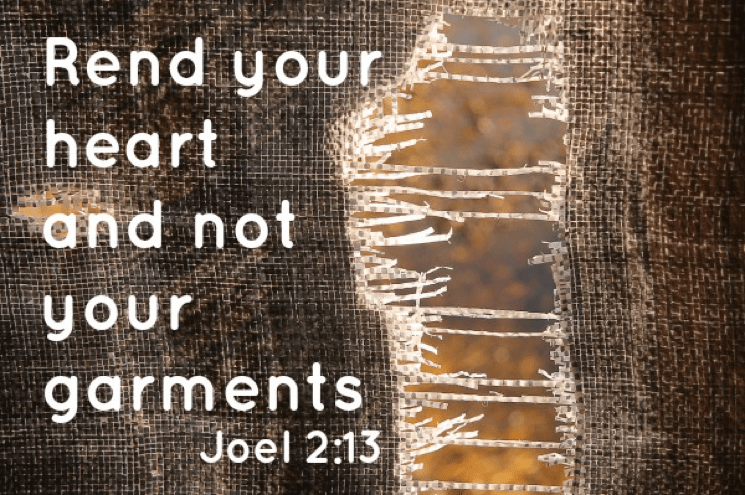
Joel 2:13 says,

Rend your heart
    and not your garments.
Return to the Lord your God,
    for he is gracious and compassionate

Living in a different culture, we miss some of the meaning here.  Have you ever been so angry that you threw something (or wanted to)?  It’s kind of the same idea.  Grief so overwhelming that you pull at your hair, your clothes…you are beside yourself.  In Jewish culture, tearing one’s garments was a common outward sign of tremendous grief.

But here, Joel is calling for more than an outward sign.  He’s telling the people that God wants an inward change more than….

….more than going forward on ‘decision night’

….more than posting a touching quote on Facebook

….more than acting holy around your parents and church friends

Our Father is merciful and kind, but he cannot tolerate sin.  Like most prophets, Joel gives two options:  Repent or Reap the Consequences.

-Susan Landry


And Another Thing…

Hosea 5-9

susan mon

Monday, April 10

Have you ever experienced this?

Your parents are lecturing you about something you’ve done wrong.  Really laying into you.  It seems to go on and on and on.  Finally, they pause and take a breath and you think they’re done.  But instead, they start in again with a new wave of, “And another thing…!”

In chapters 4-6, we see God get riled up.  He’s mad.  He is laying it all out in phrases like:

  • You ignored the law of your God
  • You exchanged glory for disgrace
  • Your deeds do not permit you to return to God
  • You’ve moved boundary stones. (I love this phrase, would be an interesting one to dig into)
  • Your love is like a mist…here one minute, gone the next.
  • God has withdrawn from you.

Yeah, He’s mad.

Then He pauses, takes a breath, and starts the second round, where he lays out the consequences of all of this (9:7-9):

The days of punishment are coming,
    the days of reckoning are at hand.
    Let Israel know this.
Because your sins are so many
    and your hostility so great,
the prophet is considered a fool,
    the inspired person a maniac.
The prophet, along with my God,
    is the watchman over Ephraim,
yet snares await him on all his paths,
    and hostility in the house of his God.
They have sunk deep into corruption,
    as in the days of Gibeah.
God will remember their wickedness
    and punish them for their sins.

Don’t miss these phrases:

  • Punishment is coming.
  • The days of reckoning are at hand.
  • God will remember.
  • Punish them for their sins.

We are so fortunate that, because of Jesus, we don’t have to have our sins remembered by God.  They can be wiped away.  Forgiven here and now.  That doesn’t let us off the hook, though.  Jesus calls us to continued repentance and obedient living.

But what wonderful news that we get to choose if our parental lecture ends with punishment or forgiveness.  When does THAT ever happen?

-Susan Landry


Hey, Listen Up!

II Chronicles 35-36

2-chron-36

Sunday, December 4

Have you ever wondered if God gets frustrated when people don’t listen to Him?  The people of Jerusalem had a great king while Josiah was ruler of Jerusalem but things quickly turned sour after his death.  Under King Josiah the people had experienced the re-instatement of the religious commemoration festivities of Passover.  The celebration was even mostly funded with animal sacrifices given by  Josiah and his officers on behalf of the laypeople.  We are told that such a tremendous Passover had not been celebrated like that in Israel since the days of Samuel the prophet, and that no other Passover celebration was quite like the one that Josiah had with the Priests of God.  But then something tragic happens.  Josiah, who normally would have listened to God, and his messengers decides to not heed God’s warning and goes to war unnecessarily where he is wounded and dies.

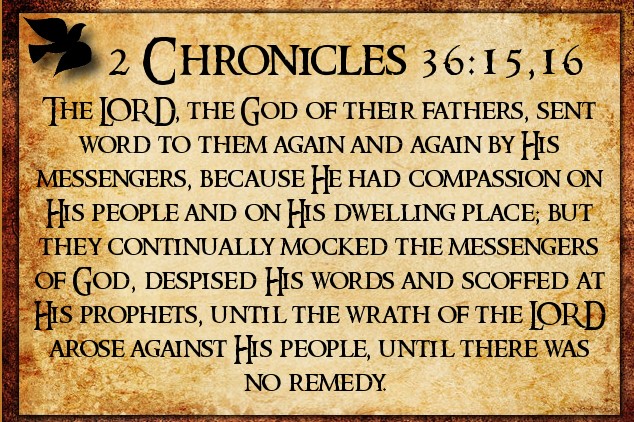
This is where the story of the people of Jerusalem takes a dramatic, terrible turn for the worse.  Under their next two kings who are ungodly men the country goes into a spiritual downward spiral.  The people forget the goodness of God, their devotion to Him and refused to listen to the prophets such as Jeremiah that God would send to warn the people to turn from their wicked ways.   Again, and again they were warned but they continually mocked the messengers of God, thus  raising  the wrath of God until there was no remedy.  The people and their kings did not listen, so God allowed King Nebuchadnezzar of Babylon to overtake their beloved city and carry many of the people off into exile in the land of Babylon.  To make matters worse the Babylonians carried off the sacred vessels and treasures of God’s house to their own land, slew many of the people, burned the house of God, and tore down the protective wall around Jerusalem.  The people stayed exiled in Babylon, and the city of Jerusalem lay in ruins for 70 years before God brought about a change by stirring up within Cyrus King of Persia’s spirit that the people that had been taken captive in the previous conquests should be allowed to go back to their homeland and worship in their beloved city once again.

What caught my eye in this passage is that the people would not listen and mocked the messengers of God and scoffed at the prophets God sent.  Doesn’t that  sound like the society we live in today?

Many of us have friends who are unbelievers, or even friends who claim to be Christians but their life choices and their actions don’t seem to follow God’s standards.  Many of them are doing the same thing today by scoffing at the idea that there is a God who is in control of the Universe or mocking God by not following his standards instead choosing to do whatever makes them feel good.  People often make excuses why they are the exception to God’s rules.  Does God like this?   From what we have read, God doesn’t.   Scripture reminds us that we should not be deceived, God will not be mocked, people reap what they sow.  By sowing disobedience to God, in turn God removed his protection from the people of Jerusalem and allowed them to be overtaken by enemies.

Every action has a consequence, every choice has a consequence.  Choosing not to listen to God, and honor him  has its consequences as well.  The people of Jerusalem found that out the hard way.  If only they had just  listened to  God how differently things might have turned out!     Key thought:  Choose to hear when  God is speaking to you!

-Merry Peterson


A Little About The Writer:

Merry Peterson is an Associate Pastor at Freedom In Christ Church in Welland, Ontario, Canada.  She grew up in Canada and recently moved back there after  pastoring a church in Wenatchee, Washington for 15 years.  She is a graduate of Atlanta Bible College, and Clayton State University.  She enjoys hiking, baking, reading, and often has pet goldfish.  Merry has enjoyed being at FUEL as a camper and as part of the staff. 


Winning the Battle, but Losing the War

2 Chronicles 23-25

2-chron-25

Wednesday, November 30

I am enjoying the trailers for Rogue One, the soon-to-be-released film that chronicles the rise of the rebel alliance, setting the stage for Star Wars movies four through six. The search for the rightful ruler lies behind many such stories.


We see the same throughout Judah’s history. In today’s reading alone, we read of four different regime changes. The first is the best, as God’s priests serve as warriors defending the rightful king and overthrowing the usurping daughter of Ahab.


Stuart (1987) writes that the Chronicler likes to show immediate retribution for sin amongst God’s people, and we see that several times in today’s passage. One really sad event begins with King Amaziah trusting God and winning a battle against great odds, but then returning home to set up the defeated kingdom’s idols for Israel to worship. God’s prophet rightly asks him, “Why have you resorted to a people’s gods who could not deliver their own people from your hand?” (2 Chron. 25:15). Before long, Judah was overthrown by Israel.


Does life work like that today? How quickly do we experience the consequences of bad behavior?Sometimes it happens very quickly, but not always. The Apostle Paul warns us, “The sins of some people are conspicuous and precede them to judgment, while the sins of others follow them there. So also good works are conspicuous; and even when they are not, they cannot remain hidden.” (1 Timothy 5:24-25).


We must remember, however, that our life as Christians is not simply a matter of good things happening when we are good and bad things happening when we are bad. We are called into a life better than anything we read about in the Old Covenant because now we have entered into a wonderful new relationship with God because of what Jesus has done for us. We must not be dominated by the cycle of good and bad behavior that occurs in almost everyone, and instead live in faith that God loves us and enables us to live out our lives through the power of his Holy Spirit that dwells within us.

-Greg Demmitt

Douglas Stuart, Hosea–Jonah, WBC 31; Accordance electronic ed. (Grand Rapids: Zondervan, 1987), 262.