One of the strongest building materials is steel. All the great towers and skyscrapers today are built out of steel. It is a very hard metal and very durable. But it does not start that way. It begins as a piece of iron ore. To transform the iron ore into steel, the iron must be heated to extreme temperatures and exposed to blasts of super hot air to blow out the impurities. When it is quickly cooled, the result is steel – a pure form, durable, and able to stand the test of time. It is only tough and useable because of the intense “heat and violent blasts of air” that transforms it.
The apostle Peter wrote his letters to Christians scattered out across Asia Minor (Turkey today). The Christians there were struggling because of hardship and persecution. Living a life of faith in God was very difficult and dangerous. As the Roman empire continued to persecute the Christians across the empire, the apostles, like Peter, worked hard to encourage the children of God.
Peter reminds us in his letter that we have a “living hope” (1 Peter 1:3-4). No matter what kinds of trouble we experience in life, we can be assured that the hope that we have in Jesus is true and eternal. We know this because Jesus has been raised from the dead, proving that every promise that He made is true. No matter what kinds of sorrow we face in this life, we can be assured of an “inheritance that can never perish, spoil or fade. Kept in heaven for you” (1 Peter 1:3-4). Jesus promised to return to this world to make things right. Then, our promise will be revealed before our very eyes as we enjoy eternity with God the Father and His son Jesus Christ in God’s glorious earthly kingdom.
Despite being persecuted and threatened by the Romans, Peter reminds the Christians that they are to put their faith in God and serve Him. Like the first Christians, God allows us to experience trouble and sorrow because, like heat to iron, He wants to create a tougher, more usable child of God. God desires for each of us to endure troubling times. We are a chosen people (1 Peter 2:9-10). As God’s chosen people, we can be assured that He will use hard times to strengthen us. It is God’s will that we suffer for doing good (1 Peter 3:17). Jesus suffered greatly on the cross. But the result of His suffering has brought us closer to God (3:18). Who knows what incredible things God will bring about because His people are willing to suffer for doing good?
Questions for Discussion:
Are good works the way to earn a blessing? (1 Peter 3:9-12)
Why be gentle and respectful to unbelievers? (1 Peter 3:15)
Everyone likes to get a letter in the mail! Especially around Christmas time. Getting a letter from a friend or loved one might seem old fashioned, but letters have a way of being more personal and intimate. Receiving a letter from a mentor or person you respect is especially important when the letter includes an important message.
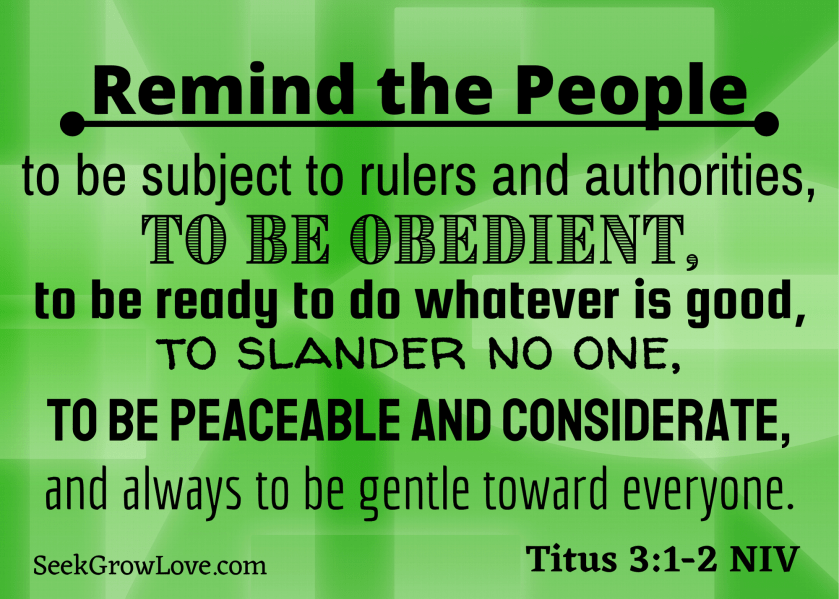
The Book of Titus is a letter written by Paul to his “true son in the common faith” Titus. Titus was an early Christian leader and a close friend of the apostle Paul. He is best known as being the leader of the churches in Crete and Corinth. He was sent by Paul to these churches to help them solve problems. In this letter, he asks Titus to ask the people in the churches to stop arguing with each other over silly things and to focus on doing good things in the name of Jesus.
To help the church at Crete, Paul sent recommendations on how to pick good leaders to look after the church (Titus 1:5-9). Having leaders who are qualified is important in leading a church. Like shepherds of a flock of sheep, the “elders” of the church look after us and protect us from making mistakes that can harm us. Their job is to help us do good works for God.
Paul also reminds us that we should always do good because we are Christians. Paul writes that the grace of God “teaches us to say ‘No’ to ungodliness and worldly passions”. As Christians we should always seek to serve other people and be good to them. Sometimes it is hard to live obediently for God. Paul asks us to be “self-controlled” and live upright and godly lives. It’s not easy, but God wants to help us and to “purify for himself a people that are his very own, eager to do what is good”. (Titus 2:11-15).
It is important to always remember that God has shown His mercy to us not only because He wants us to be good, but so that He could adopt us into His family. Paul hopes that each of us “might become heirs having the hope of eternal life” (Titus 3:7). Living a godly life is how we declare our thankfulness for His great mercy. As we accept God’s gift of grace, it makes us want to do good things for the Kingdom of God.
Questions for Discussion:
In Titus 2:2, what does it mean to be “self-controlled”?
What does Paul mean when he says to “avoid foolish controversies” in Titus 3:9?
I’m not sure when contentment became a dirty word to so many people. We now equate it with a lack of drive or sometimes even laziness. We liken it to “settling.” The definition of contentment is actually a state of happiness or satisfaction. But we live in a world where bigger is better, and newer is better, and we can always achieve more if we just work a little harder for it.
For a little while I went through a faze where I looked on Zillow a lot. I got it into my head that we could potentially get a bigger or nicer house and therefore we should at least look. I just wanted to see what was out there that might be in our potential price range. And then I was looking at things slightly above that, because honestly we could probably make that work too.
You can see where this is going. It’s a slippery slope, and soon you’re borrowing more money than you should and all because you weren’t content with what you have. I deleted the app and fell in love with my home all over again. Contentment is something intentional, and it’s most definitely not settling. It’s looking at your blessings and recognizing them as such. It’s being thankful to your heavenly father for where you are, when you are, who you are, and who you are with.
These last chapters of 1 Timothy are a mix of advice from Paul on how to live, both for Timothy and for the people he’s ministering to. There’s a good deal in there about working hard so that we can take care of ourselves and take care of others. We are also called to not be so focused on money that we are neglecting our true purpose in ministry. Do good, be rich in good deeds, and be generous. Rather than focusing on our wealth and what we have or don’t have, we should be focused on how to serve others with our blessings.
1 Timothy 6:6-7 “But godliness with contentment is great gain. For we brought nothing into the world, and we can take nothing out of it.”
This is the true idea behind contentment. We can be ambitious in our careers and are encouraged to do well financially if that is where we are called. But we have to be wary of what’s actually driving us. If having wealth and status is our motivation, then we will never be in a “state of happiness or satisfaction.” We will never be content.
1 Timothy 6:9 “Those who want to get rich fall into temptation and a trap and into many foolish and harmful desires that plunge people into ruin and destruction.”
But if we are guided by an ambition to serve the Lord, then we can truly practice contentment. Paul describes these people as those who “will lay up treasure for themselves as a firm foundation for the coming age, so that they may take hold of the life that is truly life.” I love how that is phrased. “Life that is truly life.” And living a life that is truly life? Definitely not settling.
Reflection questions:
Where do you find yourselves in a state of discontent? Is it distracting you from God’s purpose for you? We have a lot of areas where discontentment can sprout up like a weed and make our lives more difficult and less full of the peace and joy that God longs for us to experience. Some common ones to watch out for: our physical appearance, financial status, possessions, our home, our relationships, our jobs. Is there a distracting discontentment in your life that is robbing you of peace?
How can you look at that area of your life and find the blessings? What sort of habits can you set for yourself so that you can better practice contentment? How can you take your blessings and offer them as a pleasing sacrifice to God?
Prayer:
My prayer for you is that you recognize God working in your life as it is now, and see the blessings he has given to you. I pray for discernment to see areas where you can grow and where he can further bless you and that your efforts be put there. I pray that you long to reach the goals HE has for you, rather than the goals you have for yourself, and that you live a life that is truly life.
There was a time when I didn’t think very much of Paul. It was as a teenager reading his instructions to Timothy here in Chapter 2. I had faith, though, that God was speaking through this man, and SURELY there was something here that I just wasn’t understanding correctly. It wouldn’t be the first or last time that I had to look at a scripture passage and throw up my hands, admitting that I just didn’t have an answer.
I’ve gone back and forth, looking at explanations and trying to get insight on what exactly was happening at this church. I got the impression that the women there were not behaving the way they should be. Admittedly, some scholars use Chapter 2 as absolute reasoning for why women should not be leaders in the church. Obviously, this doesn’t sit well with me, being a female church leader. Many say that it’s specifically addressing a problem within that church, where women were using wealth, fashion, and beauty to loudly and boldly repeat false teachings that they didn’t fully understand, and it was turning others away. Also, some translations point not to Paul refusing to give women authority over men, but rather specifically not giving them authority over their husbands. I heartily agree here, as that would cause disharmony within a balanced marriage that is seeking to honor Christ.
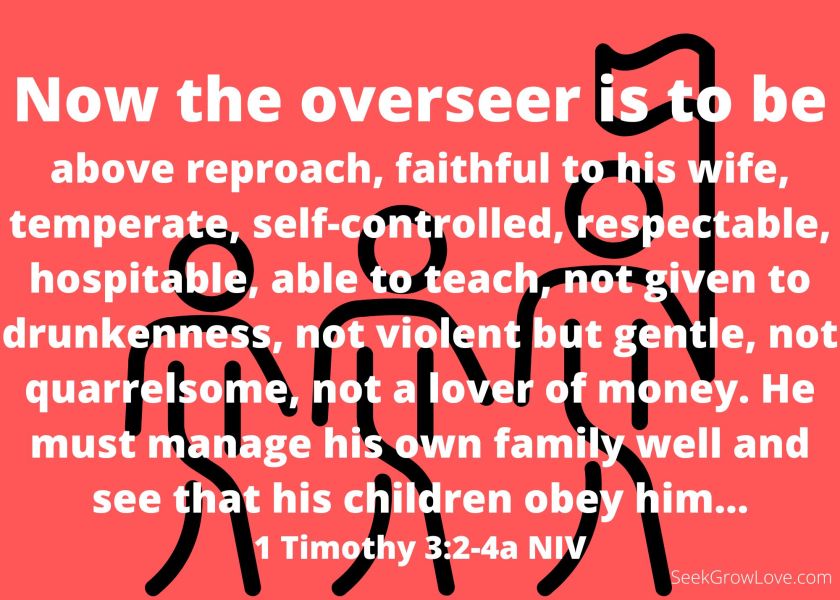
Looking into the whole of scripture, we actually do see female leaders throughout the Old and New Testaments. Those female leaders had wisdom, were full of grace and mercy, and were servant leaders as we are all called to be. They strove toward truth and righteousness, and they were held up for those qualities. We see many of those qualities listed here in the first chapters of Timothy, giving us a wonderful outline of what a good leader looks like.
We are to worship and pray together without anger. We are to focus more on our actions than our appearances. We are to be faithful to our spouses and full of self-control, managing our lives, money, and families in a way that honors God. We are all to be worthy of respect.
That’s a lot to place on an imperfect human being. We hear about scandals with our leaders all the time. They make for sensational news. But this is not what we want to see in anyone, especially in our church leaders who are to be leading others to Christ.
Stepping up as a leader in our church means greater accountability. James 3:1 warns us about this: “Not many of you should become teachers, my fellow believers, because you know that we who teach will be judged more strictly.”
How many people have turned away from Christ because of the actions of those in his church? Too many.
Reflection Questions:
Are you a sort of leader in your church? Even if you don’t have a named role, are there those who would follow your example? Have you ever thought deeply about what kind of responsibility that is? People are looking to you and your example when you proclaim yourself to be a Christ follower. Are you following his example in your words and actions?
Go through Paul’s list of qualifications of a good leader. Where do you hold up to the standard, and where could you use improvement? How could you do better to be a good example for others, someone others would respect and want to follow.
Prayer:
My prayer is that we all take to heart the fact that we are representing Christ when we call ourselves Christians. Pray that God opens your eyes to where you can be a better example to others and that you lead those around you closer to a relationship with him.
Let’s talk about distractions. One of my greatest frustrations and fears while driving is distracted drivers. I feel a bit ridiculous when I say things like, “It didn’t used to be like this,” with the unsaid “back in my day” hanging uncomfortably in the air. But it’s true. I started driving before cell phones, screens in cars, and most other technology that might take my attention from the road. But now I can’t go anywhere without being cut off or having to swerve my car out of the way of someone crossing that center line. I notice it even more now that I’m teaching my daughter to drive. It’s terrifying.
Speaking of teenage daughters, it seems every time I give them a task and come back later to see it is not done, the response is always, “I got distracted.” I’m just as guilty. We all are. We are a distracted society.
I had to read through these two chapters a few times, trying to decide where I wanted to focus this devotion. What was God trying to tell me here? But I saw a common theme that I’ve never noticed before, and it was distractions.
Paul talks first about being too focused on our own past and on ourselves. We get so wrapped up in everything we’ve done and said that we lose sight of the fact that none of that matters. Pride or shame sets in. Paul lists why he had every reason to be proud of who he was and where he came from, but that it all meant nothing. We get distracted by ourselves and are no longer focused on a relationship with the only one who can actually save us. Paul tells us in 3:13, “But one thing I do: Forgetting what is behind and straining toward what is ahead.” Don’t get distracted by the past or yourself but push on toward Christ.
Next, we are distracted by worldly people and their ways. He says in 3:17, “keep your eyes on those who live as we do.” Stop trying to be like those of the world and surround yourselves instead with Christ-like examples. Stop trying to impress those that don’t matter with what you wear, what you do, and what you say. Reserve your attention and your actions for Christ and his message.
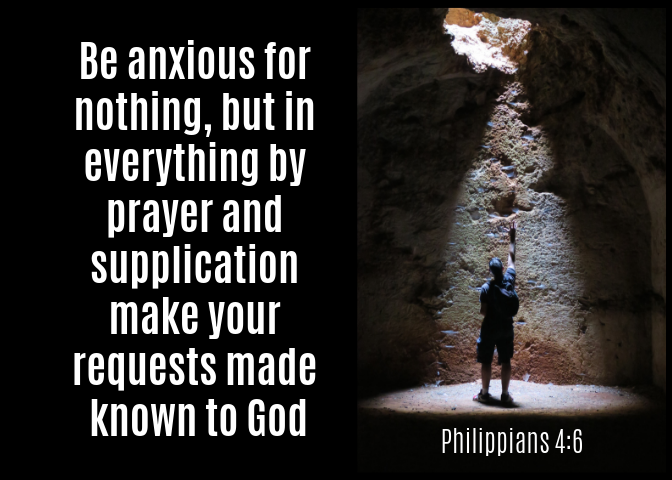
And, finally, my personal favorite distraction – anxiety. Whether you worry about everything, or overthink, or are overly concerned with what others think or do – all distractions. Paul tells us what to focus on instead: “Whatever is true, whatever is noble, whatever is right, whatever is pure, whatever is lovely, whatever is admirable—if anything is excellent or praiseworthy—think about such things.”
Reflection Questions:
What is distracting you from a real relationship with Christ? What attitude within yourself should you change? What habits should you destroy and with what should you replace them?
What are some true, noble, pure, and praiseworthy things you should be focused on and how can you shift your attention toward them more often?
Prayer:
My prayer for you today is that you are able to pick out distractions in your life and burn them away. I pray that you have a closer relationship with Christ and that it outshines everything else. Like Paul said, “…press on to take hold of that for which Christ Jesus took hold of me.” Press on and focus on Jesus.
One of the sins that always frightens me most is the sin of pride. It’s slippery and hard to recognize because one of the symptoms of this particular sin is the inability to see a fault in ourselves. I’ve seen many people who claim humility – they are quick to point out their easily recognized flaws and will readily acknowledge when someone else is better than them at something that they are terrible at. I think of that as easy humility. It’s a quick reassurance to ourselves that we are not guilty of the terrible sin of pride. It makes us feel better about ourselves and our attitudes.
But pride doesn’t have to show up in every aspect of our lives. You can be humble about your skills playing an instrument, while still being enmeshed in pride in some other area. Sometimes pride disguises itself. For example, not seeking counsel because you believe you already have the answers? Pride. Insisting on things being done a certain way because you think it is the RIGHT way, when really it’s just the way you PREFER? Pride.
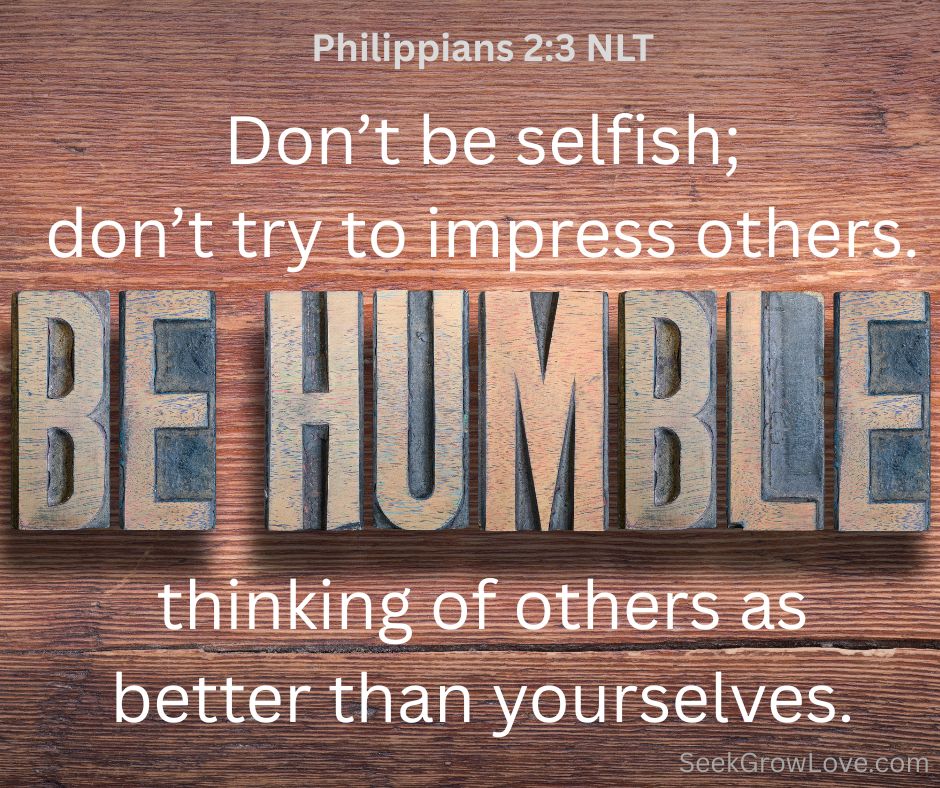
Philippians 2:3-4 says:
Do nothing out of selfish ambition or vain conceit. Rather, in humility value others above yourselves, not looking to your own interests but each of you to the interests of the others.
It’s an easy thing to say. I bet most of us think we already place others before us. We serve others, we give of our time and resources, we pray over their needs. But Paul calls us to do more than this. He says do NOTHING out of selfish ambition or conceit.
We all have agendas. We all have goals. Do every single one of our agendas and goals look out for the interest of others? I know mine don’t always. I struggle with shopping for gifts for others because I keep seeing things I would like to get myself! We are trained by the world to look out for ourselves! We must do what is best for ourselves!
Let’s be clear – God wants you to take care of yourself and do good things for yourself as well. But in this letter Paul is talking to the church as a whole and to the people working within that church. We, as a body of Christ, are to be working together in complete humility, putting others before ourselves. I’ve had to say many times, both to myself and to others, “This isn’t about you.”
Because it’s not. None of this is about you. The types of songs we sing in worship. How we conduct meetings. How the furniture is arranged. How we do prayer requests or announcements. What type of public events we hold. I could go on. None of those things are about you.
We have one mission as a church. We are to live and serve like Christ. We are to go and make disciples, baptize, teach, serve, and love. We are to do Christ’s work, and not once did Jesus ever put his own agenda before God’s agenda. He was the ultimate example of what it looks like to put God’s will before our own.
Reflection Questions:
Where are you guilty of pride? Don’t stop at the easy answers either. Look deep. Do you find yourself getting frustrated over people in church doing things “the wrong way” when really it’s just not the way you would do them? Do you find yourself not asking for counsel in an issue because you think you already have the answer? Do you find yourself not praying over decisions?
What areas of your life would look different if you put others before yourself? What areas of your church would look different if you put others before yourself? (Note that I didn’t ask what areas would look different if OTHERS were more humble or selfless. We are looking just at ourselves, so don’t start down that dangerous path.)
Prayer:
My prayer for you is that our church bodies be united in humility to do Jesus’ work. I pray that we are able to keep the slippery sin of pride far away from us. I pray that others are able to see Jesus Christ in us because we are continually showing them love and putting them first above ourselves.
Relationships are tricky things. They are a blessing to us, and yet they don’t come without thorns. God decided in the very beginning that we weren’t to be alone. We were created to be with others. The final three chapters of Ephesians center around how to be in relationships. From the bond found in church bodies and friendships,to slave/servant and master, to children and parents, to husband and wife, we see a wide array of relationships. And they all start in the same place: unity in Christ.
What a tricky thing to do, being one in spirit and purpose when we aren’t always one in mind. For example, you could look at the political atmosphere in our country. I know Christians who are Democrat, and Christians who are Republican, and a vast array in between or beyond. They are definitely not of one mind, though I like to believe that most are of one spirit: they want our country to be a good, safe place to live. We just all have a different ideas of how that should happen, and we prioritize different ideals, right?
The same goes in every relationship. In churches, I rarely see a lack of peace because someone desperately WANTS to go against Christ and destroy his church. Usually I just see different groups of people with different priorities and different ideas of how things should be done. One in spirit, but not one in mind. This holds true in every relationship. No matter how united we are in our goal, we will find differences that lead to conflict.
So how do we handle relationships when we differ in mind? Paul gives us a lot of advice here, so I’ll list some highlights:
1. Be humble, gentle, and patient in love. Show humility by admitting that maybe your way doesn’t have to be THE way. And of course be gentle and patient when you are disagreeing.
2. Seek God in determining your place in the body of Christ, as well as in your relationships. Many times our conflicts occur because we have stepped away from where God wants us.
3. Deal with your anger in a Godly way. Don’t let it take root and stew in your bitterness. Evaluate what you’re actually angry about. Is it righteous anger? Is this anger God would have in the same situation, or is this YOUR anger – anger that things aren’t going the way YOU want them to. If it’s Godly anger, then you need to speak up in truth. If it’s your anger, then you need to stop letting it get in the way of the work God wants to do in you and through you.
4. No unwholesome talk. This means you DON’T put others down. You don’t gossip, and you don’t say hurtful things about those who are one with you in the body of Christ. You don’t put down your children, you don’t put down your spouse, you don’t put down your friends, and you don’t put down your church body. You can’t be unified in mind and purpose if your speech is keeping you apart.
5. Ephesians 4:32 – Be kind and compassionate to one another, forgiving each other, just as in Christ God forgave you. That verse is so important to good relationships that I put it to song and had my children memorize it when they were small. God forgave you for all your stupid, stupid mistakes, sins and words. So forgive others for theirs.
6. Do not wait for others to follow Paul’s advice here. It starts with you. Paul didn’t say this, but we see it in every example of a good disciple. You can’t control others’ actions and emotions. But you can control yours. And good disciples take the first steps and live as an example to others.
Paul goes on in the rest of Ephesians with more good advice, specifically pertaining to certain relationships. But these foundations he lays out in chapter four pave the way. You are called to be united in Christ. So it’s time for a relationship inventory.
Reflection Questions:
First, are you united in spirit in this relationship? (As in, do you have the same goal, and is that goal Godly?) If you aren’t, then maybe it’s time to place some safety distance in that relationship so that it doesn’t affect the work God would like to do in your life. If you ARE united in spirit, you can move on to further analysis.
If you’re united in Spirit, are you currently not united in mind about an issue?
Are there negative feelings attached to that issue? Are you angry, bitter, hurt, jealous, anxious, or something similar? You need to find out the root cause. Do those feelings stem from something that is ungodly, or do they come from a more personal place? If you look at it hard enough, is this really just a difference of opinion, or is this an issue of righteousness? Most of the time, it’s a difference of opinion. If that’s the case, it’s time to start looking at Paul’s suggestions there in chapter 4. Most of all, show love. Rather than saying, “I’m angry at this person because of….” start actively saying, “I love this person because…” and you will see a radical shift in your relationships with others. Even if you have to start small with, “I love this person because God told me to.” Doing what God asks is a wonderful place to start.
Prayer Thoughts:
My prayer for you today is that you read through these passages and really try to apply them to your relationships. I pray that you are able to recognize a difference of opinion for what it is – a difference in how your beautiful brains think, not a reason to be angry and distrustful. I pray that you find unity in spirit and unity in mind in your relationships. I pray that when you don’t find that unity, you step up and be a good disciple by making the first move toward togetherness. I pray that you love and forgive others as Christ forgave you.
I will be the first to admit that I struggle to let go of hurt. I don’t like to hold grudges. Having bad feelings towards others eats away at me. It gives me an upset stomach. And yet, I still fixate on those feelings and my relationships with those that hurt me never seem to be the same. I cling to that hurt, and that hurt divides us.
Hurt and grudges don’t seem to have much to do with our passages today, I know. But it’s where my heart went. What stood out to me the most in these scriptures was the idea of division. I don’t know many Jewish people and so I don’t think I can fully appreciate what it meant to be united in grace and salvation with a group of people who were so radically separate from me. But there are others who ARE radically separate from me. We are separated by pain and broken relationships.
Read Chapter 2:14-18:
For he himself is our peace, who has made the two groups one and has destroyed the barrier, the dividing wall of hostility,by setting aside in his flesh the law with its commands and regulations. His purpose was to create in himself one new humanity out of the two, thus making peace,and in one body to reconcile both of them to God through the cross, by which he put to death their hostility.He came and preached peace to you who were far away and peace to those who were near. For through him we both have access to the Father by one Spirit.
Have you ever felt yourself so divided from another person or another group of people that you felt there was no fixing that gap? I have. But the divide wasn’t a matter of nationality or to what group of people I belong. The divide was pain, hurt, betrayal, pride, and heartache.
I don’t know what your divide is, but I’m willing to bet that most of you have felt separated from others like I have. It’s painful, and it doesn’t feel like it could ever be mended.
And yet, Jesus Christ destroyed the division. You are a sinner and you have done wrong and yet he died for you. The ones who hurt you? They are sinners and they have done wrong. And he died for them too.
“He came and preached peace to you who were far away and peace to those who were near.” We all got the same message. We all got the same forgiveness. We all got the same grace. Yes, they hurt you. And you’ve probably hurt someone else.
Verses 21-22 continue:
In him the whole building is joined together and rises to become a holy temple in the Lord. And in him you too are being built together to become a dwelling in which God lives by his Spirit.
In Jesus Christ, we are joined together with those on the other side of that wide divide of hurt. We are to rise as his holy temple. We are to be united as his church. The divide that was too wide for us to cross on our own has been made small by the grace freely offered to all of us sinners. The divide may be hurt or betrayal or a sin done against one side or another. But the people on each side of that divide are equally guilty of sin. And they are equally forgiven.
Reflection Questions:
From whom are you divided? Really examine your heart. Do you want to be a united family of God? Do you want to be the temple God wants you to be, or would you rather hang on to your hurt?
What sins of yours did Christ die for? What sins against you did Christ die for? If Christ died for those sins, and they have been paid for and are no longer yours or theirs, why are you still holding on to them?
Prayer:
My prayer for you today is that you find healing. Pray that God softens your heart and fills it with love for him that is so great, there is no room for hurt and division. Pray that you recognize God’s children as your own family, and that you be united in Christ. Pray for peace to settle on you all.
I’m amazed at how the book of Philemon came to be included in the Bible. I mean, this is a personal letter from one man to another. It wasn’t addressed to a group. And it was giving a simple, short message. It was just a note, really. But sometimes short and to the point is what we need, especially when the message is as radical as what Paul says to Philemon.
In this short letter, we see people in three positions in which every one of us has probably found ourselves.
We have Paul, who shows us how to encourage others towards love and forgiveness. He encourages Philemon not only to forgive Onesimus, but to accept him as a brother. And Paul does this with such love and gentleness. Paul reminds Philemon of their bond and implores him to show love to Onesimus and treat him as he would treat Paul. And he says that whatever debt that Philemon still feels Onesimus owes, should be considered Paul’s debt instead. Paul is showing us how to be Jesus to others.
Then we have Philemon, the wronged party. We’ve all been hurt by someone before and we see here how we should handle it – with love, grace, and forgiveness, just as Christ showed us. And Paul knows that’s hard. When you’ve been wronged and hurt, it’s hard to let that go. But here Paul asks us to not only forgive, but to also love the one who hurt us, just as Christ loves us.
Finally we have the one I think we can relate to the most: Onesimus. Onesimus has run from the one he wronged, and Paul knows that it isn’t enough to ask for forgiveness from afar. He sends Onesimus back to Philemon to do the hard thing. He sends him back to reconcile. Making things right is uncomfortable and even painful. But Paul knows that it must be done for true healing. We have all been Onesimus. We have all needed forgiveness.
And what these three thankfully have in common is that they are all saved by Christ and they are no longer what they once were. Their relationship is new. They aren’t slave and master or teacher and student. They are equal brothers in Christ.
Reflection questions:
When have you been Philemon lately? Is there anyone you’re struggling to forgive?
When have you been Onesimus? With whom should you be reconciling?
How can you remind others of Christ through your speech and your example, just as Paul does here?
Prayer:
I pray that you don’t let awkwardness or hurt or unforgiveness stand in the way of your relationships with other believers. I pray we are united in an effort to spread the gospel message to the world by showing others the power of love and forgiveness.
Wow – today we have the whole book of Colossians to read and digest. After Ephesians Colossians is the next doctrinal and correction teaching which we have in our Bibles. The message of the kingdom is proclaimed all through the Old Testament and the blessing to the Gentile nations is included in that message. However, the fulness of the teaching of the mystery of the church of the body of Christ is hinted at in Romans 16:25, talked about in 1 Corinthians 2 and especially in 15:50-58, explained at length in Ephesians 3, and now the glory of the mystery proclaimed in Colossians 1:26-27. What is this mystery and why is it so important to the church that Paul would put so much emphasis on it?
The book of Colossians is one of the ones written by Paul while in prison at Rome. It follows Ephesians in the pattern where the first half of the book is doctrinal teaching and the second half of the book is a practical section correcting and teaching us how to live out this amazing Christ in us. Read these 4 short chapters with this main distinction in mind.
Colossians 1:15-18(NKJV) He is the image of the invisible God, the firstborn over all creation. 16 For by Him all things were created that are in heaven and that are on earth, visible and invisible, whether thrones or dominions or principalities or powers. All things were created through Him and for Him. 17 And He is before all things, and in Him all things consist. 18 And He is the head of the body, the church, who is the beginning, the firstborn from the dead, that in all things He may have the preeminence.
The meaning of the mystery is that it is the sacred secret of God’s purpose which has been revealed to those that have the ears to hear and eyes to see. Christ died for our sin and to give us a newness of life which we now can receive. This brings us as children into the family of God, members of His own household. The body of Christ is a spiritually bonded people who all have the DNA of holy spirit to bring us together. Whether Jew or Gentile, slave or free, male or female we all become one in Christ. All tribalism is swallowed up by the coming of the one body of Christ with him as the head. It is Christ in each one of us which then unites us together. Amazing what God has done for us!!
The message of the kingdom changes on the day of Pentecost when the new covenant is instituted with believers in Christ. The time period between the passion of Christ and his glorious kingdom on earth was not revealed in the OT Bible. That is why the apostles ask him before Jesus ascends whether the kingdom is going to be restored that day. Jesus answers them that the timing of all these events are in the Father’s hands. The mystery revealed by Paul and Peter later on is that the time of the church of the body of Christ is now and is alive in Christ.
Colossians 1:24-28 I(NKJV) now rejoice in my sufferings for you, and fill up in my flesh what is lacking in the afflictions of Christ, for the sake of His body, which is the church, 25 of which I became a minister according to the stewardship from God which was given to me for you, to fulfill the word of God, 26 the mystery which has been hidden from ages and from generations, but now has been revealed to His saints. 27 To them God willed to make known what are the riches of the glory of this mystery among the Gentiles: which is Christ in you, the hope of glory. 28 Him we preach, warning every man and teaching every man in all wisdom, that we may present every man perfect in Christ Jesus.
Ephesians 3:6-7(NLT) And this is God’s plan: Both Gentiles and Jews who believe the Good News share equally in the riches inherited by God’s children. Both are part of the same body, and both enjoy the promise of blessings because they belong to Christ Jesus. 7 By God’s grace and mighty power, I have been given the privilege of serving him by spreading this Good News.
How does the mystery revealed intersect with our preaching and teaching of the kingdom message?
Colossians 2:6-10(NLT) And now, just as you accepted Christ Jesus as your Lord, you must continue to follow him. 7 Let your roots grow down into him, and let your lives be built on him. Then your faith will grow strong in the truth you were taught, and you will overflow with thankfulness. 8 Don’t let anyone capture you with empty philosophies and high-sounding nonsense that come from human thinking and from the spiritual powers of this world, rather than from Christ. 9 For in Christ lives all the fullness of God in a human body. 10 So you also are complete through your union with Christ, who is the head over every ruler and authority.
Chapters 3 and 4 are the practical application teaching us about the doctrine taught in chapters 1-2.
How do the message themes compare between chapters 1-2 to chapters 3-4?
Colossians 3:12-15(NLT) Since God chose you to be the holy people he loves, you must clothe yourselves with tenderhearted mercy, kindness, humility, gentleness, and patience. 13 Make allowance for each other’s faults and forgive anyone who offends you. Remember, the Lord forgave you, so you must forgive others. 14 Above all, clothe yourselves with love, which binds us all together in perfect harmony. 15 And let the peace that comes from Christ rule in your hearts. For as members of one body you are called to live in peace. And always be thankful.
What is our motivation for doing the good works God calls us to do?
Colossians 4:2-6(NLT) Devote yourselves to prayer with an alert mind and a thankful heart. 3 Pray for us, too, that God will give us many opportunities to speak about his mysterious plan concerning Christ. That is why I am here in chains. 4 Pray that I will proclaim this message as clearly as I should. 5 Live wisely among those who are not believers, and make the most of every opportunity. 6 Let your conversation be gracious and attractive so that you will have the right response for everyone.
How do we develop our willingness and ability to give a Godly answer to every person we talk to about Christ?
I pray for you as did Paul centuries ago that you will live out this wonderful mystery of Christ as part of the body of Christ, his church. Remember who you are this day!