Ok quizzers and especially National Quizzing Director, Jacob Ballard, hear me out! Numbers 7 should be part of the quizzing materials next year! I mean, while it is the longest chapter in Numbers, you really would only need to memorize 5 verses!
Numbers 7 is very repetitive because all 12 tribes of Israel come to present their gifts to the Tabernacle, and they all give almost exactly the same thing (apparently there was no Tabernacle gift registry 😉). But that was actually on purpose as God wanted all of the people to praise and participate in the rights and responsibilities equally. He wanted every tribe to be fully devoted to Him no matter the size of the tribe. That is a reminder to us that even if we are all of different socio-economic statuses, we all bring the same thing to God, our hearts and our devotion.
Numbers 8 describes how God set the descendants of Levi apart as royal priests. Whenever I have read about the jobs of the Levites, I’ve been glad that was not my calling. These guys were not standing around praying all day. They were working hard as they had to do a LOT of butchering. Like. All. Day. Long! My husband used to work in the meat department at our local grocery store. It is a lot of bloody, messy work. Ugh… and don’t get me started on cleaning all the tools! But these priests understood the importance of their jobs, helping God’s people atone for their sins through the sacrifice of the animals they raised. And it wasn’t a one-time thing for each person; it was continual for all of each person’s life. This reminds me of how thankful I am that we don’t have to do that anymore because of what Christ did for us (Hebrews 10). Besides eternal salvation, we also don’t have to spend a great deal of our time butchering animals and barbequing them!
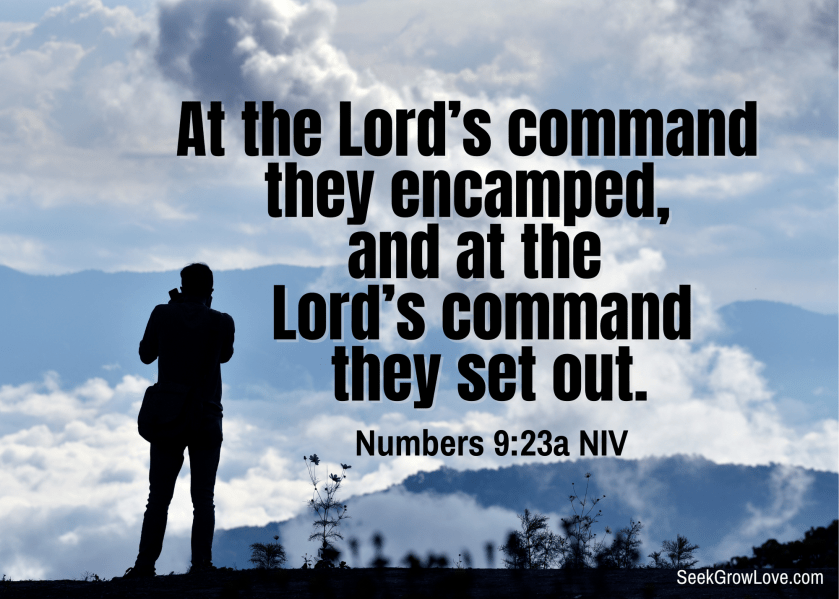
Numbers 9 discusses God’s decrees on celebrating the Passover and then their “moving” protocol. Growing up in the Air Force, I think I can understand never knowing how long you would be in any given spot. Sometimes God would have the Israelites stay for a few days, sometimes for a few years. I don’t know if this is the reason, but I suspect God did not want them to become too comfortable where they were and wanted them to remember their current position was not their home. We too would be wise to remember that where we are now is not our permanent home and we should not become too comfortable within the world.
-Maria Knowlton
Reflection Questions
Have you ever moved at God’s command – or stayed put at His command?
How do we tell today when and where He wants us to go – or stay?
What are you learning about God in Numbers so far?
Chapter 20 of Leviticus is perhaps the most difficult passage in the entire Bible for modern readers in the United States. In this chapter, the practice of homosexuality is condemned as strongly as cheating on a spouse, beastiality, and incest: the practice is condemned so harshly that it is punishable by death within Israel. While we generally still disapprove of the other inappropriate sexual unions listed in this chapter, homosexuality has taken a major swing in the opposite direction, being viewed as completely okay for people to pursue, even within the Church: in fact, the majority of Christians in the United States now view this once-condemned practice as totally acceptable for anyone, even Christians. For example, as recently as 2024, the Methodist Church voted to reverse its anti-LGBTQ+ positions, creating a major division within the denominations: they now allow for even their religious leaders to be openly practicing these once-condemned practices from the Bible.
So what is a Christian to do today? We have clear and strong prohibitions in Leviticus to avoid homosexuality and other inappropriate sexual practices, and yet, Christians today are completely divided on whether to be accepting of these practices or not. As people who believe that God gave us the Bible, and who take its commands seriously, how are we supposed to understand such difficult texts in 2025?
We come back to the discussion on “holiness”: God desired that His people would live differently than those around them. He says of His people:
“I am the LORD your God, who has separated you from the peoples.” – Leviticus 20:24
“Thus you are to be holy to Me, for I the LORD am holy; and I have set you apart from the peoples to be Mine.” – Leviticus 20:26
It is absolutely true that homosexuality has been a practice throughout the world for as long as humans existed: people were practicing it in the land of Canaan when this book was written (Leviticus 20:23), people were practicing it in the Roman world when Jesus and the apostle Paul were preaching, and people are practicing it around the world now. It has been and will likely continue to be a practice throughout the world until Jesus returns. However, does that mean Christians are allowed to participate in such things? Does the New Testament have anything to say about it, since we are under a new covenant than the Israelites?
The command for God’s people (Christians) is still to remain holy and not conform to the standards of the world: we are expected to live, speak, and act differently than those around us, just like the Israelites were commanded to do. Although some of the specifics are different, like the food laws, the standards on morals and sexuality still remain under the new covenant.
“Do you not know that the unrighteous will not inherit the kingdom of God? Do not be deceived; neither fornicators, nor idolaters, nor adulterers, nor effeminate, nor homosexuals, nor thieves, nor the covetous, nor drunkards, nor revilers, nor swindlers, will inherit the kingdom of God.” – 1 Corinthians 6:9-10 NASB1995
“… the law is not made for a righteous person, but for those who are lawless and rebellious, for the ungodly and sinners, for the unholy and profane, for those who kill their fathers or mothers, for murderers and immoral men and homosexuals and kidnappers and liars and perjurers, and whatever else is contrary to sound teaching.” – 1 Timothy 1:9-10 NASB1995
As someone who has friends and family members who are actively involved in homosexual lifestyles, it is extremely difficult for myself to read these passages because I love all of them: I want them to be in Paradise with me when Jesus returns. However, our deep desire for our loved ones to be saved in God’s Kingdom doesn’t change the standards that He has set forth for being accepted into that Kingdom, and we cannot choose to disobey those standards because we don’t want to agree in our hearts. God makes the rules, not us, and we are called to simply listen and obey His instructions: as God’s people, we are expected to live “holy” and different lives than the world around us. We cannot compromise on what’s clearly been commanded, even if it’s difficult in our world today to go against the new standards being taught to us by the world.
“Therefore, I urge you, brethren, by the mercies of God, to present your bodies a living and holy sacrifice, acceptable to God, which is your spiritual service of worship. And do not be conformed to this world, but be transformed by the renewing of your mind, so that you may prove what the will of God is, that which is good and acceptable and perfect.” – Romans 12:1-2 NASB1995
“Do not love the world nor the things in the world. If anyone loves the world, the love of the Father is not in him. For all that is in the world, the lust of the flesh and the lust of the eyes and the boastful pride of life, is not from the Father, but is from the world. The world is passing away, and also its lusts; but the one who does the will of God lives forever.” – 1 John 2:15-17 NASB1995
-Talon Paul
Reflection Questions
What rules did you have growing up that you didn’t appreciate or always agree with? Did you only have to obey the rules that you would have written yourself?
What characteristics of God make Him the best rule maker? What might He have been thinking when He created male and female and called them “very good”?
What does God want His people to be separate from today? Why be holy? Who/what wins when Christians follow the ways of the world instead of God’s way? Who loses?
How do you think God wants us to respond today to a world (and sometimes a church) that accepts and celebrates what God says is an abomination?
If you ask anyone about what Jesus taught his followers to do, there is usually a wide variety of responses: however, most of the answers you will receive will focus on his command to “love your neighbor”. Indeed, this was considered the second greatest commandment by Jesus:
“The greatest commandment is, ‘Hear, O Israel! The Lord our God is one Lord; and you shall love the Lord your God with all your heart, and with all your soul, and with all your mind, and with all your strength.’ The second is this, ‘You shall love your neighbor as yourself.’ There is no other commandment greater than these.” – Mark 12:29-31 NASB1995
However, most people today would be shocked to learn where Jesus got this second greatest commandment from: the book of Leviticus!! In Leviticus 19:18, we find out that God has always desired His people to love their neighbor as themselves, even in a book that most modern readers want to throw away because it doesn’t seem “relevant” anymore. While we don’t have animal sacrifices and aren’t bound to certain ritualistic laws found in this book any longer, it is still a relevant book for Christian living: in the book of Leviticus, we not only find the second greatest commandment (according to Jesus), but also what loving our neighbor as ourselves looks like. How are we supposed to “love our neighbor as ourselves”?
Beginning in chapter 17, we begin a new section within Leviticus, oftentimes called the Holiness Code: in this new section, God stops directing instructions to the priests and begins addressing the people of Israel directly. In this Holiness Code are very relevant and practical ways that we can “love our neighbor as ourselves”. Among the descriptions in chapters 18 and 19 are:
Not pursuing improper sexual unions (still relevant today)
Not sacrificing your children to other false gods (still relevant today)
Showing reverence for your parents (still relevant today)
Leaving some of your wealth for the poor and needy (still relevant today)
Not stealing or lying (still relevant today)
Not withholding pay from someone you hired (still relevant today)
Having fair judgment in court (still relevant today)
Not hating or bearing a grudge against your neighbor (still relevant today)
As we can see, most of the Holiness Code is still proper for us to practice under the New Covenant (if not all of it), as we seek to love our neighbors as ourselves. There is one more part to loving our neighbor that we need to focus on and re-learn in our society today, but may be difficult to hear.
“… you may surely correct your neighbor, but shall not incur sin because of him.” – Leviticus 19:17b NASB1995
When I’ve made some bad decisions in my life, there have been people who have called me out on it and tried to correct my actions: in the moment, I didn’t enjoy it at all and felt “attacked”, but I learned quickly that they were only concerned, loved me deeply, and wanted me to do better. True love for our neighbor doesn’t turn a blind eye to their sins or allow them to continue down a dangerous road because we don’t want to “hurt their feelings”: true love is difficult, because it is hard to warn someone when they are doing the wrong things that could hurt them or others. Jesus knew this and commanded us to do the same thing.
“If your brother sins, rebuke him; and if he repents, forgive him.” – Luke 17:3
In our current world where we are very sensitive towards the emotional needs of our friends and family (which is good), we cannot ignore the clear commands from Scripture to step into their lives and help them see their need for change. If you want to truly love your neighbor as yourself and fulfill the second greatest command in Scripture, you MUST call your loved ones out when the moment calls for it: it is super uncomfortable and can feel damaging at first when they inevitably get upset, but could be the most life-changing and loving thing you ever did for them. Nobody has everything figured out perfectly until Jesus comes back, and if we are Christians, we will want to live the best we can until that Day comes: however, sometimes that comes with the pain of admitting we were wrong.
If someone you love is making choices that are damaging to their life (and spiritual life), don’t be afraid to say something: it is the most loving and difficult thing you can do for them.
-Talon Paul
Reflection Questions
Suppose we do a really good job of loving God – why would He care if we also love others or not? Have you ever met anyone who did a really good job of loving God but wasn’t very loving toward others?
Who has been there to love you by correcting you? Looking back, is there any time in your life when you wish someone would’ve shown love to you by correcting you – even if you might not have appreciated it at the time?
Are you aware of any current situations where God might want you to love your neighbor by lovingly correcting – speaking the truth in love? What might that look like? Is it a job you have been trying to avoid? What happens if we don’t do it? There is a lot of sin in the world. Does God want us to spend all of our time correcting? How do I decide when it is the loving thing to correct?
Leviticus is usually the most difficult book for people to read through, specifically because so many of the rituals from the ancient time of the Israelites don’t apply anymore. Many Christians when they come to this book in their Bible reading plans enter “skimming mode”, and brush over most of the content. However, we may be surprised at just how important this book really is when it comes to experiencing the presence of God. In order to understand how significant Leviticus really is, we need to look at the end of Exodus to grasp the story.
“Then the cloud covered the tent of meeting, and the glory of the LORD filled the tabernacle. Moses was not able to enter the tent of meeting because the cloud had settled on it, and the glory of the LORD filled the tabernacle.” – Exodus 40:34-35 NASB1995
The story up to this point has been God desiring to be with His people, but when His glory finally does come to earth in the tabernacle, even Moses isn’t able to experience it fully… Leviticus is the answer to the problem. Through the rituals and the laws that Leviticus spells out for the Israelites, they are able to fully experience God’s presence. What is really cool about this book is that it worked: when we come to the following book of Numbers, Moses is finally able to enter into the tabernacle and see God’s glory.
“Then the LORD spoke to Moses in the wilderness of Sinai, in the tent of meeting, on the first of the second month…” – Numbers 1:1 NASB1995
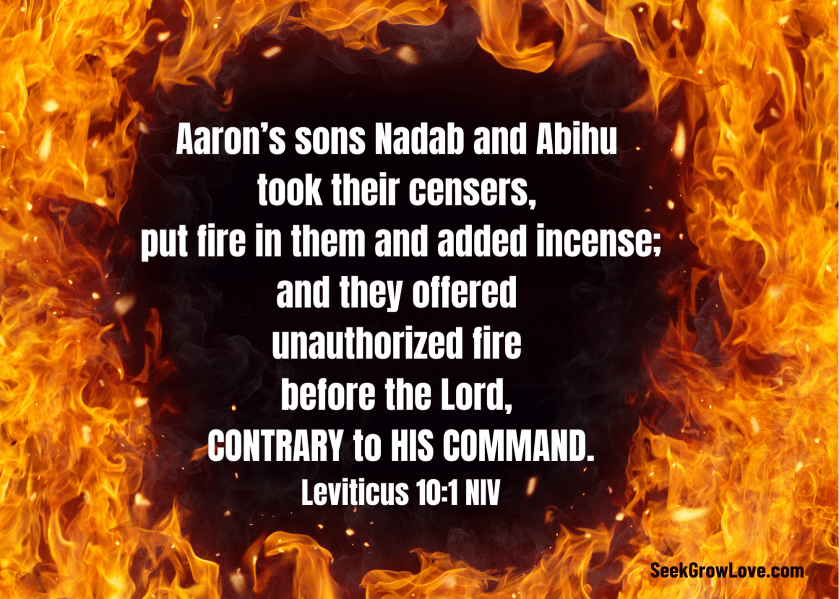
Moving forward, I hope that you will have a renewed appreciation for this often misunderstood and skipped-over book, especially as we discuss our chapters today. Through the first seven chapters, God has been telling Moses and his brother Aaron about all the very specific details they need to follow in order to bring forgiveness of sins into the Israelites’ lives. When we come to chapter eight today, they begin to put these instructions into practice: however, not everyone follows the clear instructions from God and suffers for it. Aaron’s sons, Nadab and Abihu, didn’t follow the proper procedure for worshiping before God, choosing to offer “strange fire” (10:1) onto the altar. Because they didn’t follow God’s instructions, they were struck dead and stand as an example for everyone that will worship afterwards.
We learn that God takes worship SERIOUSLY: to “worship” Him in an unworthy manner will not be tolerated. He told Moses and Aaron, “By those who come near Me I will be treated as holy, and before all the people I will be honored.” (10:3) He is a good God and Father who tells us exactly what we need to do, but will punish those who choose to “try it their own way”, especially those in positions of religious authority. No matter what, when we come to worship before our God and before our Savior, Jesus, we need to treat it as a serious matter, and seek to bring them total glory. True worship goes far beyond what type of music is played (hymns or contemporary), what order of service our church has “always used”, and beyond how we “feel” after the service: true worship is about God and Jesus being honored and exalted. If you don’t have that as your primary focus, nothing else matters.
-Talon Paul
Reflection Questions
Give some examples of how the world “tries it their own way” instead of following God’s instructions. When have you “tried it your own way” instead of following God’s instructions?
We aren’t told what Nadab and Abihu might have been thinking as they were experimenting with their ‘strange fire’. Whar are some possibilities?
Instant death is not always the consequence for acting contrary to God’s commands. What are some other consequences you have seen or experienced for acting contrary to God’s instructions?
Why do you think God places such great importance on worship, and worship done right? How do we come into His presence today?
Confession – yesterday we talked about Christ’s sacrifice replacing the Old Testament offerings. In those sacrifices, it was just that, a sacrifice – the people had to give something that they could have enjoyed because of their sin.
Even though there was a loss, the people had no clear way to alleviate the weight of guilt and find forgiveness in their lives. God has provided another way to help with that – Confession.
Confession is something that is hard to do. Many lie, deny and push blame on others just to avoid confessing. It is something that God asks of us not for his benefit but for ours. I remember being told often as a kid the only way to fix a problem is to realize there is one. And that is what confession is.
Further, confession gives a proper view on sin, God and ourselves.
The punishment for sin is death – we need a proper view of sin. I have often heard of people talk about their sin as “Not that big of a deal.” Sin is just that, SIN. If it is wrong, we shouldn’t do it. Sin that is not confessed and not repented of leads to missing out on the Kingdom.
God cannot be in the presence of sin – we need a proper view of God. Our God is a holy God. He expects purity not just in our actions but also in our hearts. (Matt. 5:8 says the pure heart will see God.)
We cannot do it on our own – we need a proper view of ourselves. We often try to fix our problems on our own. Sin is not something we can fix on our own or earn enough to repay the debt. We need a savior and Christ is willing to step in on our behalf.
A couple tips on confession:
Confess immediately – when you know you have done something wrong do not push it off. It is easy to push it off.
Confess specifically – I hear a lot of prayer that vaguely ask for all sins to be forgiven. Make it personal and specific.
Confess honestly – Take it serious and do not make promises you know you will not keep.
Confess to someone else – this is something I push in the church. For some reason people are afraid of letting others know about their sin. Most will acknowledge they are a sinner but would never discuss their struggles for fear of other’s judgement. Find someone you trust and create an open discussion and ask for accountability.
John Wincapaw
(Originally posted February 14, 2020)
Reflection Questions
What are you guilty of? What have you tried (lie, deny, blame, etc…) to avoid correctly addressing the problem?
How does not confessing hurt you? What are the benefits of confession?
What has God been waiting to hear from you? Talk to Him today.
Do you have an accountability partner? If not, who do you know who would make a good accountability partner?
At the end of Exodus, after the Tabernacle has been finally built, God’s glory comes to rest in it, but Moses is unable to enter (Exodus 40:35). However, at the beginning of the next book, Numbers, Moses is speaking with God in the Tabernacle (Numbers 1:1). This middle book, Leviticus, is the explanation about what is necessary to come into God’s presence and enjoy His fellowship. Since God is so holy and separate from us, there are things that we are expected to do in order to come into His presence. Thankfully, out of His love, mercy, and desire to be with us, God provided a way for us to come before Him, both for the Israelites back then and for Christians today.
Immediately in Leviticus 1 and 2, we find descriptions of different animal sacrifices and what is necessary to perform certain rituals in God’s presence. Since we don’t have a Tabernacle or Temple to worship in, and we don’t perform animal sacrifices anymore, how is this really relevant for us?
In Leviticus 1:4, we are told that these animals are dying in the place of the person who is offering it to God. The truth of these sacrifices is simple: sin is serious and deserves death. Whenever you do something that is contrary to God’s laws, both minor and major, it is offensive to the One who gave you life in the first place, and we deserve death for it. The mantra of our age that “everyone is naturally good in their own way” is simply not true; we are all broken, sinful, and corrupt human beings in need of God’s saving grace. For the Israelites back then, the answer to the problem was an animal sacrifice to cover their offense against God; for us today, it is the one sacrifice of Jesus Christ that is sufficient.
The New Testament continues the teaching that sin is serious, offensive to God, and deserves death: “For the wages of sin is death…” (Romans 6:23a) We cannot forget the seriousness of our situation, because when we do, we lose the power of the gospel. The good news for us is that we don’t have to die for the things that we did; Jesus died in our place, like the animal sacrifices in Leviticus. “… but the free gift of God is eternal life through Christ Jesus our Lord.” (Romans 6:23b) The sacrifice of Jesus was sufficient to cover over every sin that we have ever committed or will commit (Hebrews 10:10). We need to thank God for providing a way out of our sinfulness, both in Leviticus and today through Jesus Christ. Through this sacrifice, we can enter the presence of God and enjoy fellowship with our heavenly Father (Hebrews 4:16).
-Talon Paul
(Originally posted February 15, 2021 for SeekGrowLove)
Reflection Questions
What were the duties or responsibilities of the Israelites to come before God to be forgiven? What are the duties or responsibilities of the Christians to come before God to be forgiven?
How many times do you find the phrase ‘without defect’ or blemish? Why was that important to God for the Israelites? How does that apply to Jesus as sacrifice?
As Christians we can bring (living) offerings and sacrifices to God, not to earn salvation and forgiveness, but to thank God and show we live for Him and He has first place. What would you like to offer/sacrifice to God and how can you do it?
This week my husband is attending a four day technology conference where attendees are being introduced to the absolute newest innovations in the world of technology. They get to hear keynote speakers who are the experts in their field. He is loving exploring all the new and improved gadgets and gizmos. He also made sure he left a little extra wiggle room in his suitcase to bring home some conference souvenirs from the show floor exhibits.
As we’ve been reading in Exodus these last few days, it struck me that Moses was experiencing a somewhat similar event. With a few important differences of course. Moses’ conference wasn’t 4 days but 40. His wasn’t in Spain or Florida, but on Mount Sinai. His conference souvenir was much more impressive (and heavy) than anything Jason has come home with. And, the topic of Moses’ conference wasn’t technology but worship.
I think if you asked most people what Moses was doing on Mount Sinai, if they had any idea at all, they might say God was giving him the Ten Commandments on stone tablets. And they wouldn’t be wrong, as we see that did occur in the final verse of Exodus 31, which is part of our Bible reading today. However, there is much much more to the story. First of all, one should have asked – which visit to Mount Sinai – because it appears there could have been up to 7 or 8 trips up and down the mountain for Moses. (Similarly, if you asked me how many times Jason has been to technology conferences, I lost count a long time ago.) But, this was definitely a special place and Moses and God spent some special time together on this mountain.
It is interesting that this particular 40 day worship conference began way back at the tail end of Exodus 24 “Moses entered the cloud and went up on the mountain. And Moses was on the mountain forty days and forty nights.” (Ex 24:18 ESV) Thus begins 7 detailed chapters (Exodus 25-31) in which Moses tells us exactly what was really going on on Mount Sinai for 40 days and nights. And it really wasn’t about the law and the Ten Commandments, this time. In fact, these were given back in Exodus 20-23 (just 4 chapters for the giving of the law, though we will get to some more soon in Leviticus). Also, in Exodus 24 Moses had written down God’s rules for living. He read them to the people and they agreed that they would obey.
Next, God was moving on to the next BIG thing – How will you WORSHIP me? If you’ve been following along this week in Exodus you’ve read over and over again, “The Lord said to Moses…”, and “You shall make…”. And then you’ve read many, many detailed directions on how God wanted the people to make a tabernacle where they would meet and worship God. Contributions, curtains, ark of the covenant, bread table, golden lampstand, bronze altar, outer court, lamp oil, the priests’ clothing and consecration, incense altar, census tax, bronze basin, anointing oil, incense…no wonder it took 40 days! I wonder if Moses had to pass a written test at the end so God was sure He remembered the perfect incense recipe and the dimensions of the curtains. Maybe Moses took notes and made sketches which would become the rough draft of Exodus 25-31.
It’s important to remember these were not just suggestions given for one possible way they could create a space for God to dwell with them. These were precise directions from the Creative Maker of the Universe. The All-Knowing Keynote Speaker at this Worship Conference knew what He wanted and why. There was only one right way to do it God’s way. Perhaps He was giving them valuable experience in doing things God’s way. Thankfully, He was making it known, every detail, so they wouldn’t have to guess and get it wrong over and over again. Also, as we see if Exodus 31 He was not only giving this information to Moses, but He was also giving His Spirit and ability, intelligence and knowledge to others who would lead the work of crafting. They didn’t have to figure it out on their own! They could follow the God-given directions and God would provide the skills and abilities and knowledge and Spirit they needed! But, what if Moses or Bezalel or Oholiab (the gifted craftsmen) or the people decided green and yellow yarn would be much brighter and cheerier than blue, purple and scarlet? What happens when we disregard God’s directions and decide to do it our own way instead?
One example is given in Exodus 32. Just as I have my biggest technology emergencies when my tech expert is at the technology conference, when Moses is at the worship conference, the Israelites experience a very big worship emergency. They not only try changing the color of the yarn, they change their god. Fearing what has happened to Moses (apparently they didn’t get the advertisement that this worship conference would last 40 days), they take matters into their own hands and decide it’s time to make a new god to lead them. It sounds so ridiculous – but perhaps if we are honest we have sometime also gotten tired of waiting on God, and fearing the worst, took action in the wrong direction. Unfortunately, Aaron followed along with their ideas, maybe scared of the people, maybe eager to get his chance to be in charge?
At Moses’ 40 day Worship Conference he got to receive first hand from the Lord the unveiling of all the latest and greatest features of how God wanted the Israelites to prepare to worship the Almighty. How can you attend a worship conference with God today? What does He want to reveal to you about how to worship Him?
-Marcia Railton
Reflection Questions
Why do you think God gave Moses so many specific directions for how the Israelites were to worship Him? Do you think there is a connection between His rules for how we live and how we worship?
I don’t think there is just one type of music God wants to be worshiped with, or just one color of carpet God wants to see in every church, but what are some worship rules you think God wants us to remember when we worship Him today?
What can we learn from Moses about Christian leadership? And from Bezalel and Oholiab? And from Aaron?
Have you ever created a new god to worship and follow when you became fearful or impatient. How do we guard against falling into the golden calf trap?
I’ve been a pastor for 35 years (actually, 40 now, as this was written in 2020). I’ve pastored local congregations. I’ve served on the mission field in a different country. I’ve served as a hospice chaplain with people who have been diagnosed with life ending diseases and as a hospital chaplain with people who are very sick, or having surgery, or recovering from surgery or recovering from pneumonia, or have attempted suicide or are struggling with mental health issues and need extra support. I preach each week to people in the nursing home and those who are suffering from Alzheimers and other forms of dementia. I’ve stood at the bedside and prayed with families whose loved one is about to die or who has already died. I’ve prayed blessings over newborn babies and people over 100 and everywhere in between.
The one common need I find over and over again is the need of the person going through crisis to know that God is with them. Everyone goes through challenges and difficulties, losses and pains in life. It’s not a question of, “Will bad things happen?” or even, “Why do bad things happen?”, it’s more a case of, “When bad things happen what resources do you have to draw from to help you get through it?”
As God’s people, Israel was being transformed from slaves to the people of God who were to be a light to all nations, they were going to face many challenges on that journey of transformation. They had a desert to cross. They had numerous enemies to face who all wanted to prevent them from reaching the promised land, and once they arrived in the land, there were enemies who wanted to take the land away from them and turn their hearts away from undivided loyalty to God.
To get through these challenges Israel needed regular assurance that God knew them and that God was with them. If you’ve been a Christian for most of your life, it is likely that you know these things already. You know that God knows you by name, that before He formed you in your mother’s womb he knew you. You know Jesus’ promise that he will be with you always, to the end of the age, right? There’s no way you would ever forget that God knows you and that Jesus is with you, right? (More about that in a minute).
The people of Israel were spiritual babies. They were just starting to learn about who this God is and to get used to the idea that God would stay with them and not abandon them. They needed a lot of reminders. So, in addition to having a tent of meeting constructed in their midst (see yesterday’s devotion) they needed to know that they had representatives who would go before God regularly on their behalf. So God set aside a group of men who would serve as priests. They had a special calling and were set apart or consecrated to do the work of a priest.
Today’s reading describes the various pieces of clothing that the priests wore and the purpose of each item- ephod, breast piece, robe, tunic, turban, urim and thummin, gold plate, sashes etc… of all of these descriptions in Exodus 28 one in particular stands out: “Engrave the names of the sons of Israel on the two stones the way a gem cutter engraves a seal. Then mount the stones in gold filigree settings and fasten them on the shoulder pieces of the ephod as memorial stones for the sons of Israel. Aaron is to bear the names on his shoulders as a memorial before the Lord.” (11-12). So when the priest went before God, he went bearing the names of the sons or tribes of Israel. This was a reminder that they were there on behalf of the entire people of God. The message for the people was that the priests would bear on their bodies a constant reminder to God of His beloved people.
We might ask the question,” if God is perfect and all knowing, why would he need such a reminder? ” I would say that the reminder wasn’t for God as much as it was for the people to have the assurance that they were being constantly brought before God. Prayer works the same way for us. When someone prays to God on our behalf, they aren’t exactly bringing new information to God’s attention. God knows our needs before we ask. One of the benefits of intercessory prayer is to remind us that we are not alone in the midst of our needs. When I was first diagnosed with cancer and underwent surgery and radiation lots of people were praying for me. It brought me great comfort and encouragement to be reminded regularly that people were remembering me before God’s throne.
In Exodus 29 it provides a description of the rituals that were used to consecrate or set apart the priests for their duties of bringing the people before God. Notice how the consecration involved sacrifices and blood. In order for the priests to go before God on behalf of the people, their sin and guilt had to be covered over by blood. In fact, every day, morning and night, a lamb was to be sacrificed to God. “For the generations to come this burnt offering is to be made regularly at the entrance to the tent of meeting, before the Lord. There I will meet you and speak to you; there also I will meet with the Israelites, and the place will be consecrated by my glory.” (42-43)
This served as a constant reminder that God was holy and sinless, and that human beings are sinful and needed to be cleansed and forgiven of their guilt in order to come near to God’s presence. As a result: “Then I will dwell among the Israelites and be their God. They will know that I am the Lord their God, who brought them out of Egypt so that I might dwell among them. I am the Lord their God.” (45-46) These daily sacrifices served as a constant assurance to God’s people that He was their God and that He was with them.
As Christians, we are not required to sacrifice a lamb day and night in order to be assured that God is with us. Jesus is the lamb of God who takes away the sins of the world. He, as the high priest and the sacrificial lamb, went into the most holy place with his own blood and offered a sacrifice that covers over all of our sins once and for all. (Once you read the book of Exodus, the book of Hebrews in the New Testament is much easier to understand… check it out). When Jesus was first prophesied in Isaiah 7 it was said that he would be a sign that God is with us (Immanuel means God is with us). In the name of Jesus we can be assured that God is with us – not because we are perfect or sinless, we are no more sinless than the nation of Israel was, but we have been made holy by the blood of Jesus.
Earlier I asked the question: “There’s no way you would ever forget that God knows you and that Jesus is with you, right?” The fact is, we all have times when we forget that God knows us and that Jesus is with us. This is a danger when everything is going well in our lives- when we are busy enjoying the blessings that God gives us and are on a roll, we can get so caught up in enjoying the gifts that we forget to worship the one who gives them to us, God. It is also a danger when things are tough and we are hurting and feel all alone or worry that God isn’t answering our prayers. When we go through spiritual depression or the dark night of the soul we can forget that the Lord promised never to leave us. We need constant reminders, in the good times and the bad times. That’s why we need to gather regularly with other believers to find encouragement and strength, so we don’t forget. That’s why we need to regularly break bread and drink the cup at communion, to help us remember. You and I need ongoing reminders that God is with us, that God remembers us. We need to know others are bringing our names before God in difficult times, and we need to remember to bring others before God during their difficult times. We may not have to wear ephods and robes and rub lamb’s blood on us, but as Christians we are all priests and we all need to go before God regularly on behalf of each other and on behalf of people in the world, in the name of Jesus. Don’t forget to remember, God is with us and God will never forget you.
Places of worship come in all different shapes and sizes. I have worshipped God in huge cathedrals with impressive pipe organs and altars overlaid with gold and stained glass windows. I have also worshipped God in open-air tabernacles with sawdust floors. I have worshipped God in a deer stand, at the beach, on a mountaintop and on a table undergoing radiation. I have worshipped God in loud and energetic services with guitars, drums, and electronic keyboards and I have worshipped him in places with no sound at all except the flickering flame of a single candle.
I believe God loves to be worshipped in lots of ways and in lots of places. Even in the Biblical stories God was worshipped on simple stone altars, in burning bushes, on mountain tops and down in valleys.
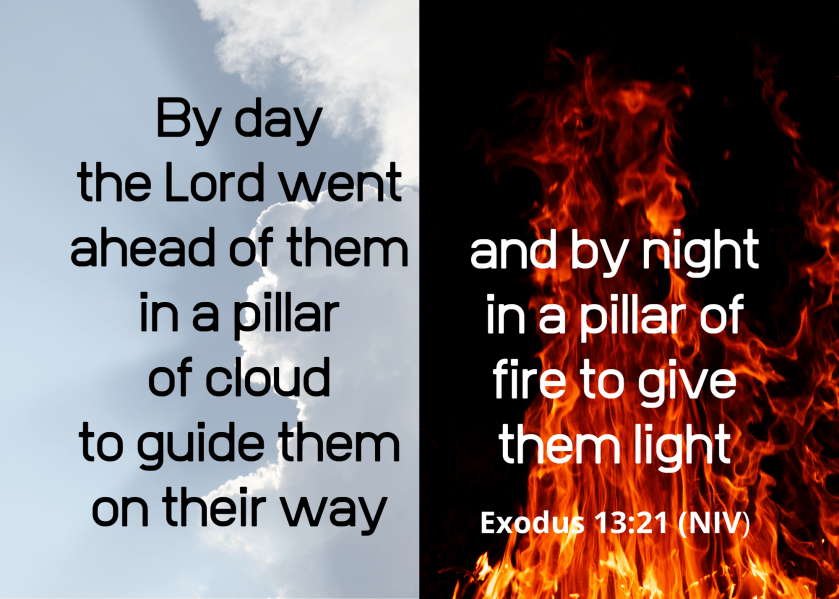
Israel was at a critical time in their formation and it was important for them to have a steady reminder of God’s presence. God made his presence visible to them as they journeyed with both a pillar of cloud in the day and a pillar of fire at night. As they continued their journey across the wilderness, God chose to make his visible presence known to them in a portable house of worship. This place would provide structure in the midst of their community wherever they stopped to make camp. The tent of meeting or tabernacle would be an ongoing visible sign that God’s glory was in their midst. And God taught them how to be a holy nation. He used various symbols and rituals of sacrifice and worship as a way to drill home to them his holiness and the consequences of sin.
How God chose to do this is quite interesting. He could have simply built a temple Himself in the heavens and dropped it down fully formed on earth. However, God chose instead to invite His people to become active participants in creating this place of worship.
First, God began with their willing desire to give. “Tell the Israelites to bring me an offering. You are to receive the offering for me from everyone whose heart prompts them to give. These are the offerings you are to receive from them: gold, silver and bronze; blue, purple and scarlet yarn and fine linen; goat hair; ram skins dyed red and another type of durable leather. acacia wood; olive oil for the light; spices for the anointing oil and for the fragrant incense; and onyx stones and other gems to be mounted on the ephod and breast piece” (Exodus 25:2-7). This was not a mandatory tithe that was required; this was an offering to be willingly given and received.
Where did the people get all of these valuable commodities? If you will recall, as they were leaving Egypt they were given many valuable items by the Egyptian peoples – one might say this was payment to help compensate for years of slavery. They had these items in their possession already. Those who were willing could give them to help create the tent of meeting and the prescribed worship items inside of the temple, which included the Ark of the Covenant, the table, the lampstand as well as the material for the tabernacle itself, and the altar, courtyard and the oil to keep the lamps burning. All of the materials were freely donated. The people of God used their own skill to build the items from these donated materials – carpenters, weavers, stonemasons, goldsmiths and others each made their own contributions to the creation of this place of worship. In this way, everyone in the community that wished to participate had buy in to the tabernacle. It truly was a communal place of worship.
Once the nation finished their journey through the wilderness and took possession of the Promised Land, they would eventually transition from a portable tent of meeting to a permanent temple under the leadership of King Solomon. However, this tent of meeting served them well for 40 years in the wilderness and many more during the times of the judges, and kings Saul and David.
For Christians, we do not worship God in a tabernacle or physical temple and we do not bring sacrifices of sheep or goats or bulls for an offering to God. For us, the Church itself is the temple of God. I am not talking about the building where the Church gathers to worship, I am talking about the actual people who gather to worship, and we are the Church. Jesus said whenever 2-3 gather in his name that he is there in their midst. There is no one single right way or place to worship God. It is wherever God’s people come together. Christian Worship does not have to follow a strict pattern. Worship is where we gather to read the word of God, pray, worship, encourage each other and exhort one another to good works, break bread and proclaim the resurrection of Jesus. Blood sacrifices are not necessary because Jesus is the Lamb of God who takes away the sins of the world and he entered into the holy of holies once and for all and gave his own body as the final sacrifice for all of our sins.
One thing remains unchanged from the time of Israel in the wilderness tent of meeting and the Church today. God still welcomes us to bring our offerings from the heart as a way to say thank you. We can still bring tangible offerings, and we can still offer our gifts and talents as ways of showing God our deep gratitude for all of his blessings to us. It is not all that important how we worship or where we worship, but it is very important that we worship and we bring our offerings freely to worship God.
Jeff Fletcher
(originally posted February 7, 2020 for SeekGrowLove)
Reflection Questions
Why do you think God wanted the Israelites to have a tabernacle? What are some benefits today to having a place to go to worship God together with God’s people? What are the additional benefits to being able to worship God anywhere?
Why do you think God gave Moses so many details for how to make the tabernacle and its furnishings?
Where do you find a sanctuary where God dwells with you? What offerings do you freely bring to God as part of your worship?
In our devotion yesterday Jeff Fletcher was describing the Dark Night of the Soul when it seems like God is distant. Certainly being enslaved for 400 years in a foreign land could have that effect. I wonder if even through all those years of painful toil if many or some Hebrew parents were still faithfully telling their children of the God of Abraham, Isaac and Jacob who had promised Abraham that his descendants would come out of that land of slavery after 400 years with great possessions and God’s judgment upon their former masters (Genesis 15:13). Was anyone still counting the years in anticipation? Were they talking to God about how He would show up? Were they watching to see how God might be acting on their behalf day after day while in slavery? I don’t know. But I hope so. In our reading today, there can be no doubt, God is at work and He shows up in some major ways – and also in some small surprising ways, too – but always faithful.
I will assume that you already have some knowledge of these events from Exodus 13-15. So, you already know of the amazing way God chose to lead the Israelites on their journey out of Egypt – with a pillar of cloud by day and a pillar of fire by night – spectacular! And you already know of God’s strong east wind that split the Red Sea with a wall of water on their right and a wall of water on their left as His cherished people crossed on dry land – astounding!
So, today I will focus on two of the smaller things – wheels and logs.
I don’t know about you – but I take great delight (maybe a little too much) in the picture of God at work in Exodus 14:25. Here the great God of the universe who has been directing the winds to create great mountains of water is watching from the pillar of fire/cloud which He specifically moved from in front of the Israelites where it had been guiding to the rear where it was protecting. So this great all-powerful God of the universe reaches down from on high to clog the chariot wheels of the advancing Egyptians who want to take back their slaves. Is there an adversary chasing you who wants to make you or someone you know a slave again? God is good at protecting His children, sometimes in ways I wouldn’t even think of. In big and small ways. God so loved the world. But we know everyone is not going to listen and play on His side. Some will play the role of adversary, but do not fear, our God knows how to clog their chariot wheels. Oh, and, make sure you are playing on the right team because the God who clogged their wheels also sent the mountainous walls of water crashing down on the Egpytians and none survived. His judgment is right and sure and coming at God’s perfect time not ours. And the whole world will know He is the Lord.
The second little example of God at work even in small ways in His big plans comes at the end of our reading today. The Egyptians are no longer a problem. Now, thirst is. They have traveled three days and have not found water. And when they finally reach water at Marah, they find the water is bitter, not just unpleasant to drink but likely unhealthy and perhaps deadly as well. The people grumble, Moses cries out to the Lord, and the Lord answers by showing Moses a log.
Thanks, God. This will help – if we want a campfire or need to start building a log cabin. But we really need water now. The Bible doesn’t record that Moses questioned God, but I might have. I love the partnership between Moses and God. God could’ve fixed the problem any way He wanted to. And if He wanted to sweeten the water with a log He could have easily picked up the right log and thrown it in himself – after all we just saw Him displace how many gallons of water and clog chariot wheels without any help from human hands. But more to His “normal” working – He shows Moses which log – and Moses simply steps up, pitches it in the water and God makes the waters sweet and healthy and life-giving.
Today, whether God is displacing the sea for you to walk through on dry land or clogging some chariot wheels to protect you, or showing you which log He wants you to pick up to sweeten your bitter surroundings – follow Him. He is at work, in big and small ways, guiding and protecting and sustaining.
-Marcia Railton
Reflection Questions
What inspiring words did Moses have for the people at the edge of the Red Sea in Exodus 14:13 & 14? Which phrase do you need to hear today? What words does the Lord God have for Moses in Exodus 14:15? Where do you think God is calling you to go forward?
Exodus 15 includes the first recorded hymn of the Hebrew people. If you were to create a hymn or worship song praising God for who He is and what He has done for you what would you include?
Where do you see God at work – in big and small ways? Like Moses picking up the log God showed him – what might God be showing you to do to change bitter to sweet and help sustain the weary, thirsty children of God?





 Seek Grow Love