The Heart of the Matter

Numbers 33-34

Psalm 23

Mark 7

-Devotion by Emilee Christian (MO)

We’ve all heard the saying, “it’s the thought that counts.” Intentions matter. That’s what Jesus is getting at in today’s scripture reading in Mark 7. 

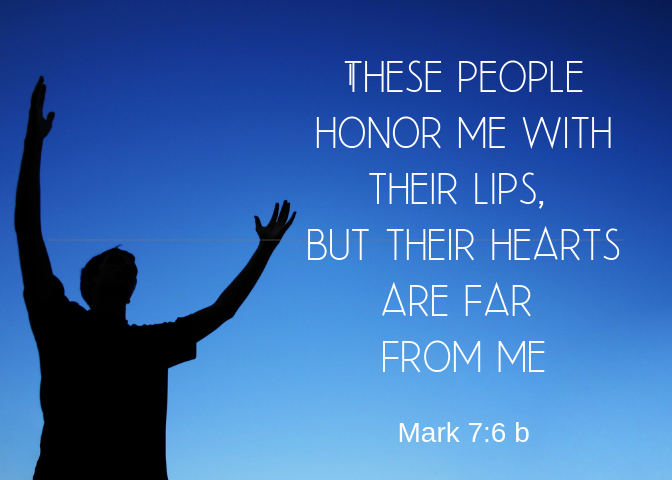
Jesus tells the Pharisees actions without heart mean nothing. He quotes Isaiah 29:11 saying, “These people honor me with their lips, but their hearts are far from me” (NLT). It got me thinking about how easy it can be to practice routine spiritual disciplines without our hearts being fully present. The spiritual disciplines I’m referring to include tithing, regular church attendance, praying before meals, communion, prayer, worship, and reading of scripture. These are the things that easily become mundane for the longtime practicing Christian. It’s important to find ways to mix things up once in a while. We can easily get stuck hamster wheeling through the motions without taking the time to really consider what it is we’re doing. Taking a break from your normal routine can reignite your passion. When we feel like we’re going on autopilot, switching things up, practicing our spiritual disciplines in different ways, helps us refocus on the task and approach it with a renewed attitude. 

I understand not everyone’s mind works like this, so I’ve created a list of suggestions. This week I encourage you to choose one discipline to switch up. See if the task means more to you. If you get more out of the experience. Or, perhaps you’ll learn just how much you enjoyed doing it your way, which will hopefully renew your heartfelt intentions. The goal of this challenge is to bring yourself back to the heart of why we do what we do, by pausing and re-evaluating your intentions. 

Tithing 

  1. Write your check at a different time than normal. If you’re always doing your check right before the plate is passed, try preparing it at home first. If you always come with your check prepared, try writing it during the worship service. I personally really enjoy tithing during services. To me, there’s something intimate about listening to the worship music, getting on my phone and checking my pay stubs, doing quick math on the back of a bulletin, then placing my check in the offering box. 
  2. Include your children in tithing. This may be by encouraging them to put their own money in the plate, or giving them something to put in the offering. I still remember the feeling of importance I got as a little girl whenever I dumped my change into the offering. It felt good to give to God and made me feel part of something bigger than myself, even if all I contributed were pennies. 

Church Attendance 

  1. Go to service at a different time if your church offers multiple services. 
  2. Sit somewhere else during the service. 

Praying Before Meals

  1. If you typically pray silently, pray aloud.
  2. If your family is the fold hands type – try holding hands to pray. 
  3. Put your hands in a different position. 
  4. Start your prayer off with thanking Him for one specific blessing you experienced since your last meal. 
  5. Have your family take turns saying the prayer. 

Communion 

  1. If you know it’s communion Sunday, sit somewhere else during the service so you are taking communion in a new environment. 

Prayer

  1. Pray aloud.
  2. Pray at a different time in the day.
  3. Put your hands in a different position.
  4. Start a prayer journal. Or just simply write down your prayers. 
  5. Create a prayer chart with a white board. 
  6. Pray when you are bored or waiting. This is how we learn to pray without ceasing and be in constant conversation with God. 
  7. Take yourself to a quiet place and pray on your knees.
  8. End your prayer time with a worship song. 
  9. Pray with your children.
  10. Pray with your spouse.
  11. Pray in public. Without being the annoying guy in Luke 18:9-14. For example, you could end your coffee date with your friend by praying for her right there in the shop, quietly in the corner taking a private moment together. 

Worship

  1. If your church is a standing and singing church, sit down during a song, bowing your head in prayer. 
  2. Don’t sing. Listen to the words. 
  3. Do sing! Even if you are no good and you think no one wants to hear your voice – God does. 
  4. Do a mini worship session in the car on the way to work. Turn on the local Christian radio, or play some of your favorite worship music. 
  5. Take a Sunday off from leading worship if you’re part of the worship team. Sometimes it can be nice to simply be a part of  the service instead of leading it. This also may give the opportunity for others in your church to step up and serve. 

Reading of Scripture

  1. Sit someplace else in your house for your quiet time.
  2. Take a break from what you are currently reading. It’s okay to flip to a different part of the Bible, or a different devotional book. Doing it just for the sake of doing it and saying you completed something is exactly what Jesus was accusing the Pharisees of doing. 

Questions: 

  1. Which challenge are you going to choose? 
  2. Give yourself a heart check. Are there areas of your faith that have become mundane? 

Prayer –

based on the lyrics “The Motions” by Mathew West

Dear God,

I don’t want to go through the motions. I don’t want to go one more day without your all consuming passion inside of me. Let your love make me whole. 

In Jesus’ name, 

Amen. 

Peace Or I’ll Squash You

Numbers 15-16

Psalm 18

Mark 3

Devotion by Emilee Christian (MO)

When I was a little girl, my mom got her tonsils removed. My brother, sister, and I were all very young, probably all under the age of ten. The healing process of a tonsillectomy is intense, especially for adults. It is recommended you refrain from talking while in recovery. One day, while my mom was resting in bed, us kids played in the basement. We must have woken up Mom because I distinctly remember seeing her round the corner of the basement steps looking angry and disheveled. She held up two fingers, indicating the peace sign. Then, she clapped her hands very loudly. We later learned the clapping was to get our attention, since she was unable to talk. However, we all understood her message as, “Peace or I’ll squash you!” I can still picture it in my mind, today. Never had we been more afraid of Mom than in that moment. You can bet we played quietly afterwards! 

Now, my mom is not a violent person. Spankings were used sparingly in our household. We look back on that memory now and laugh. Yet I will never forget the way I felt receiving the “Peace or I’ll squash you” message. The fear and awe, wondering what exactly she meant by squashing but knowing I don’t want to find out. This was mixed with the knowledge that she is my mother who loves me dearly and whom I love in return. I have since come to realize that is the same fear and awe in which we should approach God. God loves us. Immensely. But He does have the ability to squash us. 

The fear of the LORD isn’t a hide behind a rock shaking and afraid sort of fear. It’s a healthy reverence. It’s recognizing God’s power over our lives, His ability to do miraculous things. It’s respect. 

We see a lot of God’s power in our readings today. We see his power to punish the wicked in Numbers and Psalms. Psalms 18:7-15 is an incredible visual describing God’ s power and sovereignty over nature. We see how God has power over our problems and our enemies as David tells of how the LORD delivered him. We see God’s power over demons working through Jesus Christ and His power to heal in Mark 3. Finally we see His power to forgive sins, explained in Mark 3:28 and throughout Numbers. 

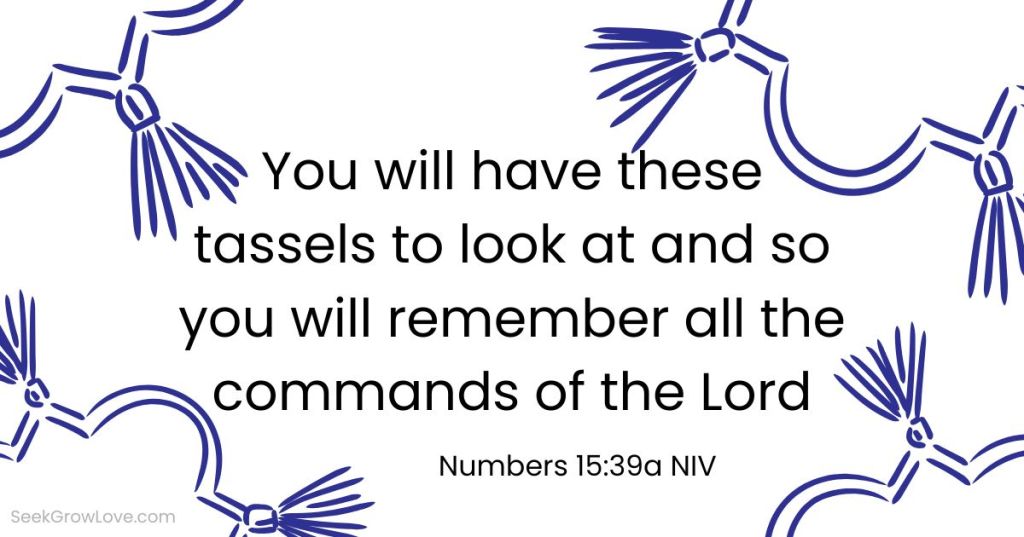
So, what do we do with this knowledge of God’s power? Well, I think the answer is in Numbers 15:37-41. We would do well to remember. To not forget God’s great power. To look to Him as David looked to Him to be our supporter, our rock, our light as is described in Psalms 18. The LORD knew our fickleness. Our ability to forget. That’s why he instructed the Israelites to wear the tassels, to serve as a physical reminder. I believe we, today, could benefit from physical reminders as well. Our “tassles” may look different than they did back in Bible times. Maybe it’s a bible verse as our lockscreen on our devices or a notecard taped to the bathroom mirror. Maybe it’s a piece of jewelry you wear everyday. Maybe, not to get too controversial here, it’s a tattoo. Or, maybe, it’s a piece of decor someplace prominent in your house you’ll see everyday. Or it could be a bumper sticker you see every time you get into your car. A stone you carry in your pocket. A keychain on your keys. A water bottle or coffee cup with your favorite verse. A pen you use everyday.  

We should apply the idea of tassels to our own lives. In doing so, may we be humbled by this. May it lead us to stand in awe of God’s great glory. May we come to a healthy fear of LORD. 

Reflection Questions

  1. How would you explain the fear of the LORD to someone? How is it different from the fear in 1 John 4:18?
  2. Do you have a “tassle”? What is it? If not, what can you do to create one?

Prayer

Dear Heavenly Father, 

Thank you for your might, your strength, and your goodness. Thank you for your instructions. For keeping our best interest at heart. May we remember how great You are. 

In Jesus’ name,

Amen.

Jesus and the Law

Numbers 13-14

Psalm 18

Mark 2

-Devotion by Emilee Christian (MO)

I love Jesus. I don’t just mean that in the way I have dedicated my life to him etc etc, but also in the same way you might discuss your favorite characters on TV.  I love the way Jesus acts. I love his role in God’s great plan. He’s compassionate, level-headed, and kind of snarky. He’s real, he tells it like it is. I like that in my story characters, in my friends, and in my Savior. 

We get a real juxtaposition in our scripture, today. In Numbers 13 and 14 we see an angry God, fed up with his people’s unfaithfulness, ready to strike. Then we get this moment from Mark 2, where Jesus is eating with sinners and says “Healthy people don’t need a doctor – sick people do. I have come to call not those who think they are righteous, but those who know they are sinners.” (verse 17 NLT). It is this same God who rebuked the Israelites, punishing an unfaithful generation never to enter the promised land, that sent this Jesus in Mark 2. 

I have always had a fascination with the continuity of the Bible. I like for things to make sense. I have humbly come to the realization there are simply some things about God we will never be able to comprehend or understand. Yet, I think Mark 2:18-28 helps clarify this juxtaposition between Jesus, the Law and the angry God we see in Numbers. They aren’t meant to contradict one another. Jesus says so himself in Matthew 5:17: “I did not come to abolish the law of Moses or the writings of prophets. No, I came to accomplish their purpose.” (NLT). Traditionally, the purpose of Mosaic law was to set apart God’s people from other nations, protection (we see this in many of the food and clean/unclean laws), and ultimately to show that sin needs a solution. Therefore, if the purpose of the law is to show there is a sin problem and Jesus is the accomplishment of said purpose, he must be the sin solution. This idea is supported in Mark 2 as Jesus essentially tells the Pharisees certain aspects of the law are no longer relevant as he has come to dwell amongst the people (v 18-20). In fact, now that he has come, there are new laws that should be put into practice. We can read a lot of these teachings from Christ’s sermon on the mount found in Matthew 5 – 7. 

In Mark 2:22, Jesus says, “And no one puts new wine into old wineskins. For the wine would burst the wineskins, and the wine and skins would both be lost. New wine calls for new wineskins.” (NLT). Basically, Jesus is saying the old ways of doing things aren’t going to work anymore. It doesn’t mean the old ways were bad, just as the old wineskins themselves once had value. However, they are no longer needed. The Mosaic law served its purpose during its time. Jesus is here now. His teachings call for new wineskins. 

He drives this point home in the final verses of this chapter. When criticized about how his disciples were spending the Sabbath day he exclaims, “The Sabbath was made to meet the needs of people, and not people meet the requirements of the Sabbath. So the Son of Man is Lord, even over the Sabbath!” (v. 27 & 28). I believe this is an example of a synecdoche, a figure of speech where the part of something is used to refer to the whole thing. In this case, the Sabbath is representative of the law. Substitute the word Sabbath with law and this becomes quite the powerful statement. 

In Jesus we see how God can be “slow to anger, and filled with unfailing love, forgiving every kind of sin and rebellion. But does not excuse the guilty” (Numbers 14:18). Jesus is the answer. He is the fulfillment of Old Testament prophecies and law. It is beautiful and poetic. Best of all, it is real.  

Reflection Questions

  1. What do you love about Jesus? What do you love about God?
  2. How would you describe the role Jesus plays in God’s great plan?
  3. Are you more often the one who thinks they are righteous or the one who knows they are a sinner?
  4. Do you believe Jesus is the answer? If so, how can you share the Jesus answer with others?

Prayer

Dear God, we praise You for being a God of perfect character and we thank You for Your Son Jesus. You created him with so much for us to love about him. Help us see You and Your Son clearly and Your plan of salvation that You have been working on through the ages. We know so much has been fulfilled already, and more is yet to come. Help us love You and follow Jesus well so we are ready to be his bride.

Never Alone

Leviticus 24-25

Psalm 13

Matthew 26

Devotion by Emilee Christian (MO)

I love the Psalms, especially those by David. David didn’t shy away from sharing his conflicting emotions with the Creator. Psalms 13, while short, is an excellent example. He begins the Psalms questioning God, feeling abandoned by Him. David pleads with the LORD for deliverance. Yet, David ends with a submission of praise. Personally, I don’t think anything happened to change David’s circumstances in between verses 4 and 5. Rather, I think David resolved himself to continue to trust in God’s unfailing word, even when he could not see its immediate fulfillment. The sort of dedication David has towards the LORD at the end of this Psalm very much reminds me of Jesus’ prayer in Gethsemane.

Jesus, like David, knows what it feels like to be alone. We see this in our reading from Matthew 26. Jesus understands how it feels to feel forsaken or forgotten by God. Jesus knows anguish, a sorrow that rests heavy in one’s heart. The words of David in Psalms 13 echo the story of Jesus’ crucifixion. Jesus’ accusers had the upper hand as they beat him, gloating and rejoicing in his suffering. Knowing all he was about to endure, Jesus still submitted to God’s plan. He went away with his accusers willingly. His submission was an act of praise and worship, just as David’s words are in the conclusion of Psalms 13. 

We will face struggles in our life as well. Though many of us will not be facing death by crucifixion or a life on the run from an angry king, we will face trials that leave us feeling desolate and hopeless. It is then we can take refuge in knowing our Savior, our High Priest, has felt the same. 

There is strength in numbers. Even the most introverted value and thrive upon community. It’s how our Creator designed us. When our soul feels crushed, we can run to the Savior who understands us. May we not forget that we have a powerful best friend in our corner. Jesus knows pain. Jesus knows loss. We are not alone. 

Reflection Questions:

  1. Why do you think there is so much detail about Christ’s suffering? Is it simply for the fulfillment of scripture or do you think there could be another purpose for the narrative?
  2. What does the knowledge of having a savior who can personally relate to your pain mean for you? If you are currently going through a trial, how does the knowledge your Savior can relate affect you? 
  3. How can you rededicate yourself to God during your own trials?

PRAYER:

Dear LORD,

Thank you for your Word. Thank you for reminding us that we are not alone. Thank you for giving us a Jesus who knows what it is to cry tears of anguish late into the night. Even when things feel hopeless, may I turn to You. Strengthen my resolve to do Your will. It’s in Jesus’ name we pray, Amen. 

Festivals

*Leviticus 23

Psalm 13

Matthew 26

Devotion by Emilee (Ross) Christian

Our reading in Leviticus lists the six festivals the LORD commanded the Jews to follow and observe. I thought it would be fun to take a deep dive into each. For each festival, I searched additional scriptures where it was mentioned. I also investigated how it is celebrated in today’s modern world.

Passover and Festival of Unleavened Bread

This is perhaps the most commonly known Jewish holiday. In our passage today, the festival is said to last seven days, the first and last days marked with a “holy assembly” and “no work.” This festival commemorates when the tenth plague passed over the Israelites in Egypt. This final plague ultimately led to their deliverance from Egyptian slavery. In scripture, Passover is seen as a time of rededication, purification, remembrance, and celebration. It is during this celebration the Last Supper takes place, and from this the Christian practice of communion. The reverence and sincerity in which passover is handled in the Old Testament is a reminder to us Christians of the mindset we should have when taking communion. The passover is still celebrated by Jews, today. Jewish families gather in their homes for a special meal called the Seder. During this, the story of the Israelites exodus from Egypt is read. Special food is served at this meal to symbolize aspects of the Jewish faith. 

Celebration of First Harvest

This celebration is marked by bringing sacrificial grain offerings from the first fruits of the crop to be presented to the LORD. It is also referred to as the Feasts of Firstfruits and is tied into the Festival of Harvest, yet still as a separate day of celebration, according to the text. I found it much more difficult to find information of this day alone as it is so closely related to the Festival of Harvest. From what I can tell, this day is no longer celebrated on its own. Yet, God made a distinction here, in Leviticus. I think part of that purpose is to show how God desires our worship and honor. God wanted a separate day set aside just for the first fruits of a crop. This was so he could be acknowledged as creator and giver of life. One way that we as Christians can continue this theme of gratitude for provisions is to pray before our meals. 

Festival of Harvest 

The Festival of Harvest, or Festival of Weeks, was later referred to as Pentecost and is known today as Shavout. It is to take place fifty days after the Celebration of the First Harvest. According to our text in Levitus, this festival was marked by various offerings of “pleasing aroma to the LORD” and a day or holy assembly in which no work was to be done. In Deuteronomy 16:9-12 it is described as a time of great celebration. The focus of the holiday in today’s age is no longer agricultural but instead serves as a time to celebrate the giving of the Torah. It is a sacred time in Jewish culture. It is observed with traditional foods, decoration of synagogues, and confirmation services. I think it’s incredibly special how practicing Jews set aside a time to remember and give thanks for their scriptures. How often do we as Christians pause and give thanks for our own Scriptures? When was the last time you honestly thanked God for the Bible? Perhaps we Christians could learn something from the modern day celebration of Shavout. 

Festival of Trumpets

The Festival of Trumpets is a day for holy assembly and no work. Specific offerings are to be presented. These are described in more detail in Numbers 29:1-9. During this celebration there is to be a blast of trumpets. I imagine this was the biblical version of setting off fireworks. This festival later became known as Rosh Hashanah, the Jewish New Year. It is celebrated by traditional foods, such as sweet breads to signify the hopes of a sweet new year. The specific readings during services focus on God’s sovereignty, past deeds, and anticipation of the future. The instructions in Leviticus for this festival are unique as it shows music as an example of worshipful offering. This is something each of us are capable of doing. God wants to hear our praise in song and deed. 

Day of Atonement 

The Day of Atonement is the second most well-known Jewish holiday. It is known today as Yom Kippur. Leviticus 16 goes into further detail of the requirements for the Day of Atonement. It is a day of holy assembly, fasting, and offerings of purification made by the High Priest. Jesus is our High Priest and his sacrifice on the cross is symbolic of the offerings made on the Day of Atonement. It is considered one of the holiest days in Jewish culture. Today, it is marked by a time of fasting and confession. The Day of Atonement shows that God is in the business of reconciliation. He provides a path of redemption for all people. The Day of Atonement was a physical reminder of God’s covenant grace with his people. Jesus has allowed that same covenant of grace to extend to all people who come to Christ. 

Festival of Shelters

The Festival of Shelters is also referred to as Festival of Booths or Festival of Tabernacles. It is an eight day celebration. Days one and eight are characterized by holy assembly days and days of rest. On each day of the festival, specific offerings are to be made, detailed in Number 29:12-40. Deuteronomy 16:13-17 reveals it is to be a time of great joy and celebration, reflecting upon the good harvest. Our text, Leviticus 23, instructs families to build tiny huts from branches to live in during the week of the Festival. This is to represent their time living in shelters after being delivered from Egypt. Today, this holiday is known as Sukkot. Interestingly enough, it is still widely celebrated in a similar fashion with families gathering in small temporary huts called sukkahs. This festival reminds us of the importance of pausing to thank God for all our many blessings. It is meant to be a joyous celebration, where we are to rejoice in God’s goodness. We should have this attitude of praise daily, but it is also good to set aside time dedicated just for thankfulness. 

Questions: 

  1. What do you do to prepare yourself for communion?
  2. Do you pray before every meal? Why or why not?
  3. Do you think Christians take scripture for granted? How can we remember to treat God’s word with holiness? 
  4. Do you sing along during worship at church? Why or why not? Do you think you should start?
  5. In what ways is Jesus our High Priest?
  6. Can you think of a U.S holiday similar to the Festival of Shelters? Even though Thanksgiving is a long ways away, how will you plan to make this year’s celebration a holy time?

PRAYER:

Dear Lord God, You are so worthy of our worship. Help me daily, and in special ways and times, honor and celebrate You, Your scriptures (yes, including Leviticus), Your precious Son – the perfect High Priest we need, , the good gifts that You give, the good God that You are. Thank you for life and redemption, for your perfect plans through the ages, for music, prayer, communion, church, feasts, fasting and holidays. Help me to prepare well for the celebration that will surpass them all, when Your Son returns to earth to set up Your Kingdom for eternity.