
-Devotion by Jeremy Martin (TN)
1 Chronicles has one of the densest “who begats” sections in scripture, and roughly 10% of the entire book is devoted to genealogy. Let’s talk about the genealogies for a second. These are admittedly some tough chewing at times, but that’s because they are so nutrient dense. Every single one of the names that we normally skim over is an entire novel or series of novels in it’s own right, and constitutes an entire lifetime of choices, decisions, and adventures but it’s hard to see that because all we see is a name and then it moves to the next. I used to completely skip over these as a kid because, well, let’s be honest: not a whole lot was going on that I could see, just a lot of “and Jed begat Bob who begat Bill who begat Frank who begat…”. I’d considered it as the literary equivalent of Ambien ™ at the time.
That perception changed for me when I did a deep dive into the genealogy listed in Matt 1, and I started taking genealogies seriously. Jewish folks take their genealogies very seriously, and for a very good reason, we touched on that just a little bit in yesterday’s devotion. What I discovered, quite by accident, is that genealogies are fascinating if you start digging. Think of every genealogy section in scripture as a dinosaur bone. You don’t always know what it’s going to look like when you start digging it up, but it’s always amazing what you find if you’re a good scriptural paleontologist. In fact, yesterday’s entire devotion was going to be done out of 1 Chronicles 1-3, but after I read Galatians 1 I rewrote the whole thing because it had such an important message in it.
Let me see if I can inspire your inner scriptural paleontologist with some interesting snippets from 1 Chronicles 1-6:
- In 1Chron 1:1-4 there is a direct line from Adam to the sons of Noah. Which one of these men listed didn’t die, and purportedly has a “pseudepigriphal” (apocryphal) book that is quoted later in the New Testament but which is NOT included in the canon of the New Testament? (Hint: Gen 5:24, Jude 14-15. Also, if you get a chance, read the book in question, it’s interesting.)
- In 1Chron 1:19 it states: “…the name of the one was Peleg, for in his days the earth was divided “. What does that mean? Is this a confirmation of the scientific theory of “Pangea”, or is it a reference to the tower of Babel? (Hint: Although also noted in Gen 11, it never clearly says why in the Bible, but a few apocryphal books including “The book of Jubilees” seem to imply the latter)
- In 1 Chron 2:7, when it mentions “Achar, the troubler of Israel” it seems like there’s a gap in the genealogical listings between Zimri and Carmi, who’s missing, and why is Achar called that? (Hint: he’s also known as Achan, see Joshua 7 for both answers)
I don’t want to get too sidetracked from our devotion today, but I’ve listed the few snippets above to try and inspire you to dig scripturally every time you come across a genealogy. You never know what you’re going to find, but there are books and books worth of stories in genealogies that we normally just brush past. They’re fascinating, dig a little bit.
Moving on to our Galatians 2 reading today, we see a quick snippet in v1-2 that is pretty important for a number of reasons. In it, Paul, after being called by a revelation from Jesus, empowered by the holy spirit, and preaching to the gentiles for 14 years, humbly goes to the “authorities” (namely, some of the original apostles), to make sure he’s acting properly. Firstly, note that God has at this point in time already been performing miracles through Paul, and also keep in mind that prior to the events in Acts 10, the message was being delivered solely for and to the Jewish people.
The first “Church Council” is referenced here in Galatians 2, and actually takes place back in Acts 15. There are a number of very important things to take away from this council. Firstly, the gospel of salvation is approved to be given to the gentiles, fulfilling many prophecies (See in particular Is 49:6). This is huge, particularly if you’re a gentile (non-jewish person). Secondly, the content of the meeting is absolutely screaming down history at us about what it doesn’t say, or even question.
Keep in mind, the Jews are fiercely monotheistic ever since the return from the Babylonian exile. The gospel message of salvation has been being preached to the Jews by Jesus and by the apostles after Jesus was resurrected, and now is going to the gentiles for the first time. So let’s think for a moment: the content of this first, hugely controversial, church council is (in it’s entirety) this: can the gospel of salvation be preached to the gentiles, and if so, what must they do? The entire reason for the meeting was predominantly to question whether or not gentiles should be circumcised to be considered “of the faith” (A: no, see Acts 15).
You know what is NOT being questioned at this first church council, nor by any other church council until AD 325, hundreds of years after Jesus’ resurrection, and hundreds of years after converting many pagans and philosophers into Christianity? “Is Jesus God?”. It just never came up, because it’s such a foreign concept to the Jews of that time that it would never even be conceived of as a possibility. The apostles and all of the Jewish followers of Christ at that time wrote, suffered, and often died, to tell the world and to prove that Jesus of Nazareth was the Messiah prophesied about in numerous scriptures; nothing more, and certainly nothing less.
The Jews knew who God was, His name occurs almost 7000 times in scripture; Yahweh, the creator and sustainer of all life, who revealed Himself to Moses in Ex 3. The Jews fully understood the concept of “shaliah” (see 1/27 devotion), but they could also quote the Shema (Deut 6:4-5) by heart, and had it written beside their doors, and in boxes they tied to their hands, and in boxes they tied to their foreheads because it was so important to God that he commanded them to do so. If you have a more “complex” understanding about the nature of God than what is written, I urge you to “stand at the crossroads and look; ask for the ancient paths, ask where the good way is, and walk in it, and you will find rest for your souls. “ (Jer 6:16).
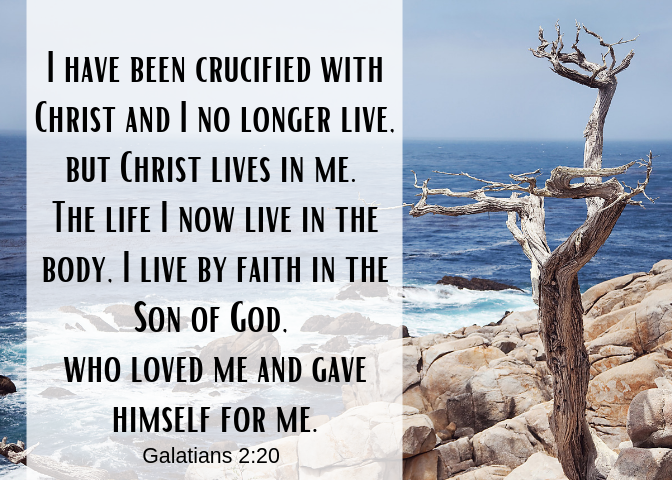
One thing to leave with; as obedient servants and slaves to our king, Gal 2:20 is a really good verse to memorize and keep in your defensive arsenal for when you are tempted: “I have been crucified with Christ, and it is no longer I who live, but Christ lives in me. And the life which I now live in the flesh I live by faith in the Son of God, who loved me and gave Himself up for me “ (LSB). Remember that we were bought by our God at a price, a very high price indeed, and allow our king, the Christ, to sit upon the throne of our hearts.
REFLECTION QUESTIONS
- Are you (even slightly) inspired to dig a little next time you see a genealogy?
- Why do you think Paul, after 14 years, went to check with the “authorities”?
- If the “authorities” had told Paul “No, you can’t preach to the gentiles” do you think he would have listened based on the rest of the chapter? Either way, would that have been the right or the wrong call, and why?
- How can we get off the throne of our hearts, and put Christ there? (It’s different for each of us, your answers will be unique to you)
PRAYER
Father God, forgive me of all sin and teach me to be holy. Circumcise my heart, father, and let me humbly serve you and bear good fruit to honor you. Thank you for sending your light to the nations, thank you for the high price which you paid for me, please grant that I can honor you in everything I say, do, or think. In Jesus name, amen.


