God is once again reaching out to the nations. He is sending messages through the prophet Ezekiel. He wants them to know that “He is the LORD their God.” Yet, they have fallen into the trap of pride. We see this in the way the ruler of Tyre is described in Ezekiel 28:2. In the pride of your heart you say, “I am a god; I sit on the throne of a god in the heart of the seas.” When we are prideful we may elevate ourselves over God. Our self-importance becomes inflated. Self-sufficiency guides our behavior rather than a dependance on God’s grace and strength. Our pride can also blind us to the value of others. We may forget that human beings are created in the image of God and therefore have invaluable worth. God’s children, His image bearers, live lives that show love for God and others. Our worth is found in the LORD. A righteous understanding of the love that God demonstrates to the world (John 3:16) is a source of self-esteem and should produce grateful hearts in us.
Unfortunately, the nations being addressed by Ezekiel have adopted selfish prideful ideas and behaviors. They rely on their natural resources, militaries, trading abilities, treasuries, allies, …but God is sending a message through Ezekiel. Many times God states to these countries, “then they will know that I am the Lord.” These countries needed to acknowledge that God is above all and truly know Him. That should be one of our daily goals, too. We love You Lord! You are the LORD our God!
Reflection Questions
Where else in Scripture do you find God warning about pride? Why does God dislike human pride?
What do you see as the dangers of pride? In what ways have you seen prideful attitudes come between you and God?
The world often tells us to take pride in ourselves, our family, what we have accomplished, etc.. How might you reply?
“Teamwork makes the dream work.” I’m sure this saying or one like it is on many framed posters in the workplace. I can’t utter it without a smirk on my face. It is cheesy, but there is a powerful truth at the core of it. When people work together, the result is something greater than just adding up what each would have accomplished individually. It is more than just the sum of the parts. It is the secret sauce, or added little something you get when people are connected and integrated. Iron Man is better with Hulk and Captain America. Michael Jordan is better with Scottie Pippen and Dennis Rodman. Neil Peart is better with Alex Lifeson and Geddy Lee.
This is part of what Paul was getting at in 1 Corinthians 12 when he was talking about spiritual gifts within the body of Christ. People have different strengths and abilities they bring to the table. Not everyone does the same thing, and nobody can do everything. Instead, we specialize in something and rely on others to do their part. When everyone is contributing, things are working like the proverbial well-oiled machine. When someone is missing, things are not as efficient or effective as they could have been. Paul recognized the strength that emerges out of our interconnectedness and unity.
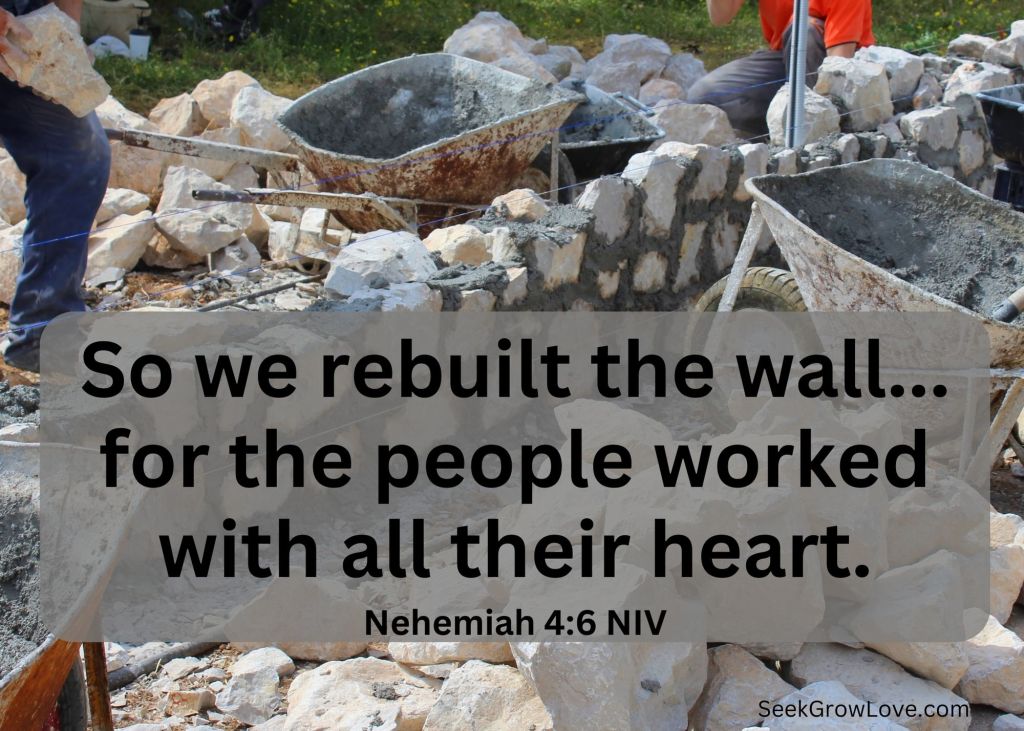
Rewinding back to Nehemiah chapters 3 and 4, we can see the same principle in play. The context is that they are returning to a ruined Jerusalem after being in exile. The walls need to be rebuilt to ensure the safety and security of everyone in the city, and so that they can work towards getting back to something resembling normal again. Chapter 3 gives us a less than riveting account of the names and jobs of those working to repair the city and its walls, but in chapter 4, things get juicier as enemies threaten to come make war with them to stop their progress.
This threat prompted a needed pivot in strategy. Some people would be stationed with sword or bow to defend the city against attackers, while others continued to build. Some did dual duty, building with one hand while holding a weapon in the other. It was an “all hands on deck” situation that required the effort of everyone in order to succeed. It wasn’t easy, but they were able to accomplish the goal.
The mutual support of everyone involved and the guidance of good leadership made the result something greater than you would think possible. After experiencing something like this, you might look back and say, “Wow, I don’t know how we did it.” This creates awe and wonder in our hearts, not because of our own abilities, but because of the power of working together while following and cooperating with God’s spirit. The lines start to blur between what I’m doing, what you’re doing, what we’re doing, and what God’s doing.
What could this say about what God is like? God does not prefer to do all the work alone, but would rather delegate and involve his children in the work. When we say humanity is the image of God, this is not about appearance, but vocation. We image God not by looking like him, but by sharing in his work as his agents. Through our actions, others can experience a taste of God. Does this remind you of anyone? We can see God by looking at Jesus, whose God-imaging abilities are unparalleled. Jesus was the only human who perfectly and faithfully stepped up to the work God gave him to do.
You may sometimes feel like you don’t have much to offer the body of Christ. Whatever you can do, even if you think it is insignificant, is beautiful and desperately needed in the church and in the world we reach out to. We cannot do this without you. And perhaps paradoxically, you can’t do this without us. And we can’t do this without God. But somehow this machine works when you put it all together.
-Jay Laurent
Reflection Questions:
1. What are some things you can do to help build up the church?
2. Can you think of times in your past when being part of a team allowed you to accomplish something amazing?
3. What is your favorite team (doesn’t have to be sports)? What is it about the members of the team that allow them to work so well together?
Gospel of John Introduction
John, “the disciple that Jesus loved”, wrote the gospel of John, as well as 1, 2, & 3 John and Revelation. John told us his purpose in writing this gospel in John 20:31, “But these are written that you may believe that Jesus is the Messiah, the Son of God, and that by believing you may have life in his name.”
Many times in the Gospel of John, John contrasted light and darkness. For example 1:6-9, “There came a man who was sent from God; his name was John [the Baptist]. He came as a witness to testify concerning that light, so that through him all men might believe. He himself was not the light; he came only as a witness to the light. The true light that gives light to every man was coming into the world.”
Then 3:19-21 states, “This is the verdict: Light has come into the world, but men loved darkness instead of light because their deeds were evil. Everyone who does evil hates the light, and will not come into the light for fear that his deeds will be exposed. But whosoever lives by the truth comes into the light, so that it may be seen plainly that what he has done has been done through God.”
Then in 8:12, John wrote, “When Jesus spoke again to the people, he said, ‘I am the light of the world. Whoever follows me will never walk in darkness, but will have the light of life.’”
The most well-known verse in the Bible is found in John 3:16. I’ll close with John 3:16-18, “For God so loved the world that he gave his one and only Son, that whoever believes in him shall not perish but have eternal life. For God did not send his Son into the world to condemn the world, but to save the world through him. Whoever believes in him is not condemned, but whoever does not believe stands condemned already because he has not believed in the name of God’s one and only Son.”
I love to look deeper into these verses in Colossians to fully understand what Paul was writing and why. Paul was poetic in his language and using wording that the Israelites used to describe the personification of wisdom. If you look through the Old Testament it is not likely that you will find the phrase “Holy Spirit”. You will however find the term “Spirit of God” which we discover is the same thing, God’s power within us. Likewise “word of God” is not seen in the Old Testament. Once there is a reference to the “word of the LORD” but the majority of the references toward the Word of God are seen describing this personification of wisdom. A different way of saying the same thing. Jesus is the living embodiment of the Word of God.
“He is the image of the invisible God” – Jesus is called the image of God in these verses and in 2 Corinthians 4:4. In Hebrews 1:3 he is described as “the radiance of God’s glory and the exact representation of His being”. Two truths are revealed through the first half of this verse: God has remained unseen “no one has ever seen God” John 4:18 and second, Jesus reveals the nature and character of God for he is the image of God in which humanity was originally created in Genesis 1:26. It is the image that we as the faithful will be transformed into upon Jesus’ return.
“The firstborn over all creation” – Paul borrowed from his Jewish upbringing; firstborn was a Hebrew way of saying someone was especially honored. The nation of Israel was called firstborn (Exodus 4:22), as was David (Psalm 89:27). The word, in these instances, did not refer to their physical birth but to their place of honor before God. So here Paul is saying that Jesus has a place of honor over all creation.
“By him all things were created” seven times in these verses Paul mentions “all creation”, “all things”, and “everything” stressing that the Christ is supreme over all through the power God granted him. The tense at the end of this verse was not translated correctly in the NIV, it says “all things were” however the original language was not past-tense “were” rather present “are”.
“Before all things” like with firstborn this does not speak of time but importance. The Christ is before all things in importance for it is only through him that all things will be restored.
“All things hold together” he will usher in a new age in which sinful man will be redeemed and united with our holy God.
This passage speaks of the importance of the Christ, the place of honor over all things that he holds. Additionally it points to both Jesus’ place of honor over the church and those who will be resurrected to eternal life as well as a chronological order. Jesus was the beginning of the church as we know it. And he was the first, and only one to this point, which God raised to new life. We the faithful will follow suit once Jesus returns.
“All (his) fullness dwell” (his) was added to many translations which adds to the confusion and skepticism that people may have concerning these verses. Before moving forward think about what happens to those who come to God through Jesus. We are filled with God’s spirit, His power and character, at least to a point. But Jesus was filled with the fullness of God, all power and authority were given to him. He also displayed the nature, character, and attributes of God. Paul also had another reason for his choice of words, “fullness” was a popular term among the Gnostics who used it to refer to the combination of all supernatural influences. So Paul used their own word to elevate the Christ above all other religious ideas and systems.
“To reconcile to himself all things” Jesus’ death, burial, and resurrection set the stage for not only the faithful to be made new but also all of creation. Unfortunately it does not mean that everyone will be saved from sin and ultimately death. We have free will and we make our own choices. But God does not give up on us. I believe that even those He has already seen reject Him are given daily opportunities for redemption.
It is important that we have a clear understanding of who Jesus is and the reason that we need a Christ, Messiah.
To be continued… (by someone else)
Jeff Ransom
(Editor’s Note – Thank you Jeff for finishing off the book of Proverbs with us this week, and giving us two free theme days to think on! Tomorrow we will begin looking at the book of Revelation – one chapter a day through the month of November. And in December we will finish off the New Testament with the book of Luke. So many precious things in God’s Word! Keep taking it in.)
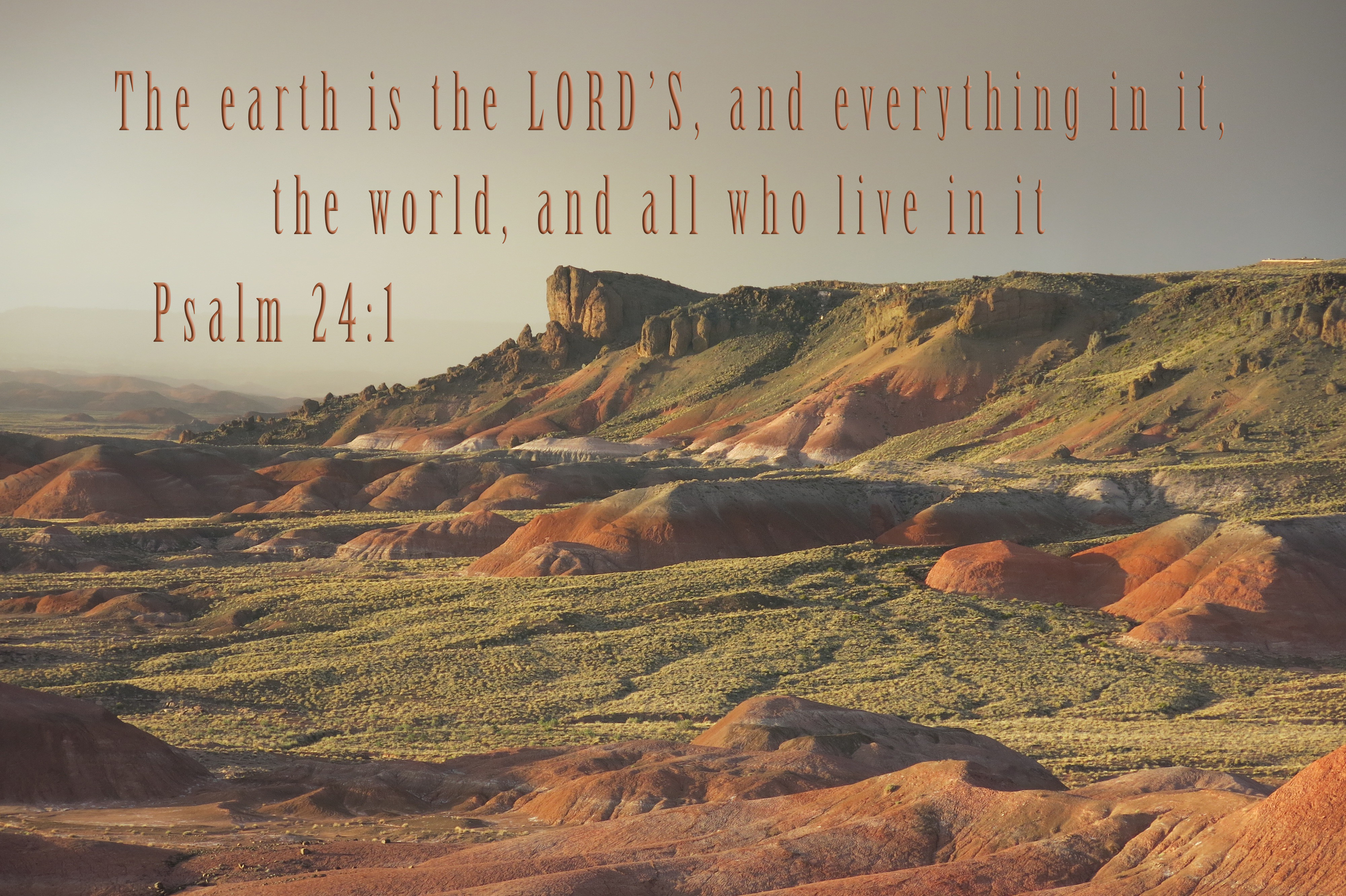
I absolutely love to see God’s creation. I love the snow falling on the bare, winter trees, covering them perfectly. I love to see the sun beams shining through a forest. I love the ocean and beaches with the seemingly never-ending water and countless (for me, not God) grains of sand. I also love rocks and mountains and caves. It’s amazing how different each nature scene can be, yet, each created by God.
Not only did God make these beautiful landscapes for us to see, but He also made YOU! Psalm 24 is one of my favorite chapters because of the first verse.
“The earth is the Lord’s, and everything in it, the world, and all who live in it;”
I love how this verse is a great reminder of how God made the earth and breath-taking landscapes along with all the people in it. In fact, we’re created in the image of God (Genesis 1:27). Each of us are created in the image of God, which shows how we should treat others with kindness and love, because they too are made in the image of God, just like yourself.
Going back to the 24th Psalm, verse one, helps me realize that sometimes, I just need to step back and remind myself that this beautiful earth is God’s and the people that live on it, are made by God, too. Next time you get to experience new parts of the world you’ve never seen before or even the next time you look outside your window or step outside your house – see the nature you pass by every day and remember who made it. Remember who the earth belongs to. Remember that you belong to God, too, and that’s pretty special!



 Seek Grow Love