Regardless of your political ideas and loyalties, I believe we can all agree that the world is a mess right now. War and the threat of new wars are a daily reality. Mud-slinging goes back and forth between our politicians while important issues that they should be finding solutions to go unresolved and forgotten until the next election cycle. The soaring cost of buying a home or even purchasing groceries shows no sign of significant improvement. Anxiety and stress levels are high, causing many both inside and outside of the church to feel hopeless.
And yet, we have hope! Although there is quite a bit of reading material from the Bible today, I’m going to focus on just one verse that can bring all of us hope. In the NASB 1995, Isaiah 2:4 says:
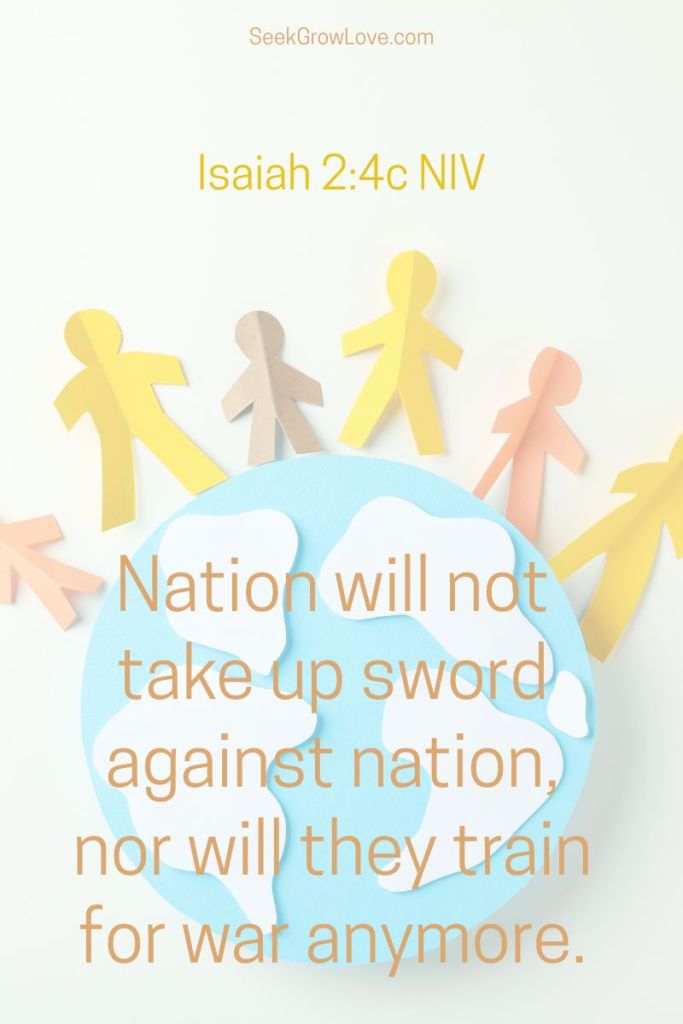
“And He will judge between the nations, And will render decisions for many peoples; And they will hammer their swords into plowshares and their spears into pruning hooks. Nation will not lift up sword against nations, And never again will they learn war.”
Imagine living in a time and place where God is our judge. Of course, he is already in our hearts, but the nations of our world don’t worship and obey him. Even the USA, with “In God We Trust” printed on our money, documents, and buildings, does not truly and wholly worship God.
Imagine no more need to create bigger and faster weapons. In verse four, by turning weapons into plowshares and pruning hooks, they are creating tools used for growth instead of destruction. Without war or the threat of war, more creativity and time could be devoted to feeding the hungry and easing each other’s burdens. No one would fear their loved ones becoming a casualty of war or going off to fight only to return as a different person because of their experiences.
I encourage you today, as we await God’s Kingdom, to seek out ways to bring good to the damaged world we live in. Regardless of the hate and dismay, help to cultivate life and renewal for your family, church, and community. Seek peace whenever possible and spread hope far and wide.
-Lacey Dunn
Reflection:
• What are ways that you can spread the hope of God’s peace to others in your family, church, school, work, community, etc…
• Take time to imagine what life will be like in God’s Kingdom. What does it look like, smell like, and feel like?
• Are you feeling hopeless? Who is someone you can talk to who can help restore your hope?
If you have never read Daniel before, or you don’t remember it if you have, then we are now getting away from the stuff that we usually remember. Chapters 1-6 are mainly narrative, stories of Daniel and the boys and the people they encounter and the God who is with them every step of the way. Chapters 7-12 leave the comfort of narrative behind, and we move into the murky and deep waters of visions and interpretations. Let’s start with a caveat: we don’t know everything that will happen in the future. If and when Daniel speaks about the end of days and the beginning of a new world, then we should and must take his prophecies seriously. But there are a lot of different opinions on the interpretation of the book of Daniel. I am hoping to give you mine. First, we’ll do a rundown, and then we will see what it means to us now.
First, Daniel’s four beasts who come up out of the sea are connected with the four kingdoms in the vision of Daniel from chapter 2. If you were curious then, here is what we begin to see. It is clear that the head of gold is Babylon, and the fact that the beast was a lion with wings and had the mind (found in the head) of a man connects these two. If we skip down to the fourth kingdom, notice the ten toes vs. the 10 horns; also, the legs are of iron and the feet of iron and clay, and the fourth terrible beast has ten horns where one uproots three. If it is clear that the first beast and the fourth beast are the same as the head and the legs of Daniel 2 respectively, then we can allow Daniel 2 to help shape our understanding of this passage. Still, we are not yet given the identity of the other kingdoms, so all we are working with, so far, is Babylon. We will fill in the blanks as we go forward.
Second, we are treated to a picture of the throne rooms of God. God in the passage is called the “Ancient of Days,” basically saying God is the one who has existed from the beginning. He is not a tame, fatherly, or grandfatherly God, with a jolly face and an upturned nose handing out candy canes to good boys and girls. God isn’t Santa. He sits upon fire, and the wheels of the throne are fire, and he is served by legions of angels, and there is judgment held before this one who brings terror. And the fourth beast and the horn are destroyed, and their authority is taken away.
Third, one “like a son of man” comes into the presence of the ancient of Days, and is given dominion and glory and a kingdom and all will serve him. To be clear, this is explained in Daniel by an angel in the vision. The beasts are kings, but “the saints of the Most High shall receive the kingdom and possess the kingdom forever, forever and ever.” Again, later in verse 27 we read “the kingdom and the dominion and the greatness of the kingdom under the whole heaven shall be given to the people of the saints of the Most High.”
What does it mean for us now?
Simply, no matter how bad the world gets, God is going to win. If you are feeling like giving into gloom and despair as the world gets darker, literally in the Northern Hemisphere and metaphorically *everywhere*, remember, God is not worried about the end of the age, and we shouldn’t be either.
The reason to not fear is that there is a kingdom coming. Back in chapter 2, this kingdom was described as a stone that crushed the feet mixed of iron and clay. Today it is the judgement of God upon the fourth kingdom of this world. We are going to have an interesting discussion about the fourth beast soon, and what kingdom it represents. But more importantly, the victory of God over the kingdoms of this world is not in doubt. The reason this is different from point one is that something better is coming. It’s not just that God is powerful over the fourth beast; its that something better is going to be put in its place, a kingdom for and of his priests, with life as the center (see Daniel 12). Look for and be ready for the kingdom.
We do that by being found in Jesus. Jesus calls himself “the son of Man” extremely often, seemingly in reference to Daniel. Daniel, however, interprets the son of Man as the saints of God. What gives? Jesus is the personification and leader of the saints of God. Every promise for God’s people is given to and fulfilled in Jesus. As Christians, when we trust in Jesus, the Bible says we are “clothed in Jesus”. Jesus moves into our hearts and we dwell in his power. The reason we receive the Kingdom of God is only because Jesus shares it with us as the perfect saint of the Most High. The reason we have life is because he has life. If you want to be able to face the darkness of this world knowing it will be destroyed, and that you will be given’s God’s blessings rather than undergoing his wrath, you must trust in Jesus for this salvation, rely on him for his spiritual power, and live the way he commanded in response to the salvation he offers.
And that is “the end of the matter “ (Dan. 7:28)
-Jake Ballard
Questions:
Does it matter to you personally to know the identity of the Kingdoms in Daniel? Why or why not? Even if we might acknowledge that our knowledge is faulty, are you comfortable saying “I don’t know” to any question? Most questions? Every question? If we say “I don’t know” more often than giving an answer, are we truly loving God with all our mind?
I don’t want to harp on yesterday’s theme, but notice the mispicturing of God: like a grandfather giving sweets, or Santa bringing presents to good kids. What is the picture of God in Daniel? How does this compare to the beginning of Ezekiel or Isaiah?
Check in with your heart: are you worried about the world being too dark? Are you giving up hope in a brighter future of the kingdom of God? Don’t give in to despair. God desires for you to hope; it is a cardinal virtue. “These three remain, faith hope and love, but the greatest of these is love.”
Today’s reading finishes up our time in the prophetic book of Ezekiel. A book that I’ve enjoyed studying a bit more- even if some days I’ve found myself with more questions than answers. Ultimately, it is nice to close in hope, and Ezekiel’s last chapters end with hope and a climax with God’s glory being restored to the temple. His words of prophecy were full of hope to those in exile even before the promised Messiah had surfaced. For us who have received the gift of the Messiah, and a personal relationship with God, the hope for a future restoration in the kingdom of God is something we still cling to in our days of exile.
The book of Ezekiel starts with a little less good news, and some warnings of destruction which certainly came to Jerusalem, but it ends with this detailed, beautiful prophetic description of a new temple yet to come. Historically, there has not yet been a temple meeting this description to fulfill this prophecy. And while some argue that this prophecy was solely fulfilled figuratively (in Jesus, in the church, etc.), others assert it is a future literal temple yet to come in the Millennium where believers reign with Christ. While I am certainly motivated to study it more after stumbling across the various ideas out there, because I am confident from scripture that there will be a literal return of Christ to earth, it appears to me these prophecies work well alongside that in describing a literal temple.
I appreciate the taste of restoration and return of God’s glory that Ezekiel gives us. In the United States, we have just finished another tiresome election cycle, and it seems like in these times we hear it all….. over and over again…..the self-proclaimed prophets, empty promises, whining and blaming, “pride, patriotism, and prejudice”…..the whole shebang. My hope and faith is not in America being great. Nor is it in world peace we know scripturally will not truly happen in this age- no matter who is president. My true identification or affiliation is not found in my national citizenship or any other political, demographic, or who-knows-what-now-label. My only sustaining hope is based in the promises given to Abraham and shared with me thousands of years later. I look forward to the world being great again, and pray Jesus will return soon, so that the meek will inherit it.
Ezekiel closes his prophecy telling us the name of the city he had described in such detail. It is called “The LORD is there”. In Hebrew, “YHWH sammah”. Two words that brought the most resonating image to my mind in all of the chapters in this book that I read. There will be a day when God and His son Jesus will dwell with us. Literally.
-Jennifer Hall
Questions:
What are your thoughts on how the prophecies from these chapters are/will be fulfilled?
What gives you hope in today’s reading?
How does the LORD “being there” impact a place? We know we’re invited!
Have you ever taken a sneak peak to the end of a book? I don’t do it often, but when I do, it may be just a quick glance to see if a character is still alive at the end. In today’s reading, we have some exciting, confusing stuff! Ezekiel 38 and 39 have it all…..new characters, epic battles, armed horsemen, plundering, hailstones and burning sulfur, crumbling cliffs, overturned mountains, and all people and creatures (even fish!) trembling. If you were to illustrate this section….you’d need quite the mural.
As one can imagine for such exciting material, there are many studies, teachings, commentaries, and beliefs associated with which modern day peoples/nations might be associated with Gog and Magog, how this prophecy ties in with end time prophecies, etc. I learned a lot studying it, and thought it was interesting that just a few weeks ago, in an adult Bible class I attend, the teacher asked us our thoughts on these chapters and Gog and Magog and what was going on in the world today. A question I had certainly never been asked before. I’m pretty sure I’ve been asked “what are your thoughts on God”….but “what are your thoughts on Gog?!”…that one was a new one for me! But, I’m confident that as things continue to unfold with devolving world relations, new alliances, political turmoil in so many places, these chapters will continue to prove interesting. And no matter our age or place in life, current events and awareness of Biblical prophecies and a worldview based in scripture matters.
I remember as a kid visiting my great-grandma in her nursing home (Pinecrest Manor in good old Mt. Morris, Illinois!) and being struck by how worked up she was when she (at the age of 100, legally blind and hard of hearing by then) was listening to my mother chat about the news at the time. The Berlin Wall had recently come down and the Soviet Union had just collapsed -which I realize makes me sound ancient to many of you reading this. But, I distinctly remember looking up from my book to watch her face as she said so emphatically to my Mom, “Why don’t they TELL us these things here?!” She was fascinated because she knew her Bible, she was interested in Biblical prophecy and how they relate to current events, and I’d imagine at the age of 100….she liked to consider the coming kingdom of God!
Regardless of precisely who all these characters are in these chapters, we see the purpose of the story clearly stated. Clearly stated numerous times. When I was reading through Ezekiel, I noticed that I had read the phrase “know that I am the LORD” a few times. Enough times that it caught my attention and I ran the phrase through Logos to see how many times it was used. Umm…..more than a few! More like that specific Hebrew phrase is found 88 times in scripture and 76 of them are in the book of Ezekiel. 76 times this prophet reminds us of the importance of knowing that He is the LORD!
When battles rage and we are persecuted, when landscapes crumble and fires burn, when enemies pursue and God’s name is profaned, He is the LORD!
We live in a world of increasing disrespect toward the LORD, but that doesn’t change the fact that He is who He is. If I ever need a reminder again of who He is, who will win and be alive in the end, and whose promises for a coming kingdom and eternal peace I need to rely on….I think these chapters will be great ones for me.
“So I will show my greatness and my holiness and make myself known in the eyes of many nations. Then they will know that I am the LORD.” (Ezekiel 38:23)
“ I will send fire on Magog and on those who dwell securely in the coastlands, and they shall know that I am the LORD.”
“And my holy name I will make known in the midst of my people Israel, and I will not let my holy name be profaned anymore. And the nations shall know that I am the LORD, the Holy One in Israel[1] (Ezekiel 39: 6-7)
-Jennifer Hall
Questions:
Make a mental list of ways God has shown you He is the LORD.
Are there ways you have seen the LORD’s name being profaned recently? How can you honor Him today? How do you picture Him being honored in the coming kingdom?
I was blessed to bring you this part of Revelation because this chapter means so much to me.
Go back to Revelation 21:3-4 and read it again. And again. And again.
I don’t want you to read another sentence of this devotion until you dwell on the glorious truth of Revelation 21:3-4.
God will be with us.
That’s the goal. I don’t mean the goal of Revelation. The goal of EVERYTHING, everything collectively and every thing individually, is to be connected to the God who created it, who sustains it, who loves it. Everything God did was so that he could be among those who accepted him, so he could be their God. He would have every right to sit in the middle of the city, demanding we come and bow to him and confess our sins and honor and adore him without his speaking to us.
But the old order of things has passed. He comes to us. Instead of an unreachable, untouchable King far away and distant, He walks up to us.
He walks up to you
He walks up to me
and He wipes away our tears.
Think of all the tears you’ve cried. I’ve cried so many. Relationships I’ve hurt. Trust I’ve broken. Loved ones who have been lost. Pain seen in the eyes of my wife and daughter.
God will not remain distant. He will walk up to me, and he will say “My Son, the old things are gone, the new have come. Cry no more.” God Himself, the creator of all things, will wipe away my tears.
God Himself will wipe away your tears.
God will be among us and be our God.
Everything else, the grand city, the streets of gold and the walls of precious stones, all these images of the glorified future, everything is icing on the cake. Without God it wouldn’t mean anything. Because God is there among us, it means everything.
My brothers and sisters, I can’t wait until your tears are wiped away. I can’t wait until the old is gone and the new has come.
May the Lord Jesus come quickly, prepare the way for his Father, and may God come and be our God.
Jake Ballard
(originally posted November 23, 2019 for SeekGrowLove)
Reflection Questions
What are your favorite verse(s) in Revelation 21? Why?
What OLD things are you looking forward to being gone? What NEW things are you looking forward to coming?
Because of this passage – what ought you to do today? Do you agree about the Goal of EVERYTHING? How often do you forget this goal? How can we do a better job of remembering it and living by it?
What are you tempted to do when things get bad? Especially in the USA right now, it seems like everyone is divided, the country is full of anger, and Christianity is on the decline. What’s going on? Is there any hope?
Looking through Scripture, we can find examples of difficult times for the people of God. Jeremiah chapter 3 is one such example. In the beginning of the chapter, God talks again and again about how corrupt and faithless the people of Israel and Judah have been. God uses the language of divorce, sexual immorality, and idolatry to describe the past mistakes of Israel and the current status for Judah. The problems were obvious. The solution also seemed obvious — return to the Lord. And not only did God declare that this was the right answer — He actively called for His people to return to Him.
But what did the people do?
Reading the rest of the book of Jeremiah, we know that they did not return to the true worship of Yahweh, at least before the exile.
Nevertheless, the middle of Jeremiah 3 should catch our attention. The story does not end with the faithlessness, corruption, and sin.
Jeremiah 3:15-18 (ESV)
15 “‘And I will give you shepherds after my own heart, who will feed you with knowledge and understanding.
16 And when you have multiplied and been fruitful in the land, in those days, declares the LORD, they shall no more say, “The ark of the covenant of the LORD.” It shall not come to mind or be remembered or missed; it shall not be made again.
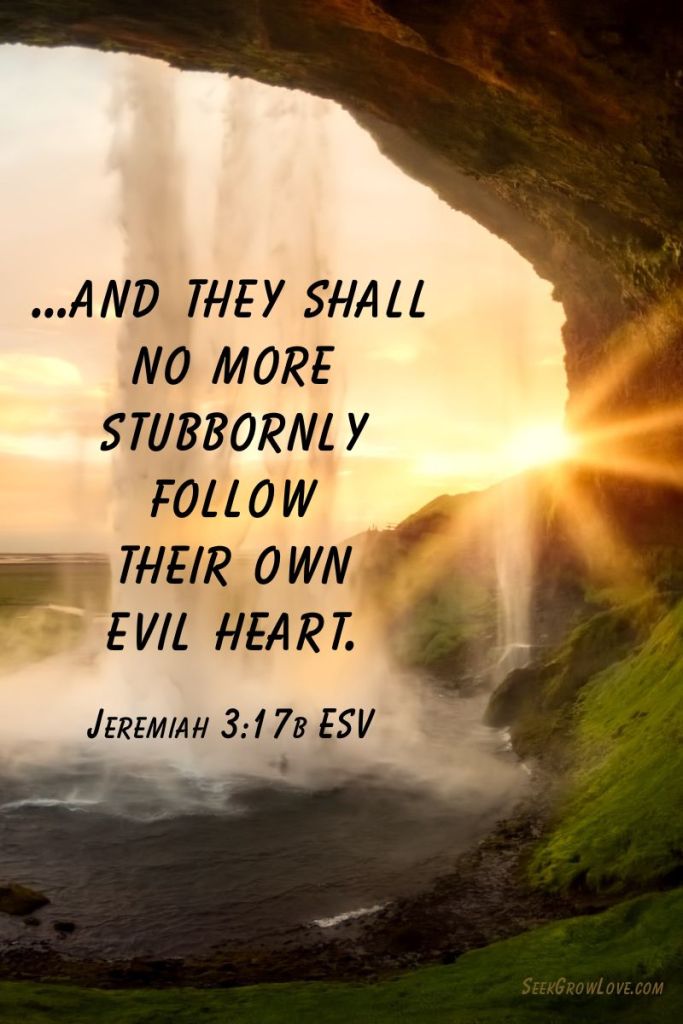
17 At that time Jerusalem shall be called the throne of the LORD, and all nations shall gather to it, to the presence of the LORD in Jerusalem, and they shall no more stubbornly follow their own evil heart.
18 In those days the house of Judah shall join the house of Israel, and together they shall come from the land of the north to the land that I gave your fathers for a heritage.
The story ends with the goodness of God. No matter what, God will send good shepherds, most importantly the Good Shepherd, Jesus. All nations will come to worship God in the holy city of Jerusalem. The people of God will be reunited again. This is a kingdom promise, a kingdom promise located in the darkest period of the history of the people of God.
Friends, that is our lesson for today: no matter how dark the world gets, no matter how hopeless our future seems, the kingdom is coming. The King is returning.
Instead of focusing on the darkness around us and the turmoil (war, politics, etc.), let’s focus on God and on the hope we have for the future. And let’s share that with others, too.
-Will Barlow
Reflection Questions
Self assessment: how are you feeling with all that is going on in the world today?
What can you do to be a brighter light in the midst of this darkness?
How can you stay anchored in the hope of the return of Jesus while also paying appropriate attention to the things of the world?
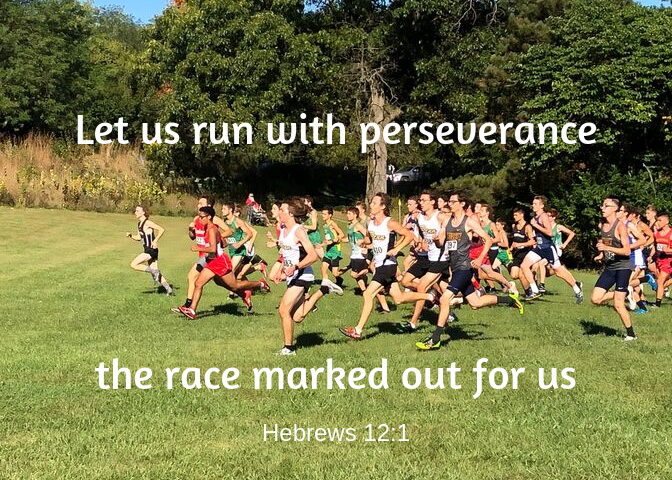
If you’re feeling sluggish, tired of enduring the hardships that come with choosing to be faithful to the end of your race in this age, caught in sin that’s hard to get disentangled from, then think on all of those faithful chosen of God from chapter 11. They made it! They’re going to the Kingdom!
We have to have the endurance to make it to the end to, for our own good. If that great cloud of witness doesn’t move you, consider Jesus’s faith, by which he endured the cross for you. God’s will for him involved the shedding of his blood to resist the sin of others against him and to free us from it. Has God asked you to shed blood to resist sin? That’s probably not God’s will for you, thank God, though many of his children have. I pray it never comes to that.
What’s it going to take to finish your faith race? This writer says endurance, and it comes through discipline (he may even be referencing the letter he’s penning as part of that discipline). He is reproving the Hebrews, but discipline involves more than reproof. It involves scourging (I think the definition of scourging here is “suffering”), and it takes training.
The Hebrews seem to have forgotten that they are heirs to the Most High; they are sons of God. If you’re a son, then you will be disciplined (if not, you’re illegitimate). God’s discipline is like that of a father to his child. It is like the training up of the child in the way he should go so that when he is old, he will not depart from it. The child who was disciplined experienced how to endure as an adult.
The discipline was for the child’s good, though it was sorrowful in the moment. As adults, the discipline will be sorrowful in the moment, but remember, the discipline of the Lord happens because he loves his children, so welcome it. If you’re not disciplined, you’re going to hurt yourself or others with sin. You might forfeit your entrance into the kingdom.
Discipline removes sin. It shapes us into holy people – sharing in the holiness with God (because we are transformed into people who want good for others and therefore do the will of God). It yields the peaceful fruit of righteousness (it turns you into a person who is faithful to do God’s will).
With the Lord’s leading, we can take steps to discipline ourselves to resist sin with endurance, for a whole lifetime. Here are some examples from this chapter:
Serve those in need – strengthen the hands that are weak and the knees that are feeble.
Pursue peace with all men.
Don’t let any root of bitterness spring up causing you trouble.
Don’t refuse the one who is disciplining you.
Don’t trade your birth right for food (like Esau did); God didn’t forgive that sin.
Remember, you didn’t endure what God’s firstborn son (the children of Israel) did. They were not allowed to be where God was like you are through Jesus. Through their mediator Moses, they had to stay away from the mountain where God was. And they were terrified because if they touched the mountain, they’d die. They were terrified of hearing God’s voice, sounding like thunder and lightning.
Instead, you’ve come to the church of the firstborn (Jesus). You have approached the throne room of God, with his angels, with your brothers and sisters who have all been made perfect by Jesus’s sacrifice, and you can do it without being terrified. You’re not going to die if you approach the throne room of God through Jesus.
Oh, and by the way, Jesus’s sprinkled blood as our living sacrifice speaks better than Abel’s blood that cried out for vengeance. Jesus’s blood cries out for love/sacrifice for others. Our job is to follow the cries of the one who’s better, who’s blood lets us into the throne room of God now to be in his presence. God will oblige both, but he says vengeance belongs to him.
God once shook the earth when he spoke from earth. In the end, he’ll speak from heaven, and shake both heaven and earth, so that the things that can be shaken will be removed, leaving only those things that are unshakable. What’s unshakeable is the Kingdom of God. Let’s praise God that we can be a part of that Kingdom now, showing him reverence and awe for what he’s doing. It’s a new thing, and it’s better.
-Juliet Taylor
Reflection Questions
1. Can you think of something you endured faithfully through discipline?
2. Do you have a routine of discipline that helps you stay on track?
3. Abel’s blood cries out for vengeance. Jesus’s blood cries out for love/sacrifice to save others. God will oblige both cries, but vengeance belongs to God, not to those under the New Covenant. Our responsibility is to love, as Jesus loved because it can change hearts and allows us in God’s presence now (in spirit as we draw near). Our job is to love even those who have hurt us. How can you love someone who has hurt you?
How excited are you about going to church? You might think church is boring, the singing doesn’t inspire you, the sermon puts you to sleep, the building is nothing to write home about, etc. If you think like this, you are probably also thinking, “Why even bother going to church when there are so many more exciting things I could be doing?”
If you think church is bad now, just imagine how bad it was when they used a tent as a church (called the Tabernacle), and slaughtered animals to cover sins. How well would you have liked going to church then?! (Can you imagine the smell?)
Our reading today is from Psalm 84, which starts out, “How lovely is your dwelling place, O Lord Almighty!” The writer wasn’t talking about the throne room of God in heaven, he was talking about the Tabernacle (tent) where he went to worship God.
Psalm 84 continues, “My soul yearns, even faints, for the courts of the Lord; my heart and my flesh cry out for the living God.”
The writer wasn’t getting excited about visiting a tent, he was getting excited about being able to be in the presence of God. He was yearning, fainting, crying out to be near God.
Verse 4 goes on to say, “Blessed are those who dwell in your house; they are ever praising you.”
I’m guessing the writer is referring to the singers whose job was to stay at church and sing praises to God all day long. He was envious they didn’t even have to leave there to go to work (they were at work) – they were so lucky! They got to be near God all the time.
Verse 10 says, “Better is one day in your courts than a thousand elsewhere; I would rather be a doorkeeper in the house of my God than dwell in the tents of the wicked.”
You may dread going to church. The writer of Psalm 84 dreaded having to leave church. He’d rather spend one day at church than almost 3 years anywhere else. He’d rather be a doorstop at church than party all the time with his wicked friends.
Why did the author crave going to church so much? The answer is: because he loved God, and he associated being at church with being in God’s presence – so he couldn’t get enough of it.
Today, as a result of Jesus’ sacrifice on the cross, we have far greater access to God than the people in the Old Testament (including the writer of Psalm 84) had. We’re told in Hebrews 4:16, “Let us then approach God’s throne of grace with confidence, so that we may receive mercy and find grace to help us in our time of need.”
God didn’t just send Jesus to die for our sins, God also wants to adopt us as His children. And there’s an inheritance involved – the Kingdom of God.
1 Corinthians 2:9 says, “… No eye has seen, no ear has heard, no mind has conceived what God has prepared for those who love him.”
I don’t know about you, but I have a pretty vivid imagination, and can imagine some amazing things. But, according to this verse, I can’t imagine how great the Kingdom will be. Start with no more death or mourning or crying or pain, add in a little euphoria in the presence of God forever, and you’re just scratching the surface for what God has prepared for those who love him.
I want that!
God wants to adopt us as His children, but there’s a catch. He will only adopt us if we accept Jesus as our Lord and Savor, are baptized, and live our lives for Him. Only then will we get to live with Him forever.
Maybe, our level of excitement in going to church is related to our level of excitement for God. Once we recognize how much God has already done for us, and what He has planned for those who love him, we’ll get more excited about God. And once we do, I suspect we’ll get more excited about going to church too.
-Steve Mattison
Reflection Questions
What are your thoughts and feelings right now about going to church? Where do you think they come from?
How excited for God are you? What has He done for you already? What do you know about – and what can you imagine – about being in the Kingdom of God? Have you already been adopted into God’s family? Are there steps you need to do in this adoption process?
Is there anything about your perception and understanding about going to church that you think God wants you to change?
Our God is a God of restoration. There will ultimately be a full restoration, but full restoration can only happen when the world is once again the beautiful, perfect place God created it to be, when His Kingdom is established on earth. Partial restoration, however, has been happening ever since the beginning of time. We read about restoration countless times in the Bible, and if you look, you can see it in our lives today, too. God constantly restores what has been lost to His people, whether it be a physical ability, such as sight, or movement, or a spiritual restoration, such as that of faith, or even the restoration of life.
Today, we read in 2 Kings chapter 8 about a Shunammite woman who lost everything she had during a 7 year famine, but because of her faith in God and willingness to obey, it was restored to her. Now this woman was not new to witnessing God’s ability to restore what was lost. In chapter 4 of 2 Kings, we read about how Elisha rewarded the Shunammite woman’s kindness with fertility, and she bore a son. Sadly, the son later died, but she had faith in God’s power, so she sought out Elisha. Elisha came, and the son was brought back to life; he was restored.
It is clear that this woman had remarkable faith. Perhaps this is why Elisha warned her about the famine that would come on the land for 7 long years, and advised her to leave. So without question, she and her household left their home and stayed in the land of the Philistines for 7 years, until the famine was over. When they returned, she had to appeal to the king to get back her home and all her land. The crazy thing is, right as she was coming to appeal to the king, Elisha’s servant, Gehazi, (who in chapter 5 was cursed with leprosy, and left Elisha… so perhaps these chapters are not necessarily in chronological order) was telling him the unbelievable story of the miracle Elisha performed in the resurrection of the son of the Shunammite woman. The woman, who just happened to show up during this particular story time, also gave an account of what happened, and the King was so impressed that he instantly granted her the land and all that she left 7 years ago.
This story speaks volumes of God’s perfect timing, and adds to the common theme we see throughout the Bible of God’s willingness to restore what has been lost to those who are faithful. Look closely at the different ways in which God restores things in your life, and let it remind you to live everyday for the ultimate restoration that’s coming.
-Isabella Osborn
(originally posted for SeekGrowLove on June 8, 2021)
Reflection Questions
In 2 Kings 8 what does God do for restoration to take place? What did the Shunammite woman do? What did others do?
Where have you seen restoration? Did faith play a part in the restoration you witnessed? What did God do? What did the recipient of the restoration do? What did others do?
How can you be a part of God’s great restoration project? What restoration can you be praying for? What restoration can you be working towards, with faith in God, that He will act in amazing, restorative ways?
As President of the United States, Abraham Lincoln is uniquely positioned in American history as the only leader of a broken country. No matter who he chose to serve in his cabinet, how empathetic his staff was to his role, how much they helped to shoulder the load or strengthened his areas of weakness, no one can truly understand the weight borne by the Commander-in-Chief, whose presidency was the bookends to rebellion. A great example of this can be seen in Vicksburg, a Union siege took out the Confederate stronghold on the Mississippi which was a key route for reinforcement and supplies. While this battle represented a great public triumph for Lincoln’s side, it also held personal tragedy. Lincoln received the report that his brother-in-law, a Confederate general, was killed in battle. It was stated by those surrounding him they never saw the president more moved during the war than when he received this news.
Likewise, David’s emotions in victory are complex. Tens of thousands of men look to their king to champion their victory, no doubt hearing stories of how he famously danced in the streets as the Ark made its way into the city. Instead, they see the lament of a father’s cry. Great leaders, more than anything else, are human; however, the weight of leadership will undoubtedly tip the scales in favor of fostering commitment, vision, and hope for followers, rather than abandonment trials and tragedy. Joab’s words seem insensitive, “You love those who hate you and hate those who love you. You have made it clear today that the commanders and their men mean nothing to you. I see that you would be pleased if Absalom were alive today and all of us were dead. (2 Sam 19:6) ” but they are actually encouragement to a leader who has made a personal sacrifice to acknowledge that tens of thousands of others had done the same.
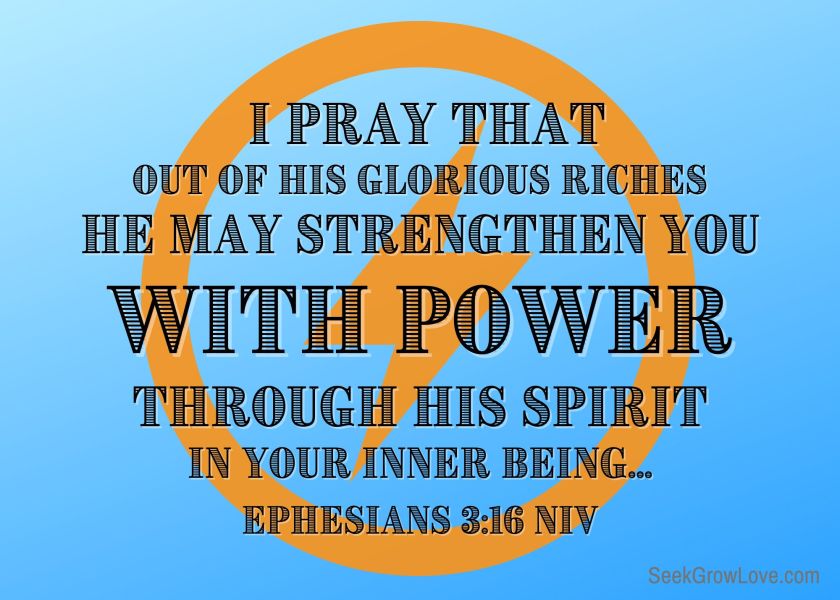
The words of Jesus could be thought equally cutting and unfeeling, “Let the dead bury their own dead, but you go and proclaim the kingdom of God. (Luke 9:60).” Our ministries do not stop because we face conflict or personal tragedy. Conversely, I would say this is when our ministry and testimony are spotlighted. By the standards of the world, this conflict provides permission to act selfishly, but when we bear our burdens with the Kingdom of God at the forefront, we lean on God and lead others to the Good News. Paul makes mention of this in Ephesians 3. He tells the church at Ephesus not to worry about his suffering, because it is for their sake and to the glory of God. The same circumstance is both a victory yet a personal hardship. Paul instead lifts those he leads in prayer, asking for the strength of the Holy Spirit to guide those for whom the letter was intended, and likewise, encourage us today. No matter what scale Paul used, no matter what was placed in the balance, the weight of the Kingdom of God far outweighed any loss. This sentiment is again echoed from his prison cell to the church at Philippi when he states:
“What is more, I consider everything a loss because of the surpassing worth of knowing Christ Jesus my Lord, for whose sake I have lost all things. I want to know Christ—yes, to know the power of his resurrection and participation in his sufferings, becoming like him in his death, and so, somehow, attaining to the resurrection from the dead.” – Phil. 3:8,10
While we may not be ready to ask for suffering like Paul, tragic circumstances are the nature of this world. It may be an unfamiliar posture, but our grief, our battle, and our dire circumstance is an opportunity to demonstrate the assurances we have, to revel in the joy and love of God. We must look for opportunities to pray for and encourage others who may be participating in the same battle, asking God to give them the strength to see the victory too. Yes, we must bear, and even welcome, hardship for the sake of the Kingdom of God because, with the help of God, we can lead within it, bringing others to the saving knowledge of Christ Jesus.
-Aaron Winner
Reflection Questions
What do you learn about leadership from David? From Paul?
What do you think of the statement: “No matter what scale Paul used, no matter what was placed in the balance, the weight of the Kingdom of God far outweighed any loss.” Do you see this in Paul’s life? Do you see this in your own life?
Who will you pray for strength to see the victory?




 Seek Grow Love