A Radical Relationship

Old Testament: Hosea 1-2

Poetry: Psalm 76

New Testament: Luke 14:25-35

Since the pandemic, mental health has become an important topic that has not only been destigmatized, but has rapidly appeared in popular culture.  Looking at the vocabulary passed along in social media, I’m sure you’ve seen a quote or two referencing toxic behaviors, triggers, gaslighting, or keeping some type of balance.  The vast majority of those offering this advice are not certified to give it, but many have the ability to identify, and for the most part avoid, unhealthy relationships and behaviors that would emotionally exhaust us. So I, as one not certified to give advice, offer some advice, albeit unpopular and radical wisdom for the day and age we live in: God asks us to form addictive, dependent relationships in abandonment of self.

When the LORD began to speak through Hosea, the LORD said to him, ‘Go, marry a promiscuous woman and have children with her, for like an adulterous wife this land is guilty of unfaithfulness to the LORD’” (Hosea 1:2, NIV)

In a very specific instance, God instructs Hosea to marry Gomer, taking on an unhealthy relationship, knowingly to a woman who would be unfaithful to him. Not only a symbolic representation, but a real life metaphor, Hosea’s heart mimicked that of the Most High who was heartbroken by Israel’s infidelity. Yet in the same way, Hosea’s persistent love and commitment would mirror God’s unwavering love for His people. In spite of our own betrayal, God beckons us to return to Him and be restored.  This is a promise for Israel but truly, for each one of us.

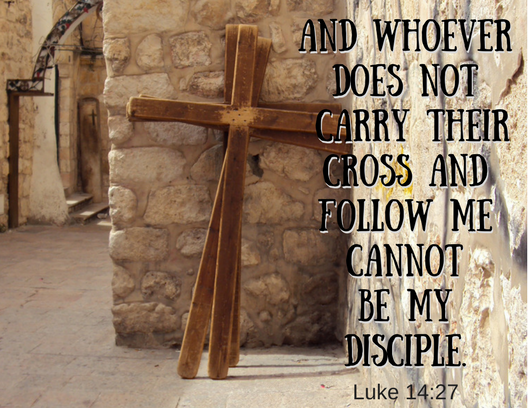
Jesus also speaks directly to the demands of this type of abandonment in relationships.  Conversely, His focus is the reciprocation of God’s reckless love to us.  In the same manner, we prioritize Him above all else, even above family and possessions. In maybe the toughest pill to swallow in the ministry of Jesus, he states in Luke 14:26, “If anyone comes to me and does not hate father and mother, wife and children, brothers and sisters—yes, even their own life—such a person cannot be my disciple.”  Jesus double-downs on this statement, saying that we each must carry our own cross to follow Him. The demands of following Christ are toxic to self and most indeed will destroy us.

But this is the very cost of knowing Christ. If we were not aware of it before, be reminded of it as you read and re-read these words today. There must be a willingness to give up everything that hinders our relationship with God, and not only accept this, but embrace the sacrifices of discipleship.  No doubt there could be a growing dissonance in our minds. If this is the case, it could be that we are trying to preserve the self that remains instead of running to our relationship with the abandonment of Hosea, and ultimately, our Heavenly Father.  True discipleship demands more than superficial commitment. It requires a deep and wide devotion to Jesus, the same dedication He showed to His Father and to us.

Although we have lived in a manner that made us unworthy, God’s love for us is restorative and sufficient for any loss. The Church of God is His bride in the coming kingdom, and it matters not our history before coming to Him. We must no longer accept Jesus, for this implies He is tolerated. We must make a covenant with Him, becoming one. He has fully demonstrated His love for us, so we must embrace the cost of this radical relationship that continues to transform every aspect of our life.

-Aaron Winner

Reflection Questions

  1. “True discipleship demands more than superficial commitment.” Where else can you see this principle taught and illustrated in the Bible?
  2. How deep does your commitment to God go? What do you find gets in the way of diving deeper into commitment?
  3. How would you describe God’s love? What is your response to His love for you? OR – asked another way – What is God asking of you in your relationship to Him and to His Son? And what does He offer in return?

Posts and Planes

Old Testament: Amos 7-9

Poetry: Psalm 74

New Testament: Luke 14:1-14

“This is what he showed me: The Lord was standing by a wall that had been built true to plumb, with a plumb line in his hand. And the LORD asked me, “What do you see, Amos?” “A plumb line,” I replied. Then the Lord said, “Look, I am setting a plumb line among my people Israel; I will spare them no longer.” Amos 7:7-8

 Three summers ago, I took on the task of building 300 or so feet of fence in my backyard to enclose the wandering space of two quickening toddlers.  I am far from a carpenter by trade, so in every way, it took me significantly more time to get the job done; however, I was committed to doing it right, building something that had some staying value. It was my Great Wall.  After doing some YouTube research, I knew even the smallest deviation, a single degree to the left or right on a plane, could have pretty severe consequences.   If you can’t imagine the measurements of fence posts, an example more relevant might be one drawn from James Clear in Atomic Habits.  He asks his reader to imagine an airplane taking off from California destined for New York. Just after takeoff, the heading is adjusted by the smallest degree shift.  This unnoticeable change, if never corrected, will have you arriving in Florida, not New York, roughly 1000 miles away from your destination.

Whether it is posts or planes, we can see that God is using a measure for Israel and us, that is making sure that we are vertically aligned with Him.  Amos alludes to the scattering of Israel and a final judgment at the return of Jesus. Unchecked cultural allowances passed from generation to generation compound their effect and become paradigm shifts.  While Israel was at the height of its economic and political power, seemingly built on a great foundation of previous generations, small allowances and leanings away from God, moves Israel away from God’s chosen, eventually leading to their conquered and scattered status in the 1st century.

Additionally, at the beginning of Luke 14, Jesus reminds us of the measure we should use. The Pharisees took great pride in regularly measuring themselves to a standard.  Unfortunately, the rules they followed were often legalistic, self-imposed, and focused solely on their status with one another. Taking seats of honor, refusing to help on the Sabbath, and blessing only those who can repay you are incorrect measures that can skew the outcome of your vertical alignment more quickly than one or two poles being out of line.  Jesus gave them the measure, “but when you give a banquet, invite the poor, the crippled, the lame, the blind.” Alignment with God means blessing those who cannot return the favor.  Simply put, this is the Father’s love shown through Jesus Christ paying a debt we could never repay.


So how do we combat these leanings that will make our defenses weak? First, we are encouraged to regularly check our progress or face being cut out of the plan of God.  Here’s a quick check-in: the average American takes in 100,000 words a day through conversation and content. Reading a Bible study like this is 2,000 of those, solely if you stick to the plan and stay away from devotional.  Over the course of a year, not reading a daily Bible plan misaligns you by 800,000 words, roughly 8 full days within a year without God’s presence.  This is only a single, simple action, which does meet the requirements of the plumb line alone in isolation. Giving up a hundred words here and there may seem harmless, but they add up, and could place us far from our destination in a matter of months. 

Start today with something small to plumb. Pray for patience over your first cup of coffee.  Offer a line or two of a worship chorus when you hear the rain. Thank God aloud whenever you arrive home safely. If we check in with this single task daily, how much more aligned would our life be to Christ’s in a few months?  We cannot spare any more time without God’s presence beckoning the standard in Christ and shoring up our shortcomings. Daily measure against God’s standard and build your life with eternal value.

Reflection Questions

  1. What steps do you want to take to be well aligned with God? What practices and habits do you need to remove and replace because they are pulling you away from proper alignment?
  2. How does being just a few degrees off over time take you where you do not want to go?
  3. What does God’s standard look like? How can we follow it more closely?

Your Banquet Invite

Luke 14

Wednesday, December 21, 2022

As life grows busier by the day, holidays grow nearer, preparations for travel are made, deadlines for school are due, or you find yourself putting in those time and a half hours at work, it is so easy to become all consumed in your own day to day life. The same was true in the parable told by Jesus in Luke 14, The Parable of The Great Banquet. As Jesus gathered around the table with the Pharisees and experts in the law, he spoke to them on humbling themselves and serving in the here and now, even when they are giving all and receiving none. He says that their payment will be paid at the resurrection of the righteous. At the mention of the resurrection, one man calls out, blessed is the one who will eat at the feast at the Kingdom of God. Jesus replies with a parable, explaining that a great feast has been prepared for many guests. When word spread that the feast had come, and that it was time to join, many of the guests were found to be caught up in their own world and did not attend with urgency. Excuses were made and the banquet was pushed off. “I just bought a field that I must go and see.” “I bought five yokes of oxen, I must go try them out.” “I just got married, I can’t come.” As a result, each of these guests lost their place in the banquet as they were not ready, not prepared, and were not willing to attend at the call of the host. 

This parable serves as a wake up call to many as it is important to work hard each day and do your best with what has been bestowed upon you, however this life is temporary and our focus should always be on what is yet to come. In the meantime, we need to make sure that we are pursuing our faith, building a relationship with our heavenly father, and implementing spiritual disciplines daily so that when the banquet, otherwise known as the Kingdom of God draws nearer, our hearts will be prepared and our focus will be set on the right priorities. 

As we enter into a busy holiday season, may we be present in the why. Why we celebrate, why we serve, why intentionality matters. Let’s not be a people who become so caught up in each day that we do not humble ourselves before the Lord and serve His great name, no matter the cost. 

Luke 14:11 

“For all those who exalt themselves will be humbled, and those who humble themselves will be exalted.” 

– Kayla Elwell

Reflection Questions

  1. What does it mean to you that the invitation to the banquet in the Kingdom of God has been extended to everyone in the roads and country side? Who had been included in the original invitation – did it include you?
  2. What excuses have you used when you were neglecting the most important things of God?

More from Luke

luke 14 27

Luke 14 & 15

(My apologies for sending out the wrong chapter yesterday.  I was getting ahead of myself.  So, here today we have the youth of Blood River Church with Luke 14 & 15 to help us get caught up.)

Luke 14
Hey My name is Colten. I love hunting and fishing. I am currently serving in the Navy. I grew up in Indiana and Louisiana. I can’t wait to dive into Luke 14 with you 
Luke 14:13-14
“Instead, invite the poor, the lame, and the blind. Then at the Resurrection of the righteous, God will reward you for inviting those who could not repay you.”
We are called to spread the word and the love of Christ around the world right? But why do you do it? Is it because he asks us to? Or is it because you can have a spot in the kingdom for it?
In this verse it tells us we will be rewarded for inviting those who could not pay, but would you do it if there was no reward? That is the big question! You see almost everyone nowadays expects something from everything! But how much do you think the world would change if we did something expecting nothing as Pastor John said in his thanksgiving sermon in 2018. So how about the rest of 2019 we do something for nothing? I am willing to accept the challege, but are you?
Luke 15
Hi, my name is Russell, and i’m from Springfield, LA. Im 16, and I play Baseball for my school as well as track. I love hunting, and fishing. I love my family and my church. 
Read:
Luke 15:6
Luke 15:9
Luke 15:32
Imagine this, a boy goes to Home Depot with his father to purchase some lumber. While moving the boards from the rack to the cart the boy puts his phone down on a nearby stack of boards. So the father and boy check out.  After loading the boards in the truck the boy rushes into the store because he couldn’t find his phone.  He searched and searched  and when he found it he rejoiced and was glad for he had found his phone. That boy was me.
I rejoiced in the same way that the man found his sheep, the woman her coin and the father his son. Always rejoice when you find something you have lost no matter how small it is.