The Not Last Supper

Luke 22:1-38

God is an epic story-teller. One trick up every story-teller’s sleeve is repetition, only each new repetition brings a new twist. The story in today’s chapter is titled, The Last Supper, implying that other suppers preceded it. 

The first meal of this kind is found in Exodus; the Israelites were captive to Pharaoh in Egypt, who worked them ruthlessly.  God sent a series of plagues to convince Pharaoh to let His people go, which would culminate in the death of all firstborn sons—people and livestock alike. To save the Israelites from this horrific plague, God gave specific instructions to Moses and Aaron:

“On that same night I will pass through Egypt and strike down every firstborn of both people and animals, and I will bring judgment on all the gods of Egypt. I am the LORD. The blood will be a sign for you on the houses where you are, and when I see the blood, I will pass over you. No destructive plague will touch you when I strike Egypt.” (Exodus 12:12-13)

The Israelites with the blood of the lamb slathered on their door frames were safe, as the angel of death passed over their houses. God ordered the Israelites to commemorate the day God saved Israel, and they did so every year. 

Over one thousand years later, in the week leading up to Jesus’ death, Jesus celebrated Passover with his disciples in Jerusalem. This time, there was a new twist. Jesus gives new meaning to the emblems eaten that meal: 

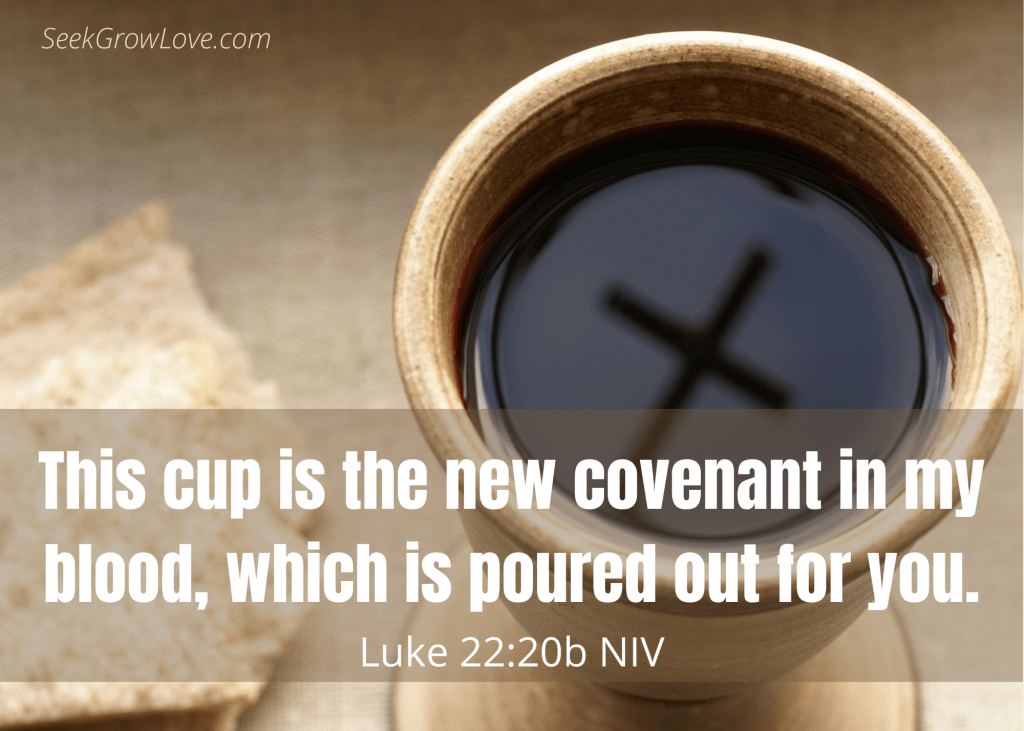
And he (Jesus) took bread, gave thanks and broke it, and gave it to them, saying, “This is my body given for you; do this in remembrance of me.” In the same way, after the supper he took the cup, saying, “This cup is the new covenant in my blood, which is poured out for you.” (Luke 22:19-20).

Jesus’s body was given for you, his blood poured out for you. His sacrifice marks a new covenant in which Jesus’ death atones for the sin of the world: 

Behold the Lamb of God who takes away the sin of the world. (John 1:29)

Have you ever read a story in the Bible with a hint of jealousy, wishing you, too, could have witnessed that moment? I know I have. I had a seat at that table with Jesus, eating and drinking, hearing his wisdom, and honoring his upcoming sacrifice. The good news for us is that “The Last Supper” isn’t really Jesus’s last supper: 

And he (Jesus) said to them (the disciples), “I have eagerly desired to eat this Passover with you before I suffer. For I tell you, I will not eat it again until it finds fulfillment in the kingdom of God.” (Luke 22:15-16)

It’s another feast with another twist. This time we’ll be eating and drinking in physical communion with Jesus, but in the Kingdom of God. I am excitedly awaiting that day, but in the meantime we have the honor of commemorating Jesus’ sacrifice regularly through Communion. The next time you take Communion, do it in remembrance—and in sweet anticipation—of all Jesus has done and is yet to do. 

-Mackenzie McClain

Today’s Bible reading passages can be read or listened to at BibleGateway here – Deuteronomy 27-28 and Luke 22:1-38
Sour Gummy Worms & Copper Coins

Luke 21

My young cousin got a bag of sour gummy worms for Christmas this past year. The following week, he carried the bag along everywhere he went, proudly savoring each lick. He loved those sour gummy worms! At the end of the week, he tried to give me his precious worms; of course, I declined because I don’t delight in stealing candy from children. As he was leaving my house, he hid the candy in my bedroom because he wanted me to have them. He didn’t have much to give, but he gave all he had and did so sincerely. 

Luke describes a similar encounter Jesus had with a poor widow at the temple: 

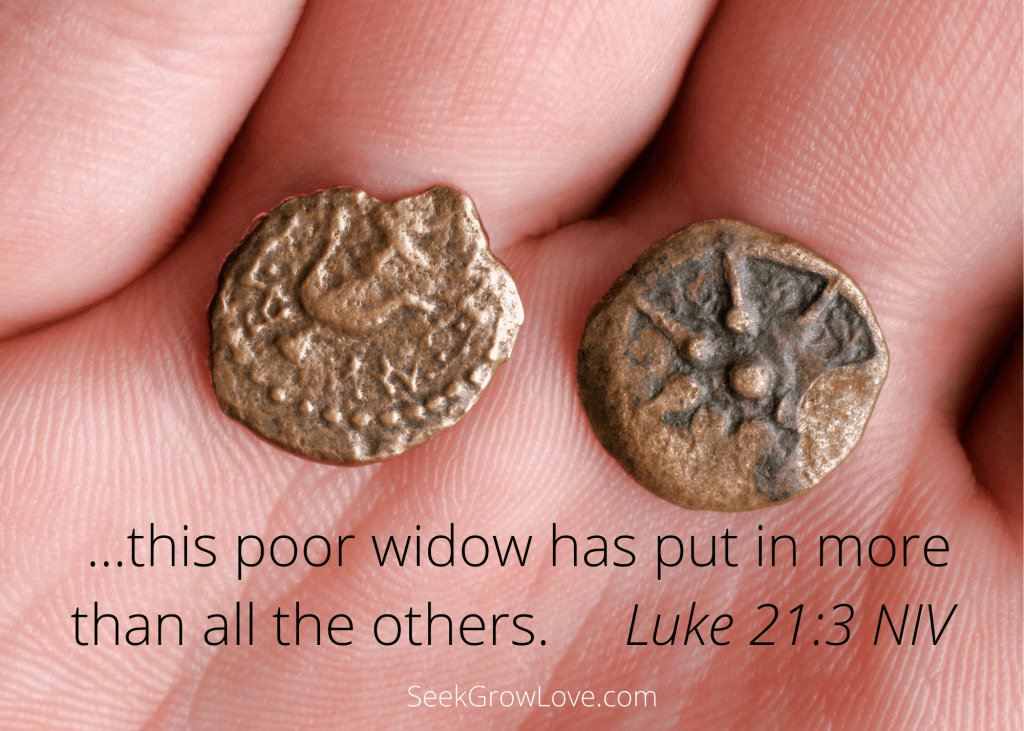
As Jesus looked up, he saw the rich putting their gifts into the temple treasury. He also saw a poor widow put in two very small copper coins. “Truly I tell you,” he said, “this poor widow has put in more than all the others. All these people gave their gifts out of their wealth; but she out of her poverty put in all she had to live on.” (Luke 21:1-4)

We know three things about the woman mentioned: she was poor, she was a widow, and she gave a small amount of money to the church. Her story isn’t flashy and her name isn’t even mentioned. Yet, she honored God by giving the little she had. And you know what? Jesus said her gift was greater than all the others. 

Jesus had spent the past day discussing the intricate details of religious rules and hypothetical situations. They were concerned with religion, but perhaps not the conditions of their hearts. Their attitudes are juxtaposed by the poor widow whose heart was generous and faithful. By the world’s standards, the poor widow’s actions were foolish. She should have used the money to feed her family and allowed the Jews with more money to support the church. In God’s eyes, her giving was a reflection of her faith, and I am sure her family didn’t go hungry that night.

To be clear, God doesn’t need your money—neither your time nor gifts. 

I could have bought my own bag of sour gummy worms at the gas station down the street. In the same way, God can accomplish anything and everything by his own accord. However, He still wants your sour gummy worms, copper coins, and anything you have to give. 

God wants your trust.

God wants you to participate in the mission of the Church. 

God wants to bless you. 

-Mackenzie McClain

Today’s Bible reading passages can be read or listened to at BibleGateway here – Deuteronomy 25-26 and Luke 21

Jesus’s Mic Drop

Luke 20

Remember the king that was greeted with palm leaves and shouts of hosanna yesterday? Today, we see him bombarded with questions meant to entangle him. The religious elite were threatened by Jesus—by his growing popularity, his radical views of religion, and his claim to be the Messiah. The teachers of the law and Pharisees tried to make Jesus stumble.

Keeping a close watch on him, they (the teachers of the law and chief priests) sent spies, who pretended to be sincere. They hoped to catch Jesus in something he said, so that they might hand him over to the power and authority of the governor (Luke 20:20). 

The religious elite were trying to make Jesus stumble through an intense line of questioning, just like the lawyers do to criminals on TV. Of all the questions thrown in Jesus’ direction, I find this question most interesting: 

Is it right for us to pay taxes to Caesar or not? (Luke 20:22)

It’s a lose-lose question. If he sided with Caesar, he would be in trouble with the Jews; if he sided against Caesar, he would be in trouble with the Romans. Instead of pleading the fifth or requesting to see his lawyer, he answered with the perfect solution. Since it’s Caesar’s image on the denarius, that is to be given back to Caesar. However, whatever is God’s should be given back to God. 

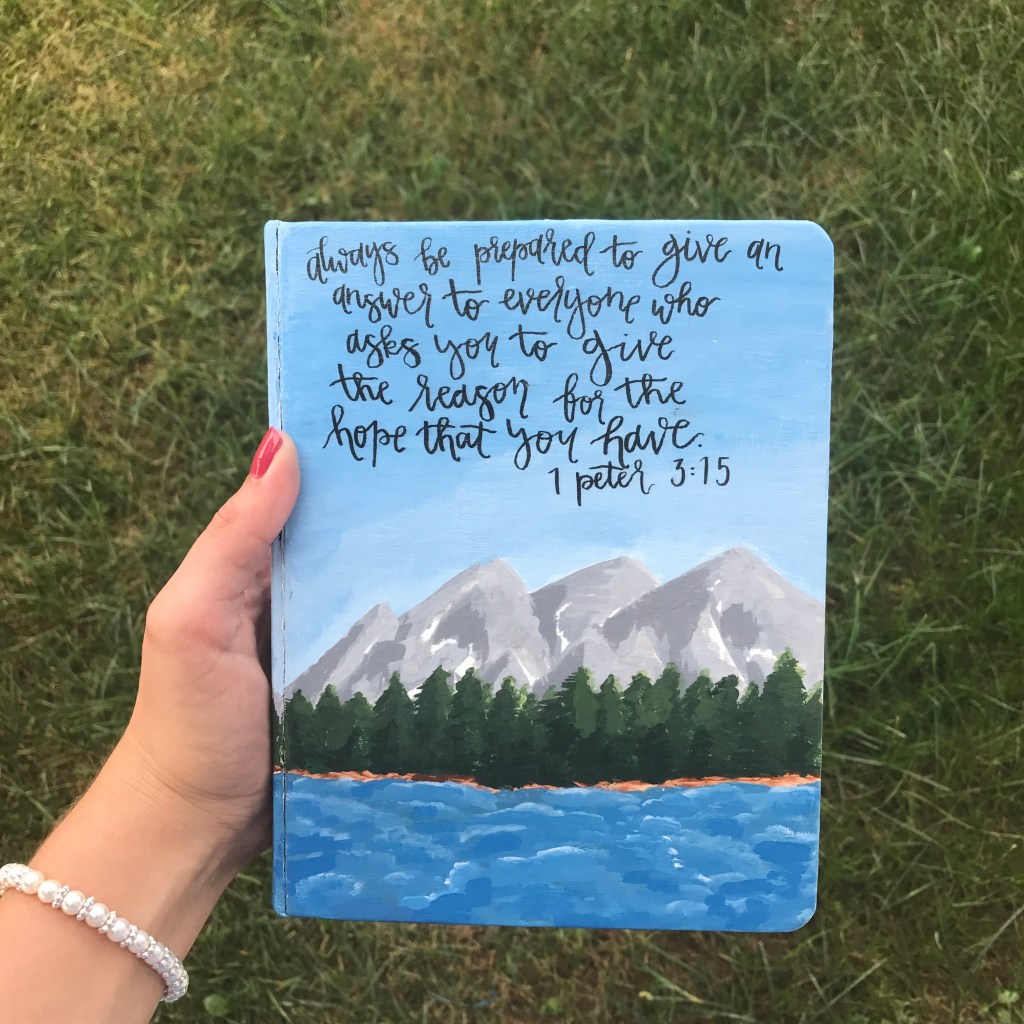
His answer is so profound yet simple that it literally silences the crowd—better than any answer given by a fancy attorney on TV. Jesus spent the first thirty years of his life preparing for interactions like this one. He was so in tune with God’s spirit that the perfect words just seemed to flow out of his mouth effortlessly. In the same way, we should prepare ourselves to answer tough questions and defend our faith—this includes praying for wisdom and understanding, studying truth, and committing scripture to memory. As a reminder of just that, I painted the following verse on the cover of my Bible: 

Always be prepared to give an answer to everyone who asks you to give the reason for the hope that you have (1 Peter 3:15). 

Paul likens scripture to a sword, but we must wield it well in order to enact its power. Every time I open my Bible, I want to grow more confident in my faith so that I can rise to the defense of it and share it with others. 

How will you build up your defense? 

-Mackenzie McClain

Today’s Bible reading passages can be read or listened to at BibleGateway here – Deuteronomy 23-24 and Luke 20

Best Parade Ever

Luke 19

I love to plan parties! I’m usually up late the night before a big party getting all the details just right—making signs, assembling favors, and arranging decorations. Meanwhile, my God plans parades centuries in advance! He planned the famous parade we commemorate each year on Palm Sunday: Jesus’ triumphant entry into Jerusalem. 

Daniel received a vision about Jesus’ journey to Jerusalem, about 600 years before it was to happen: 

“Know and understand this: From the time the word goes out to restore and rebuild Jerusalem until the Anointed One, the ruler, comes, there will be seven ‘sevens,’ and sixty-two ‘sevens.’” (Daniel 9:25) 

It’s important to note that the ‘sevens’ described by Daniel are each periods of seven years. The math makes my head spin (not everybody used the same calendar back then… talk about confusing!), but historians have found Daniel’s vision astonishingly accurate. The time between the issue to rebuild Jerusalem went out (Nehemiah 2) and Jesus’ triumphal entry into Jerusalem is just as God said it would be, to the very year. God’s timing is perfect and His plans always prevail. 

In the book of Zechariah, the world’s best party planner gives even more insight into how this day would unfold:

Rejoice greatly, Daughter Zion! Shout, Daughter Jerusalem! See, your king comes to you, righteous and victorious, lowly and riding on a donkey, on a colt, the foal of a donkey.” (Zechariah 9:9)

And so it came to be—Jesus rode into Jerusalem on a donkey. The gospels contain several descriptions of that bitter-sweet day—Matthew 21, Mark 11, Luke 19, and John 12. Up until this point, Jesus kept his status as the begotten Son of God a secret, urging his disciples not to reveal his identity to anyone (Matthew 16:20). On that day, however, his disciples shouted among the masses, “Blessed is the king who comes in the name of the Lord!” (Luke 19:38)In that same city, in that same week, the cries of “Hosanna!” would turn into shouts of “Crucify!”

As we wave our palm leaves at church this morning, remembering Jesus’ triumphal entrance into Jerusalem years ago, let us also remember the parade still to come. Close your eyes and imagine the grandeur of Jesus’ second coming—the roar of the trumpets, the raising of the dead, and the overwhelming noise of centuries worth of believers worshipping at the feet of Jesus. No more death, no more crying, no more pain:

And I saw the holy city, new Jerusalem, coming down out of heaven from God, prepared as a bride adorned for her husband. And I heard a loud voice from the throne saying, “Behold, the dwelling place of God is with man. He will dwell with them, and they will be his people, and God himself will be with them as their God. He will wipe away every tear from their eyes, and death shall be no more, neither shall there be mourning, nor crying, nor pain anymore, for the former things have passed away. (Revelation 21:2-4)

God’s timing is perfect and His plans always prevail. 2,000 years ago Jesus journeyed to Jerusalem to die. Soon he will return to Jerusalem again to bring life everlasting.

Hosanna in the highest!

-Mackenzie McClain

Today’s Bible readings can be read or listened to at BibleGateway here – Deuteronomy 21-22 and Luke 19

Samson – Hero of Faith

Saturday – Judges 16-18

Judges Devotions-6

Weird people are my kind of people, and Samson definitely brings weird to a whole new level. We’ve seen Samson rip a lion apart with his bare hands, tie 300 burning foxes in pairs by their tails, and kill a thousand men with the jawbone of a donkey.

God wanted Samson to follow through on his Nazirite vow, which involved abstaining from cutting his hair, drinking wine, and going near dead bodies (Numbers 6:1-8). In this way, Samson would be set apart from the rest of the world—sanctified and pure. However, he eats honey from a lion’s carcass, is tricked by Delilah into cutting his hair, and disappoints God in a dozen other ways. He’s hot-headed, prideful, and is obsessed with revenge; yet, in his weirdness and messiness, Samson is commended for his faith. He is mentioned in Hebrews 11, as a hero of great faith.

“And what more shall I say? I do not have time to tell about Gideon, Barak, Samson and Jephthah, about David and Samuel and the prophets, who through faith conquered kingdoms, administered justice, and gained what was promised; who shut the mouths of lions, quenched the fury of the flames, and escaped the edge of the sword; whose weakness was turned to strength; and who became powerful in battle and routed foreign armies” (Hebrews 11:32-34).

Samson’s life ended with one act of great faith. After losing his hair, the source of his God-given strength, Samson was captured by the Philistines. They gouged out his eyes and threw him in prison. Since Samson was the Philistine’s public enemy number one, they ridiculed him in the temple for their own entertainment. On that day, Samson made one final request to God:

“Then Samson prayed to the Lord, ‘Sovereign Lord, remember me. Please, God, strengthen me just once more, and let me with one blow get revenge on the Philistines for my two eyes’” (Judges 16:28).

God used Samson’s physical weakness and his obsession for revenge, turning it into strength. With a surge of God’s power, Samson pushed on the pillars of the temple, crushing the temple and all the Philistines in it. Samson was messy, but God used him to bring the Israelites closer to liberation from the Philistines. We, like Samson, are never too messy to be used by God.

In fact, when we believe we are too messy to be used by God, it’s God’s power we underestimate, not our own. He wants to transform your messiness for his glory. Will you be transparent in giving God the glory as he transforms your mess? What weaknesses of yours can you surrender to God to be redeemed as strengths? What messy people in your life, the same people God sees value in, are you avoiding?

Mackenzie McClain


Today’s Bible passage can be read or listened to at https://www.biblegateway.com/passage/?search=judges+16-18&version=NIV

Thank you, Mackenzie for your writing this week!  Tomorrow, as we start a new week, Bethany Ligon will discuss the final chapters of Judges for us, and then take us into Ruth and 1 Samuel during the rest of the week.  Keep Reading – Seeking – Growing & Loving!  We have a great God!

2020 Chronological Bible Reading Plan

In Your Waiting God is Working

Friday – Judges 13-15

Judges Devotions-5

Waiting is hard, like really hard. Most boxes of frozen foods give two sets of directions, one for the microwave and one for the oven. I’m the kind of person who always picks the microwave.  I’m also the kind of person who abandons a movie if it hasn’t struck my interest in the first five minutes, and you bet I’ve read the last page of every book I start because I can’t wait to see how it ends. On every road trip, I ask “Are we there yet?” dozens of times.

“Again the Israelites did evil in the eyes of the Lord, so the Lord delivered them into the hands of the Philistines for forty years” (Judges 13:1). The Israelites have fallen back into sin and in desperation, they call out to God… and wait.

Suffering for forty years, I imagine many Israelites were wondering what God was doing in their waiting. Did He hear their prayers? Did He still care for them?

Another woman, Manoah’s wife, was also waiting, but for a child. “A certain man of Zorah, named Manoah, from the clan of the Danites, had a wife who was childless, unable to give birth” (Judges 13:2).

Even when they could not see it, in their waiting God was working. You see, the answer to Manoah’s wife’s prayer was also the answer to the Israelites’ prayers.

“The angel of the Lord appeared to her and said, ‘You are barren and childless, but you are going to become pregnant and give birth to a son. Now see to it that you drink no wine or other fermented drink and that you do not eat anything unclean. You will become pregnant and have a son whose head is never to be touched by a razor because the boy is to be a Nazirite, dedicated to God from the womb. He will take the lead in delivering Israel from the hands of the Philistines’” (Judges: 13:3-5).

This baby boy, Samson, grew up to liberate his people from the Philistines. In those forty years of waiting, God was preparing for them a leader who would bring deliverance.

Are you in a season of waiting? Whether you’re waiting for a promotion, a spouse, a child, a house, a cure, or a plan, God hears your prayers. Child of God, your heart’s deepest desires are in the hands of the Almighty; in the meantime, trust that God is working. Maybe He isn’t working in the way you’re expecting, but He is still working.

We’ll jump more into Samson’s (spoiler alert: crazy) life tomorrow, but for today I want to leave you with scripture that has encouraged me in my times of waiting:

But as for me, I watch in hope for the Lord, I wait for God my Savior; my God will hear me. (Micah 7:7).

I remain confident of this: I will see the goodness of the Lord in the land of the living. Wait for the Lord; be strong and take heart and wait for the Lord (Psalm 27:13 & 14).

I wait for the Lord, my whole being waits, and in his word I put my hope (Psalm 130:5).

But those who hope in the Lord will renew their strength. They will soar on wings like eagles; they will run and not grow weary, they will walk and not be faint (Isaiah 40:31).

In your waiting, He hears you. He fights for you. He is working.

Mackenzie McClain


Today’s Bible passage can be read or listened to at https://www.biblegateway.com/passage/?search=judges+13-15&version=NIV

Tomorrow’s reading will be Judges 16-18 as we finish another week on our  2020 Chronological Bible Reading Plan. And, it’s always a great place to start up, too!

An Eternal Perspective

Thursday – Judges 10-12

Judges Devotions-4

Growing up, every evening my dad returned home from work I would run to him shouting, “Daddy!” I would jump into his arms, sometimes nearly knocking him over. Judges tells about another dad’s return home after a day of work, but what happens next is heart-breaking.

Jephthah, in a battle against the Ammonites, makes a deal with God, “If you give the Ammonites into my hands, whatever comes out of the door of my house to meet me when I return in triumph from the Ammonites will be the LORD’s, and I will sacrifice it as a burnt offering” (Judges 11:30 & 31).

God delivers and the Israelites triumph over the Ammonites. As Jephthah returns home from his day of work, his daughter, dancing, runs through the door to greet him. Knowing he must deliver on his promise, Jephthah tears his clothes, weeping. In a beautiful act of obedience, his daughter agrees, retreats to the wilderness to grieve, and dies.

The Bible only refers to this young lady as Jephthah’s daughter. Despite how little we know of her, she did have a name. She had a family. She had friends. She had talents. She had dreams… but she gave up everything.

This story really used to anger me. How could God require an innocent, young girl to die? When I considered just that moment, it was hard to really believe the essence of who God is: “God is love” (1 John 4:8). The image of the loving God I had constructed in my head would never require Jephthah’s daughter to die. I looked for loopholes in the story and read commentary after commentary, but I was still unsatisfied—still devastated by how this story damaged my view of who God is.

Later, I had a realization; the story of Jephthah’s daughter didn’t end the day she died. While her story may be paused, it’s not finished. In fact, the climax of it all is still to come when God will raise her from the dead to spend eternity together. With an eternal perspective, it’s incredibly obvious that God really is love. The everything Jephthah’s daughter once had is nearly nothing in comparison to how abundantly God is going to bless her in His Kingdom.

The best part of this story is that we get to share in her reward. Like Jephthah’s daughter, God wants our everything, but He also wants to give us His everything.

You, me, and Jephthah’s daughter—we’re like kids with only a few dollars to our name, and God asks us to hand over everything in our piggy banks. As children, it can be painful to see those few dollars go because we can’t yet comprehend ever having more than that. However, I am confident that God’s return on our investment will surpass our greatest expectations.

With an eternal perspective in mind, what will you give up to God today? Would you be willing to die for Him? What does it look like to truly hand over your life to God? Remember, He wants your everything, and in return will give you His everything.

Mackenzie McClain


Today’s Bible reading can be read or listened to at https://www.biblegateway.com/passage/?search=judges+10-12&version=NIV

Tomorrow’s reading will be chapters 13-15 as we continue through Judges on our journey through our 2020 Chronological Bible Reading Plan.


Hey, Siri. What’s an ephod?

Wednesday – Judges 8-9

Judges Devotions-3

While Gideon is presented as a mighty warrior earlier in Judges, his legacy becomes more muddled in today’s reading. When you first learned about Gideon in Sunday School, your teacher probably didn’t tell you about his seventy sons (one of whom killed nearly all of his brothers) or the ephod he made out of gold.

If you’re like me, you’re asking Siri right now what an ephod is, but let me save you the trouble. An ephod is a sacred, decked-out, garment worn by the high priest that hung from his neck, similar-ish to a vest. After the Israelites invade the Midianite camp, Gideon requests that everyone bring him a gold earring from their share of the plunder. From the forty pounds of gold gathered, Gideon makes an ephod. He’s not Israel’s first leader to build something grandiose out of gold (we’re looking at you, Aaron).

Unfortunately, like Aaron’s golden calf, the Israelites begin worshipping Gideon’s ephod, which resided in his hometown. I’m not exactly sure why Gideon made the ephod, perhaps to mark Israel’s victory or assert his dominance as a leader. At any rate, I don’t think Gideon’s intent was to make something for the Israelites to bow down and worship. After all, he had just told the Israelites that there is only one king: God.

I think there are two valuable lessons we can learn from Gideon’s mistake:

1. You can hurt people even when you don’t “mean to.” Whenever I got in trouble as a child, my go-to phrase was, “I didn’t mean to.” However, even if I didn’t mean to hit my brother, he still had a bloody nose. My intent wasn’t to make my brother’s nose gush uncontrollably, but that was the impact of my actions. In the same way, Gideon didn’t intend to build something that would create a rift between the Israelites and God, but it did. It is important to take responsibility for our actions, even when they’re not premeditated. With urgency, deal with the hurt you may have caused.

2. Watch out for snares! The author of Judges describes the ephod as a snare to Gideon and his family. Be on guard, avoiding traps that try to rip you from God—maybe it’s a lie that keeps running through your head, a movie you know you shouldn’t be watching, or a friend who pressures you into something you’re uncomfortable doing. Also, be proactive in looking for snares that could trip up a brother or sister in the faith; the church works best when we look out for each other. If your roommate struggles with pornography, don’t let them sit alone on their computer. If your friend is a recovering alcoholic, don’t take them to the restaurants covered in beer advertisements. If your classmate is tempted to cheat during a test, cover your answers.

In a world where sin is often celebrated, let’s make sinning as difficult as possible.

Mackenzie McClain


Today’s Bible reading passage can be read or listened to at https://www.biblegateway.com/passage/?search=judges+8-9&version=NIV

Tomorrow’s reading will be Judges 10-12 as we carry on with the 2020 Chronological Bible Reading Plan

God is with me

Tuesday – Judges 6-7

Judges Devotions-2

I could tell you the story of Gideon in my sleep, but probably only in Spanish. For the past couple years, I’ve told many groups of children in different cities throughout Peru the story of Gideon. Each time, we make torches like the ones Gideon’s men brought into battle. Whether we’re gathered at a local park, a giant school assembly, an alleyway on a busy street, or a kitchen table, we all shout enthusiastically, “Dios está conmigo!” which means, God is with me. The pure joy and conviction in the children’s echoing voices give me shivers each time. The God who was with Gideon, is with me, with you, and with hundreds of children in Peru.

66101650_2270193566383697_6905642581095350272_o.jpg

Reading the story of Gideon again today, I am amazed by how God defies human logic; His ways often seem mysterious to us, but they lead to victory. Of all the people to raise up an army to fight against the Midianites, God picks Gideon, a self-proclaimed runt of the litter from the weakest clan in the whole city. He looks at Gideon and says:

The LORD is with you, mighty warrior. (Judges 6:12)

Gideon’s response to God’s calling is laughable:

Pardon me, my lord. (Judges 6:13)

He talks to God’s angel like he just accidentally bumped into someone at the grocery store. Gideon’s hesitation continues, as he asks God for a handful of signs, involving a goat, bread, and fleece. When Gideon is finally sure that God is indeed with him, he assembles an army of 32,000 men. God, however has a very different plan. With just 300 men armed with trumpets, jars, and torches, God leads His people to victory, conquering the Midianite army of 135,000 well-equipped soldiers. The same God who triumphs over seemingly impossible circumstances is still at work today.

I, like many of you, entered the year 2020 with the word “vision” on the mind. To me, vision meant clarity and a plan. I was hopeful that this would be the year I would “figure everything out.” In these past few weeks, everything I thought I knew, everything I planned, has been thrown out of the window—all because of a virus I didn’t see coming.

Much like Gideon, I’m scared, uncertain, and don’t understand what God is doing (yet). So maybe 2020, the year of vision, wasn’t a promise for answers, but rather a challenge of your faith. Will you seek God’s provision and plan for your life? Will you cling to Him when everything else is shaky, foggy, and unknown? Will you trust that He is present even if His ways don’t make sense to you yet?

For the next few hours, I challenge you to not look at the latest news headlines or CDC guidelines; instead, rest assuredly in this simple truth:

God is with me.


Mackenzie McClain


Today’s Bible passage can be read or listened to at https://www.biblegateway.com/passage/?search=judges+6-7&version=NIV


Tomorrow’s reading will be Judges 8-9 as we continue seeking God in His Word on the 2020 Chronological Bible Reading Plan

Over and over and over

Monday – Judges 3-5

Judges Devotions (1)

Judges reminds me of the movie “Groundhog Day”—the one where Bill Murray, the local weatherman, relives the same day over and over and over. While not a single groundhog makes an appearance in Judges, the book does repeat itself over and over and over. You see, the Israelites are in a downward spiral, stuck in a vicious cycle of sin. In the reading for today, Judges 3-5, we see this cycle play out three times, once under Othniel, again under Ehud, and finally under Deborah. Today, we’ll take a closer look at this cycle using the example of Othniel:

1. SIN – “The Israelites did evil in the eyes of the LORD; they forgot the LORD their God and served the Baals and the Asherahs” (Judges 3:7). The Israelites neglected to kick out all the bad people from the Promised Land, and they often find themselves tempted by the Canaanite’s sinful ways. Their temptation leads to habitual sin, tearing themselves further from God.

2. OPPRESSION – “The anger of the LORD burned against Israel so that he sold them into the hands of Cushan-Rishathain king of Aram Naharaim, to whom the Israelites were subject for eight years” (Judges 3:8). I think, perhaps, God uses oppression as a tool to bring His people to their knees. His people become so desperate with no other choice but to turn to Him.

3. REPENTANCE – “But when they cried out to the LORD…” (Judges 3:9a) In their newly humbled position, the Israelites cry out to God. They recognize their sin and run from it, towards a God whose arms are always open.

4. DELIVERANCE – “He raised up for them a deliverer, Othniel son of Kenaz, Caleb’s younger brother, who saved them. The Spirit of the LORD came on him, so that he became Israel’s judge and went to war” (Judges 3:9b & 10a). God works for His people through His people. He fills people with His Holy Spirit to accomplish His work.

5. PEACE – “So the land had peace for forty years” (Judges 3:11a). With a newfound trust in God and a godly leader to follow, the Israelites find peace. Unfortunately, after Othniel passes, this peace leads to complacency which leads right back to sin.

As a soon-to-be English teacher, this literary structure of the book of Judges is impressive. As a follower of God, this repetition is alarming. Why do the Israelites keep finding themselves back in a stage of sin? Why am I a repeat offender of the same sins?

Temptation and habit.

First, just like the Israelites were tempted by the corrupt and wicked ways of the Canaanites dwelling in the Promised Land, we, too, are surrounded by temptation. Set healthy boundaries from whatever may be luring you towards sin because the more distance we give between ourselves and temptation, the less likely we are to fall into sin.

Second, the Israelites were caught sinning over and over and over—their sin became their habit. Recognize the power of your habits and work diligently to set healthy rhythms that honor God. Ever since I read this quote, I’ve been convicted of the power of my own habits: “People do not decide their futures, they decide their habits and their habits decide their futures” -F.M. Alexander

Let the boundaries and habits you set lead you away from sin and towards God.


Mackenzie McClain


Today’s Bible reading can be read or listened to at https://www.biblegateway.com/passage/?search=Judges+3-5&version=NIV

Tomorrow’s Bible reading will be Judges 6-7 as we continue the 2020 Chronological Bible Reading Plan.  Reading God’s Word daily is one healthy habit to pursue.  Keep at it!  It has the power to determine your future.