
-Devotion by Brian Froehlich (IL)
Solomon’s kingdom had reached astonishing heights.
The temple was complete.
The palace was built.
The nation was prosperous.
The surrounding kingdoms were amazed.
1 Kings chapters 9–10 describe a period of extraordinary success. Solomon’s wisdom became internationally famous. Wealth flowed into Jerusalem. Leaders traveled great distances just to hear him speak. Even the Queen of Sheba came away overwhelmed by what she witnessed.
From the outside, it looked like the golden age of Israel.
And yet, hidden beneath all the glory is a quiet warning.
God appeared to Solomon again and reminded him of something critically important:
“If you or your descendants turn away from me… then I will cut off Israel from the land…”
— 1 Kings 9:6-7
Why would God give such a warning during the kingdom’s greatest moment of success?
Because prosperity can be spiritually dangerous.
Hardship often drives people toward God.
Success often tempts people to slowly forget Him.
When life falls apart, people pray desperately.
When life feels secure, people sometimes begin trusting the blessings more than the One who provided them.
That danger still exists today.
A good career can slowly replace dependence upon God.
A comfortable life can dull spiritual urgency.
Even ministry success can quietly become pride.
And Solomon’s story demonstrates how subtle that drift can be.
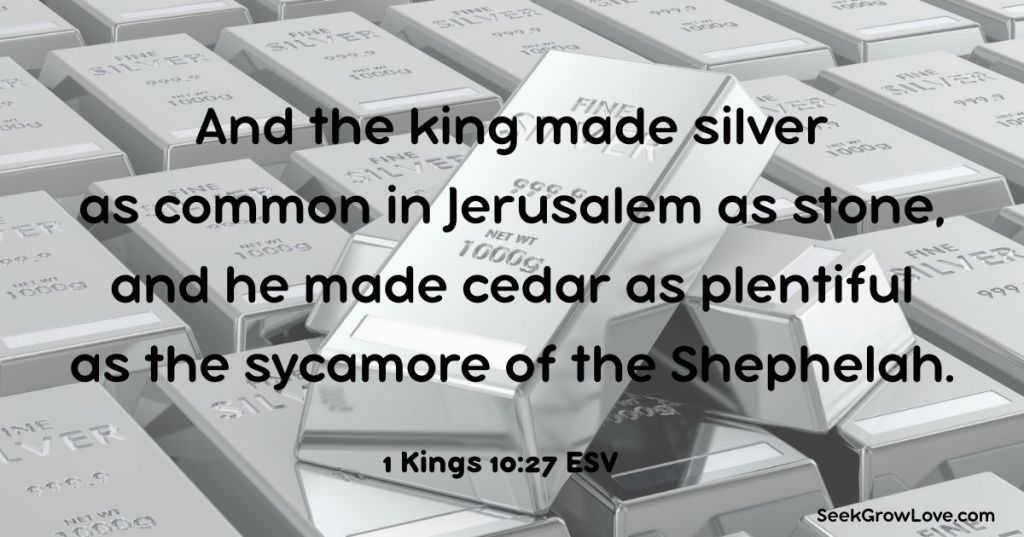
These chapters list staggering amounts of gold, military strength, trade networks, luxurious possessions, and political influence. None of those things were automatically sinful by themselves. But together they reveal a king whose attention was gradually shifting from simple devotion toward accumulation, prestige, and earthly security.
The human heart has a dangerous tendency to turn gifts into idols.
The Queen of Sheba recognized that Solomon’s wisdom came from God. Sadly, Solomon himself would eventually begin losing sight of that truth.
That makes these chapters deeply relevant for us.
Sometimes the greatest spiritual threat is not suffering.
Sometimes it is success.
The Bible never teaches that money, achievement, or influence are the ultimate goal. In fact, all earthly kingdoms eventually fade. Solomon’s kingdom — despite all its glory — would soon begin unraveling.
But God’s coming Kingdom will not collapse.
Its foundation will not be gold, military power, or political influence. It will be built upon righteousness, justice, resurrection, and the rule of God’s appointed King.
That is why our hope must never rest primarily in earthly prosperity.
Because even the greatest human kingdoms eventually crack.
Three Things to Remember
- Prosperity can distract us from God.
Success often tests the heart more than hardship does.
- Blessings should point us back to the Giver.
The Queen of Sheba recognized God’s hand in Solomon’s wisdom.
- Earthly kingdoms never last forever.
Only God’s coming Kingdom will endure permanently.
It is easy to assume we are spiritually strong when life is going well.
But sometimes the most dangerous words a person can say are:
“I’ve got this.”
Solomon’s story reminds us that no amount of wisdom, wealth, or success can safely replace humble dependence upon God.
Reflection Questions
- Have you seen evidence in your own life or in others that, “prosperity can be spiritually dangerous”?
- Focus in on your own life – what blessings have you received that have then stolen some of your time, desire and devotion away from serving God with all your heart?
- Do you own too much? Do you value things too much? What is your greatest treasure?
- Are you more humble or prideful, thankful or entitled, generous or greedy, kingdom-seeking or self-centered? Is your heart, time and finances more focused on possessions in this life or properly preparing for the one to come?
Prayer
Dear Father – I don’t want any thing that will distract me from doing what You want me to do. I want to keep growing closer and closer to You, not further away. Help me remove excess that gets in the way. Help me be thankful and generous with what You have given me and my family, always focused on You and Your coming kingdom. May my life show that You are my greatest treasure.


