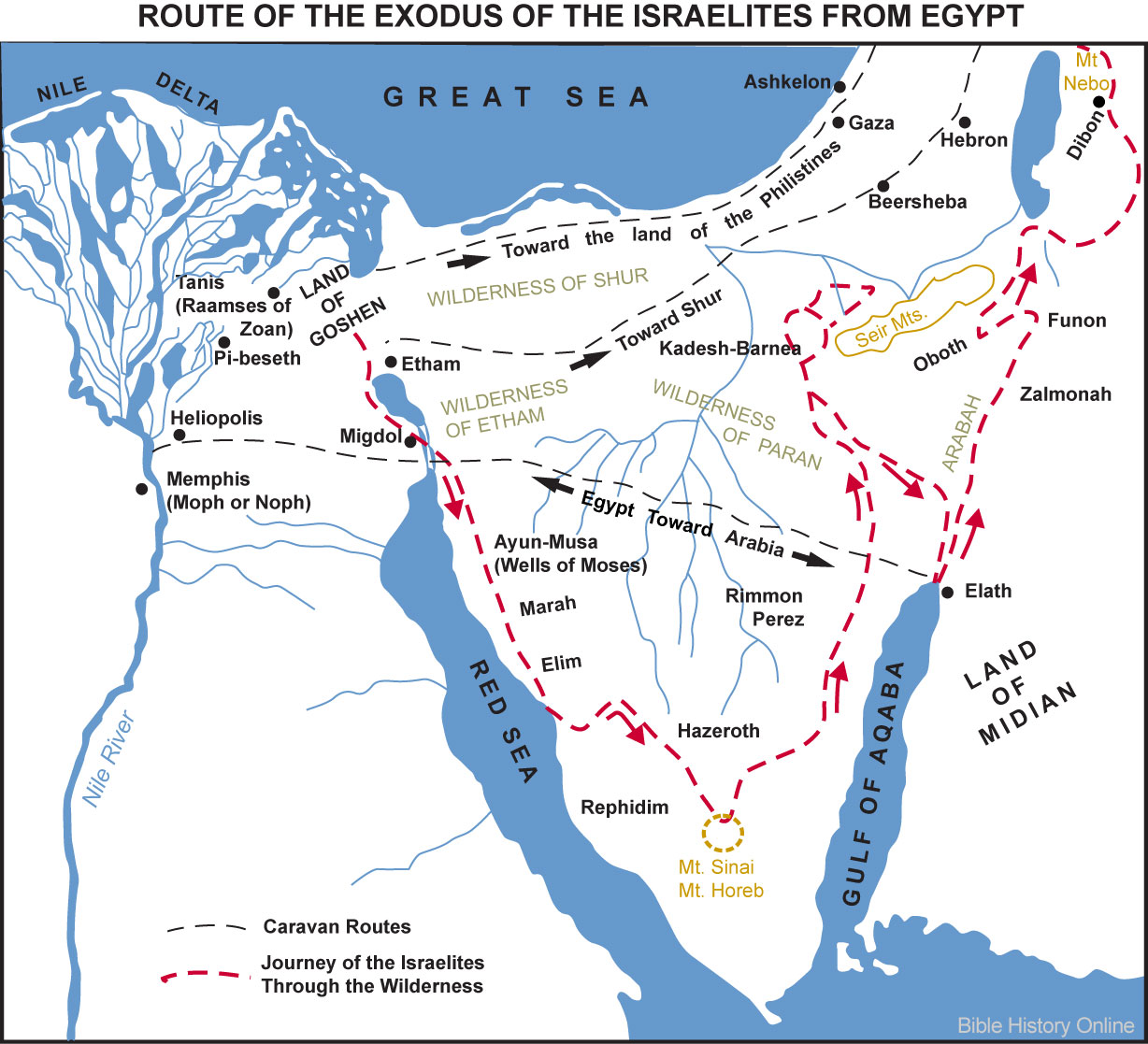
Moses and the Israelites’ wilderness wanderings continue on in Numbers 19-20. In previous chapters as we’ve seen, God faithfully shows up for Moses, choosing him and the Levites as the priesthood to be the leaders and go-betweens between God and the Israelite people. In Numbers 20, Moses has to deal with the Israelites’ rebellious spirit again. They came fighting against Moses saying, “If only we had perished when our brothers perished before the Lord. Why have you brought the Lord’s assembly into this wilderness for us and our livestock to die here? Why have you led us up from Egypt to bring us to this evil place? It’s not a place of grain, figs, vines, and pomegranates, and there is no water to drink!” (Numb. 20:3-5).
Even though God continued to provide for the Israelites time and time again, the Israelites had yet to learn to trust in him. They questioned God’s purpose for them and even stated that they wished they had died with the Israelites who had been killed in the plague after Korah’s rebellion. One rebellion had just been resolved with the blossoming of Aaron’s branch, but the people were again questioning Moses’ leadership because of their circumstances in the wilderness.
Moses responds as he normally does – by falling face down before God to beg God for help. God responds to Moses and Aaron and gives them specific instructions to follow: take your staff and speak to a rock. Then, water will flow out. However, Moses, heated in the moment, rashly gathers the assembly and says to them, “Listen, you rebels! Must we bring water out of this rock for you?” Then, he struck the rock twice and water gushed out (Numb. 20:9-11). In this pivotal moment of Moses’ leadership, he does not respond with level-headed humility. Instead, he responds rebelliously towards God because of his frustration with the people. By forcefully striking the rock and saying that it was him – Moses – who brought the water out, he took the glory away from God and placed it on himself. Moses decided that he was going to be the one to save the Israelites, and he forcefully showed them what he could do.
I totally can identify and sympathize with Moses in this moment. He loved God. He loved the people. And, he truly wanted what was best for the people. But, he got frustrated. He was tired and probably thirsty. He was overwhelmed. Because of this, he made a mistake with dire consequences; he would not lead the people into the promised land. He got caught up in the feelings of the moment, the seeming impossibility of shepherding the Israelite people into a trusting, righteous way of living and into the promised land. When he looked at his situation, he may have felt trapped, may have felt hopeless, or may have just felt mad. The one thing he forgot to do was to view those feelings in light of the character of God. He forgot to trust in who God was – to remember that despite what the Israelites were saying, God was always in Moses’ corner.
We all have times where the circumstances we are in cause us to be blinded by the feelings we have. We may feel stuck, tired, hopeless, mad. Maybe we feel like we just want to hit something. Or we just want to give up. But remember – God is in our corner. When we face those difficult times, we can trust that he will always come through.
~ Cayce Fletcher
Read or listen to today’s Bible reading at Biblegateway.com: Job 1-2 and 2 Corinthians 2 .




 If you are in that moment, remember that God does not leave Elijah there, and he doesn’t want to leave you there either. Instead, he says, “Get up and eat (v. 5). After Elijah eats twice, he goes on a journey forty days and forty nights to the mountain of God. There, Elijah waits, first through a great wind, then through an earthquake, and lastly through a fire. In each of these places, he does not hear God’s voice. Finally, he hears it in the soft whisper, as God asks him “What are you doing here Elijah?” (v. 13) Elijah responds by saying, “I have been very zealous for the Lord God of Hosts, but the Israelites have abandoned your covenant, torn down your altars, and killed your prophets with the sword. I alone am left, and they’re looking for me to take my life” (v. 14). Elijah feels this despair because he had forgotten what God just showed him. In the desert when he was hungry, God was there with provision. He had forgotten that in the showdown, God was there with provision. When we turn our eyes from God to focus on our fractured circumstances, it can lead us to doubt. But, one remedy for that doubt is not only to remember the character of God but also to remember how God has exhibited that character in previous actions of faithfulness. We can trust in him not only because of what we know from the Bible but also because of what we know from our own lives. So, if you are in a wilderness period in your life, pause and remember God’s past faithfulness instead of dwelling on your despair. These reminders can help us to remember that even in our darkest times, God will carry us through.
 Over the next few days, we’re going to look at four wilderness stories in the bible to learn a lesson about what the wilderness is and what it can teach us. The first Wilderness Wandering Lesson is this: