Which are You?

Old Testament Reading: Leviticus 3 & 4
Psalms Reading: Psalm 48
New Testament Reading: 1 Corinthians 1

Let’s play a quick game together, shall we? I’m going to give you two separate lists to study, each with a dozen synonymic adjectives, and then ask you questions about them. 

List 1: idiotic, half-witted, brainless, imprudent, ill-advised, senseless, reckless, foolhardy, lunatic, absurd, unwise, nonsensical

List 2: sage, clever, informed, astute, sensible, prudent, judicious, discerning, insightful, perspicacious, sharp-witted, enlightened

Who is the first person to pop into your head when you see each respective list? 


Which list best describes you currently?

Which list would you rather have read about you at your funeral? 

The first set of words contains synonyms for the word “foolish”, and the second one lists synonyms for “wise”. The end of I Corinthians 1 is contrasting foolishness and wisdom as it relates to God vs. man, and how God empowers us to do His work. Paul writes beginning in verse 25 (ESV), “For the foolishness of God is wiser than men, and the weakness of God is stronger than men. For consider your calling, brothers; not many of you were wise according to worldly standards, not many were powerful, not many were of noble birth. But God chose what is foolish in the world to shame the wise; God chose what is weak in the world to shame the strong; God chose what is low and despised in the world, even things that are not, to bring to nothing things that are, so that no human being might boast in the presence of God. And because of him you are in Christ Jesus, who became to us wisdom from God, righteousness and sanctification and redemption, so that, as it is written, ‘Let the one who boasts, boast in the Lord.'”

This verse causes me to bubble over with inspiration and gratitude every time I read it! I take great joy in reading accounts of the underdogs in the Bible whom God used to do great things, and in believing that He can do the same with me. Moses had a speech impediment, but God used him to speak with Pharoah and deliver the Isaelites from slavery. Rahab was a prostitute, but God designated her to save His spies and she was then in the lineage of Jesus. David was only a grungy, petite shepherd, but God used him to defeat Goliath. (David later served God as a great King of Israel, despite being a murderer and adulterer.) Gideon, who was the least important of his family (which was the weakest of his tribe), was hiding when an angel sent from God called him “Mighty Warrior”, but God led him to defeat the Midianite army with nothing but a miniscule army and God’s power. 

BUT GOD. 

BUT GOD. 

BUT GOD throughout history has called people to do great things through his power. Most of them were not already rich or famous or powerful, but when God gave them His power, He did mighty things through them! Even in the New Testament, we read in Acts 4:13 that people were amazed that Peter and John were “unschooled, ordinary men.” 

God is still active and working today. He wants us to strive for wisdom and seek Him. God wants to use you to do great things for Him! God is still using his people in big ways to impact their communities and the world. No matter your history, education level, age, job, or any other excuse you might share for why God can’t use you, remember… He loves to use imperfect people for His glory. 

-Rachel Cain

Reflection:

*What is your excuse for why God shouldn’t use you? Pray for Him to show you the way He sees you and give you His power. 

*What is God calling you to do that might be scary or out of your comfort zone? Pray about that situation and ask Him to fill you with His power! 

*What has God revealed about Himself today?

The Awesome Lord Most High

Old Testament Reading: Leviticus 1 & 2
* Psalms Reading: Psalm 47
New Testament: 1st & 2nd Chronicles Introduction – see below

Psalm 47 is all about praising God and realizing His power. In my Bible (ESV), it is titled, “God is King over All the Earth”. When the sons of Korah wrote this psalm/song, perhaps they had just completed a great military victory, or maybe there was some other big event that called for a celebration! 

It’s easy to praise God when things are going well, right? Or… do we even remember to praise Him in the good times? A lot of us probably come before God most often when we need something. Sometimes we treat him like a cosmic genie or Santa Claus, asking for the things we want. Sometimes, we simply get busy and forget Him during the good times, but when we need His intervention, then we remember to pray. 

It is so important to remember (and I am speaking to myself here too!) to praise God regularly, and talk with Him often. No one likes having that “friend” who only calls when they need something; however, if we have a dear friend in need, we want to help them! God is our Father who cares greatly for us, and He wants a relationship with us. So instead of just asking Him for what we need, we should remember to praise Him regularly and get to know Him better by reading His Word and listening for His still, small voice to speak to our souls. 

-Rachel Cain

Reflections:

  1. Rewrite Psalm 47 into your own words, using actual examples from your own life. Sing or pray the psalm to your Heavenly Father! 
  2. What picture do you get of God from your reading today?

In preparation for beginning 1st Chronicles tomorrow in our New Testament reading, here is our…

Introduction to 1st & 2nd Chronicles

Paul wrote the books of 1 and 2 Corinthians to the church in Corinth which he had personally founded.  The city of Corinth was rich and sinful, and the church was struggling to resist the ungodly influences of the pagan society.  Paul wrote 1 Corinthians to the church in Corinth specifically to address division and sin in the church.

The most well-known chapter is 1 Corinthians 13, also known as the love chapter.  This is sandwiched between two other chapters focusing on spiritual gifts and their use in the church.

The other well-known chapter is 1 Corinthians 15, also known as the resurrection chapter.

In 2 Corinthians, Paul defended the fact that he was an apostle.  He emphasized the suffering he had endured for the gospel.  He explained that he had not visited the church in Corinth again because he didn’t want to have to come down hard on them publicly.  He was happy they had addressed the sin in the church.  He emphasized the need to financially help other believers, and pointed out that “God loves a cheerful giver”.

Paul warned in 2 Corinthians 13:5, “Examine yourselves to see whether you are in the faith; test yourselves.  Do you not realize that Christ Jesus is in you – unless, of course, you fail the test?”

I suspect that if Paul were to write to Christians today, he would write something very nearly like 1 & 2 Corinthians, so pay attention as you read it.

-Steve Mattison

Be Still – Daddy’s Got You

Old Testament: Leviticus Introduction Below
*Psalms Reading: Psalm 46
New Testament Reading: Romans 16

I am a Daddy’s girl, through and through. As a child, you could usually find me hiking with my dad, reading books with him, snuggling up to him, or helping him with a building project. He was so strong, secure, safe. Now, as his terminal illness has progressed, I have much more of a parental role toward him than he does toward me, but I’ll still always consider myself a Daddy’s girl. 

Sometimes I like to sit back and just observe my daughters interacting with my husband too. They fawn over him! They want to attend all the Daddy-Daughter dances together. They draw him sweet pictures regularly. They beg him to scratch their backs to get them to sleep. When they are scared, they run to him for comfort and protection, knowing that he is strong and gentle.

Though in this flawed and sinful world many fathers don’t live up to God’s ideals, we all do have a Heavenly Father who wants to guide and protect us. 

“God is our refuge and strength, a very present help in trouble.” (Psalm 46:1, ESV)  I’ve always loved this verse. It has spoken to the depths of my soul during many tumultuous times in my life. Following these encouraging introductory verses, Psalm 46 proceeds to mention many catastrophic events – the earth gives way, mountains fall into the sea, waters roar, mountains tremble – and calls us to have no fear during these times. Verses 4 through 9 then remind us of the power and provision of our God. 

“Be still and know that I am God.” This verse I have both underlined in my Bible and written in the margins so I will be sure to notice it as I read. It is a good reminder that when all the chaotic events occur (both the ones mentioned in this Psalm as well as any others that happen in my own life), I am still called to find shelter in His stillness and remember that God is on the throne and He is in control. I don’t know about you, but “be still” is a tough command for me to follow; I like to always keep my hands and mind busy. My mind, actually, does not often settle down at all; anxiety has been my constant (uninvited) companion for as long as I can remember. However, when I purposefully choose to be still, basking in the presence of God, I can feel His peace wash over me like a spring rain. It takes a lot of effort, as I am not naturally driven to “be still”, but I’ve never been disappointed following a quiet moment with God; to the contrary, I find a renewed sense of purpose and strength when I remember – rather, KNOW within the depths of my soul! – that He is God.

“‘Be still, and know that I am God; I will be exalted among the nations. I will be exalted in the earth!’ The LORD of hosts with us; the God of Jacob is our fortress.” God is our protector, our fortress… our Daddy who loves us so much! 

-Rachel Cain

Reflections:

1. Pray this Psalm today. Think about it intently as you say each word. 

2. Choose a time this week that you can “be still and know that He is God” – bask in his presence for a while as you praise and pray. 

3. What in your reading today helps you KNOW that He is God? What are His qualities?

In our Old Testament reading, yesterday we finished reading Exodus, tomorrow we will begin Leviticus – here today is our

Introduction to Leviticus

Leviticus is the third book in the Old Testament, and the middle book in the Torah.  Moses wrote Leviticus, which is mostly a record of God dictating His rules to Moses – while the Israelites were camped in front of Mount Sinai.

The recurring theme in Leviticus is, “Be holy, because I [God] am holy”.  Leviticus 20:26 sums up the whole book pretty well, “You are to be holy to me because I, the Lord, am holy, and I have set you apart from the nations to be my own.”

God had rescued the Israelites from slavery to belong to God.  They had served the Egyptians, and now they must serve God.  And in order to do that, they needed to know what God required.

As you read, you’ll be struck repeatedly by the fact that God is holy, and people aren’t.  God gave all these rules because He wanted His people to be holy, and if they followed all these rules, they would be holy.  The story of Nadab and Abihu in Leviticus 10 is a stark reminder that misdirected zeal for God can result in death. 

You will see that reconciliation is possible for those who break God’s laws in ignorance, but only punishment awaits those who defiantly break God’s laws.

You will recognize that some rules were fulfilled in Jesus.  For example, Leviticus 23 describes the “Feasts of the Lord”, which have fulfillment in Jesus.  For example, Jesus fulfilled the 4 Spring feasts on the exact calendar day of the feast.  I suspect the 3 fall feasts will be ultimately fulfilled exactly when Jesus returns.

  • Passover – Jesus *was* the Passover lamb, and was killed on the date of Passover
  • Unleavened Bread – Just as yeast was to be removed from houses, Jesus removed sin to his grave on this date.
  • Firstfruits – Jesus was raised from the dead on the date of the feast of firstfruits.
  • Feast of Weeks (or Pentecost) – The Holy Spirit was poured out on the believers on this date in Acts 2.
  • Feast of Trumpets – I believe this will be the date the last trumpet sounds
  • Day of Atonement – I suspect this may be the date of the Great White Throne Judgement
  • Feast of Tabernacles – I suspect this may be the date of God’s dwelling with men.

Ultimately, I suspect what you’ll recognize is that God is holy, and no matter how hard we try, we just can’t follow all His rules to be holy.  You’ll acknowledge that we couldn’t please God on our own. And will appreciate all the more that God sent his one and only Son to reconcile us to Himself.

-Steve Mattison

A Guiding Presence

Old Testament Reading: Exodus 38, 39 & 40
Psalms Reading: Psalm 45
New Testament Reading: Romans 15

Last year, my kids and I studied history from Creation through Greek civilization in our homeschool, covering the entire Old Testament alongside simultaneously-occurring secular world history. This study included details about the Mosaic Tabernacle, God’s temporary dwelling place in the wilderness before His people reached their Promised Land. As a visual and kinesthetic learner, I love to bring our lessons to life in a tangible way, so you can imagine how excited I was to discover that a traveling life-size interactive Tabernacle replica would be near our stomping grounds last summer! 

The sun scorched down over the Tabernacle when we arrived, which I humored was very fitting since the real Tabernacle was built while the Israelites wandered in the desert. (However, keeping four young children calm in the heat was a bit of a challenge, and I had to make a pilgrimage from the Holy of Holies to the nearest well – I mean, my van – to get water to satisfy my parched children… but I digress). While we had already learned a lot about the Tabernacle before, it was fascinating to see it all with our own eyes and learn all about the symbolism of the Tabernacle to the Messiah and the coming Kingdom. 

In Exodus chapter 40, we see that the Tabernacle, after several chapters of minute details describing its construction, was finally erected, “and the glory of the LORD filled the tabernacle… throughout all their journeys, whenever the cloud was taken up from over the tabernacle, the people of Israel would set out… for the cloud of the LORD was on the tabernacle by day, and fire was upon it by night, in the sight of all the house of Israel throughout all their journeys.” (Exodus 40:34-38, ESV). 

The Tabernacle provided a way for God to live among His people again and guide them through the desert. I do wish that God’s direction was as clear to me as his presence in a cloud pillar leading me through this confusing life (wouldn’t that be nice?), but there is no longer a need for a Tabernacle like in those days, because Jesus is now our mediator and our Shepherd, and the Bible is our map and GPS. Because of Jesus, we have a direct line to God anytime, anywhere through prayer. Our ultimate hope is that someday, we will live together in the Kingdom with God, where there will not even need to be a sun because God will provide all the light we need! 

Our Psalm reading ties into this well. Check out verse 6: “Your throne, O God, is forever and ever. The scepter of your kingdom is a scepter of righteousness; you have loved righteousness and hated wickedness.” God is on the throne! Hallelujah! 

And I’ll leave you with this from our Romans passage (verse 13), as you journey through this life relying on God’s direction: “May the God of hope fill you with all joy and peace in believing, so that by the power of the Holy Spirit you may abound in hope.” Our hope is through Jesus in God the Father, who is preparing a Kingdom for us that will be permanent (not temporary like the Tabernacle), a place where we can one day dwell with Him. Go in that hope! 

-Rachel Cain

Reflection:

  1. Do some research about the symbolism of the Tabernacle to Jesus and the Kingdom. What speaks to your heart? 
  2. How is your prayer life, your connection with God? What could make it better? (Consider downloading a prayer app that pops up your prayer requests onto your phone throughout the day if, like me, having an uninterrupted prayer time is challenging). 
  3. What do you learn about God in our Bible reading today?

Love Letters

Old Testament Reading: Exodus 35, 36 & 37
Psalm Reading: Psalm 44
New Testament Reading: Romans 14

Happy Valentine’s Day! 

Have you ever received a mushy love letter that resulted in a permanent smile pasted on your face? My late father-in-law Rex Cain shared stories about writing love letters to his girlfriend Grace (who later became his wife) when he was states away at Oregon Bible College in the 1950s. He would save his pennies for postage stamps and brief long-distance phone calls while he anxiously awaited her letters via snail mail. 

Communication has changed a lot since then. Now we can reach people almost anytime, anywhere, as they probably carry their cell phones everywhere they go. We can video chat instantly with people from all over the world and send written correspondence lickety-split via email and text. (Call me old fashioned, but even though I am very grateful for the technological advancements that have allowed us so much more contact with each other, nothing can quite replace a handwritten letter or card from someone you love.)

I’ve heard it said that the Bible is God’s love letter to us. I also envision that many of the Psalms are the writer’s love letters to God. Psalm 44 begins as a love letter style – it might have even been put to music. The author writes about God’s faithfulness to His people in the past and renews their devotion to God. “For not in my bow do I trust, nor can my sword save me… In God we have boasted continually, and we will give thanks to your name forever. Selah.” (Psalm 44:6, 8 ESV)

Then in verse nine, this love letter turns a bit sour as the writer wonders aloud why God seems to have abandoned them. Something bad has happened to Israel, perhaps some battles that didn’t end well, even “though we have not forgotten you, and we have not been false to your covenant. Our heart has not turned back, nor have our steps departed from your way…” (vs 17,18). Israel is still faithfully serving God, but things are not going well for them. 

Here, the writer is poetically penning the collective thoughts and doubts of God’s chosen people, speaking directly to God. They need help and answers! Perhaps sometimes we are afraid to tell God what we really think, but He already knows. He created us with emotions and feelings, and I think He wants us to share those with Him. But notice how this psalm ends. It doesn’t conclude by harping on God and turning away from Him. Rather, in verse 26 we observe an optimistic plea as the author remembers how God has always been faithful in the past, and believes that He will yet again show up to help His people: “Rise up; come to our help! Redeem us for the sake of your steadfast love!”

Even in your times of doubting, don’t forget to remember God’s faithfulness. The Bible is packed with true tales of God’s provision, and if you think back hard enough into your own life, I bet you will recognize many times when God came through in your darkest moments as well. 

-Rachel Cain

Reflections: 

Pen your own psalm. In this season of life, would your psalm be mostly praise and triumph, or more lamenting and questioning? Be sure to remember His faithfulness in your life as you close out the psalm. 

Do you journal? It can be a great way to remember God’s faithfulness in your life. It doesn’t have to be elaborate; you can even do a quick bullet journal style. Journaling is a concrete way to look back to see God’s provision in your life. Jump in this week and give it a try! 

Which  part of this psalm speaks most to your heart today? 

What does God want you to know about Him?

The LORD Reveals Himself

* Old Testament Reading: Exodus 33 & 34
Psalms Reading: Psalm 43
New Testament Reading? Romans 13

Those silly Israelites. Even when God demonstrates His power in huge and miraculous ways like splitting the sea in half so they could walk across, they STILL forget and worship other gods. I would never be like that if I were an Israelite! … or would I? Sometimes, I forget God’s faithfulness and love too, and am tempted to wander from Him. I’m betting you have been like me and the Israelites at different seasons of life as well. 

Yesterday, in Genesis 32, we read about Moses bringing the Ten Commandments down from the mountain, only to find his people worshiping a golden calf they had made, claiming it was a god who had delivered them from Egypt. Aghast, Moses drops the two tablets and lectures the people! Moses pleads forgiveness for the Israelites, and God agrees to continue leading them toward the promised land. As a punishment, however, a great plague comes upon the people. 

In chapter 33, God commands the people to leave Sinai. Moses has a meeting with God, in which he asks for God’s presence to lead them and requests to see God – this wish is granted, but God only allows Moses to see his back. In chapter 34, Moses takes two new tablets to the presence of the LORD. As the LORD passes by, He says as a renewal of His covenant to the people (and a verse which is quoted many more times throughout the Bible), “The LORD, the LORD, a God merciful and gracious, slow to anger and abounding in steadfast love and faithfulness, keeping steadfast love for thousands, forgiving iniquity and transgression and sin, but who will by no means clear the guilty, visiting the iniquity of the fathers upon the children and the children’s children, to the third and fourth generation.” (Exodus 34:6,7 RSV)

This passage starts out as hope-filled and encouraging, right? We see God, YHWH, describe himself as full of mercy and grace, not easily angered, overflowing with love and faithfulness, and forgiving… But He will enforce consequences for sin. These verses show us that while God is merciful, he is also just. (I’ll link below a short video that I think provided a lovely explanation of these verses).  

After this meeting, God offers forgiveness and renews his covenant with his people. He reminds them of His best ways to live, and when Moses returns from the mountain after 40 days and nights with God, he is physically glowing!

The last half of Romans 13 ties in nicely in that it restates many of the same ten commandments! Paul reminds the people of Rome that the root of the commandments is actually love, and loving your neighbor as yourself. “Love does no wrong to a neighbor; therefore love is fulfilling the law.” (Romans 13:12, The Message). 

If we truly love God and love people, and show it with our actions toward them, we will be fulfilling the law and living more like God intended us to live. 

-Rachel Cain

Reflections: 

  1. Watch this video to learn more about the interpretation and poetic nature of verses 6 and 7:  bibleproject.com/explore/video/character-of-god-exodus/
  2. Who would you treat differently if you truly love your neighbor as yourself? 
  3. What does God reveal about Himself in your reading of His words today? How would you describe God to a child – or to a co-worker?

Ordinary Moments

Old Testament Reading: Exodus 31 & 32
Psalms Reading: Psalm 42
* New Testament Reading: Romans 12

The vast majority of life’s moments are simply ordinary for most of us. Even people who have exciting careers or riches and fame still have low-key moments in their lives. As a homeschooling mom, I like to think that I spend my days helping my children pursue an excellent education and engaging them in infinite stimulating activities with their full cooperation; in reality, though, I find that much of my time passes by tidying up messes I didn’t make, preparing meals that will soon be rejected, arguing about why they actually do need to learn the process of simplifying fractions, and washing laundry that has mysteriously amassed into a mountain overnight.

Even as a young adult, before my four Blessings were born, I often felt overwhelmed with the mundane. I wanted to do something BIG for God, not spend my long days as a teacher begging my students to stop throwing spitballs during the read-aloud.

Around that time, God showed me Romans 12 in a new light, through The Message paraphrase. The first verse, which was revolutionary to me, goes like this: “Take your everyday, ordinary, life – your sleeping, eating, going-to-work and walking-around life, and place it before God as an offering.” For decades now, I have had that scripture posted around my home so I am always reminded of the value of the humdrum rhythms of life, the chance to make a difference in even the most unremarkable situations. Because most of life is without pomp and circumstance, we must learn to live each day with purpose, as all of our interactions with others have a kingdom impact. We should consider ourselves missionaries in the midst of our own school, job, and life.

Intrigued by the Danish lifestyle of hygge that represents a more simplistic and intentional way of living, I picked up the book “Holy Hygge” by Jamie Erickson. Have you heard of hygge (pronounced “HYOO-guh”)? Hygge is a word with complex meaning that is not directly translatable to English, but I believe that it goes along well with realizing that every moment of our lives is an offering to God. Simply put, “Hygge is a mindset – a way of making the mundane and necessary tasks of life more meaningful and beautiful… [hygge] helps us see that the whole of our lives is greater than the sum total of all the individual moments. The cup of coffee we sip with our roommate at the breakfast table each morning, the quick chat with the coworker as we share an elevator on our way into the office, the smile-and-wave we offer to the playground supervisor each afternoon while sitting in the pickup line – these all become a daily liturgy. We no longer grudge the monotony of a routine because hygge compels us to find the extra of each ordinary moment. In the words of author Annie Dillard, ‘How we spend our days, is, of course, how we spend our lives.’ ” (Holy Hygge, p. 15, 79-80).

Therefore, as followers of Jesus, it behooves us to realize the eternal importance of each action and interaction.  To quote Brennan Manning, “In every encounter, we either give life or we drain it. There is no neutral exchange.” Everything we do – or don’t do – makes an impression for the good or the bad. Every interaction is a chance to point to – or away from – Jesus through our actions. Every moment of our lives is meant to be an offering to God. 

Romans 12 goes on to share a lot about standing out from the world rather than blending into it (verses 1-2) and recognizing our gifts of grace from God and sharing our gifts with the right attitudes (verses 3-8). The rest of the chapter is almost like “popcorn proverbs” – little tidbits of reminders about how we should handle life’s challenges. In The Message version, each piece of advice has a second part to either reinforce the concept, show cause and effect, or suggest what NOT to do. I’ve put them into a chart below so you can see how they go together: 

Love from who you are;Don’t fake it.
Run for dear life from evil;Hold on for dear life to good.
Be good friends who love deeply;Practice playing second fiddle.
Don’t burn out;Keep yourselves fueled and aflame.
Be alert servants of the Master,cheerfully expectant.
Don’t quit in hard times;Pray all the harder.
Help needy Christians;Be inventive in hospitality.
Bless your enemies;No cursing under your breath.
Laugh with your happy friends when they’re happy;Share tears when they’re down.
Get along with each other;Don’t be stuck up.
Make friends with nobodies;Don’t be the great somebody.
Don’t hit back;Discover beauty in everyone.
If you’ve got it in you, get along with everybody.Don’t insist on getting even; that’s not for you to do. “I’ll do the judging,” says God. “I’ll take care of it.”
Our Scriptures tell us that if you see your enemy hungry… go buy that person lunch.
if he’s thirsty…get him a drink.
Your generositywill surprise him with goodness.
Don’t let evil get the best of you; get the best of evil by doing good.

This is a great list of things we can practice in the midst of our ordinary moments, and doing so will help shine the light of Jesus to the world around us, helping them see him in the monotony of life, too. 

-Rachel Cain

Rachel is the wife to Pastor Dan Cain and homeschooling mama to four children.

Reflection questions:

  1. Choose one or two of the “popcorn proverbs” in the chart that are a struggle for you. How and when will you apply them to the monotony of your days? 
  2. Romans 12:2 (MSG) says, “Don’t become so well-adjusted to your culture that you fit into it without even thinking.” What are some ways that you have fit in with the culture, but God is calling you to stand out for Him? 
  3. Think about the most monotonous part of your day. How can you redirect to focus on God during those times? (Listen to the Bible on audio while driving, pray while doing dishes, etc). 
  4. What has God shown about Himself in your reading of His words today?

Now is the Day of Salvation!

Old Testament Reading: Exodus 28-30 (see note below)
Psalms Reading: Psalm 41
* New Testament Reading: Romans 11

Editor’s Note: I apologize for missing the fact that three days ago our reading plan jumped to 3 chapters a day in our Old Testament reading – it will do that occasionally (mostly during genealogies, land surveys, and detailed “building” descriptions) to fit the whole OT into one year. If you have been following the devotions reading schedule not the printable schedule/download you might have a little bit of catching up to do in Exodus. Sorry!

We’ve talked the last two days about the Israelite’s rejection of God, and the subsequent grace God has shown us Gentile believers who he has adopted into His family.  Gentiles, both in Paul’s day and also today, might be tempted to condemn the Israelites and also become conceited because of God’s grace toward us.

Paul addressed the potential conceit we might feel in Romans 11:17-21 which says, “If some of the branches have been broken off, and you, though a wild olive shoot, have been grafted in among the others and now share in the nourishing sap from the olive root, do not boast over those branches.  If you do, consider this: You do not support the root, but the root supports you.  You will say then, “Branches were broken off so that I could be grafted in.”  Granted.  But they were broken off because of unbelief, and you stand by faith.  Do not be arrogant, but be afraid.  For if God did not spare the natural branches, he will not spare you either.”

I find this analogy interesting.  In orchards, often a wild rootstock is more hearty than a domesticated rootstock.  So when grafting, someone will graft a desirable shoot that will produce good fruit onto a strong rootstock to get the best tree possible.  Nobody would ever consider grafting an autumn olive (or Russian olive) branch onto a productive olive tree.  Autumn olives are an invasive species, have thorns, and are completely undesirable.  Even deer don’t eat autumn olives.  

So, given Paul’s analogy, we are worthless.  Israelites, in the analogy, were far more valuable than we are.  If God pruned them off because of their unfaithfulness, and then grafted us in, we should be thankful, not conceited.  Because if God pruned them, he will certainly prune us who are worth so much less, if we don’t continue in our faith.

Paul said that some of the motivation for his preaching to the Gentiles was to make the Israelites jealous, and want to be reconciled with God.  Some wonder if God would ever accept back a person who walks away from God.  Romans 11: 23-24 suggests that God will welcome rebels back, “And if they do not persist in unbelief, they will be grafted in, for God is able to graft them in again.  After all, if you were cut out of an olive tree that is wild by nature, and contrary to nature were grafted into a cultivated olive tree, how much more readily will these, the natural branches be grafted into their own olive tree!”

This is great news, not only for Israelites, but also for us.  First, we have been extended the opportunity of salvation because of the Israelites’ rejection of God.  And secondly, because if God will welcome them back when they have walked away from Him, this suggests He will welcome us back if we have turned away from Him.

It’s a dangerous thing to presume on the grace of God.  But if you have wandered, come back to God while there is still time.  2 Corinthians 6:2 says, “For he says, ‘In the time of my favor I heard you, and in the day of salvation I helped you.’ I tell you, now is the time of God’s favor, now is the day of salvation.“

If you haven’t yet accepted Christ as your Lord and Savior, today is the day of salvation.  If you accepted Him in the past, but have wandered away, today is the day to come back.  We don’t know when Jesus will return.  I assume it will be relatively soon.  Once He does return, it will be too late to accept Him.  Today is the day.  Seize the day.

-Steve Mattison

Reflection Questions

  1. What do you need to do since Now is the day of salvation? How will you do it?
  2. How have you been a recipient of God’s grace? Tell Him how you feel about it.
  3. What do you think of God’s grafting skills? What have you learned about Him in our Bible reading today?

Are you Zealous for God?

Old Testament Reading: Exodus 22 & 23
Psalms Reading: Psalm 40
* New Testament Reading: Romans 10

Paul starts Romans 10 like he started Romans 9, wishing that Israelites would be saved.  He lamented in verses 2-4, “For I can testify about them that they are zealous for God, but their zeal is not based on knowledge.  Since they did not know the righteousness that comes from God and sought to establish their own, they did not submit to God’s righteousness.  Christ is the end of the law so that there may be righteousness for everyone who believes.”

Are you zealous for God?  If so, great!  But as Paul pointed out, zeal is not enough.  Do you try to establish your own righteousness (through rigidly following a bunch of rules or making up your own rules)?  That didn’t work out too well for the Israelites, and won’t work out well for you either.

Fortunately, Paul revealed what *is* needed in Romans 10:9-10, “If you confess with your mouth, “Jesus is Lord,” and believe in your heart that God raised him from the dead, you will be saved.  For it is with your heart that you believe and are justified, and it is with your mouth that you confess and are saved.”

This sounds too simple to be true, but it is.  We need to publicly proclaim “Jesus is Lord” – and live it, not just say it.  And we need to believe that God raised Jesus from the dead – not just head knowledge, but knowledge that will transform our lives.  If we do this, we will indeed be saved!  Praise God!

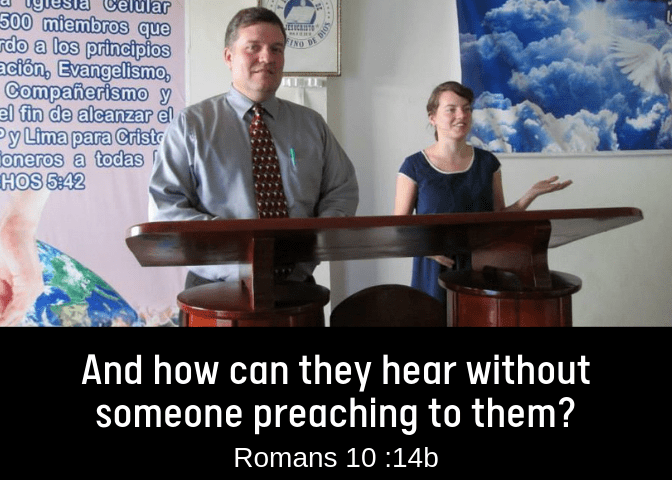
Since this is true, evangelism is critical!  Paul points out in Romans 10:14-15, “How then can they call on the one they have not believed in?  And how can they believe in the one of whom they have not heard?  And how can they hear without someone preaching to them?  And how can they preach unless they are sent?  As it is written, “How beautiful are the feet of those who bring good news!”

If we have the right relationship with God, we will have the love of God in our hearts.  And just as God doesn’t want anyone to perish, we too won’t want anyone to perish.  But how can people be saved if they don’t know about God and Jesus?  And how can they know unless someone tells them?  In the “Steve Mattison” translation, this passage pretty clearly says that you and I have a responsibility to tell others about the good news of the gospel, and you and I have a responsibility to send missionaries to tell even more people.  How are you doing with that?

A lot of people who dabble at Christianity need to get serious about going all in with God or quit pretending.  In Revelation 3:15-16, Jesus said, “I know your deeds, that you are neither cold nor hot.  I wish you were either one or the other!  So because you are lukewarm – neither hot nor cold – I am about to spit you out of my mouth.”

You may be wondering how does this apply to you?  I’m glad you asked.

Have you made a public confession that Jesus is your Lord?  If so, does your life reinforce or contradict that confession?

Do you believe in your heart that God raised Jesus from the dead?  If so, does your life bolster or refute that head knowledge?

Are you actively spreading the gospel and/or funding missionaries so they can spread the gospel?

-Steve Mattison

Reflection Questions

  1. See Above!
  2. What has God revealed about Himself today?

Is God Faithful, or Not?

Old Testament Reading: Exodus 21 & 22
Psalms Reading: Psalm 39
* New Testament Reading: Romans 9

Romans 8 ended with the promise that nothing can separate us from the love of God.  But then in the next chapter, we find Paul saying, in Romans 9:2-4, “I have great sorrow and unceasing anguish in my heart.  For I could wish that I myself were cursed and cut off from Christ for the sake of my brothers… the people of Israel.”

You may be thinking, “Wait a minute, is God faithful, or not?  Didn’t he choose the Israelites as His chosen people originally?  Apparently, that didn’t work out so well, so then God threw them away, and now Christians are His chosen people.  Will God get tired of us too, and throw us away too?”

I’m glad you asked.  Let’s look at that.

God chose the Israelites.  They were His people. God gave the Israelites the law, the temple worship, and the promises, the patriarchs, and the human ancestry of Jesus.   God extended tremendous grace to them.   God was (and is) faithful.  But despite that, many turned their back on God.  Romans 9:6 says, “It is not as though God’s word had failed.  For not all who are descended from Israel are Israel.”  The problem was with the Israelites.  They weren’t faithful to God.  Even though they had the right ancestor (Abraham), they didn’t have the right heart.

Romans 9:27-28 later says, “Though the number of the Israelites be like the sand by the sea, only the remnant will be saved.  For the Lord will carry out his sentence on earth with speed and finality.”

This should be a warning to us.  God told us in Romans 8 that nothing external can separate us from the love of God.  But we are free to walk away from Him if we choose.  Even though God extended tremendous grace to Israel, many rejected God, and only a remnant will be saved.  God has now extended tremendous grace to us Gentiles through Christ.  Unfortunately, I fear the same will be true of those of us who call ourselves Christians.

Romans 9:30-32 then stresses again the importance of righteousness by faith, “What shall we say then?  That the Gentiles, who did not pursue righteousness, have obtained it, a righteousness that is by faith; but Israel, who pursued a law of righteousness, has not attained it.  Why not?  Because they pursued it not by faith but as if it were by works…”

To recap, God is merciful, gracious, and faithful.  He showered His love on the Israelites, but many rejected him.  And many who didn’t reject Him tried to please God by just following a bunch of rules.  I picture their attitude as something like this:  “I’m going to do what God demands, but it doesn’t mean I have to like it.”  God then rejected those who rejected Him and those who tried to earn their way into his favor.

God has showered his love on us through Jesus, and has invited us to be adopted as His children.  How will you respond?  Will you reject Him?  Will you try to earn His favor by following a bunch of rules?  Or will you develop a loving relationship with Him and live by faith?  Only one of these choices will result in eternal life.  Which will you choose?

-Steve Mattison

Reflection Questions

  1. In this chapter on God’s Sovereign Choice how many times does Paul quote the Old Testament? Why do you think Paul does so?
  2. Are there times you have questioned if God is faithful? Do you find anything in Romans 9 that would have helped you (or did help you) through these times? How can you help someone else who is questioning?
  3. What do we learn about God and His character and roles and desires in our reading of His words today?