To See and Be Seen

Luke 18:15-19:48

Devotion by Paula Kirkpatrick (Minnesota)

What do you think, when you hear the name Zacchaeus?  Short man, tax -gather, tree-climber.  All correct.  But there’s more to think and learn about this man, as we consider his conversion in Luke 19:1-10. 

The Bible tells us that Zacchaeus was rich.  This reality seemed to be common among tax-gathers in Jesus’ day, mainly because they consistently cheated people as they collected taxes.  Tax collectors were not only scorned by the Jewish people, but they were often shunned by them as well. 

Would you want to socialize with someone who claimed you owed more money to the government than you actually did, and kept your “stolen” funds for himself?  Of course not!

We can only imagine that Zacchaeus, despite his riches, felt the sting of rejection.  Besides his poor reputation as a “thief” to the masses, the Bible tells us he was short in stature.  His presence may not have been authoritative.  He was small in height, and a “small” man in his business dealings. 

But Zacchaeus was also curious.  The Bible says, “he was trying to see who Jesus was.” 

A multitude was passing through Jericho, following this stranger.  “Who was he?” Zacchaeus wondered. 

Running ahead, he climbed up a sycamore tree for a better view.  And to his utter disbelief, Jesus looked up into the tree and said, “Zacchaeus, hurry and come down, for today I must stay at your house.”

Zacchaeus’ world was turned upside down, and instantly changed.  Hurriedly, he descended from the tree and welcomed Jesus into his home.  Onlookers reacted with disapproval, grumbling that Jesus “has gone to be the guest of a man who is a sinner.”

But Zacchaeus’ transformation was real.  In response to the crowd’s condemning remarks, he stopped in his tracks and declared, “Behold, Lord, half of my possessions I will give to the poor, and if I have defrauded anyone of anything, I will give back four times as much.”

No longer was he a short, scorned tax-gather of Jericho.  Zacchaeus was a fresh follower of the Son of Man. 

“Jesus said to him, ‘Today salvation has come to this house, because this man, too, is a son of Abraham. For the Son of Man came to seek and to save the lost.’”  (Luke 19:9,10)

In Sunday’s reading, the rich young ruler could not commit his entire life to following Jesus.  (Matt. 19:16-30)   How could he give up his lifestyle, his riches?  Sadly, he turned away from Jesus to go back to his opulent life. 

In contrast, Zacchaeus eagerly declared his charitable intentions to the listening crowd, with no prompting from Jesus.  His heart was forever changed.

What is it concerning the account of Zacchaeus that touches us so deeply?  Perhaps, it is that he never expected to be discovered in the sycamore tree that day.  He just wanted to see what all the commotion was about on the streets of Jericho.  Never could he have predicted that the man he was trying to see, would see HIM, would TRULY SEE HIM.  Zacchaeus, once a cheating tax collector, was now a follower of Jesus.

So many people in our world, in our daily personal world, need to be “seen” by us.  They are discouraged and depressed, hurting and hopeless.  They need a friend.  Jesus is waiting to be their friend.  He just needs an introduction.  Will you be the one to make it for him?

Reflection Questions

  1.  Have you ever felt “invisible” in your life or relationships?  Why?
  2. Why do you think Zacchaeus wanted to see Jesus?  Did he feel, even with his riches, something was missing in his life?
  3. Think about someone who needs to be “seen” by Jesus this week.  What can you do?   

Open Our Eyes, Lord

Matthew 20-21

Devotion by Paula Kirkpatrick (Minnesota)

Even as Jesus neared the end of his earthly ministry, he daily continued to teach and to heal.  Leaving Jericho on his way to Jerusalem, (Matt. 20: 29-34), a great multitude followed him. 

Close your eyes and imagine the sounds of the boisterous crowd—lighthearted laughter among the men as they swapped stories; shrieks and giggles from the children as they ran ahead of their parents; crying babies consoled by their mothers.  But above the increasing din of the devoted crowd, pleading voices shouted out to Jesus.

“Lord, have mercy on us, Son of David.”  Two blind men, sitting by the road, had understood the chatter of the passing people.  Jesus was nearby! 

Their cries riled the multitude, and they demanded that the men be silent.  But the crowd’s command encouraged the two men even more.  “Lord, have mercy on us, Son of David.” 

Jesus stopped and regarded the two pleading men.  “What do you want me to do for you?” he asked. 

They said to Him, “Lord, we want our eyes to be opened.”

The Scriptures say Jesus was moved with compassion.  Picture his concern, his tenderness as he gazed upon them.  Reaching down, Jesus touched their eyes, and IMMEDIATELY they regained their sight.  “And followed him.”

We can only ponder how joyfully the two men joined the crowd that had tried to silence them, the crowd that now heard their shouts of praise.  Jesus had healed them, and their lives would never be the same.  Not only had the blind men’s eyes been opened, their hearts had been stirred. 

Jesus was moved with compassion when he saw them.  The blind men, now healed, were moved with devotion when they followed him. 

There’s a worship chorus that puts it so simply.

“Open our eyes, Lord.

We want to see Jesus.

To reach out and touch him.

And say that we love him.”

(Open Our Eyes Lord by Robert Cull)

Do we open our eyes each day to the wondrous compassion and love of our Savior?  Do we reflect on the matchless gift he has given us, the sacrifice of his life so ours might be saved?  Do we respond with love and affection to our “best friend?” 

Let this be our daily prayer. 

“Open our eyes, Lord

We want to see Jesus.”

Discussion Questions

  1. Why do you think the crowd tried to silence the two blind men?
  2. Why do you think Jesus asked, “What do you want me to do for you?”  Didn’t he already know?
  3. How will you “open your eyes” this week?

Choosing to be Last

Matthew 19 & Mark 10

Devotion by Paula Kirkpatrick (Minnesota)

When I taught a primary Sunday School class many years ago, there were three eager learners in the class: a brother and sister, and another young boy who was their cousin.  The brother and sister were blond and blue-eyed, a sharp contrast to their cousin’s thick dark hair and brown eyes, but each one was bright and engaging, and so fun to teach.  They were also quite competitive.

“Who’s going to pass out the crayons?” I asked.  “I will,” declared one student, only to be challenged by another voice chiming in, “No, I will!”  Inevitably, the remaining student would declare, “I want to do it!  It’s my turn!” 

For several weeks, this vocal battle ensued each time a new task presented itself during our classtime.  We tried to keep track of “turns,” but it still didn’t seem to quiet the noise, or the challenge of, “No, it’s my turn!  He did it last week.”  Our precious learning time was being shortened by these weekly squabbles.

I needed a solution and Scripture provided the answer.  Matt. 19:30 says, “But many who are first will be last; and the last, first.”  Mark 10:19 repeats the same sentence. 

In Matt. 19:16-30 and Mark 10:17-31 we find the story of Jesus’ encounter with the rich, young ruler. 

One day, as Jesus was walking along the road, a rich young man came up to him. “Teacher,” the man said, “what good thing should I do to have eternal life?”

Jesus answered, “You know the commandments.” Jesus then began to list several of them.

“I have obeyed all the commandments since I was young,” the rich young man replied.

Jesus looked at the young man and loved him.  Then, he said to him, “You lack only one thing. Sell all you have and give the money to the poor so that you will have treasure in heaven. Then come, follow me.” When the young man heard those words, he turned and walked away because he had many possessions.

As the rich young man sadly departed, Jesus declared to his disciples, “How hard it will be for those who are wealthy to enter the kingdom of God.”  Jesus’ words amazed the disciples.  Then he repeated again, “Children, how hard it is to enter the kingdom of God.  It is easier for a camel to go through the eye of a needle than for a rich man to enter the kingdom of God.” 

Jesus’ statement astonished the disciples.  We can imagine them with eyes wide open, jaws dropped, and simply speechless for a few moments.  Finally, they asked, “Then who can be saved?”  Jesus responded, “with men it is impossible, but not with God; for all things are possible with God.”

The rich young ruler had followed the law.  Yet Jesus wanted him to sell everything he owned.  Jesus saw what the disciples could not see—the young ruler’s heart.  His status, his possessions, were more important than following the example of Jesus, who came to serve mankind and ultimately sacrifice his life for all. 

Peter, still trying to understand the meaning of his teacher’s words, exclaimed, “Behold we have left everything and followed you.” 

Jesus’ loving response brought assurance. 

The disciples’ present sacrifices would be rewarded in the age to come.  They had left family and livelihood to follow their beloved Master and assist him in his ministry.  To others, they appeared as common laborers, poor and at the bottom of society.  But in the coming kingdom, their status would be undisputed. 

Paul says it well in I Timothy 4:7-8.  “I have fought the good fight, I have finished the course, I have kept the faith;in the future there is reserved for me the crown of righteousness, which the Lord, the righteous Judge, will award to me on that day; and not only to me, but also to all who have loved His appearing.”

When I shared this story with my students, a change happened.  As we began our class the next Sunday, I asked, “Who’s going to pass out the crayons?” 

I received these responses.  “You go ahead and do it;” “No, you can go first;” “I want to be last!”  Attitudes had changed!

All three children now wanted to be LAST each and every time!

“But many who are first, will be last; and the last first.”

Reflection Questions

  1.  Why is it hard for wealthy people to follow Jesus? 
  2. What “riches” do you have in your life that make it difficult to live for Jesus?
  3. How can you be “last” as you interact with others this week?    

Trust, Gratitude and Humble Prayer

Luke 17:11-18:14

Devotion by Jerry Wierwille (New York)

As Jesus continues his journey toward Jerusalem, he encounters people from all walks of life—outcasts, disciples, religious leaders, and ordinary men and women. In Luke 17:11–18:14, there are various stories and teachings involving miracles and parables where Jesus calls people to deeper trust, genuine gratitude, and humble prayer.

Trust and Thankfulness

This section of Scripture opens with Jesus traveling along the border between Samaria and Galilee. Ten men with serious skin diseases (traditionally translated as “lepers”), who were shunned by society and desperately wanted mercy, call out to him from a distance, saying, “Jesus, Master, have mercy on us” (Luke 17:13). Jesus responds not with an immediate healing, but with a command: “Go and show yourselves to the priests.” As they obeyed, they were cleansed. But while all ten were physically healed, one man (the Samaritan) displayed gratitude which brought him a deeper wholeness—spiritual as well as physical. Jesus tells him, “Your trust has made you whole” (Luke 17:19). The passage reveals that faith and thankfulness are both vital to experiencing the fullness of God’s blessing.

One helpful insight here is that trust often requires action before we see results. The lepers had to begin their journey to the priests while still unhealed. Their obedience was an expression of trust, and as they went, God’s power healed them. Trust, even as small as a mustard seed, has the power to move what seems immovable (cf. Luke 17:6).

Reflect: Where is God inviting you to trust him more, even before you see the outcome? How might cultivating a heart of gratitude open the door to God’s work in your life?

Persistence in Prayer

Jesus then tells the parable of The Persistent Widow (Luke 18:1-8), encouraging his followers to “always pray, and not become discouraged.” The widow’s relentless pursuit of justice before an indifferent judge is contrasted with God’s attentive care for his people. If even an unjust judge can be moved by persistence, how much more will God respond to the cries of his beloved children when they persistently come to Him in prayer?

The parable is about the necessity of persistent prayer and unwavering hope, even when answers seem delayed. Jesus asks, “When the Son of Man comes, will he find trust on the earth?” (Luke 18:8). Our perseverance in prayer is an act of trust and also a testimony to our trust in God’s character.

Reflect: In what prayers do you need to be more persistent? What discouragements in your life can you bring honestly before God, trusting that he hears and cares?

Humility Before God

Finally, Jesus tells the parable of The Pharisee And The Tax Collector (Luke 18:9–14). The Pharisee stands confidently, listing his religious achievements and looking down on others. The tax collector, by contrast, stands at a distance, unable even to lift his eyes, but nonetheless, he prays: “God, be merciful to me, a sinner.” Jesus declares that it is the humble tax collector who goes home “righteous,” not the devout Pharisee. The reason Jesus gives is that “everyone who exalts himself will be humbled, but whoever humbles himself will be exalted.”

This parable reveals that one must be humble when coming before God. Humility, openness, and a childlike posture are essential for receiving the kingdom of God (Luke 18:17). Our standing before God is not based on our prowess, devoutness, or accomplishments, but on our honest need for his mercy, because there is nothing we can do to deserve it.

Reflect: In what ways do you find yourself comparing your spiritual life to others? How can you approach God with greater humility and openness in your heart?

Encouragement

As you read these stories and teachings of Jesus, may you be inspired to trust in God more deeply, return thanks for His goodness and blessing, persist in prayer, and humble yourself before Him.

Jerry works on the REV Bible (revbible.com) as the chair of the REV Translation Committee and the lead NT translator. He also has a podcast on the Book of Proverbs called “Words of Wisdom” (stfi.org/podcasts/words-of-wisdom-podcast) that people can find on Spotify, Apple, Pandora, etc.

The Resurrection and The Life

John 11

Devotion by Jerry Wierwille (New York)

Jesus was a master teacher but also a compassionate friend, deeply moved by the struggles and sorrows of those he loved. In John 11, we encounter one of the most powerful stories in the Gospels where we see Jesus’ emotion. This record invites us to consider how Jesus meets us in our grief, reveals the glory of God, and calls us to trust in God’s power—even when all hope seems lost.

The narrative opens with a startling circumstance—Lazarus, the beloved brother of Mary and Martha, is gravely ill. And so, the sisters send word to Jesus, confident in his love and his ability to heal. Yet, in a surprising twist, Jesus delays his journey. The text says, “Now Jesus loved Martha and her sister and Lazarus. But when Jesus heard that Lazarus was sick, he didn’t depart immediate but stayed two days longer in the place where he was (John 11:5-6). This delay, however, does not show Jesus as being indifferent. Given the timing and distance for the message to travel, it is very likely that Lazarus died soon after the messenger was sent by Mary and Martha, and perhaps Jesus already knew this by revelation when the message arrived. Furthermore, Jesus knew that through this situation, though, God’s glory will be revealed in a way that will deepen the faith of his followers.

Reflect: When have you experienced a delay in answered prayer? How might God be using that time to deepen your trust or reveal His purpose?

Walking in the Light

When Jesus finally prepares to go to Judea, his disciples are concerned for his safety. Jesus responds, “Are there not twelve hours in the day? If anyone walks in the day, he does not stumble, because he sees the light of this world” (John 11:9). Jesus uses this physical reality to make a spiritual point: as long as we walk in the light of God’s revelation, we can move forward with confidence, even in dangerous or uncertain circumstances. Jesus models courageous trust in God, reminding us that our times are in God’s hands.

Reflect: What does it look like for you to “walk in the light” in your daily life? Where do you need courage to trust God’s guidance, even when the path is uncertain?

Jesus—the Resurrection and the Life

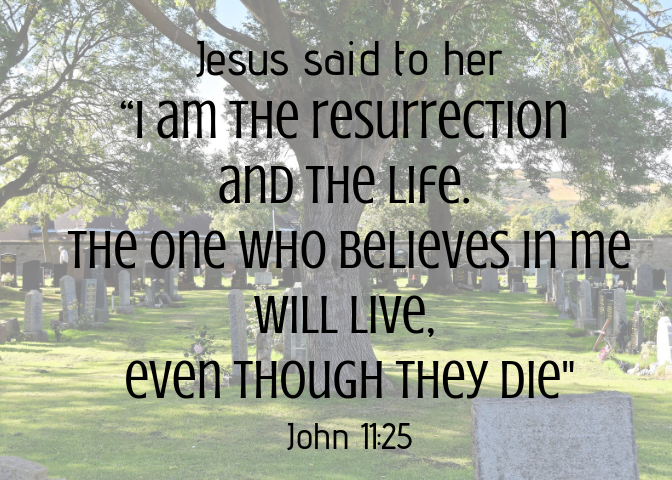
As Jesus approaches Bethany, Martha meets him with a mixture of faith and sorrow. She believes Jesus could have prevented her brother’s death, yet she holds onto hope that somehow Jesus might still do something. Jesus boldly declares, “I am the resurrection and the life. The one who believes in me will live, even though he dies” (John 11:25). This is not just a promise for the distant future; it is a present reality. Jesus reveals that through him, God’s life-giving power is available now, even in the face of death. Lazarus’ resurrection serves as a glimpse and foreshadowing of the future resurrection of all God’s people to new life.

Reflect: How does Jesus’ promise of resurrection shape your perspective on loss and the comfort of the hope? In what areas of your life do you need to trust that God’s power can bring new life?

The Glory of God Revealed

When Jesus sees Mary and the others weeping over Lazarus, he is deeply moved—so much so that he himself begins to weep (John 11:35). Jesus had a special attachment to Lazarus, and his tears show his genuine empathy and sorrow. Jesus’ grief is mingled with righteous anger at the pain and brokenness that death brings. He stands at the tomb, not as a rabbi or religious figure, but as a friend who was there with Mary and Martha in their pain.

Jesus intentionally prays out loud so that all those who were present at the tomb would believe that God sent him (John 11:42). Then, with a loud voice, Jesus called to Lazarus for him to come out of the tomb. As everyone stood there watching, Lazarus emerges from the tomb still wrapped in grave clothes. This miracle is a powerful display of God’s glory—His power in action. Lazarus’ resurrection is not the final victory over death, but a sign pointing to the greater hope that all who trust in Christ will one day be raised to everlasting life in the age to come.

Reflect: How does knowing that Jesus was moved by compassion encourage you in your own struggles? Who around you might need the comfort of your presence and solidarity today?

Encouragement

This record reminds us that Jesus meets us in our deepest pain and invites us to trust in God’s power and timing. Jesus is the resurrection and the life, and through him, we have hope that transcends even the death and the grave. May you find comfort in knowing that the same Jesus who wept at Lazarus’ tomb walks with you today, offering life, hope, and the promise of resurrection. Trust in God’s love, timing, and power in every circumstance in your life.

The Master Teacher at Work

Luke 16:1-17:10

Devotion by Jerry Wierwille (New York)

Jesus was a master teacher, and he used parables to teach and challenge his listeners to reconsider their present attitudes or perspectives. In Luke 16, Jesus teaches on wealth, faithfulness, forgiveness, and humble service, inviting us to consider how our daily choices reflect our commitment to God’s kingdom and to live in light of the age to come.

Wise Stewardship and Eternal Perspective

Jesus begins this section with the Parable of the Wise Manager (Luke 16:1-9). In this story, a house manager is called to give an account of his stewardship after being accused of wasting his master’s possessions. Facing dismissal from his position, he shrewdly reduces the debts of his master’s debtors, hoping to secure their goodwill for his own future. Surprisingly, the master commends the manager—not for his dishonesty, but for his prudence and foresight. Jesus then says, “For the sons of this age are in their own generation more prudent than the sons of the light. And I myself say to you, make friends for yourselves by means of unrighteous wealth, so that when it fails they will receive you into the tents in the age to come” (Luke 16:8-9).

Scripture teaches that our resources—whether money, talents, or opportunities—are temporary and ultimately belong to God. Jesus calls us to use what we have now with a perspective toward the age to come, investing in relationships and acts of generosity that have lasting value in God’s kingdom. Furthermore, our “wealth” includes not only material goods, but also our mental and physical abilities. The challenge is to use all we have to prepare for the future life God promises rather than clinging selfishly to earthly treasures here and now.

Reflect: How can you use your resources today to bless others and honor God? What does it mean for you to “make friends” through your actions and generosity with respect to the age to come?

Faithfulness in Little and Much

Jesus continues on in Luke 16, saying, “The one who is faithful in a very little is also faithful in much” (Luke 16:10). This is such an important point about the need to be mindful of small things before thinking about larger things. In addition, Jesus warns that we cannot serve both God and wealth, for our loyalties will inevitably be divided (Luke 16:13). The religious leaders, who loved money, scoffed at Jesus’ teaching, but he reminded them that God knows the heart (Luke 16:14-15). Jesus’ emphasis is on faithfulness in small things as the foundation for greater areas of responsibility in God’s eyes. Our daily choices, even in seemingly insignificant matters, reveal where our true allegiance lies and where our focus is placed.

Reflect: In what “small” areas of your life is God calling you to be more faithful? How might your attitude toward money or possessions reflect the way you trust in God?

The Rich Man and Lazarus: A Warning and a Promise

Jesus then tells the Parable of the Rich Man and Lazarus (Luke 16:19-31). The rich man lives in luxury, ignoring the suffering of Lazarus, a poor beggar at his gate. After death, their roles are reversed: Lazarus is comforted, while the rich man is in torment. The parable warns that earthly status and comfort are fleeting, and that our response to the needs of others has eternal consequences. This story is a powerful call to compassion and to heed God’s Word, for “if they do not listen to Moses and the prophets, they will not be persuaded if one rises from among the dead” (Luke 16:31).

Reflect: Who are the “Lazarus-es” in your life—those in need whom God is calling you to notice and care for? How does this parable shape your view of justice and mercy?

Forgiveness, Faith, and Humble Service

In Luke 17:1-10, Jesus addresses the challenges of his followers with regard to their life in community with one another. He warns against causing others to stumble and commands a spirit of continual forgiveness: “If your brother sins, rebuke him, and if he repents, forgive him…even if he sins against you seven times in the day” (Luke 17:3-4). Jesus’ disciples, feeling the weight of this command, cry out, “Increase our faith!” Jesus assures them that even faith as small as a mustard seed is powerful when a person trusts in God.

Finally, Jesus reminds his disciples that serving God is not about seeking recognition or reward. “When you have done all that you were commanded, say, ‘We are unworthy servants; we have only done what was our duty’” (Luke 17:10). Even after faithful obedience to God, our attitude should be one of humility, not entitlement. We are to focus on our duty and responsibility as disciples and not be preoccupied thinking about what reward we might receive.

Encouragement

Jesus is calling us to live with wisdom, faithfulness, compassion, and humility as his disciples. As you reflect on these teachings, consider how you can steward your resources for God’s glory, forgive generously, and serve with a humble heart. May you find encouragement in knowing that God sees your faithfulness, values your compassion, and honors your humble service in His kingdom.

With Humility, Carry Your Cross & Find the Lost

Luke 14-15

Devotion by Jerry Wierwille (New York)

Luke 14-15 presents some of Jesus’ most challenging teachings, calling us to embrace humility, count the true cost of discipleship, and rejoice in God’s relentless pursuit of the lost. Also, we find some of Jesus’ most memorable parables and statements that help us to understand what it means to be a servant and call him “Lord,” and the depth of God’s grace for all who turn to Him.

Humility and Hospitality in God’s Kingdom

Luke 14 opens with Jesus at a Sabbath meal in the house of a Pharisee, where he observes how the guests desired to sit in places of honor. Jesus uses this moment to teach about humility, saying, “Everyone who exalts himself will be humbled, and whoever humbles himself will be exalted” (Luke 14:11). In God’s kingdom, Jesus is declaring that status is not measured by one’s social standing, but by a heart that is willing to serve and take the lowest place. Jesus goes further, urging his listeners to invite not just friends and wealthy neighbors to their feasts, but “the poor, the maimed, the lame, the blind” (Luke 14:13). True hospitality, he teaches, is generous and selfless, reflecting God’s own gracious invitation to everyone.

Reflect: In what ways can you practice humility in your daily interactions with others? Who in your life might need an invitation to experience God’s love through your hospitality or kindness?

Counting the Cost

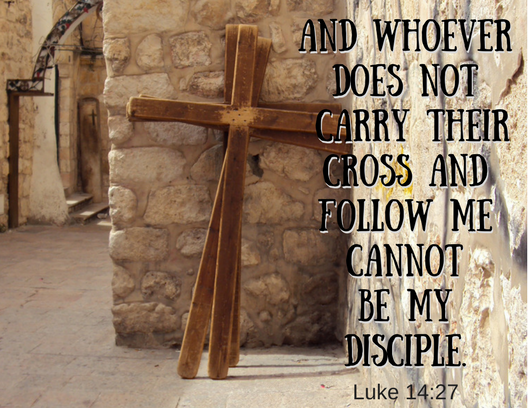
As crowds follow Jesus, he turns to them with sobering words and says, “If anyone comes to me, and does not hate his own father, and mother, and wife, and children, and brothers, and sisters, yes, and his own life also, he is not able to be my disciple. Whoever does not carry his cross and come follow after me is not able to be my disciple” (Luke 14:26-27). This statement would have certainly caused his audience to be taken back, wondering what this stipulation could mean. But Jesus is not commanding hatred or any ill-will toward others. Rather, he is using intentionally strong language to emphasize the supreme loyalty required to follow him. Discipleship means putting Jesus above all other relationships and comforts, and being willing to endure hardship and sacrifice for his sake. He illustrates this with parables about building a tower and a king preparing for war—both which require careful consideration of the cost (Luke 14:28-33). Jesus’ main point is that following him must be a wholehearted commitment and not a partial or casual decision.

Reflect: What does it mean for you to “carry your cross” in your current season? Are there certain comforts or relationships that are impeding your commitment to Christ that you do not want to let go of?

The Joy of God’s Restoration

Luke 15 is a chapter overflowing with God’s heart for the lost. The religious leaders grumble at Jesus because he welcomes and eats with sinners; something which they find repulsive and utterly alarming. In response to their judgmentalism and resistance to seek those who need help, Jesus tells three parables—the lost sheep, the lost coin, and the lost son. Each story highlights God’s relentless pursuit of the lost and the extravagant joy that accompanies when even one sinner repents and is saved (i.e., “found”).

The Parable of the Lost Sheep (Luke 15:4-7) shows a shepherd leaving ninety-nine sheep to find the one that is lost, rejoicing when it is found. “I tell you that in the same way there will be more joy in heaven over one sinner who repents than over ninety-nine righteous people who have no need of repentance.” In like manner, the Parable of the Lost Coin (Luke 15:8-10) and the Parable of the Lost Son (Luke 15:11-32) echo this theme about how God’s love actively seeks, restores, and celebrates the return of those who were lost.

These parables reveal the depth of God’s grace and mercy and the value he places on every individual, no matter how small they might seem. In the parable of the Lost Son, in particular, the father’s embrace of his long-lost son illustrates God’s loving heart and readiness to forgive and restore, no matter how far we have wandered, if we will just turn back to Him in repentance.

Reflect: Where have you experienced God’s restoring grace in your life? Who in your life might need to hear about God’s joy in welcoming the lost home?

Encouragement

This section of Scripture invites us to embrace humility, count the cost of following Jesus, and rejoice in God’s heart for the lost. As you reflect on these teachings of Jesus, consider how you can embody Christ’s humility, make courageous choices to follow him, and join in God’s joy by welcoming others into His grace and forgiveness. May you find encouragement in knowing that every step toward Jesus is met with God’s open arms and heaven’s jubilant celebration, for this is the will of God.

Be Ready, Repent, Choose Jesus

Luke 12-13

Devotion by Jerry Wierwille (New York)

Luke 12–13 contains a series of teachings and parables from Jesus that invite us to reflect deeply on our priorities, our readiness for God’s kingdom, and the call to genuine repentance.

Living with Kingdom Readiness

Jesus’ words in Luke 12:35-40 call his followers to be dressed and ready for service and to “keep your lamps burning.” He uses the image of servants waiting for their master’s return, emphasizing the need for constant readiness. Through the analogy, Jesus emphasizes that life is not just about mundane daily routines, but first and foremost, it is about living in anticipation of God’s purposes and Christ’s return.

This urgency is underscored in Luke 12:54-56, where Jesus rebukes the crowds for being able to interpret the weather but failing to “interpret this [present] time.” Jesus’ ministry marked a pivotal moment in God’s plan, and people were called to recognize the significance of what God was doing through him. The call is to spiritual alertness—to see beyond the surface of daily events and discern God’s activity in our world, especially in and through Jesus the Messiah.

Reflect: Are you living with a sense of spiritual urgency? What might it look like for you to “keep your lamp burning” in your current season of life? How can you cultivate a heart that is attentive to God’s work happening around you?

Unless You Repent…

Luke 13 opens with a sobering reminder of the necessity of repentance: “Unless you repent, you will all perish as well” (Luke 13:3, 5). Jesus refers to recent disasters—the Galileans killed by Pilate and those who died when the tower in Siloam fell—not to explain the tragedies, but to call everyone to carefully examine their own lives.

Jesus’ call to repentance is not meant to instill fear, but to bring attention to the opportunity for repentance. God’s patience gives us time to turn to Him, as illustrated by the parable of the barren fig tree (Luke 13:6-9). The owner seeks fruit, but the gardener pleads for more time to nurture the tree. In the same way, God graciously gives us opportunities to bear fruit in our lives, but there is a time when judgment will happen and the tree that does not bear fruit will be “cut down” (Luke 13:9).

Reflect: Where do you sense God inviting you to repentance and growth? Are there areas in your life that need to be surrendered or renewed? How can you respond to God’s patience and grace today?

Choosing Jesus

One of the more challenging statements of Jesus in this section is, “Do you think that I have come to bring peace on the earth? I tell you, no, but rather division” (Luke 12:51). Jesus explains that following him may even divide families, as people must decide whether to trust in him and align their lives with him, or not.

Division is not Jesus’ desire, and neither is conflict. But rather, it is a recognition that the truth of his message demands a response. The good news confronts every person with a choice: will I follow Jesus, even if it costs me personal relationships or people’s approval? The emphasis is not about the outcome of disagreement between people, but to remain a faithful believer and disciple, even when it is difficult and requires significant sacrifice.

Reflect: Are there relationships or situations where following Jesus has brought tension or misunderstanding? How can you remain faithful and loving, even when it is costly to you? What helps you choose Jesus above all else?

Encouragement

Throughout Luke 12-13, Jesus challenges us to live with spiritual urgency, to embrace repentance, and to follow him wholeheartedly—even when it leads to making hard choices.

Take time today to ask God to open your eyes to His work, to soften your heart toward repentance, and to give you courage to follow Jesus wherever he leads and to endure whatever it takes. As you do, may you experience the fruit that comes from a life marked by readiness, transformation, and hope in God’s kingdom.

Who is this Good Shepherd?

Luke 10, John 10:22-42

Devotion by Jerry Wierwille (New York)

John 10:22-42 opens with the Feast of Dedication in Jerusalem, where Jesus walks in Solomon’s porch and faces many direct questions about his identity. The passage is filled with challenges to expected norms, the importance of faith, and the safety and strength of the Shepherd’s hand.

The Challenge of Faith

As Jesus walks through the Temple, a group gathers around him, pressing in on him with questions that reveals both their curiosity but also their skepticism: “How long will you keep our souls in suspense? If you are the Christ, tell us plainly” (John 10:24). Jesus responds by saying, “I told you, and you do not believe. The works that I do in my Father’s name, these testify about me. But you do not believe because you are not of my sheep” (John 10:25-26).

Here, Jesus points out that belief is not simply a matter of intellectual assent or witnessing miracles. True belief is about recognizing the Shepherd’s voice and responding in trust. The works of Jesus—his miracles, his teachings, his ministry—are clear evidence of his mission and that he is from God. Yet, as Jesus notes, only those who are truly his “sheep” respond to him in faith. This situation echoes a recurring theme in Scripture: the spiritual life of faith is not about seeing the miraculous but about having a heart that is receptive to the things of God.

Reflect: Are there areas in your life where you find it difficult to trust Jesus, even when you see evidence of God’s work? What might it look like to move from being less skeptical to more faithful, trusting the Shepherd’s voice even when some answers are not immediate or obvious?

The Shepherd’s Hand

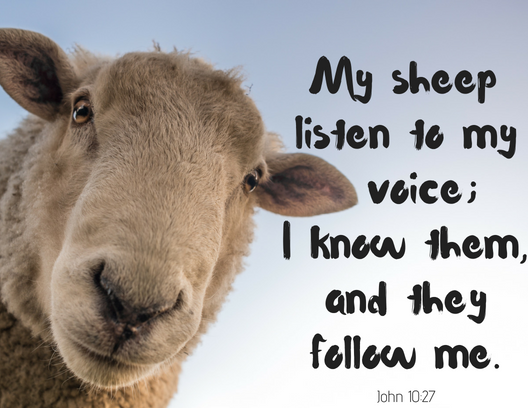
Jesus continues with one of the most comforting promises in all of Scripture: “My sheep listen to my voice, and I know them, and they follow me. I give them life in the age to come, and they will absolutely not perish, and no one will snatch them out of my hand. My Father, who has given them to me, is greater than all, and no one is able to snatch them out of the Father’s hand. I and the Father are one” (John 10:27-30).

This passage reveals one of the most profound promises that comes from belonging to Jesus. His followers are not only known by him, but are also protected by the power of God. The assurance that “no one will snatch them out of my hand” is a promise of lasting spiritual safety and belonging for those who follow Jesus. Undergirding this assertion is the truth about the unity of Jesus and God. But it is not a unity of identity, but about a perfect partnership in purpose and action. This unity in purpose with God and Jesus is the foundation for the believer’s confidence and hope.

Reflect: In what ways do you need to rest securely in the hand of the Shepherd? How does knowing that the purposes of Jesus and God are unified change your outlook on challenges, fears, or uncertainties?

Invitation to Deeper Faith

The immediate response to Jesus is intense and divisive. Some pick up stones, accusing him of blasphemy for making himself “a god” (John 10:33). Jesus, however, points them back to Scripture, referencing Psalm 82:6: “Is it not written in your law, ‘I said, you are gods’?” (John 10:34). He challenges their understanding and invites them to examine his works as evidence of his mission from God: “If I am not doing the works of my Father, do not believe me. But if I am doing them, though you do not believe me, believe the works, so that you will come to know and continue to know that the Father is in union with me, and I am in union with the Father” (John 10:37-38).

As the opposition persists, Jesus withdraws beyond the Jordan, where many people come to him. They recall John the Baptist’s testimony and recognize that everything John said about Jesus was true (John 10:41-42). The Jordan area was away from the hustle and bustle of Jerusalem and was a quiet countryside. Many believe in him there, showing that trust often grows in places and moments where hearts are open and receptive.

Reflect: Are you willing to examine Jesus’ works and words with fresh eyes/ears and an open heart? How can you invite others to explore the truth of who Jesus is, even when it challenges their expectations?

Encouragement

This section reveals who Jesus is and why people should listen to him and believe him. He is the Shepherd who gives life to those who follow him, challenging the audience to move from doubt to faith. Take time today to listen for his voice, trust in his protection, and share his truth with those around you. As you do, may you experience the peace, assurance, and security that only the Good Shepherd can give.

Spiritual Sight – or – Spiritual Blindness

John 9:1–10:21

Devotion by Jerry Wierwille (New York)

Several accounts in John 9:1–10:21 invite us to reflect deeply on spiritual sight, the voice of Jesus, and the abundant life he offers. We are going to look at three separate aspects of the section and then reflect on their significance.

From Blindness to Sight

The section begins with Jesus encountering a man born blind. Jesus’ disciples ask whose sin caused this—his or his parents’—but the question is ill-posed, and Jesus redirects their thinking by saying, “Neither did this man sin, nor his parents; but let the works of God be revealed in him” (John 9:3). Jesus then heals the man, giving him physical sight.

This healing is more than a mere miracle—it’s a sign of God’s power and how God can transform lives. The man’s journey from blindness to sight mirrors the spiritual awakening that Jesus brings to those who invite him into their life. It was undeniable the transformation that had happened physically in the man. Later, when questioned, the man boldly testifies, “One thing I do know, that, though I was blind, now I see” (John 9:25).

Reflect: Where have you experienced God’s transforming work in your life? Where have you been blind but now you see? And are there areas where you still need the light that Jesus brings to break through the darkness that can blind us? The passage encourages us to trust that God can reveal His work in us even in situations that seem hopeless or confusing.

Humility vs. Pride: Who Really Is Blind, And Who Can See?

After noting that the man was healed, the Pharisees investigate, but their hearts remain hardened to the truth. Jesus tells them, “For judgment I came into this world, that those who do not see will see, and that those who see will become blind” (John 9:39). The Pharisees, confident in their own understanding, ask, “We are not blind too, are we?” Jesus replies, “If you were blind, you would have no sin, but now, since you say, ‘We see,’ your sin remains” (John 9:41).

Ironically, Pharisees are both “blind” and “deaf” to the truth. Humble people, like the man born blind, can “see” and “hear” Jesus, while the proud cannot. This theme echoes throughout Scripture: spiritual pride blinds us to God’s work, while humility opens our eyes and ears. The Pharisees thought they could “see,” but that false confidence was their undoing. Jesus says because of this their “sin remains.”

Reflect: Are there areas where pride or self-reliance might be keeping you from seeing or hearing what God wants to show you? Is there a concrete action you can take to promote cultivating a humble, receptive heart in your life?

Hearing and Following Jesus’ Voice

As the section continues, Jesus states, “I am the door. If anyone enters by me, he will be saved, and will go in and go out, and will find pasture. The thief does not come except to steal and kill and destroy. I came so they can have life and have it abundantly” (John 10:9-10). Jesus’ self-ascription is “the Good Shepherd,” and his sheep know his voice and follow him.

When the text says that the true “sheep” (i.e., believers) “hear” the voice of the Shepherd (i.e., Jesus), while others do not, this is not talking about mere intellectual understanding, but about a trusting relationship. To “hear” the voice of Jesus means that you follow him because he leads, protects, and provides for you (his sheep), offering more than what is needed for survival, but a more abundant life.

Reflect: Are you attuned to Jesus’ voice in your daily life? What practices help you recognize and respond to him as your Good Shepherd? In a world full of competing voices and influences, this section invites us to focus on hearing the voice of Jesus and to be willing to follow him wherever he leads.

Encouragement

Through the narrative of this section, we are being challenged to move from spiritual blindness to sight, to embrace humility over pride, and to follow the Good Shepherd who offers an abundant life. Take time today to ask God to open your eyes, soften your heart, and help you listen for Jesus’ voice. As you do, may you experience the fullness of life that he promises and that only he can give.