FREEDOM. Not Legalism. Not Lawlessness. FREEDOM

Friday, August 12, 2022

 Galatians 5

            Every year on the 4th of July people in the United States come together to celebrate our freedom.  If you are living in another country you might have different ways of celebrating freedom or you may not be particularly focused on freedom.  Freedom means different things to different people.  For the person who has been in prison, freedom means being able to go where you want to go and do what you want to do.  For a student who is on vacation, freedom means not having to go to class and turn in homework.  For a person who is single, freedom means being able to date.  For the people who originally established the United States freedom meant being able to choose whatever religion or church that your conscience told you was the way to know God.  It was also about the freedom to self-govern rather than be governed by a dictator.

            Freedom can be a very good thing when it is rightly understood and practiced, but wrongly understood and practiced, freedom can be very dangerous.  America is about freedom in some ways, but not every way.  I’m not free to drive as fast as I want or in whatever direction I want on the highway.  I have to obey traffic laws or else I could cause injury or death to myself and others, or I can be criminally punished and lose the privilege of driving.  Freedom has to be rightly understood.  What am I free from and what am I free to do?

            When Paul talks about freedom here he has a couple of things in mind.  We are saved by God’s grace through faith in Jesus Christ.  We are not saved by following some law or other legalistic ritual practice.  In the Church of Galatia, those who heard Paul preach the Gospel and were baptized into Jesus Christ were set free from the power of sin and death.  They were free to allow the spirit of God to transform their lives so that they could do what is most important, love. 

            Paul is obviously very angry in chapter 5 because he sees that they have chosen to reject the freedom given by the Gospel and have chosen to place themselves under the yoke of slavery to the Jewish Law.  Circumcision was the physical act of mutilating part of your body as a way of marking you as different.  Jewish boys were circumcised to distinguish them as children of Abraham and followers of the Mosaic Law.  One under the Law was required to obey all 611 laws ranging from what foods to eat, to how and where and when to worship, how to properly dispose of human waste, and ceremonially clean mildew.  Paul had been raised under that Law and it didn’t make him any closer to God.  It made him an enemy of Jesus Christ, and it certainly didn’t make him a more loving person.  He found faith in Christ and receiving the Spirit of God to be truly freeing and life-transforming.  He could not imagine going back to the slavery of the law.  So he cannot understand why the Galatian Christians were choosing to trade their freedom in Christ for enslavement to the law.

            Paul’s main emphasis is the Spirit and Love.  “The only thing that counts is faith expressing itself through love.” (Galatians 5:6) “For the entire law is fulfilled in keeping this one command: ’Love your neighbor as yourself.’” (5:14) “The fruit of the Spirit is love” (5:22).  This is what’s most important for Paul, not the practices that separate Jews from Gentiles (circumcision, food, and observing The Law.)

            But Paul also doesn’t want followers of Christ to get the wrong idea about their freedom in Christ.  It is the Freedom from the power of sin, not the freedom to do whatever your flesh desires.  Some believers take grace and freedom to a place where Paul and God never intended for it to go.  The acts of the flesh that Paul lists: “sexual immorality, impurity, and debauchery; idolatry and witchcraft; hatred, discord, jealousy, fits of rage, selfish ambition, dissensions, factions, and envy; drunkenness, orgies, and the like.”  He is clear that a life that is given over to the flesh is not the life that results in life in the kingdom of God in the age to come.  It’s a freedom from the power of sin, not the freedom to do whatever you want that opposes the life of God.

            Receive God’s spirit through faith in Jesus Christ and live a life of love, that is what a life of fruitful and flourishing discipleship to Jesus Christ looks like.  Legalism is one extreme to avoid, lawlessness is the opposite extreme to avoid.  The goal is faith expressing itself through love.

-Jeff Fletcher

Questions for Discussion: 

  1.  Which extreme do you find more challenging in your discipleship- legalism or lawlessness?
  2. Why is our freedom in Christ so easily misunderstood?
No Longer a Slave

Thursday, August 11, 2022

 Galatians 4

            Parts of the Bible have been around for nearly 4,000 years.  Some parts are very clear and transcend time, place, language, and culture.  Instructions to not steal or to not murder generally don’t need a lot of contextual background to be understood.

            Other parts of the Bible come from contexts that are very different from our context and certain points can be confusing or easily lost in translation.  Galatians 4 uses words like slaves, heirs, and sons.  Paul wrote this against the backdrop of the Roman Empire so it is helpful to have a background understanding of civic and family life in ancient Rome to more easily understand Paul’s points in this part of his letter to the Christians in Galatia.

            Rome had different categories of persons.  To be a citizen of Rome was to be a person of privilege.  You had a lot of rights as a citizen: to vote, to run for public office, to get married, to make use of the legal system, to not be tortured or whipped.  This citizenship status and the accompanying rights were given to certain men.  Women had a lesser status as citizens and fewer rights- they could not vote nor run for public office.  Children had no rights, but they came under the protection of their fathers until the time when their fathers released them to become full citizens.

            There were other categories in the Roman Empire including Freedmen (former slaves, now free) who had some rights but were not automatically granted citizenship.  There were also Client States or allies who had some limited rights as citizens but not full citizenship.  Slaves had no rights and were not considered to be persons under Roman law.

            Because Paul was a Roman citizen and was writing to Christians who were in the Roman Empire, they would have had a basic understanding of these facts.  In addition to being a Roman Citizen, Paul was also a Jew and there were elements of the Jewish faith that would also have been well understood by these Galatian Christians, particularly those who themselves were Jews.  Paul also utilizes what is known as an allegorical interpretation of the Bible as he argues his case here.  An allegorical reading sees beyond the literal meaning of the story to the deeper symbolism found therein.

            With this as a background, Paul is showing these Christians that life in Christ is far superior to life under the Jewish Law.  Becoming a Christian is like going from being a slave to becoming a son.  To be a son is vastly better in terms of the rights given compared to being a slave.   Paul uses this to show the stark contrast between living under the law of Judaism vs. being redeemed by God and granted the spirit and the gift of sonship whereby we are now heirs of God’s coming Kingdom.  This should be a no-brainer.  And yet, Paul has been facing opposition from those who are teaching that Gentile converts to Christianity must live under the Jewish Law.  That is like telling an adopted son that he has to live under the rules of the slave.  It’s crazy.

            Today, it’s not terribly likely that you as a Christian are going to be bombarded by people trying to convince you to live under the Jewish law.  When was the last time someone insisted that you get circumcised (if you are an uncircumcised male), eat kosher foods, strictly observe the Jewish Sabbath, make pilgrimages 3 times a year to Jerusalem and offer sacrifices at the temple (when there is no temple anyway)?  We’re not likely to be enticed to enter into the “slavery” of law-keeping.  However, we very likely are being invited to enter into the slavery of lawlessness or sin.  Far more commonly, Paul talks about being a slave to sin and death.  As sons of God, we don’t have to become Jews and follow Jewish dietary and ceremonial laws, but we do have to follow Christ and live godly lives.  In Galatians 5 Paul will contrast living by the flesh vs. living by the spirit.  Paul wants Christians here to understand that in Christ we are not slaves but free.  We are not slaves we are sons (and daughters).  We should use that freedom wisely and not misuse it to be enslaved again whether it be to the law or to sin/the flesh.

-Jeff Fletcher

Questions for Discussion:

1.  How does seeing yourself as a son or daughter rather than as a slave change how you live?

2.  How have you misused your freedom?  What parts of slavery do you find most tempting?

The End of Division

Galatians 3

Wednesday, August 10, 2022

            I don’t know about you, but to me, it feels like the world is really divided right now.  More divided than we’ve been in a long time.  Liberal vs. Conservative.  The liberals call the conservatives Fascists or Nazis, the conservatives call the liberals Communists.  We are divided between theists and anti-theists, or some would divide us as racist or anti-racist.  Still, others would divide us as binary or non-binary, pro-live or pro-choice.  Living in perpetual states of division is stressful, painful, and exhausting.  In the words of Rodney King during the L.A. racial riots of the early 1990’s “Can we…can we all get along?”

            That’s kind of what Paul was saying to the Galatian Christians.  There was division going on in their Church.  Paul taught them that we are saved by putting our faith in Jesus Christ as the son of God who died for our sins and whom God raised from the dead.  This salvation is open to everyone who believes, young or old, male or female, Jew or Gentile (non-Jew).  As Paul was traveling on his mission to other places in Asia and Europe to share the message of Jesus Christ and the Gospel of the Kingdom of God with as many as he could, he received reports that people had come into the Churches in Galatia insisting that Gentile believers must begin practicing Jewish law in order to be saved.

            Paul was pretty angry with the Christians there who were being led astray by the teaching of these “Judaizers”  (people who insisted that Gentile Christians must practice Jewish Law in order to be saved).  Paul calls them fools and victims of witchcraft for allowing themselves to be taught something so clearly contrary to the gospel that he preached to them previously.

            Paul goes back and shows from the Hebrew Bible (our Old Testament) that even back in the time of Abraham God made his plan very clear.  God always planned to bring salvation not only to the Jews who were descendants of Abraham but also to Gentiles who were not biological descendants of Abraham.  Paul shows that God called Abraham long before the Ten Commandments and Ceremonial Laws were given to the Jewish people.  As Jews, they were always recipients of God’s grace.  The Law was never a precondition to them being chosen as God’s covenant people.  Paul wants it to be clearly understood that for the Gentiles they are brought into God’s chosen family not on the basis of observing Jewish ceremonial law or even moral law, but on the basis of faith in Jesus Christ.

            In Christ, old barriers and divisions come falling down.  We all become a part of the one family of God through Jesus Christ. It doesn’t matter our nationality, our age, our sex, our citizenship status or our righteousness according to the law.  What matters is that we come to Jesus Christ and have been clothed in Jesus Christ.

            Later in Galatians Paul will talk about what it means to crucify the flesh and to live according to the spirit and produce virtuous actions by the spirit, but the fruit is a result of salvation, not the precondition to being saved.

            The only true way to end division in the world is by becoming one with Jesus Christ through faith.

-Jeff Fletcher

Questions for Discussion:

1.  What are the kinds of things that divide Christians and Churches today?  What action will you take to help remove divisions where you worship and serve?

2.  Why is it important to understand virtue as a result of salvation rather than as a precondition to salvation?

How Do You Save the World?

Tuesday, August 9, 2022

 Galatians 2

            The following story is based on a Poem by Loren Eiseley called The Star Thrower:

Once upon a time, there was a man walking along the shore. As he looked down the beach, he saw a human figure moving like a dancer. He smiled to himself to think of someone who would dance to the day. So he began to walk faster to catch up. As he got closer, he saw that it was a young man and the young man wasn’t dancing, but instead, he was reaching down to the shore, picking up something and very gently throwing it into the ocean.

As he got closer, he called out, “Good morning! What are you doing?” The young man paused, looked up and replied, “Throwing starfish into the ocean.”

“I guess I should have asked, “Why are you throwing starfish into the ocean?”

“The sun is up and the tide is going out. And if I don’t throw them in they’ll die.

“But young man, don’t you realize that there are miles and miles of beach and starfish all along it. You can’t possibly make a difference!”

The young man listened politely. Then bent down, picked up another starfish, and threw it into the sea, past the breaking waves. “It made a difference for that one!” https://starthrower.com/pages/the-star-thrower-story

            How do you save the world?  One starfish at a time.  That seems to be how God does it.  When you look at the history of salvation as revealed in the Bible, God often begins the work through a single person.  When God decided to create one special nation who would enter into a personal, covenant-based relationship with Him, He began with one man, a man named Abram (later Abraham).  God entered into a special bond with Abraham and promised to make him into a great nation that would eventually bring blessing to all the earth.  Abraham was the father of the nation of Israel, God’s chosen people.  Israel’s mission as God’s people was to be a light to all the nations of the world. 

            Israel struggled to fulfill that calling from God and became very inward-focused.  They elevated their unique relationship with God and emphasized their “set apart” status, worn as a badge of superiority.  They lost the mission imperative that God first gave to Abraham.

            God always had the heart to reach all people, not just descendants of Abraham by birth.  When the time came to expand his relationship with all humans and open the doors of salvation to the nations not descended from Abraham, God again started small.  Through one man, Jesus of Nazareth, God’s only begotten Son, God would open the doors of salvation to people from every nation.

            It was difficult for many of Abraham’s descendants to grasp that in Christ, God was extending his saving hand to all people.  One of the issues the early church wrestled with was “what is necessary for one who is not a descendant of Abraham, not from the nation of Israel, to do to become a member of God’s chosen people?”  The church agreed that they needed to be baptized into Jesus Christ and be obedient to Christ as their Lord and observe the basic commandments to not worship idols, not steal, kill, commit adultery or misuse the name of the Lord.  But still, for many of the descendants of Abraham who had lived separated lives, eaten special kosher food, and not shared meals with Gentiles, it was very difficult for them to imagine embracing those Gentiles, whom they had previously considered to be nothing better than dogs, as equals in the sight of God.

            While Peter, James, and the other Apostles continued to make their primary focus on sharing the message of Jesus Christ died and risen and coming again as King with their fellow Israelites, the Apostle Paul was called by God to bring that same message about Jesus to the Gentiles.  Through Paul’s preaching and missionary work, God’s kingdom was expanding to include people from every nation, and language on earth.  God made it clear to Peter in a vision that the dietary laws that they followed as Jews and the physical act of having all males circumcised were not to be a requirement for Gentiles coming into the Church.  You didn’t have to become a Jew in order to become a Christian.  But this did not sit well with many Jewish Christians who found it challenging to let go of those old prejudices and barriers.

            Paul’s letter to the Galatians was written to correct his fellow Jewish Christian and convince them to change their attitudes and practices in relation to Gentile Converts.  When they tried to make the Gentiles become Jews when they became Christians, Paul called this a “different gospel”.  They were creating unnecessary barriers to salvation.

            Do we today put up unnecessary barriers to salvation for people who are outside of the Church?  Sometimes we place our cultural preferences and traditions in the same category as the message of Jesus Christ and require others to jump through those hoops in order to be accepted into the Church.  When we create extra requirements beyond the basic teaching of the gospels and expect people to meet our cultural expectations in order to be saved, we are preaching a different gospel and keeping people away from Jesus and his saving love.

-Jeff Fletcher

Questions for Discussion:

1.  What can the young man in the Star Thrower teach us about going about the overwhelming task of rescuing the world from sin?

2.   What are some unnecessary barriers to salvation that you have observed in church or in your own witness to unbelievers?

The Hero who Rescues Us

Galatians 1

Monday, August 8, 2022 

            Like most people, I enjoy stories about people being rescued.  There is a universal appeal to a story where it’s life and death on the line and the hero comes to the rescue.  Sometimes, it’s an ordinary person with “a particular set of skills” like the father Liam Neeson played in the movie Taken.  Sometimes it’s a group of people who pool their talents to do a heroic deed and defeat evil powers or existential threats. Think, Lord of the Rings, Armageddon, or Independence Day. Sometimes it’s a hero with otherworldly powers who is willing to put his own life and safety on the line, like Superman, the Man of Steel.  Many people have noted that Superman can be viewed as a kind of allegory of the greatest hero of all, Jesus.

            As Paul opens his letter to the Galatians he leads with Jesus Christ, who was raised from the dead by God, the father.  God raised Jesus from the dead after Jesus “gave himself for our sins to rescue us from the present evil age.”(Galatians 1:4).  There it is, the heart of almost every hero story.  This is the story of Jesus, God’s chosen one who gave himself to rescue us from evil.  This is not only the overarching story behind Paul’s letter to the Galatians, but it is the big story of the Gospel, the story of the Bible, and the story of life.  This is the story that is God’s story, it is history, and we are part of that story.  What I just wrote is called a metanarrative.  The post-modern worldview which has come to predominate our culture rejects metanarratives which are grand stories that explain the truth in clear terms.  There is no place in post-modernism for things like objectivity and universal truth.  You have “your truth” and I have “my truth” and “no one should impose their truth on someone else”.  Of course, this is not actually practiced by those who preach it and who are working to impose “their truths” on others as if they are right and others are wrong.  If you don’t follow “our truth” we will work to get you canceled.

            Paul has no patience for those who reject the Truth and listen to the voices of those who are trying to throw the followers of Jesus Christ into confusion by preaching a “different gospel”.  I’m sure Paul would have a lot to say about what is happening in our world today.  The loss of Truth, of metanarratives or big coherent stories around which we organize our life.  As Christians, we are part of God’s Big Story and that story is Truth.  Jesus said of himself that he is “the way, the truth, and the life.”  The Bible speaks in binary terms: good and evil, right and wrong, light and dark, male and female, lost and found, etc…  The evil one has always tried to sow seeds of doubt and contradict such clear thinking.  The evil one prefers to operate in the realm of “50 Shades of Gray.” Ever since the serpent tempted Eve by causing her to question and doubt God’s word introducing confusion and chaos into the world, there has been a war on the truth.   Jesus told Pontius Pilate “The truth will set you free”.  That was true 2000 years ago in Jerusalem, and it is still true today.

            Jesus is a True Hero sent by God to rescue us from this “present evil age” which he did by laying down his life for us.  That’s a hero worth believing in and following.  Let’s not fall for the trendy lies of post-modernism, the lies of the evil one.

-Jeff Fletcher

Questions for Discussion:

1.  What is your favorite hero/rescuer story?  What is it about that story that you find most appealing/inspiring?

2.  How does Jesus as a hero/rescuer stack up against others (fiction or non-fiction)?  How can you share the big story about Jesus with others effectively?

Untitled Thoughts About Galatians 4 – or – If Jesus hands you a burger

Galatians 4 (& Ecclesiastes 7-8)

“All this I observed, applying my mind to all that is done under the sun, while one person exercises authority over another to the other’s hurt.” (Ecc 8:9)

As you are all aware, the United States has a deep and dark history with slavery. Generations of family wealth were built on the blood, sweat, and tears of slaves. We abused our power and took advantage of others for our own gain. Thankfully, although through great struggle, we abandoned the practice.

But we still feel the ripples of our past today. Slavery ended, but it took many, many years before everyone could say they had the same fundamental rights. It takes a long time to recover from being held down as a people for so many years, especially as those in power do everything they can to stay in power. It is painful to see that senseless acts of racism and hate still happen, and that the systems and powers still propagate forms of racism. I do not claim to know what the solutions are, but there is still a lot of work to be done to correct our great wrongs.

The United States wasn’t the first nation to have a practice of slavery. For an example, let’s go back in time to the exodus. You probably remember the story, but if not, it’s… in Exodus. Moses and the Israelites were miraculously delivered from slavery in Egypt. This was an important memory for the Israelites and was commemorated by the Passover meal. In fact, we trace our tradition of communion back to one particular Passover meal that Jesus had with his disciples.

If we move forward to the time when Paul was writing to the Galatians, slavery was a thing then too. It was a normal part of the culture. Although, compared to what the United States did, it was milder. Think more along the lines of indentured servitude. It was not a good situation to be in, but it was not to the level of horror that we took it.

Unfortunately, the practice of slavery is still alive and well in our world. There are more slaves in the world than ever before. Usually we call it “human trafficking” now, but the concepts are not that different. It is about owning people. The mindset that you can own a person and profit from them is big business, and it’s terrifying to think about.

We come to Galatians 4 and see that Paul is drawing a strong connection between following the Jewish law and being under slavery. This seems to fly in the face of what we have seen elsewhere in scripture about the law. The law is supposed to be a good thing that was received from God. For the Israelites, it was an important pathway toward connecting with God. Jesus himself upheld it as something good (Matt 5:17 and surrounding verses). In Galatians 3, Paul seems to agree it was good, and even necessary for a time. But if we have a chance to corner Paul and ask if he thinks the law is good or bad, he’ll probably say “Yes!” There are two sides to this.

Usually you don’t think of things as absolutely good or bad. You compare them to other things or judge them in context. A burger is better than salad. It is savory with lots of protein and fat. The salad is better for providing micronutrients and some fiber, otherwise it is worthless. I would put a tomato slice and lettuce on the burger and call it a day. If you are hard pressed for finding food, then a salad is better than nothing. But if you had access to a burger, then you would not bother with a salad. I am the least picky eater I know. I can enjoy and see the value in a salad. They are a good thing. But there is just no comparison to a burger. A burger wins every single time.

The law is like the lettuce that the Jews had to live on until they had burgers. It was the best option for a long time, and it was a blessing from God. But now that we have grace, the promises of God, and the spirit through Jesus, the law looks pathetic in comparison. After a bite of that burger, you won’t go back. Taste and see!

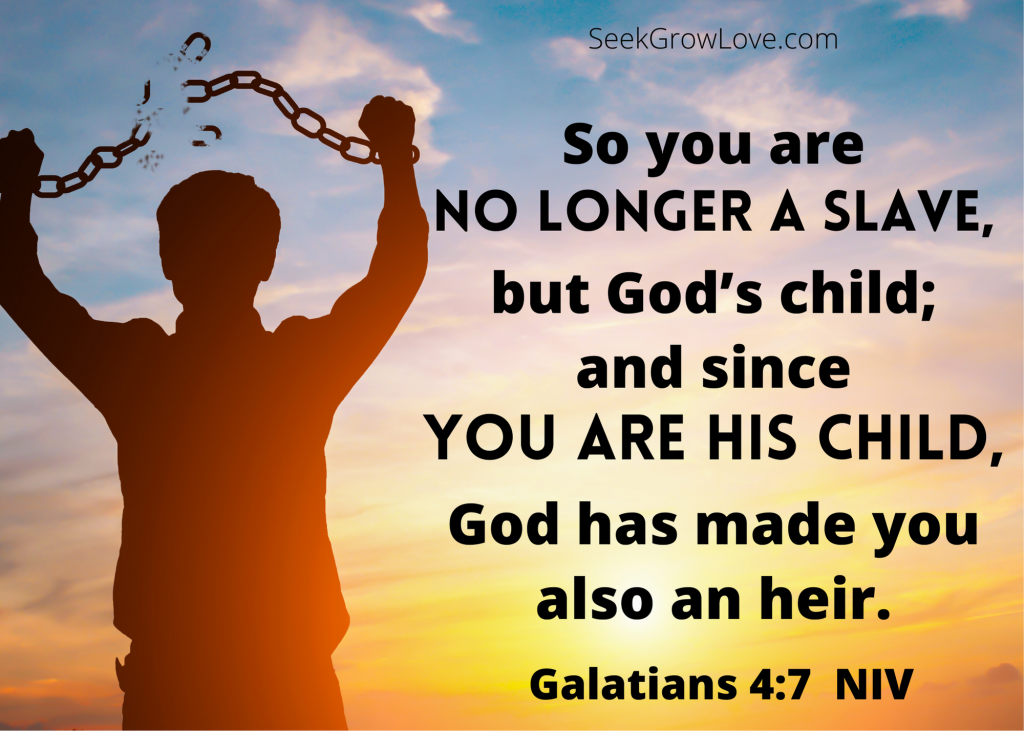
“But when the fullness of time had come, God sent his Son, born of a woman, born under the law, in order to redeem those who were under the law, so that we might receive adoption as children. And because you are children, God has sent the Spirit of his Son into our hearts, crying, ‘Abba! Father!’ So you are no longer a slave but a child, and if a child then also an heir, through God.” (Gal 4:4-7)

Paul is saying it is better to be a child and heir than to be a slave. Because of what Jesus has done, your status has changed from a slave under the law to a child of God and an heir of his promises. If you’re a child and heir, with rights and a large inheritance, you wouldn’t think of going back to having nothing.

You can imagine that trying to follow the letter of the law would feel burdensome, like it owned you. And the law has a way of making you hyper-aware of your sin. And sin is all tangled up with death. Thankfully we are filled with and are influenced by the spirit of God to help guide us. If we keep in step with the spirit and make ourselves vessels of God’s love, we don’t have to worry about breaking God’s laws. It is like they take care of themselves.

Starting in Galatians 4:21, Paul gives us an allegory of the slave woman and the free woman. He’s presenting us with a crossroads of sorts, but the choice should be easy. Of course if Jesus hands you a burger, you take it, and don’t bother with the salad. Why be a child of the flesh when you can be a child of the promise? Why be a slave when you can be free?

With all of this influence from Ecclesiastes lately, I can’t help but think Paul would say being slaves to the law is like chasing after the wind.

-Jay Laurent

Read or listen to today’s Bible reading passages at Bible Gateway here – Ecclesiastes 7-8 and Galatians 4

The Best Shape for a Table

Galatians 3

Sometimes when you read a section of the Bible, something in particular sticks out to you. As you think about it, several other thoughts bloom from it. I love Ecclesiastes, but there are 4 verses from Galatians 3 that stole my attention.

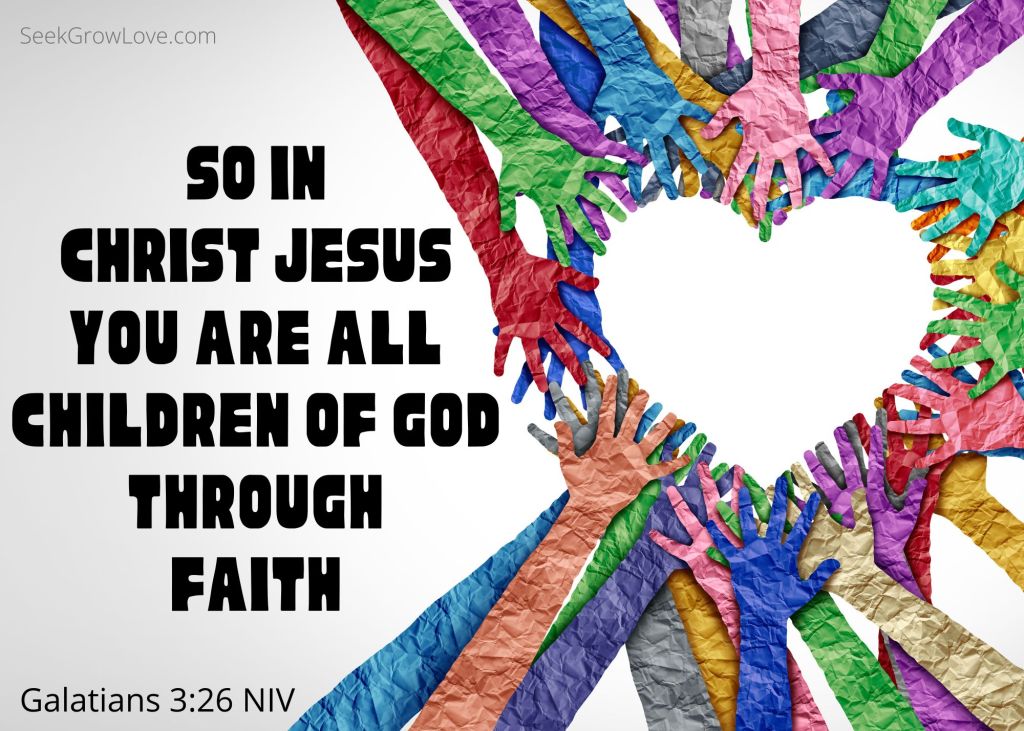
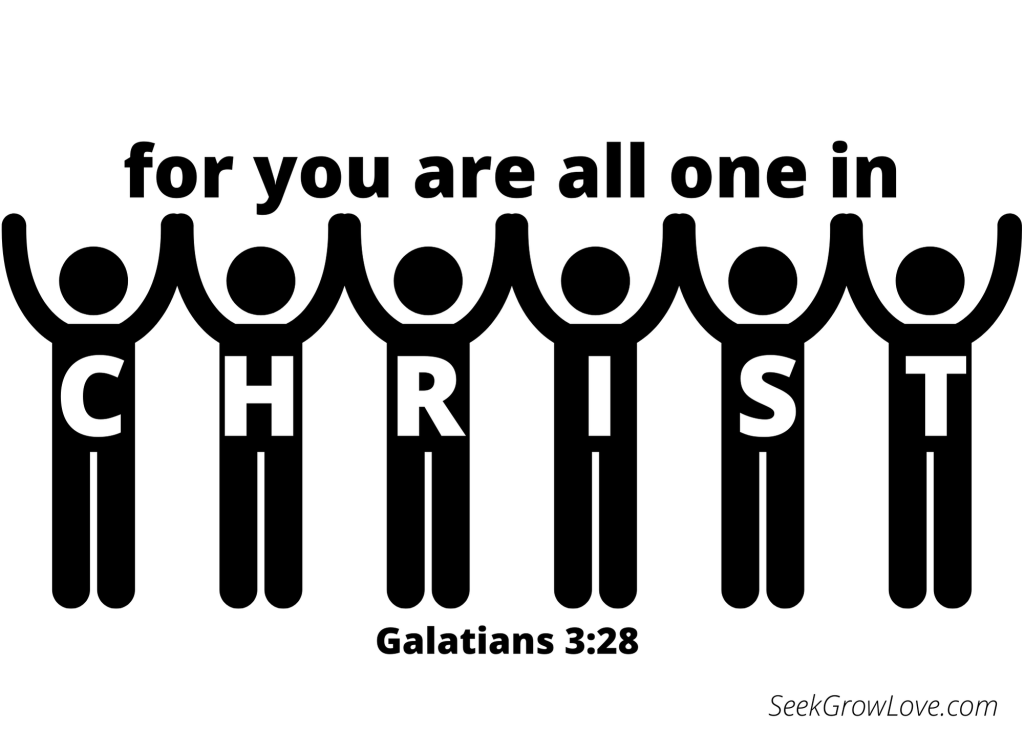
“…for in Christ Jesus you are all children of God through faith. As many of you as were baptized into Christ have clothed yourselves with Christ. There is no longer Jew or Greek, there is no longer slave or free, there is no longer male and female; for all of you are one in Christ Jesus. And if you belong to Christ, then you are Abraham’s offspring, heirs according to the promise.” (Galatians 3:26-29)

Paul is letting the Galatians know that any lines that divide people do not exist under Christ. Anyone who calls Jesus “Lord” is right there with him as an heir to the promise, as much of a child of God as any other child of God. As much of a child of God as Jesus himself!

Does this seem too good to be true? Is it too radically inclusive? As we’ve explored, some of the early Jewish Christians scoffed at the idea of including the gentiles without making them meet certain conditions. That’s like saying that in order to have access to God, you have to be like me. How would you feel if I expressed that I was part of the “in” crowd that has particular boxes checked, and unless you also have them checked, you’re an outsider without proper access to a relationship with God? Do you sometimes think other Christians are not real Christians because they think differently than you do or have other ways of doing things?

What other categories might Paul have included in his list if he were here today in our culture? Would he have said there is no Republican or Democrat, no conservative or liberal, no boomer or millennial? No black, white, brown, or any other skin shade or culture you can think of? No rich or poor, young or old, dumb or smart? No Catholic, Lutheran, or Pentecostal? No introvert or extrovert? No lawyer or plumber? No young earth, old earth, or evolutionary creationists? No five-point Calvinists or process theologians? I can go all day.

How does it make you feel that everyone belonging to Christ is equally a child of God? Is it a liberating and empowering thought, or does it ruffle your feathers a little? How does it sit with you to know that females and males equally carry the image of God (Gen 1:27)? Can you handle that those with political views different than yours have a place at the table with you? Are you uncomfortable that you are a brother or sister in Christ of someone who doesn’t have the same doctrine as you, or has less money than you, or has a thousand times the money you have? Through Jesus, God extended his promise out to anyone who would accept it. Who are we to try to take that away because of dividing lines that were already erased?

When we think of a round table, we think of King Arthur and Camelot. We think of the Holy Grail, the Bridge of Death, questions about swallows, Tim, witches, and very small rocks. At least I can’t help but think of all those things and so many more. Anyway, it’s a round table because it doesn’t have a head. Nobody has the seat of honor; everyone has equal status. It’s the kind of thing that elevates everyone and excludes no one. Are the Christian circles you are part of really like that?

Paul is saying that under Christ we’re all sitting at a big round table. That’s just how it is. You and I differ in important ways. Being in Christ doesn’t make us all uniform, but it does make us united. Your personality, gifts, and things that make you unique do not disappear under Christ! They are expressive of a beautiful diversity capable of reaching all the dark corners of the world.

We have a lot to talk about, and so many things to do. Will you sit at the table?

-Jay Laurent

Read or listen to today’s Bible reading passages at BibleGateway here – Ecclesiastes 5-6 and Galatians 3

You Forgot Your Membership Dues

Ecclesiastes 3 & 4 and Galatians 2

What we know as Christianity started as a movement within Judaism. The first Christians were Jews who became part of this new movement that Jesus started. They recognized not only that Jesus was a great guy with revolutionary ideas, but that he was also the son of God and the messiah, and that his death and resurrection shifted the course of history.

The Jews had certain traditions and customs to stay right with God and set themselves apart. They followed the law of Moses as closely as they could and worshiped at the temple. The males were also set apart physically by one particular practice called circumcision. Within a different age and culture where public nudity wasn’t that rare, you might be able to tell if a guy was Jewish by catching a glance. It sounds completely strange to us now, but it was an important marker that set them apart. Over time, the idea of circumcision didn’t just mean cutting off some skin, but started to symbolize all the things the Jews did to set themselves apart as belonging to God.

Through Jesus, the grace and promises of God that belonged exclusively to the Jewish tribe for millenia were suddenly being extended to the entire world of uncircumcised gentiles. Imagine how scandalous this would have seemed to the Jews. The gentiles didn’t have their penises cut a certain way (literally uncircumcised), but also, they hadn’t done anything else that a Jew is supposed to do to live out being the image of YHWH (metaphorically uncircumcised). It doesn’t seem fair because it isn’t.

Naturally, this caused some conflicts and disagreements in the early church. Some thought that in order for them to be truly justified, the gentiles would need to be circumcised and follow the law. You might say they would need to become Jews. Others, like Paul, thought that the gentiles didn’t need to do this. Paul had already shared the gospel with the churches in Galatia and told those gentiles that they were just fine not becoming Jews. Then others came along to them saying that they were doing it wrong and that they had to become Jews to be in the club.

When Paul heard about this, he knew he had to write this letter to the Galatians. You can almost feel his frustration bleeding through the pages. Paul says in chapter 1 that if anyone (even an angel) comes around preaching a different gospel than what he originally shared, they should be “accursed.” Those are strong words.

Paul mentions in chapter 2 that he had a big argument with Cephas about this issue. Cephas was hanging out with the gentiles until he came under pressure from the people who insisted the gentiles needed to be circumcised. So he separated himself from the gentiles to avoid criticism. Paul was rightfully disgusted by this two-facedness.

According to Paul in Gal 2:16, we aren’t justified by following the law, but by faith in Jesus (or by the faith or faithfulness of Jesus, some interpreters suggest). Jesus loves us and gave himself for us. That is how we received that grace. If we are made right with God by following the law and being circumcised, then what did Jesus die for? We can’t earn grace by jumping through hoops. It has already been given to us. The gentiles had already received the grace through Christ and were walking in the spirit. Paul was not going to let someone come along and say what they had was not real and try to heave them back to square one.

There was a lot hanging in the balance. What if Paul and others had not intervened, and the gentiles had been convinced they should become Jewish for all intents and purposes? Would Christianity among the gentiles have died away, leaving just a sect of Judaism? The message may not have spread like it did. Maybe everyone who believed Jesus was the messiah would have quietly died out and we never would have even heard the good news today. All we’d read about is some first century Jewish insurrectionist being executed by the Roman government and his strange but brief cult following.

No wonder Paul was frustrated. He knew that having the gospel twisted in such a way could have been the demise of the church. Thank God that Paul channeled his anger and pain in this matter to write an important letter of correction and encouragement. And thank God that it has been preserved and passed down so that we are able to read it today.

-Jay Laurent

Read or listen to today’s Bible reading passages on BibleGateway here – Ecclesiastes 3-4 and Galatians 2

The Part Where the Bible Flirts with Nihilism

Ecclesiastes 1-2 and Galatians 1

Often I think that mowing the lawn is pointless. Why do we mow lawns? Who decided for all of us that it is just something we have to do? Wouldn’t the grass and weeds exist happily without being cut down every week during the warmer months? How does it really benefit me or anyone to mow the lawn? Also, it’s time consuming, and costs money for gas and to maintain the mower.

Yet, I cave to societal expectations and take reasonable care of my lawn. It isn’t so bad. Often it is enjoyable, and can be therapeutic or meditative. It’s a chance to sort out my thoughts. But still, there are so many things on the list of things I’d rather be doing.

We could all come up with lists of what we think is pointless. It would be an easy project. The harder project would be to see what is left over. What actually matters? What has true significance?

This is the question brought to the table by the book of Ecclesiastes. Our Qoheleth (Hebrew for teacher) is beginning to let us know about all the things he thinks are pointless, and there are a lot of them. All the work we do is pointless, because you can’t take the results with you when you die. Someone else gets all of it (2:18). The pursuit of wisdom is pointless because “in much wisdom is much vexation, and those who increase knowledge increase sorrow” (1:18). The pursuit of pleasures is pointless too, like chasing after the wind. He tried all of them, and gained nothing from it.

Are these things bad? The teacher doesn’t say that. Surely working is something we have to do, otherwise we can’t provide for ourselves or our families. Wisdom and knowledge are positive things. Isn’t it beneficial to understand things? Pleasure is a good thing given a few healthy boundaries. We all need opportunities to appreciate and enjoy the good things in life.

The teacher does mention a few things that might be worthwhile: eating, drinking, and enjoying your work. They are from the hand of God, he says. Also on the list of not-so-pointless things is pleasing God. This is a good start. If we think about it long enough, maybe we can figure out what the essence of something meaningful is. Could we decide what is meaningful or not based on a set of criteria? I currently don’t have a good method of deciding this, but I’d like to get better at recognizing what is meaningful and what is not.

What if we spent more time thinking about and pursuing things that are truly meaningful? Doesn’t that allow us to focus our efforts on things that will actually benefit us and others? If only it was easy to know what those things are. We constantly have to prioritize the many options for how we could spend our time, whether we consciously think about it or not. The teacher is not giving us a complete guide for what should take priority, but he is challenging us to think about it.

Looking at Galatians 1, we might be able to pick out a few things the apostle Paul thinks are pointless. Perverting the gospel, being a people-pleaser, persecuting the church, and climbing up the ladder of Judaism all could make his list. What does Paul think is worthwhile? Serving and proclaiming Christ! As we continue on through Ecclesiastes and Galatians, maybe we will get more insights into what these authors think is important, and by doing so, improve our understanding of what God thinks is important.

Seek ye first…

Jay Laurent

Today’s Bible reading passages can be read or listened to at BibleGateway here – Ecclesiastes 1-2 and Galatians 1

No Longer a Slave

Galatians 4-6

Galatians 5:1 – It is for freedom that Christ has set us free. Stand firm, then, and do not let yourselves be burdened again by a yoke of slavery.


Growing up in the great Southwest, I have had the luxury of enjoying authentic Mexican food. I could eat chips and salsa every day, all day. When I’ve got a craving, I will even eat chips and salsa from New York City. (Click here for reference to an old TV commercial.) 


Tacos, quesadillas, enchiladas, burritos are all very, very good. But one main entree dish tops them all, the chimichanga. If you’re not familiar with the chimichanga, you can think of it as a deep fried burrito topped with sour cream and guacamole. Or if you’re feeling extra decadent,  queso fundido sauce. My mouth is watering just thinking about it…


When I was in college, I spent a semester at Kansas State University. For the most part, I enjoyed going to school there. One of the only drawbacks was that back in 1993, there weren’t any Mexican restaurants in the area. And while I could get chips and salsa from the grocery store, and tacos from Taco Bell, there wasn’t any authentic Mexican cuisine to be found. 


Then one day, I was dining at an Applebee’s. And low and behold, there on the menu was a chicken chimichanga. I almost cried. I was so excited! With great anticipation, I waited for the plate to be brought out to the table. And when the dish finally arrived, it was everything I could do to hold back the tears. Not because I was so thrilled, but because the chimichanga was covered in chili! Not Mexican red or green chili, but chili beans! I was dumbfounded. How could anyone mess up my chimichanga?!?! When I spoke with my parents later that evening (they were still living in Arizona), I let the tears fall. I was so homesick. 


I tell you all of this because when I read the book of Galatians, something stands out to me. The church in Galatia had enthusiastically accepted the Gospel that the apostle Paul had preached to them. But after he had left, interlopers had begun to convince Believers that there were certain rituals that they had to practice, including circumcision, to be considered righteous. When Paul heard of this, he was so frustrated! 

Here’s Bethany’s interpretation of Galatians 5:1 – Why, why, why would you go back to living under the burden of all these rules and regulations? Don’t you know that Christ died so that you wouldn’t have to be a slave to all that? Your faith has set you FREE! Now start living like it! 


The same message applies to you and me. Once you realize what life can be like living under the grace of God through faith in what His son did on the cross on your behalf, why, why, why would you ever think about going back to a previous lifestyle? And yet, that’s what we encounter every single day. We’re faced with decisions on how to treat others, how we spend our time, how we invest our finances. It might be tempting to make concessions in stressful circumstances, but we must stay strong, to persevere and be firm in our faith. 


When you get in the habit of living in freedom, going back to a former way of living becomes just as inconceivable as eating a chimichanga with chili beans dumped all over it. When you experience the REAL DEAL – you never want to go back. 


Grace from God gives us a glimpse of His goodness.

Mercy from the Most High motivates us to move mountains.

Forgiveness from the Father fills in the fissures of the heart.

Rest within the shadow of the Rock renews our responsiveness.

Acceptance by the Almighty alters our attitudes.

Joy from Jehovah jolts our joints! 


It is for Freedom that Christ has set you Free. Now start living like it!  

Bethany Ligon

Today’s Bible passage can be read or listened to at BibleGateway here – Galatians 4-6

Tomorrow we will read Acts 17:1-18:18.