Changed into a Different Person

Old Testament: 1 Samuel 9 & 10

Poetry: Proverbs 6

New Testament: Acts Introduction below

Saul was looking for Samuel and Samuel was looking for Saul but for different reasons! At first, Saul was looking for his father’s donkeys, and Samuel for the king of Israel – then, all was found. Not only was Saul (tall and handsome) anointed the first king of Israel, but the Spirit of God came upon him. It even says, “He’d be turned into another man (1 Samuel 10:7) … God gave him another heart.” (10:9) Imagine to go looking for donkeys and to be anointed the first king of Israel, what a shocking surprise! Honestly, I’m not too surprised he was hiding amongst the equipment. That’s probably where I would’ve been too. But the LORD knew right where he was and whom He had chosen.

Sometimes things turn out differently than we’d planned, actually a lot of times. My motto around the house is we need to be flexible or we’ll break as our plans are often shifting. 😊 After the time of the judges, authorities will shift to kingship. Yet, ‘Thus says the LORD God of Israel: I brought up Israel out of Egypt, and delivered you from the hand of the Egyptians and from the hand of all kingdoms and from those who oppressed you. But you have today rejected your God, who Himself saved you from all your adversities and your tribulations; and you have said to Him, ‘No, set a king over us!’” (10:17-19) It is sad that the people rejected God as their king and yet God was gracious and granted them one anyhow.

“These are six things the LORD hates, yes, seven are an abomination to Him:

A proud look,

A lying tongue,

Hands that shed innocent blood,

A heart that devises wicked plans,

Feet that are swift in running to evil,

A false witness who speaks lies,

And one who sows discord among brothers.”  (Proverbs 6:16-19)

“My son, keep your father’s command, and do not forsake the law of your mother.

Bind them continually upon your heart; tie them around your neck,

When you roam, they will lead you; when you sleep, they will keep you;

And when you awake, they will speak with you.

For the commandment is a lamp, and the law a light. Reproofs of instruction are the way of life.” (6:20-23)

Amen!

-Stephanie Schlegel

Reflection Questions:

  1.  Is there something in our lives that we’re failing to acknowledge God for doing for us? Let’s keep a thankful heart and thank Him for three things that happened today.
  2. Are we aware of the 7 things God hates and hopefully not doing any of them?
  3. Are we keeping God’s ways close to us throughout the day and letting them guide us even while we lie down to sleep?

Acts Introduction

The Book of Acts, also known as The Acts of the Apostles, is a sequel to the Gospel of Luke.  Luke, a physician who traveled with the apostle Paul, wrote both.  In fact, Luke wrote more of the New Testament than any other author, including Paul.  The book of Acts covers the period of time from just after the resurrection of Jesus until just before the death of Paul, and tells the history of the early Church.  Because the story about Paul ends abruptly with his house arrest and awaiting trial before Caesar, it’s likely the Book of Acts was written at that time, likely around 62 or 63 AD.

The first half of the Book of Acts focuses primarily on Peter, who taught mostly Jews, while the last half is about Paul, who taught mostly Gentiles.  Luke detailed the expansion of Christianity from being centered in Israel, to reaching worldwide (in the known world of that day).  Luke recorded several sermons, from Peter’s on the day of Pentecost, to Stephen’s, and multiple of Paul’s.  By using the word “we” in parts of the second half of the book, it is obvious that Luke traveled with Paul.

From Chapter 1, we can see several things the early church believed:

  • The reality of Jesus’ resurrection (Acts 1:3a)
  • The promise of the coming kingdom (Acts 1:3b)
  • The power of the Holy Spirit (Acts 1:8)
  • Jesus will return the same way he left (Acts 1:11)
  • Prayer was important, and they spent lots of time in prayer (Acts 1:14)
  • They believed in God’s leading (Acts 1:24-26)

Some of the more well-known information in Acts includes:

  • Jesus’ ascension into heaven (Acts 1:7-11)
  • The Holy Spirit being poured out on the Day of Pentecost (Acts 2)
  • Peter and John healing a crippled beggar (Acts 3)
  • Peter and John before the Sanhedrin (Acts 4)
  • Ananias and Sapphira (Acts 5)
  • Stephen’s sermon and the stoning of Stephen (Acts 7)
  • Philip and the Ethiopian (Acts 8)
  • Saul’s conversion (Acts 9)
  • Peter and Cornelius (Acts 10)
  • Peter’s miraculous escape from prison (Acts 12)
  • Paul’s missionary journeys (starting in Acts 13)
  • etc.

As you can see, Acts is a very exciting and well-known book.

I love Acts 4:13, which says, “When they saw the courage of Peter and John and realized that they were unschooled, ordinary men, they were astonished and they took note that these men had been with Jesus.”  As you study the book of Acts, and ask God to fill you with the Holy Spirit, I pray that people will notice you and be astonished, and will take note that you have been with Jesus.

-Steve Mattison

A King?

Old Testament: 1 Samuel 7 & 8

Poetry: Proverbs 5

New Testament: Luke 24

The men of Kiryat Jearim (City of the Forests) came and took up the ark of the LORD and brought it into the house of Abinadab on the hill where it stayed for 20 years. We could actually look out our window and see this site where the ark had been. Now there is a monastery and church built on top of it, called the Lady of the Ark. Oddly a large statue of Mary standing on the ark is visible from a distance. There is a spring nearby amongst the houses, which would’ve made it a good place to live with a water source. And yes, the hill country of Jerusalem can get snow once or twice a year, and it’s fun! 😊

“Samuel spoke to all the house of Israel, “If you return to the LORD with all your hearts, then put away the foreign gods and the Ashtoreths from among you, and prepare your hearts for the LORD, and serve Him only; and He will deliver you from the hand of the Philistines.” (1 Samuel 7:3) (Applies to modern day relics too!) So, the Philistines were subdued. Samuel judged Israel all the days of his life. (7:15) However, like Eli, Samuel’s sons did not walk in his ways and perverted justice causing the people to ask for a king like the other nations. After warnings the people still insisted on a king to judge them and God allowed them as they’d rejected Him as their king.

Later on, there was a messianic king rejected in Jerusalem. Luke 24 ends with Jesus being raised from the dead. And interestingly, that same day two apostles were traveling to a village called Emmaus, which is 7 miles from Jerusalem. Many believe this to be the site of Kiryat Jearim where the ark resided, as it’s 7 miles from Jerusalem!

As they walked along the way, he said to them, “O foolish ones, and slow of heart to believe in all that the prophets have spoken! Ought not the Christ to have suffered these things and to enter into His glory? And beginning at Moses and all the prophets, he explained to them in all the Scriptures the things concerning himself.” (Luke 24:25-27) Wouldn’t that have been a good listen of what Jesus explained?!

Later on, he was “carried up into heaven. They worshipped him, and returned to Jerusalem with great joy, and were continually in the temple praising and blessing God. Amen.” (24:51,52)

-Stephanie Schlegel

Reflection Questions

  1. Do we recognize and honor God and Jesus as kings in our lives?
  2. Do we accept and turn to them for authority in our lives or reject them and turn to others?

Think About It

Old Testament: 1 Samuel 5 & 6

Poetry: Proverbs 4

New Testament: Luke 23

Things don’t always go as planned. The Israelites thought taking the ark of the covenant with them into battle against the Philistines would cause them to win, except the ark was captured and taken by their enemies!  For 7 months the ark remained with them. They said, “The ark of the God of Israel must not remain with us, for His hand is harsh toward us and Dagon our god.” (1 Samuel 5:7) God sent deadly destruction in their cities and plagues of tumors. The Philistines sent the ark back on a cart. It was the wheat harvest when the people of Bet-Shemesh rejoiced to see the ark’s return. EXCEPT, the LORD struck many who looked inside to see what was in the ark of the covenant. And the men of Bet-Shemesh said, “Who is able to stand before this holy LORD God? And to whom shall it go up from us?” (6:20) Thus the Israelites in Bet-Shemesh were ready to depart with it also! God is all powerful and holy and should be treated as such.

Here is a picture of Bill teaching students (20+ yrs. ago;) on Bet-Shemesh with the valley in the background where the ark of the covenant would’ve come up from the Philistines. Also, one can see how there would’ve been wheat fields nearby. (The hometown of Samson is on the hill in the distance). It’s so neat how most of the biblical sites still hold their same name today, 1,000s of years later! It’s evidence to show these are real events that occurred.

Some of these rarer Bible stories are found in the Arch Book children’s series, and they’re even written in rhythm. There are 134 different volumes. I don’t have all of them but many over the years. They can make nice gifts to family or friends. 😊

Take firm hold of instruction, do not let go; keep her, for she is your life.

Do not enter the path of the wicked, and do not walk in the way of evil.”

(Proverbs 4:13,14)

My son, give attention to my words: incline your ear to my sayings.

Do not let them depart from your eyes; keep them in the midst of your heart.

For they are life to those who find them, and health to all their flesh.

Keep your heart with all diligence, for out of it flows the springs of life.”

(Proverbs 4:20-23)

 -Stephanie Schlegel

Reflection Questions:

  1. Are their areas of our lives we need to reexamine that we’ve slacked off on?
  2. Maybe certain instructions we’ve slowly been letting go of that we need to take ahold of again?
  3. Are their others we need to forgive that we haven’t? On the cross Jesus prayed, “Father, forgive them, for they do not know what they do.” (Luke 23:34)

Obedient – and Disobedient – Sons

Old Testament: 1 Samuel 3 & 4

Poetry: Proverbs 3

New Testament: Luke 22

Obedient and disobedient sons! We choose obedient, right?!  Eli had some disobedient sons that most seemed to know about, and God told that to Samuel. That they “made themselves vile and he did not restrain them.” (1 Samuel 3:13) But “Samuel grew, and the LORD was with him.” (3:19) After the Israelites were defeated in battle against the Philistines, they decided to bring the ark of the covenant to battle to save them from their enemies. However, the Israelites were defeated and the ark of the covenant taken away. Eli (98 years old) sat by the gate waiting for news, only to hear the bad report of his two sons dead and the ark captured causing him to fall over backwards breaking his neck and dying. What a tragedy.

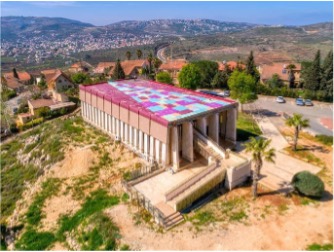
It’s still possible to see the ancient site of Shiloh today! They are excavating it. It’s interesting to know that the tabernacle resided here for 369 years (longer than the US has been a country) during the time of the Judges. This is where Hannah would’ve come to pray asking for a child, and where Samuel served, in the hill country of Jerusalem. (The tabernacle was longer in the hill country than in the desert!) In 1978, modern Israelis established a community here of Jews and now has 5,000 residents.  They built a synagogue for their place of worship, resembling the tabernacle which was there for so many years.

Also, interesting in the Proverbs of Solomon he exhorts his son, “Do not forget my law, but let your heart keep my commands, for length of days and long life and peace they will add to you. Let not mercy and truth forsake you; bind them around your neck, write them on the tablet of your heart, so find favor and high esteem in the sight of God and man.” (Proverbs 3:1-4) Most people quote the next verses 5 and 6, which are important, but I’ve for so long appreciated the verses prior and following those verses!


Do not be wise in your own eyes: fear the LORD and depart from evil. It will be health to your flesh, and strength to your bones.”  (3:7,8)

My son, do not despise the discipline of the LORD, nor detest His correction; Just as a father the son in whom he delights. Happy is the man who finds wisdom.” (3:11-13)

In the New Testament we can see the ultimate obedience of the Son of God in his time of difficulty in the face of death. “Father, if it is Your will, take this cup away from me; nevertheless, not my will, but Yours be done.” (Luke 22:42) Jesus was obedient until death.

-Stephanie Schlegel

Reflection Questions

  1. Are we struggling with any kind of disobedience that needs to be corrected today? It’s good to do a search and see if we need to be corrected and be willing to make that change.
  2. How can we teach the wisdom of Proverbs (and the rest of the Bible) to our children, grandchildren, and the children/youth and even adults of our church community? What happens when we don’t?
  3. What do we learn about the Heavenly Father in our Bible reading today? What do we learn about His Son Jesus?

Ask Him

Old Testament: 1 Samuel 1 & 2

Poetry: Proverbs 2

New Testament: Luke 21

The story of Hannah is touching and interesting how it was the LORD that closed her womb (1 Samuel 1:5) like the other matriarchs. And her husband suggests that isn’t he better than 10 sons? (1:8) She was desperate for a child and yet willing to make a vow to the LORD that if He’d give her one, she’d give him back to serve the LORD! So the LORD remembered her and gave her Samuel. (1:19) The thrill she must have felt and knowing the LORD did it. She worshipped the LORD and prayed, “My heart rejoices in the LORD… because I rejoice in Your salvation.

No one is holy like the LORD, for there is none besides You, …

For the LORD is the God of knowledge.”  (2:1-3)

Then she ends her prayer with the hope of the messiah, which is the first time mentioned in the Bible. “The LORD will judge the ends of the earth. He will give strength to His king, and exalt the horn of His anointed. (messiah)” (2:10)

Sometimes we want something so badly and yet need to be ready to give it up, like Hannah did with the very child she wanted. Furthermore, “the LORD visited Hannah, so that she conceived and bore three sons and two daughters.” (2:21) The LORD blessed her with five more children! “And the child Samuel grew in stature, and in favor both with the LORD and men.” (2:26) Sounds familiar with another special messiah in the NT, right?!

Yes, if you cry out for discernment, and lift up your voice for understanding,

If you seek her as silver, and search for her as for hidden treasures;

Then you will understand the fear of the LORD, and find the knowledge of God.

For the LORD gives wisdom; from His mouth come knowledge and understanding.” (Proverbs 2:2-6)

Jesus spoke of being betrayed by “parents, brothers, relatives, and friends; and they will put some of you to death. And you will be hated by all for my name’s sake. … By your patience possess your souls.” (Luke 21:16-19) We will go through hard times and not be well received by everyone. We can expect it since we’ve been warned ahead of time. “Then they will see the Son of Man coming in a cloud with power and great glory.” (21:27) “Watch therefore, and pray always that you may be counted worthy to escape all these things that will come to pass, and to stand before the Son of Man.” (21:36) Watch and pray and then prayer can burst forth like it did with Hannah in her desperation and in her exaltation!

-Stephanie Schlegel

Reflection Questions

  1. Is there something in your life you desire pretty desperately, like Hannah? And yet, are you willing to give it back to God if He does give it to you?!
  2. What is a difficulty in your life right now that you need to pray about? Sometimes we let a certain matter consume our thoughts and yet we haven’t prayed much about it! Take the time to commit the matter to prayer today!

The Beginning of Knowledge

Old Testament: 1 & 2 Samuel Intro Below

Poetry: Proverbs 1

New Testament: Luke 20

“The fear of the LORD is the beginning of knowledge, but fools despise wisdom and instruction.”  (Proverbs 1:7) This seems like such a simple verse, and yet how I misunderstood it for so long as I didn’t think of the LORD as the Father alone. It’s so important to first fear and love the LORD/YHVH, and yet so many believe in a twisted version like I did.  I recently read the golden calf incident to our grandkids and was reminded that they called the golden calf, YHVH! And as the rest of the verse says, “fools despise wisdom and instruction.” Many don’t want to be corrected for being wrong, I know I sure didn’t want to be at first. ☹ Fearing YHVH is just the BEGINNING of knowledge! We should continually be willing to learn wisdom and gain instruction no matter our age. “Fools hate knowledge.” (1:22)

Then they will call on me, but I will not answer; they will seek me diligently, but they will not find me because they hated knowledge and did not choose the fear of the LORD.” (1:28,29)

We must continue to choose to fear the LORD and not despise knowledge.  I am encouraged in reading the Scriptures how it helps us by continually pointing us in the right direction. 

Jesus’s goal was to fear the LORD. The chief priests and scribes sought to destroy him. “They watched him and even sent spies who pretended to be righteous, that they might seize on his words, in order to deliver him to the power and the authority of the governor.”  (Luke 20:20) 

Jesus walked about in the streets of Jerusalem and here I am some years ago doing just that. All of our 5 children were born in Israel, four in Jerusalem and our first in Bethlehem (like Ruth’s first;).

They could not catch him in his words in the presence of the people.” (Luke 20:26) “He taught the way of God in truth.” (20:21) Such fear of God he had, giving us an example and thus providing wisdom and instruction. How can we fear God more in our daily lives? And be more open for wisdom and instruction?

-Stephanie Schlegel

Reflection Questions

  1. How can we fear God more in our daily lives? And be more open for wisdom and instruction?
  2. In Jesus’ example and in his teaching how did he display and teach fearing God?
  3. In order to have a proper fear of the LORD we need to have an understanding of who He is, what He does, what He desires so we don’t end up calling something the LORD/YHVH that isn’t. What do we learn about God in today’s passages? Why is the Bible the perfect place to find out who He is? What else is the Bible useful for?

1st & 2nd Samuel Introduction

The books of First and Second Samuel are named after the man Samuel – the last judge of Israel (1 Samuel 7:15), a prophet (1 Samuel 9:9), priest (1 Samuel 3:1), and kingmaker (1 Samuel 10:1; 1Samuel 16:13).  Samuel oversaw the transition from Israel’s being ruled by Judges to it’s being ruled by a king.  As a prophet, priest, and ruler, the man Samuel was a foreshadowing of Christ. 

We don’t know who wrote the books of First and Second Samuel.  But whoever wrote them clearly had inside information about Samuel, and Kings Saul and David, since the books record such detailed information about each, including what they were thinking, in addition to what they did and said.

From the time of Moses until Samuel, Israel was a theocracy – a nation ruled by God.  1 Samuel 8 details Israel’s rejection of God as king, when they wanted a king to lead them “like all the other nations have” (1 Samuel 8:5).  God let them go their sinful way by telling Samuel in 1 Samuel 8:7, “…Listen to all that the people are saying to you; it is not you they have rejected, but they have rejected me as their king.”  God then led Samuel to anoint Saul as King.  He was tall and strong – impressive from any human standpoint, and was just the type of king the people wanted.  Unfortunately, he didn’t follow God wholeheartedly.

It wasn’t that God didn’t want Israel to have a king, it was just that the timing wasn’t right.  God eventually directed Samuel to Jesse’s family to anoint the next king to replace Saul.  1 Samuel 16:6-7 records, “When they arrived, Samuel saw Eliab and thought, ‘Surely the Lord’s anointed stands here before the Lord.’ But the Lord said to Samuel, ‘Do not consider his appearance or his height, for I have rejected him. The Lord does not look at the things people look at. People look at the outward appearance, but the Lord looks at the heart.’”  God then directed Samuel to anoint David, a man after God’s own heart (1 Samuel 13:14), to be the next king over Israel.

Some of the more familiar passages in 1 & 2 Samuel include:

1 Samuel 3 – God calling Samuel

1 Samuel 17 – David and Goliath

1 Samuel 28 – Saul and the Witch of Endor

2 Samuel 7 – God’s promise to establish an eternal dynasty for David

2 Samuel 11 – David and Bathsheba

2 Samuel 15 – Absalom’s conspiracy

2 Samuel 22 – David’s song of praise

Even though David wasn’t sinless (e.g. David and Bathsheba), he was called a man after God’s own heart because he put God first and sought to live for God.  I challenge you to live your life like David, who was able to say in 2 Samuel 22:21-25, “The Lord has dealt with me according to my righteousness; according to the cleanness of my hands he has rewarded me. For I have kept the ways of the Lord; I am not guilty of turning from my God. All his laws are before me; I have not turned away from his decrees.  I have been blameless before him and have kept myself from sin. The Lord has rewarded me according to my righteousness, according to my cleanness in his sight.”

-Steve Mattison

A Restorer of Life

Old Testament: Ruth 3 & 4

Poetry: Proverbs Introduction below

New Testament: Luke 19

Shalom! This is Stephanie Schlegel writing this week while my husband and youngest daughter are in Israel for a few weeks. 😊 We lived there for about 30 years and moved back to the States five years ago to care for his aging parents.

The passages for today are so fitting for my life right now, and I hope yours too. 😊 The Scriptures bring us so much hope and peace and sustain us, sometimes verses strike and encourage us more than other days. Overall, the faithful commitment in them isn’t disappointing!

When I met my husband (Bill Schlegel) in Jerusalem, he said he found his Ruth. A woman that would be willing to leave her home country and live with him in Israel where he wanted to stay. Both Boaz and Naomi call Ruth their daughter multiple times, and the LORD/Yahweh is acknowledged for having brought about events.

  • People and elders said, “The LORD make the woman who is coming to your house like Rachel and Leah, the two pillars who built the house of Israel.” (4:11)
  • “Because of the offspring which the LORD will give you from this young woman.” (4:12)
  • “The LORD gave her conception.” (4:13)

It is good to acknowledge that the LORD is the giver and sustainer of life.  Ironically, these days I’m caring for my mother-in-law, like Ruth did. The women told Naomi “Blessed be the LORD, who has not left you this day without a close relative, and may his name be famous in Israel: And may he be to you a restorer of life and a nourisher of your old age, for your daughter-in-law, who loves you, who is better to you than seven sons, has borne him.” (4:14,15)

My mother-in-law has four sons, but she really needs a daughter-in-law these days, especially in rehab with three broken limbs, and I love her! Naomi had had two sons previously, but in her later days, she needed a daughter-in-law to care for her. In general, younger people (grandchildren) can be a restorer of life and nourisher in old age for the elderly.  Maybe this week, think of an elderly person or relative you could visit and encourage them, even a neighbor.  It can be a lonely time for them as they can’t move around as much. Hug them and speak words of encouragement to them in their days of old.

The passage in Luke 19 is also fitting!  Jesus was in Jericho with Zacchaeus and walked up to Jerusalem. He walked past Bethpage and Bethany and came to the Mt. of Olives. Now when one reads those places it sounds fairly simple to walk them, but the walk from Jericho to Jerusalem, which I’ve done, is quite an incline! It took 8 hours to walk the 15 miles with a 3,400 ft elevation increase. Jesus probably walked this a dozen times in his life, including when he was a 12-year-old boy. So, I didn’t have much sympathy when our 14-year-old daughter texted me the other day that Abba (Dad) made her walk from Jerusalem up to the Mt. of Olives, which was less than a mile. Lol I told her Jesus walked multiple times from Jericho to Jerusalem, and not only that but all the way from Galilee to Jerusalem, which is about 80 miles and would’ve taken about 4 days to walk. So, I didn’t want to hear any complaining about a little hike up to the Mt. of Olives.  Here’s a picture of her smiling at the top of it. 😊

Now as he drew near the city, he saw the city and wept over it.”  (Luke 19:41) This would’ve been a similar view Jesus would’ve seen minus most of the buildings, and it would’ve been the temple instead of the Dome of the Rock. “And he was daily in the temple. But the chief priests and the scribes, together with the leaders of the people sought to destroy him” (19:47)

So, despite difficulties we may have in our lives, seek the peace of God and reach out to the encourage the broken. “Blessed is he who comes in the name of the LORD!” (19:38)

-Stephanie Schlegel

Reflection Questions

  1. Think of an elderly person or relative you can visit and encourage. What do you think you would find helpful and encouraging when you are older than you are now?
  2. How can you be a restorer of life? How is Jesus a restorer of life?
  3. What do we learn about the LORD in our reading today? What do we learn about His Son Jesus?

Proverbs Introduction

The book of Proverbs is a collection of “sayings of the wise” which was mostly written by King Solomon.  According to Proverbs 1:2-4, the purpose of the book is, “for attaining wisdom and discipline; for understanding words of insight; for acquiring a disciplined and prudent life, doing what is right and just and fair; for giving prudence to the simple, knowledge and discretion to the young.”

Spoiler alert: Proverbs 1:7 gives the answer right away, where it says, “The fear of the Lord is the beginning of knowledge, but fools despise wisdom and discipline.”

Solomon gave advice on many topics, some of which include.  

  • How to live life – Proverbs 3:5-6, “Trust in the Lord with all your heart and lean not on your own understanding; in all your ways acknowledge him, and he will make your paths straight.”  
  • Money – Proverbs 3:9-10, “Honor the Lord with your wealth, with the firstfruits of all your crops; then your barns will be filled to overflowing, and your vats will brim over with new wine.”
  • Hard work – Proverbs 6:6, “Go to the ant you sluggard; consider its ways and be wise!”
  • Alcoholism – Proverbs 20:1, “Wine is a mocker and beer a brawler; whoever is led astray by them is not wise.”
  • Compassion – Proverbs 21:13, “If a man shuts his ears to the cry of the poor, he too will cry out and not be answered.”
  • Childraising – Proverbs 22:6, “Train a child in the way he should go, and when he is old he will not turn from it.”
  • Revenge – Proverbs 24:29, “Do not say, I’ll do to him as he has done to me; I’ll pay that man back for what he did.”
  • Enemies – Proverbs 25: 21-22, “If your enemy is hungry, give him food to eat; if he is thirsty, give him water to drink.  In doing this, you will heap burning coals on his head, and the Lord will reward you.”
  • Obeying God’s law – Proverbs 28:9, “If anyone turns a deaf ear to the law, even his prayers are detestable.”
  • Defend the poor – Proverbs 3:8-9, “Speak up for those who cannot speak for themselves, for the rights of all who are destitute.  Speak up and judge fairly; defend the rights of the poor and needy.”

As you read through Proverbs, I challenge you to consider how you can benefit from applying these proverbs to your own life.  

-Steve Mattison

The Lord be with You

*Old Testament: Ruth 1 & 2

Poetry: Psalm 118

New Testament: Luke 18

Today we begin reading the book of Ruth, which is both enjoyable and easy to read; a book without heavy theology to parse. The importance of the book is made plain at its end (for a preview, look to Ruth 4:17), in that it identifies a certain history of the family of the later King David. In that sense, it serves the Old Testament purpose of remembrance. In this case, it establishes a back story for the royal family (which ultimately leads to Jesus himself), but it also shows the providential role of God in that family. Like the passages in the Book of Judges, an important purpose of the text is to remind Israel how God established a relationship with the nation and then provides, cares for, and protects the nation.

Chapter 1 of Ruth provides the context for the remainder of the book: a family’s migration to Moab, and Naomi’s return to Bethlehem with the unexpected companion, Ruth. Chapter 2 is where the action of this story is established, with Ruth going to glean in Boaz’s fields and the repeated acts of kindness that he shows to her. We must also recognize the extent of his kindness as well: Boaz is obligated to leave some of his unharvested crops for the poor (see Leviticus 23:22), but he goes above and beyond this in his instructions to his servants to purposely leave grains for Ruth. She must have been confused, perhaps embarrassed by the kindness of Boaz, but it all leads to Naomi recognizing Boaz:

“The man is our relative, he is one of our closest relatives.” (Ruth 2:20 NASB)

Unfortunately, the depth of the term “closest relative” is not adequately captured in translation. The Hebrew term means “kinsman redeemer” – a family member that satisfies an obligation or vengeance of another in the extended family. Specific examples are the man that, following the Torah, marries his brother’s widow to preserve land inheritance, but also one who redeems a family member from slavery. This usage takes us to a second purpose of the Old Testament: prefiguring. Boaz, as a “kinsman redeemer” for the family of Naomi, prefigures Jesus as the one that redeems his family: Israel and (as we now know) Gentiles grafted in.

One aspect of Ruth that I greatly enjoy is the ordinariness of the spiritual expression of its characters. Without being ostentatious, the characters of the book recognize the providential role of God repeatedly and reflect it back to others to further recognize God’s role in their daily lives. Consider the statement of Ruth and Orpah in 1:8,9:

“May the LORD deal kindly with you as you have dealt with the dead and with me. May the LORD grant that you may find rest, each in the house of her husband.”

It is not enough for Naomi to wish her daughters-in-law success in their presumed departure; she specifically calls on God to give them that success in their new lives.

Then consider the dialogue between Boaz and his servants in 2:4:

Boaz to his servants: “May the LORD be with you.”

Servants’ response: “May the LORD bless you.”

I think the implication is that Boaz and his servants lived lives suffused in the presumption that God would be with them in every action, in every step along every path. Think about it further: Boaz and his servants were not going to war or going on a trip; they were simply going to the fields for the ordinary work of the day. Yet, he begins the day with a blessing on his servants.

In today’s culture, we increasingly compartmentalize our lives, even our spiritual lives. We work for some hours of the day, we take care of our daily obligations, and, hopefully, we set aside time to relax. More than likely prayer is a “carved out” time and time reading scripture may have to be scheduled. The alternative is to suffuse the entire day with the recognition that God is with us at every moment, and that prayer can and should be spontaneous and simple – ordinary. That we can take any moment to request God’s blessing on another.

This reminds me of an experience from childhood that might be odd to some. One summer, sometime in my teenage years, I had taken my youngest sister on a bike ride to the post office ostensibly for an errand, but mostly to be outside. At the post office, we encountered two nuns in the waiting area. (This was not out of the ordinary, there was a very active convent in my hometown.) One of the nuns leaned down, laid her hand on my sister’s head, and spoke a very simple blessing on her. Then she went back to her business, without skipping a beat. For that woman, living a life devoted to serving others in the name of God, speaking a blessing on a young child was utterly ordinary – she simply wanted to express God’s love to a child.

One of the messages of the Book of Ruth is that God is present in all parts of our lives. We can endeavor to purposefully include our appreciation for God for who He is and to share His love for all people in every moment of our day.

-Dan Siderius

Dan Siderius is a member of the Fair Oaks Community Church of God in Virginia. He lives in central Maryland with his wife and daughter and works as a research scientist for a government laboratory. Apart from work and parenting, he enjoys studying history, gardening, and all varieties of cooking.

Reflection Questions

  1. How can you break your spiritual life out of its compartment this week and mix it with your ordinary every day life? What are the benefits to doing so?
  2. How and to whom can you share remembrances of God providing, caring for and protecting? How can you seek to more regularly and often request God’s blessings on others?
  3. In what ways are Boaz and Jesus similar? In what ways are they different?
  4. What do we learn of God, and His Son Jesus, in our Bible readings today?

1 Out of 10

*NEW TESTAMENT: LUKE 17

Poetry: Psalm 117

Old Testament: Ruth Intro below

(and I forgot to include Judges 21 yesterday, so you can finish that up today)

The story of the ten lepers is familiar to many of us. Luke 17:11-21 is often included in youth Sunday School lessons as a powerful tale of healing and to give thanksgiving. In the parable, we read about the ten men who were cleansed but learn that only one returned to give thanks to Jesus. Often, we use this parable to teach young children about the importance of giving thanks.

Though like many, I learned this tale in my youth, it wasn’t until my adulthood that I more fully understood the need for thanksgiving. Verses 15-16 of this parable are what jump out at me as an adult. “Now one of them, when he saw that he had been healed, turned back, glorifying God with a loud voice, and he fell on his face at His feet, giving thanks to Him. And he was a Samaritan.”

It’s interesting to me that it’s specifically pointed out that the man who returned to give thanks was a Samaritan. This man had a double whammy in society! First, he had leprosy and would have been kept apart from others. Secondly, he was a Samaritan, considered less than desirable among people of Jesus’ time. In that simple phrase at the end of verse 16, we see yet again that Jesus’ ministry sought out and served the marginalized people. Healing and grace was for all people, not just an elite few.

That phrase jumps out to me, because at heart, I am a Samaritan. I’m one of the less desirable that Jesus came to save. As a youth, I didn’t have life experience to fully appreciate and understand the gift of God’s grace or the need for thanksgiving. As an adult, I have both the education of life and Bible study to have a full awareness of God’s grace and mercy. Just like the marginalized people that Jesus served in His day, I am in great need of healing and grace due to my sin. 

Verses 15-16 also strike a chord in me because of the manner in which the leper gave thanks. Look at the way he praised Jesus! He used a loud voice and he fell on his face before Christ. He did not shrink in giving praise and thanksgiving because he understood the power of the healing bestowed upon him. He had a true gratitude to Jesus. Do we have a true gratitude for the way in which we have also been saved?

Oh, how I want to praise Jesus just like the leper who fell at his feet! He has given me much, so let me praise him much! In our lives, can we live out Psalm 117? “Praise the Lord, all nations; Laud Him, all peoples! For his lovingkindness is great toward us, And the truth of the Lord is everlasting. Praise the Lord!”

Today, can you offer true gratitude for the mercy and loving kindness that God has offered to us through the gift of Jesus’ life on the cross? Can you share that mercy with others? As a church, can we seek out the marginalized people of our society and offer them the same love that Jesus lived in His ministry?

~Jen Siderius

Reflection Questions

  1. How can you (will you) offer true gratitude for the mercy and loving kindness that God has offered to us through the gift of Jesus’ life on the cross?
  2. How can you (will you) share that mercy with others?
  3. As a church, how can we (will we) seek out the marginalized people of our society and offer them the same love that Jesus lived in His ministry?
  4. In our Bible reading today what do we learn about God? What do we learn about Jesus? Why do you think it says that as the cleansed leper was throwing himself at Jesus’ feet he was praising God?

Ruth Introduction

The Book of Ruth is one of only two books of the Bible named after a woman.  It takes place during the time of the Judges in Israel.  It is named after the main character in the story, a Moabite woman by the name of Ruth, who became a believer in God, and followed her mother-in-law back to Israel.  Because it mentions Ruth’s great-grandson, King David, the book of Ruth must have been written after David became King.

One of the most familiar passages is Ruth 1:16-17, which says, “…Where you go I will go, and where you stay I will stay.  Your people will be my people and your God my God.  Where you die I will die, and there I will be buried.  May the Lord deal with me, be it ever so severely, if anything but death separates you and me.”

The Book tells about a woman, Ruth, a foreigner, born to a people with no relationship to God, who became a believer, and was richly blessed by God.  Ultimately, she was listed in Matthew 1:5 in the ancestry of Jesus.

The Book of Ruth shows the incredible loyalty of Ruth to Naomi.  It also shows the kindness of Ruth to her mother-in-law, Naomi, as well as the kindness of Boaz to Ruth.  These remind us of God’s kindness toward us.  We are also introduced to the concept of a “kinsman redeemer” – a relative who will redeem someone when they can’t pay their own way.  This reminds us of Jesus, our relative, who paid for our sins, because we couldn’t pay for them ourselves.

As you read the Book of Ruth, consider how God watches over and blesses those who follow Him.

-Steve Mattison

I Love the LORD Because…

Old Testament: Judges 19 & 20

Poetry: Psalm 116

New Testament: Luke 16

As was discussed in two previous days’ devotions, Psalm 116 is another of the Hallel (literally, “Praise”) Psalms that are particularly associated with joyous events for Jews. They are prominent in the liturgies of the primary seasonal festivals such as Passover, and Psalm 116 is additionally part of the “Egyptian Hallel” subset of Hallel psalms. Psalm 116 does not make specific reference to Egypt, Passover, or the Exodus of Israel, but it is very straightforward to adapt its structure into a prayer of praise for the salvation of the nation of Israel. By connecting the psalm to that event, it is easily transformed into a pedagogical device that teaches the listener to acknowledge God for His grace toward Israel.

The Psalm is most naturally structured into three parts, but let us draw out the first two verses as an introductory dialogue (ellipsis of psalm text in bold):

I love the LORD. Why? Because He hears my voice, my supplications. Because He has inclined His ear to me. How should I respond? …. I shall call upon Him as long as I live.

The psalmist has provided a simple justification for the reader, all of us, to reverence and petition God: Because He hears me; the implication is that God answers those petitions. And because He hears me I should not fail to call on Him again and again.

Beginning in verse three, the psalmist builds upon the introductory dialogue to stretch and flesh out what could be the reason for calling on God and a more specific supplication: Cords of death wrap around me; the terror of the grave has come upon me; I found distress and sorrow. It is easy to see how this text was associated with Passover and the exodus: these words could be those of enslaved Israel, looking for deliverance from Egypt. Now look at verse four: Then I called upon the name of the LORD… “Save my life!” Taken in association with the enslavement in Egypt, these are the collective words of Israel, longing for deliverance, longing for God to “Hear my voice and incline His ear to me” (v 1). Verse four ends the first part of the psalm. 

The second part of the psalm does not begin with a description of the salvation desired by the writer (later usage: the nation of Israel), but instead utilizes another introductory statement: Gracious is the LORD .. our God is compassionate … the LORD has dealt bountifully with you. (vv 5-7). Only in verses 8-11 is the desired salvation described. The psalmist acknowledges God for who He is before getting to specifics about what He has done. Cast as part of the Hallel, we have Israel 1) acknowledging God as LORD and 2) thanking God for salvation from Egypt. To see a record of a similar acknowledgment, take a look at Exodus 15, a poem or song of adoration sung by Moses and the Israelites after passing through the sea.

Finally, beginning in verse 12, the psalmist builds out eight verses to answer the question What shall I render to the Lord? It is the question that must be asked after reflecting and acknowledging what He has done. And the answer, given in the text, is a catalog of options for worship and reverence toward God.

When the psalm is sectioned as outlined here, one can see how it was adapted for the celebration of Passover. It provides context (terrible circumstances, like Egypt) and a call for salvation, it identifies the LORD God as the agent of deliverance, and then provides options for adoration of God. Imagine sitting around a table, each member of a family saying or offering (perhaps competitively?) an option for active reverence: “I shall lift up the cup of salvation” (the mealtime allusion is especially apt in relation to Passover), “I shall pay my vows to the LORD” and “I’ll pay my vows in the presence of all His people.” The point is that the reverence, acknowledgment, and worship derive directly from the active role that God takes (took!) in deliverance from the circumstances of verse three.

Psalm 116 is a wonderful outline of one context for the why and what of thankfulness toward God: I may be in terrible circumstances, but the God that is gracious and compassionate can and will rescue me. In response, I bow to Him in reverence and worship, declaring my thankfulness to Him in the presence of others.

-Dan Siderius

Postscript

The Psalms, as poetry, always carry some underlying structure, though perhaps lost in the translation from Hebrew to English. One of the features of many psalms that I appreciate is doublet structure, in the form of question-and-answer. For example, Psalm 116:1:

Question: I love the LORD

Answer: Because He hears my voice

These doublets can be used to impart rhythm to the reading of certain psalms. One way to take advantage of the inherent rhythm is to speak the psalms antiphonally, where one person reads the first part of the doublet and a second person reads the response. Another option is to incorporate movement, by walking through the first half of the doublet, pausing, and then resuming with the second half. It can greatly liven the Psalms!
If you are interested in reading the Psalms whose translation purposefully retained rhythmic and melodic elements, I encourage you to use the Coverdale Psalter (e.g., Psalm 116: https://psalter.liturgical-calendar.com/en-emodeng/Coverdale/116) or its newer revision, the New Coverdale Psalter (available for viewing online: https://bcp2019.anglicanchurch.net/index.php/downloads-pdf/).

Reflection Questions

  1. How would you finish the sentence/poem/song which begins, “I love the LORD because…”? Think on it, write it down, share it with the LORD. Who else could benefit from hearing your testimony of why you love the LORD?
  2. What are some options for how you can respond to the LORD? Write them down as well. Some responses, perhaps some we do most often, are not very good responses – if your list includes any poor responses you can cross them out now. Put a star next to a response you will work on today.