The Weight of Unconfessed Sin

Old Testament Reading: Exodus 7 & 8
Psalms Reading: Psalm 32
New Testament Reading: Romans 2

The weight of unconfessed sin is heavy. Today’s passage in Psalm 32 helps us to see that unconfessed sin takes a spiritual, emotional and physical toll on us. David mentions that his body was wasting away under the burden of his unacknowledged sin.

Psalm 32

3 When I kept silent about my sin, my body wasted away

Through my groaning all day long.

4 For day and night Your hand was heavy upon me;

My vitality was drained away as with the fever heat of summer. Selah. (NASB 1995)

When we confess our sins to God and repent of them, God is faithful to forgive. Many times we can be like Adam and Eve clamoring to find our leaves to cover our shame and nakedness. It is futile to try and conceal our sin from an omniscient, omnipresent God.  

5 I acknowledged my sin to You,

And my iniquity I did not hide;

I said, “I will confess my transgressions to the Lord”;

And You forgave the guilt of my sin. Selah. (NASB 1995)

I hope the admonition in verse 6 was not lost on you. 

6 Therefore, let everyone who is godly pray to You in a time when You may be found;

Surely in a flood of great waters they will not reach him. (NASB 1995)

This verse reminds me that we do not have unlimited time and opportunity to right our wrongs with the maker of the Universe. There will be a time when God can no longer be found, so if you are bearing the weight of unconfessed sin, what are you waiting for?

Romans 2 reminds us of some of the amazing attributes of God’s character: kindness, patience and tolerance. However, it also warns us not to take those attributes lightly.

4 Or do you think lightly of the riches of His kindness and tolerance and patience, not knowing that the kindness of God leads you to repentance? (NASB 1995)

Meditating on how amazing our Heavenly Father truly is and how much He loves us should compel us to repent and to reconcile with Him. However, we are not special and there is a limit to His kindness, tolerance and patience. He is also a God of justice. We read in verse 11 of Romans 2, “For there is no partiality with God.” (NASB 1995) The subsequent verses make it clear what the outcome will be if we remain stubborn and unrepentant.

5 But because of your stubbornness and unrepentant heart you are storing up wrath for yourself in the day of wrath and revelation of the righteous judgment of God, 6 who will render to each person according to his deeds: 7 to those who by perseverance in doing good seek for glory and honor and immortality, eternal life; 8 but to those who are selfishly ambitious and do not obey the truth, but obey unrighteousness, wrath and indignation. (NASB 1995)

I would like to circle back to the Psalm 32 passage of how David’s unconfessed sin was causing his body to waste away.  We see a similar concept in Romans 2 and how our conscience accuses our thoughts and wears on us if we do not confess and repent of our wrongdoing. 

14 For when Gentiles who do not have the Law do instinctively the things of the Law, these, not having the Law, are a law to themselves, 15 in that they show the work of the Law written in their hearts, their conscience bearing witness and their thoughts alternately accusing or else defending them, 16 on the day when, according to my gospel, God will judge the secrets of men through Christ Jesus. (NASB 1995)

It all comes down to our hearts. In verse 29 of Romans 2, we see that our circumcision should be of our hearts. If we are a people after God’s own heart like David, we will inevitably have ‘the work of the law written in our hearts’ and our priority will be pleasing God and not man. That means confessing our sins and returning back to God while He still may be found.

29 But he is a Jew who is one inwardly; and circumcision is that which is of the heart, by the Spirit, not by the letter; and his praise is not from men, but from God. (NASB 1995)

-Kristy Cisneros

Reflection Questions:

  1. Are you currently bearing the burden of unconfessed sin? Enlist God’s help in confessing and freeing yourself of this burden. Go a step further and ask God to help you alter your course so that you aren’t falling into the same sin traps over and over that continue to get in the way of your relationship with God.
  2. In reflecting on your life, does it seem to show more of an effort toward pleasing man or pleasing God?
  3. What does God reveal about Himself in today’s Bible reading – and why does it matter?

Trusting God

Old Testament Reading: Exodus 5 & 6
Psalms Reading: Psalm 31
New Testament Reading: Romans 1

In today’s reading in Exodus, Moses gives us yet more examples of how not to talk to God. In chapter 5, we witness the irreverent tone Moses uses with the God of the universe.

22 Moses returned to the Lord and said, “Why, Lord, why have you brought trouble on this people? Is this why you sent me? 23 Ever since I went to Pharaoh to speak in your name, he has brought trouble on this people, and you have not rescued your people at all.” (NIV)

Maybe he needed another reminder that he was standing on holy ground. God then clearly lays out His plan to Moses for delivering the Israelites. He explains that He will use the force of His strong hand to make Pharaoh let the people go. 

Since Moses seems to forget He is conversing with Almighty God, God reminds him in chapter 6:

2 God spoke further to Moses and said to him, “I am the Lord; 3 and I appeared to Abraham, Isaac, and Jacob, as God Almighty, but by My name, Lord, I did not make Myself known to them. 4 I also established My covenant with them, to give them the land of Canaan, the land in which they sojourned. 5 Furthermore I have heard the groaning of the sons of Israel, because the Egyptians are holding them in bondage, and I have remembered My covenant. (NASB 1995)

The NASB 1995 translation gives the following footnote concerning verse 3: Heb YHWH, usually rendered Lord.

Just think, Moses was privileged enough for God to utter His name to him! If this were a work of fiction and I had to write Moses’ response, I would want it to be a picture of Moses falling to his knees and begging for mercy for questioning God and not showing Him the praise and honor He is due. Unfortunately, even though God equips Moses with the very words he should say to the Israelites, Moses lets his fear of man overtake his fear of God. He becomes argumentative with God in verse 12 and 30 of Exodus chapter 6.

12 But Moses spoke before the Lord, saying, “Behold, the sons of Israel have not listened to me; how then will Pharaoh listen to me, for I am unskilled in speech?” (NASB 1995)

30 But Moses said before the Lord, “Behold, I am unskilled in speech; how then will Pharaoh listen to me?” (NASB 1995)

Moses’ fear was misplaced and showed a lack of trust in God and a lack of recognition of God’s might. He was more fearful of man at this moment and clearly didn’t trust God to come through for him. The Bible makes it clear that we must not let fear of man cause us to disobey God. Psalm 118:6 and Matthew 10:28 are great examples.

Psalm 118:

6 The Lord is for me; I will not fear; What can man do to me? (NASB 1995)

Matthew 10:

28 Do not fear those who kill the body but are unable to kill the soul; but rather fear Him who is able to destroy both soul and body in hell. (NASB 1995)

In sharp contrast to Moses, David demonstrates his trust in God and a recognition of God’s lovingkindness in Psalm 31:

14 But as for me, I trust in You, O Lord,

I say, “You are my God.”

15 My times are in Your hand;

Deliver me from the hand of my enemies and from those who persecute me.

16 Make Your face to shine upon Your servant;

Save me in Your lovingkindness.

and

23 O love the Lord, all you His godly ones!

The Lord preserves the faithful

And fully recompenses the proud doer.

24 Be strong and let your heart take courage,

All you who hope in the Lord. (NASB 1995)

It certainly seemed that David knew God on a much more intimate level and actively praised His amazing attributes. The scriptures tell us he was a man after God’s own heart. For all the flaws David had, that is pretty special to be described in this way.

Acts 13

22 After He had removed him, He raised up David to be their king, concerning whom He also testified and said, ‘I have found David the son of Jesse, a man after My heart, who will do all My will.’

May our faith always be bigger than our fear. May we be more like David when it comes to relying on God and trusting His character. 

Romans chapter 1 has great words of admonition concerning what our faith should look like:

16 For I am not ashamed of the gospel, for it is the power of God for salvation to everyone who believes, to the Jew first and also to the Greek. 17 For in it the righteousness of God is revealed from faith to faith; as it is written, “But the righteous man shall live by faith.”

-Kristy Cisneros

Reflection Questions:

  1. How can you deepen your prayer life with God to have it look more like someone after God’s own heart?
  2. On most days, which is bigger: your fear or your faith? 
  3. What picture do you get of God in today’s reading?

Obedience in the Face of Fear

Old Testament Reading: Exodus 1 & 2
Psalms Reading: Psalm 29
New Testament Reading: Matthew 28

For me, the theme of today’s reading was obedience in the face of fear. If God is calling us, the only right answer is obedience. In yesterday’s reading of Matthew 28, we read about the agony Jesus experienced on the cross and how he alone had to bear the crushing weight of humanity’s sins. Jesus felt fear on the cross, but that did not stop him from responding with obedience to God’s plan. In Exodus 1 and 2 we learn that Israel is becoming a formidable threat to Egypt. Pharaoh tries to minimize this threat by ordering the Hebrew midwives to kill any newborn boys right after they are delivered. The Hebrew midwives would not hear of taking part in such an abomination. They were obedient to God’s laws and the result was victorious. In Exodus 1 we read,

20 So God was good to the midwives, and the Israelites continued to multiply, growing more and more powerful. 21 And because the midwives feared God, he gave them families of their own. (NLT)

We read about more bravery in Exodus 2 when Moses’ mother kept the baby Moses hidden for three months. She then concocted a plan to place him in a basket among the river reeds. Moses’ sister Miriam hung out to see what would happen. As the story goes, Pharaoh’s daughter finds him and takes pity on him. I have to think Moses’ mother and sister had to have been afraid when they went to execute their plan, but they felt the fear and did it anyway. 

I think the acts of boldness of the Hebrew midwives and Moses’ mother and sister demonstrated that they must have had a healthy and reverential fear of God as David did. 

In the first two verses of Psalm 29, David highlights God’s splendor, glory, power and might.

1 Honor the Lord, you heavenly beings;

    honor the Lord for his glory and strength.

2 Honor the Lord for the glory of his name.

    Worship the Lord in the splendor of his holiness. (NLT)

Following God often requires boldness and not letting our fears overshadow what God has called us to do. We have a special reminder in verse 11 of Psalm 29 that God equips us during hard times:

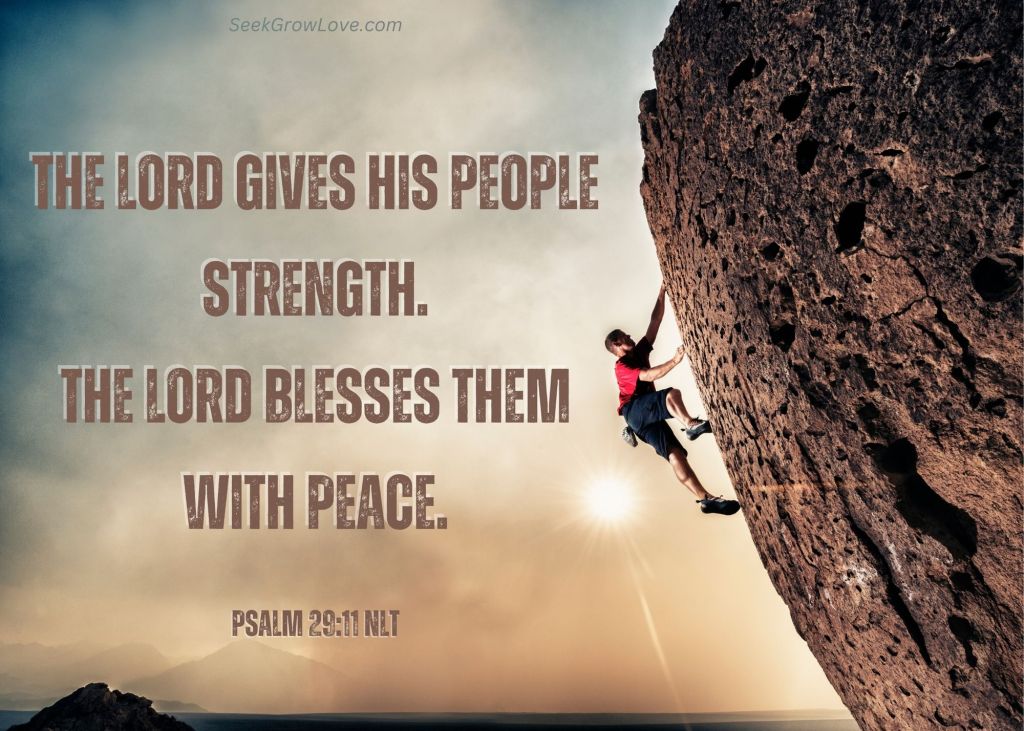
The Lord gives his people strength.

    The Lord blesses them with peace. (NLT)

If we trust in God’s goodness, we know that He has our best interest at heart and will supply us with the strength we need. Therefore, feel the fear and be obedient anyway.

-Kristy Cisneros

Reflection Questions:

  1. Do you struggle with being obedient to God’s calling? Do you feel fear overshadows doing the right thing? Pray to God to deepen your trust. As we learned in yesterday’s reading, it is important to trust in God’s timing and goodness— even in the face of fear.
  2. What do we learn about God and His character in our Bible reading today?

Crying Out to God

Old Testament Reading: Exodus Introduction Below
Psalms Reading: Psalm 28
New Testament Reading: Matthew 27

In today’s reading, I couldn’t help but see some parallels between David and Jesus. In both of these passages, we see a crying out to God in a time of true despair or suffering.  

In Psalm 28, we read David’s heartfelt words:

1 ​​To you, Lord, I call;

    you are my Rock,

    do not turn a deaf ear to me.

For if you remain silent,

    I will be like those who go down to the pit.

2 Hear my cry for mercy

    as I call to you for help,

as I lift up my hands

    toward your Most Holy Place.
(NIV)

The words, “For if you remain silent” stood out to me. Up until that point, David clearly felt that God had been silent. He wanted to be reminded that God was on his side and actively fighting for him. 

In Matthew 27:46, Jesus also cried out to God in distress:

46 About three in the afternoon Jesus cried out in a loud voice, “Eli, Eli, lema sabachthani?” (which means “My God, my God, why have you forsaken me?”). NIV

To me, that sentence contains some of the most poignant words in scripture. Jesus is truly taking on the weight of the world at this moment by bearing all of humanity’s sins. The weight of it must have been crushing. It must have felt so terribly dark and cold. In this case, he alone had to pay the price and it was not the plan for God to rescue him from death; however, we know how the story ends. We know God did not forsake him in the grave. We read in Acts 2:31: 

31 Seeing what was to come, he spoke of the resurrection of the Messiah, that he was not abandoned to the realm of the dead, nor did his body see decay. (NIV)

When we are in the depths of despair or metaphorically running from danger, it can seem like God is silent and turning a deaf ear to us. However, His word assures us in Romans 8:28 that He is not turning His back to us. 

28 And we know that in all things God works for the good of those who love him, who have been called according to his purpose. (NIV)

In the latter portion of Psalm 28, we read David’s recognition that God came through for him.  

6 Praise be to the Lord,

    for he has heard my cry for mercy.

7 The Lord is my strength and my shield;

    my heart trusts in him, and he helps me.

My heart leaps for joy,

    and with my song I praise him. (NIV)

Notice the words from verse 7: “my heart trusts in him.” How do we cultivate trust in God? One of the best ways is to learn about Him through His word. His character radiates beautifully all throughout scripture. One aspect of God’s character that really spoke to me in today’s reading is His tenderness. In Psalm 28:9 we read: “Save your people! Bless Israel, your special possession. Lead them like a shepherd, and carry them in your arms forever.” (NLT)

Isaiah 40:11 gives us more insight into how He shepherds His flock: 

He tends his flock like a shepherd:

    He gathers the lambs in his arms

and carries them close to his heart;

    he gently leads those that have young. (NIV)

God carries us close to His heart. Now that’s an amazing image! Where we are might feel very cold and alone in the moment, but God is there holding us close to His heart. Unlike Jesus on the cross, we never have to bear the weight of our burdens alone. He is working things out for the good for those who love Him. It might not look like how we imagined, but it will be beautiful in the long run. Trust His timing. Trust His goodness. 

-Kristy Cisneros

Kristy is married to Pastor Andy Cisneros who pastors Guthrie Grove Church in Pelzer, SC. This May they will celebrate their 25th wedding anniversary! They are the proud parents of two awesome children: Brooke and Logan. 

Reflection Questions:

  1. Do you feel that you trust in God’s timing and goodness? If not or maybe not as much as you should, make it an intentional prayer that God will help you grow in these areas.
  2. How can you use this year’s Bible reading plan to grow further in your appreciation of God’s timing and goodness? Remember this year’s plan is focused on reading with a lens for understanding God’s character more richly.

And tomorrow we will begin reading in the book of Exodus for our Old Testament reading. So, here is our introduction to the book of Exodus…

Exodus Introduction

The book of Exodus continues the story from Genesis of God’s creating a nation of His own from the descendants of Abraham, Isaac, and Jacob.  These people would be different from the rest of the people on Earth.  It tells of the oppression His people faced as slaves in Egypt.  It then tells how God raised up a deliverer (Moses), and miraculously rescued His people from slavery – to eventually bring them to the promised land.  

Many times throughout Exodus, we can recognize parallels to the way God rescued us from slavery to sin by raising up a deliverer (Jesus), so we can eventually inherit the Kingdom of God.

There are incredible parallels between God’s sparing the Israelites at Passover by the blood of a lamb, and the way we are spared death by the blood of the Lamb of God (Jesus).

The Israelites were figuratively baptized when the Red Sea parted so they could walk through on dry ground.

As if all this weren’t exciting enough, God, through Moses, led the people to Mount Sinai, where the people saw the mountain engulfed in flame, and heard the physical voice of God, as he gave them the 10 commandments.  (See a parallel of this to us in Hebrews 12: 18-29.)

The Israelites were so terrified they begged Moses to talk with God, and then bring word back to the people.  They thought they would die if they heard God speaking anymore.  God agreed that this was a good idea, and promised to later send a spokesman, raised up from among his brothers – like Moses, who would represent God to the people.  This was ultimately fulfilled by Jesus.

The rest of Exodus, as well as all of Leviticus, and part of Numbers, takes place at Mount Sinai – as God gave His laws to His people.  As you read, you’ll find out that His people had difficulty obeying God’s laws.  

In 1 Peter 2:9, we’re told that God has chosen us, just like he originally chose Abraham’s descendants.  And He expects us to be different – to declare the praises of God.  How well are you obeying?

-Steve Mattison

This Only Do I Seek

Old Testament Reading: Genesis 49 & 50

Psalms Reading: Psalm 27

New Testament Reading: Matthew 26

(Sorry, if you didn’t receive this earlier today – it seems to have appeared on wordpress and facebook this morning, but not to the email list…Or, sorry if you DID receive it earlier this morning and this is now a repeat.)

If you could have anything in the world, what would it be?


For some of you, the answer might be a trip to a neat destination (Ireland seems pretty awesome). For others, it might be to finally marry that person of your dreams. Maybe you would ask to have children one day, or for your current children to have successful lives. If you’re in some financial difficulty, like so many are, maybe you’d wish to just be debt-free. None of those things are bad of course! However, they aren’t the most important thing; and thankfully, you don’t need to have a magic genie in a bottle to acquire the most important thing. It is readily available to each and every believer right now.


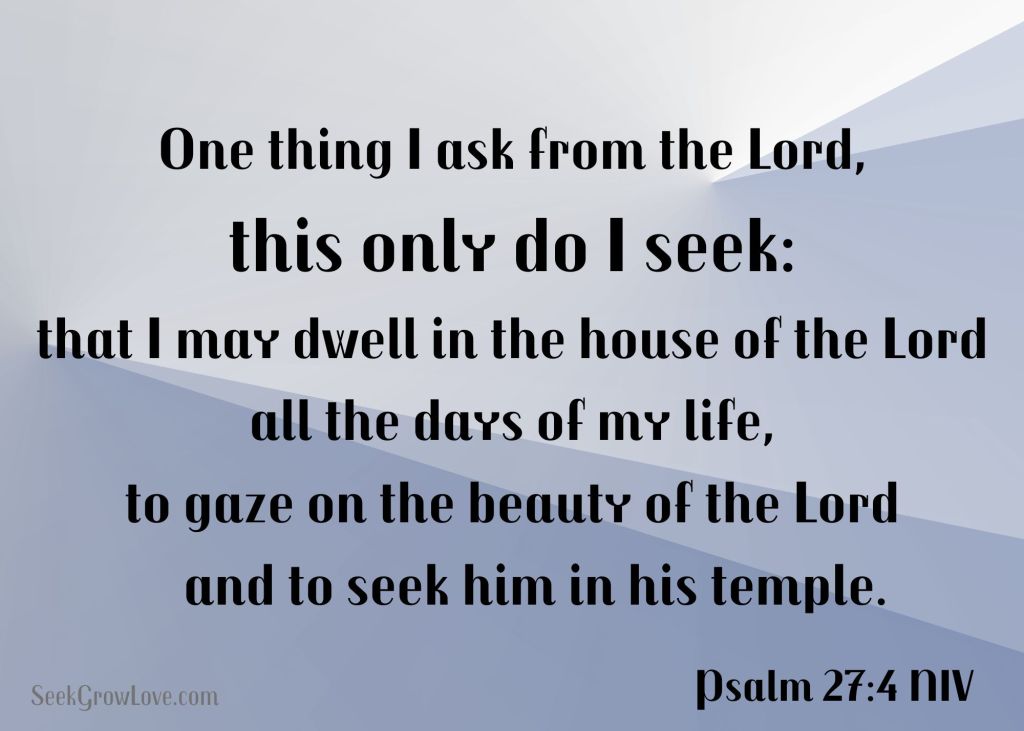
In Psalm 27, the author (likely not David due to his references to the Temple) states that the only desire he is seeking after is to be in the presence of YHWH in His holy temple. For the author, God’s presence was the most precious gift one could ask for; it surpassed all the greatness to be found on earth. For in God’s presence, one can finally be at rest and peace (see Psalm 23), and receive the forgiveness of sins that all of us long for (see Psalm 25). Being in God’s presence is everything; and thankfully, it is readily available to us.


In the New Testament, Jesus says that “wherever two or three are gathered in my name, I am there in their midst” (Matthew 18:20), and wherever Jesus is found, God’s presence is found, too (see John 1:14; 14:9). If you truly want to experience God’s presence today, the greatest gift that you could ever experience in this life, it is available with other believers. When we gather together to worship, to serve, or even to eat a meal, the presence of God is there. We feel closest to God when we are surrounded by our brothers and sisters in the faith, gathering together in Jesus’ name. And while you can pray to God in private by yourself, you will never experience His powerful glory if you remain alone; we need to prioritize time together as believers (Hebrews 10:25). We were not designed to be alone (Genesis 2:18), but to enjoy fellowship with each other.

Brothers and sisters, come and join with your fellow Christians today and this week. There is no greater gift on earth than what you can experience there.

-Talon Paul

REFLECTION QUESTIONS

  1. What verse from Psalm 27 would be a good one to have on your refrigerator and in your heart this week? Make it so.
  2. What are the benefits of being together with your Christian brothers and sisters? List as many as you can. In what ways can you make more opportunities and time to do this more and more?
  3. What do you learn of God in your reading today?

This Only Do I Seek

Old Testament Reading: Genesis 49 & 50

Psalms Reading: Psalm 27

New Testament Reading: Matthew 26

If you could have anything in the world, what would it be?


For some of you, the answer might be a trip to a neat destination (Ireland seems pretty awesome). For others, it might be to finally marry that person of your dreams. Maybe you would ask to have children one day, or for your current children to have successful lives. If you’re in some financial difficulty, like so many are, maybe you’d wish to just be debt-free. None of those things are bad of course! However, they aren’t the most important thing; and thankfully, you don’t need to have a magic genie in a bottle to acquire the most important thing. It is readily available to each and every believer right now.


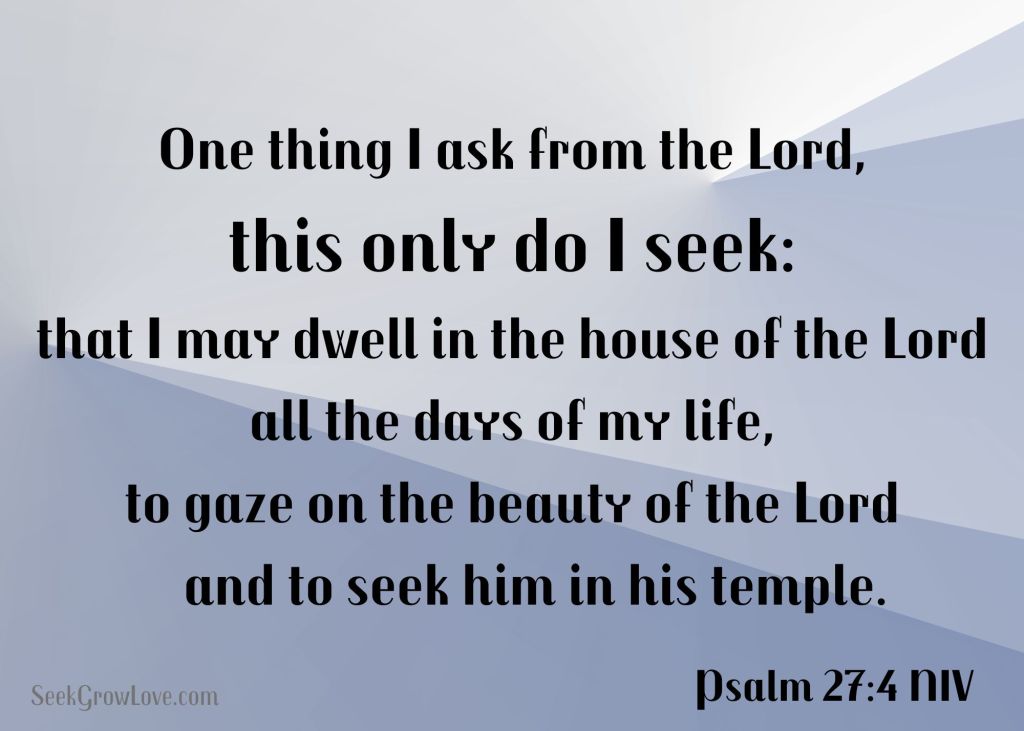
In Psalm 27, the author (likely not David due to his references to the Temple) states that the only desire he is seeking after is to be in the presence of YHWH in His holy temple. For the author, God’s presence was the most precious gift one could ask for; it surpassed all the greatness to be found on earth. For in God’s presence, one can finally be at rest and peace (see Psalm 23), and receive the forgiveness of sins that all of us long for (see Psalm 25). Being in God’s presence is everything; and thankfully, it is readily available to us.


In the New Testament, Jesus says that “wherever two or three are gathered in my name, I am there in their midst” (Matthew 18:20), and wherever Jesus is found, God’s presence is found, too (see John 1:14; 14:9). If you truly want to experience God’s presence today, the greatest gift that you could ever experience in this life, it is available with other believers. When we gather together to worship, to serve, or even to eat a meal, the presence of God is there. We feel closest to God when we are surrounded by our brothers and sisters in the faith, gathering together in Jesus’ name. And while you can pray to God in private by yourself, you will never experience His powerful glory if you remain alone; we need to prioritize time together as believers (Hebrews 10:25). We were not designed to be alone (Genesis 2:18), but to enjoy fellowship with each other.

Brothers and sisters, come and join with your fellow Christians today and this week. There is no greater gift on earth than what you can experience there.

-Talon Paul

Reflection Questions

  1. What verse from Psalm 27 would be a good one to have on your refrigerator and in your heart this week? Make it so.
  2. What are the benefits of being together with your Christian brothers and sisters? List as many as you can. In what ways can you make more opportunities and time to do this more and more?
  3. What do you learn of God in your reading today?

Put IT to Work

Old Testament Reading: Genesis 47 & 48

Psalms Reading: Psalm 26

New Testament Reading: Matthew 25

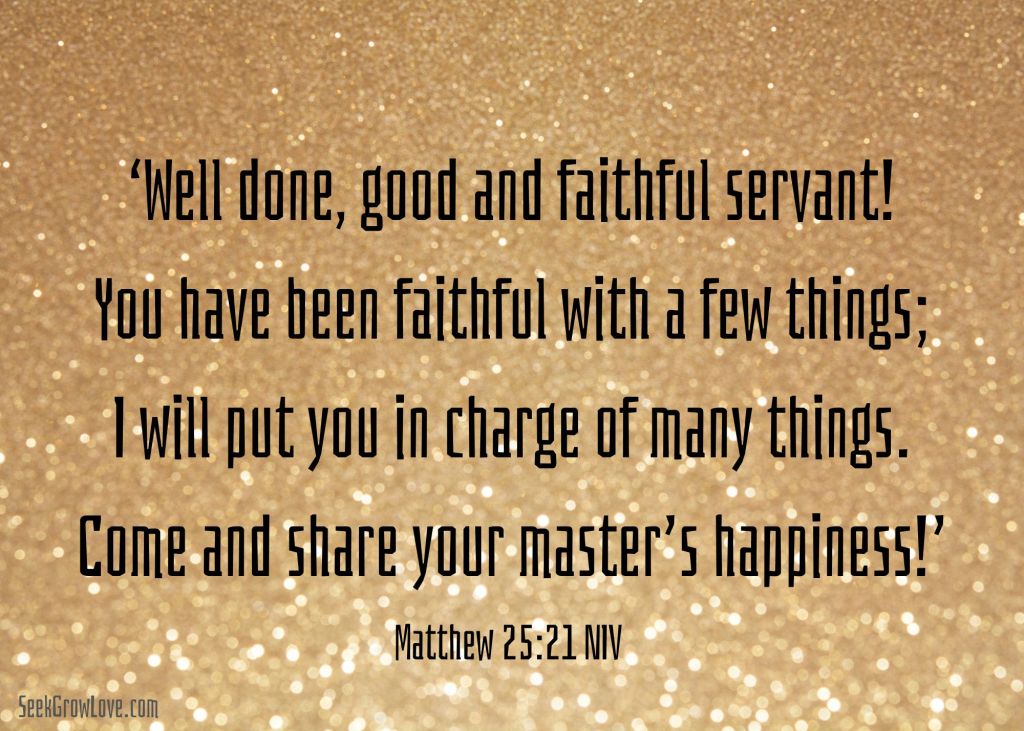
In Matthew 25:14-30, Jesus tells a parable about a man who entrusts his money to three of his servants while he is away. They each receive a different amount of wealth: 10, 5, and 1. The master doesn’t instruct them on what to do with it; he simply leaves it in their possession and takes off. The first two double their money: the 10 now having 20, and the 5 now at 10. However, the servant who only had 1 chose not to risk losing it; he chose to bury it in the ground so that his master wouldn’t be upset with him. He was terrified of what his master might do to him if he was to lose his one and only amount of money. Unfortunately for him, this was the wrong choice and he was punished for it, because he could have made at least a little amount from it at the bank.


The parable is revealing of our Christian walk as well. Our Master, Jesus, has entrusted us with different things in this life to use and bring others to saving faith. Some of us have more money and opportunities than others, but every single one of us has been entrusted with something. You might have money, people, a position at work or school, a certain hobby, physical health, or a variety of different gifts. Jesus expects us to use whatever we have been given for the sake of the Kingdom of God. He doesn’t want us to waste it, and honors it when we give it a shot (did you notice that both of those who tried doubled their investment?). When we choose not to make an attempt, we are operating out of fear, which is the opposite of what Jesus and God empowers us with (2 Timothy 1:7).


What have you been entrusted with by your Master? Take some time to write down what skills, people, and possessions you have been given in a column on a piece of paper. How can you use that to further the gospel message of the Kingdom? Take some time to brainstorm and write down in a separate column next to that first list any ideas that come to mind.


You’ve been given something; don’t waste it. And Jesus is with you always through the process, so don’t fear anything (Matthew 28:20)

-Talon Paul

Reflection Questions

  1. Take some time to create your two columns: What have you been entrusted with by your Master? and How can you use that to further the gospel message of the Kingdom? Return to it throughout the weekend with more thoughts. What have you been given that you never considered using to spread the good news of the Kingdom?
  2. Has fear stopped you from using your talents? What should we be most fearful of (men, what others think, what if I mess up – or – what will happen when the Master returns)?
  3. What can we learn from the other two parables in Matthew 25?
  4. What do we learn of God and His Son Jesus in our reading today?

And then The End will Come

Old Testament Reading: Genesis 45 & 46

Psalms Reading: Psalm 25

New Testament Reading: Matthew 24

I am practically lost without an instruction manual. I have relied on instruction manuals for everything, from constructing Legos and Bionicles when I was young (does anyone remember those?), to building cheap furniture from the department store. Instruction manuals bring order to the chaos; they provide a clear path forward to your desired goal. I admire people that can “wing it” and still accomplish their task without a set of instructions; I am not one of those gifted people. However, I believe that instruction manuals are a good analogy for our Christian life and purpose moving forward; after all, Jesus gave us clear instructions too.


In Matthew 24, we find one of the most interesting and debated texts in the entire Bible. There are details that depict what is going to happen when the city of Jerusalem is conquered by Rome in 70 AD, and there are details about when Jesus will come again on the clouds of heaven to establish the Kingdom of God. Books on top of books have been written about this passage, and its parallels in Mark and Luke; however, not enough has been said about the practical instructions Jesus gives to us here among all the chaotic images described. In verse 14, we are told that, in the midst of all the craziness, we Christians have one job: to share the gospel of the kingdom to the whole world. In fact, Jesus tells us that he will not return until this job has been accomplished.


Brothers and sisters, the greatest contribution you can make in this life is telling someone else about God’s coming kingdom. It is in this message that true salvation is found. It is in this message that God will redeem humanity and the earth. It is in this message that your sins can be forgiven. This message needs to be shared not just in other countries, but with your friend, your neighbor, and everyone else in your life. This is our only mission in life as Christians before Jesus comes back: let’s follow the Great Instruction Manual given by Jesus by sharing the same message that he shared (Luke 4:43). You can truly save a life.

-Talon Paul

Reflection Questions

  1. What are your thoughts and feelings as you read Matthew 24? In your opinion, what is the best part of the chapter? What do you find of great value?
  2. Reading through Matthew 24 what instructions, warnings and promptings do you find from Jesus?
  3. What are you doing to share the good news of the coming Kingdom? What might Jesus like to see you doing this month that you haven’t already been doing?
  4. What did God reveal about Himself today in your reading of His words?

Siblings in the Faith

Old Testament Reading: Genesis 43 & 44

Psalms Reading: Psalm 24

New Testament Reading: Matthew 23

Jesus, the great King of God’s Kingdom, told us that he came to “serve, not be served” (Mark 10:45). His entire ministry revolved around giving up his life for the sake of those around him and for the entire world. Paul tells us in Philippians 2 that Jesus considered others as more important than himself, and Jesus himself tells us that he was not trying to accomplish his own will, but the will of his heavenly Father (John 5:30). You see, Jesus wasn’t interested in titles, status, or holding a special office; he only cared about serving the needs of those who he loved. Jesus calls us to be the same way, which is completely different than what the world around us wants us to do. We are told over and over to keep shooting for higher and higher status, and for more sophisticated and respected positions, but this isn’t the way things are supposed to be in the Church: we are all equals.


In Matthew 23, Jesus tells us that nobody among his disciples should seek after any title: not “Teacher”, “Leader”, or “Father”. Instead, we are to consider each other “brothers and sisters” (equals), like the apostle Paul tells us in Galatians 3:28: “There is neither Jew nor Greek, there is neither slave nor free man, there is neither male nor female; for you are all one in Christ Jesus.” None of us is to think too highly of ourselves, even if we do hold official titles in the Church, like “pastor”, “elder”, “youth leader”, or anything else: we are supposed to be like Jesus and only care about serving each other, not exalting ourselves to some high position. We should be humble and lead like Jesus led: by stooping low and washing feet.

This also means that we all have an equal responsibility for the Church and the mission of Jesus to make disciples. It’s not just the job of the pastor and other leaders; it is every believer’s responsibility. We are all supposed to care for what God has given us in this world, since it’s all His anyways (Psalm 24:1). It doesn’t matter if we get to sit in on Board meetings and make major financial decisions for our church buildings; we all have a share in the Church’s larger plan and the later Kingdom of God.

Brothers and sisters, let’s all contribute and serve each other. We will only be as healthy as we are humble. Be like Jesus today and consider others as more important than yourself, and don’t seek after those titles and statuses, even if they do eventually come your way. Our focus should be on loving our siblings in the faith and doing what Jesus has called us to do.

-Talon Paul

Reflection Questions

  1. Would you rather…exalt yourself now, OR be exalted by Jesus later? Why is it only one or the other?
  2. Jesus said, “The greatest among you will be your servant.” (Matthew 23:11) How are you doing as a servant?
  3. What do you think of Talon’s statement: “We will only be as healthy as we are humble”? How healthy, or ill, are you currently? What could you do to improve your health and your humility today?
  4. What did God reveal about Himself in your reading of His Scripture today?

God Speaking to You

Old Testament Reading: Genesis 41 & 42

Psalms Reading: Psalm 23

New Testament Reading: Matthew 22

I have recently developed a new appreciation for the Psalms. I am not one that enjoys poetry; I prefer historical accounts and factual information (I know; what a nerd!). However, after joining a weekly prayer meeting with a group of pastors in town, I have grown to see that the Psalms are not to be read like most of the other books; instead of reading for information, the Psalms are meant to be read to “hear”. We often call the Bible “the Word of God”, but rarely do we treat it like God is speaking to us. That is how I have learned to read this set of poems and songs, and I’d encourage you to try it.


In Psalm 23, God tells us that He is our shepherd, guiding us along life’s difficult paths towards green pastures and waters of rest. Although most of us don’t know what it’s like to be a sheep herder, what is obvious is that shepherds care for their flocks. They make sure that their flock has water, food, and shelter; they make sure that their flock is at peace and protected from danger. This is what God does for us as our shepherd; he provides, protects, and allows us to enjoy rest.


In a time when anxiety is higher than it has ever been, and people are worried about all sorts of different issues, this Psalm should speak to every single one of us and be an encouragement. We don’t need to worry, like Jesus says (Matthew 6:34); God has us and will take care of what we need. He allows us to rest in peace when we are in His presence, safe from the difficulties that surround us. The only requirement we have is to follow Him and stay close to Him, because
when we are with the Great Shepherd, nothing can harm us.


Our Father is calling to you today; calling you to come before Him and calling you to rest. Enjoy this wonderful, merciful gift now, knowing that He has everything taken care of.

-Talon Paul

Reflection Questions

  1. If you haven’t yet, reread Psalm 23 specifically looking for what God is speaking to you about Himself.
  2. Is God promising to remove all scary, bad things from your life if you follow Him (see especially verses 4 & 5)? What does He offer to remedy anxiety and worry even in the midst of dark shadows and enemies?
  3. How have you already benefited by having God as your shepherd? Is anything required from you to remain part of His flock?