Endurance

OLD TESTAMENT: Isaiah 32-33

POETRY: Song of Songs 6

*NEW TESTAMENT: Hebrews 12

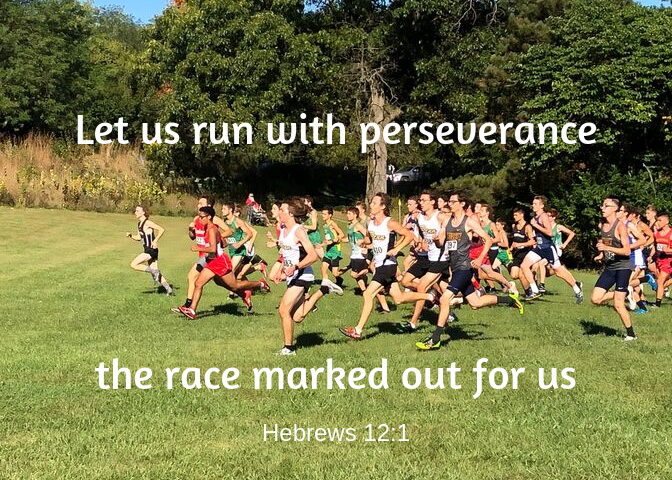
If you’re feeling sluggish, tired of enduring the hardships that come with choosing to be faithful to the end of your race in this age, caught in sin that’s hard to get disentangled from, then think on all of those faithful chosen of God from chapter 11. They made it! They’re going to the Kingdom!

We have to have the endurance to make it to the end to, for our own good. If that great cloud of witness doesn’t move you, consider Jesus’s faith, by which he endured the cross for you. God’s will for him involved the shedding of his blood to resist the sin of others against him and to free us from it. Has God asked you to shed blood to resist sin? That’s probably not God’s will for you, thank God, though many of his children have. I pray it never comes to that.

What’s it going to take to finish your faith race? This writer says endurance, and it comes through discipline (he may even be referencing the letter he’s penning as part of that discipline). He is reproving the Hebrews, but discipline involves more than reproof. It involves scourging (I think the definition of scourging here is “suffering”), and it takes training.

The Hebrews seem to have forgotten that they are heirs to the Most High; they are sons of God. If you’re a son, then you will be disciplined (if not, you’re illegitimate). God’s discipline is like that of a father to his child. It is like the training up of the child in the way he should go so that when he is old, he will not depart from it. The child who was disciplined experienced how to endure as an adult.

The discipline was for the child’s good, though it was sorrowful in the moment. As adults, the discipline will be sorrowful in the moment, but remember, the discipline of the Lord happens because he loves his children, so welcome it. If you’re not disciplined, you’re going to hurt yourself or others with sin. You might forfeit your entrance into the kingdom.

Discipline removes sin. It shapes us into holy people – sharing in the holiness with God (because we are transformed into people who want good for others and therefore do the will of God). It yields the peaceful fruit of righteousness (it turns you into a person who is faithful to do God’s will).

With the Lord’s leading, we can take steps to discipline ourselves to resist sin with endurance, for a whole lifetime. Here are some examples from this chapter:

Serve those in need – strengthen the hands that are weak and the knees that are feeble.

Pursue peace with all men.

Don’t let any root of bitterness spring up causing you trouble.

Don’t refuse the one who is disciplining you.

Don’t trade your birth right for food (like Esau did); God didn’t forgive that sin.

Remember, you didn’t endure what God’s firstborn son (the children of Israel) did. They were not allowed to be where God was like you are through Jesus. Through their mediator Moses, they had to stay away from the mountain where God was. And they were terrified because if they touched the mountain, they’d die. They were terrified of hearing God’s voice, sounding like thunder and lightning.

Instead, you’ve come to the church of the firstborn (Jesus). You have approached the throne room of God, with his angels, with your brothers and sisters who have all been made perfect by Jesus’s sacrifice, and you can do it without being terrified. You’re not going to die if you approach the throne room of God through Jesus.

Oh, and by the way, Jesus’s sprinkled blood as our living sacrifice speaks better than Abel’s blood that cried out for vengeance. Jesus’s blood cries out for love/sacrifice for others. Our job is to follow the cries of the one who’s better, who’s blood lets us into the throne room of God now to be in his presence. God will oblige both, but he says vengeance belongs to him.

God once shook the earth when he spoke from earth. In the end, he’ll speak from heaven, and shake both heaven and earth, so that the things that can be shaken will be removed, leaving only those things that are unshakable. What’s unshakeable is the Kingdom of God. Let’s praise God that we can be a part of that Kingdom now, showing him reverence and awe for what he’s doing. It’s a new thing, and it’s better. 

-Juliet Taylor

Reflection Questions

1. Can you think of something you endured faithfully through discipline?

2. Do you have a routine of discipline that helps you stay on track?

3. Abel’s blood cries out for vengeance. Jesus’s blood cries out for love/sacrifice to save others. God will oblige both cries, but vengeance belongs to God, not to those under the New Covenant. Our responsibility is to love, as Jesus loved because it can change hearts and allows us in God’s presence now (in spirit as we draw near). Our job is to love even those who have hurt us. How can you love someone who has hurt you?
Faithful

*OLD TESTAMENT: Isaiah 30 & 31

POETRY: Song of Songs 5

NEW TESTAMENT: Hebrews 11

By faith, everything is made better. Faith is the certainty of things hoped for, a proof of things not seen that were promised or spoken of by God. By faith, the people of old gained approval by God.

Throughout scripture, we have examples of God’s people who lived by faith, fulfilling their role in the covenant that God made with them, because they believed that God was faithful to fulfil his promises. There were some promises that were fulfilled in their time, according to the specific covenant God made with them (e.g., the Abrahamic covenant, the creation covenant, covenants of blessings, or children, or land, etc..), but all the faithful examples listed in this chapter died in faith, without receiving the promises of the New Covenant, but having seen and welcomed them from a distance.

They were people who knew that this world (the current age) is not their home. They knew they were strangers, looking for a better home, a heavenly one (that will come down to earth), whose maker was God.

By faith, Abraham offered up Isaac. He knew his God was faithful to his promise that through Isaac, the promised seed (Jesus) would be born. That can’t happen if his son is dead. So Abraham had faith that God was able to raise people from the dead.

By faith, Moses chose to suffer with his people, rather than to indulge in the temporary pleasures of sin that came with the territory of being a grandson to a rich Pharoah. He considered the shame of Messiah greater riches than the treasures of Egypt, because he was looking to the reward.

There are so many examples of faithful people of God mentioned in this chapter. If you’re lacking in faith, read about them, you won’t be disappointed! The point in reminding the Hebrew readers of this I believe, was to teach them, or to remind them, that the people of old were faithful to the end of their lives, to a God they believed was faithful in keeping his promises—even the ones they had not yet received prior to dying, and thus became pleasing to God. They were chosen because of their faith, enduring until their end.

Yet, God wasn’t willing to establish his kingdom with them in their time, because he wanted them to be with the Hebrews in this letter. By extension, he wanted them to be with us. He didn’t want them without also having you! That’s the God you chose to serve!

The promise of a better hope, the one obtained now through the New Covenant, spoken of in the law and the prophets of old, is for those pleasing to God – the faithful; the chosen. It’s for those who have gained approval through their faith (their obedience to whatever covenant God made with them because they believed he was faithful), who are made perfect with those of us who chose to enter the New Covenant with God through Jesus. The better promises are all through Jesus, and they’re available for everyone who seeks God through him, choosing God back through their faith.

And without faith it is impossible to please Him, for he who comes to God must believe that He is (exists) and that He is a rewarder of those who seek Him.

-Juliet Taylor

Reflection Questions

1. It is common for people to say, “Have faith,” but I don’t think people should have faith in something that God never promised them. The examples in this chapter seem to reflect that. What do you think?

2. Whose faith recorded in this chapter do you admire most, and why?

3. We are to have faith in promises not yet received in this age too. How will you keep your faith until the end?

Draw Near

OLD TESTAMENT: Isaiah 28-29

POETRY: Song of Songs 4

NEW TESTAMENT: Hebrews 10

I used to think that Hebrews chapter 10 was the scariest chapter in the whole Bible because it contains the scariest verses—about those willful sins that are committed. I missed the whole point of this beautiful chapter.

I missed that Jesus doesn’t have to make a sacrifice for us yearly like the priests of old did to cleanse the flesh of sin committed that year. His one-time sacrifice takes away sins for all time, cleansing the flesh and the conscience. That’s perfection that the old law could never do. Through Jesus, God’s children no longer needed that reminder that we’re slaves to sin, because we’re not anymore. We are free in Christ. We are perfect, but we have to choose to remain perfect by doing God’s will.

I missed that where there is forgiveness of sin (because of Jesus’s obedience to always do God’s will), an offering for sin is no longer required to enter the holy place of God. His role as high priest of the New Covenant is different than that of the Levitical high priests. He’s always available to save if you draw near to him; to intercede on our behalf when we sin, as opposed to sacrificing himself by dying again and again and again when we sin.

An animal sacrifice for sin is no longer required under the New Covenant law, but drawing near to Christ is required when dealing with my sin. I still need to bring a sacrifice, but it’s of repentance; a contrite heart. And I don’t have to wait outside a tent or a veil, I go right into the heavenly tabernacle where Jesus is and ask for forgiveness in his name. God will be faithful to me when I draw near to him through his son in this way. This is required of me if I entered the New Covenant with God through Jesus. I did, when I was baptized into the name of Jesus. Praise God.

The word says that by one offering (Jesus’s literal sinless body), he perfected for all time those who are sanctified. Those who are sanctified are those who have put the laws of God in their minds and have written them on their hearts because they chose to do God’s will out of love for God and others (just like Jesus did).  

Now for those scary verses:

26 For if we go on sinning willfully after receiving the knowledge of the truth, there no longer remains a sacrifice for sins, 27 but a terrifying expectation of judgment and the fury of a fire which will consume the adversaries (read through verse 31 if you want to see how scary this section is).

There no longer remains a sacrifice for sins, but what does remain is something better – drawing near to Christ through repentance when we sin. I think this is true for most sins, even willful sins IF we desire to repent of them because we know how much better God’s ways are for us and desire to get back on track.

If we don’t have that desire and don’t enter the holy place through Jesus’s torn body veil, what should we expect? If we don’t, we should expect just judgment. If we don’t, it means we are choosing to willfully bind ourselves to sin again and remain in it. It means we aren’t looking for forgiveness, because we think it was better when in slavery to sin than being freed from it (and slavesto serving God by doing his will that is good for us).

This reminds me of the children of Israel in Massah and Meribah, complaining in the wilderness, wishing they were back in Egypt. They were slaves there, and perhaps they’d die, but at least they weren’t going to die of hunger or of thirst like they would in the wilderness serving God, so they grumbled. They tested Yahweh God, as they had no faith that God would provide for them as he promised (“Is the LORD among us or not?”). This willful sin, this lack of faith that God would be faithful to do what he said he’d do for them in a time when they were enduring trials and hardship, eventually got them destroyed. The reality was that though God was faithful to uphold his end of the covenant he made with them, they weren’t willing to uphold theirs because they didn’t trust him.  

The testing of God’s faith is what I believe the scary section in Chapter 10 is referencing. If we sin because we don’t believe God is faithful to do all he promised for us, especially when times get tough, and we think it was better living the old way when slaves to sin as opposed to being slaves to God, then our entrance into the Kingdom of God is in jeopardy. It’s like saying to ourselves, “We’re slaves to sin, but at least we won’t die hungry or thirsty living in sin.”

Unfortunately, choosing to live like Christ now does come with pain and suffering, because of the consequences of the past and present sins of all people. Not everyone chooses to do what God says is good for us, so our world becomes more and more corrupt. So do our bodies. It’s hard to live for Christ in a world like that. There’s also so much confusion about what’s right and wrong, even among his followers, and so we get hurt. And of course, there is Satan, walking around like a roaring lion, trying to get us off track.  

The Hebrews were reminded of their former sufferings for Christ and commended for enduring it with joy because they once knew they had something better awaiting them. Though I’ve been through trials, I’ve never had to go through the trials that the Hebrews here had to go through for Christ. It says that they “32 …endured a great conflict of sufferings, 33 partly by being made a public spectacle through reproaches and tribulations, and partly by becoming sharers with those who were so treated. 34 For you showed sympathy to the prisoners and accepted joyfully the seizure of your property, knowing that you have for yourselves a better possession and a lasting one.” The Hebrews were being exhorted. The writer is pleading with them to behave how they once did, and to stop looking back at their old way of life.

If the people of God who went through this type of hardship needed an exhortation to get back on track, what of us? What of me?

Now that we’ve got the kick in the pants we needed to stop being babies, we can apply this information to do better with some application from the writer:

19 Therefore, brethren, since we have confidence to enter the holy place by the blood of Jesus, 20 by a new and living way which He inaugurated for us through the veil, that is, His flesh, 21 and since we have a great priest over the house of God, 22 let us draw near with a sincere heart in full assurance of faith, having our hearts sprinkled clean from an evil conscience and our bodies washed with pure water. 23 Let us hold fast the confession of our hope without wavering, for He who promised is faithful; 24 and let us consider how to stimulate one another to love and good deeds, 25 not forsaking our own assembling together, as is the habit of some, but encouraging one another; and all the more as you see the day drawing near.”

-Juliet Taylor

Reflection Questions

1. Notice that we draw near to Jesus in the throne room of God, which is God’s throne room in heaven. We do this in spirit. The bible uses figurative language like this a lot. What other figurative language do you notice in this chapter?  

2. How can you encourage one another in love and good deeds through their hardships?

3. How do you live by faith as it says in Hebrews 10:38 (quoted from the old; applied to us in the new)?

The Best High Priest

OLD TESTAMENT: Isaiah 25-27

POETRY: Song of Songs 3

NEW TESTAMENT: Hebrews 9

No one talks about the sins committed by God’s people in ignorance. But it’s these sins that the Levitical high priest offers a sacrifice for yearly. If that’s the case, then what of the sins of the people that are committed willfully? I think we’ll find out about them in Hebrews Chapter 10.

The more I read, the more I have to change my mind about what God’s will for me actually is. There’s so much confusion that’s been passed on from generation to generation that gets stuck in our minds and in our hearts. Confusion is not good, because if we continue in it, someone’s going to get hurt. This studying of the book of Hebrews has helped me tremendously in that regard.

The Old Covenant had a high priest who sacrificed for sins with regulations that had to do with food, drink, and regulations for the body UNTIL the reformation of the covenant. An example of this is in washing hands and feet prior to entering the tabernacle or making a sacrifice. God told them that if they didn’t do this, they’d die. The priest would do this to make sure they didn’t die (literally), for the purpose of cleansing the flesh (the body) of the sin that was committed that year. But it could not cleanse the conscience. It, along with the various gifts and sacrifices offered amongst the people of God under the Old Covenant, could never make the worshiper perfect in conscience. Why?

The Holy Spirit (God) had not yet revealed the way into the holy place while the outer tabernacle was standing, separating the people from God. Nothing offered could compel the person to desire to flee dead works and serve the living God out of self-sacrificial love (God’s will for us all) because Jesus hadn’t demonstrated this kind of love yet. Jesus’s love is what changes the heart, soul, mind—the conscience, if you will. It causes us to desire to repent when we miss the mark and strive to do God’s will out of love.

The New Covenant, with its better high priest, better promises, and better tabernacle, will help the chosen people of God live well for his kingdom. They (we) can start living that way now because the Kingdom of God is at hand. Our great high priest Jesus is working for us (in us), from heaven for our own good, and for the good of others to do God’s will out of love. We’ll desire this with a clean conscience because of what our savior did for us.

The Levitical high priest was only able to make a sacrifice on behalf of his own and the people’s sin once a year. He was only able to cleanse sin once a year. But Jesus’s one time love sacrifice makes it available to cleanse our conscience of sin at any time, as he is available to save forever those who draw near to God through him, since he always lives to make intercession.

It makes sense that if Jesus is always available to make intercession for us that we can become entangled in sin again that kills. When that is the case, we can draw near to God through our high priest and repent because he’s always available to save. I think this is what the writer to the Hebrews is trying to get across. They needed to draw near to God through their new, better high priest with repentance. And they can do that without dying because Jesus already did that.

The new, better high priest has the job role of cleansing our conscience from dead works to serving the living God once we enter the holy place of God. We are the people who desire that because of what Jesus did for us. He demonstrated for us that love conquers sin and sets people free (to serve God). We must choose to follow in Jesus’s footsteps to remain cleansed, repenting when we miss the mark.

God’s desire for his people isn’t new. This has always been God’s will for his people. That’s why he brought his firstborn son Israel out of slavery to Egypt, to serve him, with a clean conscience (the heart) so that it would be well with them. But most of them chose not to.

How the people would be reconciled back to God is new. It was revealed by the Holy Spirit after the veil was torn. Jesus’s body was torn so that we could be in God’s presence to offer sacrifices, just like the Levitical Priests could, but without a chance of dying when we enter (Jesus already did that). The sacrifices we bring in are repentance, praise, thanksgiving, humility, brokenness, contriteness, etc.  

People can now have hope of resurrection from the dead to everlasting life by entering the New Covenant, made available through Jesus’s love sacrifice. We are called to do the same, Jesus showed us how. Jesus was able to do this through the eternal spirit working in him. We can do it through Jesus’s spirit working in us.

Jesus tells us what is required of us. It’s the better requirement than the Old Covenant stipulations because it can make us perfect in conscience. Our requirement is to love, as Jesus loved. How has he loved? Jesus Christ laid down his life for us. And we ought to lay our lives down for our brothers and sisters. Hopefully not literally, but we will be willing to if it comes to that. We can do this through the spirit of Jesus working in us. We can desire this because of Jesus’s demonstration of love. If we don’t, Jesus is always able to save when we draw near to him (repent) with our better sacrifices.

-Juliet Taylor

Reflection Questions

1. Without the shedding of blood, there is no forgiveness. Those under the Old Covenant were forgiven for their sins through the blood of animal sacrifice that year, but it didn’t save them (they had no hope of resurrection). With the shedding of Jesus’s blood, there is forgiveness of sins that saves us. What do you think is the difference between forgiveness under the old law and forgiveness under the new law?   

2. Hebrews 9:26 says, “Otherwise, He would have needed to suffer often since the foundation of the world; but now once at the consummation of the ages He has been manifested to put away sin by the sacrifice of Himself.” This does not mean that people don’t sin anymore. We can clearly see that that’s not the case. What do you think it means to “put away sin”?

3. Christ loved us by dying for us. How do you think God wants you to demonstrate his love to someone today who is in need of some love from you?

“Jesus is Better” Continued

OLD TESTAMENT: Isaiah 22-24

POETRY: Song of Songs 2

NEW TESTAMENT: Hebrews 8

“Jesus is better” talk continued…

Jesus is a better high priest because the Lord set it up, not man. He was chosen. The Lord (Yahweh) chose Jesus to be high priest of his New Covenant due to his loving obedience, as opposed to being appointed by men after their predecessor in lineage died (like in the Levitical priesthood). Jesus’s place as high priest is in heaven itself, not on earth as it was under the law of Moses, where there could only be a mere copy of the sanctuary.

Jesus wasn’t in the priestly line of Levi, he was in the line of Judah – whose line was chosen to be the king-ly line (after Saul (Benjamin’s line) screwed up and another (David) was found who chose God). It was after this chosen man (David) set his heart on choosing God that God swore his oath regarding the new priesthood that was to come in Psalm 110:4. God was going to make his new forever priest one who chose him, after the order of Melchizedek (chosen to be both king and priest; no lineage that made him so). And through him (the new high priest Jesus), he made a New Covenant with people who chose him from their hearts and had God’s laws in their minds.

The Old Covenant promised Israel that they would be God’s people – a kingdom of priests and a holy nation among all the inhabitants of the earth (Exodus 19:6). To serve God in this way, they had to know God’s will in how to live rightly, or at least better than how the rest of the world had been living (and hurting each other). God gave them laws to help them become holy, for their own good and the good of the world. But not all of them were faithful to uphold their end of the deal.

Although God chose them, some didn’t choose God back based on their actions. The law was not in their hearts. If it was, they would have trained themselves to distinguish between good and evil (to stop the evil and do good). They didn’t, hence, the need for a new covenant made with chosen people, through a perfect high priest.

The New Covenant through Jesus is written on the minds and hearts of God’s chosen people. To be chosen means that God chooses us because we choose God. We choose God by obeying him from the heart because we know that he loves us and sets up his commandments for our good, and for the good of the world through us. He’s a good father who establishes our ways for us so that it will be well with not only us, but those whom we affect by following God. We are the people who want that. We want it so badly, that we train for it. 

I understand that God set up the Old Covenant for the people’s own good – because they needed it to live well in their time – to be the people that God wanted them to be for their own good, to affect the lives of those around them positively as God’s holy people. But they didn’t want it (based on their behavior). God says of them, “For they did not continue in My covenant, And I did not care for them, says the Lord.” We know that God cared for his firstborn son Israel. He showed them mercy time and time again. But eventually, their continuously evil actions caused God to cease from his pleading with them to be faithful – until the better man Jesus inaugurated the better covenant based on his faithfulness.  

In this better covenant, all will know God, because they are people who choose to know him. In this better covenant, God will be merciful to them, because they will choose to repent. In this better covenant, God will not remember their sins, because they will choose to ask for forgiveness and do better, in the name of their high priest Jesus, because God’s laws are in their minds and written on their hearts (because they chose to put God’s laws in their minds, and on their hearts for their own good, and for the good of those around them). Don’t let Calvin persuade you otherwise.

There is usually a good reason people are chosen. They aren’t generally going to be randomly selected when it comes to matters of importance. And if they were chosen, they generally have to maintain the qualities that got them chosen in the first place to remain chosen. Throughout our bible history, some did, some didn’t. When God chooses someone, it almost always has to do with that someone choosing him. If God is choosing you, I pray you choose him back.

-Juliet Taylor

Reflection Questions:

1. Do you think God cared for the Children of Israel, even though he’s quoted from an Old Testament statement that he did not (Hebrews 8:9)?

2. Do you think God puts his laws into our minds and writes them on our hearts under the New Covenant (which would take away our autonomy) or do you think action on our part is involved?

3. Hebrews 9:13 says, “When He said, “A new covenant,” He has made the first obsolete. But whatever is becoming obsolete and growing old is ready to disappear. What does obsolete mean here?

Able to Save Completely

OLD TESTAMENT: Isaiah 19-21

POETRY: Song of Songs 1

NEW TESTAMENT: Hebrews 7

The whole point of the letter to the Hebrews, it seems, was to show them how much better Jesus and the New Covenant were than anyone, or anything, that God used or worked through to fulfill his plan of salvation in the past. I think the writer is doing this because the Hebrews needed to hear it. In chapters 5 and 6, they were just scolded because they had become poor listeners, in need of milk like infants, instead of solid food.

I have a hunch that meant that they had heard the gospel, took it to heart, maybe applied it for a time when they were still excited about it, then slumped back into their old ways over time. They didn’t train themselves in it to distinguish between good and evil for the sake of endurance. I think they were getting sluggish and therefore falling back into their old habits/ways of life, because it’s so much easier to continue what you are used to, especially if there’s persecution for doing it God’s way. For them, their old habits were those pertaining to the law of Moses.

It’s hard for me to be too harsh however, as we’ll soon read about what they had already endured for the gospel’s sake (e.g., having their homes taken away and enduring it with joy). If people like that were in need of some rebuke and encouragement, I can only imagine what I need.

To make the point (about Jesus being better) in chapter 7, the writer applies these “better” characteristics and principles of Melchizedek to Jesus and the New Covenant, to help explain why Jesus’s priesthood in the New Covenant is far superior to the Levitical priesthood under the Old Covenant.

The writer is quick to point out that Melchizedek’s name means something that can easily be applied to, and understood of, Jesus. Melchizedek means “King of Righteousness” and he’s the king over Salem (now Jerusalem). That makes him the righteous king over the land of peace. That can easily be applied to Jesus (but he’s better). Jesus is THE king of righteousness (always doing his father’s will). He is not only going to rule over the land of peace from his father David’s throne, in Jerusalem, he’ll rule the entire world from there in peace in the kingdom age.  

Oh, and the Levitical priests served Melchizedek, so Melchizedek’s priesthood is the better priesthood (and Jesus is a priest after his order, so he’s better yet). The Levitical priests paid Melchizedek a tithe because Levi was in the loins of his father Abraham when Abraham paid it (I’ve come to expect the writers of the New Testament to talk like this; we all should). The point is—the one after Melchizedek’s priesthood is far superior to the priests after the Levitical priesthood the infant acting Hebrews were following.

Like Melchizedek’s priesthood, Jesus’s priesthood was made by God (after his exaltation). He was chosen, or made perfect by God, because he fulfilled his role in his father’s plan of salvation through his suffering. That’s much better than obtaining the priesthood based on genealogy like the Levitical priesthood.

Better still, God swore an oath, that if another priest should arise after the order of Melchizedek, his priesthood would never die. That oath is fulfilled in Jesus, by the power of an indestructible life. That means that he always lives to make intercession for those who come to God through him. He’s always available to save someone. That’s much better than being after the order of Aaron, where there’s continuous turnover as each predecessor dies. And they can’t save.  

It seems like the writer to the Hebrews had some pretty profound words to share with them to get them out of their sluggish state of life. Thankfully, we have a great high priest to help us out of our sluggish state of life too. He set up a system where brothers and sisters in the body exhort each other to do good works and discipline each other when we are falling short (by training each other to distinguish between good and evil). If you’ve become sluggish, consider how great a high priest you’ve got, and get going by following him. Train yourselves as a body, with Christ as your head, to distinguish between good and evil, and then do good.   

-Juliet Taylor

Reflection Questions

1. New Testament writers often apply characteristics of people or things from the Old Testament to the New to help in their apologetics. One of these examples is that of Melchizedek. Some have interpreted that Jesus is Melchizedek incarnate. It’s nonsense, but unfortunately, we’re reading someone else’s mail over 2,000 years after it was written. We’re going to lack in some understanding as they would have understood things 2,000 + years ago. What is something you notice in this chapter that needs a little more exploration in understanding?

2. Jesus’s priesthood was made perfect by God, the Levitical priesthood was not. Perfection for a priest came after the sinless man Jesus chose to suffer and die for us, always being faithful to God’s will. Levitical priests were made priests because of their genealogy. What do you think perfection means in this chapter?

3. Hebrews 7:25 says, “Therefore He is able also to save forever those who draw near to God through Him, since He always lives to make intercession for them.” What do you think this means?

What are you looking towards?

OLD TESTAMENT: Isaiah 16-18

POETRY: Psalm 106

NEW TESTAMENT: Hebrews 6

One of the most memorable sermon illustrations that I’ve heard is about someone who is driving a car. If their eyes are on the road, they can direct the car wherever they choose (as long as the road and traffic patterns allow). But, how often have we been driving and our eyes drift from the road to something else? Maybe it’s something on the side of the road or a passenger in the back asking a question. Maybe we need to grab something from our purse or check our phone (even though that’s illegal in most states). 

In a split second, we can go from being on the right path to being in a ditch on the side of the road. This is why the push against texting and driving is so strong. We may choose to ignore the facts, but in 2022 alone, over 3,000 people died just from texting while driving. This is because “Sending or reading a text takes your eyes off the road for 5 seconds. At 55 mph, that’s like driving the length of an entire football field with your eyes closed.”

When you take your eyes off the road, you begin to veer off course. This can lead to destruction and harm. 

This is true literally when we are driving a car, but it is also spiritually true when we are thinking about our walk with God. The Bible often speaks of where our eyes are fixed to describe the spiritual health of our hearts. If our eyes are turned to God, we will be walking towards him. But, all too often, our eyes get focused on other things – jobs, pleasures, stresses, idols – and when this happens, we begin to veer off course. 

Isaiah 17:7-8 says, “In that day people will look to their Maker and turn their eyes to the Holy One of Israel. They will not look to the altars, the work of their hands, and they will have no regard for the Asherah poles and the incense altars their fingers have made.”

At the time, Israel had their gaze fixed off-course. They had turned towards idols, with their Asherah poles and incense altars. That focus led their hearts away from God and ultimately ended in destruction. They were headed towards a spiritual crash. 

God spoke off a day in the future when the Israelites course would be righted. Instead of turning to their false gods, they would look to their creator God. They would be headed on the right and good path. 

When this happens, the ultimate destination is one that is filled with hope for the good things of God. Isaiah 16:4-5 describes, “The oppressor will come to an end, and destruction will cease; the aggressor will vanish from the land. In love a throne will be established; in faithfulness, a man will sit on it— one from the house of David – one who in judging seeks justice and speeds the cause of righteousness.”

We know that this is our hope too. We have a glorious hope in the kingdom, when Jesus is seated on the throne. There will be justice, righteousness, love, and faithfulness. We wait for that day. We long for it. 

So where are your eyes fixed? Are they fixed on idols, pleasures, or cares of this world? Or are they turned towards your Maker? 

-Cayce Fletcher

Cayce Fletcher is a teacher-turned-SAHM mom of two. She blogs and podcasts at A More Beautiful Life Collective where she focuses on how you can create a life you love and cultivate your heart for God. Currently, she is working through a systematic theology series on her podcast. You can find her latest post on Bibliology here

REFLECTION QUESTIONS

  1. What are some of the things that lead to ‘distracted driving’ in your spiritual walk? How do your eyes get taken off of God? 
  2. Where are you currently looking now? Are you looking to God? Or somewhere else? 
  3. How does Jesus fulfill the prophecy in Isaiah 16:4-5? How does this fill you with hope for the future?

What spiritual food are you eating?

OLD TESTAMENT: Isaiah 13-15

POETRY: Psalm 106

NEW TESTAMENT: Hebrews 5

Growing up, I was one of the youngest out of both my family and all my cousins. I changed my first diaper when I was in college when my oldest niece was born. To say I was inexperienced around kids is probably an understatement. Because of this, parenthood has also meant lots of research about what it to actually do. Sleep routines, bathtimes, mealtimes, and independent play. There’s a lot that you need to learn even if it seems like it would be common sense. 

As you read through the Bible, it can be easy to gloss over passages that reference parenthood when you are a teen and young adult. It’s not until you are a parenthood constantly trying to keep your two-year-old out of harm’s way that the significance of the passage “an infant will put its hand in a cobra’s den” really makes sense (Is. 11:8).

Today, we read a passage that also really only starts to show its true significance when you’ve been around children during their baby years. Every child is born helpless, needing constant love, care, and literal physical support. When they are born, they can only eat milk. In fact, if you tried to give your newborn an apple or even a banana they may very well choke. Their baby tummies may not be able to digest it, and they may end up having poor nutrition because they get more calories without the rich nutrients delivered by milk. 

You only start feeding solids after several months of development so that babies can grow bit by bit into the food that they eat. There’s lots of different (and conflicting) advice about the methods and timing for introducing solids, but to keep it simple if you’ve never been around young kids going through this transition, the move from milk to solids is momentous and requires thought and care. Some parents I’ve talked to have even put it off into the child’s seventh or eighth month because of the lifestyle change it requires. However, it is a very necessary step towards a mature adult. 

Today, we read in Hebrews 5:11-14, “We have much to say about this, but it is hard to make it clear to you because you no longer try to understand. In fact, though by this time you ought to be teachers, you need someone to teach you the elementary truths of God’s word all over again. You need milk, not solid food! Anyone who lives on milk, being still an infant, is not acquainted with the teaching about righteousness. But solid food is for the mature, who by constant use have trained themselves to distinguish good from evil.” 

In our Christian walk, we want to strive for holiness and righteousness. We want to be mature in our faith. In James 1:4, we read that we want to be ‘mature and complete’ in our faith, not lacking anything. 

The writer of Hebrews was pretty critical of the letter’s recipients. Instead of calling them mature, they were called newborns in the faith who lived on milk, not solid food. What is the milk of the faith? 

The beginning of Hebrews 6 tells us: “Therefore let us move beyond the elementary teachings about Christ and be taken forward to maturity, not laying again the foundation of repentance from acts that lead to death, and of faith in God, instruction about cleansing rites, the laying on of hands, the resurrection of the dead, and eternal judgment. And God permitting, we will do so.”

When we read the judgments in the books of prophecy of the Old Testament, we can often feel a little overwhelmed. But, we want to grow and become mature in faith. This only happens if we are consistent and diligent in our study of God’s word and live out the things that we read. We have to move beyond the basics and move towards solid food. This means dealing with difficult passages, theological concepts, and ethical questions. 

This solid food will help us to become wise. It will help us to have discernment as we deal with an increasingly difficult, complex, and uncertain cultural moment. It will help us to be able to distinguish good from evil and choose the right paths for our lives. 

-Cayce Fletcher

Cayce Fletcher is a teacher-turned-SAHM mom of two. She blogs and podcasts at A More Beautiful Life Collective where she focuses on how you can create a life you love and cultivate your heart for God. Currently, she is working through a systematic theology series on her podcast. You can find her latest post on Bibliology here

REFLECTION QUESTIONS

  1. Read through the list of teachings that is the milk of the Christian faith. Does this list surprise you? Would you add anything to this list? 
  2. Do you think you are currently needing spiritual milk or solid food? 
  3. What steps can you take to grow and mature in your faith? 

Feasting on a Dish of Hope

OLD TESTAMENT: Isaiah 10-12

POETRY: Psalm 106

NEW TESTAMENT: Hebrews 4

A skill that I picked up from my teaching days was the complement sandwich. Whenever you needed to email a parent or correct a student, you nestled your criticism between two things that were good. It was a way of taking ‘a spoonful of sugar to help the medicine go down.’ There have been studies that it takes 5 positive interactions to overcome 1 negative interaction. From marriage to parenting to work relationships, we have to fight to notice the good so that we don’t become too negative with our words. 

Interestingly, as I read through the first few chapters of Isaiah, I noticed that God does the same thing with his prophecies. The people of Israel and Judah were told in no uncertain terms that they needed to repent and turn back to God, or they would face destruction. As we’ve read, this is a pretty bleak picture. 

Isaiah 10:16-18 says, “The Light of Israel will become a fire, their Holy One a flame; in a single day it will burn and consume his thorns and his briers. The splendor of his forests and fertile fields, it will completely destroyed, as when a sick person wastes away. And the remaining trees of his forests will be so few that a child could write them down.”

When we read this, it’s easy to think of God just as the vengeful and wrathful God that sometimes culture depicts him as. And, it’s true that God is a just God; this destruction happened in the past and will happen again in the last days. 

But, to just describe God in this way misses the full picture of who he is. With all of our readings this week, we haven’t been left with destruction. In the midst of these prophecies, there is always hope. God may not give his criticisms in a compliment sandwich, but he does serve up a solid dish of hope. 

Right after God describes the destruction coming in Isaiah 10:18, he then describes how a remnant will be left that will be led by the shoot from the stump of Jesse (Is. 11). We then have this beautiful picture of what the coming kingdom looks like. 

Some of the descriptions of the kingdom that we get: 

  • A king who is righteous, faithful, and good
  • Characterized by peace and nonviolence, not just between the nations but also between predator and prey
  • An Earth that is full of the knowledge of the Lord 
  • Nations that have left between jealousy and strife and are full of brotherly love towards each other 

As we read through Isaiah, we should feel convicted to look deeply at our lives and be sure that we are living them righteously. But, we should also be reminded of the ever-lasting faithfulness and love of our Father. Yes, God is a holy, just God, but he also is a loving God who has good things in store for us. 

With each picture of hope, we are moved to praise just like Isaiah. We say along with him, “Surely God is my salvation; I will trust and not be afraid. The Lord, the Lord himself, is my strength and my defense; he has become my salvation. With joy you will draw water from the wells of salvation” (Is. 12:2-3).

-Cayce Fletcher

Cayce Fletcher is a teacher-turned-SAHM mom of two. She blogs and podcasts at A More Beautiful Life Collective where she focuses on how you can create a life you love and cultivate your heart for God. Currently, she is working through a systematic theology series on her podcast. You can find her latest post on Bibliology here

REFLECTION QUESTIONS

  1. A common theme throughout Isaiah is the tendency of the people to oppress the poor, widow, and fatherless. James 1:27 says that pure religion is to take care of these people. Describe God’s heart for those who are oppressed. How are you serving them in your life? 
  2. Do you view God as a wrathful judge or a loving Father (or a little of both)? How do you think the world views God? What is the correct view of God? 
  3. How do the prophecies of the kingdom that we read in Isaiah move you to praise? 

A Sign to the Nations

OLD TESTAMENT: Isaiah 8-9

POETRY: Psalm 106

NEW TESTAMENT: Hebrews 3

If you’ve ever gone on a road trip, you know the dance that you start whenever mealtime approaches. If you haven’t packed a lunch to bring with you, you turn to the passengers and start asking if they’re hungry. Then, you begin to think about what type of fast food you’re in the mood for. Finally, you start to look at the signs on the road for what you could actually it. 

Growing up, we always gravitated towards the Holy Grail of Southern Fast Food, Chick-fil-A. If we were on a road trip, we would probably eat there. We even had the Chick-fil-A locations memorized on the way to Atlanta or the beach. We knew the easiest ones to get to and how far it was to get to them and would plan our departure time to arrive at said Chick-fil-A around lunch. 

For road trips a little further out or off the beaten path – especially for those desolate places where Chick-fil-A has not reached yet – the dinnertime dance grew a little more tedious. On one particularly long trip, we passed through one of those places that said ‘50 miles to your next gas station.’ I remember watching the signs on the road, my stomach starting to growl as I waited in anticipation for the next place to eat to appear. 

Even in the age of GPS and Google Maps, we have a tendency to rely on signs to direct us to the next location. Signs move us along. They tell us where to go to order food, where to drive our cars, and where to place our paperwork. As a teacher, one of the key pedagogical points we were taught was to make sure that we had appropriate signage in our classrooms so that kids were never lost or confused about what to do or where to go. 

Isaiah’s calling required him to be a sign as well. Isaiah 8:18 says, “Here am I, and the children the Lord has given me. We are signs and symbols in Israel from the Lord Almighty, who dwells on Mount Zion.” Even the name of his son, “Maher-Shalal-Hash-Baz” which means ‘quick to the plunder, swift to the spoil’, was a sign to the Israelites. Isaiah 8:4 tells us, “For before the boy knows how to say ‘My father’ or ‘My mother,’ the wealth of Damascus and the plunder of Samaria will be carried off by the king of Assyria.” 

Imagine the fear that Isaiah must have felt as he looked into an uncertain future where kingdoms were failing and being taken over by pagan lands. He looks at his child and thinks about their tumultuous existence in a land that is about to be ravaged by war. 

This is why in Isaiah 8:12-17 we see God comforting Isaiah with ‘a strong hand.’ God tells us Isaiah that the only thing he should fear is God himself. Isaiah resolves, “I will wait for the Lord. I will trust in him.” 

God’s chosen people were often called to be a sign to the surrounding nations. Israel was supposed to be a light to the world. When they failed, Jesus came into the world and was also the light (Is. 9:2). Now, we are taking up the mantle to be a ‘city on a hill, a light to the world.’ 

Our lives are our testimony that shows Christ to the world. We are not called today to name our sons and daughters interesting, long names to speak of future peril. But, we are called to be a sign to the surrounding nations to tell them of God’s faithfulness, his plan, and his redemption. 

How is your life pointing others towards Christ?

-Cayce Fletcher

Cayce Fletcher is a teacher-turned-SAHM mom of two. She blogs and podcasts at A More Beautiful Life Collective where she focuses on how you can create a life you love and cultivate your heart for God. Currently, she is working through a systematic theology series on her podcast. You can find her latest post on Bibliology here

REFLECTION QUESTIONS

  1. How is your life pointing others towards Christ? What kind of ‘sign and symbol’ is your life to others? 
  2. The beginning of Isaiah 9 is an important prophecy that is read often during Christmastime. Who is this prophecy about? What has already been fulfilled in this prophecy, and what will be fulfilled in the future? 
  3. Hebrews 3:12-15 speaks to the temptation to fall away from the truths that we have received. How can you better encourage one another to stay faithful in the midst of trials and persecutions?