More and More

1 Thessalonians 4

Paul fits so much into the 18 verses of 1 Thessalonians 4. The chapter is probably best known for laying out the great hope Christians have of the coming of Christ when the dead in Christ shall rise from death to meet their resurrected Lord Jesus at the trumpet call of God. (Remember, “a great trumpet sounding” and a fabulous reunion on God’s holy mountain was also mentioned in yesterday’s reading of Isaiah 27). This indeed will be a moment in time like no other – a celebration like never before – ushering in a Kingdom beyond what we can imagine! Today is a great day to be reminded. Today marks the 6th year that my dad, Pastor Ray Hall, has been dead in the ground. We miss him greatly. But we do not grieve as those with no hope. We look forward to the day of Jesus’ return when the graves will be opened and the dead in Christ will rise to new life! And those believers who are still alive will join in the party. It is a great day to look forward to!

And in the meantime, there is work to be done. Paul cautions against idly waiting. He says stay busy, work with your hands, mind your own business, support yourselves, so you will be a good witness to outsiders – those who currently have no hope for the future, dead or alive.

And, there’s more…in fact, twice in the first ten verses Paul uses the phrase, “More and more”. Do it again. Over and over. An ever increasing spiral. More and more.

The first time Paul uses the phrase in 1 Thessalonians 4:1 is in connection to how we are “to live in order to please God”. Do it more and more. This was my dad’s goal. Even up to what would be the last week of his life, from his hospital bed, when the nurse asked him what his goal was for the day, his goal was to please God. Good answer, dad! I’m guessing it’s not an answer she heard much. People want to be comfortable and pain-free, they want good health, they want good food, they want companionship, they want freedom to pursue personal pursuits, they want to get out of the hospital. But how would our lives look different if our very first and most pressing goal was to please God? And, not just once in a lifetime, or on Sundays, or when convenient, or when you have free-time, or when you feel well, but to strive to live a life that is pleasing to God, and to do it more and more.

If pleasing God is our goal, it becomes very important to know what pleases God. We obviously don’t have time in this devotion to list everything possible, and nor did Paul in his letter. But he did take time to write about the importance of avoiding sexual sins, controlling lusts and living pure, holy lives, for there is punishment coming for those who don’t.

The second thing Paul wanted to see more and more from the Thessalonians was brotherly love. He commended them for learning how to love from the best lover and teacher of all time – God himself. (Isaiah also wrote about God instructing and teaching the right way – Isaiah 28:26. How and what are you learning from Him?) I am still working on learning how to love from God and the loving Christian earthly (but far from worldly) parents He gave me – all 4 of them. Dad did teach some great lessons in brotherly love – making time for people (even when you are tired or had other plans), showing grace and second chances (because grace has been given to us), providing for needs (whether it might be a ride to work, a meal, or a visit) and teaching God’s word (because without it, people will perish and have no hope).

More and More. Live to please God.

More and More. Love others.

It’s a great way to spend our time while we wait in eager expectation for the trumpet to announce the arrival of the King, the resurrection of the dead and the beginning of the Kingdom of God. Come, Lord Jesus, Come!

-Marcia Railton

Today’s Bible reading plan passages can be read or listened to at BibleGateway.com here – Isaiah 29-30 and 1 Thessalonians 4

Rescue from the Coming Wrath

Isaiah 23-24 and 1 Thessalonians 1

As editor of SeekGrowLove, last December I created the Bible reading plan we are using this year. Each day we are generally reading two Old Testament chapters and one New Testament chapter. But, to fit it all into 365 days we’ve included Psalms and Proverbs in chunks throughout the year, taking the place of the New Testament reading. I didn’t pay much attention to what Old Testament and New Testament chapters were lining up together for each day. But, I have been amazed throughout the year at how often the two readings have complimented each other. It just goes to show how God’s scriptures are all connected, forever pointing us to the One Almighty God, His Son Jesus, and His plan of salvation and hope for the future. And, it’s been that way for all the generations who went before us, even for those who were reading His words as they were originally written by their writers.

Isaiah had been writing and preaching to the Jews around 740 BC. He was sharing many prophecies he’d received from God of what destruction was to come if the Jewish people and their neighbors did not repent and turn to God. Many of the things Isaiah wrote about did indeed come true within the next few generations. Some of the prophecies Isaiah wrote about (such as we find in Isaiah 24) were telling of a coming judgment further down the timeline – a time still in our future as well. We have not seen it all take place yet, but we can be sure that God’s words are true and just and will happen as He told Isaiah they would – perhaps in our generation or the next few.

In Isaiah 24 we read that God’s judgments will reach across the earth and affect everyone: priest and people, master and servant, borrower and lender, rich and poor. There are none who will be able to escape it because of their wealth or power or position. “The exalted of the earth languish. The earth is defiled by its people; they have disobeyed the laws, violated the statutes and broken the everlasting covenant. Therefore a curse consumes the earth; its people must bear their guilt.” (Isaiah 24:4b-6a NIV). This will be the fate of the majority, those stuck in their sins without a Savior.

Isaiah also gives hope. To the Jews of his time he spoke of a remnant who would survive the destruction from the conquering armies and return to Jerusalem. This too, has already happened. And, regarding the judgment that is yet to come, Isaiah also has a word of hope and restoration for those who do trust in God in a world that doesn’t – the “very few” that are left after the harvest has taken place. (verse 6 and 13). We have not seen it take place yet, but we can be sure God’s words are true and just and will happen as He told Isaiah they would – perhaps in our generation or the next few.

Those who are left are shouting for joy, giving God praise and singing, “Glory to the Righteous One” (vs. 14-16). Isaiah warns it won’t be easy. This group will be targeted by the evil who tries to trap them. But, God is coming with power and justice. “In that day, the LORD will punish the powers in the heavens above and the kings on the earth below. They will be herded together like prisoners bound in a dungeon…for the LORD Almighty will reign on Mount Zion and in Jerusalem, and before its elders, gloriously.” Satan, his demons, and all sin and evil and those who have turned their backs on God will face God’s judgment. And God will reign.

Truly, there are so many passages that line up so well with Isaiah 24 (Matthew 24, Mark 13, Luke 21, Daniel 12, and Revelation just to name a few). For this is indeed a huge part of God’s story for the ages. It is what God wanted Isaiah to tell the nations nearly 3,000 years ago. And, it is what God wanted Paul to remind the church in Thessalonica less than 2,000 years ago. 1st & 2nd Thessalonians are often called the eschatological letters of Paul because of the many references to the end times (or, the end of this age and the beginning of the next). It was not enough for Paul to tell them how they ought to love and serve at the present, without preparing them for what was to come in the future, even if it wasn’t during their lifetime.

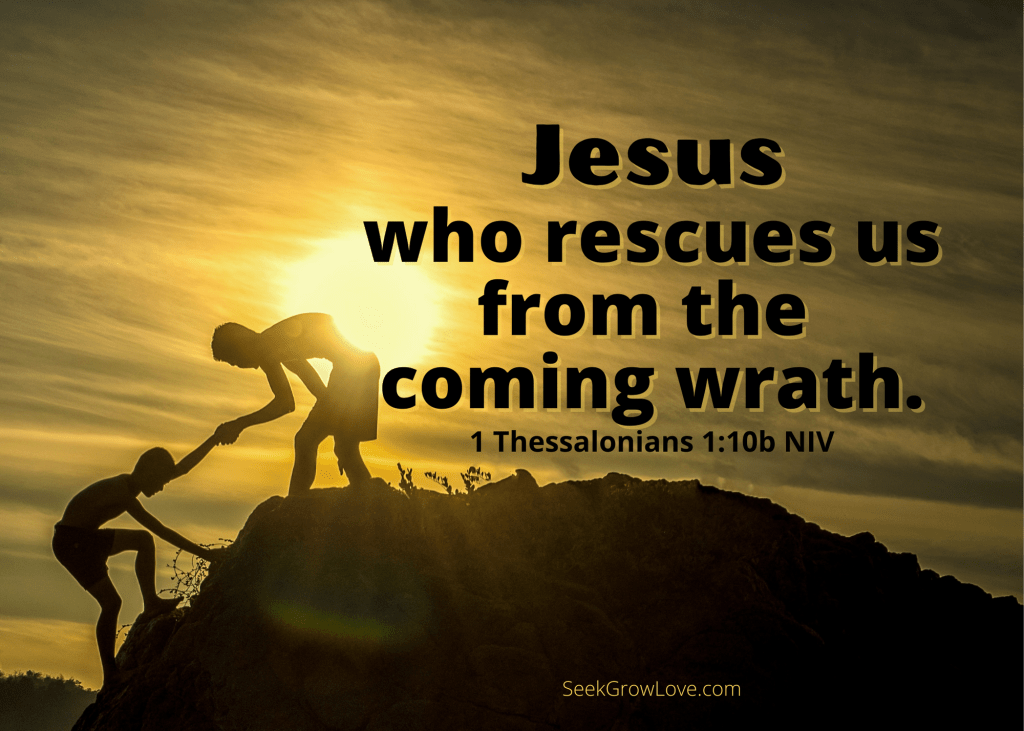
As we read 1st and 2nd Thessalonians this week and next, look for how many times Paul teaches, reminds, warns, and encourages the church with God’s perfect plans for our future. How does each chapter in 1st Thessalonians end? For a clue, let’s look at the end of chapter 1? “They tell how you turned to God from idols to serve the living and true God, and to wait for his Son from heaven, whom he raised from the dead – Jesus, who rescues us from the coming wrath.” (1 Thessalonians 1:9b-10 NIV). It is especially exciting reading of a part of the future that Isaiah was only able to allude to – the second coming of Christ Jesus, since Jesus had not come for the first time at the time of Isaiah’s writing.

May we read and heed the warnings of Isaiah and Paul as sent by God. May we be encouraged by God’s plan for the ages as displayed throughout His scriptures. And may we too turn, “to God from idols to serve the living and true God, and to wait for his Son from heaven, whom he raised from the dead – Jesus, who rescues us from the coming wrath.” (1 Thessalonians 1:9b-10 NIV).

-Marcia Railton

Today’s Bible reading plan passages can be read or listened to at BibleGateway.com here Isaiah 23-24 and 1 Thessalonians 1

Identity in Christ: You are God’s Child!

I think we’ve all experienced chapters in life that were just difficult. Maybe you’re going through one of those times as you’re reading this. Maybe you feel like nobody understands you or hears you. Maybe you’re just looking for a hope to cling to or something to ease the aching hole in your heart.

The good news is…there is someone who knows you more intimately and loves you more deeply than any human ever could.

His name is YHWH. Or, as we call Him, Father God.

It may be true that Father God is just a title and not a technical name, but Abba is the Aramaic Hebrew word for “Father.” Jesus referred to God this way as he was battling with his anguish in the Garden of Gethsemane.

Mark 14:32- 36

32 Then they came to a place named Gethsemane, and He told His disciples, “Sit here while I pray.” 33 He took Peter, James, and John with Him, and He began to be deeply distressed and horrified. 34 Then He said to them, “My soul is swallowed up in sorrow —to the point of death. Remain here and stay awake.” 35 Then He went a little farther, fell to the ground, and began to pray that if it were possible, the hour might pass from Him. 36 And He said, “Abba, Father! All things are possible for You. Take this cup away from Me. Nevertheless, not what I will, but what You will.”

“What, exactly, is the significance of Abba,” you may ask.

This title shows how God works in the context of being in relationship with His children.

Romans 8:14-15

14 All those led by God’s Spirit are God’s sons. 15 For you did not receive a spirit of slavery to fall back into fear, but you received the Spirit of adoption, by whom we cry out, “Abba, Father!”

Galatians 4:6

6 And because you are sons, God has sent the Spirit of His Son into our hearts, crying, “Abba, Father!”

Do you see it? The faith, love, and trust we can put in God are similar to the love and trust we put in our earthly fathers. As awesome as our dads can be, God’s love and knowledge of you runs even deeper. Crazy, right?!

With this comes the comfort and peace of knowing that God hears and understands our hearts, even when we don’t always feel seen and heard because God knew everything about you even before you were born!

Psalm 139: 13-16 is a beautiful account of that. “For it was You who created my inward parts; You knit me together in my mother’s womb. I will praise You, because I have been remarkably and wonderfully made. Your works are wonderful, and I know [this] very well. My bones were not hidden from You when I was made in secret, when I was formed in the depths of the earth. Your eyes saw me when I was formless; all [my] days were written in Your book and planned before a single one of them began.” (CSB)

Another example is one of my favorites, Ephesians 1 verses 4 though 6 which read, “Even before he made the world, God loved us and chose us in Christ to be holy and without fault in his eyes. God decided in advance to adopt us into his own family by bringing us to himself through Jesus Christ. This is what he wanted to do, and it gave him great pleasure. So, we praise God for the glorious grace he has poured out on us who belong to his dear Son.” (NLT)

The scriptures say it all. So, to conclude, may I quote one of my Atlanta Bible College professors for a moment, the wise Dr. Joe Martin: “Hallelujah, praise God, AMEN!”

-Caitie Wood

Read or listen to today’s Bible reading plan passages at Bible Gateway here – Song of Songs 1-2 and Ephesians 1

The Under Pressure / I Will Survive Mash-up

Job 39-40

I’m intrigued by tardigrades. They are eight-legged microscopic animals that look almost like bears when they move, earning them the alternate name water bears. They can be found anywhere on earth, surviving the most extreme temperatures and pressures. Apparently it is no big deal for them to have no air, water, or food for a while. They can dehydrate in a water shortage and sit dormant for decades until more water comes along, and then rehydrate and continue their life as if nothing happened. They can even survive exposure to outer space unshielded from dangerous radiation. They have a resilience of almost mythical proportions.

Consider Behemoth (Job 40:15-24). He seems pretty solid. He makes me think of an elephant, hippo, or in the Harry Potter universe, an erumpent. Who knows what he is anyway? All I know is that I’d rather not cross paths with one. The most a tardigrade could do to me is crawl on me, and I wouldn’t notice it. Encountering a black bear could be scary, but they’d likely run away, especially if we are in a group. They don’t want to run into you any more than you want to run into them. But Behemoth doesn’t care. He’d trample you.

“Even if the river is turbulent, it is not frightened; it is confident though Jordan rushes against its mouth. Can one take it with hooks or pierce its nose with a snare?” (Job 40: 23-24)

Like the tardigrade, Behemoth is resilient. You or I would be swept away by the current, but not Behemoth. He makes his way through the turbulent Jordan and doesn’t lose his confidence. He knows the struggle is real, and the waters may even slow him down, but this is not the end of Behemoth. Not even close.

We’re of “small account” just like Job (40:4). We all have our struggles, our raging Jordans, that we are trying to make our way through. During the process, it’s fair to want to know why we have to struggle and suffer, and where all of it comes from. Is it from a broken world paying forward the hurt? Is it the natural consequence of our poor decisions? Does it come from God, like the author of Psalm 88 might suggest? Is it from evil forces trying to discourage us? Is it just general suffering we’re guaranteed to experience? Is it some combination of all of them?

But do you think Behemoth or the tardigrade worry about why they suffer? Probably not. They just try to get through it. Maybe while you are suffering, the “why” questions aren’t going to be the most important thing. You may only have the energy or capacity to react to the crisis and pick up the pieces later. Figuring out the deeper questions might be something you only worry about on the other side of suffering.

The ability to think about suffering is both a blessing and curse. If you think about your situation and realize that you are at least partly responsible for your suffering or the suffering of others, you have the ability to learn from your mistakes and avoid making them again. In that way, being able to avoid unnecessary suffering is a blessing. But it can seem like a curse to keep thinking about the purpose of your suffering when it comes from something completely beyond your control. This is the carousel of painful thoughts Job was on.

In that situation, it is fair to want to challenge God, like Job did. Where is his supposed justice? Go ahead and challenge God and have the wrestling match (Gen 32). He can handle it. Just be prepared to be challenged back. Be prepared for the possibility of injury. Be prepared to grow and receive a new name. Be prepared to be more resilient, more Behemoth or tardigrade-like.

To quote someone who voluntarily took on suffering for our benefit and was resilient through death itself: “I have said this to you, so that in me you may have peace. In the world you face persecution. But take courage; I have conquered the world!” (John 16:33)

-Jay Laurent

Read or listen to today’s Bible reading passages at BibleGateway here – Job 39-40 and Psalm 87-88

Gird up now thy loins like a man

Job 37-38 and Psalm 85-86

There is an idea called the “retribution principle” that you can find woven into much of scripture. If you think that being good and righteous means that you will be rewarded, and that being wicked means you will be punished, you think that the retribution principle is true on some level. It seems to make sense as a general rule. What goes around comes around; you reap what you sow.

For most of the book of Job, we’ve been immersed in a debate between Job and his friends about whether this principle holds up. Job’s friends insist that Job must have done something wrong to bring on this suffering. Job insists he’s righteous and that his suffering makes no sense, bringing God’s justice into question. Elihu shows up, defending God’s majesty and justice, and condemning Job for being too self-righteous.

Sometimes Job’s friends seem like they have a grasp on the truth, but other times what they say seems misguided, and in the times left over, we just aren’t sure what to think. They all have worthwhile things to say, but at the core are still flawed humans. When reading anything in Job, we have to use some discernment to decide if what is being said is really true. After all, in the last chapter of the book, Job’s friends are criticized by God for not speaking of him what is right. 

At this point we have read a large chunk of Job, yet we are not sure who to believe or how to make sense of all the things that are being said. Suddenly in chapter 38, God rejoins the conversation from a whirlwind, signaling that this should be the dramatic moment when all our questions are answered.

We get no answers. In fact, God says he is going to ask the questions now.

If Job is man enough to challenge God, then he’d better be man enough to be challenged back. He’d better brace himself like a warrior. Job, were you there when I put down the foundation of the earth and gave the chaotic waters their boundaries? Do you have intimate knowledge of how all of creation works? Have you explored the highest highs and the deepest and darkest chasms? Do you have control over light, rain, snow, lightning, stars, or animals? Where does wisdom come from?

What would you say back? Really, what could you say back?

Does this frustrate you? It frustrates me. We call out to God in our deepest despair and questions but then feel like we just have more questions. It is not any fun to be humbled and put in our place. It’s disheartening to follow God and still go through hard times; we think it isn’t supposed to work that way. It’s natural to ask why we even bother serving God when we can’t seem to find the benefits, and yet the troubles have no trouble finding us. This all hurls us back to the question posed in Job chapter 1: If all the benefits were stripped away, would Job still serve God? Would you?

Through the story, the author of Job is asking us to question the retribution principle. Apparently, being good doesn’t mean you’ll expect only good things in your life. And being bad doesn’t mean getting a lump of coal. Reality is just more complex than that. It rains on the righteous as well as the wicked, and even in a desert land where nobody lives.

I’ll close with prayers of hope from the other part of our reading today:

“Let me hear what God the LORD will speak, for he will speak peace to his people, to his faithful, to those who turn to him in their hearts. Surely his salvation is at hand for those who fear him, that his glory may dwell in our land.” (Psalm 85:8-9)

“But you, O Lord, are a God merciful and gracious, slow to anger and abounding in steadfast love and faithfulness.” (Psalm 86:15)

-Jay Laurent

Some of you may know Jay as the really tall bass player in the FUEL worship band. We welcome his deep thoughts on God’s Scriptures this week.

Today’s Bible reading passages can be read or listened to at BibleGateway here – Job 37-38 and Psalm 85-86

God’s Face

Job 31-32 and Psalm 79-80

“In the beginning, God created the heavens and the earth.” “For God so loved the world, he gave his one and only son, that whoever believes in him shall not perish but have eternal life.” Verses like these are famous. We’ve all heard them. They receive the bulk of our attention when reading Scripture. If you’re following a reading plan, though, you’ve probably come across some passages that are hard to swallow: “How long, LORD God Almighty, will your anger smolder against the prayers of your people?” (Psalm 80:4).

Today, Psalm 80 was on the reading plan. Some may look at Psalm 80 and see a passage about God’s anger, or God’s burning justice. Sometimes it’s difficult to understand these passages. But when I read Psalm 80 (and other passages like it), I don’t see an angry God– I see a hurting person placing their trust in the only One who can help them. 

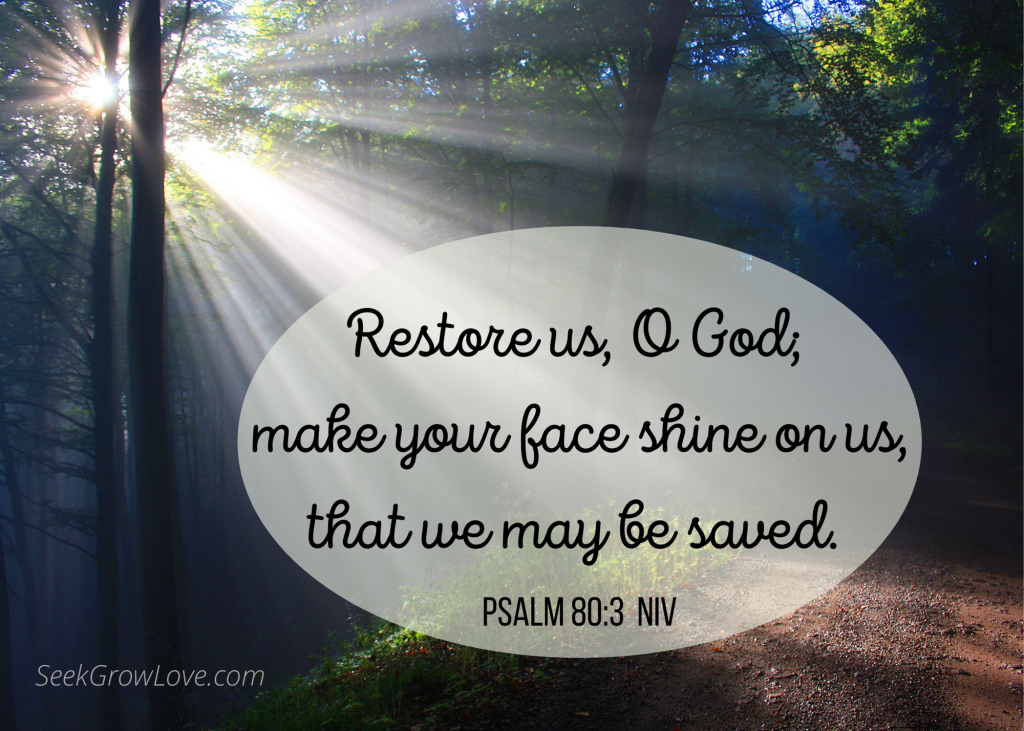
Look at verses 3, 7, and 19. Did you notice they look almost identical? The author is using a phrase that his audience would know well: “make your face shine upon us.”  During the time of the Exodus, God gave a prayer of blessing directly to the high priest, Aaron, in Numbers 6:24-26: “The LORD bless you and keep you; the LORD make his face shine on you and be gracious to you; the LORD turn his face toward you and give you peace.” It’s clear that the author of Psalm 80 was remembering this famous blessing that God had given them (on a side note, verses 8-11 of Psalm 80 are also about the Exodus. The author was probably remembering all the good things God had done for Israel!).

But what does that mean? When I think about someone’s face “lighting up,” I think of someone smiling with favor and affection. Or maybe I think of Moses, who came down from the mountain, literally shining because he had been in the company of the God of the universe. When I think of God’s face shining down on us, I think of favor, company, and affection. God is looking upon us favorably. He is keeping us company. And he has affection for us. 

Let’s remember, alongside the author of Psalm 80, that things will not always go well for us. Life can be difficult sometimes. It’s not always clear why. But we have a God who has done incredible things in the past, and wants to keep working in our lives. Let’s pray “God, make your face shine on us, that we may be saved.”

-Levi Salyers

Levi is a recent graduate of Atlanta Bible College, current pastoral intern, and last week he received his ministerial license from the Church of God Ministerial Association. Congratulations, Levi! Keep sharing God’s love and wisdom to the world in many ways! Thank you for writing for us today!

Read or listen to today’s Bible reading passages at BibleGateway here – Job 31-32 and Psalm 79-80

Please Lord, Get Your Hands Out of Your Pockets!

Job 25,26 and Psalm 73,74


Job had certainly experienced his share, actually more than his share, of trouble.  Add to that the counsel of his wife and friends and you can’t help but wonder how he managed to survive, and to actually thrive in his relationship with the LORD.  None of it was fair, but why would we expect life to be fair?  If life was fair, I suppose we’d be zapped with judgment upon our first sin.  Job seemed to have wisdom and understanding beyond most.  Psalm 111:10 comes to mind, “The fear of the LORD is the beginning of wisdom; all who follow his precepts have good understanding.  To him (the LORD) belongs eternal praise!”  Job did his best to follow the LORD’S precepts, and he was consequently blessed with understanding.  He was certainly a man of faith, with determined loyalty to the LORD, no matter what came his way.  What an example for us as we see evil in our world, as we experience trouble, disappointment, pain, sorrow, frustration.  It’s easy to wonder, where is God?  Why doesn’t he send Jesus back?  Isn’t it time to put an end to this broken and disobedient age in which we live? 


Asaph, author of Psalm 73 and 74, may have had similar thoughts.  He seemed to envy the arrogant, even thought the wicked had it better than he.  Everything seemed to go well for them.  They were carefree, yet their wealth increased.  This bothered him to no end, until he remembered the rest of the picture.  All may have appeared bright and shiny, but he was reminded the wicked are doomed to judgment and destruction.    


Still, it bothered Asaph that things continued as they did.  Notice Psalm 74:11, “Why do you hold back your hand, your right hand?  Take it from the folds of your garment and destroy them!”  Asaph felt, as probably most of us today, that God should get his hands out of his pockets and fix things.  Deal with the evil!  Get rid of those who persecute God’s people!  Smack those who call evil good, and good evil!  Bring your salvation!  Have regard for your covenant, your promises!  Defend your cause!  


Doesn’t that sound like our thoughts and wishes?  Send Jesus back now!  I suspect things are going to get a whole lot worse than they are now, than we can even imagine.  It’s okay that we would wish God would take his hands out of his pockets and fix everything, because that in itself shows that we do know he who can and will eventually fix things.  At the same time, may we be patient, may we persevere, as did Job, and may we wait upon the LORD to take action when and how he sees fit!

-John Railton

Today’s Bible passages can be read or listened to at BibleGateway here – Job 25-26 and Psalm 73-74

A Captive in Sin

2 Chronicles 5-6

As much as I could go on and on repeating exactly what Paul says in Romans 2, I have much more to add and apply from the Chronicles passage, so focus your reading on those chapters. Mostly, I’ll be looking at chapter 6. Solomon has just built the amazing perfect temple that David definitely did not build (even if he prepared all the materials, drew the blueprints, and basically left only the annoying part of building a building to Solomon). And in chapter 6, Solomon is dedicating this temple to God. Take a look at verse 14, the opening of Solomon’s prayer where he addresses God. Notice, there’s almost a lesson in that God’s faithfulness is kept with those who “walk before [Him] with all their heart.” Of course, Deuteronomy 6:5 says more and Jesus even more of how much of you should be dedicated to God on a daily basis (hint: it’s literally all of who and what you are, Mark 12:28-31). But I mostly want to look at verses 36-39.

36 “When they sin against you—for there is no one who does not sin—and you become angry with them and give them over to the enemy, who takes them captive to a land far away or near; 37 and if they have a change of heart in the land where they are held captive, and repent and plead with you in the land of their captivity and say, ‘We have sinned, we have done wrong and acted wickedly’; 38 and if they turn back to you with all their heart and soul in the land of their captivity where they were taken, and pray toward the land you gave their ancestors, toward the city you have chosen and toward the temple I have built for your Name; 39 then from heaven, your dwelling place, hear their prayer and their pleas, and uphold their cause. And forgive your people, who have sinned against you.” – 2 Chronicles 6:36-39 – NIV

Reread those verses and think for a second… You may be saying “How does this apply? Isn’t this just an ironic prophecy about Israel’s inevitable collapse and occupation by Babylon?” And, yes, it probably is. But the beauty of the Bible is taking historical accounts and creating life lessons from them, so hear me out. When you’re buried in sin, and truly lost, it almost feels like you’re a captive in enemy land. And, in some spiritual sense, you are. Sin is the land of the world and of Satan, not of God. And you feel far and cut off from everyone, but look at 37. Then 38. Because if you pray to God, he will hear you, and if you truly wish to repent – to turn in your ways – and return to God in all of your heart (and soul, and mind, and strength) then God will forgive you.

“…Now, my God, please, let Your eyes be open and Your ears attentive to the prayer offered in this place…” – 2 Chronicles 6:40

-Liam Johnson

Today’s Bible reading passages can be read or listened to at BibleGateway here – 2 Chronicles 5-6 and Romans 2

God Gives Victory

2 Kings 3-4


You know the feeling you get when you meet up with a couple of fellow kings, who aren’t really your fellows, but you have a common enemy, so you march on together in friendship and harmony, despite the odds that are against you, when you come to the devastating realization that your combined armies and cattle are on the road to dehydration, so you suggest finding that one
prophet dude who can maybe help out in this situation, and the other kings agree, so you find the prophet dude and it miraculously turns out, yes! He, or more accurately God through him, helps you out with your water dilemma, (it’s “but a slight thing in the sight of the LORD) and not only that, but he also says that he’ll assist in the defeat your enemy!! Eeeeek, I’m practically bursting
just thinking of it. Unfortunately, I can’t say I’ve actually experienced the aforementioned occurrence, but I have felt the amazing emotion that fills your heart with complete, unmatchable joy when you are assured that the most powerful, capable, fierce, wisest Being in the universe, loves you and has your back.


In 2 Kings 3, this is exactly what we see happening. Jehoram, the king of Israel, comes together with Jehoshaphat, the king of Judah, along with the king of Edom, and together they avoid dying of thirst, and totally crush the Moabites. Their epic victory wasn’t of their own works, though. It was God who provided water, and delivered Moab into the hands of the three kings. More often than we ever realize, God works in our lives too. Every single undeserved blessing, every single little victory we celebrate, is our Father’s loving presence. He is continually showing us how much He cares for us, and how deeply He loves us. He demonstrates this love not only in our lives now, but in the amazing promises He’s made to us. Promises of a perfect Kingdom in a beautiful land, where we will live eternally in absolute contentment and happiness
with our wholly perfect and wholly good Father.

Notice, however, that Elisha clarified in verse 14 of chapter 3 that he would not even be seeing them if it wasn’t for the presence of the godly and faithful king Jehoshaphat. This king trusted his God, and knew to go to Him in his time of need. Back then, they had to go to God through a prophet, like Elisha, or Elisha’s predecessor, Elijah, but Jesus has since then connected us to our
God, bridging the gap as a mediator between God and man. We have the ability to speak directly with God and form the relationship He so desperately wants with us, despite our utter imperfection and His divine perfection. Hold on tight to that gift, never forgetting how awesome it is that we can be so massively loved by such a great God; that He would care for us at all, even in our sin and weakness. Hold on tight to the unimaginable promises He’s made to us, and live
everyday aware and thankful for the countless blessings He provides for us.


What a feeling, to know that you have such an awesome God on your side.

-Isabella Osborn

Today’s Bible reading passages can be read or listened to at Bible Gateway here – 2 Kings 3-4 and Proverbs 6

When You’re Ready to Give Up

1 Kings 19-20

Have you ever been hiking on a strenuous trail or baled hay on a hot summer day? These tasks can prove quite difficult as your muscles become strained, you become overheated, and your endurance slowly dwindles. The idea of stopping and taking a nap or just quitting all together sounds very tempting. It seems like the best thing to do, but you have to keep going.

I remember one day when I was unloading a wagon full of hay bales on a hot and humid summer day. There were about 60 hay bales to unload and stack in the barn. About halfway through, I started to get tired. I was hot from the bright sun. I was itchy because of the hay that covered me, and I had rope burns from the twine on the bales. I was ready to be done, but I couldn’t stop. Rain was coming in that evening and I had to get the hay under cover before that happened. So, I kept going until my task was finished.

In 1 Kings 19, we find Elijah at a point where he is ready to give up. He is on the run again. Jezebel wants him dead, so he flees from her grasp. But he is tired of running and having to look over his shoulder. He felt like he could not continue in this way any longer. Those before him had been put to rest and he says he is no better than them. Therefore, he asks God to let him die.

Rather than letting him die, though, God sent him sustenance through an angel. Bread and water were offered to Elijah that he might have the strength to continue. So, he went to sleep again and then the angel appeared once more providing more food. This food gave him the strength he needed. For without it, he could not have made the journey. It was not yet Elijah’s time. There was work that he still needed to do, and God gave him the strength to do so.

Sometimes it can be hard to carry on with our tasks, but God is there to strengthen us. Like a cool glass of water at the end of a hike or when baling hay, God is there to sustain us. God was there to strengthen Elijah and we too can be strengthened through God.

-Hannah Deane

Today’s Bible reading passages can be read or listened to at BibleGateway here – 1 Kings 19-20 and Proverbs 3