Everyone likes to get a letter in the mail! Especially around Christmas time. Getting a letter from a friend or loved one might seem old fashioned, but letters have a way of being more personal and intimate. Receiving a letter from a mentor or person you respect is especially important when the letter includes an important message.
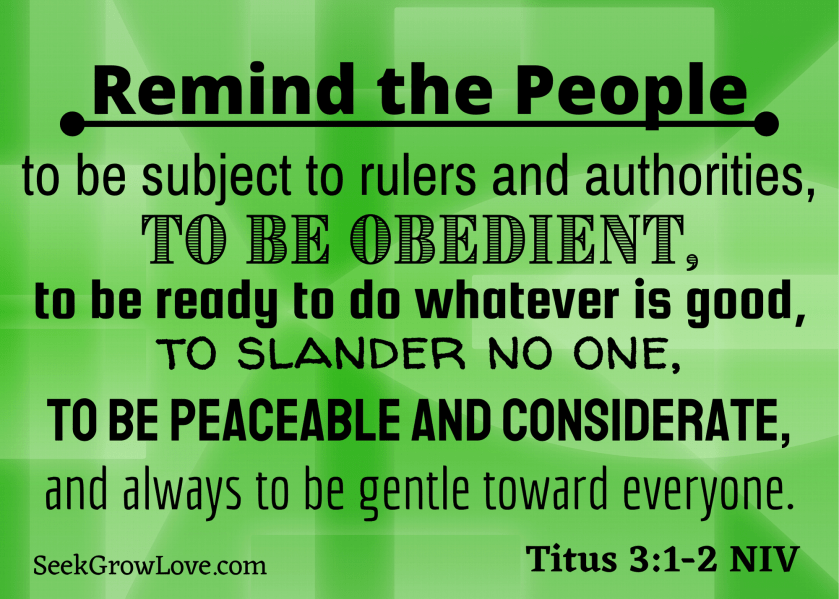
The Book of Titus is a letter written by Paul to his “true son in the common faith” Titus. Titus was an early Christian leader and a close friend of the apostle Paul. He is best known as being the leader of the churches in Crete and Corinth. He was sent by Paul to these churches to help them solve problems. In this letter, he asks Titus to ask the people in the churches to stop arguing with each other over silly things and to focus on doing good things in the name of Jesus.
To help the church at Crete, Paul sent recommendations on how to pick good leaders to look after the church (Titus 1:5-9). Having leaders who are qualified is important in leading a church. Like shepherds of a flock of sheep, the “elders” of the church look after us and protect us from making mistakes that can harm us. Their job is to help us do good works for God.
Paul also reminds us that we should always do good because we are Christians. Paul writes that the grace of God “teaches us to say ‘No’ to ungodliness and worldly passions”. As Christians we should always seek to serve other people and be good to them. Sometimes it is hard to live obediently for God. Paul asks us to be “self-controlled” and live upright and godly lives. It’s not easy, but God wants to help us and to “purify for himself a people that are his very own, eager to do what is good”. (Titus 2:11-15).
It is important to always remember that God has shown His mercy to us not only because He wants us to be good, but so that He could adopt us into His family. Paul hopes that each of us “might become heirs having the hope of eternal life” (Titus 3:7). Living a godly life is how we declare our thankfulness for His great mercy. As we accept God’s gift of grace, it makes us want to do good things for the Kingdom of God.
Questions for Discussion:
In Titus 2:2, what does it mean to be “self-controlled”?
What does Paul mean when he says to “avoid foolish controversies” in Titus 3:9?
I’m not sure when contentment became a dirty word to so many people. We now equate it with a lack of drive or sometimes even laziness. We liken it to “settling.” The definition of contentment is actually a state of happiness or satisfaction. But we live in a world where bigger is better, and newer is better, and we can always achieve more if we just work a little harder for it.
For a little while I went through a faze where I looked on Zillow a lot. I got it into my head that we could potentially get a bigger or nicer house and therefore we should at least look. I just wanted to see what was out there that might be in our potential price range. And then I was looking at things slightly above that, because honestly we could probably make that work too.
You can see where this is going. It’s a slippery slope, and soon you’re borrowing more money than you should and all because you weren’t content with what you have. I deleted the app and fell in love with my home all over again. Contentment is something intentional, and it’s most definitely not settling. It’s looking at your blessings and recognizing them as such. It’s being thankful to your heavenly father for where you are, when you are, who you are, and who you are with.
These last chapters of 1 Timothy are a mix of advice from Paul on how to live, both for Timothy and for the people he’s ministering to. There’s a good deal in there about working hard so that we can take care of ourselves and take care of others. We are also called to not be so focused on money that we are neglecting our true purpose in ministry. Do good, be rich in good deeds, and be generous. Rather than focusing on our wealth and what we have or don’t have, we should be focused on how to serve others with our blessings.
1 Timothy 6:6-7 “But godliness with contentment is great gain. For we brought nothing into the world, and we can take nothing out of it.”
This is the true idea behind contentment. We can be ambitious in our careers and are encouraged to do well financially if that is where we are called. But we have to be wary of what’s actually driving us. If having wealth and status is our motivation, then we will never be in a “state of happiness or satisfaction.” We will never be content.
1 Timothy 6:9 “Those who want to get rich fall into temptation and a trap and into many foolish and harmful desires that plunge people into ruin and destruction.”
But if we are guided by an ambition to serve the Lord, then we can truly practice contentment. Paul describes these people as those who “will lay up treasure for themselves as a firm foundation for the coming age, so that they may take hold of the life that is truly life.” I love how that is phrased. “Life that is truly life.” And living a life that is truly life? Definitely not settling.
Reflection questions:
Where do you find yourselves in a state of discontent? Is it distracting you from God’s purpose for you? We have a lot of areas where discontentment can sprout up like a weed and make our lives more difficult and less full of the peace and joy that God longs for us to experience. Some common ones to watch out for: our physical appearance, financial status, possessions, our home, our relationships, our jobs. Is there a distracting discontentment in your life that is robbing you of peace?
How can you look at that area of your life and find the blessings? What sort of habits can you set for yourself so that you can better practice contentment? How can you take your blessings and offer them as a pleasing sacrifice to God?
Prayer:
My prayer for you is that you recognize God working in your life as it is now, and see the blessings he has given to you. I pray for discernment to see areas where you can grow and where he can further bless you and that your efforts be put there. I pray that you long to reach the goals HE has for you, rather than the goals you have for yourself, and that you live a life that is truly life.
Is there something that is holding you back in serving the Lord? We are unclear what Paul’s infirmity was but we know that it was troublesome to him. Some have suggested it may have been an eye condition or some other physical issue that plagued him. We don’t know for sure but we do know it bothered him! However, he refused to let whatever his personal issue was to hold him back from serving the Lord fully and completely as best he was able.
Some of us have hindrances that hold us back. Maybe like me you are friendly but incredibly shy. Perhaps you have issues with self-esteem, or a physical issue that makes you self-conscious, or some other issue that holds you back from fully serving the Lord. The apostle Paul is a good example of what the Lord can do through someone, when they are willing to be used of him. Paul brings out in this passage that it is Christ who works through us to do his will and work in the world and he is able to work through, and past, our own thoughts of inability.
Christ can do more through us than we can imagine if we remain open and willing to serve him in the ways he calls us to. So in spite of our personal issues he works through us! This is where we should rejoice – that we can be useful for service no matter what situation we are in. This brings even more glory and honor to our Lord; when to the human train of thought we could be rendered useless, and yet, he uses us in a special, wonderful, effective way for him. You see it is not our ability, but Christ’s ability, through an open and willing heart that is ready to serve. Isn’t it wonderful to know that we have a Lord who is willing to use us even if we consider ourselves not ‘perfect’ for the job. He can take someone like you and me and through his strength and power, work in and through us to accomplish his kingdom purposes.
For Reflection:
What is made perfect in weakness? What weaknesses/hinderances to serving the Lord do you have?
Are you willing to allow the Lord to work through you with his strength to accomplish great things for him?
How could you encourage someone who may be struggling with allowing the Lord to use him or her?
Have you ever had an idea, or plans for something that you spent time putting together, but were not able to actually carry it out?
It might be because you don’t have the means, the talent, the time, but whatever the case, it can be disheartening, so I appreciate David’s example here on not being downtrodden about it but instead taking an opportunity to guide the nation and his son, directing them to serve God.
I also think it is pretty cool that despite David not being allowed to build the temple, we see an example of God’s Spirit working in David to come up with the plans. Just because he wasn’t allowed to build, didn’t mean that he wasn’t able to still do something for the LORD.
In this case, David wasn’t allowed to build because of being a warrior who had killed others, but it is also a reminder to me that there isn’t just one thing to do. God may call us differently or gift us differently to accomplish more things. God didn’t use David to build the temple because of David’s actions over the past. But in other cases, God is just using people in different ways – not because one thing is better than the other (thinking of Paul describing the body – each part needs the others to properly function), but because multiple things need to be done. We might sometimes feel saddened by being unable to do what we want, but that shouldn’t stop us from doing something. We are all able to serve, but that service might look different from how others serve depending on our skills, or physical abilities, or God-given direction.
And then as we continue reading, we see how things are generously donated to the building of the temple, and to keep us all in check, David offers this in 29:14 “But who am I, and who are my people, that we should be able to give as generously as this? Everything comes from you, and we have given you only what comes from your hand.”
In a world/culture that is heavily focused on earning what we have, sometimes we need that reminder that the only reason we have is because God has given us things. And that can fill us with gratefulness and love and inspire us to give as well.
~Stephanie Fletcher
Reflection Questions
Is there a job that you have wished God would chose you for, but He has not? What can you learn from David? What other jobs do you think God IS asking you to do? In what ways are God’s plans better than ours?
What has God given to you that you can use to serve Him?
Our Psalm today was written by Solomon and he wrote: “Unless the Lord builds the house, those who build it labor in vain.” (Psalm 127:1 ESV). What did Solomon learn from his dad? How can you apply these words to how you are building your house/life/family and how you are building/supporting/growing God’s house/church?
I love petting zoos, seeing the animals at the 4H fair, and anytime I’ve been up close and personal with a sheep, I’ve been impressed! How soft and gentle, how amazing their wool coat really does feel, and for a non-farmer gal like me, how tricky it is to tell a sheep from a goat sometimes? How someone can tell a llama from an alpaca is also beyond me! I’ve never raised sheep or had a sheep of my own to care for. But, over the years, I’ve heard lots of sermons/teachings on sheep and shepherds, and a few takeaways I’ve learned are: sheep are mentioned a lot in the Bible!, sheep are reportedly dumb animals, and shepherds doing their dirty work were not considered the high class of society.
In today’s reading in Ezekiel 34 and 35, we encounter some Israelites being compared to shepherds though who perhaps thought they were the high class of society. And, they are being reproved harshly. In fact, even modern translations use a little “woe to” language in Ezekiel 34:2 ….”Woe to you shepherds of Israel who only take care of yourselves!
This verse caught my attention right away, making me think of a little phrase called “self care.” As an occupational therapist, these are words that for years were common in my “work language”, and it was a phrase referring to the self care tasks we need to do for basic daily living (dressing, toileting, hygiene, eating, etc.). Part of my job was to evaluate and work to help people with their self care tasks which can often be impacted by injuries, developmental disabilities, mental health challenges, etc. It wasn’t a phrase I heard out and about much in “non OT chit chat” for the first 10 years or so that I was working. And then it seemed to me that … kaboom….the phrase meant something new and was used all over social media, taught from preschool to college, and it was something emphasized as crucial for being able to function, be healthy, etc. But, it meant something different. It meant…..perhaps abstractly taking care of oneself…..but some of the examples I saw were more things like…..massages, vacations, get a degree, do a puzzle, prioritize “me time”, yoga, mindfulness breathing, and then maybe some camping weekends to “just relax” if your self care app found you lacking that week. I am kinda glad the term caught my attention because I became aware of some discrepancies that are out there on this subject.
Most definitely, it is beneficial for all aspects of our health to have adequate nutrition, sleep, cleanliness, time in nature, etc. And those of us who live in a free country, have a safe and comfortable place to sleep, the ability to look outside a window and see a tree and bird, the opportunity to be over-fed and clean should not take that for granted. But, it seems to me, these shepherds mentioned in Ezekiel would have loved the “self care” movement of today. A quick internet search regarding “self care” will lead you to terms emphasizing “self reliance”, “self defined”, “listening to you”, “self love”, “self esteem”, etc. Non of these terms are inherently bad if coupled with a Biblical world view, but combine them with some of the lists of things the internet tells me I should do daily for my self care , and my guard is up for a reason. I see some sneaky belief systems creeping in all over that I think are meant to destroy and not heal. The shepherds in Ezekiel were engaging in self care, but they were not doing anything for sheep care. Their job was to care for the sheep.
Should not shepherds take care of the flock? 3 You eat the curds, clothe yourselves with the wool and slaughter the choice animals, but you do not take care of the flock. 4 You have not strengthened the weak or healed the sick or bound up the injured. You have not brought back the strays or searched for the lost. (Ezekiel 34: 2-4)
In today’s world, there are so many pressing challenges negatively impacting every area of health, and the image Ezekiel 34 ends with provides a beautiful thought for both self care and sheep care. They are words revealing a hope beyond ourselves because my “self” isn’t going to get me through this alone. My mental health benefits from knowing that God cares for his sheep, that I am grafted into the vine through Jesus, and that as Christians, we are also heirs to the promises of Abraham.
They will no longer be plundered by the nations, nor will wild animals devour them. They will live in safety, and no one will make them afraid. 29 I will provide for them a land renowned for its crops, and they will no longer be victims of famine in the land or bear the scorn of the nations. 30 Then they will know that I, the Lord their God, am with them and that they, the Israelites, are my people, declares the Sovereign Lord. 31 You are my sheep, the sheep of my pasture, and I am your God, declares the Sovereign Lord.’” (Ezekiel 34: 28-31)
Interestingly, so many studies show that one of the best ways to improve mental health or physical health is by doing things to help others, so self care and sheep care really are aligned. On days we are struggling with our own baggage and carrying weights Jesus doesn’t want us to carry alone, one of the best ways to engage in true self care is by engaging in sheep care. Ironically, one of our therapy students at work recently told her supervising therapist that she couldn’t see the next patient yet because she had had a stressful day, could tell she needed some “me time”, and proceeded to sit down on a mat in the middle of a patient care area of the hospital and begin scrolling on her phone. I am not sure who needed a bubble bath or pursed lip breathing most at that moment, but I firmly believe asking for help from a shepherd and serving people instead of scrolling would have genuinely helped. However, the memory provides comical relief at work for the rest of us still, and we appreciate that.
Whatever we do to pursue physical, emotional, and spiritual health, let’s be careful it is rooted in scripture and the example we see in Jesus and his followers rather than the latest blog, book, or meme.
-Jennifer Hall
Questions:
Imagine you are home alone sick in bed. How can you participate in sheep care?
Imagine that you have been on a path too indulgent in self care and too lacking in sheep care. How could you improve things?
Imagine a restored earth under Jesus’ reign where all of God’s sheep are gathered in a perfect “pasture”. Take a few moments of prayer and reflection seeking first his kingdom.
Have you ever wondered what gifts you have been given by God? Have you ever doubted that you even HAVE a gift from God? In the middle of 1 Peter 4, Peter gives a simple statement about gifts that should arrest our attention:
1 Peter 4:10-11 (ESV)
10 As each has received a gift, use it to serve one another, as good stewards of God’s varied grace:
11 whoever speaks, as one who speaks oracles of God; whoever serves, as one who serves by the strength that God supplies–in order that in everything God may be glorified through Jesus Christ. To him belong glory and dominion forever and ever. Amen.
We are first comforted (or perhaps surprised!) to hear that we have received a gift. What are we to do with our gift? We are commanded to serve one another in love — that is the way that we can use God’s grace appropriately.
Peter also gives two large categories for gifts from God: speaking gifts and serving gifts. Unfortunately, in the modern Western church, most Christians think of the “speaking gifts” when they think of gifts. And so, when asked, “what is your gift?” so many are tempted to think that they do not even have one. But Peter does not teach this, nor do the rest of the Scriptures. For example, giving mercy is listed as a gift in Romans 12, and administration is listed as a gift in 1 Corinthians 12. The gifts of God come in many shapes and sizes.
If you are unsure what your gift is (or gifts are!), what can you do? I believe that Peter would encourage you to get more involved in a local congregation of Jesus followers. Try volunteering for a food drive, helping to set up for a special event, or working with the children’s ministry. Do you have any musical ability? Perhaps your worship team could use an extra instrument or voice. Has God put a desire for preaching or teaching in your heart? Ask your pastor how you can develop this desire into something more concrete. Do you have a heart for the homeless, those in prison, single parents, or another disadvantaged group of people in your community? The opportunities for exploration and service are virtually endless!
Many times, I think we overcomplicate the idea of gifts. We are each unique people, valued by our infinite Creator. None of us are alike in every way. God has especially given you abilities that I may not have, and He has given me abilities that you may not have. And even if we have the same gift type, we will express it uniquely! This is the value and the beauty of the Body of Christ — we are both designed to fit in and belong to the church of Jesus Christ, AND we are designed to stand out in unique ways.
Ask God to show you what desires He would like you to pursue. As you pursue those gifts, remember that it’s all about Him. It’s His ability, His power — even your life belongs to Him! So love Him with your whole heart and love your neighbor as yourself. As you do, you’ll learn more about Him and more about how He has uniquely gifted and enabled you to do good works that point back to Him.
-Will Barlow
Reflection Questions
Do you have any ideas about the gifts that you have? What can you do to learn more about yourself and about God?
What gifts of others do you especially appreciate? How does this practice of thankfulness for others’ gifts help us greater appreciate the Body of Christ?
What next steps are you going to take to develop an awareness of your gifts and how they can be used to serve others and glorify God?
Will Barlow is the head pastor at Compass Christian Church in Louisville, KY. He lives near Louisville with his wife of 15 years (Becca) and three children (Liam, Hannah, and Isaac). Besides theology, he enjoys playing sports, watching sports, and spending time with his family.
Yesterday, we looked at being imitators of Christ and allowing our faith to reflect positively in the lives of others. Remember the verses about the fruits of the spirit from the devotional yesterday? Those are the start of reflecting our faith positively in the lives of those around us. Paul said in 1 Thessalonians 2:6-7, “nor did we seek glory from men, either from you or from others, even though as apostles of Christ we might have asserted our authority. But we proved to be gentle among you, as a nursing mother tenderly cares for her own children.” Paul is explaining how they shared the gospel with the people of Thessalonica. He shared with great gentleness and care. In the following verse he talks about having a fond affection for the people. As an imitator of Christ, Paul shared the gospel in love, gentleness, and care. Both Paul and Christ cared for the people they ministered to. They didn’t command authority over them, they walked alongside those they taught.
Jesus said in Matthew 20:28, “just as the Son of Man did not come to be served, but to serve, and to give his life a ransom for many.” He is explaining to his disciples that his role was to serve the people and to give his entire life to them. Jesus many times flipped the worldview of being the best and greatest to showing that humility and service was above all most important. Paul recognized this about Christ and imitated this selfless and humble lifestyle.
Think of the person who has had the largest impact on your spiritual walk. Is this person controlling, authoritative, and pushy? OR does this person show how much they care for you as an individual and show you through grace and mercy the life and death of Jesus? I know for me it is the latter of the two. My parents were always my strongest examples of what a life following Christ should look like. They loved the people within their church even when it was hard. They went out of their way to help whenever there was a need. They never forgot to say I love you to everyone they cared about. Having a deep care and love towards people will help them trust you and it will allow them to see God’s faithful and never failing love.
Psalm 92:1-2 says, “It is good to give thanks to the LORD and to sing praises to Your name, O Most High; to declare Your lovingkindness in the morning and your faithfulness by night.” Growing up with siblings, it was a lot easier to find things to be mad at them about than to be thankful for them about. A sibling cleaned the bathroom but moved your brush so instead of focusing on the good they did, you yell at them about touching your stuff. Does that show your sibling you care about them and are thankful for what they do, or does that say something opposite?
Right about now you might be wondering why I pulled the two verses from Psalm 92. Let me explain. When we focus on the negatives in life, it makes it hard to find anything positive and that will reflect in how we speak and act around others. This doesn’t serve as a good example and it definitely won’t show that we greatly care for those around us. Instead, we should have an attitude of praise. Psalm 92 is a psalm full of praise and it reflects on the good God has done. If we thank God for His lovingkindness in the morning and praise Him for His faithfulness at night, our attitudes will slowly shift from one of negativity to one of positivity. When we look for God’s goodness throughout our day, we likely will look for the goodness in those around us as well. In order to selflessly serve like Christ and to impact people like Paul with his gentleness and care, we should have a heart overflowing with praise to help focus on all the good that is in our lives.
Recently, the movie Inside Out 2 came out. If you have had the chance to watch it or the first film, we see the huge role Joy plays in the lives of people. In the second film, Joy wonders if growing up means being less joyful. The world isn’t a joyful place and it will push us towards locking our Joy deep within ourselves. In the film, it made Riley hurt her friends and not connect well with the people around her. Joy is a needed emotion that will help us find the good in life.
-Makenna Landry
Discussion Questions:
1: What are ways you can show people you care deeply for them?
2: Why is caring deeply for people important?
3: Are you letting Joy be your main focus or are other negative emotions clouding your view of those around you?
Scripture: “David and the chiefs of the service also set apart for the service the sons of Asaph, Heman, and Jeduthun, who prophesied with lyres, with harps, and with cymbals.” — 1 Chronicles 25:1 (LEB)
“Whatever you do, work at it with your whole being, for the Lord and not for people, because you know that from the Lord you will receive the reward of the inheritance. Serve the Lord Christ.” — Colossians 3:23-24 (LEB)
“Blessed be the Lord, the God of Israel, from everlasting to everlasting! Amen and Amen.” — Psalm 90:2 (LEB)
In 1 Chronicles 25, David and the leaders set apart the sons of Asaph, Heman, and Jeduthun to prophesy with musical instruments. Their dedication to worship through music is a powerful example of using one’s talents for the glory of God. This act of worship was not just about playing instruments; it was about prophesying and communicating God’s messages through music. Through music, they made Him known!
1 Chronicles 26 outlines the responsibilities of the gatekeepers. Their role was crucial for maintaining the sanctity and order of the temple. These gatekeepers demonstrate that every role in God’s house, whether seen or unseen, is significant and valuable. These chapters highlight the importance of worship and service in the life of God’s people. They remind us that every task, whether musical, administrative, or protective, no matter how menial or mundane, is an act of worship when done for the Lord.
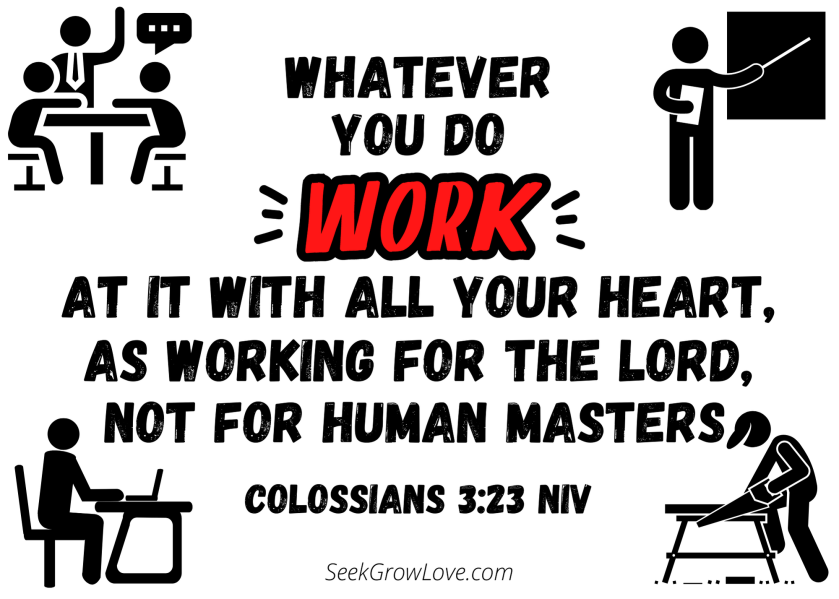
Colossians 3:23-24 continues this message as it encourages us to work heartily for the Lord, not for human masters. This perspective transforms our daily tasks into acts of worship. Whether we are serving in the church, at home, or in our workplaces, doing our work for the Lord gives it eternal significance.
Psalm 90 reminds us of God’s eternal nature: “Blessed be the Lord, the God of Israel, from everlasting to everlasting! Amen and Amen.” In our worship and service, we acknowledge the everlasting nature of God and our place in His eternal plan.
The organization of musicians and gatekeepers in 1 Chronicles shows that both worship and practical service are vital in God’s kingdom. Every role, whether public or behind the scenes, is important. Colossians 3:23-24 reminds us to do everything wholeheartedly for the Lord. This attitude turns everyday tasks into meaningful acts of worship. Psalm 90’s focus on God’s eternal nature encourages us to see our service and worship in light of eternity. Our actions have lasting value when done for God.
These are great examples of dedication and service to God. Through them, perhaps, we will all be more inclined to use our talents for His glory and to see every task as an act of worship, to live with an eternal perspective, acknowledging His everlasting nature.
-Jeff Ransom
Reflection Questions:
How can you use your talents and skills to worship and serve God in your daily life?
In what ways can you adopt an eternal perspective in your work and service?
How does understanding that you are working for the Lord, not just for human recognition, change your attitude toward your daily tasks?
I would like to start off this post with a short introduction. My name is Ruth Finnegan and I am married to Sean Finnegan and we have four sons, who range from age 11 to 1 month old. It is my joy and pleasure to be a stay-at-home mom! When Sean and I first got married we had a lot of discussion about “how are we going to be.” We decided to set a few tenets or standards for our life together. These were: seek righteousness; don’t be cheap, tip generously, only use good toilet paper, and be given to hospitality. Recently, I went to the store to stock up on toilet paper and they were out of our usual brand. I bought a cheap package to tide us over until I could go to the store again. Oh man! Mistake!! Sean started declaring, “Have we lost all of our principles?? What is this, sandpaper?! Should we stop tipping too?” I burst out laughing when he said this because I was instantly brought back to that conversation early on in our marriage. I went out and bought good toilet paper for the house and got rid of the cheap stuff.
Sean and I have been married for almost 14 years and we have always been passionate about being given to hospitality (Romans 12:10). Over the years, we have had many people come stay with us. Some come for just a night and some for many months. We feel that God has given us much and blessed us abundantly and that it is our joy to bless others with our home (and with our good toilet paper). I have found that you discover a lot about people when they stay with you in your home. I thought about this as I read Acts 20:17-38.
When Paul was in Ephesus, his mission was certain. He served and lived among the people, he kept back nothing, teaching them “repentance toward God and faith toward our Lord Jesus Christ” (Acts 20:21). Paul was a true shepherd who cared for his flock and was very clear about his purpose. He made sure that he was not a burden. He took care of himself and those with him and he used every opportunity to teach and shepherd the flock there. He truly cared for people and genuinely wanted the believers to be protected from the wolves that were sure to come. Paul knew he had to leave and wouldn’t see them again. He implored them with these final words:
35 In everything I showed you that by working hard in this manner you must help the weak and remember the words of the Lord Jesus, that He Himself said, ‘It is more blessed to give than to receive.’”
And with that, he knelt down with them and prayed for them. When Paul left, they did not breathe a sigh of relief because he had inconvenienced them. No, they had deep sorrow in their heart because he had been a blessing to them.
We have had people stay with us that were all about what they needed or being served so when their time of departure came, we were thankful! We have also had the pleasure of having guests that infused our home with light and eternal blessings! They had eyes to see and wanted to be a blessing and help. When we go about our lives and come into contact with others, let’s strive to be like Paul. He was all about teaching the eternal things of life like the Kingdom of God. He was not a burden but a blessing to the believers and sincerely cared for them. He didn’t complain about his lot as a missionary, he was driven by the holy spirit even when it came to his own discomfort and sacrifice. Let’s strive to encourage others and remember it is more blessed to give than to receive!
-Ruth Finnegan
(Originally posted for SeekGrowLove on June 10, 2017 – today, Ruth and Sean’s boys are much older and taller. But I bet the whole family still enjoys using, and giving, the good toilet paper.)
Reflection Questions
How would you describe how Paul gave? What was he giving?
When have you found it to be true that, “It is more blessed to give than to receive?” What has been your favorite thing to give?
Where are you challenged to give more freely? What will you give this week? How?
Today, we’re going to take a break from Psalms 37 and focus on our passage in Acts. Though a short chapter, two very important events take place in chapter 6. To set the stage, here’s a quick mini review of Acts so far.
Acts 1 – Jesus leaves the apostles and Matthias is chosen to replace Judas of Iscariot. Acts 2- Holy Spirit comes, pentecost. Acts 3 – Peter heals a beggar and preaches in the temple.
Acts 4 – Leading priests and elders get mad. Peter, John, and believers began to worry about oppression but pray for courage and continue preaching. Believers begin to unite in one heart and mind, caring for each other by acting as generous givers.
Acts 5 – Ananias and Sapphira lie about being generous givers and are struck dead. The apostles heal many people. More officials get mad at apostles and arrest them. An angel of the Lord sets them free and they continue preaching.
In Acts 6 we see the church has grown and the apostles feel overwhelmed with responsibility. So, like all great leaders, the apostles delegate. Seven men are chosen to be in charge of caring for widows, food distribution, and other administrative duties. This enables the apostles, those who had lived with Jesus and witnessed his resurrection, to continue their preaching and teaching.
I love this story because it shows how all people are useful within the church. Not everyone is meant to be a preacher. Not everyone has a surplus of money to donate to the church. Not one role is more important than the other. This is where we start to see the church operating as a body.
As a little girl I was always in awe of my Aunt Christy. I got to really see her at work when she took over directing Minnesota State Youth Camp. My first camp job was making sure my cousin, her toddler son, “stayed out of the lake” as his parents put it. During that time of babysitting my cousin, I saw a lot of the behind the scenes work Christy did. I was impressed. There is a lot more that goes into running a camp than one might think. I told her how she was so good at her job and she laughed in humility. Then she told me something I’ve never forgotten. She said the secret to being a good leader is finding the things other people are good at and putting them in charge of those things. In Acts 6 that is exactly what happens for the early church.
Sometimes I think we are too harsh on ourselves. We compare ourselves to others and guilt ourselves for not serving like them. The thing is we all have different roles to play. We need not feel bad about our role. It takes all sorts of people to run a church efficiently. We are given this example in Acts 6.
The second important event in Acts 6 is Stephen’s arrest. His arrest leads to his death in Acts 7. This is significant as it is the first recorded execution of someone preaching the Gospel in Jesus’ name. Present at Stephen’s execution is the first time we see the man Saul who would later become Paul the Apostle. Before he is stoned to death, Stephen delivers a beautiful sermon. One line in particular stood out to me but we will look at that tomorrow. For now, I encourage you to find ways to serve within your church community, using your unique God-given gifts.
-Emilee Ross
Reflection Questions
What God-given gifts have you been given?
How can you use those to serve within your church community?
Is there a job you have been doing for the church that might be good to share with someone else?
What benefits are there to giving responsibilities to others?