Excited about Church

Old Testament: Micah 5

Poetry: Psalm 84 (day 2)

New Testament: Luke 18:9-14

How excited are you about going to church?  You might think church is boring, the singing doesn’t inspire you, the sermon puts you to sleep, the building is nothing to write home about, etc.  If you think like this, you are probably also thinking, “Why even bother going to church when there are so many more exciting things I could be doing?”

If you think church is bad now, just imagine how bad it was when they used a tent as a church (called the Tabernacle), and slaughtered animals to cover sins.  How well would you have liked going to church then?!  (Can you imagine the smell?)

Our reading today is from Psalm 84, which starts out, “How lovely is your dwelling place, O Lord Almighty!”  The writer wasn’t talking about the throne room of God in heaven, he was talking about the Tabernacle (tent) where he went to worship God.

Psalm 84 continues, “My soul yearns, even faints, for the courts of the Lord; my heart and my flesh cry out for the living God.”

The writer wasn’t getting excited about visiting a tent, he was getting excited about being able to be in the presence of God.  He was yearning, fainting, crying out to be near God.

Verse 4 goes on to say, “Blessed are those who dwell in your house; they are ever praising you.”

I’m guessing the writer is referring to the singers whose job was to stay at church and sing praises to God all day long. He was envious they didn’t even have to leave there to go to work (they were at work) – they were so lucky!  They got to be near God all the time.

Verse 10 says, “Better is one day in your courts than a thousand elsewhere; I would rather be a doorkeeper in the house of my God than dwell in the tents of the wicked.”

You may dread going to church.  The writer of Psalm 84 dreaded having to leave church.  He’d rather spend one day at church than almost 3 years anywhere else.  He’d rather be a doorstop at church than party all the time with his wicked friends.

Why did the author crave going to church so much?  The answer is: because he loved God, and he associated being at church with being in God’s presence – so he couldn’t get enough of it.  

Today, as a result of Jesus’ sacrifice on the cross, we have far greater access to God than the people in the Old Testament (including the writer of Psalm 84) had.  We’re told in Hebrews 4:16, “Let us then approach God’s throne of grace with confidence, so that we may receive mercy and find grace to help us in our time of need.”

God didn’t just send Jesus to die for our sins, God also wants to adopt us as His children.  And there’s an inheritance involved – the Kingdom of God.

1 Corinthians 2:9 says, “… No eye has seen, no ear has heard, no mind has conceived what God has prepared for those who love him.”

I don’t know about you, but I have a pretty vivid imagination, and can imagine some amazing things.  But, according to this verse, I can’t imagine how great the Kingdom will be.  Start with no more death or mourning or crying or pain, add in a little euphoria in the presence of God forever, and you’re just scratching the surface for what God has prepared for those who love him.

I want that!

God wants to adopt us as His children, but there’s a catch.  He will only adopt us if we accept Jesus as our Lord and Savor, are baptized, and live our lives for Him.  Only then will we get to live with Him forever.

Maybe, our level of excitement in going to church is related to our level of excitement for God.  Once we recognize how much God has already done for us, and what He has planned for those who love him, we’ll get more excited about God.  And once we do, I suspect we’ll get more excited about going to church too. 

-Steve Mattison

Reflection Questions

  1. What are your thoughts and feelings right now about going to church? Where do you think they come from?
  2. How excited for God are you? What has He done for you already? What do you know about – and what can you imagine – about being in the Kingdom of God? Have you already been adopted into God’s family? Are there steps you need to do in this adoption process?
  3. Is there anything about your perception and understanding about going to church that you think God wants you to change?

Two Kings among the Sheep

Old Testament: 1 Samuel 15 & 16

Poetry: Psalm 68 (day 1 of 4)

New Testament: 2 Corinthians 12

We read it yesterday: “If you had obeyed…” 

Saul committed disobedience. But was the kingdom taken from Saul because of one act of disobedience? 

In 1 Samuel 15, God commands Saul, through Samuel, to kill and destroy everything of King Amalek. That is gruesome, but it is the command of God; you will kill all the people and destroy all their stuff. In warfare of the ancient world, after an enemy army was defeated you would take their survivors as slaves, their flocks as property, and their land as your own. To win a war was to become wealthy. But that is not the reason God desires the Israelites to go to war; they go to war because they are listening to the Lord, because he is creating a people for himself, not for their gain and profit. 

Saul disobeys God because he spares a man and the best animals. What our world, our culture might consider “mercy” is considered an act of disobedience. Samuel comes to Saul at Gilgal, and after the Lord told Saul to explicitly kill the sheep, the bleating carries across the hills of the region. After the Lord told Saul to explicitly kill the oxen, their lowing can be heard. Saul had set up a monument for himself (15:12) and even declares that he had completed the will of the Lord! Samuel has to clue him in that in declaring that he intended to sacrifice these animals, he was in fact disobeying God’s direct orders.  

To obey is better than sacrifice. 

To heed is better than the fat of rams. 

The Lord regretted he had made Saul king over Israel. 

However, in the town of Bethlehem, a young boy, ruddy, beautiful, and handsome, also stands among sheep. A young boy who has been slinging stones at predators, not knowing he would need to fell giants. A young boy who is learning obedience, learning hearing and obeying the word of the Lord. A boy, a man, after God’s own heart. 

David. 

Imagine you are Samuel. The last time you smelled lanolin, you had a king crying at your feet, ripping your robes, and it breaks your heart. You had anointed this tall man while he was chasing donkeys, through the desert, but he never truly learned how to be king, how to follow the commands of God. And you grieve.

And now, the boy covered in the smell of sheep walks in through the front door and the Lord speaks to your spirit “Arise, anoint him; for this is he.”

With a sense of irony you realize that you have seen the Lord change the times and the ages. 

He took the kingdom of a king, and he gave the kingdom to another. 

Two Kings among the sheep…

-Jake Ballard

Reflection Questions

  1. Worship and Obedience: Because it is Sunday, there is just one difficult question for you. Today will be or was a day of worship. In Christ, our sacrifice is our heart and our praise to God. (Romans 12, Hebrews 13) However, have you been obedient to God? Have you done all that he has commanded? Are there any broken relationships that need to be mended? Are there any hurts for which you should ask for forgiveness? How can you be obedient to the prompting of the spirit, or to the commands of scripture? Or are you simply “worshipping” God, content that you are giving him something subpar, something less than the obedience he demands? 

A Living Sacrifice

Old Testament Reading:  Deuteronomy 32

Poetry Reading:  Psalm 42

*New Testament Reading:  Romans 12

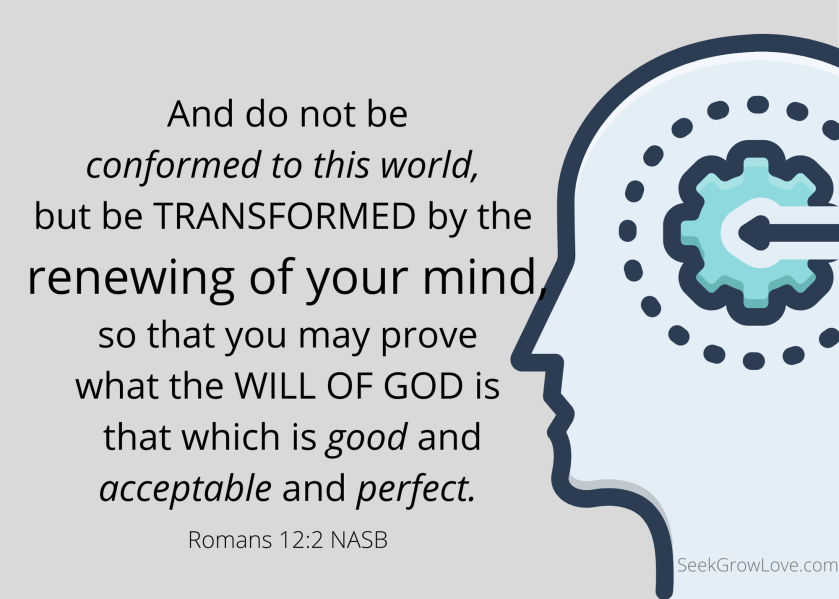
“Do not be conformed to this world, but be transformed by the renewal of your mind…”   -Romans 12:2a (ESV)

Pleeeeease!  Can you hear a child begging their parents for something.  Maybe for a treat, or a toy, or to stay up later? 

Romans 12 begins with Paul begging us to follow his advice.  Different versions use appeal, request, plead, urge, or beseech.  These words all tell us one thing:  that it is our choice.

So, who is Paul begging and what is he asking of them?   He is speaking to his brothers in Christ, and that includes all Christians then and now.  He is asking us to live a life worthy of claiming the name of Jesus Christ.  He asks us to “present our bodies as a living sacrifice, holy and acceptable to God”.  Then he tells us this is our “spiritual worship”, or our “spiritual service of worship”, or our “true and proper worship”, or our “reasonable service”.  In other words, it is reasonable for us to live as God desires us to because He has done so much for us (“by the mercies of God…”).  True worship involves all of us – our heart, soul, strength, and mind (Luke 10:27). 

One of my frequently used phrases is, “What does that look like?”.    Well, fortunately, Paul tells us in the very next verse, “Do not be conformed to this world, but be transformed by the renewal of your mind”.  Conform means to be in agreement with, or to adopt the form of those around you.  Transform means to change in character or to change the appearance of.   Both are verbs – action words.  Both of them require us to change.  This is what Paul is pleading with us about – we will either be conformed by the world or we will be transformed to be holy and acceptable to God.  Our world was created perfect but sin corrupted it.  Until Jesus returns to restore it to perfection, we must live in it.  We are warned several times in Scripture not to love the world, become like the world, think like the world. 

It sounds like an easy choice, and it is.  The hard part is choosing it every minute of every day.  Choosing to live it with our whole body – heart, soul, strength, and mind.  Every time we make a choice about our attitudes, actions, words, thoughts, etc.  This requires humility and being humble requires us to let go of our pride, arrogance, and egos.  Not so easy. 

Paul then goes on to warn us not to think of ourselves more highly than we ought.  Sounds like more humility. 

This chapter is full of godly advice; here are just some pieces of that advice.  Believe God has given you a gift, figure out what yours is, use it.  A healthy body (church) needs every member to be using their gifts.  Genuinely love one another.  Be constant in prayer.  Hate evil.  Contribute to the needs of the body.  Show hospitality.  Live in harmony with one another.  Do not be haughty.  If possible, live peaceably with all.  Never avenge yourself. 

Chapter 12 concludes with this, “Do not be overcome by evil, but overcome evil with good.”.  This brings us full circle.  The world is evil; if we are conformed to the world, we will be overcome by evil.  If we choose to be transformed, we will be able to overcome evil with good. 

Amy Blanchard


Reflection Questions

  1. What of the world draws you toward conforming?  Maybe it’s always wanting your way, viewing yourself as right all the time, or not determining what is evil so you can detest it.  Maybe it’s good things like family, showing hospitality, or volunteering.  Be aware of what messages are out there trying to turn your attention away from God.  Family, showing hospitality, and volunteering are good; but the place you give them shouldn’t be ahead of God.
  2. Transformation begins in your mind.  Paul says that it happens by the renewal of our minds.  What changes do you need to make to renew your mind?  It is our will to make the choice to be transformed, but God does the transforming.  We need to humble ourselves and let Him.  We are told that then we will be able to know God’s will.                

Save Us!

Old Testament: Deuteronomy 2

Poetry: Job 26

New Testament: Mark 11

As we just celebrated the triumphal entry it got me thinking about 1 aspect of Palm Sunday. The hosannas that the people yelled out to Jesus. What does that mean?

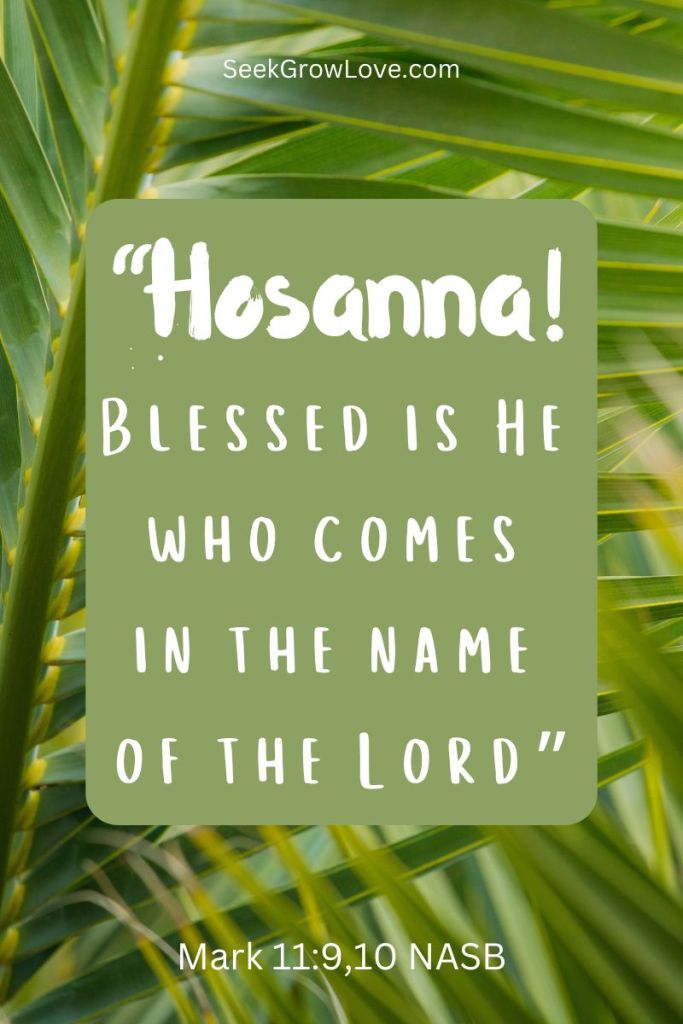
Hosanna is a word used in some songs of praise, especially on Palm Sunday. It is of Hebrew origin: “Hosanna to the Son of David! Blessed is he who comes in the name of the Lord! Hosanna in the highest heaven!” (Mark 11).

Hosanna is often thought of as a declaration of praise, similar to hallelujah, but it is actually a plea for salvation. The Hebrew root words are found in Psalm 118:25, which says, “Save us, we pray, O LORD!”. The Hebrew words yasha (“deliver, save”) and anna (“beg, beseech”) combine to form the word that, in English, is “hosanna.” Hosanna means “I beg you to save!” or “please deliver us!”

So, as Jesus rode the donkey into Jerusalem, the crowds were perfectly right to shout “Hosanna!” They were acknowledging Jesus as their Messiah, as shown in their address “Son of David.” Theirs was a cry for salvation and a recognition that Jesus is able to save.

When is the last time that you have yelled out to Jesus to save you? It’s an important question, and one that needs to be on our lips all the time.

There is nothing more satisfying in all the world than to be followers of a king like Jesus. Picture him riding toward Jerusalem, the rebellious city. A multitude praising him: “Hosanna, blessed, is the king who comes in the name of the Lord.” He knows the praise is shallow. In a few days it will fade away. But does he rebuke them? No. He defends them against the criticism of the Pharisees: “‘Teacher, rebuke your disciples!’ . . . ‘I tell you, if these were silent, the very stones would cry out.'” He knew his days were numbered. He knew their cries were not completely sincere.

The praise the people gave was not because they recognized Him as their Savior from sin. They welcomed Him out of their desire for a messianic deliverer, someone who would lead them in a revolt against Rome. These are the ones who hailed Him as King with their many hosannas, recognizing Him as the Son of David who came in the name of the Lord. But when He failed their expectations, when He refused to lead them in a massive revolt against Rome, the crowds quickly turned on Him.

Within just a few days, their hosannas would change to  Crucify Him.

Those who hailed Him as a hero would soon reject and abandon Him.

The story of the triumphal entry is one of contrasts, and those contrasts contain applications to us. It is the story of the King who came as a:

servant on a donkey, not on a white horse.

not in royal robes, but on the clothes of the poor and humble.

Jesus Christ comes not to conquer by force but by love, grace, mercy, and His own sacrifice for His people.

 His is not a kingdom of armies and splendor but of lowliness and servanthood.

He doesn’t conquer nations but hearts and minds. His message is one of peace with God.

If Jesus has made a triumphal entry into our hearts, He reigns there in peace and love. As His followers, we exhibit those same qualities, and the world sees the true King living and reigning in triumph in us.

If he lives in us today, we sing Hosanna. With a true and right heart. We don’t crucify him again and again with our sin.

We cry out to save us, not we can save ourselves. What do you cry out to Jesus for? Is it sincere? Is it true? Ask God to give you a sincere heart, so that your worship to God through Jesus is a saving worship. 

-Andy Cisneros

Reflection Questions

  1. What can you learn from the King who came on a donkey?
  2. Where else in Scripture do you find humility honored? Are you more known for your humility or pride?
  3. In what ways, at what times, have you tried saving yourself? When have you cried out for Jesus to save you?

Homemade Idols

*Old Testament: Exodus 31 & 32

Poetry: Psalm 32

New Testament: Matthew 27

I grew up on a farm and was around cows a lot. Never once did I find qualities to be worshipped in our cows. Sure, sometimes they did something cute or funny, but to lift a calf into idol worship seems ridiculous to me. Yet many ancient cultures worshipped the bull. Apparently, the Hebrew people were aware of this practice, too. So while Moses is receiving the Law of the Lord on the mountain, Aaron is left in charge. The people told him to make them gods who would go before them. And amazingly he does it. He creates the idol from their jewelry. Aaron goes on to build an altar in front of it. He announces that they will have a festival to the Lord with burnt offerings and fellowship offerings. The LORD is writing instructions for Moses of who He is and how they can worship Him, but they decide to create their own idol and practice their own form of worship. Along with these bad decisions, they eat, drink and indulge in revelry.

The golden calf should illustrate the ridiculousness of placing anything or anyone in a position of worship. The LORD is the only One who should be there.

I wonder if we had our modern-day idols put out on public display with altars in front of them, what would we find? Things that represent power, relationships, careers, educational degrees, wealth, fame…What offerings are being given for these idols? Are we offering most of our energy, time, focus or money?

Even good things can become idols when we make someone or something else the highest priority in our lives. Material possessions can be viewed as blessings from the LORD. We can thank Him for them and use them to help others. When we do this, we are using God’s blessings for good, but if we become consumed in our material possessions, they become an obstacle to fully loving and serving the LORD.

We should ask ourselves, “Does anything or anyone hold a higher priority in my life than the LORD?”  In Colossians 3:5 we are told to “Put to death, therefore, whatever belongs to your earthly nature: sexual immorality, impurity, lust, evil desires and greed, which is idolatry”.
So we see here that evil things need to be eliminated from our life before we find that they have become idols.

The Hebrews show us the seriousness of putting idols in the place of the LORD. They made themselves a laughingstock to the other nations and they broke a blood covenant with the LORD. (Ex. 24:7-8) How much better it would have been if Aaron had refused? Even when leadership falters, we should stand for the LORD. Let’s move out any idols and make the LORD the center of our world by loving Him with all our heart, soul, mind and strength.

-Rebecca Dauksas

Reflection Questions

  1. Does anything or anyone hold a higher priority in your life than the LORD? What or who? 
  2. What offerings are being given for these idols? Are you offering most of your energy, time, focus or money to anything or anyone who is not the LORD God?
  3. What will you do to put God first (either again, or for the first time in your life)? What changes need to be made? What habits need to be broken? What habits need to be started? What will you do today to make it so? 

Paradise

Old Testament: Ezekiel 37 & 38

Poetry: Psalm 107

New Testament: Revelation 22

     Revelation 22 begins with a few more verses describing New Jerusalem, a topic which began in chapter 21. It is full of life. I go back and forth on how to visualize this from the details we have. The city is described with one street, paved in gold like glass. The street leads to the throne of God and Christ – it is the most important destination. Perhaps the street spirals up to them, and the clarity of the gold helps the light from the throne reach everywhere. The river of the water of life passes down the center of the street, and the tree of life is on either side (v. 2). So perhaps the water goes through a tunnel carved in the thick trunk of the tree of life, which has grown quite large since being transplanted from the Garden of Eden. The design does not concern me greatly, the key is the offer of life and blessings. This is a place of contentment and worship – it has no temple because it needs none, all within it are constantly in the presence of God and Christ, bathed in their glory.

     Rather than design, I am interested in the idea that things have, at last, moved beyond the stage where God considers them “very good” (Genesis 1:31). After each of the first five days of creation God declared the work “good”; after day six it was “very good” – notably with the addition of humans. It may be that things didn’t remain at “very good” for long before they slid into distress and pain due to the addition of sin, but that isn’t the point in this chapter. God has restored matters. The curse is gone! But I think God more than restored things and passed “very good” to “perfect.” I suspect the needed element for that to take place involves free will – God would not force Adam and Eve to love and accept Him, it was to be our choice if we would seek companionship with Him.

     Well, talking about this sort of thing with God can wait, and by the time we enter those kinds of conversations with God we will be better equipped to do so. For now, we know the challenges we face, and the Spirit we have been entrusted with to face them. Let us continue toward the paradise God has planned for us.

     The Greek word for “paradise,” by the way (Luke 23:43; Revelation 2:7), from which we get our English word “paradise,” comes from a Persian word for a pleasure garden. It seems like we are striving to get back to a garden, where we could eat from the tree of life and perhaps even walk with God.

     With understanding and acceptance of each other.

     Loving and loved.

     Forever.

     These are goals worth having.

     Lord, the book says a blessing is on those who read and hear the words of this prophecy and heed the things written in it, for the time is near. Help us be attentive to these words, and all that you direct for our lives. Thank you for the gift of your words. Do not let us be drawn astray from you, your message, or your work. You are a gracious God. In Jesus’ name I pray to you, Amen.

-Daniel Smead

Reflection Questions

  1. We are repeatedly told there will be no night in the time of the New Jerusalem – what do you associate with night that you will be pleased to have end?
  2. How do you find the curse affecting your life this week? How is knowing Jesus, and believers, helping you to deal with the curse now?
  3. Looking back over Revelation, what directions stand out to you for your life? How is it going? Do you think you should call on someone to help you be accountable for what you feel called to do?

Good!

Old Testament: Ezekiel 23 & 24

Poetry: Psalm 100

New Testament: Revelation 15

I chose to write about Psalm 100 because of how much we can learn from it despite its shortness. This is a great chapter to read, and it only takes a minute of your whole day. The first thing I would like to point out is that in verse four it says, “Bless his name.” This verse is talking about God and how we should give thanks to him and bless his name. Now if you’re like me you might be thinking, why should we bless God’s name? Well, God blessing us and us blessing God are not the same thing at all. God does not profit from us blessing him. It’s not like he gets stronger or better anytime someone blesses him. On the other hand, when God blesses us, we benefit from it. In this verse, it is talking more about how we should praise him.

Throughout the whole Psalm, it talks about how we should praise God. As a church, I believe we should be more joyful, and excited. This Psalm is a great example of how we should praise God. It tells us we should serve God with gladness, shout joyfully, enter his gates with thanksgiving, and give thanks to God.

Usually when we think of ‘good’ we use it to mean something between ok and great. But in this passage, it is saying that he is righteous and about how great God is. This reminds me of the popular song below:

God is good, all the time

And all the time, God is good.

This Psalm is a great one to meditate on. Here are some points from Psalm 100 that you can meditate on.

God made us

We are the sheep in his pasture

The Lord himself is God

His lovingkindness is everlasting

The Lord is good

His faithfulness continues to all generations

Throughout the whole book of Psalms, it says, “His lovingkindness is everlasting”. In fact, it says it 34 times. Of those 34 times, 26 of them are all in Psalm 136. It even says it in every single verse.

Even in this short Psalm we can take so much from it.

-Makayla Railton

(Originally posted for SeekGrowLove on January 26, 2018)

Reflection Questions

  1. Do you believe the Lord God is good? Why?
  2. How can you work to bless His name today?
  3. Where can you post Psalm 100 to see and remember it often?

Identifying Detestable Idols

Old Testament: Ezekiel 7-9

Poetry: Psalm 93

New Testament: Revelation 8

Today I want to focus on Ezekiel 8. So in this chapter, there is a description of the second vision Ezekiel had. This vision is all about the idolatry going on amongst the Israelites. God takes Ezekiel to Jerusalem. This is where the temple is, so it is where people come to worship God. But instead of that, Ezekiel sees people worshiping idols, not God. I want to focus on the idols that Ezekiel sees, and see how they could potentially be present in our lives. 

The first idol mentioned is in verse 5. It is called the “idol of jealousy.” It is important to focus on what this means, and to start to understand that, we need to know what it means to be jealous. To be jealous is to look at other things and want them more than what you have. It’s like if your neighbor gets this awesome new car, maybe a brand new corvette, and you see that, and start to feel like you just have to have that car. He looks so cool driving it, and you just need that in your life, too.  We try to satisfy ourselves by trying to be like the people around us. We want what they have and maybe, just maybe, more than they have. This is something that we can put before God very quickly. We can focus on the next best thing instead of God. God says in verse 6 “the utterly detestable things the house of Israel is doing here, things that will drive me far from my sanctuary.” We are pushing God away when we start looking for “things” rather than looking for God. 

The second idol that Ezekiel sees is the worship of images of animals and creatures. The elders were burning incense to these images as a form of worship. In verse 12 the elders say, “the LORD does not see us; the LORD has forsaken the land.” They did not feel like God was there. So what do they do? They replace God with something else. We do this all of the time. Something doesn’t go the way we want it, we feel like God has abandoned us, and we instantly start to put something else before God. We turn to something else that makes us “happy.” Whatever that is, is different for each person, whether it’s work, hobbies, sports, school, friends, alcohol, or other things of this world. Instead of turning to these things, we need to put God first.

The last idol that Ezekiel sees is men in the temple with their “backs towards the temple of the LORD” and bowing down to the sun. The men here have completely turned away from God and are worshiping something other than God. We are sometimes guilty of this as well. We turn our backs to God and worship what is right in front of us. We see the visible thing that is right there and think that that thing is worthy of our full heart. Sometimes we need to do a full 180 and turn our worship back to the amazing, all powerful, loving God. 

Every time God shows Ezekiel one of these idols He calls them “detestable” things. They aren’t just bad or an “issue”, they are detestable in the eyes of God. Having idols is very serious to God. Just read verse 18. It is very important to evaluate our lives and identify if there is anything we put before our relationship with God. And if there is, to either reprioritize our life with God at the head, or get rid of whatever we put before God. 

-Camden Bormes

Reflection Questions

  1. When have you experienced the idol of jealousy? Have you overcome it (for now) or are you currently struggling with it?
  2. How have you seen people (including yourself) try to replace God?
  3. In what ways might idol worship creep into a culture – or into a church – or into the life of a believer – or into your life? What makes it detestable to God?
  4. What makes God and God alone worthy of all your worship and first place in your life and heart?

A Tale of Two Mountains

Old Testament: Isaiah 17 & 18

Poetry: Psalm 67

New Testament: Hebrews 12

     When I read Hebrews 12 I tend to think about how I’d like to see a painting of the Hebrew people gathered in front of Mount Sinai. Something that captures the atmosphere, with the darkness and smoke, the fire and the quaking ground. Maybe someday I will run across a painting like that hanging in a museum and I can marvel at the artist’s impression of the moment. I realize there is no point in my having such an artwork myself. First, I can’t imagine where my wife would let me hang it. Second, I’m not at all sure I would want to look at it for very long. If the painting was done well, I don’t think I would find it that pleasant to see. Impressive, yes. Happy-making, no.

     The scene with Mount Zion and the heavenly Jerusalem is quite a different story.  You might first think this was meant to illustrate the future kingdom, but recall the phrasing “You have come to” (v. 22), not ‘You will come to.’ The contrast we are being offered is between the tabernacle where it sat at Mount Sinai and the heavenly tabernacle set up by God. Notice that the description includes the heavenly Jerusalem, which we would not expect to be relevant to Jesus’ second coming (there is a thousand-year gap to consider before it comes to earth). We are also told about “the spirits of the righteous made perfect” – that they are perfected implies this is in the future, at the second coming (or after). But the mention of “spirits” helps bring to mind Revelation 6:9-11. There, in a vision, John hears those who had been slain speak from below the altar. This is a description of worship, contrasted with the worship at Mount Sinai. It is not literal, but a presentation of what is involved with the heavenly tabernacle as opposed to the earthly tabernacle.

     When my mind has tried to visualize this scene it tends not to work well. For one thing the scale is off, too many millions of angels are present. And my mind balks at a painting showing God, despite the number of painters who have tried to produce just that. I won’t bother telling you more about what my brain came up with, I don’t want to mess up your imaginations if you have a better grasp on this.

     Herb (my name for the author of Hebrews, for simplicity) is making another of his arguments for staying firm in the faith. He isn’t trying to get people to say how much nicer the Mount Zion scene is than the Mount Sinai scene, but how much firmer and authoritative the message of the Mount Zion scene is. It represents covenant 2.0, for which Jesus shed his blood. This is another ‘that was good but this is better’ argument. I’m not sure if Herb thought about it quite this way, but while people might have been warned against touching the old mountain, sinners looking at the new mountain would know better than to come anywhere near it. It had myriads of angels, for one thing (don’t forget the Bible reports of how even the presence of a single angel kept making people fall to the ground). And God is right there. When verse 29 says “our God is a consuming fire” the main reference may be Deuteronomy 4:24 or 9:3, etc., but we shouldn’t forget about what first set the tone: “The glory of the Lord rested on Mount Sinai, and the cloud covered it . . . and to the eyes of the sons of Israel the appearance of the glory of the Lord was like a consuming fire on the mountain top.” (Exodus 24:16-17). The people saw God as a consuming fire while God was concealed within a cloud, away on a mountain top. With God less concealed God is brighter, and this is the God who will replace the sun for the New Jerusalem (Revelation 21:23). Yes, potentially very scary to anyone who isn’t certain they are on the Lord’s side.

     Herb wanted the people to be fully committed in their decisions for Jesus. He wanted them to endure, not growing weary and losing heart (12:3). He wanted them to strive against sin (v. 4). He wanted them to continue in discipline so that they would be able to share in God’s holiness (v. 10). He wanted them to pursue peace with all men, to pursue sanctification, and one day see the Lord (v. 14). They were to be part of a kingdom that could not be shaken (which may pull in Daniel 2:44, drawing on another mountain reference), but the implication was that everything else would fall away.

     I wonder if Herb’s comparison of two mountains in chapter 12 may be behind his pattern of writing about the tabernacle and avoiding references to the temple in this book. It helped him tie the first covenant to Mount Sinai, and the second covenant to Mount Zion. The tabernacle later moved along with the people, and eventually Solomon built the temple at Mount Zion. But mentioning those facts could have complicated the analogy. If that is the case, well played, Herb. And I like your illustration.

     Lord, your worthiness for praise is obvious to the angels. Please help us Christians to understand you better. Help us show you an acceptable service with reverence and awe. You have allowed your son to die so that our hearts can be purified, and we could be closer to you. Help us not to lose track of the value and importance of your choice. Please let me serve you, and those you love. Amen.

-Daniel Smead

Reflection Questions

1.  Going through difficult experiences can increase our understanding – Hebrews 12:7 refers to having the peaceful fruit of righteousness. Are you prepared to accept support from fellow believers when you struggle in times of endurance? Are you prepared to support fellow believers when it is appropriate?

2.  Has a piece of art (painting, sculpture, music, etc.) helped you understand God better? Has a piece of art helped you grow as a person? Do you think God works through artistic beauty?

3.  How does it make you feel about God, knowing that He is preparing to set up a kingdom that cannot be shaken, and has invited you to be part of it?

A House for God

*Old Testament: 1 Chronicles 28 & 29

Poetry: Psalm 149

New Testament: 1 Thessalonians 4

     First Chronicles 28 and 29 relates the end of David’s time as king. Mostly it discusses an assembly where David laid out responsibilities his son Solomon would have for building God a temple and encouraged the people to join in that work with him. By gathering that assembly David was also making it clear that Solomon was the chosen heir – chosen by God. The line of succession had been contested before, and David called on all present to commit their loyalty to both God and Solomon (28:5; 29:24).

     David had desired to build God a dwelling place but was denied that role because he had shed blood. Joyfully for David, the time when he learned of his rejection was paired with learning about the promise of a special covenant with God. In the years that followed David stockpiled resources in preparation for the Temple to be constructed by his promised son. In 22:14 we read of huge amounts of gold and silver David stored up. In 29:4 we are told of additional sums he provided near the end of his reign. That was followed by him encouraging the people to offer their own commitments (6-9). They gave tons of gold and silver and brass and iron, along with precious stones. And “the people rejoiced because they had offered so willingly, for they made their offering to the Lord with a whole heart, and king David also rejoiced greatly.” (9). As David had said, this was not a temple “for man, but for the Lord God” and they were able to rejoice in the idea of giving to the project (1).

     I read some years ago about a study in which people of varying incomes were asked what they considered would be enough money for them to be content. There was a remarkable similarity in the answers given to the researchers, from those who made fairly little, on through those who made far more. People tended to want 15% more income than they currently had. Knowing this, of course, we can guess that very few people whose income increases become content – instead they adjust to their new circumstances and change their target for “contentment.” Of course we are not to view the world in that way, though we can all too easily become caught up in the distractions of worldly thinking. If we are seeking to store up for ourselves treasure in heaven, rather than on earth, we are less susceptible to such errors.

     I find it a matter of joy that the people of Israel in David’s time chose to join in setting up the Temple. They could have hesitated to give, and left matters to David and Solomon. They could have suggested that the vast amounts David had already collected would be enough for the task. (To try to put some numbers to this, we are told in 22:14 that David had collected 100,000 talents of gold. One calculation puts a talent at about 75 pounds, which would mean David had collected about 3,000 tons of gold. By a useful coincidence it is estimated that 750,000 pounds of gold were collected during the California Gold Rush, so a tenth of what David had gathered.) But the people still wanted to be involved with honoring God by contributing from their own wealth, which had itself come from God’s blessings (29:14, 16).

     (I find it interesting, as well, how God’s intentions may have been set up across the generations. David being a man of war could tie in with the extent of the nation’s wealth and how he prepared the way for Solomon. David was not accepted to build God a Temple, but he was freed to go forward in fighting against the enemies of God’s people and to help prepare a time of peace for Solomon. At the same time David’s victories brought in wealth that would enable the Temple to be funded to an incredible degree.)

        While David thought of the promises he had received in terms of Solomon, and prepared for his reign, we recognize a greater fulfillment in terms of another son, Jesus. Even in the text of these chapters there are hints at that, statements that “if” Solomon will serve God “with a whole heart” his descendants will continue to possess the land forever (28:8, 9). That kind of obedience was not available from Solomon, or any of the kings in David’s line who lived in Old Testament times. So while Solomon was able to fulfill the prophecy in one sense, building a house for God, it was destroyed after only a few hundred years. Another house waited to be built by a son yet to come.

     Lord, please help me not to be caught up in material concerns to the detriment of spiritual calls. Please let me have my daily bread so that I will not be distracted by wants, but please help me not let desires for more than I actually need get in the way of things that truly matter, like other people, and worshipping you. Help me to recognize how truly kind you are to me, and to give you credit and praise for your blessings to me and my family. Help me be willing to go out of my way for things that are important to you. Thank you for your care, Amen.

-Daniel Smead

Reflection Questions

  1. David and Solomon approached worship very grandly, perhaps more so than anyone today. What lessons might we be meant to take from the stories of the Temple?
  2. It may seem like an absurd amount of gold and silver was collected for use with the Temple construction, and we aren’t sure how all of it was used, but what impression do you think it would give to worship at a Temple where the walls were coated with gold? What if you knew that you, or your ancestor, contributed to building that Temple?
  3. Do you think it is harder to see yourself as receiving blessings from God when your income is from wages instead of through farming or spoils of battle?