David is still fighting battles and confronting the enemies around him. When things still flare up in Israel today, I often think how LONG it has been happening for about 2,700 years! Battles and hatred from their surrounding enemies has actually been going on for a long time in Israel. It is actually “old news” to hear the continual fighting. In this battle, Joab led David’s army. He could see that the battle was against them this time. He encouraged his best men, “Be of good courage, and let us be strong for our people and for the cities of our God. And may the LORD do what is good in His sight.” (19:13) What encouraging words from the army captain. He did not encourage them to find strength in themselves or by their own might and power they could win, but to be STRONG for their people and the cities of God, and that God would do what was good in HIS SIGHT. When young Israeli men (like our 2 sons) and women are sworn into the Israeli army today, Joshua chapter 1 is read to them in Hebrew. I found these words to be very touching and encouraging to a young soldier. (By the way, ALL boys are required to serve 3 years after high school in the Israeli military and girls 2 years. So, they are not thinking about what college they are going to attend, but what division of the army they would like to go into. Girls are not required to do combat. Lots of a variety of tests are given to match them up to fitting tasks for them.) “Have I not commanded you? Be strong and of good courage; do not be afraid, nor be dismayed, for the LORD your God is with you wherever you go.” Joshua 1:9 What hope and encouraging words for the army of Israel, back then and today. Like the schools, also their military is not anti-God or Bible. How awesome that a whole chapter of the Bible is read at every soldier’s swearing into the Israeli army. May they and we truly find our strength and courage in the God of Israel.
Another battle was against the Philistines at Gath. Goliath was also from Gath. It is an ancient ruin still visible today as you can see in the drone picture that our son took. David’s brother, Jonathan killed a 24 finger and toed giant from Gath! We do not see any giants there today!
It is interesting to note the allusion to David, one of many sling throwers, in Proverbs 26:8. “Like one who binds a stone in a sling is he who gives honor to a fool.” I understand this to mean that it is not fitting to praise a fool, like putting ammo in a gun except in this case it is a stone in a sling. In conclusion, of todays and this week’s devotionals I hope you have a greater LOVE for the God of Israel, His Messiah Jesus, and beautiful Land of the Bible. 😊
It is important to see the connection between David and Jesus, both are messiahs! Many Christians today misunderstand who Jesus is because they never understood about the messiah David. In fact, “Christian” has messiah in it. In Israel, they are called Messianics (which has also been twisted). God chose David to shepherd the people Israel and be ruler over them. (17:7) God told him through the prophet Nathan, “When your days are fulfilled, when you must go to be with your fathers, that I will set up your seed after you, who will be of your sons; and I will establish his kingdom. He shall build Me a house, and I will establish his throne forever. I will be his Father, and he shall be My son; and I will not take My mercy away from him, as I took it from him who was before you. And I will establish him in My house and in My kingdom forever; and his throne shall be established forever.” (17:11-14) What promises God made to David that through his seed would be an everlasting kingdom, AND that he would call God his FATHER and he would be God’s son. David was also a son of God, and we know that ultimately, Jesus is the Son of God. Even though sometimes the Old Testament books may seem “drier” or have lots of lists of names and cities, they’re so valuable for understanding as we’ve been seeing this week. Sometimes I tell my kids reading the Bible is as important as eating food. One often can’t remember what they read or ate several days ago, but we needed them for our survival!!
David’s response is exalting, “O LORD, there is none like You, nor is there any God besides You, … and who is like Your people Israel, the one nation on the earth whom God went to redeem for Himself as a people—to make for Yourself a name by great and awesome deeds, by driving out nations from before Your people whom You redeemed from Egypt? For You have made Your people Israel Your very own people forever; and You, LORD have become their God.” (17:20-22) Little Israel, the size of New Jersey, yet God chose them as a people to make His name known.
The first six verses of Proverbs 25 deal with the king, so it’s very fitting with our chapters from Chronicles. If you read Proverbs 25 today take note of that timely match up. 😊 Here’s one of them. “Take away the wicked from before the king, and his throne will be established in righteousness.” (25:5) That makes me think of the future kingdom of God. Once the wicked are removed before King Jesus; his throne will be forever est. Oh, how we long for that day when righteousness will be established on this earth, and the wicked will be taken away.
Today’s picture is when we left Israel 3 years ago. Our 9-year-old daughter is looking longingly out the window of the airplane as we left. She didn’t want to leave it as it was home to her where she was born and raised. She looked at Israel the whole time, until she couldn’t see it anymore. So far, we have not been back, because of covid restrictions, but others in our family long to go back. And 1 of our 2 sons there plans on coming this week, God willing, after almost not seeing him for 2 years. “The LORD of hosts, the God of Israel, is Israel’s God.” (1 Chronicles 17:24)
Once again David planned to bring up the ark to Jerusalem. However, this time he found out how to do it properly. The last time he had good intentions, but did not do it the way God intended it to be done. “Then David said, ‘No one may carry the ark of God but the Levites, for the LORD has chosen them to carry the ark of God and to minister before Him forever.” (15:2) Previously, he had it put on a new cart, and it was always ONLY to be carried by the Levites. “The LORD broke out against us, because we did not consult Him about the proper order.” (15:13) After waiting and seeking the proper way GOD WANTED it done, THEN there was much celebration and joy this time since it was done according to God’s way. It even says, “God helped the Levites who bore the ark of the covenant.” (15:26) The proper way was written down years ago in Exodus 25:13, but His ways can be forgotten if we don’t read and study them. For us too, it’s always good to consult God and do it His way. There are so many things that we think and seem are right, but it’s not actually the way God planned it. Let’s be open to read the Scriptures and seek Him in prayer in the way we should go.
After the ark arrived in Jerusalem there was much rejoicing. I do not have a picture today of a site because I want you to image what it was like seeing and hearing the people praising the LORD. It was not only sites and sounds, but smells too! There were numerous burnt offerings before God. We often do not think of what it would have smelled like with all the burnt offerings. Then David blessed the LORD God of Israel with song. In fact, it is a combination of 3 different Psalms; 105:1-15, 96:1-13 (all), and 106:1, 47. “Do not touch My anointed ones (messiahs), and do My prophets no harm.” (16:22) “For the LORD is great and greatly to be praised; He is also to be feared about all god. For all the gods of the peoples are idols, but the LORD made the heavens.” (16:25,26) “Blessed be the LORD God of Israel from everlasting to everlasting!” (16:36)
“Do not rejoice when your enemy falls, and do not let your heart be glad when he stumbles; lest the LORD see it, and it displease Him, and He turn away His wrath from him.” (Proverbs 24:17) That’s just what David experienced when King Saul died. He mourned for Saul and asked others to do so also. He wrote a lament and said to teach it to the children. In fact, all 6th grade Israeli school children, secular and religious are required to memorize David’s lament in 2 Samuel 1:19-27 to this day. Our children memorized it also along with the other Israeli school children. The picture is taken at one of our children’s school programs often celebrating biblical holidays. (As you can see there is limited seating and many children sat on the floor for the program.) It is neat in Israel by being a Jewish nation the Old Testament is studied as a subject in all the schools starting in 2nd grade until graduation. The public schools there are not anti-God or Bible, which is a good thing. “My son, fear the LORD and the king.” (24:21) We pray more will come to understand Jesus as their king along with the LORD God of Israel.
“Now” that David’s living in Jerusalem. He wanted to return the ark of the covenant there. He said to all the assembly of Israel, “If it seems good to you, and if it is of the LORD our God, … let us bring back the ark of our God back to us.” (13:2,3) David had good intentions of bringing the ark back, but he did not actually inquire of God or do it according to His instructions. He gathered all Israel together to bring the ark of God up from Kirjath Jearim. He had it put on a new cart. “All Israel played music before God with all their might with singing, on harps, stringed instruments, tambourines, cymbals, and trumpets.” (13:8) He had such good intentions, but once Uzza held the ark when the oxen stumbled and he died, David became angry and was afraid. He took it aside to the house of Obed-Edom and left it.
We lived in the village right behind Kirjath Jearim. In fact, for 20 years we could look out our living room/kitchen windows and see it! Also, one can see in the picture modern houses built around the ancient site. There is a Catholic church over the ruins, which is the case for other sites in Israel. And one can see the main road, which is still the modern-day ridge route they would have traveled on to avoid the deep cutting valleys.
Even though David had good intentions, afterwards he sought God for instruction, which encourages us to do the same. Not long after the Philistines attacked near Jerusalem, it says, “David inquired of God” if he should go against them. (14:10) Again, he inquired of God if to attack them, and God told him to send an ambush around them and succeeded. (14:16) “So David did as God commanded him, and they drove back the army of the Philistines from Gibeon as far as Gezer (could include pictures of them too😉). Then the fame of David went out into all lands, and the LORD brought the fear of him upon all the nations.” (14:16,17) This account of David is so encouraging though he had good intentions and yet failed to seek God, he corrected himself immediately and sought God’s counsel if he should attack the Philistines. We can learn from David and do likewise! “Be zealous for the fear of the LORD all the day.” (Proverbs 23:17) In wrap up, it is interesting to note once again another Proverbs that talks about a child, which has a Hebrew word meaning more “youth.” “Do not withhold corrections from a child (YOUTH), for if you beat him with a rod, he will not die.” (Proverbs 23:13) Children and youth both need lots of training and correction, but the end results are so rewarding. Reach out to children nearby you or related to you and encourage and lovingly correct them. Many may be going back to camp this summer, which is a special time for them. Many times, they have good intentions and yet need directed in God’s ways. 😊
After the death of King Saul, Israel came together at Hebron to anoint David king. God took him from being a shepherd of sheep to shepherd people. “You shall shepherd My people Israel and be ruler over My people Israel.” (11:2) Think about that, now adays it is a matter of degrees one has from LOTS of insidestudy. With David it was after LOTS of outside hours of watching the sheep (and years on the run from King Saul). For the first 7 years he reigned as king from Hebron. Then he wanted to move to Jerusalem, but the people rejected him there, so he fought against them. After David built the city up, and still to this day it is called, “The City of David” in that area by the temple. “So David went on and became great, and the LORD of hosts was with him.” (11:9) Below is a picture our son took with a drone of the City of David. (My husband knew what shots he wanted, but our son knew how to get them as a teenage tech). 😊 They made a great team, while it was still possible to fly in Jerusalem.
My biblical geography teacher of a husband likes to point out the parallels with David, anointed as messiah and king of Israel with Jesus, also anointed as messiah by God and king of Israel. Both lived lowly lives in the beginning though they were kings! Some of David’s mighty men even hid themselves in the cave of Adullam. And guess what?! Those caves are still there today and called by the same name! The students that came for our semester program would sometimes camp out there or have a bonfire there depending on our schedule. (Drone shot from our son😉) “The LORD brought about a great victory.” (11:14) God caused David and his men to prosper against their enemies. “By humility and the fear of the LORD are riches and honor and life.” (Prov. 22:4)
Further looking into Proverbs, it is interesting to note that the popular verse, “Train up a child (youth) in the way he should go, and when he is old, he will not depart from it,” (22:6) means more “youth” in Hebrew, like David was this age when he killed Goliath. Also, “Foolishness is bound up in the heart of a child (YOUTH); the rod of discipline will drive it far from him.” (22:15) So, to end on a happy note this “youth” son that took many of our drone pictures in Israel was granted permission today from the Israeli army to come and visit us for a month!! So exciting! 😊
The Philistines fought against Israel on Mount Gilboa. King Saul and his sons were also fighting against them. They fell slain in battle there. It says that “Saul died for his unfaithfulness which he had committed against the LORD, because he didn’t keep the word of the LORD.” (10:13) He consulted a medium for guidance, “but he did not inquire of the LORD; therefore, He killed him, and turned the kingdom over to David.” (10:14) It is so important to ask God for guidance, first and foremost. We so often ask others or search online for answers, which can be okay, but mainly we need to seek and ask God. It had been almost 9 years since Saul’s disobedience and rejection by God as king, yet he was still ruling for years, until it says that God killed him through the Philistines, and FINALLY the kingdom was turned over to David… as they mourn for King Saul.
Here is a modern aerial (drone) view of Mount Gilboa taken by our homeschooled high school son that was with my husband on a field trip. It is a mountain range, not one individual mountain. And guess what? It still has the same name today! In fact, by it you can see a manmade “snow” slope to go sledding on throughout the year. 😊
Proverbs 21:1 follows the two chapters in Chronicles perfectly! “The king’s heart is in the hand of the LORD, like the rivers of water, He turns it wherever He wishes.” And not just his heart but his whole life, as we just read that He can even kill the king. “To do righteousness and justice is more acceptable to the LORD than sacrifice.” (21:3) “There is no wisdom or understanding or counsel against the LORD.” (21:30)
Another Proverbs I wrote “sp” for speech by it helped me a lot during a rough time in my life. “Whoever guards his mouth and tongue keeps his soul from troubles.” (21:23) There were troubles brewing in my life, but it really helped to GUARD my mouth and tongue like a security guard standing by the opening of my mouth watching what I was going to say. In Israel, there are security guards everywhere. Most malls have a grocery store in them, but before buying milk in the mall’s grocery store, I would need to pass by three security guards! Thus, it is good for our words to be guarded at the exit of our mouth to make sure they are fitting! It is a good exercise today to picture a security guard by our mouths and tongues to make sure what we say is appropriate and pleasing to God.
Shalom y’all. 😊 I was born and raised in small town Indiana, then lived in Israel for 25 years, now I am back in the States in the South. So, I will add some pictures and thoughts about Israel in each devotional this week to help give you a taste of it over there. This year I have been reading through the Chronological Bible for my personal Bible reading and really enjoying it. In various ways, reading through the Bible is a great experience even though some parts are slower. 😊 It is interesting to note that the Hebrew Old Testament is arranged in a slightly different order than in English. In my Hebrew/English Bible the Old Testament ends with 1 and 2 Chronicles as a final summary of the Old Testament.
Although 1 Chronicles 7 & 8 are FILLED with Hebrew names and cities, it is amazing how familiar those names are to native Israelis. Many people are still called those names today, especially religious Jews. AND many of those cities are STILL called that TODAY. At some places, the ancient ruins of the city are beside the modern one, sharing the SAME NAME! Also, amazing that we still have this record of people and places from about 2,800 years ago. God’s Word has been preserved through all these years and one can still see the numerous same locations in Israel today. Israel is a wonderful country and testifies of real places and a real God and Messiah Jesus. See the green patch towards the bottom of our picture, that’s ancient Shechem with the modern city built around it. It is listed among the many cities in 1 Chronicles 7 and 8 and is STILL an actual city in Israel today! Some ancient cities are only in ruins, but the name remains the same.
Over the years, it has been a great benefit to read the book of Proverbs and focus on a certain topic while reading it and marking that topic with a few letters, like shown in picture. So many good nuggets of wisdom to meditate on! Something interesting is that many times a “child” is mentioned it’s often referring to a “youth” in Hebrew. “Even a youth is known by his actions” (Proverbs 20:11) is how it translates into English, same word used for David when he killed Goliath. I encourage you the next time when you read the book of Proverbs to pick a topic that interests you or that you would like more wisdom in and initial each verse that applies. Sometimes I have even made a list in a notebook of those verses and then meditated on them, and it has really helped me in that area that I needed more wisdom about. “The hearing ear and the seeing eye, the LORD has made them both.” (Proverbs 20:12)
My last devotional for this week comes out of Proverbs 19:18. It says, “Discipline your son while there is hope, and do not desire his death.” After doing this for a week now, the first portion of this passage made me immediately think about Amon. Remember him? He was that king of Judah that was murdered by his servants after reigning for only 2 years. He did evil in the sight of Yahweh. His father, Manasseh, also did evil in the sight of Yahweh but eventually repented and renewed his status with God. I had commented to myself on paper, thanking God for repentance – as there’s still time for it. What if you don’t have the time like Amon? What if you don’t even know that repentance is an option? This is why we are commissioned! Find those Josiahs and let them know the good news!
Discipline your son while there is hope, and do not desire his death… Why would any good parent desire their child’s death? My studies this week have also led me to some wisdom, I think, regarding the latter portion of this verse in Proverbs. I don’t think I would have understood the latter part if I hadn’t immersed myself in the word for a week. Words mean something. This is a wise, powerful statement that lets us know we DO desire our children’s death if we don’t take action to discipline them. We’ve got a great commission in our own homes if we are parents.
I have been wanting to do a study on child-rearing for a while now. Since I desire that my children live, I started by looking into discipline as it is demonstrated in the word. I found that my idea of discipline was nothing like what discipline actually meant in the bible.
Look at the Old Testament and how God, through Moses, disciplined the children of Israel in comparison to the New Testament and how God, through Jesus disciplined.
Deuteronomy 11:1-13 (NIV)
11 Love the Lord your God and keep his requirements, his decrees, his laws and his commands always. 2 Remember today that your children were not the ones who saw and experienced the discipline of the Lord your God: his majesty, his mighty hand, his outstretched arm; 3 the signs he performed and the things he did in the heart of Egypt, both to Pharaoh king of Egypt and to his whole country; 4 what he did to the Egyptian army, to its horses and chariots, how he overwhelmed them with the waters of the Red Sea[a] as they were pursuing you, and how the Lord brought lasting ruin on them. 5 It was not your children who saw what he did for you in the wilderness until you arrived at this place, 6 and what he did to Dathan and Abiram, sons of Eliab the Reubenite, when the earth opened its mouth right in the middle of all Israel and swallowed them up with their households, their tents and every living thing that belonged to them. 7 But it was your own eyes that saw all these great things the Lord has done.
8 Observe therefore all the commands I am giving you today, so that you may have the strength to go in and take over the land that you are crossing the Jordan to possess, 9 and so that you may live long in the land the Lord swore to your ancestors to give to them and their descendants, a land flowing with milk and honey. 10 The land you are entering to take over is not like the land of Egypt, from which you have come, where you planted your seed and irrigated it by foot as in a vegetable garden. 11 But the land you are crossing the Jordan to take possession of is a land of mountains and valleys that drinks rain from heaven. 12 It is a land the Lord your God cares for; the eyes of the Lord your God are continually on it from the beginning of the year to its end.
13 So if you faithfully obey the commands I am giving you today—to love the Lord your God and to serve him with all your heart and with all your soul—
Let’s go through this passage carefully. Through Moses, God disciplined the 12 tribes of Israel (the children of Israel). He disciplined them by first showing them his majesty, or who he was (Yahweh God!). Who he was could be recognized by the works he did (e.g., signs, miracles, plagues). He rescued them (from Egypt) and defeated their enemies (Egypt in the red sea). Along their journey to the promised land, he performed miracles to sustain them in the wilderness (e.g., manna, water from a rock). He got rid of the people among them who were insolent and tried to usurp Moses (i.e., Dathan and Abiram; Korah).
He then disciplines the children of Israel by telling them to obey the commandments they were given (i.e., obey the law of Moses) so that they would have strength to enter the promised land. He entices them to obey the law of Moses by describing how wonderful their hope is. In it, they will have long life and it will be well with them. In it, they will have good things (flowing with milk and honey). It is a land they won’t have to tend themselves (like they did in Egypt) to receive the good things in it. The good things will be sustained through heaven. To me, the last verse shows God’s heart. He cares so much about that land that he desires to give to his children.
Now let’s look at the New Testament and the discipline of God through Jesus. He pretty much does the same thing but gives greater honor and authority to Jesus since Jesus literally is the one who rescues the people.
In the New Testament, Jesus disciplined the 12 disciples by showing them who he was (is) (The Son of God! The Messiah – pretty much described throughout the whole book of John). Who he was (the Messiah) could be recognized by the works he did in their presence. There were some pretty distinctive works he did that pointed to himself as the Messiah (i.e., Isaiah 35:5-6a “Then the eyes of the blind will be opened and the ears of the deaf will be unstopped. 6 Then the lame will leap like a deer, and the tongue of the mute will shout for joy.).
It is Jesus himself who rescued them from their enemy (sin and death) by his death on the cross. Once seated at the right hand of God in heaven, it is Jesus who sustains them along their journey to the Kingdom of God (KOG). Post resurrection, it’s up to them (and us) to do these final things to enter into the KOG through Jesus. Jesus is the bread of life and he is the rock of our salvation who provides living water. He chastens us by pruning us along our journey (e.g., If your right hand offends you, cut it off – get rid of the people and things in your life that try to usurp Jesus as Lord of your life because they’ll prevent you from entering the KOG).
Jesus disciplines us by telling us to obey the Law of Christ (i.e., Love God and love people like Jesus loved). We need to obey these commandments so that we will have strength (through the receiving of the holy spirit) to enter the KOG.
The love of Christ compels us to obey by enticing us with the good things in the KOG, our hope. In the KOG, we will live forever with Jesus (and eventually with God himself). God will wipe away every tear from our eye; sin and death will be no more (the incorruptible crown; the crown of life). In it, we will be rewarded with good things, positional rewards based on how we built upon the foundation that was laid for us (built upon Jesus) (the crown of rejoicing; the crown of righteousness). If you’re an elder in your church, you’ll receive a crown of glory!
Once there, we won’t have to labor like we do now to enjoy the KOG. There will be a river of the water of life flowing from the throne of God and from the lamb. In it will be the tree of life on either side of the street with 12 kinds of fruit. The leaves of the tree will be for the healing of the nations. I realize that this may not all be literal. All I really know is that it will be unimaginably good and that God and my Lord Jesus will be there, so I’d like to be there too.
And then for my correlation of the last verse. I can only imagine the joy Jesus must have when he thinks about the coming KOG. It is his reward. He’ll be ruling the whole world from the new Jerusalem. I think this was God’s plan all along, with Jesus in mind as the king of his kingdom before the foundation of the world, to a people whose desire is for them whom they love.
Going back to the Old Testament passage, we see that not all of the children of Israel were witnesses to God through Moses. Therefore, he instructs them to discipline their children who were not witnesses. An example of discipling for the children of the children of Israel who were not direct witnesses was laid out for us in Deuteronomy 11.
Similarly, not many of us were direct witnesses to Jesus’ ministry on earth. Therefore, he instructs his disciples to discipline the rest of us who were not direct witnesses. I believe that through the power of the holy spirit however, we too can be called witnesses of Jesus, and are therefore also commissioned to discipline our children and others (the Josiahs). An example of discipling for us is laid out in the new testament, beginning with the gospels.
Can you say amen?
-Juliet Taylor
Today’s Bible reading passages can be read or listened to at BibleGateway here – 1 Chronicles 5-6 and Proverbs 19
The book of wisdom says, “Death and life are in the power of the tongue, and those who love it will eat its fruit.” (Proverbs 18:21). I understand this scripture to mean that we have the power to speak words to others unto life or words unto death, so we should choose our words carefully. If we love to talk, we better make sure our speech represents who we are because we become what we speak (eat your words). Our words are death and life to our own bodies.
I keep coming back to the issue of the heart. I know we need to have a heart for God if we desire to be with him and his son in the Kingdom of God. But how do we really know if we have a heart for God? The heart can be seen in the things we do that correspond with Jesus’ commandments (love) that we must do to enter in. Works are fruit but works can be deceiving if the heart behind the works is not motivated by love. Mathew 7:15 – 23 says:
15 “Beware of the false prophets, who come to you in sheep’s clothing, but inwardly are ravenous wolves. 16 You will know them by their fruits. Grapes are not gathered from thorn bushes nor figs from thistles, are they? 17 So every good tree bears good fruit, but the bad tree bears bad fruit. 18 A good tree cannot produce bad fruit, nor can a bad tree produce good fruit. 19 Every tree that does not bear good fruit is cut down and thrown into the fire. 20 So then, you will know them by their fruits.
21 “Not everyone who says to Me, ‘Lord, Lord,’ will enter the kingdom of heaven, but he who does the will of My Father who is in heaven will enter. 22 Many will say to Me on that day, ‘Lord, Lord, did we not prophesy in Your name, and in Your name cast out demons, and in Your name perform many miracles?’ 23 And then I will declare to them, ‘I never knew you; depart from Me, you who practice lawlessness.’
The people speaking to Jesus in this passage are shocked that Jesus doesn’t know them. The works mentioned in this passage do outwardly appear to be good fruit. Fruit can look good on the outside but can be rotten on the inside.
It can be difficult to identify bad fruit sometimes. If you really want to know if you’re producing good fruit or not, there is one particular fruit that’s pretty transparent, at least to the people we’re around the most. Our words are a good indication of what’s in our hearts.
Here’s a similar passage from Luke’s perspective in Luke 6:43-47:
43 For there is no good tree which produces bad fruit, nor, on the other hand, a bad tree which produces good fruit. 44 For each tree is known by its own fruit. For men do not gather figs from thorns, nor do they pick grapes from a briar bush. 45 The good man out of the good treasure of his heart brings forth what is good; and the evil man out of the evil treasure brings forth what is evil; for his mouth speaks from that which fills his heart.
46 “Why do you call Me, ‘Lord, Lord,’ and do not do what I say? 47 Everyone who comes to Me and hears My words and acts on them, I will show you whom he is like:
Jesus has a little more to say about the mouth in Mathew 12:30-37:
30“He who is not with Me is against Me; and he who does not gather with Me scatters.
31“Therefore I say to you, any sin and blasphemy shall be forgiven people, but blasphemy against the Spirit shall not be forgiven. 32“Whoever speaks a word against the Son of Man, it shall be forgiven him; but whoever speaks against the Holy Spirit, it shall not be forgiven him, either in this age or in the age to come.
33“Either make the tree good and its fruit good, or make the tree bad and its fruit bad; for the tree is known by its fruit. 34“You brood of vipers, how can you, being evil, speak what is good? For the mouth speaks out of that which fills the heart. 35“The good man brings out of his good treasure what is good; and the evil man brings out of his evil treasure what is evil. 36“But I tell you that every careless word that people speak, they shall give an accounting for it in the day of judgment. 37“For by your words you will be justified, and by your words you will be condemned.”
James gives us even more clarity about the power of our speech in chapter 3:5-12:
5 So also the tongue is a small part of the body, and yet it boasts of great things. See how great a forest is set aflame by such a small fire! 6 And the tongue is a fire, the very world of unrighteousness; the tongue is set among our body’s parts as that which defiles the whole body and sets on fire the course of our life, and is set on fire by hell. 7 For every species of beasts and birds, of reptiles and creatures of the sea, is tamed and has been tamed by the human race. 8 But no one among mankind can tame the tongue; it is a restless evil, full of deadly poison. 9 With it we bless our Lord and Father, and with it we curse people, who have been made in the likeness of God; 10 from the same mouth come both blessing and cursing. My brothers and sisters, these things should not be this way. 11 Does a spring send out from the same opening both fresh and bitter water? 12 Can a fig tree, my brothers and sisters, bear olives, or a vine bear figs? Nor can salt water produce fresh.
Are you noticing as I am that some of the scariest, most convicting verses in the bible for a supposed Christian regard our speech? We must tame our tongue. To tame the tongue we must change our hearts.
By examining our own words, we can tell if we have a heart for God or not. I think it’s a really good indication about our destiny too. If you really want to know if you are producing good fruity speech, ask those who are closest to you how they perceive your speech towards them. If they aren’t on the receiving end of your good fruity speech, that’s not good. Be prepared with your response. If you don’t like what you hear, how will you respond? Choose your words wisely.
If you know you will have trouble responding with good fruit, prune your speech! You might find it helpful to practice not saying anything at all. Proverbs is chock-full of verses that tell us that there is wisdom in keeping our mouths closed. Even a silent fool is considered wise if he keeps his mouth shut. We can use that silent time to pray for wisdom and words of life and in the meantime, practice our sacrifice of praise to God, which is the fruit of our lips that give thanks to his name.
-Juliet Taylor
Today’s Bible reading passages can be read or listened to at BibleGateway here – 1 Chronicles 3-4 and Proverbs 18
…the exact truth about the things you have been taught.
1 Chronicles 1-6
The very last class of my undergraduate education taught me something I’ve remembered for years. I was finishing up my minor and taking my last sociology class. I made a statement during a class presentation that earned me a grade that pushed me into a new academic rank that I thought was impossible to achieve. The presentation was on being a voice for change in society. “If we want to bring about societal change, we need to make some noise!”
I’m going to sound a tad irreverent here. I used to cringe every time a modern agent of societal change preached “Fact-check!” My disdain from the message grew with each passing day that the seemingly one-sided social sermon that I immersed myself in on an almost daily basis, was made light. The noise was bringing change but to me, it was not warranted change.
At first, noise is all I ever allowed myself to hear from the opposing side’s communication. My mind went straight to the need for taking the stick out of the opposing side’s eye. There may have been a beam in there too.
I had to turn off the noise and get myself immersed in something else because I wasn’t helping the situation. I was supposed to be the light that brought change, not the opposing societal view. Right around this time, I started digging into the various things Jesus was called. In the quiet I reacquainted myself with The Light of the World.
Through my continued immersion in the word, I did something I had rarely done. I actually took the time to read the genealogies of Jesus, the boring stuff, in the beginning chapters of Mathew and Luke. It dawned on me.
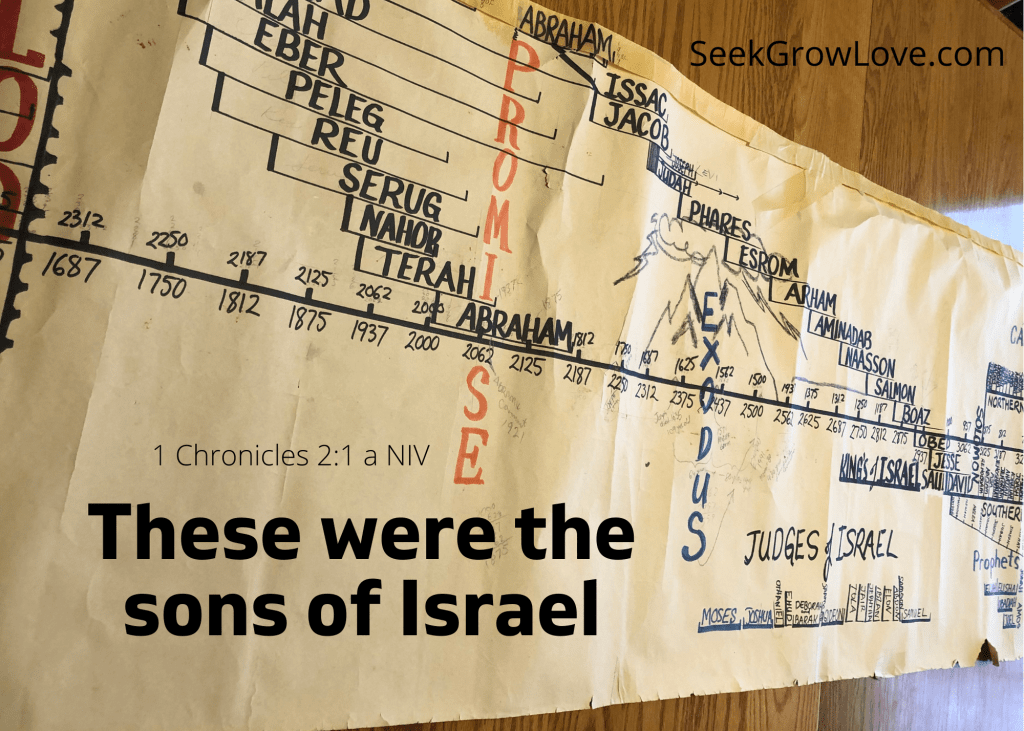
In the quiet, I realized that the words so often skipped over were God’s fact-checks! Through these, he made certain we knew who the Messiah was, the one who would bring about the right change. It was all in there waiting to be discovered. The Messiah is exactly who God said he’d be and exactly who Jesus said he was. There are facts that lead to him in the genealogies, the lineages, the “begats”, the “in the lands of-s”, the “in the times of-s”, through the recordings of kings of kingdoms, in the astronomical signs of the times, etc. All fact-checks leading to Jesus Messiah.
The genealogies of Jesus were written by eyewitnesses of his ministry. I love the beginning of Luke:
“Since many have undertaken to compile an account of the things accomplished among us, 2 just as they were handed down to us by those who from the beginning were eyewitnesses and servants of the word, 3 it seemed fitting to me as well, having investigated everything carefully from the beginning, to write it out for you in an orderly sequence, most excellent Theophilus; 4 so that you may know the exact truth about the things you have been taught.” -Luke 1:1-4
I took a little more time today reading through the genealogies recorded in 1 Chronicles chapters 1 – 6. They’re fact-checks. They can help us to be prepared with an answer to anyone who questions our faith.
Through this experience, I have begun to listen to the opposing side before opposing them completely. I have come to value the opposing side’s pleas for fact-checking. They are right. We need truth. But we need to fact-check society as a whole – all sides.
I’m still a bit put off by the societal noise and social pressures of our time. Although it may be true that making noise may lead to societal change, it may not be what God wants for us. There were times when Jesus spoke softly and times when Jesus rebuked. There were times when Jesus was offensive and there were times when Jesus remained silent. He always did whatever he heard from his father. If I’m going to be the light of the world like Jesus, desiring to cause societal change, I need to hear Jesus and heed his statements. I need to do it his way. His way is often the unpopular way but it is the only way that’s going to bring about change that matters.
-Juliet Taylor
Today’s Bible reading passages can be read or listened to at BibleGateway here – 1 Chronicles 1-2 and Proverbs 17












 Seek Grow Love