The Beginning of Ministry

Matthew 3

Mark 1

Luke 3

Devotion by Cayce Fletcher (SC)

The past year, I just celebrated the big 3-0. With every new decade, life speeds up, and the long stretch of the future that seems endless at 18 starts to look shorter and shorter. 

I remember when I graduated from high school, I – and all my friends – wrestled endlessly with what to make of our lives. What college? What major? What city? What guy? It seemed like we needed to have it all figured out as soon as we walked across the graduation stage. 

But, as anyone who has a little life experience knows, life rarely goes as planned. What we thought would make up our lives at 18 rarely fits with what our life actually looks like at 30, 40, or 50. 

It always seemed strange to me that Jesus, with such a short life, waited to begin his ministry until 30. Here are some reasons why that could be

Traditionally, 30 was the age in Jewish culture of full maturity. It matches up with the pattern of scripture: David was 30 years old when he became king, Joseph was 30 when he entered the service of Pharaoh, the Levitical priests were 30 when they started their service, and so on (Ezekiel, King Saul, and maybe even Paul the Apostle). 

Jesus needed to wait to gain the experience and wisdom that comes with age. His authority and testimony depended on it. 

When I was younger, it seemed like if I had not decided on a thing by age 22 that opportunity would have passed me by for the rest of my life. Whether that’s a career or a specific ministry, it seems like I’m already too set in my ways to be able to make a change and start doing the thing. 

But, I’ve realized that is not how life works. Our lives are long and full of twists and turns. Joseph probably could not have dreamed of the many changes that would take place between his time among his flocks and entering the service of Pharaoh, but God knew and had a plan. 

Sometimes, I find myself falling into this trap today. If someone has moved on from the church or a friendship is broken, I often give up. I feel as though this will be how this person, this relationship, or this work will be for the rest of my life. 

We need to remember this: As long as we are willing to walk in obedience, it is never too late to start the work. God uses the time waiting and praying as preparation to help to mature our faith and grow our wisdom. 

What can we do in the waiting? 

We can pray, prepare, and trust – as we look to all those who had to wait to begin their ministry. We can trust that God, ‘who started a good work in us, will see it through to completion.’ 

Cayce Fletcher writes and podcasts at amorebeautifullifecollective.com. Check out the blog and other resources to help you create a life you love and cultivate your heart for God. This free resource here will help you take your Bible study one step further with a Bible reading tracker, Bible study reflection page, and more.  

Reflection Questions

  1. Why do you think Age 30 was so significant in God’s plan? What is special about this age? 
  2. What thing do you feel is ‘too late to change’? It could be a job, a personality trait, a failed relationship, or a church ministry. How could you pray for change for this thing? 
  3. How can we ‘wait well’? What are some practical steps we can take to make the most of our time of preparation? 

SGL.2025.SeptemberFullPageDownload

The Gift of the Magi

Matthew 2

Luke 2:39-52

Devotion by Cayce Fletcher (SC)

When I was still teaching seventh-grade English, one of the stories that my students loved (much to my surprise) was “The Gift of the Magi” by O. Henry. In the story, a young couple needed to buy Christmas presents for each other, but like many young couples, they were severely lacking in funds to do so. In order to scrounge together what they needed for the perfect gift, they sold their most valuable possessions (hair in the girl’s case and an inherited pocket watch for the boy). 

At the end, to their dismay, the boy and the girl realized that the gifts they had purchased were useless, though very expensive. The boy had bought a comb for the girl who had shorn her hair. The girl had bought a chain for the boy who had sold his watch. 

As my students reached the end of the story, they would always laugh and shake their heads at the couple. But, the story ends with this famous quote: “Of all who give and receive gifts, such as they are wisest. Everywhere they are wisest. They are the magi.” 

Today’s reading almost feels like Christmas in July (or well… September). In four separate stories of travels, we learn about Jesus’ boyhood. He receives the gifts from the Magi, takes off to Egypt for several years, returns and settles in Nazareth, and finally participates in an annual pilgrimage for the Jewish feast of Passover. 

My students may think that the boy and girl in the story are silly, but when we read the story of the Magi, we should be struck as well. These men left their countries to go on a years long journey. To where? They didn’t know. For what? They also didn’t know. 

All they knew was this: “We saw his star when it rose and have come to worship him.”

O. Henry recognized that this was true devotion and love. To recklessly sacrifice to show devotion for something that we hold as truly valuable. The Magi are famously called ‘The Wise Men.’

But, what is true wisdom? 

It is not always playing it safe. It is not always acting in a way the world deems prudent. 

But, it is always rightly ordering our loves so that we can show devotion to the best thing. 

What does that look like? 

It is choosing to put our faith at the forefront of our lives, prioritizing it. We talk of priorities as a list of 3, 5, or even 10. But, really, the word means the thing we hold first. If our faith is placed first, everything else we do falls behind it. 

And, when we devote our lives to our faith, we may pursue the way of the Magi. We may sacrifice (maybe a little recklessly) in order to obey our God. Because we know that the path of obedience is sweet and good. It is worth giving up everything – even our most valuable possessions – for. 

Cayce Fletcher writes and podcasts at amorebeautifullifecollective.com. Check out the blog and other resources to help you create a life you love and cultivate your heart for God. This free resource here will help you take your Bible study one step further with a Bible reading tracker, Bible study reflection page, and more.  

Reflection Questions

  1. We often think of the Wise Men as being Wise because they were simply ‘learned.’ But, how were their actions also wise? 
  2. What is our first priority in our lives? How do we show this through our actions? 
  3. How can choosing to live wisely and righteously look like foolishness to the world? 

SGL.2025.SeptemberFullPageDownload

We Need More Ezras

Ezra 7-10

Devotion by Carla Hardy (Michigan)

The name Ezra comes from a Hebrew word that means “help.” Ezra was a man of integrity, trusted by the king. Most importantly, though, Ezra was a man of God. He committed himself to knowing the Word of God. In Ezra chapter 7, verse 10, it says, “For Ezra had set his heart to study the Law of the Lord, and to do it and to teach his statutes and rules in Israel.” So not only did Ezra study the Word, but he lived it out so he could share his knowledge and heart with others – in this way he embodied what it truly means to be a helper. 

Paul says in 1 Timothy 4:2 to “preach the word; be ready in season and out of season; reprove, rebuke, and exhort, with complete patience and teaching.” This is exactly what Ezra did. He knew the Word so he could then go out and teach it. When Ezra is sent by the king to Jerusalem, he finds the Israelites in bad shape. They had been disobedient to God, neglecting all of His ways. Ezra was equipped and ready to handle this unexpected discovery because He knew God’s word inside and out. He set about helping the Israelites find their way back to God. He was a true leader; he cared about people, lifted them up, prayed for their repentance, taught them the Word, and showed them how to live out a life of faith. 

In all areas of my life, I want to be like Ezra. I pray and hope people see me as someone with integrity, someone they can trust. I want to know God’s word and keep it in my heart, so I am prepared to help in all seasons. Above all, I want to share God with others and proclaim His goodness, mercy and love.

Reflection Questions:

  1. Have you committed yourself to knowing the Word? How do you study it? How do you best commit it to your heart?
  2. Have you ever known a great leader? In what ways was this person like Ezra? What wisdom did that person impart to you?
  3. This world needs more Ezras. How can you be more like Ezra today in your walk with God?

Anticipation

Zechariah 10-14

Devotion by Carla Hardy (Michigan)

Anticipation. It’s the worst. But it’s also the best. On one hand, being hopeful and excited about an upcoming event can be agonizing. On the other, you can feel joy and peace in the waiting. 

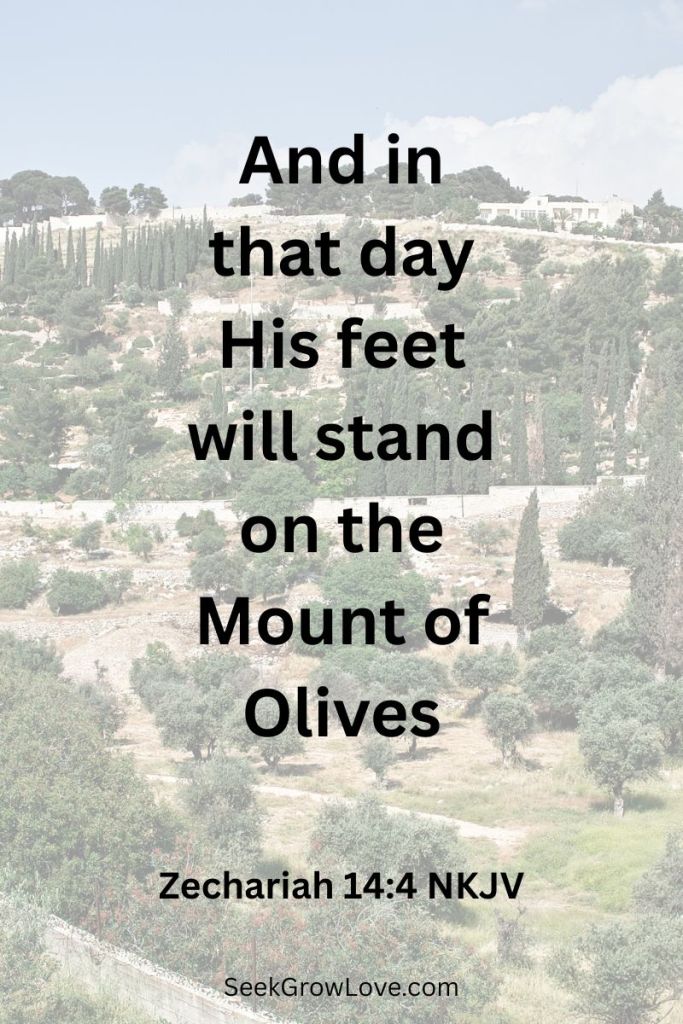
The end of the book of Zechariah paints a vibrant picture for us of the return of Jesus. It tells us what it will look like – his feet on the Mount of Olives, the mountain split into two, his light illuminating all the earth, living waters flowing. But, the book doesn’t reveal a crucial part – the when. No one knows the day or the hour of Jesus’ return, and if you are anything like me, this can drive you a little crazy. I’m filled with so much awe and wonder when I read these verses and meditate on what is to come. But I can’t escape wondering about the when. 

However, I do not want to be anxious about it. I don’t want to focus so much on the when that I neglect two other vital pieces – the who and the why. 

See, when Jesus comes back, I want to be ready for him. Every day I want to know him more, love him more deeply and live more like he did. This is how I prepare. And, I want to be sure that those I love are found the same when he comes back. That is my calling. That is the who. 

And the why? Because God loved us, He sent his son to save us. In focusing on that truth I can live each day trusting God that His timing is best. I don’t need to worry about when. I just need to do my part – preparing, praying, loving and serving. Because He loves me, and I can rest easily in that, waiting for His perfect timing.

Reflection Questions:

  1. How do you handle anticipation?
  2. Who is your “who?”
  3. What is one way today that you can focus on the “why?”

When the Outcome is Unseen

Habakkuk 1-3

Devotion by Dustin Farr (South Carolina)

Why do bad people seem to succeed in this life? Why do the righteous suffer while the wicked seem to get away with everything? And if God sees it, why doesn’t He step in right away?

That’s exactly where the book of Habakkuk begins. The prophet cries out to the LORD, confused and hurting, asking why injustice is allowed to go on. It’s a reminder that God isn’t afraid of our concerns. He wants us to bring our pain, our doubts, and even our “why” straight to Him.

God answers Habakkuk in a way he doesn’t expect. He says He will use the Chaldeans (a powerful and wicked people) to bring judgment on Judah (a less powerful and less wicked people). But He also makes it clear that their strength is nothing compared to His, and their own judgment is coming.

Habakkuk learns that affliction is part of living in a broken world. God’s justice is not absent just because it isn’t immediate. His plans are bigger than what we can see, and even while Habakkuk was praying, God’s answers and plans were already in motion, just not in a way he could yet understand.

In the middle of this, God gives Habakkuk a promise. “The righteous shall live by his faith” (Habakkuk 2:4). Paul quotes this later in Romans 1:17, reminding believers that faith is the foundation of a right relationship with God.

By the end of the book, Habakkuk’s tone shifts. His questions turn into worship. Chapter 3, written as a song, closes with 

“Yet I will rejoice in the LORD; I will take joy in the God of my salvation.” (Habakkuk 3:18)

That’s the kind of faith we’re called to, not just praising God for what He’s done, but trusting in Him even when the outcome is still unseen.

Reflection Questions:

  1. What does Habakkuk’s honesty in prayer teach you about how to approach God in hard times?
  2. How does “the righteous shall live by his faith” (Habakkuk 2:4) challenge your response to unanswered prayers?
  3. What would it look like for you to rejoice in the LORD this week, even in uncertainty?

“An Object of Extreme Devotion”

Jeremiah 35-37

The Israelites were still heading in the wrong direction. Jeremiah 35:15 reads, “Again and again I sent all my servants the prophets to you. They said, ‘Each of you must turn from your wicked ways and reform your actions; do not follow other gods to serve them. Then you will live in the land I have given to you and your ancestors.’ But you have not paid attention or listened to me.”

Is there an area of our lives where we need to pay closer attention and listen to God more? Sometimes the sins of the Israelites can seem so unrelatable at first glance. They engaged in idol worship? We might safely conclude,  “None of that going on here, but how foolish of the Israelites!” Then I think about modern day idol worship. Does it look like overconsumption of social media, doom scrolling, adoring celebrities, etc.? Sometimes our idol can be right in the palm of our hands. Do we have a fit of panic when we are getting ready to go somewhere and we can’t find our phones? Merriam Webster’s dictionary defines an idol as “an object of extreme devotion.” Do we have idols we need to clear out of our lives so that God becomes our number one priority? God makes it very clear we are to have no other gods before Him. 

I worked at a Catholic school for a number of years and the faculty and staff worked hard to come up with a school motto that embodied the school’s mission. One of the teachers exclaimed, “God calls, we answer!” and everyone unanimously agreed. That simple, succinct, yet oh so powerful statement really resonated with me and it dovetails nicely with the last sentence in 35:17:

“Therefore this is what the Lord God Almighty, the God of Israel, says: ‘Listen! I am going to bring on Judah and on everyone living in Jerusalem every disaster I pronounced against them. I spoke to them, but they did not listen; I called to them, but they did not answer.’”

When God calls, we want to be sure to answer, but first we must make sure we are truly listening and not letting the superficial cares or distractions of life drown out His voice. Perhaps it’s time to put Psalm 46:10 into practice:

He says, “Be still, and know that I am God;

    I will be exalted among the nations,

    I will be exalted in the earth.”

-Kristy Cisneros

Reflection Questions

  1. Do we have idols (“objects of extreme devotion”) we need to clear out of our lives so that God becomes our number one priority?
  2. What distractions keep you from listening to God’s voice? How can you tune in better to the voice of God?
  3. When you hear God calling – how will you answer?

“Per My Last Email”

Jeremiah 14-17

“Per my last email.” I’ve never actually used those words in text or speech, because everyone knows what that means, “ I ALREADY TOLD YOU THIS INFORMATION!!!” It’s a little passive-aggressive, so I’ve only ever thought it. I’ve often wondered throughout scripture, if God has thought similarly. In Jeremiah 14, Judah begins to experience a serious drought. The people begin crying as they start to notice God is not hearing their prayers. WHY are You treating us like a stranger ( 13:8)? WHY are You acting like You can’t do anything for us (13:8)? WHY have You afflicted us so that we cannot heal (13:19) I can only imagine God was thinking, “per my last PROPHET, I ALREADY TOLD YOU WHY!!!!” By this time, at least according to my study Bible’s timeline, Jeremiah had probably been warning the people of Judah for well over 15 years. The people could not claim ignorance of God’s coming judgment and this drought was just the beginning. It does dawn on some of the people that , oh yeah, maybe this has something to do with our complete disregard for Your laws and decrees. Or maybe, it wasn’t even that many people realizing their sins in this passage…maybe it was just Jeremiah…which means it really wasn’t much of an apology at all. 

In chapter 15, God gets a little graphic with His description of Judah’s destruction, using the sword, dogs, birds, and beast (15:3). And that sets the tone for the first half of the chapter. In the second half, Jeremiah and God have a heart to heart chat. I really feel for Jeremiah. It is really hard when you’ve tried so hard to be good, only to have people treat you bad. In this case, make plans to murder you (thankfully, although I can relate with the former, I can’t with the latter)! Jeremiah also expresses disappointment in feeling God has abandoned him. But God assures him He has not, and He will reward him. But not before chapter 16. 

God then asks Jeremiah to go into a type of self exile. He was forbidden from marrying, having kids, or participating in funeral traditions. As God used Hosea as a living object lesson, He uses Jeremiah to live out an example of what God’s coming punishment would be like. Families would be destroyed and so many would die there would be no time for mourning. 

All of this, including chapter 17 is a bleak description of Judah’s folly and God’s wrath. But then oddly, in the middle of the listed curses, is a blessing (17:7-8). If the people would trust in the Lord, they would be planted firmly and withstand the droughts and coming destruction. 

Today’s reading ends with a reminder of God’s command to keep the Sabbath holy. Apparently, the people had given up on this command and were treating the Sabbath just like every other day. ( We could have a very long discussion about what that means for us now… but that’s for another day). 

Unfortunately, like a previous email, the people of Judah disregard all of the Lord’s instructions and decrees brought to them by Jeremiah. 

Just like the people of Judah, we too have been warned, comforted, educated, and instructed by the Holy Word of God. When it comes to the final judgement, we can’t claim ignorance. WE GOT THE EMAIL! Let us put into the practice all we have read and heard until the day of Christ’s return! 

Prayer: 

Dear Father, 

You have given us all we need to come to an understanding of You, Your love, and Your decrees. Please open our hearts to greater learning and understanding so that You know we take Your word seriously. 

Im Christ’s name we pray, 

Amen 

-Maria Knowlton

Reflection Questions

  1. What do you tend to think and feel when someone “under” you completely ignores directions you gave? What happens to your relationship? What are your thoughts and feelings when/if they apologize and return to following directions well? What are the similarities and differences when it is God over you and you are His child who has ignored His direction?
  2. When/in what regards might God be telling you: “Per my last email”?
  3. What benefits do you find in reading and studying God’s Word- his “original email” to you? What are the problems and dangers of not reading and studying His Word?
  4. What is needed beyond reading and studying His Word?

Entitlement

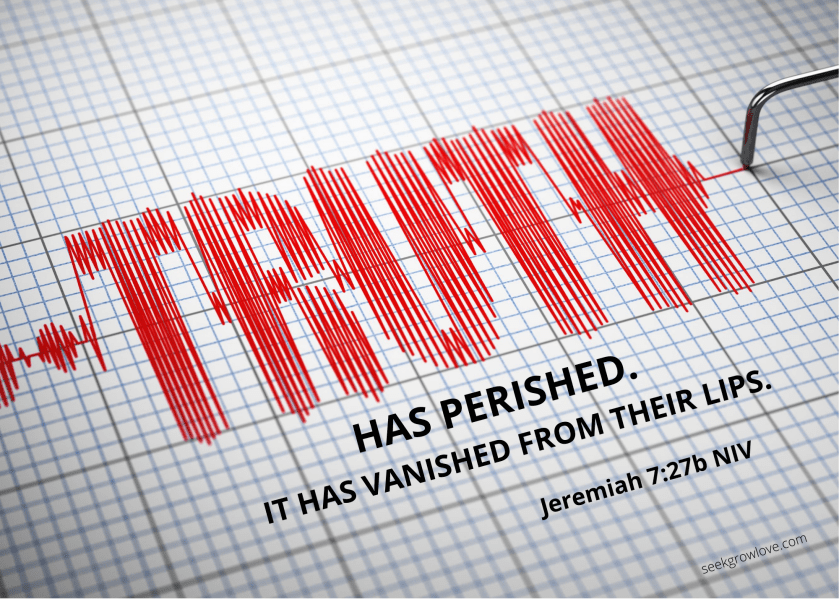
 Jeremiah 7-9 

Whether it’s social media, the news, gossip about the neighbor down the road, we seem to hear the term “entitlement” a lot these days. For whatever reasons, some people think they deserve preferential treatment. We could blame social media for what seems to be an uptick in this kind of behavior, and to some extent, that might be true. However, we do find in today’s reading, that entitlement goes back a really long time. 

In chapter 7, we see Judah believed that because they lived on the land of the Lord’s Temple, they were invincible. This belief caused them to become so bold that they begin committing crimes and worshiping other gods and then going directly to the temple to “worship” God (7:9-11) As if that were not bad enough, in verse 30, the people seem to have skipped the middle man and just went ahead and set up their idols and worse in the temple (7:30) They were truly entitled, thinking their lineage and perfunctory worship was enough. 

But of course, God sees all this. I like how the Message version puts it, “I’ve got eyes in my head. I can see what’s going on.” God even tells them that they can go ahead and eat the sacrifices they offered because they are now meaningless to Him (7:21). 

Throughout the rest of our reading, God tells the people through Jeremiah, what He has seen. 

Yet amazingly, woven throughout the description of sins and their consequences, God lays out what they need to do to be saved from destruction. 

Reform from your ways and your actions and I will let you live in this place (7:3). 

Obey me and I will be your God and you will be my people. Walk in all the ways I command you, that it may go well with you (7:23-24). 

But let him who boasts boast about this, that he understands and knows Me. That I am the Lord who exercises kindness, justice, and righteousness on earth for in those I delight, declares the Lord. (9:24) 

Well, not so much in chapter 8…that’s mostly promised punishments. Yikes! 

As Christians we know that we are not entitled to anything. We are not entitled because of our lineage in the church, the amount of time or finances we give, or even all the lessons we teach. We are only entitled to salvation through the grace of God through Christ. And Praise the Lord for that! 

Prayer: 

Dear Lord, 

Please never let us get so complacent in our worship that it becomes meaningless to You. Let us walk in obedience that you may be our God and we will be your people. 

In Christ’s precious name, 

Amen 

-Maria Knowlton

Reflection Questions

  1. Where have you seen entitlement – in society, Scripture, your life?
  2. Is there anything in your life that you have been pretending that God does not see? He sees. Stop pretending and talk to God about it.
  3. Do you think the Lord delights in you? How have you seen God’s kindness, justice and righteousness to you or others (9:24)? What are you still looking forward to?

Bold Obedience


2 Kings 22-23
2 Chronicles 34-35

Ah, finally we get to a humble, obedient, and faithful king! King Josiah was only eight years old when he became king & perhaps his childlike faith, characterized by an unwavering trust in God, was partially responsible for his complete devotion to the One True God. According to 2 Kings 22:2, “He did right in the sight of the Lord and walked in all the way of his father David, nor did he turn aside to the right or to the left.”

King Josiah stands out as one of the most faithful and courageous leaders in all of Israel’s history. From a young age, he set his heart on God, and as he matured, his devotion bore fruit through sweeping reforms and bold obedience. When the long-lost Book of the Law, the Torah, was discovered during temple repairs, Josiah didn’t dismiss its warnings or delay its commands. Instead, he tore his clothes in humility and led the nation of Judah in heartfelt repentance.

Josiah’s leadership was marked by deep reverence for God’s Word, active obedience, and massive reform. He didn’t just believe privately, he acted publicly. He removed idols, tore down altars to false gods, and restored worship as God intended. Josiah renewed the covenant between God and his people, and led a national Passover celebration unlike any since the time of Samuel.

Despite the sins of previous generations, Josiah believed it wasn’t too late to return to God. His story reminds us that genuine faith leads to repentance and action. His life models how one heart, fully surrendered to God, can impact others – even an entire nation!

Even though Josiah didn’t live to see all of the long-term fruit of his efforts, God honored his humility and faithfulness. His legacy encourages us to lead with courage and humility, obey with conviction, and seek the Lord with passionate, undivided hearts.

Prayer:

Father God, we thank You for children of faith who grow up to be men and women of faith! May our hearts be renewed as we study Your Word and learn to have unwavering faith and obedience, like that of King Josiah. Thank You for giving us Your Word and examples of the righteous who have come before us. We humbly ask that you fill us with your power to lead this generation and the next back to you!

Reflection Questions:

1. What can Josiah’s immediate response to God’s Word teach us about how we respond to truth and correction?

2. In what areas of your life might God be calling you to remove “idols” or restore rightful worship?

3. How can you use your influence, big or small, to lead others in faithful obedience to God? 

-Beth Osborn

In Seasons of Struggle. And…

in Seasons of Strength.

2 Chronicles 32-33

In 2 Chronicles 32, we see King Hezekiah face overwhelming odds as the mighty Assyrian army threatens Jerusalem. In this moment of crisis, Hezekiah listened to the prophet Isaiah and turned to God with courage and prayer. God answered powerfully, as he sent an angel to destroy the Assyrian soldiers, delivering Judah from their enemies. It’s a powerful picture of faith under pressure – God was glorified through Hezekiah’s faith and hence, Jerusalem was protected.

Unfortunately, once the threat had passed and success was secured, Hezekiah faltered. In his pride, he failed to give thanks for God’s blessings, and judgment nearly comes upon him, until he humbles himself once again. His story reminds us that remaining faithful isn’t just for hard times – it’s a daily posture, even in seasons of comfort and strength.

In chapter 33, we meet his son, Manasseh – a king who begins with blatant rebellion and leads his nation into idolatry and evil. Yet, even Manasseh, after being taken captive, humbles himself before God. Astonishingly, God restores him!

The rise and fall of these two kings show us both the blessings of obedience, the consequences of our disobedience, and the gracious mercy that awaits repentant hearts. Remaining faithful to God isn’t a one-time decision, rather it is a lifelong journey! Hezekiah’s pride and Manasseh’s rebellion serve as warnings and encouragements. God is patient, but He desires our hearts fully, in every season – whether we are in a season of strength or a season of struggle. God calls us to faithfulness at all times, as displayed by our humility, obedience, repentance, and trust in Him.

Prayer:

Lord, help me to remain faithful to You, not only in times of need but also in times of blessing. Protect me from evil, that my heart would be humble and obedient. Please have mercy on me and draw me back to You quickly when I stray. In Jesus’ name, Amen.

Reflection Questions:

• How does God’s willingness to forgive even the worst rebellion shape the way I treat others who fail? Do I extend the same mercy that I hope to receive?

• Am I more likely to seek God in crisis than in comfort? How can I cultivate a heart that remains humble and repentant even when life seems to be going great?

• In what ways can I live for God today, as a response to God’s radical love and forgiveness in my life?

• What does true repentance look like – not just in words, but in action? 

-Beth Osborn