Called into His Marvelous Light

1 Peter

1 Peter 2 9

It’s great to know why the author writes a book. Many times, it’s because they want to tell a story. It’s their story (in the case of auto-biographies) or someone else’s (biographies). It may be completely made up (fiction) or only slightly altered (based on a true story). But many books are not about stories but about themes. Some books are about the food we eat, or about the way economics work, or about a brief history of everything. Sometimes the authors never tell you WHY they are writing a book, sometimes it is the first thing they tell you. Anytime I read “I am writing this because” I take a sigh, because it allows me to finally figure out why they were trying to say all they are trying to say.
Peter gives us that when he wrote what would become 1st Peter. He says “I have written you this brief letter… to encourage you and to testify that this is the true grace of God.” He then gives the command “Take your stand in it!” Peter lets us know that he is hoping to encourage us and show us the true grace of God. I think he does this (being inspired is helpful too!) But I find the most encouraging passage in the book to be in 2:9-10. I think the passage should be written down in it’s entirety. Read it slowly and let it sink it.
But you are a chosen race, a royal priesthood,
a holy nation, a people for His possession,
so that you may proclaim the praises
of the One who called you out of darkness
into His marvelous light.
Once you were not a people,
but now you are God’s people;
you had not received mercy,
but now you have received mercy.
You are a member of a chosen race. You and the Christians in your community are not cosmic accidents but instead have been chosen by God.
You are a royal priesthood. You will rule with Christ in the coming Kingdom but you will also serve as a priest to bring worship to God.
You are a holy nation. There is not just you lost alone in a sea of disbelief, but there is an entire nation called to follow after God, who are holy, set apart of glory and honor at the end of days.
You are a people for his possession. God treasures you. He wants you because he loves you.
God has called you from darkness into his light. No longer are you unsure of where you will go, what will happen to you, or what the future holds. Instead, God sheds light on all these things. The future may still have moments of unknowing, but God will be beside you all the way, illuminating your steps.
You have become a part of God’s people; you have received mercy.
Read it again. While this letter has great theological truths, while it raises important issues between husbands and wives and Christians and their government, Peter was trying to encourage us through the knowledge of who we are!
Take courage in that you are precious and special to God.
-Jake Ballard
(I apologize for several days without a devotion.  That was my fault, due to many overlapping circumstances.  But, now we are back in business and looking forward to continuing this daily devotion.  May you be blessed by your time in His Word.                  FUEL Bible Devotions /Marcia Railton)

ON PURPOSE – Fellowship

1 Cor 12 27

We have been looking at living our life on purpose – choosing goals that are pleasing to God and then striving to live by them.  So far, we have covered the purposes of Worship and Discipleship.


Today, we consider the exciting fact that we are not the only disciple of Christ.  Rather, we are a part of a body of believers – the body of Christ.  It is God’s desire that we remain connected to the body of Christ in order to be more effective and to better fulfill the 2nd Commandment: love others.  This purpose can be called Fellowship.


Hebrews 10:25 gives great counsel to the family of God: “Let us not give up meeting together, as some are in the habit of doing, but let us encourage one another – and all the more as you see the Day approaching.”   Unfortunately, sometimes the church body fails at this.  In a survey of people who have stopped attending church, 75% said they gave up meeting together because they didn’t feel like people cared if they were at church or not.  They failed to get encouragement from the body of Christ.  This should not be!   As disciples of Christ we have a responsibility to each other – to encourage, to listen, to greet, to show concern, to value the other members of God’s family.  The church is no place for cliques or loneliness.  And each one of us can be part of the solution.


Take a minute today to read Acts 2 (particularly verses 36-47).  Look for what the early church was doing together.  How were they creating a powerful body of believers that were on fire for God’s truth and a love for one another?   What will you do today and throughout the week to strengthen your bonds with God’s family?  They need you – and you just might find out you are better off with them, too.


A Part of His Body,

Marcia Railton


With Your Faith and Love

1 Thessalonians 3

1 Thess 3

Paul was very concerned for the Thessalonians. He was so concerned they were going to lose their faith he sent Timothy to them. He wanted Timothy to strengthen and encourage them. He had told the Thessalonians that they would be persecuted. He was afraid they would be tempted and walk away from God.

Timothy reported back that the Thessalonians had not walked away from God. In fact Paul was encouraged by their faith and love. We can encourage one another with our faith and not even realize it. You never know who is watching you. When we have something hard going on in our life and we tackle it with God we can uplift people and not even realize it. So as you go about your day, encourage one another with your faith and love.
Tomorrow we will look at 1 Thessalonians 4.

Many Blessings,
~The Ransom’s

Working for God’s Approval, Not Man’s

1 Thessalonians 2

verse-of-the-day

This passage starts out with Paul saying that they (Paul, Silas and Timothy) had previously suffered and been insulted.  Christians are being insulted every day, in everything we do. Verse 2 also goes on to say that they, with the help of their God, dared to tell about His gospel despite the strong opposition. How often are we given the chance to speak boldly in the name of Christ? When we do get the chance, how often do we take it? Or do we turn around and run?

They took the opportunity to talk about God because they wanted to have God’s approval not man’s. They encouraged, comforted, and urged them to live lives worthy of God.  They were torn from the Thessalonians and wanted desperately to return but they were continually stopped by Satan.

Satan is continually trying to stop us from the good that we do for God. He is always trying to get us to turn away.  The problem for him is that we know how this all ends. God WINS!!!  I know that the world is full of evil and forces are trying to pull us from God in many ways.  DON’T let Satan win.  When you are faced with something and you don’t know what to do and you think you are alone (this is one of Satan’s tricks) remember you have friends all over that love you, will listen and help you.  That is one of the wonderful things about FUEL (and Family Camp, State Camps and all the other ones I don’t know about).  You have friends that believe like you do and will stand up with you. Stand strong in your faith, share it with others and continue to bring more people to the kingdom. When Jesus returns, he and God will win; death and sin will be no more. We will get to be together forever with them and each other.

-The Ransoms

Fulfilling Purpose…Or…Refusing Salvation

Acts 26

acts 26 22

There are two reasons why it’s interesting that Paul makes his case to King Agrippa. First, it really wasn’t going to do him any good because he had already appealed to Caesar and knew that meant he would have to go to Rome. Of course, he had been told that Rome was where he needed to go anyway. (Remember Acts 23:11) It seems that Paul’s defense before Agrippa was all for show. Agrippa wanted to hear Paul and Paul wasn’t going to miss the opportunity to share God’s message. We can’t forget Paul’s purpose given to him from Jesus. In Acts 9:15 we see that Paul is to bear the name of Jesus “before the Gentiles and kings and the sons of Israel.” Paul knows what he is about! He is to share the message with not only Gentiles and Jews, but kings! So we can see why Paul is considering himself fortunate to get to speak directly to Agrippa.  He is fulfilling his purpose.

Secondly, it’s also interesting to think about who this King Agrippa really was. Agrippa’s great-grandfather had tried to kill Jesus as a baby, Agrippa’s grandfather had John the Baptist beheaded, and his father martyred James, a disciple of Jesus and one of the sons of Zebedee. Why would Paul care to make his case to a man of this lineage? Could he really expect Agrippa to care about Paul? Paul understands that God still wants Agrippa no matter what he or his family has done. He knows that Jesus died for Agrippa, too. Paul could have thought, “It’s a waste of time to speak to him.” But Paul shows us that NO ONE is a waste of time.

Agrippa is almost persuaded to become a Christian. Paul makes sense and his intense concern for all to hear and accept the truths he shares is compelling. But there are so many watching. And there is Bernice and Festus there too. Festus has already declared Paul to be out of his mind. Agrippa would be putting his standing and esteem in a predicament if he agrees with Paul. He cannot do that. However, he can’t say that Paul has done anything worthy of death or imprisonment either and he seems regretful that he can’t let Paul go. It’s such a shame to see someone have understanding and yet be so comfortable with the way they are living that they refuse to accept salvation.

-Melissa New

Totally Committed

acts 19 20

Acts 19

What stands in the way of you living completely for Jesus?  Not enough time, a secret sin, a preoccupation with _______, a friend taking you in the wrong direction? Many in the early church in Acts were living out a completely committed relationship with God and His Son, Jesus. And the results are exciting to watch as we read through the book.  Their faith was living and active and daily – and tested regularly.


I wonder if today too many people who carry the label ‘Christian’ use their faith as a once-a-week booster shot, if they can make it to church that week.  But then are quite content to spend the week surrounded by (and sometimes covered in) the germs and sicknesses of worldly living and priorities.


Go ahead and read Acts 19 today and search for all the sold-out characteristics and examples; and while you’re at it – spot the imitations as well (those exist today, too).  I particularly like the passage in verses 18-20 where the believers were confessing their practices and bringing their (expensive) magic books to be burned.  They had heard about Jesus and they believed and they were excited and ready to change!  It’s not that they had heard about Jesus and kind of believed and were sort of interested and wanted to add in some Jesus/church/faith to their full lives.  See the huge difference?  They were radically changing their lives because they wanted to follow Jesus well.


Do you have anything in your life to add to the bonfire?  Anything that is keeping you from being totally committed to God and His Coming Kingdom?  Anything that doesn’t mix well with Jesus’ message that you need to give up?


The believers had burned 50,000 drachmas worth of obstacles to living sold-out lives (a drachma was a silver coin worth about one day’s wages) – that’s a lot of obstacles they eliminated!  The very next thing Paul wrote was: “So the word of the Lord was growing mightily and prevailing.” (Acts 19:20).  Sacrifice and true change brought growth. Are you ready to grow?


-Marcia Railton

A Lesson from Pakistan: Preparation

pakistan inside group

Missions Spotlight: Pakistan

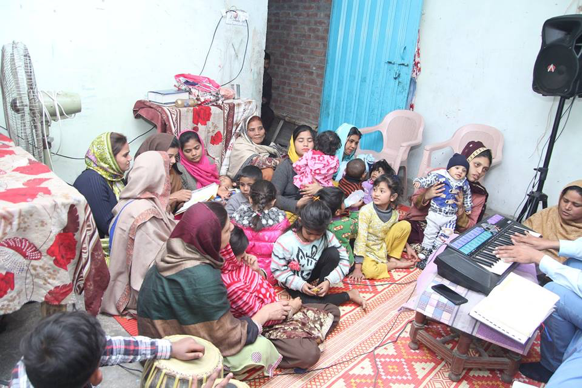
Did you know that less than 3% of people living in Pakistan are Christians?  Pakistan is mainly a Muslim country.  Because of religious persecution and the law, our Christian brethren meet in homes.  Currently, we support seven home-congregations that believe as we do.


Why do you believe in God?  Have you ever been asked this question?  After being asked this question, I would often flounder around saying things like “Ummm because I was raised in it” or “because the Bible says it’s true” or “God and Jesus changed my life” (meanwhile I didn’t really know how they changed it).  When it came right down to it, I didn’t really know why I believed in God.  If we take our faith seriously, we are not allowed to stay in ignorance; we have to be ready.  There has probably been a time and place when we all had to give an account for our faith to someone, or at least when we have questioned our own beliefs.  Let’s take a look at 1 Peter 3:13 – 18 to see what a very wise man had to say about this subject.


“13 Who is [c]there to harm you if you prove zealous for what is good? 14 But even if you should suffer for the sake of righteousness, you [d]are blessed. And do not fear their [e]intimidation, and do not be troubled, 15 but [f]sanctify Christ as Lord in your hearts, always being ready to make a [g]defense to everyone who asks you to give an account for the hope that is in you, yet with gentleness and [h]reverence; 16 [i]and keep a good conscience so that in the thing in which you are slandered, those who revile your good behavior in Christ will be put to shame. 17 For it is better, if [j]God should will it so, that you suffer for doing what is right rather than for doing what is wrong. 18 For Christ also died for sins once for all, the just for the unjust, so that He might bring us to God, having been put to death in the flesh, but made alive in the [k]spirit”


Verse 15 blankly states to always be ready to share your defense, or your testimony of the hope that lives in you!  So let’s get practical and dive into the nitty gritty of what a “defense meant to convince” might look like.  Here are several starters to get you thinking about what elements of your personal faith story are powerful to your testimony.


  1. Align your actions with Christ’s.

It’s not enough to just be different from the world.  Buddhists, Muslims, even moral atheists live differently from the world.  If you aren’t living like Christ than anything you say after that can as easily be dismissed as saying the word ‘hypocrite’.


  1. Highlight your personal change

Show how you lived before and how your life is different now, only through the power of God’s grace and strength; you couldn’t do this alone!


  1. Highlight your hope for the future

The kingdom of God resides here on the Earth now and in the future!!! This belief has given you purpose.  HOPEfully your peers will be able to perceive this from the way you have been living.  Our actions and mindset produce joy!


  1. Highlight the coming judgement

There is a judgement day approaching; it is sooner now than it has ever been.  This aspect is meant to help others perceive the urgency of believing


  1. Historical/ontological/teleological arguments for trusting the Bible

If you feel like you can articulate these aspects well, go for it! These are very valuable reasons for believing.  However, you do run the risk of appearing uninformed if the person you are talking to is studied up on these subjects.  You wouldn’t want someone to tear apart your arguments and thus misinterpret your testimony.


  1. Highlight the changes in others

Express stories of growth and change that you have witnessed in others.  This is a great time to offer a friend the chance to believe!


I encourage you to take some time and write out your testimony on paper.  That way, when the time comes you will have a “defense meant to convince” ready to go.


In Pakistan, people are not Christians because it is casual, it is the exact opposite.  With only 3% of the country practicing Christianity, our brothers and sisters are not doing it because of the trendy churches, or latest fad.  These people believe in God and Jesus because they have experienced it; they have a powerful testimony to share.  They have done the preparation and know that this is the best way of life.  Although it is not the popular belief, they are prepared disciples.  I am inspired by our brothers and sisters in Pakistan to testify boldly, and to stand ready to share my defense.


If you would like to support our family in Pakistan with Bibles and money for meeting grounds, please follow this link. Thank you! https://www.givelify.com/givenow/1.0/MjM0MDg=/selection

Love,

Josiah & Amber Cain


Resurrection Likeness

1 Corinthians 15_49 new

Today’s section (I Cor. 15.35-49) is a bit longer but it answers an important question. What will our resurrected bodies be like? The questions arises in verse 35 “…with what kind of body do they come?”. Paul answers this question in verse 42 but before he gets there he provides two analogies, we’ll go over just one though. In verse 36 and 37 he uses the example of a seed. A seed is sown or planted one way then sprouts a different and new way and when comparing the body to a seed he says “you do not sow the body which is to be…”, in other words, what comes out of the ground at the resurrection is not what goes into the ground at death. Paul is saying, the body undergoes a change just like a seed transforms when it is planted then sprouts.

In verse 42 he connects the analogies with the concept of resurrection, “so also is the resurrection of the dead..”. He then proceeds to distinguish two types of bodies, the one that is sown (the one that goes into the ground dead) and the one that is changed (the one that comes out of the grave transformed). To help see the contrast, I put verses 42-44 in a table:

It is sown It is raised
A perishable body An imperishable body
In dishonor In glory
In weakness In power
A natural body A spiritual body


Paul then picks up again the Adam-Christ parallel we saw in verses 21-22 in verses 45-49. The First Adam became a living soul but the last Adam (Christ) became a life-giving spirit. Whereas the first Adam was given life, the second Adam gives life. Paul continues this parallel into verse 47, the first man (Adam) is from earth, the second man (Christ) is from heaven. Now verse 47 is not talking about location but rather about identification. Adam is identified with the earth while sin runs rampant and the body is broken and damaged (see chart above); but Christ –  he is identified with heaven, where God is and where he is untouched by the brokenness of his creation. This is not saying that Jesus personally came from heaven to earth. Rather just as Adam is from earth in identification, Christ is from heaven in identification. Remember the context Paul is talking about is resurrection not Jesus’ origin. Then in verse 49 he concludes just as we have borne the image of the earthly (adam) so too will we bear the image of the heavenly (Christ). Here’s another chart to see the parallels:

The first Adam The second Adam
The first man is from earth The second man is from heaven
“Just as we have borne the image of the earthly..” “…we will also bear the image of the heavenly”
We are sown We are raised
A perishable body An imperishable body
In dishonor In glory
In weakness In power
A natural body A spiritual body


Now what does this all mean? When we are found “in Christ” our whole being including our bodies will be conformed to Jesus. Whereas our earthly natural bodies are powered by flesh and blood and will die, our resurrected bodies will be empowered by the spirit of God and will be glorified and will reflect the image of heaven. We will maintain our physical bodies, they will just be regenerated and powered by God’s spirit, this is the meaning of a spiritual body. Lastly, just as all of us have shared, in Adam, our earthly bodies, all those in Christ will share in his victory and his resurrected likeness. Thank you for your patience in reading this longer post today!

Have a blessed day and live boldly for the kingdom of God and Jesus!

-Jacob Rohrer

The Master and Manager

Luke 16

Luke 16 13

God and money?  Can a Christian have both? No. Yes. No? Yes? Hmm.

I am to sell all my worldly possession (Luke 18:22), but I am responsible for making sure the physical needs of widows and orphans are met (James 1:27).  It is easier for a camel to go through the eye of a needle enter the Kingdom of God (Matt 19:24), but God richly blesses men with wealth who follow him (Prov. 10:22).  I am to store up my treasure in heaven (Matt 6:19), but I am told the wise man saves his riches for a rainy day (1 Cor. 16:12. Prov. 21:20).  On the surface of this topic, it would seem we have contradiction, but thankfully today’s reading might help us come to a clearer conclusion when we consider two powerful, but unequal masters: God and money.

In Luke 16 we are presented with a peculiar parable that shows the strength of the almighty dollar.  As the story opens, we are introduced to a dishonest manager who is in charge of accounting (a running theme) of debts for his master. He learns that his master soon will dismiss him, so as each debtor approaches the manager with their contracted commitment, he forgives a portion of their debt.  Being shrewd, he knows he will be the receiver of their thanks, although it was neither his debt to forgive nor his portion to take.  Jesus makes no misgiving that he was speaking specific directly to the Pharisees, who were fundamentally dealing in the same way.  These “managers” of God put literal prices on forgiveness and offerings, ensuring their comfort, but cheating God of glory, praise, adoration, honor, or extending grace himself.  They, like the shrewd manager, traded their merciful Master for passing provision.

In Dale Carnegie’s famous work, How to Win Friends and Influence People, he states “It isn’t what you have or who you are or where you are or what you are doing that makes you happy or unhappy. It is what you think about it.” This is a challenging thought that calls us to contentment, but also in context of this specific parable, helps us increase our focus.  Are you the master or the manager of your wealth? time? health? will? Are they yours to divide, take, or utilize as you please? Who receives honor, praise, and recognition when you offer these things freely to others?  Sometimes we are as shrewd as the Pharisees, thinking a possession, a place, or a position is the source of a joyful life.  They make us feel momentarily like the master, but really, they take us away from our true purpose.

Jesus concludes this parable by saying if we cannot be trusted with the small things, why would God ever give us the BIG things. If we cannot rely upon him for our own daily bread why would he ever ensure we are the steward for the needs of others?  If we are faithful to Him, we are entrusted with more of His bidding, not in direct correlation, but determined by the master (See: “Parable of the Talents”).  Yes, this can include money.  Yes, this can include more time on earth.  BUT GLORY, HALLELUJAH, YES, he is talking about the KINGDOM.

So, can you have God and money? Yes. Can you serve two masters? No.  Will God give you more if you are faithful? Yes.  Is it money? Not necessarily, but IT IS the Master’s wealth beyond measure for His faithful managers.

-Aaron Winner

Return Home

Luke 8

Luke 8_39

Luke 8 is a pretty fast-paced chapter.  Jesus is in full ministry mode at this point and going about performing many miracles and teaching a lot of parables.  Here are a couple that jumped out at me.


Jesus tells the parable of the Sower, a farmer who is spreading seeds. The seeds grow based on the quality of soil that they are planted in.  The disciples do not understand the parable, so Jesus explains it in more clear language in Luke 8:11-15.


11 “This is the meaning of the parable: The seed is the word of God.12 Those along the path are the ones who hear, and then the devil comes and takes away the word from their hearts, so that they may not believe and be saved. 13 Those on the rocky ground are the ones who receive the word with joy when they hear it, but they have no root. They believe for a while, but in the time of testing they fall away. 14 The seed that fell among thorns stands for those who hear, but as they go on their way they are choked by life’s worries, riches and pleasures, and they do not mature. 15 But the seed on good soil stands for those with a noble and good heart, who hear the word, retain it, and by persevering produce a crop.


I think it is important to realize that the gospel is not directly injected into our hearts (metaphorically) but is presented to us.  It is up to us to make the decision to accept it, and then to purposefully fill our lives with the word in order to change our hearts.  As Jesus said, only through perseverance will we grow.  You cannot be passive about your relationship with God.


Later in the chapter Jesus drives out many demons from one man and they go into a herd of pigs, which immediately drown themselves.  Which is kind of weird.   But anyway, the man’s life had been completely changed by Jesus and he wanted to serve Jesus, and here is Jesus’ response in Luke 8:38-39.


38 The man from whom the demons had gone out begged to go with him, but Jesus sent him away, saying, 39 “Return home and tell how much God has done for you.” So the man went away and told all over town how much Jesus had done for him.


Instead of hitting the road with Jesus and spreading his testimony all over he is instructed to stay in his hometown and to give his testimony to the people in his hometown.  When a lot of people think about spreading the gospel they think about people far away that haven’t heard the gospel, and some are called to travel great distances as some of the disciples were, but many more of us are called to stay home and tell our story to unbelievers in our home towns.  Either way it is very important to share what God has done for you in order to help strengthen the faith of other believers.  For my family God performed a mighty act of healing in my Mom with her cancer and I try to share that as much as I can to show the power of prayer.

So I encourage you to “return home and tell how much God has done for you”.

– Chris Mattison