Holy Holidays

Numbers 28-30 

The biblical holidays are wonderful and believe me, I knew almost nothing about them growing up in Indiana until I lived in Israel. 🙂 I bite my tongue from saying, “Jewish” holidays as they are biblical holidays. So much meaning behind them, more so than most pagan based American holidays. One of the harder parts about leaving Israel was leaving the holidays.

In our passage today many sacrifices are named with the holidays, which no one is doing now. Also, the holidays were days of rest, set apart from other days. These holidays are still celebrated without sacrifices but with rest, stores close down!! I’m going to briefly give you a taste of these biblical holidays and how they’re celebrated today.

Shabbat: Late every Friday afternoon public transportation, sport games, and stores CEASE, yes, the MALL included, to usher in the shabbat a day of REST. Families eat a nice meal together having leftovers for the next day so no one has to cook/work.

Passover: Feast of Unleavened bread is the first month of the biblical year, which makes sense the new year starts in the spring with new growth blooming. It’s the oldest holiday still celebrated in the world, over 3,400 years! And it’s the BIGGEST holiday, (like Christmas is in America).

Feast of Weeks: Seven weeks after Passover the firstfruits are celebrated. Kids wear white and carry a small decorated basket of fruit to share with others.

Day of Blowing: People blow shofars (ram horns) throughout the day. It’s a warning to repent for the next 10 days before the Day of Atonement.

Day of Atonement: A day of repentance with fasting. The whole country SHUTS DOWN, no flights, vehicles on the highway, EVERYTHING is CLOSED… to REPENT. It’s quite amazing to experience such a national “holiday.”

Feast of Booths: A week long holiday of eating and sleeping in a booth outside. Kids often decorate them with paper chains and pictures.

God appointed these holidays for a reason and for our good. Take a moment to reflect on them. It’s hard to implement them in a society that doesn’t acknowledge them, but it’s still good to be aware of these biblical holidays and their meaning. Maybe the modern sacrifice would be to take time out and rest on these holidays and think about and thank God for what He has done. The first three have been fulfilled in the first coming of Jesus, and the last three with his second coming!

“For the Lord himself will descend from heaven with a cry of command, with the voice of an archangel, and with the sound of the trumpet of God.” 1 Thes. 4:16

-Stephanie Schlegel

REFLECTION QUESTIONS:

1. Which holiday do you like the best? Which one would you like to celebrate?

2. What’s one way your Shabbat rest day could be changed/improved to make it more restful?

3. A holiday of repentance and fasting?! Maybe pick a day within the next week that you could fast a meal and pray for forgiveness to God and others possibly offended.
Clean Before the Lord

Leviticus 14-16

Whenever we watch a movie or read a book, we are anticipating “the moment” in the story where everything comes to a climax and all the puzzle pieces finally come together: chapter 16 of Leviticus is that climax within this book. In this chapter, God gives a special ceremony for the Israelite people, later called Yom Kippur (the Day of Atonement). At this special ceremony, the sins of ALL the people were forgiven and forgotten: at this special annual celebration, every person in God’s family gets a fresh start.

Once a year, the high priest would offer a sin offering for himself, his family, and all the people of Israel within the tabernacle. Since atonement and forgiveness are only possible through blood (Leviticus 17:11), the high priest offers this sacrifice on behalf of all the people to cover all their past yearly sins. He also presents a “scapegoat” before the people, a goat that would bear the sins of all the people and be led out into the wilderness, representing their sins being carried away and forgotten forever. Meanwhile, the people were expected to “deny themselves” in humility before God, repenting and mourning over the ways that they had offended their God throughout the year (and likely fasted from food and water).

What a wonderful and merciful act that God blessed His people with! This was the most important day of the year for every Israelite: the day that they could walk into a new year, cleansed and forgiven of every past mistake they’d made. God didn’t have to provide this ceremony: He only allowed it because He loves His people and understands that we are only dust.

As far as the east is from the west, so far has He removed our transgressions from us. Just as a father has compassion on his children, so the LORD has compassion on those who fear Him. For He Himself knows our frame; He is mindful that we are but dust.” – Psalm 103:12-14 NASB1995

Unfortunately, under the Old Covenant, only the high priest was able to bring about this forgiveness and atonement: only he could offer the sacrifice needed to cover over the sins of the people. There hasn’t been a tabernacle, a Temple, or a priesthood for Israel since 70 AD… based on the standards of Leviticus, it is impossible for the people to have their sins forgiven before God. That is, unless God provided a better way, which He did.

We find out in the book of Hebrews that Jesus Christ has taken the role of our new High Priest, and also as the sacrifice we need to take away our sins: not only just for the year, but forever.

Every priest stands daily ministering and offering time after time the same sacrifices, which can never take away sins; but Jesus, having offered one sacrifice for sins for all time, sat down at the right hand of God, waiting for that time onward until his enemies be made a footstool for his feet. For by one offering he has perfected for all time those who are sanctified.” – Hebrews 10:11-14 NASB1995

We all have regrets and understand that we haven’t lived perfectly: what if you knew that tomorrow all those deeply regretful moments would be washed away, never to be remembered again? Would that change the way you lived before God today? Under the New Covenant, we have the opportunity to live completely free from the guilt and pain that comes from regretful sin, because Jesus died in our place: this is an opportunity available to you, not just once a year, but every single day.

We all have the choice to live differently today than we did yesterday, because Jesus has removed all our sins from the past. What will you choose to do?

-Talon Paul

Reflection Questions

  1. What similarities and differences do you see between Aaron as high priest and Jesus as high priest?
  2. What regrets, guilt, and shame have you experienced? Are you living with them today? Do you need to? What are the New Covenant’s steps to accepting God’s free gift of forgiveness? What will you choose to do?
  3. Did living under the Day of Atonement mean they could do whatever they wanted because once a year all the sins would be forgiven? Does living under the sacrifice of Jesus mean we can do whatever we want because we have forgiveness of sins every day of the year?

The Scriptures Are for All Generations

Leviticus 15-16 and Psalm 21-22

One huge benefit of living in our day and time is having an extensive body of God’s scriptures available to us. We can see scriptures that clearly confirm God’s plan has been actively unfolding throughout all ages and to each generation. Leviticus 16 explains the event that we refer to as the Day of Atonement.

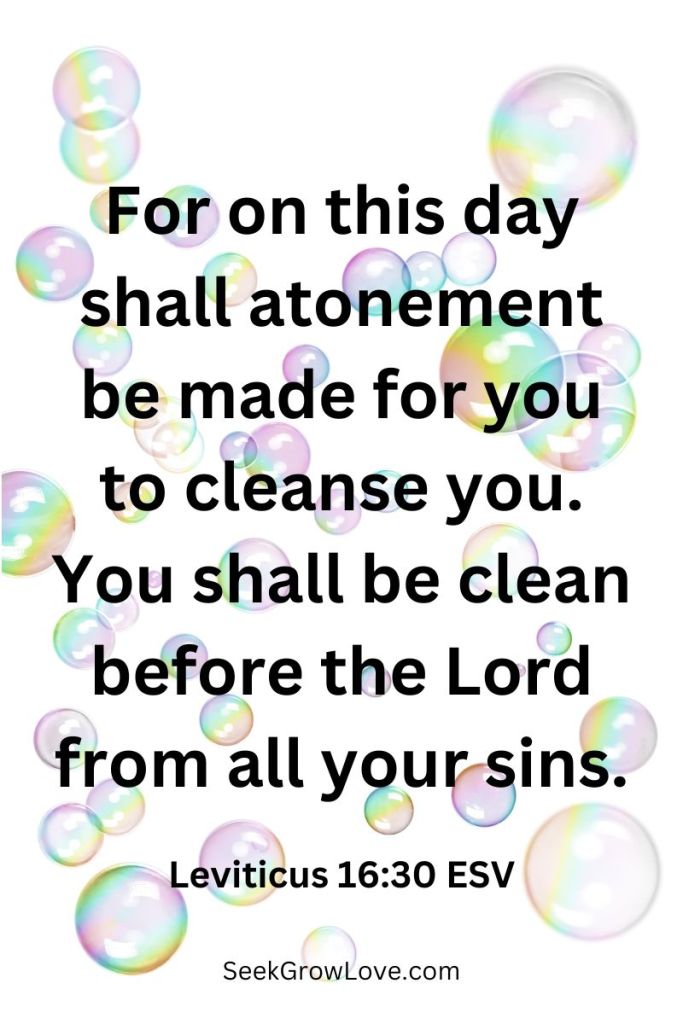
The High Priest would follow the ordinances on one special day once a year to cleanse all the members of the community from their sins. The people would observe a Sabbath rest because on that day atonement would be made for them, to cleanse them. “Then, before the Lord, you will be clean from all your sins.” (Lev. 16:30)

Of course, as Christians we can see that these offerings were pointing to the ultimate sacrifice of Jesus Christ. We know that he is our great high priest (Heb. 4:14) who offers us the opportunity to be forgiven of sin.  He sacrificed his own blood for our forgiveness. He wanted us to be cleansed from all of our sins and to be reconciled to God.

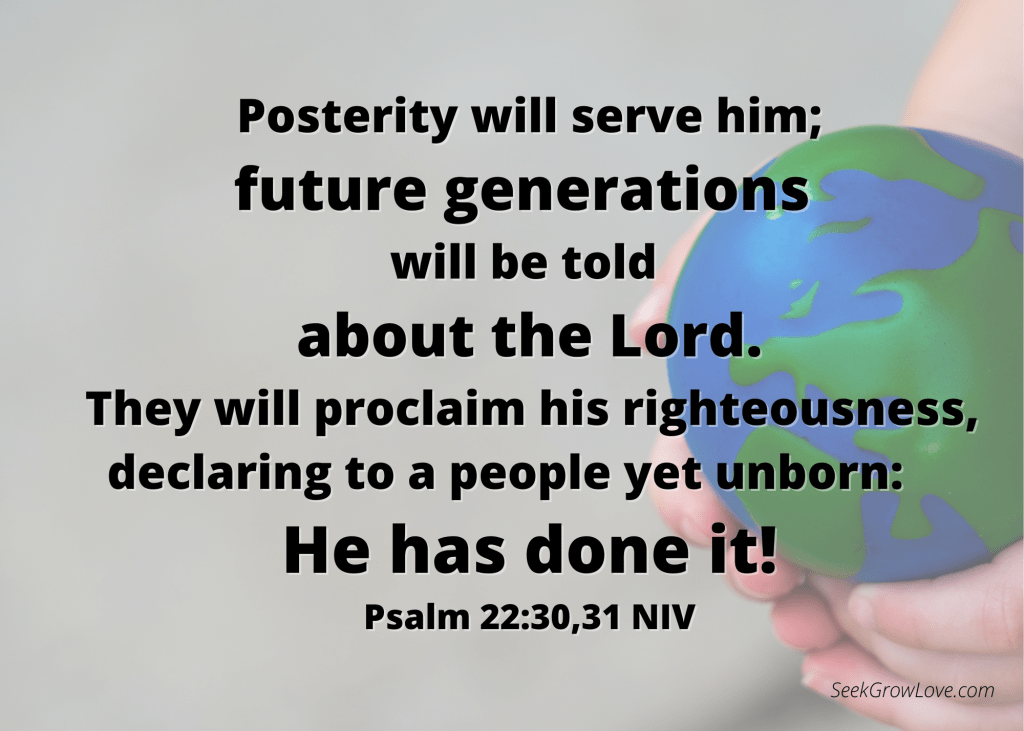
That was carried out through his sacrificial death on the cross and amazingly Psalm 22 reveals what this experience was like for Jesus Christ.  David may be writing about personal experiences and yet he miraculously described the crucifixion. He wrote this event about 1,000 years before it occurred. This Psalm begins with the words spoken by Jesus on the cross, “My God, my God, why have you forsaken me?” Yet the Psalm ends in praise to God. It states that all future generations will serve Him and be told about the Lord. “They will proclaim his righteousness, declaring to a people yet unborn: He has done it! (Psalm 22:31)

We have the benefit of seeing the results and rewards that Christ accomplished for himself and for all his followers. Praise God that we have the scriptures that explain this to us. Scriptures that were written through many centuries and passed on to the next generations. We have a bird’s eye view of how beautifully God works through His faithful followers. Be faithful to share the scriptures with others because all that God has spoken through them will be accomplished.

-Rebecca Dauksas

Links to today’s Bible reading – Leviticus 15-16 and Psalm 21-22

God’s Glory & Forgiveness: Then & Now

1 Kings 8 & 2 Chronicles 5

1 Kings 8 11 NIV sgl

Once the temple was finished, they brought in the ark of the covenant.  It was brought into the inner sanctuary of the house, to the Holy of Holies.  When the priests (who had sanctified themselves) had come out, and the group praised the LORD, His glory filled the temple and the priests couldn’t perform their service because of His great glory.

That concept of how great the glory of the LORD is hard to comprehend for me.  On one of our Zoom calls for the youth group recently, we watched a video on holiness.  There were some interesting points in it, and a good analogy on how to better understand God’s holiness and why we can’t be too close (watch the video here: https://www.youtube.com/watch?v=l9vn5UvsHvM).  We cannot get too close to God because we are impure, and He is perfect.  People had to purify themselves to come into the temple.  And for the Holy of Holies, or Most Holy Place, separated by a veil, the purified high priest could only enter once per year on the Day of Atonement when the whole nation asked God for forgiveness of their sins.

The good news for us is that we live in a time after Jesus interceded.  When he died, that veil was torn, and we can now come to God instead of the high priest, and we can come without having to go through those same purifying rituals.  I forget sometimes what a blessing that is.  Because of Jesus being our mediator, we can go to God and receive forgiveness from our sins by request, not through sacrificial offerings.  We have never had to live in a time where it was different, but can you imagine it?  Thinking of this helps to remind me of how amazing Jesus’ sacrifice was.

If you haven’t already, you can stop reading in 1 Kings 8 at verse 12 and pick up there tomorrow to read a similar account in 2 Chronicles.


~Stephanie Fletcher


Today’s Bible passage can be read or listened to at https://www.biblegateway.com/passage/?search=1+Kings+8%2C+2+Chronicles+5&version=NIV

Tomorrow’s reading will be 2 Chronicles 6-7 and Psalm136 as we continue on our 2020 Chronological Bible Reading Plan


Making A Different People : Atonement, Sacrifice, Sexual Relations

Leviticus 16-18

Leviticus 18 3 4 NIV
As we move through Leviticus, it’s important to remember two things.
— First, for the Israelites, God was and is creating a different kind of people; a people who stand out in the world. They were to look different than the nations around them. We will see this more clearly today.
— Second, for us, God is showing us what he likes and wants from his people in principle and practice. We need to see what God likes and wants, and what commands are required from the principles found in the text. Christ covers the commands, and yet reinstates certain patterns of holy behavior.
Having these ideas in mind with help make sense of Leviticus 16, 17 and 18.
Starting at the end, the laws of Leviticus 18 are all about sexual relations. In our Victorian and yet hyper-sexualized society, each of these commands are important. No one command had precedent in the ancient Jewish community. For example, Leviticus 18:22 was just as bad in the eyes of God as Leviticus 18:23. It wasn’t that 22 was LESS serious or MORE serious, all of these actions would bring defilement on those who practiced them.
But it’s neither of these passages that we are focusing on today. Read Leviticus 18:1-5, or go back and read it again. God, when giving these commands to Israel, is trying to make a people that are different than the Egyptians and the Canaanites. He want a people who will walk in his commands and his statutes. God has unending, infinite wisdom; therefore, God’s ways of living are better than mere human ways. Therefore, when he is saying “Live my way, not the Egyptian way or the Canaanite way”, he is saying “Live the best way possible.”
God doesn’t want you to settle for a second class life. All the sexual gratification in the world doesn’t hold a candle to the joy of living life in accord with God’s commands. All these ancient prohibitions for sex are teaching us that we need to be careful to not allow sex to control our lives. Our sexual orientation, our gender identity, our gender expression, are all to be in accord with God’s commands throughout scripture and must be submitted to God. God wants you to be righteous in your sexual life because it is better for you and everyone around you.
The way you can become holy has also changed from the time of Leviticus 16. God’s best life for us is no longer in animal sacrifices, but in allowing Christ to be our atonement. The blood of Christ cleanses us from sin. Christ brings us before the mercy seat in his sacrifice, and he also goes out from the community as the scapegoat, carrying our sin far away.
Today can become your day of atonement. If you trust in the sacrifice of Jesus and call him your savior and lord then you can read Leviticus 16:30 in a powerful new way : “for it is on this day that atonement shall be made for you to cleanse you; you will be clean from all your sins before the Lord.” This day can be today, and Christ can make you clean from all your sins.
Jake Ballard
Today’s Bible reading can be read or listened to at https://www.biblegateway.com/passage/?search=Leviticus+16-18&version=NIV
Tomorrow’s Bible reading will be Leviticus 19-21 on our 2020 Chronological Bible Reading Plan

Gross – and Great – in 3 Chapters (Leviticus 15-17)

Thursday, August 25
shedding of blood
When my kids go off to school, I have a home daycare and preschoolers invade the house.  Recently I was babysitting four preschoolers – three of whom were potty-training at the same time.  So, I do have some experience with bodily discharges (the topic of Chapter 15).   I found myself saying all sorts of things I never imagined I would need to say about not touching this or that or sitting here or there.  It was for very good reason that we removed the bathroom rug for several months.   And, there was no limit to the amount of times I made them wash their cute little hands – hands which didn’t even look dirty to them.  As naïve children, my preschoolers failed to see the dangers of unclean habits and the reasons and ways for cleaning themselves.   The Israelites had similar issues.  And, might we, too – at least when it comes to spiritual cleanliness?

Perhaps it is said best in Leviticus 15:31: “You must keep the Israelites separate from things that make them unclean, so they will not die in their uncleanness for defiling my dwelling place, which is among them.”  Our God is STILL a holy, CLEAN God who dwells among us and requires us to be clean to come into His presence.  Strive for purity (In your thoughts, words, attitudes, motives and actions).  When you “mess yourself” – realize the danger and harm of your sin.  Instead of making excuses – take the needed steps for cleansing.  Jesus Christ offers the best spiritual sanitizer possible.

Chapter 16 gives detailed directions for the yearly Day of Atonement – when “atonement (reconciliation) is to be made once a year for all the sins of the Israelites.” (16:34).  This will be the sacred time when the High Priest enters the Most Holy Place, and in addition to sin offerings and burnt offerings (which were also done regularly throughout the year) – a scapegoat will be released into the desert.  Wikipedia defines scapegoating as, “the practice of singling out any party for unmerited negative treatment or blame”.  Sure sounds just like what would be awaiting the Son of God so many years later.

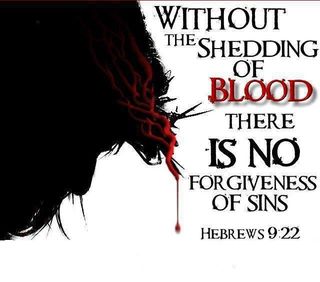
In Chapter 17 – where the eating of blood is forbidden – we see yet another foreshadowing of Jesus’ purpose (atonement) and means to the end (death).  Verse 11 says, “For the life of a creature is in the blood, and I have given it to you to make atonement for yourselves on the alter; it is the blood that makes atonement for one’s life.”

We are dirty, sinful people – just as God’s people have been all through history.  Realize the danger of your unclean habits (sins).  Be sanitized.  Thank God He has made a way for us to be purified and reconciled to Him.   Thank you, Jesus, for being the scapegoat and the perfect sacrifice so we can come before The Almighty!

Marcia Railton