Welcome to the 4th day of questions on Psalm 103. Yesterday we focused our questions on verses 11-14, looking at God’s love, forgiveness, and compassion as well as the incredible facts that, “he knows how we are formed, he remembers that we are dust.” (Psalm 103:14). This verse says so much about God – and about man. The next couple verses continue on the topic of mankind.
VERSE 15 – Why do you think David compared man’s days to grass – what are the similarities? If you compared yourself to a flower of the field which kind of flower in what field would you be most like? Why? What might make the flower flourish? What else could have David compared man to? What ideas about mankind was David using poetry to explain? How might a scientist or a psychologist have explained these same ideas?
VERSE 16 – What happens to the flourishing flower of verse 15 in verse 16? What does David say caused this to happen? What do you think the wind symbolizes? What do you think of when you think of a flourishing flower suddenly gone? What emotions come with these thoughts? What do you feel when you read the second line of verse 16? What truths are David expressing in a poetic form?
VERSE 17 – What do the words, “But from everlasting to everlasting…” mean? What changes as we go from verse 16 to 17? How is God different from mankind? Is the Lord’s love for one generation more so than another? In what other verses in Psalm 103 have we seen a similar thought as we see in the first half of verse 17? What would it look like for God’s righteousness to be with your grandchildren? Will His righteousness be with ALL grandchildren? If not, then with whose? Do you fear the Lord? (Interestingly, this concept of fearing the Lord – and instructing others to do the same – came up in our Old Testament reading for the day as well. Did you find it in 2 Chronicles 26? How were similar ideas shared in the New Testament reading of 2 Timothy 4?) Do people just automatically know how to fear the Lord? What happens if it is not taught? If you do fear the Lord, who do you know that you want to see also fearing the Lord?
VERSE 18 – Who is verse 18 referring to? Who do you picture as part of this group? Are you included? What do they do? What will they receive (see verse 17)? What is a covenant? Do you have a covenant with the Lord God? If so, what does it say you will do? What does it say God will do? What are precepts? How is your memory? Do you remember to obey his precepts? When did you recently forget to obey and which precept did it involve? How can you work on further developing your memory so as not to forget God’s laws? What else is needed to stand firm against temptation?
What did you take away from these 4 verses? How will you live today because of them? Who will you share these truths with?
One of life’s great paradoxes is that it is predictably unpredictable. Life never seems to go the way we think. Solomon reflects on the inevitability of mortality where death is the great equalizer, the advantage of being alive, and encourages the reader to relish and enjoy life on the way to death, because that is what awaits everyone in the end.
There is a common “fate” that awaits every person: death. And regardless of a person’s righteousness or wickedness, the same end is waiting for them. Solomon says, “people do not know whether it is love or hatred; everything is ahead of them.” “Love or hatred” refers to divine favor or judgment. No one knows what their work will produce because it lies in the future. According to Solomon’s method of investigation, no one can say whether they will receive “love” or “hatred” in the future.
Solomon describes the common denominator of life—death—as an “evil” that is done under the sun. No one can predict when it will happen, and no one can escape it. There is “one event” that happens to all. After death, a person has no further reward or enjoyment of things done under the sun.
But for those who have not joined the ranks of the dead, Solomon says “there is still hope!” There is “hope” that while being alive a person can acknowledge the reality of death and thereby embrace the joys in life that they can, because no possibility exists for the dead as their life has ended and there is no going back.
In Solomon’s perspective, life is better than death. Period! Even a measly, no good dog (the ancient world did not have a high view of dogs) is better than a dead lion (viewed as one of the strongest and greatest of all animals in the ancient world). He brings the “hope” of the living into plain view by bluntly stating the obvious, “the living know they will die, but the dead do not know anything.”
Solomon’s point is for the reader to embrace life and all its blessings and joys. We only have a certain amount of time to do this, and then it is over, and we can’t have more. When a person dies “their hatred, and their envy” all perish with them. And so, while we are living, Solomon advises that we pursue life to the fullest and to engage in every activity with all that we are. Soon enough, we won’t be able to. So live it up, Solomon says, “Let your garments be always white, and do not let oil be lacking from your head. Enjoy life with the wife whom you have loved.” He is using very festive language here about wearing white garments and applying oil on one’s head.
But it is important to note that as part of the life that Solomon suggests one should live, he includes dedicating the time to work hard. That is part of the fullness of life, and the food and drink from one’s labor is part of the essential joys one can partake of in life.
Solomon turns to address the uncertainty of life as something perplexing and which he finds unsatisfying. Everything he lists seems to be disordered. The race should be won by the fastest racer, the battle should be won by the strongest soldier, wise people should have food to eat, foolish people shouldn’t have money, people who are skilled should be preferred (i.e., have favor), etc. But Solomon identifies that “time and chance happen to them all.” The point is misfortune and disaster are not selective about who they happen to fall on any given day. Everyone is susceptible to the chance of bad things happening to them. To prove his point, Solomon draws upon two negative images—fish in a net and birds in a snare—to illustrate the horror of the human condition where people find themselves encountering adversity when they least expect it.
In the final section of the chapter, Solomon tells a parable of a small city that is saved by the wisdom of a poor man, but in time, the poor man was forgotten about. So, Solomon affirms traditional wisdom that says, “Wisdom is better than strength.” But people did not recognize the poor man’s wisdom as such and soon forgot about it and him.
While traditional wisdom says that “wisdom is better than strength,” Solomon’s observations seem to complicate that conclusion because things are not always that way in reality. According to the narrative in his parable, it only takes one sinner to destroy (i.e., neglect) what wisdom says. And so, Solomon is asserting that as powerful and valuable as wisdom is, it has its limits. It is certainly preferrable to foolishness, but it is not immune to the destructive effects of a little foolishness. A small bit of foolishness can spoil the greatness of wisdom. This then begs the question, “What real value is wisdom if it can be overthrown so easily by a single fool?”
-Jerry Wierwille
Reflection Questions
How has the unpredictability of life ever caught you by surprise?
What do you enjoy about life? How do you embrace it? Does this include your labor?
Can you give an example of when or how, “A small bit of foolishness can spoil the greatness of wisdom”?
Last Friday marked one year since my father lost his battle with a terrible neurodegenerative illness. My sisters and I had helplessly watched him decline for over a decade, advocating intensely during that time to help him get the complex care he desperately needed while grieving the slow waning of our once-healthy father. Then, three days after Easter, our dad succumbed to his illness and was finally able to rest from this broken world.
We sisters all shared a lot of our fond memories of our dad at his memorial service: his love for the color yellow, his affinity for hiking in nature, his proclivity to play practical jokes on unsuspecting coworkers and family members, his devotion to his daughters. As I remembered his life, I also considered what I would want written in my epitaph. What do I want people to say about me at my memorial service? What kind of legacy do I hope to leave? While considering my own funeral might sound a bit morbid, it is important to remember that we are mortal, our actions in this lifetime can have consequences (for the good or the bad), and we need to be focused on our mission for Christ.
Perhaps, like me, you tend to skip over chapters like Romans 16, in which Paul is just thanking and saying hello to some random people with difficult-to-pronounce names, much like we might skip over the Acknowledgements section of a book. However, I encourage you to read it again, focusing on how all of these people were important to Paul and his work in some way. They all left a legacy, built a foundation for the early church. Paul didn’t complete his great missionary journeys alone; there were countless people supporting him in various ways the whole time. Some of the people were mentioned elsewhere in scripture; some of the others we have never heard of before, but they were all instrumental in the ministry work that Paul was doing, so he wanted to thank them publicly. (This is a good reminder to me that we need each other for help and encouragement, and we should offer gratitude to those people who have made a difference in our lives, especially those who encourage us in the ministry.) This chapter is a testament to the devotion of the early believers who helped spread the message of Jesus so we can all be believers today! And even though these are just names to us now, they were real people doing real work for the Kingdom, and their names are still being read thousands of years later. What a great legacy!
As followers of Jesus, we also have a hope beyond the grave. This life is not all that there is! We have a hope for resurrection and eternal life in the Kingdom with God and Jesus, and we are called to share that hope with others during our lives. Take another peek at the poetry reading for today. The explanation under the heading of Psalm 45 states that it was a wedding song, but many scholars also believe that it actually has some parallels to our Messiah and the hope of the coming Kingdom, the wedding feast of the Lamb (Jesus) with his Bride (the Church). What comparisons do you notice between the poem and the coming Kingdom?
So, let’s keep living with an eternal perspective, focusing on the work God has called us to do, leaving a legacy for Him by contributing to the work of His Church.
-Rachel Cain
Reflection questions:
-Who has been an encouragement and support to you as you seek out and pursue the work God has for you? How can you thank them?
-What do you hope is written in your epitaph? (What kind of legacy do you want to leave?) What can you do this week to further develop or strengthen your legacy?
It feels funny to be talking about Jesus’ death and resurrection during Christmas week. Sunday we were expecting a baby to be born, Monday the angels were singing to the shepherds announcing his birth. Here it is Friday and he has already been crucified and his cold, dead body lies in a tomb. It is kind of jarring to go from celebrating a baby born to be king to suddenly mourning his death.
Life is often experienced as a kind of emotional roller coaster. Something great happens, and you are laughing and joyful. Then, suddenly you are hit with bad news and the laughter turns to tears. The events we have been reading about took place over 30+ years from the time Gabriel first appeared to Mary with the announcement that she had been chosen by God to bear his son, the Messiah until she stood at the foot of his cross and watched him die. As you may recall, there was death surrounding Jesus right from the beginning, as King Herod was trying to kill him when he was a baby, when the little innocent baby boys of Bethlehem were slaughtered. Jesus warned in John 10:10 that “the thief comes to kill, steal and destroy”. Right from the beginning evil was out to destroy Jesus. It took 30 years, but finally Jesus was dead. The rejoicing has turned to weeping.
The good news of the Gospels is that death doesn’t have the final word. Evil doesn’t win. God wins! At the Last Supper just before Jesus was arrested he laid out for his disciples what was about to happen:
16 Jesus went on to say, “In a little while you will see me no more, and then after a little while you will see me.”
At this, some of his disciples said to one another, “What does he mean by saying, ‘In a little while you will see me no more, and then after a little while you will see me,’ and ‘Because I am going to the Father’?” They kept asking, “What does he mean by ‘a little while’? We don’t understand what he is saying.”
Jesus saw that they wanted to ask him about this, so he said to them, “Are you asking one another what I meant when I said, ‘In a little while you will see me no more, and then after a little while you will see me’? Very truly I tell you, you will weep and mourn while the world rejoices. You will grieve, but your grief will turn to joy. A woman giving birth to a child has pain because her time has come; but when her baby is born she forgets the anguish because of her joy that a child is born into the world. 22 So with you: Now is your time of grief, but I will see you again and you will rejoice, and no one will take away your joy. (John 16:16-20).
This brings us to today’s reading in John 20. As we saw yesterday, Jesus was unjustly killed for political reasons. The principalities and powers tried to buttress their own power and control and they saw Jesus as a threat, so they had him unjustly killed. However, it takes more than the death of his son to thwart God’s plan. As it turned out, the powers who orchestrated Jesus’ death played right into God’s plan that goes back to the very beginning. That’s right, since the time of Adam and Eve and the Fall, God’s plan to defeat evil included the sacrificial death of the one who would be the son of God and Messianic King. Revelation 13:8 speaks of the “lamb that was slain from the foundation of the world.” Before Jesus ruled as King, he first had to die as sacrifice, as savior, as redeemer. He died to bear our sins as Isaiah 53 prophesied would one day happen.
God raised Jesus from the dead. Death did not have the final word, God has the final word and it is life. Along with life, Jesus offers the gift of forgiveness. When you believe that Jesus died and was raised to life and give your loyalty to him as your king, you will share in that blessing Jesus promised. Your sins will be forgiven and you will have your fellowship with God restored. The result of this restored fellowship is peace, the peace that only Jesus can give.
Jesus points out to the disciples that they came to believe in him by seeing him in person after the resurrection. Thomas even had the benefit of physically touching Jesus’ scars to help him accept the truth of the resurrection. Jesus points to those who will believe in him without the benefit of having seen him after his resurrection. Those who have faith in the message of the gospel passed down for 2000 years in the Bible from the first eyewitnesses to the risen Jesus. The good news is, that is you, if you believe that God raised Jesus from death to life, you receive the blessing Jesus promised. I hope you believe, I know I do.
-Jeff Fletcher
Reflection Questions
What do you love about God and His plan as revealed in John 20? What questions do you have about God and His plan and Jesus’ part in that plan?
What has Jesus offered to you? Have you accepted these gifts? Why or why not?
What is the next step in God’s plan and what is your role in it?
“There Ain’t no grave, gonna hold my body down. There ain’t no grave, gonna hold my body down. When I hear that trumpet sound, gonna rise right outta the ground. There Ain’t no grave gonna hold my body down.” I love hearing Johnny Cash sing that song with his old, gravelly voice. He recorded it not long before he died. I imagine he was thinking a lot about death at that point in his life. Most old people do think about death. And most young people I know don’t think much about death. We all know vaguely that we are mortal and that one day, somewhere far down the road we will have to face our own death, but we usually try to distract ourselves from the reality of death by thinking about other things. In his Pulitzer Prize-winning book The Denial of Death, Ernest Becker wrote: “Modern man is drinking and drugging himself out of awareness…”. I think that’s pretty accurate.
Personally, I never thought much about my own death until I was diagnosed with cancer 7 years ago (I’m still here). Cancer doesn’t automatically mean you are going to die, in fact, the majority of people with cancer do not die from cancer, at least not right away. There are many treatments to delay or send many cancers into remission. But I can tell you from experience when you hear the word cancer it does make you at least think about death, not just as a remote possibility but as something that you will actually have to experience someday. I imagine an accident or other near-death experience will do the same thing. PTSD (Post-Traumatic Stress Disorder) can be caused by exposure to death or fear of dying.
People deal with the fear of death in a variety of ways. One approach goes back to the time of Epicurus 300 BC who taught that there was no judgment or afterlife. When you die you simply cease to exist. There is no future reward beyond this life, and there is no fear of future punishment. Modern day atheism has embraced this approach to death. Another common approach to dealing with death is the denial of death by believing in the natural immortality of the soul. We are all immortal by nature. Our bodies die but our souls are immortal and when our bodies die our souls live on in another place like heaven or hell or come back in another form, reincarnation.
The Apostle Paul offers a third, biblically consistent, and hope-filled understanding of death. We are mortal by nature, not immortal. Death is a reality, but it does not have to be the final reality. In Christ there is the hope of the resurrection from the dead. Just as Christ died and went to the grave and on the third day was raised from the dead (in the same way that Jesus had previously raised Lazarus from the dead) Paul hoped that in Christ he too might attain the “resurrection from the dead.” (Philippians 3:11 NRSV).
Paul’s hope was that his savior, the Lord Jesus Christ who is currently in heaven will come and transform “the body of our humiliation” (Phil 3:21) into a glorious body like Jesus is today. Paul’s term “the body of our humiliation” can also be translated as “of low estate” or even “vile”. In my work at a hospital chaplain, I am daily acquainted with how our bodies suffer decay and corruption. When people are sick the fragility of their bodies is exposed. The fragility of Jesus’ body was also exposed in his crucifixion. Ultimately, our fragile bodies will suffer disease, injury, and slow decay and we will die. But our hope in Jesus Christ is that he will come again and raise our bodies up in glory, in bodies that are no longer corrupt and subject to death. This is our blessed hope.
For Paul there was a daily awareness that he had not yet arrived at the fullness of the resurrected body, that will only happen when Christ comes at the end of this age. So for now Paul’s focus was to “press on” (Philippians 3:12) or “strain forward” (3:13). It gives us the image of a runner keeping his eye on the finish line. Paul is saying “keep your eye on the prize”.
Paul contrasts this way of being with those whom he says live as though they were “the enemies of Christ”. Their gods are earthly things (their belly or human appetites- 3:19). Paul makes their end clear – destruction (3:19). For Paul, humans are mortal, death is a reality that we will all face one day. For those who make themselves an enemy of Christ by rejecting him and making their own appetites their gods, the end is final destruction. But for those who put their hope in Jesus Christ, whom God raised from the dead, their hope is to be raised up from among the dead to be transformed into a glorious body like Jesus has been transformed into at his resurrection. A body that is not corruptible and cannot die. They will be clothed in immortality by Jesus upon his return from heaven.
I hope that you, like Paul and like me and countless other believers, trust in Jesus Christ and keep pressing on to follow him. Keep your eye on the prize.
“There Ain’t no grave, gonna hold my body down. There ain’t no grave, gonna hold my body down. When I hear that trumpet sound, gonna rise right outta the ground. There Ain’t no grave gonna hold my body down.”
-Jeff Fletcher
Reflection Questions:
What value can you see in understanding the reality of death and the hope of bodily resurrection at the return of Christ as opposed to the no hope of life after death or the natural immortality of the soul?
Paul named those who were doomed for destruction as those whose gods were their belly/appetites. What might you name as other appetites/gods of people today? In what ways do pursuing those gods lead to destruction?
What does the promise of resurrection from the dead reveal to us about God’s character and plan for the world? What difference does that make in your life?
1 Thessalonians 5 carries on Paul’s discussion from the end of chapter 4 about death and resurrection (13-18). Paul had just said what it meant for a person to be dead (asleep, as a metaphor), awaiting resurrection. He said this instruction was intended to avoid the Thessalonians being “uninformed” and allow them to “comfort” each other (4:13, 18). But it is hard to imagine that Paul had not already told them about these things. We aren’t told that the people received conflicting teachings from another source. Perhaps after members of the congregation died confusion developed about how events were meant to work out. It may be that they asked, through Timothy, for more instruction on the topic of death, resurrection, and the future.
In 5:1 the discussion shifts to when these things could be expected. Paul wrote “you have no need of anything to be written to you” on the subject of “the times and epochs” – a phrase used by Jesus in Acts 1:7 apparently to describe the basic idea of events for the future including his return. When Paul wrote “you have no need” it doesn’t seem like Paul meant that the believers in Thessalonica had a clear understanding of everything related to the future, but rather that they have heard about these things before and should not need to ask for more information on the topic. The essence of the situation, as Paul lays it out, is that believers know about what is coming and non-believers don’t – in the sense of being forewarned. It is not just this awareness that affects their conduct, of course, but they will behave quite differently. One group is in preparation for that time and the other is not (Luke 21:34-36). But the future issue of knowing when that time will come is beyond both groups. Jesus had earlier declared it was even unknown to himself and to the angels in heaven (Matthew 24:36, 43). It is for God to set the schedule, and to declare it.
The events of “the times and epochs” relate to judgment, rewards, resurrection, death, joy, sorrow, renewal, and discovery. There is more tied up in that than I would try to express in one devotional, and I don’t understand it all anyway. But even with the Thessalonians clearly not having understood all that was involved in that, Paul felt that he could write: “Therefore encourage one another and build up one another, just as you also are doing.” (5:11). He felt good about them, and what they were getting done, although they didn’t have their eschatology (ideas about the future) all straightened out. That is comforting. Still, Paul figured they were about to have it cleared up, since he had written his letter. I’m not saying none of this mattered to him (he didn’t want to leave them uninformed and figured it would have made them uncomfortable). But it is nice to think there is some room for uncertainty, while we seek to build each other up.
Lord, thank you for those who have built me up and encouraged me. Help me to accept the strengthening they have offered me, and to not allow myself to be torn back down by the world. Let me use that strength for useful purposes. Help me to encourage and build up others. Please let me take that goal seriously and give me opportunities to do so. Let your Spirit work in your people to draw us closer together and show your love more clearly. Thank you, Amen.
-Daniel Smead
Reflection Questions
We hear a lot about the day of Christ’s return being “like a thief” meaning it will catch people unawares – but it seems like that is meant to emphasize the effect on unbelievers. Do you think the real effect of the metaphor might have been to make us concerned about other people not being ready for that day?
We don’t know what confusion the believers in Thessalonica had about death, we could imagine all kinds of things. Maybe they just assumed that believers weren’t supposed to die before Jesus returned, having heard of believers who were returned to life. What difficulties do you think there were for Christians as they moved into a second generation of believers?
How might things have been changed if God simply told the first generation of disciples exactly when Jesus was going to return? Do you think they might have left that information out of the Bible if they had received it? What if Jesus promised to give the believers a 30-year warning alert of when he would return? Is it better to be left with each generation not aware if it is the generation that will be alive when the trumpet sounds?
I find euphemisms to be imprecise. Usually, they are used to make taboo topics a bit easier to discuss in public, because saying words with plain meanings are just too forward.
There’s the innocuous “over the hill.” (People just get old, and that’s OK. “Gray hair is a crown of glory” Prov. 16:31)
There are quite a number of euphemisms to describe the most intimate act of marriage, which are understandable, because sex is often uncomfortable to talk about.
My least favorite are the ways we try to cover over the fact of death. “Passed on” and “crossed over” both imagine death as a journey. When I’m gone, please say “Jake has kicked the bucket”, because that phrase is stupid and I love it.
But the Bible, strangely, does something similar. Death, the cessation of life, the moment when our bodies cease to self-renew, our brains cease to function, and we cease to exist … is called sleep.
And this is not uncommon. At the death of David, he was said to sleep and join his fathers. (1 Kings 2:10, compare Acts 13:36) Daniel speaks of those “who sleep in the dust of the earth.” (Daniel 12:2) This is extremely common in the New Testament, starting in the life of Christ, where he speaks of those whom he is about to raise as sleeping and waking up, when they clearly died, like the young woman (Matthew 9:24, Mark 5:39, Luke 8:52) or Lazarus (John 11:11). Some saints, at the death of Christ, were raised to life again, after mentioning that they were sleeping. (Matthew 27:52) The language of sleep is continued by the early church. Stephen, dying a violent death of martyrdom, “falls asleep.” (Acts 7:60) Peter uses this euphemism in 2 Peter 3:4; Paul, in 1 Corinthians 15:6, 51, and 1 Thessalonians 5:10.
But, the Bible as the word of God and Christ as the Word of God, teach us something even while using this euphemism. Instead of concealing death from what it is, the Bible and Christ use this as a metaphor that makes more clear what death entails, not less.
In 1 Thessalonians 4, Paul is instructing his dear friends who were grieving the death of loved ones. He wants them to understand their situation, so when he uses the phrase “those who have fallen asleep,” it is used to bring MORE clarity to the subject of death. But, how does it bring this clarity? What does sleep teach us about death? In sleep, when we are at our most tired, we do not dream; we just go down and wake back up, with no memory of the time between. It seems that this is what the lessons we have been going through this week teach us. In Ecclesiastes 9, there is no memory, no work, no knowledge. Death is the cessation of a person but one that is sleep-like. The brain stops firing. Humans are not a kind of spirit-being inside their body but intimately connected to it. So when we die, we cease to be. That is why Lazarus could not tell us about his “afterlife” experience. There was none. And why is it such good news that Jesus was attested by God and raised to life (Acts 2) and how Paul can prove this by the word of over 500 people, and by his own experience, and the continued experience of the church (1 Corinthians 15). Death is not a passage on to a better place, but a time of cessation. When Christ is raised to life, he comes back. That’s good news.
Death is like a sleep we don’t remember.
Sleep is resting and waiting.
For some, it is waiting for reward; for others, punishment.
Daniel 12:2 says in it’s fullness “And many of those who sleep in the dust of the earth shall awake, some to everlasting life, and some to shame and everlasting contempt.” Yes, death is a sleep, but like sleep, human death is a sleep from which all will be awakened. But not to a human life again and again, as in Eastern reincarnation, nor a spiritual life in some other place, as with many Western Mythologies. Daniel promises that all people will be raised and judged. We know now that those who are in Christ are those who will receive the gift of eternal life (Acts 2). We are told that whether we live or die, we belong to the Lord (Romans 14:8), and the reason can be found back in 1 Thessalonians 5. Paul twists together the metaphor of being awake with both being alive and being holy, and the metaphor of sleep with both being dead and being unholy. But whether we live or die, whether we are awake or asleep, let us remain spiritually awake and holy (5:9-10), and when the trumpet call blasts out across the cosmos (4:16), we will be raised or we will be changed. That’s good news.
When I have lost family members or friends, people tried to encourage me with the idea of them partying among the angels, or, less vividly, at perfect peace. Very often, people were saying (without meaning to say it), “If you grieve, you wish your loved ones weren’t happy.” However, 1 Thessalonians 4 says that we will not grieve AS THOSE WHO HAVE NO HOPE. Because we know the reality and pain of death, that those who have died are gone from us in sleep, that death was never meant for any of us but a curse from a fall, that it is an enemy that will be defeated, we can live like Jesus.
At the grave of our friends and loved ones, we can cry.
Jesus gets that.
And then, we can take encouragement in the truth that they will one day hear the call of the trumpet, the voice of the archangel, and their Lord, their Savior and their Friend will pull them out of the grave.
Death could not hold him.
Death can not hold our loved ones in Christ.
And, in Christ, death cannot hold you.
So let’s trade our euphemisms for the euangelion;
Trade our “nice words” for the Good News.
-Jake Ballard
Reflection Questions
Can you think of some euphemisms for death that are not supported by Scripture? Where do those ideas come from?
Why does Paul want to correct ignorance regarding death, resurrection and the return of Jesus? Why does it matter what one believes about these topics?
In this devotion I will use words like “philosophical” and “deconstruction” and will even translate a Latin phrase. However, these are not scary concepts, and they are infinitely practical. So please bear with me. This is centrally important.
In our world today, there are many people “deconstructing.”
“Deconstruction” is a term from Jacques Derrida, a postmodern philosopher, which means, basically, picking apart every idea and belief we have to find the core, deep, central “dialectic”, words that are opposites (e.g., “being” and “nothing”) and hierarchy of ideas (e.g. that “being” is better than “nothing”). In a nutshell, Derrida believed we must pull apart an idea until we see what is at the “bottom”. Derrida believed that at base, every idea had opposing words or thoughts that in turn governed how we thought (like “being” and “nothing” governing our idea of “existence”). He believed these words, in opposition and conflict, were needed to make sense of the world, but we need to be aware of them.
However, the “Destruktion” of Derrida has changed.
Today, when people say they are deconstructing, it is almost exclusively of “traditional” Christian values and beliefs. The approach they take to marriage, LGBTQ+ issues, abortion, and other “hot-button” or political topics usually pushes people to reexamine their moral understanding of scripture AND their belief in the factual claims of the Bible. Many have “deconstructed” and no longer believe in large parts of scripture: from famous YouTubers, to our best friends, to some of us reading right now.
Latin, though a “dead” language, is used a lot to convey ideas that might otherwise be clunky. (e.g., “E.G.” comes from “exempli gratia”, or “for example”, which doesn’t really prove my point , i.e., that Latin helps with clunky phrases (“I.E” stands for “id est” or that is.))
“Sine qua non” is a phrase that means “without which, nothing”. The sine qua non is the most essential element of any political body, philosophical system, or religious doctrine; if you take away the sine qua non, that thing no longer functions, it ceases to be what it was.
In 1 Corinthians 15, Paul expresses to the Corinthians the sine qua non of Christianity. Paul says that it was of first importance that Christ died for our sins. That he was buried. That he rose. And that he appeared to many disciples.
However, the rest of the chapter focuses primarily, not on his death, but on the resurrection. Paul indicates a couple things to his readers.
If there is no resurrection, Christ has not been raised.
If Christ has not been raised, we misrepresent God, because the Christian faith says God raised him.
If Christ has not been raised, then we should be pitied above all other people.
If Christ has not been raised, then our preaching is in vain, and our faith is futile, and we remain in our sins. (v.12, 17) In short, the Resurrection is the sine qua non of the Christian faith.
Paul is talking to people who were deconstructing. We can almost hear them speaking through the years. “Well, I held to the resurrection for a long time, but I think I have finally given it up. Why believe in something so backwards, so barbaric, so physical? I think it must have been a spiritual raising. Or, possibly, no real resurrection at all, but that the Christ-Spirit that pervades the universe now lives in our hearts.” Paul is saying “you are losing the essential quality of the faith!” This is THE central point!
Today, you or someone you know might be deconstructing for a number of reasons.
You want “freedom” from the “ancient oppressive norms.”
You want “reality” instead of “naive wish fulfillment.”
You want “truth” rather than “the superstitious ideas of barbaric goat herders.”
But Paul is not claiming that you must believe in oppressive norms that crush the spirit of people, nor is he saying that he believes the reports of people he has never met, nor did he even want Jesus to be raised from the dead.
Paul, in a book that every scholar agrees comes from his own pen, claimed that he saw the man named Jesus who then changed his life. Then Paul, who had nothing to gain and everything to lose, gave up EVERYTHING, nearly died multiple times, to preach about Jesus to people who would often try to kill him. Paul did this all with sophistication and love that preclude the possibility that he was insane.
The resurrection is a fact.
Paul is saying that he would like his readers to trust Jesus; not Paul, not the church, Jesus.
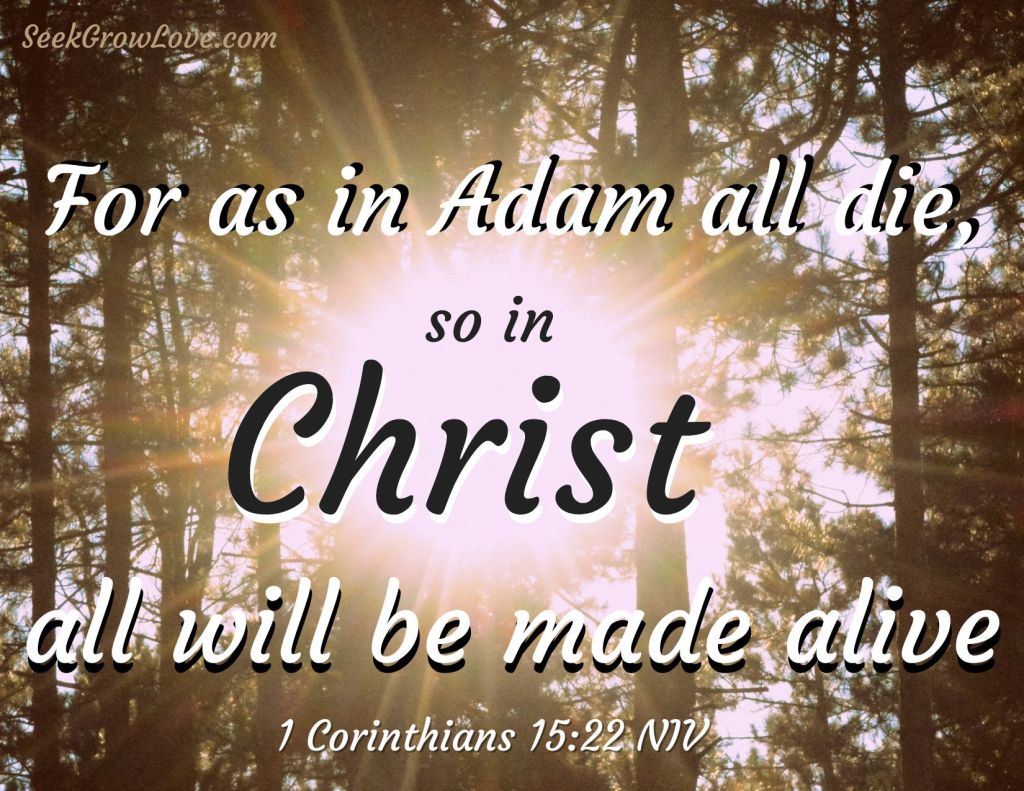
Jesus, the one who gives freedom, because he gives us a new life now and a new life in the world to come. As in Adam all die, so in Christ all will be made alive.
Jesus, the one who is the bedrock for reality, and the cornerstone of the new kingdom of God. Christ at the end will “reign until he has put all his enemies under his feet.”
Jesus, the fountain of truth, the one who can say “I am the way, and the truth, and the life.”
The Christian faith comes with a lot of question marks.
Those hot buttons issues are *hot* for a reason.
The Bible *is* frustrating. So many people have claimed it says different things! And when we actually read it, often the Bible tells us that the best way to live is the opposite of the way we are living right now.
Your questions, your doubts, are pulling at your heart because the world is messy. And dark. I’ve been there too. Where questions and doubt are big, and I feel like I am at the bottom. I look up at the questions wondering “why would I hope? could life get better? wouldn’t it just be better if I wasn’t here?” Too much loss, too much pain, too much death.
“The last enemy to be destroyed is death”
Paul is not playing at wish fulfillment, norms or superstitions. The Jesus he met, the Jesus Christ-followers met, the Jesus the church has met, has led to the fitting conclusion that “death is swallowed up in victory.” Death is no longer victorious. Death can no longer sting. Because we have been given victory.
I have been given victory.
And you have been given victory, if you choose to accept it.
God is not scared of your questions. He is not scared of your doubts. He is not scared of your failures.
What God wants to do is to give:
To give you victory that conquers your failures. Yes, you’ll still make mistakes, but always moving closer to God rather than in circles of pain.
To give you hope, purpose, and passion that will bolster your faith in doubts. You may still ask questions, and you will need other people to sharpen your beliefs, but always moving closer to the God of all comfort.
To give you the Spirit who teachings us all things and guides us into all truth in our questions. You will still have questions but it is no longer the project of deconstruction, of “Destrucktion” where every belief is torn down, but where in the end, they are built anew of Christ the Solid Rock.
In short, “Thanks be to God, who *gives us the victory* through our Lord Jesus Christ.”
-Jake Ballard
(If you need someone to pray for you today, or to hear your questions and doubts, or to tell you it’s gonna be OK, please consider emailing Jake Ballard (jakea.ballard@yahoo.com) or text at (937-561-1000), or find him on Facebook (https://www.facebook.com/jacob.ballard.336_) or Instagram (@jakea.ballard). However, the best thing you can do, is find a local pastor you trust, and speak to them in person. God bless you all.)
Reflection Questions:
Do you believe in the resurrection of Jesus? If so, why? How would you describe it to someone who has never heard of the resurrection? If not, why not?
If you believe in the resurrection of Jesus, does that prompt you to live your life differently? If so, how?
What is the timeline of events Paul gives in 1 Corinthians 15?
What is the final verse of 1 Corinthians 15 and how can you put it into practice?
When people find out what I do for a living (Funeral Director/Embalmer and Deputy Coroner) they usually respond with some variation of the following: “I don’t know how you do it”. “How do you get used to it?” Or “I don’t think I could do your job.” I have never known quite how to respond to those statements. Saying “Oh, I think you could”, doesn’t seem quite right. Neither does “You’re probably right about that.”
I’ve decided that I’m going to start asking what part of my job, specifically, they think they would not be able to handle. If they mean they don’t know how I get used to the smells, my answer would truthfully be “I don’t”… It’s a tough part of the job. My tongue-in-cheek answer would be “Mouth breathing and repeated formaldehyde exposure have helped.” (I think I’ve partially embalmed my olfactory over the years of inhalation of embalming chemical fumes). If they mean they don’t know how I can be a comforting presence when people are grieving, I have an answer for that too. It is because God has comforted me.
In 2 Corinthians Chapter 1, Paul writes:
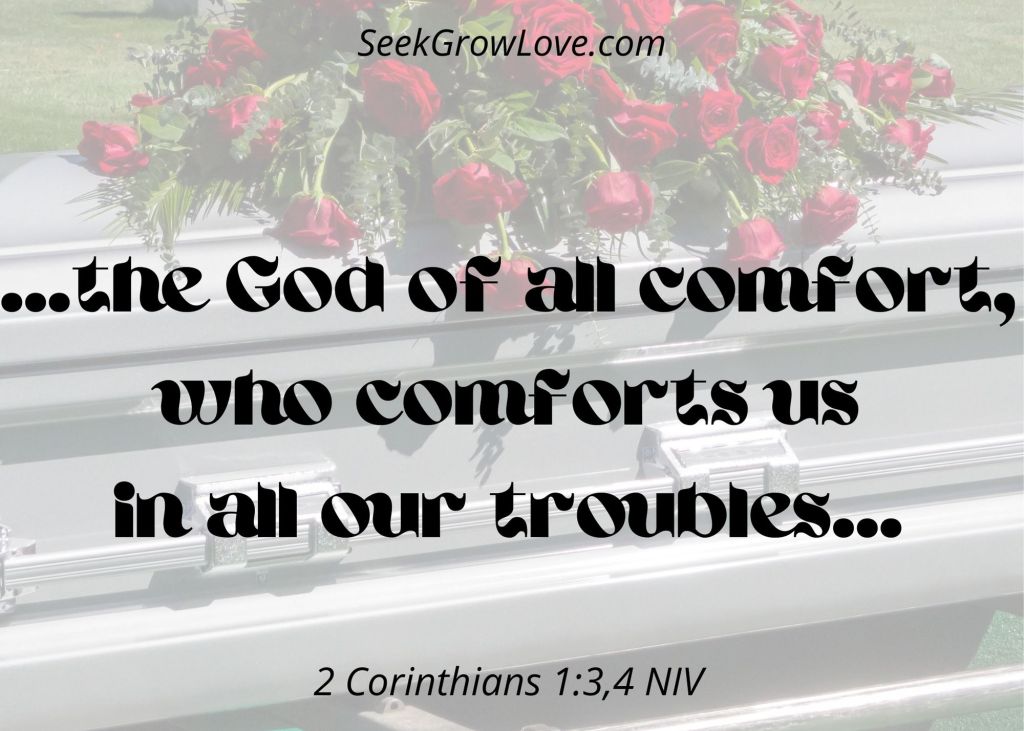
“Praise be to the God and Father of our Lord Jesus Christ, the Father of compassion and the God of all comfort, who comforts us in all our troubles, so that we can comfort those in any trouble with the comfort we ourselves receive from God.” (verses 3&4)
When I was 7 years old my infant brother, Zachary, died a few short hours after birth. He was born with a hernia of his diaphragm. I never got to see him alive. I never got to hold him. We had a place ready for him at our house, but we never got to bring him home from the hospital. Despite what people said, I knew he certainly didn’t get to go to “a better place”. The first and only time I ever saw him was in a tiny casket in the back of the Oregon Church of God. Pastors Hollis Partlowe, and a new young minister at the church by the name of Michael Hoffman, co-officiated my brother’s funeral. Pastor David Cheatwood of the Blessed Hope Bible Church also counseled and comforted our family in the years that followed.
God, through the ministry of these three Pastors, my Sunday school teachers and several other faithful brothers and sisters in our church like Alan and Darlene Shaw, Dave and Bertha Hixon and Rita Gillette comforted me. Through that experience, I learned the fullness of the gospel. I learned that the gospel was not merely that there was a perfect man who lived 2000 years ago who was falsely accused and died on a cross. The gospel is that, that man, CHRIST JESUS, only needed to borrow a tomb for a few days. The gospel is, that I will have an opportunity to see my brother Zachary alive someday and walk with him on streets made of gold!
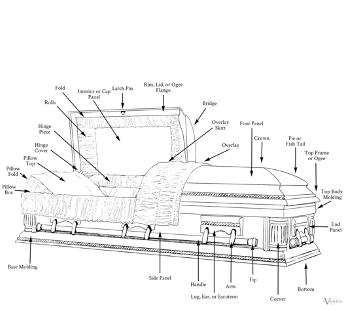
In mortuary school I learned a lot about caskets. I learned a lot about how they are made and the proper terminology for each of their different parts. We had to be able to identify and differentiate between the “ogee” and the “overlay”. We had to be able to explain why a person may want or not want a casket with a gasket. (Every time I say that, it reminds me of the Dr. Seuss book “Wocket in my Pocket.”). It would all be very depressing If I didn’t know that in the end, a casket is just a time capsule to be opened at the ribbon cutting of the new Jerusalem. I picture graves bursting open right before the wedding supper of the lamb. When I get a person dressed and placed in their casket, I’m really helping one of the wedding guests get their socks on for the party!
In this same Chapter Paul also writes “we do not write you anything you cannot read or understand.” Sometimes we just need to think about that. If our message is something that cannot be understood, it just might not be Biblical.
God created perfect people in a perfect garden on a perfect earth. Sin caused those people to be cast out of the Garden and they lost access to the tree of life. Therefore we all die. We all need to consider casket gaskets.
The entire Bible lays out plainly God’s plan to restore the perfection of his original creation and our access to Him and his tree of life. The good news is just as Jesus arose from the grave, no casket on the market will be able to hold us when the last trumpet sounds. We shall rise.
That is how I am able to do what I do. Next time you have to make funeral arrangements ask your funeral director about their long term lease programs on caskets. We won’t be needing them forever!
-Brian Froehlich
Application Questions
When you think of the word “comfort” what comes to mind?
What brings you comfort in times of stress?
What are some jobs you would not want or could not do?
We know we won’t be needing our caskets forever. If we could lease one until Resurrection day, how long do you think we would need it?
Are you living like you are expecting the imminent return of Christ? What would you do differently today if you knew the date of his return?
When I was a kid, I amassed a pretty good collection of action figures. I had a lot of He-Man and Teenage Mutant Ninja Turtle toys. I even had a few from the lesser known franchise Silverhawks. Transformer toys (the cars and trucks that convert to robots and visa versa) were popular then, too. I didn’t have many officially licensed Transformers, but several of the toys I did have, could be rapidly changed from one configuration to another in some way. With just a squeeze of the figures legs, a flip of a switch or a dip in hot or icy cold water and the figure’s costume or facial expression might change.
It seemed easier to tell the difference between heros and villains in the 80’s than it is now. For example, The evil Skeletor was He-Man’s enemy. You could tell just by looking at Skeletor, “he was a bad dude”. He had a face like a skeleton and always dressed in all dark clothing. In the cartoons on Saturday mornings, he would cackle with delight at the misfortune of others while I ate Cap’n Crunch.
I still have most of my toys from when I was a kid, but especially those action figures. I didn’t destroy stuff like some kids do; like MY KIDS do. (Remember a few days ago, “puddles” and “Whacko”.) At this point I figure I’d better save those old toys just in case I don’t ever find that savings bond, or my pension fails to keep up with inflation. Sometimes old toys have a lot of value. Sometimes the value isn’t monetary.
My toys helped me explore the differences between good and evil and imagine epic battles. They helped me envision how just when the world seems to be at its darkest possible moment and we feel powerless to the evil closing in around us, our Messiah will return and save the day.
1 Corinthians 15 is one of my three favorite Chapters of the whole Bible. It paints a vivid picture of a war story more intense and dramatic than any Hollywood blockbuster. The chapter is chocked full of memorable quotes such as:
“The last enemy to be destroyed is death.”
1 Corinthians 15:26 NIV
“Listen, I tell you a mystery: We will not all sleep, but we will all be changed—in a flash, in the twinkling of an eye, at the last trumpet. For the trumpet will sound, the dead will be raised imperishable, and we will be changed.
1 Corinthians 15:52 NIV
“Where, O death, is your victory? Where, O death, is your sting?””
1 Corinthians 15:55 NIV
So often, people seem to forget that the Bible calls death the enemy, not the reward. It is in fact the LASTENEMY to be destroyed. It is like the “boss” at the end of a video game.
My favorite restaurant in my hometown, DeKalb, Illinois is Pizza Villa.
In the basement of Pizza Villa there is a small arcade. Some of their video games have changed over the years but for as long as I can remember two have been the same.
They have always had a plastic egg dispenser that has a Fred Flinstone inside that spins around slowly when you put a quarter in it. Fred says “Yab ah Dab Ah doo. Yab ah Dab Ah doo” twice and a little plastic “Dino egg” falls out with some cheap prize inside. Maybe it’s a plastic spider ring or an old tootsie roll. The prizes aren’t worth a quarter but the nostalgia of the experience is priceless. Then there is a four player Teenage Mutant Ninja “Turtles in Time” game. It’s pretty much a “must play” every time I’m there. As you may already know, the Ninja Turtle’s final enemy is “Shredder”. Before you get to face Shredder in the video game though, you have to beat several other opponents that gradually increase in formidability. Among them, is a huge fly character that I’ve never known the name of, a giant humanoid hippo named Bebop and a rhinoceros named Rocksteady.
I can’t tell you how many quarters my Dad, my buddies and I have plunked into that machine over the years trying to beat Rocksteady. We could definitely get that horn nosed beast blinking and jumping around faster (a sign that he was taking on damage). We feverishly thrashed the joy stick and hit “A B B A A B” over and over, desperately trying to deliver just the right combination of bow staff blows and ninja kicks. I would bargain for more quarters as a kid. Now, when my kids get to that spot in the game, they will beg me for “just one more quarter?!” as they watch the final seconds tick away. There never seems to be enough “pizza power” or pocket change to finish him off. I’ve never seen anyone beat the game.
Some people seem to think that Satan is God’s final enemy and death is just one of his attack moves. They act like we can put on some kind of invincibility shield by saying the promise of eternal life means we don’t really even die, that we just go somewhere else, maybe even “a better place” immediately. (Remember the Bingo card I wish I had?).
Satan’s first lie was that Adam and Eve would not really die. He tried to put a positive spin on sin. He made it appear as though sin was a pathway to a higher consciousness of some kind; an avenue to special powers or secret knowledge; a way to become almost an equal with God.
What Satan was actually doing was setting up an ambush by the enemy of death. In the Garden of Eden, Adam and Eve had access to the tree of life. As long as they ate from it, they would continue to live. They were protected from death. Satan knew he needed to get them out on their own and away from the tree of life for them to be vulnerable to death. The plan worked.
Separation from God and the life sustaining properties of the tree of life was the wage of their disobedience (sin). That separation resulted in death. Their flesh decayed and they returned to the dust from which they were made. Absolutely predictable, scientifically repeatable decay takes place when a human body dies. The changes a dead body goes through are EXACTLY what God said they would be. Every time.
Without obedience to God we cannot be in his presence. Without being in his presence we do not have access to the tree of life. Without access to the tree of life our bodies will grow tired and weak and we are vulnerable to be overcome by the enemy of death. We spend our lives fighting off gradually more formidable foot soldiers of death that attack when we are isolated by our disobedience. You know the ones: loneliness, poverty, obesity…when we get to the end we have no energy left to fight off the final enemy- death. I can’t tell you how much money people have spent trying to keep fighting off death. Sometimes we make bargains with our father at the last minute for just a little longer. Nobody beats the game. Death wins every time.
It stings to realize that.
I vividly remember my first bee sting. I was about 6 years old. I was helping my dad clean out a little ski boat we had on a trailer in our driveway. I moved a pile of life jackets and disturbed a bee. It was like life switched to slow motion for a minute. I saw the little thing wiggle it’s bottom against my arm as it deposited its dagger. I felt the pain pulsing up my arm. I cried and gnashed my teeth. I flailed my arm, but the damage was already done. It stung me. My dad removed the stinger and I held an ice cube against the spot to numb it. Eventually the sting was gone, but the memory wasn’t. Every time I hear the word “sting” I think of that incident. As a Funeral Director and a Deputy Coroner, when I meet with a grieving family, I often see the sting of death in their eyes. I can almost feel it. Death stings. The enemy of death has not been destroyed.
1 Corinthians 15 tells us there is a day coming when things will be changed faster than a transforming action figure. We will be made imperishable and the sting from the enemy of death will be no more. Death itself, the final enemy, will be defeated.
Let us cherish these truths more than our most beloved childhood toys. Like a box of favorite action figures, let us pass these promises on to our children and their children. When their savings bonds and pension plans fall short may their hope in Christ sustain them.
-Brian Froehlich
Application questions:
What was your favorite Saturday morning Cartoon? Did you ever have any of the corresponding toys? Do you still have them?
Besides a bee sting, or the sting of death what are some other things that “sting”?
What comes to your mind when you hear the word “enemy”?
How do you define the word “destroy”?
What will it mean for the enemy of death to be destroyed?






 Seek Grow Love