Chapter 10 of the book of Hosea, implements an analogy of Israel as a thriving vine. The more fruit it bore, the more Israel used its prosperity to betray Yahweh, turning blessings into the means of idolatry. God gave them the Promised Land, and they used the blessing that he gave them to make other gods. Instead of gratitude, they responded with spiritual adultery.
The Israelites’ hearts were divided, pulled in different directions by possessions and self-interest. “You will seek me and find me when you search for me with all your heart.” (Jeremiah 29:13, REV). Israel never gave God their whole heart. And so they couldn’t find Him. God was ruled out of the life of Israel and now the same thing is happening here in our own nation. We see our country’s leaders supporting and encouraging sinful actions.
“How can I give you up, Ephraim? How can I hand you over, Israel? How can I make you like Admah? How can I make you like Zeboiim? My heart is turned within me; my compassion is aroused.” (Hosea 11:8, REV). Yahweh doesn’t want to destroy His people. He didn’t want to then, and he doesn’t now. But again and again, Israel turns elsewhere. In chapter 12, they make a covenant with Assyria looking for safety in the arms of another nation, not in God. Maybe that is the way we should treat some of the things in our lives. We tend to distance ourselves from the thought that we are creating an alliance with things daily like our phones instead of God.
“I knew you in the wilderness, in the land of great drought.” (Hosea 13:5, REV). The idea from Hosea 13:5 is that when we have an abundance of conveniences it’s hard to see the things we need. In the States most of our problems are “first world problems” which is a polite way of saying they’re not problems at all, just inconveniences. Our abundance and ease of living is one of the many reasons that America is struggling morally in our present time. With too many conveniences, too many options, or too much time -it’s easy to forget what you need.
“According to their pasture, so were they filled. They were filled, and their heart was exalted, so they forgot me.” (Hosea 13:6, REV). Let us not forget our God and turn foolishly toward the things of this world.
Application Questions:
Do you prioritize things like work, school, social media, TV, over your family, time reading God’s word, or time helping other people?
What are some distractions that are pulling you away from God?
Who are a couple people in your life who can keep you accountable in spending less time on the things of this world and more time on things of God?
Can I tell you a secret? I *loathe* the nickname “Turkey Day” for Thanksgiving.
Sure, the big bird is special to the day and to the success of the first colonist. Sure, Ben Franklin thought the bird was “a Bird of Courage.” But there is much more to Thanksgiving than the protein.
In a world of many gods, like Babylon, feasting and reveling for the glory of a deity was common. Sometimes, in the ancient world, the Kings would claim to be gods, or children of the gods, and would show their superiority over “other” gods and people by belittling the symbols of those gods. Belshazzar, the final king of Babylon, showed his contempt for Almighty God and God’s people by allowing his guests at his drunken feasts to eat and drink out of the Temple treasures that were in Babylon. In Daniel 5:4, we read “They drank wine and praised the gods of gold and silver, bronze, iron, wood, and stone.”
However, God does not take kindly when the glory due him is given to another. Therefore, because they are using God’s Temple’s treasures while worshipping other gods, God decides to give Belshazzar and his kingdom and his treasures to others, the Medes and the Persians. Daniel tells Belshazzar, “the Most High God rules over the kingdom of mankind, and sets over it whom he will.”
Thanksgiving was instituted by George Washington on October 3rd, 1789. Read this declaration to see why he instituted it : “Now therefore I do recommend and assign Thursday the 26th day of November next to be devoted by the People of these States to the service of that great and glorious Being [i.e., Almighty God], who is the beneficent Author of all the good that was, that is, or that will be—That we may then all unite in rendering unto him our sincere and humble thanks—for his kind care and protection of the People of this Country previous to their becoming a Nation—for the signal and manifold mercies, and the favorable interpositions of his Providence which we experienced in the course and conclusion of the late war—for the great degree of tranquillity, union, and plenty, which we have since enjoyed—for the peaceable and rational manner, in which we have been enabled to establish constitutions of government for our safety and happiness, and particularly the national One now lately instituted—for the civil and religious liberty with which we are blessed; and the means we have of acquiring and diffusing useful knowledge; and in general for all the great and various favors which he hath been pleased to confer upon us.
and also that we may then unite in most humbly offering our prayers and supplications to the great Lord and Ruler of Nations and beseech him to pardon our national and other transgressions—to enable us all, whether in public or private stations, to perform our several and relative duties properly and punctually—to render our national government a blessing to all the people, by constantly being a Government of wise, just, and constitutional laws, discreetly and faithfully executed and obeyed—to protect and guide all Sovereigns and Nations (especially such as have shewn kindness unto us) and to bless them with good government, peace, and concord—To promote the knowledge and practice of true religion and virtue, and the encrease of science among them and us—and generally to grant unto all Mankind such a degree of temporal prosperity as he alone knows to be best.”
President Washington desired for his Nation to thank the true God, not the gods of this world, but the “glorious Being,” the subject of “true religion and virtue”. Thanksgiving was instituted, not just to feel grateful but to give thanks to the only God, the God who is there, the God who is present in the affairs of this world and in the life of this nation and in the prosperity and peace of humankind. Today is and should be a day of feasting and merriment for all our many blessings. In the midst of all the joy of this holiday, be sure to give thanks, sincerely and humbly, to the Almighty, the Most High God.
Happy *Thanksgiving*!
Growing deeper:
Are you thankful for your blessings? If we aren’t conscious, we could miss them. Today, don’t answer questions but make a list and try to think of every blessing in your life. Number them and see how high you can make your list. Don’t forget the blessings that might be too small to consider (aren’t eyelashes amazing?) and the blessings that might be too big to see (you are able to read this, so you have life, a computer or phone, and access to the internet, plus electricity…). The list grows quickly.
Most of the Psalms were written by David, but there are a few that were written by others. For example, Psalm 90 was written by Moses and Psalm 127 was written by David’s son, Solomon.
Today’s reading, Psalm 127 is what we will reflect upon. It offers wisdom about the wise raising of a family. I find some parts of Solomon’s teaching a bit paradoxical. Solomon’s father, King David, had 19 sons by his wives. The year before his father David died Solomon’s first wife Naamah gave birth to his one and only son, Rehoboam. She also gave birth to two daughters Taphath and Basemath. As far as we know from the Bible these are the only three children Solomon fathered. This is odd considering Solomon had 700 wives and 300 concubines. Solomon valued children and saw them as a reward from God.
A Song of Ascents. Of Solomon.
Psalm 127
Unless the Lord builds the house, those who build it labor in vain. Unless the Lord watches over the city, the watchman stays awake in vain.
2
It is in vain that you rise up early and go late to rest, eating the bread of anxious toil; for he gives to his beloved sleep.
3
Behold, children are a heritage from the Lord, the fruit of the womb a reward.
4
Like arrows in the hand of a warrior are the children of one’s youth.
5
Blessed is the man who fills his quiver with them! He shall not be put to shame when he speaks with his enemies in the gate.
If Solomon valued children so much why didn’t he have more? The most likely answer is that Solomon’s next wife was the daughter of the Pharoah of Egypt. She worshipped idols and brought them into the royal palace. Many Biblical scholars believe that Solomon had no more children as punishment for allowing idolatry to enter his family.
Psalm 127 begins “Unless the Lord builds the house, those who build it labor in vain.” The house referred to here is not a physical house or palace but a family or a household.
That strikes me as a very wise teaching. And yet Solomon’s actions weren’t very wise when he had 700 wives and 300 concubines. Another paradox is that in 1 Kings 3 Solomon asked God for the gift of wisdom. Because Solomon’s request of wisdom was very unselfish (he didn’t ask for riches or a long life, God agreed to give him what he asked for, wisdom and what he didn’t ask for: wealth, honor, and long life as long Solomon followed God’s commands.
This begs the question… how did God give him wisdom? Did he open up Solomon’s head and pour in wisdom, or was wisdom acquired over time? Perhaps Solomon grew in wisdom over time, when he realized that he missed out on the blessings of a large and fruitful family because he allowed idolatry to enter his home?
Solomon doesn’t quantify a number of children that qualify one as blessed. David had 19 sons. Solomon’s 1 son Rehoboam had 28 sons and 60 daughters (wow, that’s a lot of weddings to pay for).
My wife Karen and I have been blessed with 7 sons and 4 daughters (JJ, Jon, Joshua, Karee Anne (Gregory), Joel, Kailyn, Katie Beth (Mattison), Kass, Jordan, Josiah, and James). We also have been blessed with 16 grandchildren (soon to be 17). We are greatly blessed. My children (and their spouses) and grandchildren are precious gifts from God and I’ve always appreciated this Psalm. Of course, having a large family is not the only sign of blessing from God. However God chooses to bless you, receive it with gratitude and joy.
Peace, Grow, Love
-Jeff Fletcher
Reflection Questions
How would you put in your own words and explain Psalm 127 verse 1? Compare what a house/family built by the Lord looks like versus one built in vain. Consider the home you were raised in – which was it more like? Which do you want for a home/family you will/are or have raised?
What are some of the current views towards children that you have witnessed? Which ones would God agree with, which ones would he not?
One of the most memorable sermon illustrations that I’ve heard is about someone who is driving a car. If their eyes are on the road, they can direct the car wherever they choose (as long as the road and traffic patterns allow). But, how often have we been driving and our eyes drift from the road to something else? Maybe it’s something on the side of the road or a passenger in the back asking a question. Maybe we need to grab something from our purse or check our phone (even though that’s illegal in most states).
When you take your eyes off the road, you begin to veer off course. This can lead to destruction and harm.
This is true literally when we are driving a car, but it is also spiritually true when we are thinking about our walk with God. The Bible often speaks of where our eyes are fixed to describe the spiritual health of our hearts. If our eyes are turned to God, we will be walking towards him. But, all too often, our eyes get focused on other things – jobs, pleasures, stresses, idols – and when this happens, we begin to veer off course.
Isaiah 17:7-8 says, “In that day people will look to their Maker and turn their eyes to the Holy One of Israel. They will not look to the altars, the work of their hands, and they will have no regard for the Asherah poles and the incense altars their fingers have made.”
At the time, Israel had their gaze fixed off-course. They had turned towards idols, with their Asherah poles and incense altars. That focus led their hearts away from God and ultimately ended in destruction. They were headed towards a spiritual crash.
God spoke off a day in the future when the Israelites course would be righted. Instead of turning to their false gods, they would look to their creator God. They would be headed on the right and good path.
When this happens, the ultimate destination is one that is filled with hope for the good things of God. Isaiah 16:4-5 describes, “The oppressor will come to an end, and destruction will cease; the aggressor will vanish from the land. In love a throne will be established; in faithfulness, a man will sit on it— one from the house of David – one who in judging seeks justice and speeds the cause of righteousness.”
We know that this is our hope too. We have a glorious hope in the kingdom, when Jesus is seated on the throne. There will be justice, righteousness, love, and faithfulness. We wait for that day. We long for it.
So where are your eyes fixed? Are they fixed on idols, pleasures, or cares of this world? Or are they turned towards your Maker?
-Cayce Fletcher
Cayce Fletcher is a teacher-turned-SAHM mom of two. She blogs and podcasts at A More Beautiful Life Collective where she focuses on how you can create a life you love and cultivate your heart for God. Currently, she is working through a systematic theology series on her podcast. You can find her latest post on Bibliology here.
REFLECTION QUESTIONS
What are some of the things that lead to ‘distracted driving’ in your spiritual walk? How do your eyes get taken off of God?
Where are you currently looking now? Are you looking to God? Or somewhere else?
How does Jesus fulfill the prophecy in Isaiah 16:4-5? How does this fill you with hope for the future?
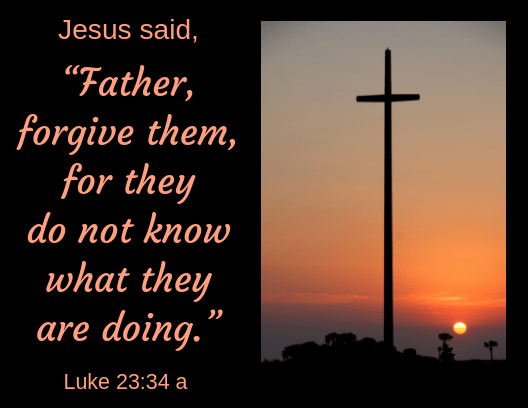
Scripture: “He did evil in the eyes of Yahweh according to the detestable things of the nations whom Yahweh drove out before the Israelites.” — 2 Kings 21:2 (LEB) “Listen, Yahweh, to my prayer, and attend to the voice of my supplications.” — Psalm 86:6 (LEB) “And Jesus said, ‘Father, forgive them, for they do not know what they are doing.’ And they cast lots to divide his clothes.” — Luke 23:34 (LEB)
2 Kings 21 describes the reign of Manasseh, who led Judah into idolatry and wickedness, turning away from the faithfulness of his father, Hezekiah. Manasseh’s actions had devastating consequences for Judah, but even in the midst of such darkness, we can find lessons of hope and redemption when we look at the prayers of Psalm 86 and the forgiveness offered by Jesus in Luke 23.
Manasseh’s reign was marked by the restoration of idolatrous practices that his father had abolished. He erected altars to Baal, worshipped the stars, and desecrated the temple by placing an idol within it. His actions not only provoked God’s anger but also led the people of Judah into deep sin and rebellion against God.
Manasseh’s actions demonstrate the destructive power of idolatry and disobedience. When we turn away from God and pursue false gods, it leads to moral and spiritual decay. Psalm 86 is a heartfelt plea for God’s attention and mercy. In times of spiritual decline, prayer becomes a vital connection to God, seeking His guidance and forgiveness. Despite the evil of Manasseh’s reign, the story of Jesus on the cross in Luke 23 reminds us of the power of forgiveness. Jesus’ prayer for those who crucified Him highlights God’s boundless grace and the possibility of redemption even for those who have strayed far from Him.
-Jeff Ransom
Reflection Questions:
Are there any “high places” or idols in your life that you need to remove to fully commit yourself to God?
How can the prayers of Psalm 86 inspire you to seek God more earnestly and sincerely in your daily life?
How does Jesus’ example of forgiveness on the cross in Luke 23 challenge you to extend grace and forgiveness to others?
This week, reflect on the life and reign of Manasseh, and consider how you can remain faithful to God. Seek to remove any idols and influence others toward righteousness. Let the prayers of Psalm 86 inspire your own prayers, and remember the forgiveness and redemption offered through Jesus Christ.
Today I want to focus on Ezekiel 8. So in this chapter, there is a description of the second vision Ezekiel had. This vision is all about the idolatry going on amongst the Israelites. God takes Ezekiel to Jerusalem. This is where the temple is, so it is where people come to worship God. But instead of that, Ezekiel sees people worshiping idols, not God. I want to focus on the idols that Ezekiel sees, and see how they could potentially be present in our lives.
The first idol mentioned is in verse 5. It is called the “idol of jealousy.” It is important to focus on what this means, and to start to understand that, we need to know what it means to be jealous. To be jealous is to look at other things and want them more than what you have. It’s like if your neighbor gets this awesome new car, maybe a brand new corvette, and you see that, and start to feel like you just have to have that car. He looks so cool driving it, and you just need that in your life, too. We try to satisfy ourselves by trying to be like the people around us. We want what they have and maybe, just maybe, more than they have. This is something that we can put before God very quickly. We can focus on the next best thing instead of God. God says in verse 6 “the utterly detestable things the house of Israel is doing here, things that will drive me far from my sanctuary.” We are pushing God away when we start looking for “things” rather than looking for God.
The second idol that Ezekiel sees is the worship of images of animals and creatures. The elders were burning incense to these images as a form of worship. In verse 12 the elders say, “the LORD does not see us; the LORD has forsaken the land.” They did not feel like God was there. So what do they do? They replace God with something else. We do this all of the time. Something doesn’t go the way we want it, we feel like God has abandoned us, and we instantly start to put something else before God. We turn to something else that makes us “happy.” Whatever that is, is different for each person, whether it’s work, hobbies, sports, school, friends, alcohol, or other things of this world. Instead of turning to these things, we need to put God first.
The last idol that Ezekiel sees is men in the temple with their “backs towards the temple of the LORD” and bowing down to the sun. The men here have completely turned away from God and are worshiping something other than God. We are sometimes guilty of this as well. We turn our backs to God and worship what is right in front of us. We see the visible thing that is right there and think that that thing is worthy of our full heart. Sometimes we need to do a full 180 and turn our worship back to the amazing, all powerful, loving God.
Every time God shows Ezekiel one of these idols He calls them “detestable” things. They aren’t just bad or an “issue”, they are detestable in the eyes of God. Having idols is very serious to God. Just read verse 18. It is very important to evaluate our lives and identify if there is anything we put before our relationship with God. And if there is, to either reprioritize our life with God at the head, or get rid of whatever we put before God.
-Camden Bormes
Reflection Questions
When have you experienced the idol of jealousy? Have you overcome it (for now) or are you currently struggling with it?
How have you seen people (including yourself) try to replace God?
In what ways might idol worship creep into a culture – or into a church – or into the life of a believer – or into your life? What makes it detestable to God?
What makes God and God alone worthy of all your worship and first place in your life and heart?
I just realized something today. I’m getting kind of old. I know this comes as a shock to most of you who know how young I look (wink wink, nudge nudge). Seriously, I’ve been alive during all or part of the presidencies of 12 different US Presidents, from JFK to Joe Biden- and several of them served 2 terms. Yikes! To borrow from an old Clint Eastwood western, some of those presidents have been good, some have been bad and some have been ugly. As we read through Chronicles and see the history of the kings of Judah, we could make the same observations, some were good, some were bad and some were down right ugly when it comes to their faithfulness to God
Amaziah was one of the ugly ones. After defeating his enemies in battle he took their idols as plunder and brought them back and worshipped them. A major no-no. God really, really hates idolatry and gets very jealous when his people start worshipping other things as god or the ultimate in their lives. In fact, in 2 Chronicles 25 (see yesterday’s reading) God punished Amaziah by having him routed in war against Israel, and then his own people assassinated him. He was decisively rejected by both God and his kingdom.
In today’s reading from 2 Chronicles we see that Amaziah’s son Uzziah followed him as King. Uzziah was young, only 16 when he began to reign. He got a great start because he sought God. He found a godly teacher, Zechariah, to show him the way of God and he intentionally tried to do things God’s way as he ruled over Judah. Because of his faithfulness, God blessed Uzziah with a prosperous reign: “as long as he sought the Lord, God made him prosper.” 2 Chronicles 26:5
Today’s reading shows how successful Uzziah was while he followed God. His army grew more powerful, he defeated their enemies. He fortified his territory. His fame spread and other nations brought him gifts acknowledging his power and success. His country did well agriculturally as their herds and flocks grew and their vineyards were productive.
The blessings were really flowing for King Uzziah and he was on top of the world and felt really good about his accomplishments. He had not made the same terrible mistakes that his father Amaziah made, there was no hint of the worship of idols under Uzziah’s rule. But…unfortunately, as often happens in times of prosperity, Uzziah grew proud. He started thinking that he was “all that and a bag of chips.” (do they still say that or is that from 20 years ago… I’ve lost track). Anyway, he was FULL of himself.
Let me back up a minute. Going back to the time of Moses as leader of Israel there was a strict division of labor among God’s people. You had judges and later Kings, who did the political leading, and you had the priests who oversaw the religious rituals. Sometimes the lines got a little blurry and there was some overlap as with Samuel who was both a priest and a judge. But by the time Kings were instituted it was clear that the Priests were the only ones allowed to go into the temple and offer sacrifices. Offering sacrifices was a no go for the King. King Saul had previously gotten himself in hot water for offering sacrifices (See 1 Samuel 13 for more details). In short, Uzziah should have known better.
Unfortunately, King Uzziah let his success lead to pride which led to his downfall. “But when he was strong, he grew proud, to his destruction. For he was unfaithful to the Lord his God and entered the temple of the Lord to burn incense on the altar of incense.” 2 Chronicles 26:16 Uzziah was doing what was forbidden for a king, to usurp the priestly role of burning incense on the altar of the temple.
The priests were horrified at what King Uzziah was doing and they stopped him (it took 80 of them). Uzziah became enraged that they challenged him. He was unwilling to stand down even with 80 priests telling him “no”. So then God intervened and instantly struck him down with leprosy. Leprosy was a skin disease that rendered the leper ceremonially unclean. Uzziah was instantly cut off from temple worship and was made an outcast. He had to leave his palace and remained an outcast until his death.
What a sad and tragic end to the reign of a king that had begun so well. Uzziah, as a young man had seen how bad his father had been as he pursued idols. Uzziah sought the Lord, was faithful, God blessed and prospered him and all was well, until he gave in to the deadly sin of pride.
Why is pride a sin? In the US June was just celebrated as Pride Month. I was reminded of this literally everywhere I went. When I turned on my computer at the hospital where I serve I was reminded that it was pride month. I watched a baseball game featuring the Baltimore Orioles hosting the Seattle Mariners and there were rainbows and pride flags on the field, in the stands and surrounding all of the player stats. Pride is celebrated in the world today as a wonderful and glorious thing. But the Bible hasn’t changed- Proverbs 16:18 still says: “Pride goes before destruction, a haughty spirit before a fall.”Proverbs 16:8. Whether it’s being proud to tell everyone that you are gay, or being proud of your accomplishments as king, pride is destructive.
Pride is a deadly sin because it causes us to focus on who we are and what we accomplish and take our eyes off of who God is and what he accomplishes. Pride is a subtle form of idolatry. Instead of worshipping another god in the form of a statue or object, pride is the worship of ourselves. Uzziah was full of pride so he thought he was above following God’s law that said only priests could go into the temple and offer sacrifices on the altar. Pride leads one to reject God’s laws and God’s authority to tell us what we can and what we cannot do which is ultimately a rejection of God as God. If, in my pride, I tell God that I don’t have to listen to him, he has no authority over an area of my life, then I’m turning myself into my own idol. That’s exactly what Adam and Eve did in the Garden of Eden. It’s what Uzziah did in the temple, it’s what we do whenever we say, “I know that God has said this is wrong, but I reject God’s authority to tell me what I can and cannot do with my body, my life.” Pride has caused the deaths of untold millions of people, including unborn babies. Pride has caused countless people to turn away from their faith in God and from following Jesus Christ in order for them to follow their own “truth” about who they are and what they think should be right.
Uzziah was punished by God with leprosy which caused him to lose his access to both worship and to his role as king. He died miserable and alone. That’s where pride usually leads. We need to avoid pride like the plague.
-Jeff Fletcher
Reflection Questions
Why do you think God was so harsh and immediate in striking King Uzziah with leprosy. After all, he’d been pretty faithful up till that point in his life?
What do you think of the ways that Pride has been exalted in our culture? Can you see any ways that pride could be leading toward societal destruction?
What are the danger areas of pride in your own life? Is there an area where pride could be leading you away from God. Are there any areas where you reject God’s teaching in your life and you are proud of it?
The school year has just ended in SC, and I am thoroughly enjoying summertime. After teaching for 5 years (and being in public school/college all those years before it), summer has become a beautiful time of rest, relaxation, and lots of swimming and sunshine. Summer is one of the perks of being a teacher, but it is definitely a time that feels earned. After a year of pushing students to be better learners and better people, I need a break.
One of the most challenging things about being a teacher is the constant redirection and discipline that are required to make sure a classroom runs smoothly. If everyone is always doing what they want – whether that’s blurting out, going to the bathroom (as soon as we start taking notes!), or playing on the iPad – not much learning is happening. One of my jobs as a teacher is to set up a structure for my classroom that involves rules so that students know how to overcome doing what they want so that they can do what they need in order to learn. Sometimes students are happy to follow these rules. But, sometimes they are not. When they don’t follow rules, there is a system of warnings and consequences to try to get them back on track. Lunch detention, emails home, you know the drill. Occasionally, a student will not listen, and that is when the big punishment happens: ISS or OSS. Any public school kids know about this place of detention. The purposes of ISS, or in-school suspension, are two-fold: (1) By taking them out of the classroom, they miss out on the fun and good things we do as well. Normally, they don’t want to be away from the class because of this. (2) It also removes the student from the learning environment so they don’t pull everyone else down with them.
In our reading today, we see the punishment the Israelites received that reminds me quite a bit of ISS, except much more severe and far-reaching. The Israelites were exiled from their land as a consequence of their sin. We read in 2 Kings 17:1-23 about how the Israelite king, Hoshen, continued to follow the pattern of doing evil in God’s sight. This caused the king of Assyria to invade the land and ‘carry the Israelites away to Assyria and place them’ throughout the land of Assyria (v. 6). Verse 7-8 says, “And this occurred because the people of Israel had sinned against the LORD their God, who had brought them up out of the land of Egypt from under the hand of the Pharaoh king of Egypt, and had feared other gods, and walked in the customs of the nations whom the LORD drove out before the people of Israel, and in the customs that the kings of Israel had practiced.” Verses 9-23 go on to describe the Israelites’ descent into sin from the time they entered the promised land with Joshua until the present time. In Deuteronomy 28, we read the promised consequences for the sin of disobedience and see these consequences given after the Israelites choose repeatedly not to listen to what God has told them to do. Despite knowing these consequences, the Israelites still pursued other gods and idols. When God would try to call them out of their sin and draw them back to him, they would not listen.
Ps. 135 describes the difference between God and idols. Calling back to the deliverance from Egypt, it states the great works of God and praises him because “For the Lord has chosen Jacob for himself, Israel as his own possession” (v. 4). In contrast, the idols are the work of human hands that cannot speak, see, hear, or breathe. “Those who make them become like them, so do all who trust in them” (v. 18). It’s chilling to read this Psalm after seeing the demise of the state of Israel. Because the Israelites trusted in their idols, they either died or were forced to live in captivity where their “life shall hand in doubt before them. Night and day they shall be in dread and have no assurance of their life” (Deut. 28:66). Instead of Israel being God’s chosen possession, God “rejected all the descendants of Israel and afflicted them and gave them into the hand of plunderers, until he had cast them out of his sight” (2 Kings 17:20).
This is a harsh consequence, but like the punishment of ISS, it is twofold in purpose. The descent into sin needed to be stopped. This was God’s boundary line, stating that if they continued to act like this they would not be allowed to remain with him. It also removed Israel from close proximity to Judah, the nation that still remained in the Promised Land. At this point, Judah was not too far gone, so God didn’t want Judah to be brought down further into sin by Israel.
God takes idolatry seriously, and there are severe consequences for it. We cannot be God’s chosen people if we choose to pursue idols. Idols look different than in the Israelites’ time, but they are all around us: Beauty, Money, Sex, Work, Family, Political Beliefs, Identity, Alcohol, Drugs, Social Media, Image. These are the intangible idols. We can’t hold them in our hands like idols of the olden days, but we may worship them all the same, giving offerings of our time, money, and relationships – sometimes sacrificing our parents, children, spouses, or friends on the altar of their worship. We will be exiled from his presence if we choose to pursue idolatry if we choose these things over God. It is not too late to turn back to him! Cast down your idols today.
~ Cayce Fletcher
Reflection Questions:
What are some of the idols that you see in your life or the life of the people around you?
Why does God give such harsh consequences for idolatry? What is the danger of idolatry?
What does exile look like in a modern day context? Do you think God punishes people in the present day, or is it just a future consequence (aka a lake of fire punishment)?
Philippians Introduction
Paul wrote the book of Philippians to the Christians in Philippi, which was the first church Paul established in Europe. Despite the fact that Paul wrote this letter while he was a prisoner in Rome, Paul repeatedly talked about joy – showing that he could be content in any circumstance (4:11).
Paul reminded the Philippians to conduct themselves in a manner worthy of the gospel of Christ (1:27), despite the persecution they were suffering (1:29-30). He pointed to Jesus as the ultimate example of humility and submission, and reminded the Philippians that they should have the same attitude as that of Jesus (2:3-11).
In chapter 3, Paul reminded the Philippians that even Paul didn’t earn his righteousness from following the law, even though he was a model Jew. Instead, all of us receive righteousness that comes from God and is by faith in Christ.
I particularly like Paul’s admonition in 4:6-7, “Do not be anxious about anything, but in everything, by prayer and petition, with thanksgiving, present our requests to God. And the peace of God, which transcends all understanding, will guard your hearts and your minds in Christ Jesus.”
I also like Paul’s reminder in 4:13, “I can do everything through him who gives me strength.”
May we be able to say like Paul in 4:9, “Whatever you have learned or received or heard from me, or seen in me – put into practice. And the God of peace will be with you.”
For the last three years I have been in the retail industry. Working with the public, you are exposed to a wide variety of people. Ever heard of people watching? That’s when you literally just observe people for fun, whether at a shop or restaurant, because the state of our society can be so entertaining. However, it can be disheartening to a Christian. The way people talk and conduct themselves, and especially the way people treat each other, is really hard to watch. Let’s look at today’s scripture.
In Amos 5 we are greeted by a funeral song. Now, music has always been a huge part of my life. From Frank Sinatra to Dr. Dre, my appreciation of music is quite eclectic. Imagine my joy when I hear the chapter I get to write about is Amos 5! It reads, “ ‘The virgin Israel has fallen, never to rise again! She lies abandoned on the ground, with no one to help her up.’ The Sovereign Lord says: ‘When a city sends a thousand men to battle, only a hundred will return. When a town sends a hundred, only ten will come back alive.’ ” This is a warning from the prophet Amos to the people of Israel to provide another chance before facing the judgment of God. The sin they needed to repent from in this case was idolatry, and the imagery of the men dying in battle was to foreshadow the eventual tool God had planned to use to remove this sin, an invasion at the hands of the Babylonian empire.
In verse 4 it reads, “Now this is what the Lord says to the family of Israel: ‘Come back to me and live!’ ” And that’s the amazing thing about the grace of God, is that’s all it takes. If the Israelites had simply put their false gods aside, they would have not (eventually) been punished.
Let’s pull it all together. You hear all the time from people that modern times are “so awful” and “that nothing like this has ever happened”. But that is plainly false! The sins of man have always been abhorrent, but “God is not a man, that He should lie, Nor a son of man, that He should repent…” (Numbers 23:19, NASB 1995), that means that when God said “Come to me and live” he MEANT that and will ALWAYS mean that.
-John Evans
Reflection Questions
Read Amos 5 and list all the things God saw the Israelites doing that He was warning them against continuing. Also list what God wanted them to do instead. Which of these actions and attitudes do you see today in society? In God’s church? In yourself?
What warning do we need today?
What does it look like to Come Back to God? How will you Come Back to Him? How will you help another to Come Back to Him?
Idolatry has been going on for all of human history. It is as old as sin, because when we stop worshiping God we naturally start to worship something else that is not God, and when we do this we give it an importance and a prominent position in our life that it should not have.
The ancient Israelites dealt with the idols and sacrifices to Baal and Ashera, the early Christians in Corinth lived in a culture that worshiped Apollo, Athena, and the Emperor.
The worship of these idols defined the culture of the day and helped to form a part of the social life of many people. For many, accepting Christ and walking away from the worship of Apollo meant losing all of their friends and community, and a part of their identity. So many of them tried to keep a foot in both worlds. They would go to Christian services and be a part of that community, and they would offer meat to idols and try to maintain their position in society. They would argue that eating meat and talking with friends was not bad, but they missed the point.
18 Look at the Jews. They ate the animals that were brought to God as gifts in worship and put on the altar. Did this not show they were sharing with God? 19 What do I mean? Am I saying that a false god or the food brought to it in worship is worth anything? 20 No, not at all! I am saying that the people who do not know God bring gifts of animals in worship. But they have given them to demons, not to God. You do not want to have any share with demons. 21 You cannot drink from the cup of the Lord and from the cup of demons. You cannot eat at the Lord’s table and at the demon’s table. 22 Are we trying to make the Lord jealous? Do we think we are stronger than the Lord?
It is not the meat they are eating that is bad, but the context, the community and the mindset. If they accidentally happened to eat some of the meat that was offered at a pagan altar, they would get some tasty protein and that is about it, but if they seek out a community of people that are offering sacrifices to, and worshiping something other than God in order to maintain their social standing and public image, then that is sin. They have elevated their pride and their image and have put that ahead of God’s will, and when they join in with the idol worship they show the non-believers that God means less to them than the idols.
27 If a person who is not a Christian wants you to eat with him, and you want to go, eat anything that is on the table. Ask no questions about the food. Then your heart will not say it is wrong. 28 But if someone says, “This meat has been given as a gift to false gods in worship,” do not eat it. In that way, it will not hurt the faith of the one who told you and his heart will have peace. 29 How the other person feels is important. We are not free to do things that will hurt another person. 30 If I can give thanks to God for my food, why should anyone say that I am wrong about eating food I can give thanks for? 31 So if you eat or drink or whatever you do, do everything to honor God
In every context our mindset should be to honor God. Because we are Christians all of our actions send a message to others about who God is, and when we are hypocritical or give in to social pressures, that hurts the faith of all who see it.
-Chris Mattison
Application Questions:
Do you have anything that you are trying to keep in your life that could be an idol? Maybe a group of friends that party a bit too hard, but you don’t want to lose them as friends? Or an unhealthy obsession with social media and how others view you, instead of how God sees you?
The early part of this chapter looks back at the Old Testament times and how angry God gets at idolatry, why do you think God gets jealous and angry when his people turn to idols instead of to him?
Do you need to be more aware of the struggles of those around you and give up some of your freedoms so that you can honor God and help grow their faith?