Carrot and Stick

Deuteronomy 28-29

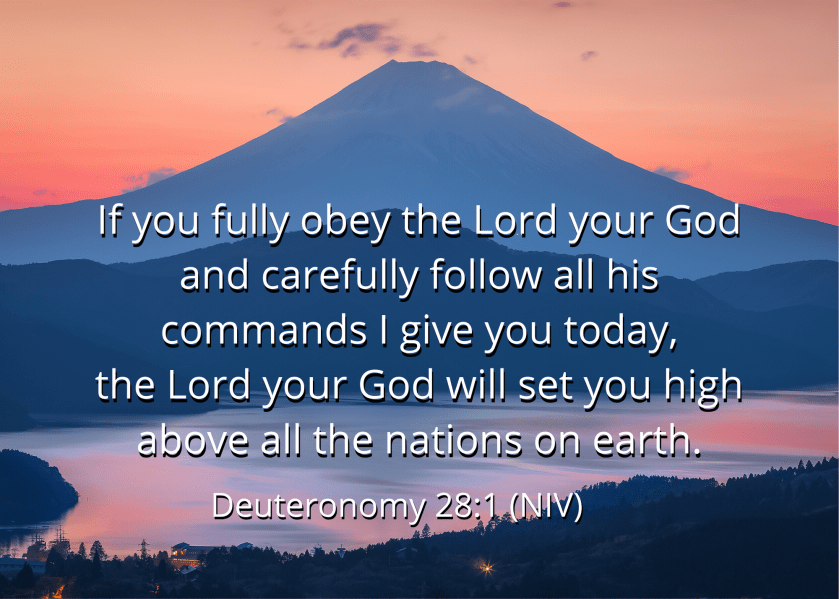
“And if you faithfully obey the voice of the LORD your God, being careful to do all his commandments that I command you today, the LORD your God will set you high above all the nations of the earth… But if you will not obey the voice of the LORD your God or be careful to do all his commandments and his statutes that I command you today, then all these curses shall come upon you and overtake you. Deuteronomy 28:1;15 (ESV)

Motivating my four children, ages 4 to 12, requires different strategies. My 12-year-old is motivated by rewards, i.e., if you do all your chores and then some extra work, you can have an extra 30 minutes playing the Switch. Consequences, however, don’t seem to faze her quite as much. The other 3 children are less cut and dry and require a more measured approach with rewards and consequences; however, one great challenge is follow-through. As busy parents with hundreds of things to do each day and limited energy reserves, it can be difficult to be consistent and follow through on our threats and promises.

God is not inconsistent. God is merciful, but he follows through on his promises. In Deuteronomy 28:1, he promises a blessing in return for obedience, but in Deuteronomy 28:15, he promises punishment for disobedience. It’s the same as a carrot and stick. Something tasty to motivate or something that brings pain to correct course. We see through Israel’s history that even though God followed through on his promises of blessing, he still had to break out the stick to use on a hard-headed people.

Over the past couple of weeks, I have been preaching from Romans 7-8. In Romans 7, Paul writes about not understanding his actions. Paul knows what is right, he knows what God desires of him, and he wants to be obedient, but there’s a problem. Despite the faith in and knowledge of God’s ways, Paul succumbs to human desire and does the things he does not want to do, i.e., the things of the flesh. Can you believe it? Paul, the apostle, was a “slave” to sin in the flesh! Is that hard to believe? Paul is human like us, and despite what we know is right, we often don’t do the right thing. Why, why, why? Because sin is ingrained in the flesh.

There are debates on something called original sin, which is not something we’ll get into here, but it is clear we learn how to sin from an early age. We are naturally selfish as children; we need to be self-focused to survive, but as we mature, we should become less self-focused and more focused on the big picture. In the Christian view, we should be imitating Jesus, who humbled himself (Philippians 2). Jesus was a model of selflessness and submission to God’s will. Jesus did not want to die, yet he was obedient to the point of death so that many could be ransomed from the death that comes from sin; he saw the big picture. Though we can see the big picture, we often fall short of the kind of selflessness that Jesus modeled.

Unlike the Israelites under the old covenant, we have Jesus in clear view. We are not holding out hope for a future savior but rather holding onto the promise that the blood of Jesus has covered our sins past, present, and future. While we are called to obedience, God does not hold our salvation in limbo every time we mess up. We are faced with the present consequences of our mishaps with sin, but we have constant forgiveness through the blood of Christ Jesus. If we confess our sins, he is faithful and just and will forgive us our sins and purify us from all unrighteousness” 1 John 1:9 (NIV). We don’t have to go through the carrot and stick metaphor as partakers of the New Covenant in Christ’s blood. We must strive to be obedient, but fess up when we miss the mark, and move forward in each new day as we are redeemed by the blood of the lamb.

-J.J. Fletcher

Reflection Questions:

  1. Why do you think it is so hard to balance the desires of the flesh with the knowledge of the living God and some pretty clear instructions on his will for us?
  2. Is it easy to become discouraged when we fall short? What are some obstacles to confidence in our faith walk?
  3. Does a tendency toward legalism sometimes impede our ability to deal with flaws in ourselves and others?
  4. Is there a place for carrot-and-stick dynamics in church life and discipline?
  5. What would Paul think about the way that some modern churches deal with reconciling the desires of the flesh with faithfulness to the gospel?
Reluctant Obedience

Old Testament: Jonah 1 & 2

Poetry: Psalm 133

New Testament: Matthew 19

The book of Jonah fascinates me.  I think the main reason is that my understanding of it has changed so much since I first heard the story as a child.  And honestly, even now when I read it, my opinion of Jonah is still changing as I keep changing.

In children’s’ classes, the story of Jonah is typically used as an example of obedience to God.  He didn’t listen at first, but then he was swallowed by a large fish and changed his mind and went and did what God told him to do.  So that was my opinion of Jonah growing up for the most part – great example of obedience.

I know I had read through the whole book, but I must have glossed over the ending.  As a parent, I understand why most classes do stop at Jonah’s obedience to God in going to Nineveh.  My kids need good examples.  They don’t really need more ideas of bad behavior or attitudes – they can come up with plenty on their own.

When I got a little older and continued to read through this story, it finally struck me – yes, Jonah did obey God’s direction to go to Nineveh, but 1) that was after he had been swallowed by a giant fish, lived, and was spit back out, and 2)his behavior is like a child telling a sibling they were sorry for hitting them because they were told by their parents to do that.  Not because they really felt sorry and wanted to, but because they were made to.  His obedience didn’t really seem to come from the heart.

And we see that as the book continues.  He did what God asked.  He told the Ninevites that they were doing bad things and that God was going to destroy their city.  And this changed their lives!  They turned from their evil ways – at least for a time; we do know they went back to evil – but Jonah didn’t care about that.  He only wanted to see the destruction that he preached.

While this isn’t the example I want to present to my children, I get it.  Jonah speaks to me as an adult as a reminder that I can’t just do the “right” thing.  I have to do it with the right heart.  It reminds me of 1 Corinthians 13 which lists all these things that one could do that are good, but says “but if I have not love, I am nothing.”  We can do all the right things.  By the book.  But if we do them without love, does it really matter? 

The Ninevites were saved for a time by Jonah’s preaching.  His reluctant obedience made a difference for their lives.  But did it make a difference in Jonah’s own life?  I think God can use our reluctant obedience to still make a breakthrough to others, to serve them.  But when we do things without love, we miss out on the best God has for us – the joy and blessings of serving.

More on Jonah tomorrow.

~Stephanie Fletcher

Reflection Questions

  1. When have you obeyed – but reluctantly and with a wrong heart? In your case was that better than not obeying at all? How might have things been different if you had obeyed – done the right thing – with a right heart?
  2. Re-read Jonah’s prayer in Jonah 2. What do you learn from Jonah in this prayer?

Breaking the Sin-Cycle

Old Testament: Isaiah 1-2

Poetry: Psalm 59 

New Testament: Hebrews 4

In yesterday’s devotion, we were reminded of the importance of obedience and the dangers of disobedience. Even though the passages that we read yesterday were years and years removed from our reading today in Isaiah, similar themes run through both. Israel was continuously going through a sin-cycle of disobedience, discipline, and then a decision to return to God. In Isaiah 1, we see the harsh consequences of sin again. Verse 5 says, “Why will you still be struck down? Why will you continue to rebel? The whole head is sick and the whole heart is faint.” Sin has eternal consequences, and it also has consequences in our daily life. Because of the Israelites’ sin, their home was destroyed, and all of the things that they loved were taken away. Even though sin was destroying them from the inside out, they still refused to submit to God. 

In many ways, we can talk about sin with the same language that we use for other negative repetitive behaviors, like addiction. People who are addicted to something keep returning to it even if the actual desire to do the thing isn’t there. They may actually hate the thing that they do, but they can’t seem to stop themselves from returning to it (which sounds a lot like my relationship with social media). Israel continued to return to sin despite the pain that it caused. 

In verses 18-20, we see a promise to the Israelites. It says, “Come now, let us reason together, says the LORD: though your sins are like scarlet, they shall be as white as snow; though they are red like crimson, they shall become like wool. If you are willing and obedient, you shall eat the good of the land; but if you refuse and rebel, you shall be eaten by the sword; for the mouth of the LORD has spoken.” On their own, Israel could never break out of the sin cycle. When they rested on their own power, they fell back into disobedience. 

But, we don’t have to rely on our own power to break our addiction to sin. This promise for the Israelites – the promise to be made clean, to be freed from sin – found its fulfillment in the sacrifice of Jesus on the cross. 2 Corinthians 1:20 says, “For all the promises of God find their Yes in him.” We now have been grafted into the body of Christ. The promise that was given to Israel has been given to us as well. This is why we can break the sin-cycle in our lives. We don’t have to rely on our own works; we find our rest in him. Hebrews 4:9-11 says, “So then, there remains a Sabbath rest for the people of God, for whoever has entered God’s rest has also rested from his works as God did from his. Let us therefore strive to enter that rest, so that no one may fall by the same sort of disobedience.” We can enter into this state of rest because Jesus has done the work for us. He was the sacrifice that made us clean. Just like the Israelites waited for the Promised Land, we wait in hope for the Kingdom, our eternal glorious place of rest. We have to hold fast to the truth and choose to live rightly. 

How then should we live? Isaiah describes a life that is lived rightly: “Wash yourselves; make yourselves clean; remove the evil of your deeds from before my eyes; cease to do evil, learn to do good; seek justice, correct oppression; bring justice to the fatherless, plead the widow’s cause.” (Isaiah 1:16-17). 

Let’s pursue righteousness as we wait for the fulfillment of the promises of God. 

~Cayce Fletcher

***You can find more of Cayce’s writing at www.amorebeautifullifecollective.com.***

REFLECTION QUESTIONS

  1. Why is it so hard to change our behavior on our own power?
  2. In what ways does it comfort you to know that the Holy Spirit can help you break the sin-cycle?
  3. Do you feel as though you are resting in Christ, or are you relying on your own works?

sgl23bibleplanDOWNLOAD

Rebellion, Discipline, and Obedience

Old Testament: Isaiah Introduction (See Below)

Poetry: Psalm 58

New Testament: Hebrews 3

After several years of teaching, I recently had the opportunity to stay home with my two kids. My oldest is three, and he has a mind of his own. Much of my day is spent doing fun things, like playing outside, reading books, and building Lego towers. But, with a toddler, there are always going to be times of correction. Discipline now is necessary for a happy, healthy, well-adjusted human later on. But disciplining through rebellion has its share of tears, tantrums, and yelling of “No.” 

Today, we read about a similar situation of discipline. There are two choices we have in life. We can choose to be obedient to God, submitting to his word, or we can choose to pursue our own desires, rejecting God’s word. One path is the path of righteousness and life. The other is the path of sin and death. In Psalm 58, we read about the harsh judgment reserved for those who are not righteous. In verse 10, “The righteous will rejoice when he sees the vengeance; he will bathe his feet in the blood of the wicked. Mankind will say, “Surely there is a reward for the righteous; surely there is a God who judges on earth.” 

As Hebrews 3:7-8 says, “There as the Holy Spirit says, ‘Today, if you hear his voice, do not harden your hearts as in the rebellion on the day of testing in the wilderness.’ We must take care of the condition of our hearts. If our heart is soft to God’s leading, we will listen in obedience to what he says, and we will do it. However, if our heart is hard, we will be more likely to reject God’s commands. 

How do we know the condition of our heart? It’s important to look at our actions. If what we do is lined up to God’s word, then we have a heart to listen to what he says and follow it. I’ve heard it described as a plumb line that we use to measure up our actions. If we are out of line, God’s word will call us out. 

What does a hard heart look like? If you notice that your actions are consistently not matching up with godly living as described in the Bible, that is a good indication that you have hardened your heart to his teaching. You are living in rebellion. Those words seem harsh, but they line up with the way that Hebrews describe them. If you consistently read that you should do something but you don’t, you are not living righteously. Just like the notifications on your phone, you swipe out of and never look at or the alarm you press snooze on, you are desensitizing yourself to the effects of sin. You’ve become “an evil, unbelieving heart” that is “hardened by the deceitfulness of sin” (v. 12-13). 

We need to encourage each other to pursue a righteous life of obedience. That is what we are called to do. 

~Cayce Fletcher

***You can find more of Cayce’s writing at www.amorebeautifullifecollective.com.***

Isaiah Introduction

The book of Isaiah was written by the prophet Isaiah to the southern tribe of Judah at a time when the Assyrian empire threatened Judah’s destruction.  The name Isaiah means “the Lord saves”.  Isaiah is quoted in the New Testament more than any other Old Testament prophet.

While Isaiah predicted that Judah would eventually be defeated because of their sins; he also predicted a message of hope – the coming messiah (a suffering servant), would come to establish the Kingdom of God on the earth.

Some have suggested that the first 39 chapters of Isaiah focus on doom and gloom, similar to the 39 books of the Old Testament; while the 27 last chapters (40 – 66) of Isaiah focus on hope and restoration, similar to the 27 books of the New Testament.

There are many prophecies in Isaiah about the “last days”, the “Day of the Lord”, the promised messiah (Jesus), God’s suffering servant (also Jesus), conditions in the millennium, and the coming Kingdom of God.

One of my favorite verses is Isaiah 41:10, “So do not fear, for I am with you; do not be dismayed, for I am your God.  I will strengthen you and help you; I will uphold you with my righteous right hand.”

–Steve

REFLECTION QUESTIONS

  1. Have you walked through a season of rebellion? What was the outcome?
  2. What is the importance of obedience?
  3. What is the current status of your heart? How do you know?

sgl23bibleplanDOWNLOAD

Numbers 15-16, Psalm 46-48

“Clap your hands all you peoples; shout to God with a jubilant cry. He chooses for us our inheritance – the pride of Jacob whom he loves.” Psalm 47:1,4

As Kyle mentioned yesterday, the book of Numbers is anything but boring. And today, we got acquainted with the interesting – and deadly – story of Korah’s rebellion. In chapter 16, Moses and Aaron are approached by a group of Levites led by Korah who had had enough of Moses and his leadership. He confronted them and said, “You have gone too far! Everyone in the entire community is holy, and the LORD is among them. Why then do you exalt yourselves above the Lord’s people?” (Numb. 16:3). 

Moses, raised by Pharaoh’s daughter, had led the Israelites out of Egypt. Not only was he the main leader, but he also acted as a go-between for the Israelites and God, speaking to God frequently on the Israelites’ behalf and receiving the law and the commandments from God. From the outside looking in, Moses could seem to be a pretentious guy giving meaningless commands to the Israelites people with fatal consequences for the people who broke them like the man stoned to death for breaking the Sabbath in Numbers 15:32-36. Korah, the man at the head of the rebellion, was also from the tribe of Levi and had the support of 250 leaders of the community. At this point, they had probably had enough of Moses’ rules and spoke out against what they believed were unjust commandments.

But, little did they know what that would cost them. Moses cried out to God and trusted in God to deliver him. He prayed that the people would see them who was the true messenger of God based on what God did. When they both came to present offerings in firepans to God, the ground opened up and swallowed Korah and all his household with all of their possessions and they went “down alive to Sheol” (v. 31-35). Then, fire came from the Lord and killed the 250 leaders who were presenting offerings in firepans to God. The Israelites, who still believed that the real men of God were Korah and his followers, began to complain about Moses and Aaron. God sent a plague to kill the Israelites, and that plague killed 14,700 before Moses put a stop to it by standing between God and the people. 

This chapter in Numbers is a whirlwind, full of intrigue, suspense, and vengeance. What’s striking to me is the complaint of Korah that sparked this chain of events that led to the death of close to 15,000 people. Korah and his followers complained about Moses and Moses’ power. And like I said, from an outsider who didn’t understand the true purpose and meaning of the law, those complaints would seem valid. But, Korah was missing the whole point of the message Moses was communicating, because that message centered around God. Korah wanted to the power for himself. He didn’t realize that Moses wasn’t doing those things for himself, but instead, he was acting in complete humility and obedience to God. To Korah, those commandments seemed meaningless, arbitrary, and harsh, because he didn’t truly know God. Thus, he wasn’t willing to be obedient to his commands. 

The world looks at the message of Christ and says similar things. It asks us, “Who do you think you are? Don’t you know we all have a little bit of God in us? How dare you try to tell us what to do?” Little do they know that the message we are following is not based on us and our likes and dislikes. It’s not something just made up by human hands. This is a message from God! And that makes all the difference. 

When you find yourself feeling the force of all the world’s questions, you can stop and remind yourself of the promise found in the psalms: You are chosen by God to be his holy set apart people. 

~Cayce Fletcher

Links to today’s Bible reading – Numbers 15-16 and Psalm 46-48

Matthew 19 & Mark 10

In Tim Keller’s book, Counterfeit Gods, he describes the ways that we put other areas of our life in the role of ‘god of our lives.’ Though the handmade idols that the Israelites worshipped – like the Baals and Golden Calves – may not exist anymore, idolatry is still very present in our modern day life. Keller describes how we, as humans, have a tendency to make good things god things, and consequently, we allow those things to turn our focus away from God. Sex, marriage, money, wealth, (self-)righteousness, and status can all be good things, but these things cannot be the ultimate thing. 

In today’s passage, we meet the Pharisees who were trying to trip Jesus up with a question about divorce. They wanted to know if Jesus was going to contradict the law of Moses by saying that divorce was not legal. After Jesus responded that divorce should not happen outside of sexual immorality, the disciples were amazed and said, “If this is the situation between a husband and wife, it is better not to marry” (v. 10). Jesus agrees with them in v. 12 when he talks about the eunuchs who chose to live that way for the sake of the Kingdom. 

Then, later on in Matthew 19, a rich young ruler comes and asks Jesus what rule he needs to follow to get eternal life. Jesus tells him the thing that he needs to do is give his possessions to the poor. He “went away sad, because he had great wealth” (v. 22). When Jesus tells his disciples that it is incredibly difficult for a rich man to enter the Kingdom, they are amazed and asked “Who can be saved?” (v. 25). Jesus responds in v. 26, “With man this is impossible, but with God all things are possible.”

In Matthew 19, Jesus focuses on 3 areas of life, and in each case, he shows the disciples that they need to obediently follow what God says, despite how contrary it looks to the world. These 3 areas of life can be areas where we all easily fall into idolatry. They are good things – but they cannot be the ultimate thing. These things cannot be our god, but we try to put them in that place. 

The pharisees (and the rich young ruler) struggle with self-righteousness. They wanted to be good enough to be their own god – so that in effect, they wouldn’t actually need God. Though no one in the story seemed to struggle with marriage and sex, the question the Pharisees asked brings up this next idol that so many people make an ultimate thing. Both of these marriage and sex are created by God, but so often, we do not act with obedience to God’s word in these areas, and we step out of God’s design for us. By doing so, we are making these things an idol. The last area is money and wealth. The rich young ruler had so much wealth that he went away grieving. We don’t know if he made the choice to act with obedience to what Jesus commanded him to do, or if he decided that his wealth was too important to him to follow Jesus and ‘enter life.’ What we do know is that he mourned for his wealth. The disciples were amazed that Jesus spoke so harshly of wealthy people. In a culture that values money and possessions (like our own), the pursuit of wealth always seems like a good thing. However, like we’ve read this past week in the book of Luke, money can become an idol in our life, and the Bible says plainly that we cannot serve two masters: God and money (Matt. 6:24). 

When it’s so easy to fall into idolatry, who then can be saved? Jesus reassures us that “With man this is impossible, but with God all things are possible.” If you find yourself in a place of idolatry – putting good things in the place of the ultimate thing, turn back to God. He is the one with whom all things are possible. 

~ Cayce Fletcher

Today’s Bible passage can be read or listened to at BibleGateway here – Matthew 19 & Mark 10.

Tomorrow, we will read Matthew 20-21.

Isaiah 13-17

A person may think their own ways are right, but the Lord weighs the heart.

Isaiah revealed a prophecy against the nations in our reading today.  In some cases those that received these warnings had years before the prophecies would occur. There was time to listen, repent, turn their lives around, prepare and be ready. What holds us back from surrendering everything to God and getting ourselves “right with Him”?

Sometimes it is pride. In Isaiah 13:11 we read “I will put an end to the arrogance of the haughty and will humble the pride of the ruthless.” When we become prideful, we exalt ourselves as our own god. We put our desires and wants as our top priority. We justify and reason that our actions are acceptable because those actions are “right” in our own eyes (Proverbs 21:2). As I grew up, I had friends that rejected following God because “they wanted to do, what they wanted to do”.  They viewed God’s commands as restricting them instead of seeing Him as a loving Father providing the best way for His children to live life. Pride tells us that we know what is best for ourselves. We think that God does not understand who and what we are. C.S. Lewis stated that “Pride leads to every other vice: it is the complete anti-God state of mind.”

In Isaiah 14 we see so clearly that the leaders in the world appear to have power, but they cannot defeat death. Those leaders claimed that “I will make myself like the Most High” (v.14), but only God has power over death. In the following chapters we see that the great cities and wealth of nations will not last. The armies of vengeance and wrath destroyed the cities and carried the wealth away. Punishment was administered to nations. In fact we explore that God is the only One who controls nature, which provides our food source. Though they planted the finest plants and imported vines, yet they did not have a harvest. These illustrations should show us that God is ultimately in control. We need to be humble before Him. Isaiah 17:7 contains the answer. “In that day people will look to their Maker and turn their eyes to the Holy One of Israel.”

That is the answer for us today. We need to come to God humbly, honoring Him as the absolute authority. God is sovereign. He is the supreme authority and all things are under His control.

We need to turn our attention away from the raging nations of the world, and turn to Our God who gives love, wisdom and salvation.

~ Rebecca Dauksas


Today’s Bible passage can be read or listened to on Bible Gateway.

Tomorrow, we continue reading the history of Israel in Isaiah 18-22 – as we continue the 2020 Chronological Bible Reading Plan

2 Chronicles 28 & 2 Kings 16-17

Storing up treasures in heaven is greater than receiving momentary glory and recognition.

Wishing blessings to everyone this week and all the time. Watching quizzing at FUEL on Tuesday was always a joy, and I always would feel the adrenaline on the edge of my seat watching many friends compete for the championships. At the end of the night watching brothers and sisters in Christ hoist up their trophies and see their hard work come full circle inspired me to want to know the word better and to celebrate them in their accomplishments.  


Looking at 2 Chronicles and King Ahaz, we see a young man become king when he came into a place of power. He angered the Lord because his deeds were for his own self and never gave glory to God nor sought the Lord’s guidance in his actions. Ahaz wanted glory for himself and provoked the Lord. He built alters and offered sacrifices that disgraced the Lord.

As humans we want to be known and want some of our deeds to bring us our own glory and recognition. Ahaz came to power when he was only twenty. He did not follow in the steps of his father, David. Sometimes we want to do things that honor us and get us recognized in front of our friends and others. It feels good, makes us feel worthy. Even when Ahaz tried to make amends, the Lord gave Judah over to those lands surrounding it. It continued with Hoshea as his deeds were evil in the sight of the Lord (2 Kings 17). God calls us to rely on him and give the glory to him for through him we accomplish all good deeds. God gives and he can also take away. God gave the Israelites what he promised them in the promised land. However, because of their disobedience and pride, God took it away.  2 Kings 17:12–13 explains why God let Israel fall as they turned from him. God wishes for us to seek and give glory to him and perform services in his honor. Doing such deeds brings more delight to him and feels you with spiritual delight than any earthly recognition. Storing up treasures in heaven is greater than receiving momentary glory and recognition. God has called you; do not forget these things as we read about others who forgot who their deliverer was. 

Right now, even though we aren’t close to one another, we can still celebrate the accomplishments and the deeds of our friends scattered around the US. This isn’t normal for us right now, but I want you to know I cannot wait for the time to celebrate, laugh, worship and hug everyone glorifying the Lord once again in the future and especially when the kingdom comes. 

“For all things are for your sakes, so that the grace which is spreading to more and more people may cause the giving of thanks to abound to the glory of God.” ~ ‭‭2 Corinthians‬ ‭4:15‬ ‭NASB‬‬

~ Evan Grant


Today’s Bible passage can be read or listened to on Bible Gateway – 2 Chronicles 28 & 2 Kings 16-17.

Tomorrow, we continue reading more about the history of Israel in Isaiah 13-17 – as we continue the 2020 Chronological Bible Reading Plan


Learning from Obedience & Disobedience

Deuteronomy 3 & 4

Deut 4 9 NIV

We live near apple country. In the fall we have driven to the mountains and visited apple orchards. The taste of ripe apples from the tree is amazing. The apple trees are pretty hanging with the delicious varieties of apples and the views are really beautiful. In Deuteronomy 3, Moses is told that he can “Go up to the top of Pisgah and lift up your eyes to the west and north and south and east, and see it with your eyes, for you shall not cross over this Jordan.” Imagine Moses standing on the mountain looking at the Promised Land. He would not enter the land because of his former disobedience. I think this consequence was important for the Israelites. Moses was so close to God and was an example for the entire Israelite community. He was their appointed leader and they followed his example. They could also learn from his disobedience. Experiencing this consequence of not entering the land probably made a big impact on the Israelites and Joshua. In fact, God tells Moses to “charge Joshua and encourage him and strengthen him, for he shall go across at the head of this people, and he will give them as an inheritance the land which you will see.”

I grew up with siblings. I had an older brother and sister and I learned from their example. If they did something good at school or church, they were rewarded with awards and praise. It was great because I learned what I should do by their example.

In Deuteronomy 4, Moses is giving his all to make the people understand the importance of obedience to the LORD. Not only will the Israelites and their children be blessed by obeying, but if they keep the decrees and laws they will have wisdom and understanding. They will set an example for other nations. People will hear these statutes and say, “Surely this great nation is a wise and understanding people. For what great nation is there that has a god so near to it as is the Lord our God whenever we call on Him? Or what great nation is there that has statutes and judgments as righteous as this whole law which I am setting before you today?”

Our personal obedience to God can be a positive example for others. Obedience leads to blessings for us and for others.

Rebecca Dauksas


Today’s Bible passage can be read or listened to at https://www.biblegateway.com/passage/?search=Deuteronomy+3-4&version=NIV

Tomorrow’s reading will be Deuteronomy 5-7 as we continue the 2020 Chronological Bible Reading Plan


Jesus Says Go

Mark 16

image (5).png

Jesus was nailed to a tree, he breathed his last, the curtain was torn.

The stone was rolled away, sin lost its stronghold, death was defeated.

This story holds so much power, whether it’s your first time hearing it or your ten thousandth time. Live everyday like you’ve just seen the stone rolled away from the tomb with your very own eyes. Let that excitement, awe, and wonder overflow from your heart.

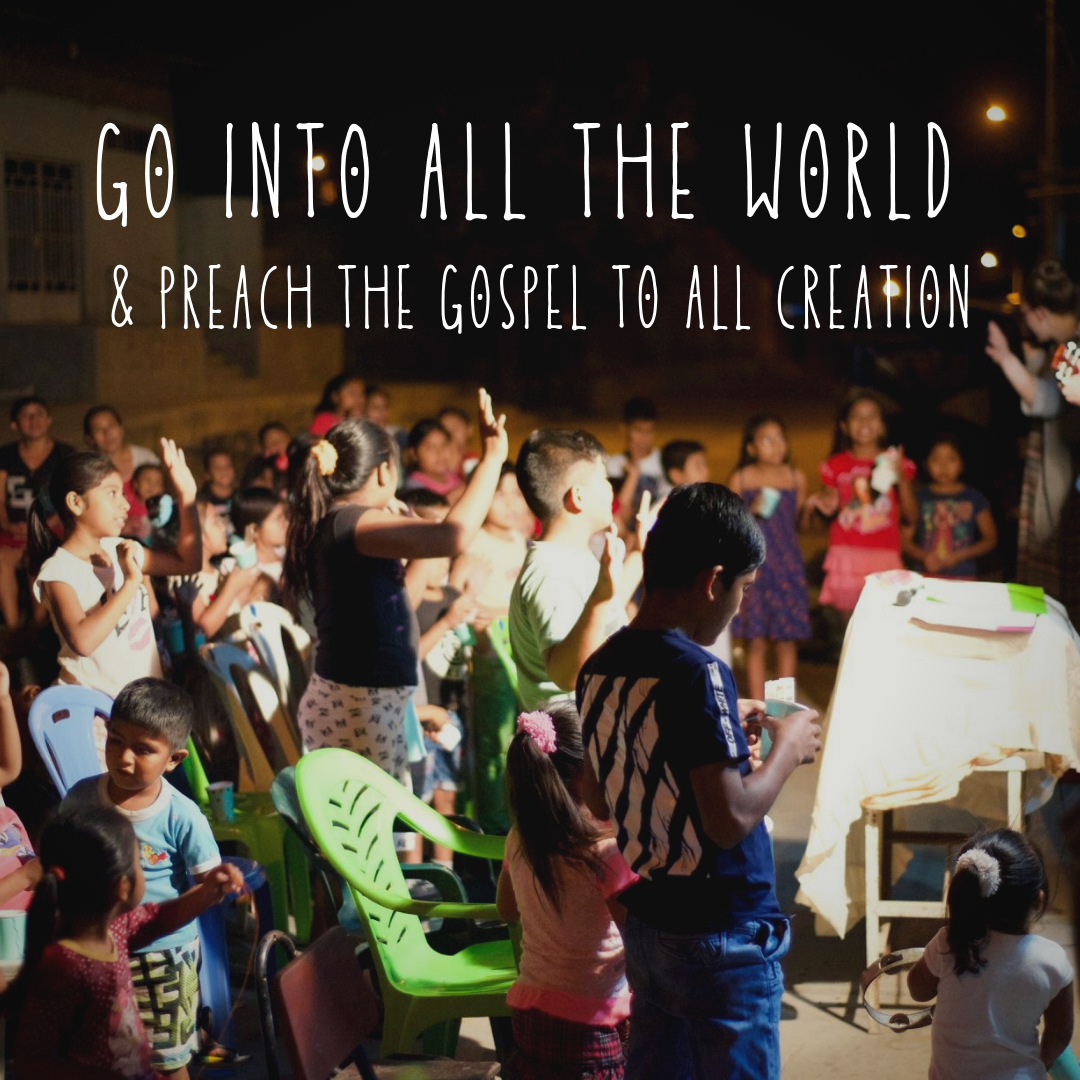
We know the power of the empty tomb, so now what? When Jesus appeared to his disciples after his resurrection, he appoints them to a certain task: Go into all the world and preach the gospel to all creation (Mark 16:15).

Jesus said go, so the disciples went.

Then the disciples went out and preached everywhere, and the Lord worked with them and confirmed his word by the signs that accompanied it (Mark 16:20).

Jesus said go, so the disciples went, and God showedup.

God saw the disciple’s obedience as usability. When we go, we obey Jesus’ calling on our life, and God can work through us. Look at everything God accomplished through the disciples after Jesus’ ascension into heaven:

Nevertheless, more and more men and women believed in the Lord and were added to their number. As a result, people brought the sick into the streets and laid them on beds and mats so that at least Peter’s shadow might fall on some of them as he passed by. Crowds gathered also from the towns around Jerusalem, bringing their sick and those tormented by impure spirits, and all of them were healed (Acts 5:14-16).

Jesus said go, so will you obey? Will you let God work through you?

You don’t have to go far, but you do have to go. Go sit in your front yard and engage your neighbors walking by in conversation. Go to the grocery store and be extra friendly to your cashier. Go to church and mentor the newly saved Christian. Go to work and be eager to strike at every small opportunity to share the hope of the Kingdom.

You have a mission field. Your mailman, your coworker, and your next-door neighbor, need to hear the gospel. You have a message to share! If not you, then who?


-Mackenzie McClain