God’s Presence and the Garden

Genesis 2 8

Text: Gen 2:4 – 3:24


Yesterday we began talking about the presence of God, starting with the creation account in Genesis 1:1-2:3. We saw that God not only created the earth as a place for us to live, but also as a place for him to be present with us. The heavens and earth are God’s temple.


As we move on in Genesis, starting with 2:4 and going to the end of chapter 2, we find another creation account, and its focus is different than the first, paying special attention to humans and what seems to be agriculture. We are introduced to a garden, and people to cultivate and rule over it: Adam (which literally means man or mankind) and Eve (which literally means living or life). The garden also includes two special trees, the tree of life, and tree of the knowledge of good and evil. The tree of knowledge could have easily been called the tree of certain death, because God promises they will die if they eat from it. But they can eat from anything else.


This garden is a special place. It seems to be a focal point, almost like a holy of holies for God’s cosmic temple. It is sacred space that he shares with his creation. God walks in the garden and is present there with Adam and Eve. Can you imagine just sharing space with God, doing some gardening, and God just walks by, like it was a normal thing? “Oh, hey God.”


That kind of closeness and intimacy with God in his presence was how it was for Adam and Eve, until something happened. There’s a talking serpent. This mischievous serpent character convinces Eve that she won’t in fact die if she eats from the tree of knowledge, she’ll just have knowledge like God. This is tricky because it has just enough truth in it. Maybe you would call it a white lie, but still a deception. Eve eats from the tree of knowledge, and Adam follows suit.


As Adam and Eve ate from the tree of knowledge, they disobeyed God’s direct command and took matters into their own hands, going down a path to prematurely obtain the knowledge of good and evil. They likely had a childlike innocence about them before, and maybe God would have in time revealed this knowledge of good and evil to them in his way, in his time. Well, now things were going to be different for them. They suddenly realized they had no clothes and hid from God. They were ashamed. God finds out what they did (surely he already knew what they did) and kicks them out of his garden.


The consequences were very serious. God has cherubim (winged creatures sort of like a sphinx, not at all like a baby with wings) and a flaming sword guard the entrance so they can’t enter and eat from the tree of life. They are exiled from the garden, they are effectively sentenced to death by no longer having access to the tree of life and God’s presence. They will have to work much harder to grow food to survive, and some other fun consequences.


Reading an account like this makes you think a lot. What sorts of things are symbolized by the tree of life, and tree of knowledge? What is a serpent doing there? Are we really talking about fruit? I have no definitive answers to these questions. The beauty of this passage is that it forces you to think more every time you read it, and I believe that is why it is there.


The garden account is ripe with symbolism to interpret. While it is an account about real people, it is written in a way that makes it much bigger than that. Adam and Eve can be seen as archetypes for us, meaning the things that are said of them are also true of us. Adam is formed from dust (Gen 3:19), so are we (Ps 103:14). Eve is made from one of Adam’s sides, while we recognize that men and women are each other’s halves in a way. They face temptation and shame, so do we. They do things in defiance against God, and so do we (Rom 3:23), and as a result of that defiance, they exiled themselves from God’s garden, as we frequently exile ourselves from God’s presence when we sin, in a way. Their story is much like ours.


This isn’t the most encouraging chapter in the story of God’s presence. It’s one of the lower places we could go in scripture. The reality is that sin and the presence of God are not compatible things. Sin, separation from God, and death are all connected, if not three heads of the same monster. Of course, God knows this, and still wants to be present with us, so there has to be some kind of remedy for sin. Ultimately, we know that remedy to be Christ, but there was a progression to get there.


Tomorrow we’ll look at Exodus 40 – how God used a man named Moses to renew his presence among his people.


-Jay Laurent


When Temptation Comes

Matthew 4

matthew 4 1

More than we would like to admit, we struggle with temptation.  No matter how great our will or sense of purpose in our life, it always seems to find a way to slither into our lives and rear its ugly head.  Ironically, we are caught most off guard and unaware, not when we are in the midst of a struggle with sin or a desperate time, but when things are at their best.  One minute we are walking close to God, doing his will, connected to His Spirit, loving His word, sharing his Gospel, and the next we are faced with an idea (James 1:13-14).  An awful idea. A wonderfully awful idea that will feed our selfishness, our human condition.

In Matthew 4, today’s reading, Jesus is led by the Spirit to the desert.  God, being the great storyteller he is, takes Jesus to the ultimate contrast of Eden, where the groans of nature longing for restoration can be most heard (Rom 8:22).  A setting that is far away from paradise, an allegory of the state of mankind, filled with the different, yet same challenge – temptation. Now, there are theological hairs you can split as you read this message today. Don’t do that. Fix your eyes on Jesus.

Jesus’s  triumph begs the question, “How did He overcome temptation?”  Well, He was the Son of God, right? This is true, but an error in our thinking if we think this is the sole reason that Jesus wins the days.  He is the Son of God, but he faced temptation, “just as we are”, and did not sin (Heb 4:15). You might say, “He obviously had a special ability to resist.”  You are right. It is the same special ability we have access to: The Holy Spirit. God may take us to the desert to see what our faith is made of, but He will not give us something we can’t handle, and will actually empower us if we seek Him in that moment (1 Cor 10:13).

But careful. Careful we must be because when we are in the desert it is easy to see what is coming.   We might feel as though we have plunged a dagger into the heart of temptation, but we have not put it to rest.  We must remember, we are human. No matter how willing our spirit is to continue on day after day in the will of God, our flesh is weak (Matt 26:40-43).  We crave food. We seek power. We want to be known. Our eyes, the lamp into our soul (Matt 6:22-24), see a way we can instantly fulfill the desires that will be made complete by God and chases after them in selfish, fleeting moments.  Unfortunately, this often comes on the day we leave our armor at home, catching us off guard, not ready to do spiritual battle.

Deut 8 3Looking to Jesus, how can we be ready to do battle with temptation?  First, he knew the word of God. It is how He responds not only to the temptation, but even when the word of God is seemingly being used against Him.  How can you know the will of God? It is as ironically simple as losing weight: diet and exercise. Consume the right thing, His word, and practice it daily, so you will be spiritual healthy.  Next, do God’s business. Know that temptation can come at any moment, but comes easier when we are idle (Prov 16:27-29). Keep your eyes on God and your hands and feet busy to his work. Like the old adage, “if you’re going through hell, just keep going,”  Jesus faced the temptation, but immediately moves onto His ministry. Temptation IS NOT sin. No guilt required; pick up and move on. Finally, be on guard. Relapse can setback or even kill your spiritual life. Removing unnecessary temptation from our lives is a must.  Even if we are in the word every day, engaging in spiritual disciplines, or deeply involved in a ministry, at the very height of our endeavors, it only takes a moment to go back to sin and fall harder and faster than we ever did (the very nature of relapse). If you can’t hang out with your friends without getting drunk, then don’t hang out with them.  If you can’t be on the internet without looking at inappropriate sites, then don’t get on it. If you can’t use social media without bridling your tongue and speaking in love, then stop. Jesus uses hyperbole to illustrate the practical advice when he states, “it is better to cut your hand off” or “pluck your eye out” (Matt 5:29, 30) than to be lost to sin, and ultimately the kingdom of God.
It is imperative you know there is a way to overcome temptation, no matter how great.  We have access to the Father, power through His Holy Spirit, and our eyes on Jesus Christ not only as our example, but our mediator when we fall short. He speaks to the Father because Jesus knows what it is like, and encourages us to not give in or give up.  Study. Do. Guard. Repeat. Temptation may come, but sin will no longer find a foothold in you.

-Aaron Winner

Lessons from the Wilderness: David

Wilderness Wandering Lesson #3: When the desires of our heart lead us away from God, true repentance leads us back.

Psalm-51-Prayer.jpg

At the heart of our lessons from the Israelites and Elijah is a focus on trust. We need to trust that God knows best for us and will lead us in the right direction as the Israelites learned. And, we need to trust that God will provide and protect us according to his will like Elijah learned. Elijah, in our previous lesson, was not lead into a wilderness season by any failing on his part. Instead, the wilderness for him was because of circumstances outside of his control. By looking to God and remembering those past successes with God, he was able to overcome trying circumstances.

The wilderness story that we will look at today also concerns a man that could remember past successes with God. In his story, he had stood against giants, mad kings, had been through the wilderness once and overcame it. David was a “man after God’s own heart” (1 Sam. 13:14). We see in the book of 1 Samuel David’s victories. He was blessed by God, and because of this blessing, he was able to overcome his enemies. The book of 2 Samuel then describes what happened to David after he overcame these things and became King of Israel. During the first 10 chapters, David is set on the throne and receives the Davidic covenant, where he is told that Jesus will come from his lineage. If David could have just stayed in these moments where his focus was on God, he would have dwelt securely in the land and set up his children to do the same.

Instead, we see David drifting down a path that led him to devastation in 2 Sam. 11. In this chapter, we see the story where David, without questioning his actions for how they would reflect God, sleeps with Bathsheba and sends her husband to her death. After this, David is told that he would lose the baby Bathsheba just bore and that his house would be destroyed. David’s actions here lead toward the hurt that he faced with his son Absalom in 2 Sam. 14-15. The first sin that we see in these chapter 11, lusting after Bathsheba, began the sin cycle that led David into a wilderness period that was a time of intense pain that David never really got over.

So how did David get to this point? During this time, he had stayed back at his palace idle instead of going with his armies to fight in the wars he wanted them to engage in. At this moment, his desires began to be misaligned from the desires of God. And from here, his actions lead him away from God.

We see some of David’s reactions in 2 Samuel as he mourns his son and repents of his sin. But, at this time, we don’t see his feelings about this time in the wilderness. In Psalm 38, a psalm written by David, we see the danger that comes from drifting too far from God. We see the desperation in David’s voice as he says, “There is no health in my body because of Your indignation; there is no strength in my bones because of my sin. For my sins have flooded over my head; they are a burden too heavy for me to bear. My wounds are foul and festering because of my foolishness” (Ps. 38:3-5). Because of David’s sin, he had to experience terrible pain, a trying wilderness experience. We can look back at the lessons of the Israelites to realize this time in the wilderness was for purification, but still, if David had aligned the desires of his heart with the desires and character of God, he could have saved himself from this pain.

ps. 51

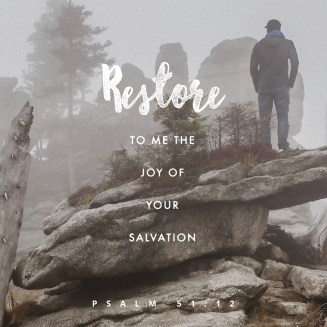
The wilderness is not always caused by our sin, as we’ve seen. But, at times, it is. And during these times, we can look to David’s example to see how to overcome those moments in the wilderness that were caused by our sin. Psalm 38 is an example of a penitential psalm, that shows both David’s true repentance and his desire for God in his life. Psalm 51 is another example of David writing in repentance. He says, “Be gracious to me God, according to your faithful love; according to Your abundant compassion, blot away my rebellion. Wash away my guilt and cleanse me from my sin. For I am conscious of my rebellion, and my sin is always before me. Against You – You alone – I have sinned and done this evil in Your sight. So you are right when you pass sentence. You are blameless when You judge” (Ps. 51:1-4). In this psalm and the other psalms, we see how David takes responsibility for his sin and also recognized what is required from him if he sins. He needs to be purified with a new heart that reflects the desires of God to be placed within him. This is key to accomplishing what David asks God in v. 12: “Restore the Joy of Your salvation to me and give me a willing spirit.” When we are in a wilderness of cause by our sin, we may be tempted to harden our hearts in anger against God. But, that is the path that leads us away from God and further into the wilderness. When we truly repent, we can receive back the true joy that comes from the salvation of God. After we have made it through the wilderness, we can use this time to bring others back to God (v. 13). If you are in this time today, choose the right path and come back to God. It may be painful to soften your heart and feel the weight of your sin, but that will lead you towards the true joy that comes from God.

~ Cayce Fletcher

How to Avoid Unpleasant Consequences

Prov 1 8


When I was in high school I remember my friend and I sneaking out of his house to go hang out with some friends. We left his house about 11:30pm and didn’t get back in until 5:45am  which was 15 minutes before his alarm would go off for school that morning. We were tired and exhausted and couldn’t really function at school. Staying up and sneaking out all night left us at a great disadvantage the next day.
I have made many bad decisions in my life. Many like this story could have been avoided if I had listened to the advice others had given me.  They say you need at least 8 hours of sleep as a teenager.  Well, I got about 15 minutes and it was not enough. 
Proverbs 1:8-16 talks about how fools and sinners bear the fruit of there own actions. I definitely deserved a hard day at school for not listening to the wisdom that was set in front of me.  
 
What wisdom has been told to you that you might need to listen to more carefully? Remember, the consequences may not be worth it.
-Jesse Allen

You Died

Col 3 3

Colossians 3:1-3

3 Since, then, you have been raised with Christ, set your hearts on things above, where Christ is, seated at the right hand of God. 2 Set your minds on things above, not on earthly things. 3 For you died, and your life is now hidden with Christ in God. 4 When Christ, who is your life, appears, then you also will appear with him in glory.

I wonder how those believers in Jesus understood those words when Paul first penned that letter to them. “you died, and your life is now hidden with Christ in God”. He told them that they died. What would it have meant to them to hear that they had died? Obviously they were still physically alive and breathing. They were not zombies or vampires or other popular dead, but not fully dead creatures. What part of them was dead.

Sometimes today we speak metaphorically about death. “I’m brain dead” means that I did something without thinking it through, it was silly or stupid. “I’m dead tired” means that I need some sleep.

I think that Paul was telling the believers in Christ at Colossi that when they were baptized into Jesus Christ, that part of their nature that was under the control of “the flesh” or their brokenness and alienation from God had died. Apart from Christ, that which drives us or controls us is sin living within us. When we come to Christ, that part that controls us is put to death. Our focus is no longer to satisfy our sinful desires. We live by the spirit of God, our life is now found in God. It has not yet been fully revealed. We are still living under the influence of sin, and the new nature has not yet been fully realized in our daily living. That process, known as sanctification, is ongoing. It requires, as Paul goes on to say, a daily putting to death of things like “immorality, evil desires, greed, rage, malice, slander”.

We’re baptized into Christ, then you died, and rose again. Your new nature has not yet been fully revealed and won’t be until the coming of Jesus, but as you live as a follower of Jesus in this present age, you die to your old self a little more each day as you live by the spirit of God in practical ways.

-Jeff Fletcher

Are you Blind?

john 8 34 35

Are you blind!?!  This is one of our favorite questions to ask when those around us are missing something that is so obvious.  It is extremely frustrating to us when they just don’t get it or they just don’t believe us when the truth is right in front of their eyes to see.  This is how Jesus felt when he was dealing with the Pharisees.  His frustration with them oozed all the way through John 8 and 9 because they just “didn’t get it”.  They didn’t believe he was who he was even though it should have been very obvious to them.  They were closed-minded and not willing to listen to witnesses like the blind man who had been healed.
In John 8:34-35, Jesus says that anyone who commits sin is the slave of sin, and the slave does not remain in the house forever.  If you have a sin in your life that you deliberately keep doing, you’re going to get kicked out of the house because you are a slave to that sin.  When you keep choosing to sin, God is getting very frustrated with you, just like Jesus was frustrated with the Pharisees.  He’s probably thinking, “They know I don’t want them to do that, but they keep doing it anyways.  I have given them my Word to read, but they don’t see how they are supposed to act.  Are they blind!?!  They just don’t get it.”  Don’t be that guy.

-Rick McClain

What We Deserve

eccles 9 10

Ecclesiastes 8:2-9:12

Solomon begins here with examples of improper decorum before a king. In his great authority he can do whatever he pleases, his word is law. So who in their right mind would say to him. “What are you doing?” We see this same idea applied to God in Job 9:12 and Isaiah 45:9. So Solomon says to obey the king, be loyal and not rebellious. Do not do something that is bad or wrong just because you do not like or agree with someone. Seems like common sense but we see it every day on the street level all the way up to those with the greatest wealth, power, and influence. There is even a saying that goes with it, “You cut off your nose to spite your face.”

So do not ask, “What are you doing?” but submit, for “whoever obeys will come to no harm.” This is the way of the wise. The wise person has a better chance of knowing the best course of action and when to act, knowing the proper time and procedure. And yet they still find misery as none knows what the future holds. Misery because we do know that there are consequences for our wickedness. And just as no one can control the wind or delay death, no one can escape the consequences for our wicked, sinful ways.

Life is not fair! … Solomon talks about the wicked being buried. In this context it implies that they receive undeserved respect. A proper burial given to an undeserving wretch. False believers who say the words and make a show of faith. So much so that they receive praise, but they are wicked none the less. They reach this status when justice is not dealt out in proper time. He may commit a hundred crimes and yet live a long life. Worse, he is adored by others who wallow in their own sin, rejoicing that this glorious example has been set for them to work towards. But there will be judgment! The righteous, God-fearing man will have life and the wicked … death!

Life is not fair! … Righteous men get what the wicked deserve and the wicked get what the righteous deserve. Circumstances and choices can lead to what might appear to be unrighteous judgment. Verse 13 tells us that justice will come … in time. Until then, verse 15 points to the wisdom of trusting God and enjoying the many ways in which we are blessed. See, we do not see the “big picture” that God does so we cannot fully understand why things happen when and in the ways that they do. It is better to accept what we are capable of and not stress ourselves with what we are not.

We are in God’s hands. He alone knows what awaits the righteous and the wise and all that they do. “All share a common destiny – the righteous and the wicked, the good and the bad, the clean and the unclean, those who offer sacrifices and those who do not.” … Death! Death is the destiny we share and the answer to the question, “What does the future hold, what awaits us?” Solomon refers to this as “the evil in everything.” It cuts down the young and old alike. Death does not care whether you are good or bad. Some believe that because death is so arbitrary that it is excusable to rush into sin, to relish in it all their days. It is where we get sayings like, “Live like there is no tomorrow, live life to the fullest” and of course the most popular one in recent years, “YOLO, you only live once.”

For the wicked I guess this is pretty much true. They have no hope for the eternal life promised by God through His son Jesus so this is all that they have. But the living, those who have life through Jesus, they have hope. But in death we will know nothing. No longer able to learn or grow and in time we will be forgotten. God will not forget you though. We can believe this, we can trust it. He did not forget Saul who became Paul. He did not forget Peter, who denied Jesus. He did not forget Ezra, Nehemiah, Joseph or Job. He will not forget you!

Life is not fair! … I hear this all the time from people of all ages. I used to say this myself in frustration, thinking of the ways that I have been hurt or wronged. I stopped saying it when I took Romans 6:23 to heart, “For the wages of sin is death.” If life was fair and was as immediate as our impatience would hope it was, we would be dead the moment we sinned for the first time. In other words, man-kind would be extinct! If we got what we deserved we would not exist! Instead we have received mercy and compassion that goes beyond our comprehension and that we do not deserve.

I for one am grateful, not for what I deserve but for what I do not.

-Jeff Ransom

Stand in Awe of God

Eccles 4 4 (1)

Ecclesiastes 4:1-5:7

Solomon, as cheerful as ever, writes about what he witnessed around him; the tears of the oppressed, power on the side of the oppressor, and no comfort for the oppressed. Who are the oppressed today, in our world, our country, our community? People are oppressed based on ethnicity, religious beliefs, economic status, gender, you name it. Some appear to less oppression than others but it is an illusion. We are all subjugated to one great oppressor, sin! Solomon rightfully says that we have no comforter … here on earth at least. He reminds us to look at what role we each play in the oppression of others for we cannot be a comfort if we are part of the problem, whether we realize it or not.

The dead! The dead are free from oppression … and happiness … and joy … and living. Peter wrote that it is only those who trust in God that may see the good that can come out of suffering. Thank you Peter for being a ray of sunshine! He says this though because we have a hope in Jesus of an eternity where sorrow and suffering will be no more. Peter was, as we are, on the other side of the cross so to speak so we have a better understanding of the impermanence of this life and its troubles and of the future promise of life in the coming kingdom.

But for today, greed and envy are tremendous motivators for oppression. When people strive for more wealth and power they rarely care for who gets pushed aside, trampled on or abused. It is a grabbing after that which will only give momentary happiness. Solomon suggests that it is better to have one handful with tranquility. … Yeah I read that and did not get it at first either. He is saying that we should not over reach or overextend ourselves. His wisdom guides us to be content with what we have, with what God has provided.

In chapter four Solomon gives two examples. The first is of a rich man whose insatiable thirst for more isolated him to the point that he had no partnership. He did not share with anyone and one day realized the immensity of that loneliness. In contrast, Solomon commends sharing in relationship. There are advantages in this as he points out. In companionship we find greater profit, a good return from our labor. We are able to help one another in difficult times when we are together. He pities those who have no one to help them when they fall. Together we can provide each other with comfort but there is no one to comfort the selfish and greedy. Companionship also affords greater protection when facing dangers. He goes further with that by saying that two is good but three is even better.

The second example is that of a poor but wise youth who succeeds the foolish king. He comes from nothing and it is implied that he was imprisoned at one point. But he rose to power and everyone followed him. He had it all! In time the people grew tired of him and he lost everything. All of his striving after money, power, and adoration was ultimately meaningless. It all comes and goes like the wind.

You might look at the opening verses of chapter five as advice or instruction on proper worship, the proper attitude, appropriate practice of prayer, and the respectful payment of vows. The reality though is Solomon is warning against straining our relationship with God. He warns against making rash vows. Rash vows become the “sacrifice of fools” and the “speech of a fool”. He advises us to be thoughtful before coming to God with an oath or vow. To consider our own limitations and our motivations. We ought to weigh all things against God’s word so that we know that it is good according to His perfect will. “What is the big deal about making vows?” A vow is a promise and for the God who always keeps His promises, breaking our promise is detestable to Him.

Whether facing oppression or battling against the sins of greed and envy, trying to stay humble enough to be content with what we have or avoiding quick words and rash vows, Solomon always returns to our Creator God. ”Therefore stand in awe of God”, trust in Him and His providence. In awe of Him rather than standing in awe of ourselves. Then we can face the troubles and strife with great endurance. Then we can rise above our baser nature. We can find contentment and dare I say … meaning!

To be continued …


Jeff Ransom


Conflict Within the Church

speaking the truth I love-2

Jesus makes a distinction between conflict outside and within the Church. The bonds we have with people in the Church are different—we’re brothers and sisters. As brothers and sisters, we have an obligation to correct, discipline, and mentor each other. Proverbs 27:17 says, “As iron sharpens iron, so one person sharpens another.”

Just like rubbing iron together creates friction, there is sometimes friction in our relationships, especially when sin tries to sneak its way between us. Sin and conflict, if not handled properly, can fracture the unity of the Church. Jesus’ passion was the Church, He went as far as dying on a cross for the sake of preserving the Church for all eternity. Sin is the enemy of Jesus’ preservation mission, so we must handle sin and conflict inside the Church carefully but also with great urgency. Fortunately for us, Jesus lays out a three-step plan to dealing with trouble in our churches.

In Matthew 18:15-17, Jesus says, “If your brother sins against you, go and tell him his fault, between you and him alone. If he listens to you, you have gained your brother. But if he does not listen, take one or two others along with you, that every charge may be established by the evidence of two or three witnesses. If he refuses to listen to them, tell it to the church. And if he refuses to listen even to the church, let him be to you as a Gentile and a tax collector.”

The first step when a problem arises in the Church is to go directly to the culprit in private—doing so with love, mercy, and understanding. Jesus says it’s our responsibility to resolve conflict whether we’re the ones causing it or not. As peacemakers, we get the privilege in joining Jesus in his mission of preserving the Church. If the culprit listens and repents, congrats, you’ve completed your mission in record timing. If your mission was unsuccessful, don’t give up just yet. The next step is to take along another trusted member or two of the Church to confront the culprit. There is power in numbers. If the culprit refuses to listen yet again, bring the issue to the Church itself. This is the Hail Mary attempt. Pull out every stop and go the extra 500 zillion miles, praying that God will multiply your efforts. Up until this point, Jesus’ objective has been mercy, but if this final step fails, justice takes over. This unrepentant culprit is now considered  a Gentile or tax collector, meaning he is no longer a part of the community of believers. Paul draws upon Jesus’ teaching in 2 Thessalonians 3:6, saying, “In the name of the Lord Jesus Christ, we command you, brothers and sisters, to keep away from every believer who is idle and disruptive and does not live according to the teaching you received from us.” If this is the fate of your mission, find peace in the fact that you are not responsible for changing hearts. You can love people, but you don’t have the authority and power to save them.

Today, pray for your church. This amazing connection we have to each other as believers of the one true God is frail and fragile in this broken world. Where there is a crack, more sin and troubles are sure to find their way in, so we must confront each crack diligently, following the procedure Jesus lays out for us in Matthew 18. Yes, confrontation is uncomfortable, but so was being nailed on a cross. Jesus never said it would be easy; he said it would be worth it.


-Mackenzie McClain

Resurrection, Transformation & VICTORY!

1 corinthians 15 52

Today’s section is over I Corinthians 15.50-57. In these seven verses there are two themes; transformation (50-53) and victory (54-57). Paul begins by stating that “flesh and blood cannot inherit the kingdom of God” and then the next phrase clarifies the previous. The perishable (flesh and blood) cannot inherit the imperishable (the kingdom of God). What this tells us is that we, in our current bodies and untransformed state cannot behold the nature to something such as the kingdom of God. In fact for us to be able to enter the kingdom, we need to undergo a transformation which happens at the resurrection and is only available “in Christ”. Paul says this in the next verse – that we will not all sleep (a euphemism for death in the Bible) but we will all be changed and then he specifies what change will occur in verse 52-53. He states that when the last trumpet sounds the dead will be raised “imperishable” and be changed. It it this act of being transformed that allows us to be in the presence of God and Jesus in the kingdom of God. Verse 53 restates and says that this mortal must put on immortality. In other words, at the resurrection the believer will receive the gift of immortality and will be granted entrance into the kingdom of God.

There are two things I would like to point out. First, you may be wondering, why would I have to change or go through a transformation to be with God? Well I think the answer is a practical one. For example, say I wanted to explore the sun. I want to get really close to it to explore and study it. The problem is I wouldn’t be able to get very close to it because of the intense heat and radiation. It would kill me if I got too close. However, if I somehow was made of the same elements of the sun I would be able to approach it because I would be like the sun. In a similar fashion, God is holy, bright, and other wordly. There is nothing in our experience to compare him to, he is incomprehensible. For you or I to be in the direct presence of God, we would have to be like him in some way or else we would die from his glory and majesty. The transformation we need in order to be in God’s presence happens and takes place at the resurrection. Philippians 3.21 says that we will be transformed into the image of Jesus’ glorious body. And where has Jesus been? He has been enthroned at God’s right hand.

A second point is notice what Paul says in verse 53 “…this mortal must put on immortality”. To be mortal means the capability to die. Immortality means the incapability of dying. Yet what does popular culture and church tradition tell us? When we die our souls or spirits go to heaven or hell. However this is only possible if there is a part of us that lives on after death, in other words, to go to heaven or hell would require us to be immortal. But Paul says that this “mortal” (this body that doesn’t have immortality), will put on, or be granted immortality. In short, we are not immortal now but those “in Christ” will receive it at the resurrection. Here are three verses to further this point:

I Timothy 6.16 – “who (God) alone possesses immortality and dwells in unapproachable light, whom no man has seen or can see. To him be honor and eternal dominion! Amen.”

II Timothy 1.10 – “…but now has been revealed by the appearing of our savior Jesus Christ, who abolished death and brought life and immortality to light through the gospel.”

I Corinthians 15.52-53 – “…and the dead will be raised…and this mortal must put on immortality.”

In short, only God possesses immortality, it is available through Jesus and the gospel, and those “in Christ’ will receive it at the resurrection. Will we let this challenge our thinking about the traditional view of what happens after death? The hope that God has placed before Christians is the hope for the return of Jesus and the resurrection, not going to heaven. Paul finishes that once the resurrection event happens that death will finally be defeated and swallowed up. And the power of sin and death will be no more and God, Jesus, and those “in Christ” will be victorious! God has given us victory over sin and death through our Lord Jesus Christ

-Jacob Rohrer