What are You Looking For?

Seek the Lord!

Psalm 6, 8-10, 14, 16, 19 & 21

Add a subheading

Today’s reading contains my absolute favorite Bible Verse, Psalm 16:8, “I keep my eyes always on the Lord. With Him at my right hand I will not be shaken.” I love this verse because of its beautiful reminder to seek the Lord daily. Growing up as a Christian my whole life, there is an added need to make my faith my own. And with that comes the importance of having a relationship with our Creator. But no matter what walk of life we are on, we all need to be striving to seek the Lord in all that we do. 

If you make God your main priority in life, He will see you through the rest. Although this doesn’t mean you won’t have any more problems, you can be reassured that God will be by your side the whole way. Continually seeking the Lord.  It’s so simple, and we have all heard it a million times yet its significance is still so important. So how do we continually seek the Lord?


Worship- As great as worshiping with other believers can be and is, spending time alone with God in worship can be just as beneficial, if not more. Whether it’s turning on worship music or meditating and praying Psalms, take the time to unplug from the world and plug into God. 

Psalm 95:1-2  “Come, let us sing for joy to the Lord; let us shout aloud to the Rock of our salvation. Let us come before him with thanksgiving and extol him with music and song.”


Reading the Bible – Dedicating time each day to read His word will realign your focus on God over and over again and is the best way to learn more and grow closer to God. God has given His word to you! Don’t leave him unread! 


Memorizing and meditating on scriptures-   Keep your focus in alignment with what is important. One way to do this could be to place a couple of your favorite Bible verses around your house to encourage you to continually seek the Lord throughout your day. Soon you will be thinking of Bible verses from memory. 

Joshua 1:8 Keep this Book of the Law always on your lips; meditate on it day and night so that you may be careful to do everything written in it. Then you will be prosperous and successful.


Pray- Just like any relationship between two people, there needs to be communication. Consistent communication. Turns out, the same is true for a relationship with God. When was the last time you talked to God, and I mean really talked, like spilled your heart out to Him? We have an amazing opportunity to talk with the Creator of the universe. And the most amazing part, he hears you. He’s waiting for you to open up your heart to him. 

Deuteronomy 4:7 “What other nation is so great as to have their gods near them the way the Lord our God is near us whenever we pray to him.” 

Psalm 27:8 “My heart has heard you say, ‘Come and talk with me’ And my heart responds, ‘Lord, I am coming’


Call on Him- The outcome of seeking God- he will uphold you. When you seek the Lord wholeheartedly, you invite Him into your life, and He will touch every angle of it. That is how our lives can be transformed into  living for Him and His glory. God’s plan for you starts with you looking to the Lord as your strength and foundation every day. .  

Jeremiah 29:”Then you will call on me and come and pray to me, and I will listen to you. You will seek me and find me when you seek me with all your heart. 

James 4:8 “Come near to God and he will come near to you…”

Jeremiah 33:3 “Call to me and I will answer you and tell you great and unsearchable things you do not know.” 

Psalm 91:14-15 “He will call on me, and I will answer him; I will be with him in trouble, I will deliver him and honor him.”

Lastly, another verse from today’s reading, Psalm 10:4 “ In his pride the wicked man does not seek Him; in all his thoughts there is no room for God. 


Let’s learn from this wicked man and not make the same mistakes he did. Make room for God in your lives, He can be found when we seek Him wholeheartedly. It’s our job today, tomorrow, and forever.


Makayla Railton


Today’s Bible reading can be found at https://www.biblegateway.com/passage/?search=Psalm+6%2C+8-10%2C+14%2C+16%2C+19%2C+21&version=NIV

Tomorrow’s reading will be 1 Chronicles 1-2 as we continue seeking God in His Word on our journey through the 2020 Chronological Bible Reading Plan



In God’s Presence

Exodus 25-27

Exodus 25 8 NIV

                Places of worship come in all different shapes and sizes.  I have worshipped God in huge cathedrals with impressive pipe organs and altars overlaid with gold and stained glass windows.  I have also worshipped God in open-air tabernacles with sawdust floors.  I have worshipped God in a deer stand, at the beach, on a mountaintop and on a table undergoing radiation.  I have worshipped God in loud and energetic services with guitars, drums, and electronic keyboards and I have worshipped him in places with no sound at all except the flickering flame of a single candle.

                I believe God loves to be worshipped in lots of ways and in lots of places.  Even in the Biblical stories God was worshipped on simple stone altars, in burning bushes, on mountain tops and down in valleys.

                Israel was at a critical time in their formation and it was important for them to have a steady reminder of God’s presence.  God made his presence visible to them as they journeyed with both a pillar of cloud in the day and a pillar of fire at night.  As they continued their journey across the wilderness, God chose to make his visible presence known to them in a portable house of worship.  This place would provide structure in the midst of their community wherever they stopped to make camp.  The tent of meeting or tabernacle would be an ongoing visible sign that God’s glory was in their midst.  And God taught them how to be a holy nation. He used various symbols and rituals of sacrifice and worship as a way to drill home to them his holiness and the consequences of sin.

                How God chose to do this is quite interesting.  He could have simply built a temple Himself in the heavens and dropped it down fully formed on earth.  However, God chose instead to invite His people to become active participants in creating this place of worship.

                First, God began with their willing desire to give.  “Tell the Israelites to bring me an offering. You are to receive the offering for me from everyone whose heart prompts them to give. These are the offerings you are to receive from them: gold, silver and bronze;  blue, purple and scarlet yarn and fine linen; goat hair;  ram skins dyed red and another type of durable leather acacia wood;  olive oil for the light; spices for the anointing oil and for the fragrant incense; and onyx stones and other gems to be mounted on the ephod and breast piece” (Exodus 25:2-7).   This was not a mandatory tithe that was required; this was an offering to be willingly given and received.

                Where did the people get all of these valuable commodities?  If you will recall, as they were leaving Egypt they were given many valuable items by the Egyptian peoples – one might say this was payment to help compensate for years of slavery.  They had these items in their possession already.  Those who were willing could give them to help create the tent of meeting and the prescribed worship items inside of the temple, which included the Ark of the Covenant, the table, the lampstand as well as the material for the tabernacle itself, and the altar, courtyard and the oil to keep the lamps burning.  All of the materials were freely donated.  The people of God used their own skill to build the items from these donated materials – carpenters, weavers, stonemasons, goldsmiths and others each made their own contributions to the creation of this place of worship.  In this way, everyone in the community that wished to participate had buy in to the tabernacle.  It truly was a communal place of worship.

                Once the nation finished their journey through the wilderness and took possession of the Promised Land, they would eventually transition from a portable tent of meeting to a permanent temple under the leadership of King Solomon.  However, this tent of meeting served them well for 40 years in the wilderness and many more during the times of the judges, and king’s Saul and David.

                For Christians, we do not worship God in a tabernacle or physical temple and we do not bring sacrifices of sheep or goats or bulls for an offering to God.  For us, the Church itself is the temple of God.  I am not talking about the building where the Church gathers to worship, I am talking about the actual people who gather to worship, and we are the Church.  Jesus said whenever 2-3 gather in his name that he is there in their midst.  There is no one single right way or place to worship God.  It is wherever God’s people come together.  Christian Worship does not have to follow follow a strict pattern.  Worship is where we gather to read the word of God, pray, worship, encourage each other and exhort one another to good works, break bread and proclaim the resurrection of Jesus.  Blood sacrifices are not necessary because Jesus is the Lamb of God who takes away the sins of the world and he entered into the holy of holies once and for all and gave his own body as the final sacrifice for all of our sins.

                One thing remains unchanged from the time of Israel in the wilderness tent of meeting and the Church today.  God still welcomes us to bring our offerings from the heart as a way to say thank you.  We can still bring tangible offerings, and we can still offer our gifts and talents as ways of showing God our deep gratitude for all of his blessings to us.  It is not all that important how we worship or where we worship, but it is very important that we worship and we bring our offerings freely to worship God.

Jeff Fletcher


Today’s Bible reading can be read or listened to at https://www.biblegateway.com/passage/?search=exodus+25-27&version=NIV

Tomorrow’s reading will be Exodus 28-29 on the 2020 Chronological Bible Reading Plan

Majestic

Revelation 4

Revelation 4 10b 11

Where are some places you have been that could be described with the word “majestic”? Maybe somewhere like Niagara Falls, the Grand Canyon, Appalachian Mountains, the beach, redwood forests, etc. There are many things about these areas and more that make them majestic; however, there is one thing that links them all together. That is, their creator. God is what makes these scenes and places majestic.

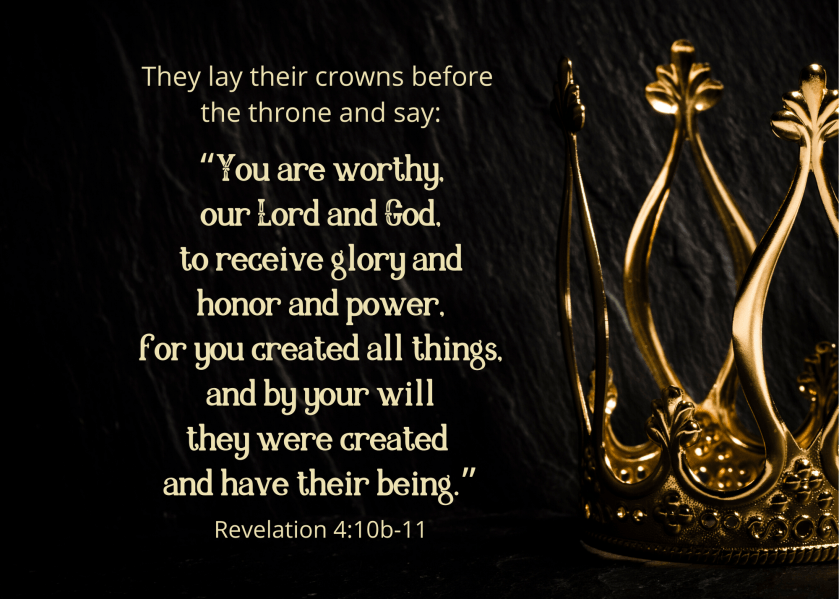
This is what comes to mind when I read the imagery in Revelation chapter 4. All of the thrones and elders with crowns and different animals and faces and a rainbow, four faces and eyes everywhere. Flashes of lightning and thunder going on in the background. It is all just majestic, and for what reason? On the surface of this chapter I would say it is safe to say it is to illustrate the importance and demonstration of worship. To worship our God in a holy way because He is holy. It says in verse 11 that, “He is to receive glory…. for You created all things”. So, we ought to worship God in a holy majestic way as all of creation does as well.

As far as the in-depth meaning of all the imagery in this chapter you must research what each animal represents in that time and worldview of Judaism as well as understanding the importance of the use of certain gems in reference to objects and people.

Jesse Allen

Different

2 Peter 2 9

Hello GROW devotion readers!  We are changing directions with our daily devotions this week, writing directly to the daily theme of FUEL which begins at Manchester University today.  If you are a faithful follower of this blog, you might already know that is was three years ago this blog began as a means of connecting “FUELers” to daily discipleship. While I won’t be attending FUEL this year,  I am excited to be participating once again in spirit by having the privilege to share my take on the important topics being discussed daily. No matter the journey ahead for us, whether it be FUEL, work, school, or ministry, there is still plenty for us all to examine together.


Little known fact about me: I failed biology my senior year in high school. My captivation with knowledge of the natural world that existed with The Magic School Bus and Bill Nye: The Science Guy regrettably never reared its head in Mr. Amato’s AP Biology classroom. I didn’t need the course to graduate; I enjoyed doodling a whole lot more than taking notes; and I stayed up in the wee hours of the night on messenger (AOL, not FB) keeping in touch with friends. I was truly indifferent to my studies. Consequently, I walked away from this class unchanged and with some rather large gaps in my knowledge concerning the constructs of life and the environment.


17 years later, I’m a teacher <plot twist> with the luxury of a summer off.  This is when I do the vast majority of my reading for the entire year – like a bear gorging prior to hibernation.  The past week or so I have spent a chunk of the day reading about the human body. My fascination for this topic may lie in a newly-acquired Jeopardy addiction, or the intrigue of watching a set of twins grow inside my wife’s belly (uterus that is – see, I read stuff), but I believe the main source of my interest comes through worship revering and connecting with God I love and serve. The information that once wasn’t worthy of my head being lifted from my latest sketch is now the information that makes for awesome contemplation in my free time.  Needless to say, a half-of-a-lifetime away from high school, I’m different.


Genetics and DNA are by far the most fascinating to me.  Even at the smallest of levels, only microns long, God is doing tremendous work.  While I’m sure David spoke figuratively when he states God “knits us together in our mother’s womb”, (Psalm 139) He, in fact, literally stitches together genetic material from our parents, and even previous generations, for our physical makeup, making us who we are.  According to one of the sources from which I’m reading there are over 70 quadrillion (yes, that’s a real number), current combinations of the human genome. To put that number into some type of digestible format – If the world remained at its current population for the next 200,000 years and there were no mutations, it would be statistically possible there would be no two humans who were identical during this time frame – and yes, this includes identical twins, who share DNA, but have some dissimilarity in gene expressions.  We ALL are truly different from one another, having been physically set apart from every other person who has existed on this planet. Fear, marvel, and wonder all strike at once; I’m a part of something great, and I don’t want to miss it. And this is God working in the space that is a thousandth of the thickness of your hair. For a greater example see: Universe. Wow. So Amazing.


As much as God has given incomprehensible diversity to the beginnings of life, this should be only outweighed  by the contrast of our lives when compared to those who don’t yet know God’s wonderful promises. Peter says that the people who carry this hope should be identifiable. Our good deeds not only protect us from accusations of wrongdoing, but tell of our Heavenly Father and glorify Him (1 Pet 2).  This means rather than being known by the manner of our genetic makeup, such as the balding bearded burly brunette, I would much rather be known as the one who feeds the hungry, the man who looks after orphans, and the singer of praises to God. Our works, not our lip service, declare our outlook. Yet it is not a single or a handful of aspects God wants to be glorified in, but the entirety of our expressions.  We should talk differently, love differently, use our money differently, dress differently, forgive differently, pursue relationships differently, and even do tragedy differently. Every moment is meant to glorify the Father so that he might show His grace and mercy, calling each one who sees us (and including us) out of darkness into the marvelous light of knowing Him.  Yes, we were made unique, but even more so, our faith, if we let it, ignites the very purpose for which we are uniquely made. Let us stick out. Let us shine. Let us live as people who are different.

-Aaron Winner

Anxiety or Peace?

Philippians 4

phil 4 6

I almost always feel anxious about something. When I am working or if I am driving, even playing video games or watching tv, I am anxious. I don’t really know what causes this mindset of anxiety but all I know is that it is there. However, there is one place that it reaches least. That is in a state of worship. However you worship you probably understand what I mean. Singing songs, prayer, or even serving someone can often reduce my sense of anxiety. I think this is because I can allow Jesus to dominate my thoughts rather than my feeling of dread.  Paul in Philippians 4 puts it this way.

“Rejoice in the Lord always; again I will say, rejoice! Let your gentle spirit be known to all men. The Lord is near. Be anxious for nothing, but in everything by prayer and supplication with thanksgiving let your requests be made known to God. And the peace of God, which surpasses all comprehension, will guard your hearts and your minds in Christ Jesus.”

I would recommend the next time you might feel anxious or dreadful about something, that you may serve the Lord in some form of worship. Whether it be serving another person, praying, or singing a song that refocuses your center of peace. This is what really helps me in times of need.


-Jesse Allen

Fit to Rule

PSALMS

psalm 99 5


This week we’ve been looking at seven different types of psalms: wisdom, royal, lament, imprecatory, thanksgiving, pilgrimage and today we look at the 7th type: enthronement.

The enthronement psalms celebrate the important truth that God is king over all of his creation.  God cares for his people as a good king/shepherd is supposed to care for his people.  Psalm 23 is a kind of enthronement Psalm as David, who is himself the shepherd king of Israel, ultimately looks to God as the true shepherd king.

Psalm 99 is a good example of an enthronement psalm:

Psalm 99

The Lord reigns,
let the nations tremble;
he sits enthroned between the cherubim,
let the earth shake.
Great is the Lord in Zion;
he is exalted over all the nations.
Let them praise your great and awesome name—
he is holy.

The King is mighty, he loves justice—
you have established equity;
in Jacob you have done
what is just and right.
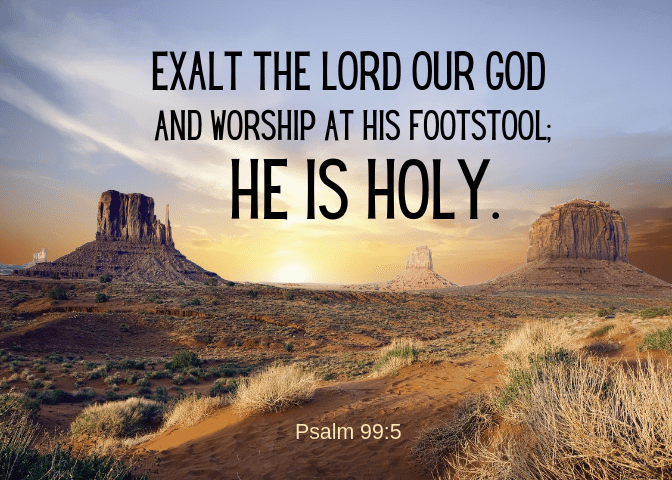
Exalt the Lord our God
and worship at his footstool;
he is holy.

Moses and Aaron were among his priests,
Samuel was among those who called on his name;
they called on the Lord
and he answered them.
He spoke to them from the pillar of cloud;
they kept his statutes and the decrees he gave them.

Lord our God,
you answered them;
you were to Israel a forgiving God,
though you punished their misdeeds.
Exalt the Lord our God
and worship at his holy mountain,
for the Lord our God is holy.


This psalms celebrate God as worthy to be worshipped, so it contains elements of worship similar to psalms of thanksgiving, but here the focus is particularly on God’s sovereign rule over all creation.

The Lord reigns.  Often we look at our world and see how seriously screwed up our political leaders are and how badly they botch up their duties as leaders.  But we must remember that they are mere humans, flawed men and women just like us.  There is only one who is truly fit to rule in righteousness over all of creation.  There is only one of us both holy and just but also merciful and forgiving even in his judgment.  It is the LORD, YHWH.  He is God and he alone is fit to rule over all of creation.  The enthronement psalms are a joyful way of acknowledging that God is in control of everything.  My mom used to have a sign on her refrigerator that said: Relax, God’s in Charge.  The enthronement psalms remind us that God is in charge, we are in great hands.

As we close out this week of psalms I hope that you come to appreciate the depth, diversity and richness of the psalms.  There is literally a psalm for every occasion.  For learning and growing, for giving thanks, for traveling, for worshipping, for complaining and asking for help in times of pain, and even when you’re angry and feel like getting revenge against those who have hurt you.  There’s a psalm for every occasion.   I hope that you will read them, and pray them (you can also learn how to sing them) and make them seep into your spirit and become a part of your prayer language and your life, just as they were for Jesus, who frequently could be found with the psalms on his tongue as he spoke and prayed.

-Jeff Fletcher


On Your Journey

Psalms

Psalm 121 1 2


We’re discussing seven different types of psalms and how to make them a regular part of our worship.  Today we consider pilgrimage psalms.  A pilgrimage is a journey to a place that holds special spiritual value to the person making the pilgrimage.  In ancient Israel those who lived outside of Jerusalem would make several pilgrimages each year to come to Jerusalem to worship at the temple and celebrate various feasts which commemorated important elements of Israel’s sacred story.  We know that Jesus was arrested and crucified at the beginning of the Passover celebration.

As people made their pilgrimage to Jerusalem they would sing joyful and festive psalms that would help them recall God’s goodness.  If you’ve ever travelled to a special place and event like Fuel, or General Conference, Christian Worker’s Seminar, or summer youth camp, you know that the excitement builds as you journey and get closer to the event.  Sometimes people sing some of the songs that gave meaning and joy to their previous times at those places.

Imagine as the pilgrims get closer to Jerusalem.  As Jerusalem is on a mountain they can see it from a distance.  As they climb Mt. Zion to get closer to the city and the temple of God their excitement grows and they begin enjoying an attitude of worship by singing and recalling God’s blessings.

Psalm 121 is a great example of a pilgrimage psalm:

Psalm 121

A song of ascents.

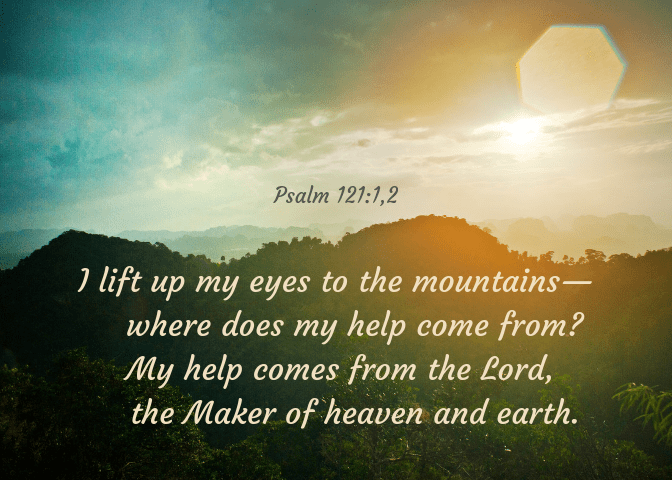
I lift up my eyes to the mountains—
where does my help come from?
My help comes from the Lord,
the Maker of heaven and earth.

He will not let your foot slip—
he who watches over you will not slumber;
indeed, he who watches over Israel
will neither slumber nor sleep.

The Lord watches over you—
the Lord is your shade at your right hand;
the sun will not harm you by day,
nor the moon by night.

The Lord will keep you from all harm—
he will watch over your life;
the Lord will watch over your coming and going
both now and forevermore.

This serves as a reminder that as you journey on your way, God is with you.  God is your helper who watches over you wherever you go.  How comforting and assuring to know that God is with you on your journey through life.  Even during those times where you might not know what’s waiting for you around the next corner or over the next hill, God is there, and he doesn’t go to sleep on the job.

-Jeff Fletcher

Worship as an Identity

John 4 24

Free theme week: Worship
Chapter reading of the day: John 4

There are many names and titles that the church is given. We’re called the bride of
Christ, saints, children of God, brothers and sisters in Christ, the body of Christ,
disciples of Jesus, and so on. However, there is another reference to the church in
John 4. In this chapter, Jesus and the Samaritan woman are speaking at the well. During their conversation Jesus makes this remark about worship: “But an hour is coming and now is, when the true worshippers will worship the Father in spirit and truth; for such people the Father seeks to be his worshippers. God is spirit and those who worship must worship in spirit and truth” – John 4.23-24. Biblical worship is worship that is so integrated into our life and weaved in through every aspect of our being that worship becomes our identity. We worship. That is who we are. And with being a worshipper we worship God in “spirit and truth”. The phrase “spirit and truth” has perplexed me for a long time. The last few years God has shown me what it means to worship him specifically “in spirit”. We are to worship God by the empowerment of the holy spirit. We worship God in and through and by means of the holy spirit. There is a spiritual aspect of worship that we can gain access to by the spirit. This could be prophetic utterances, words of knowledge, and having a very real sense of the presence of God near you during worship. At the same time we should worship God “in truth”. We should be careful not to let our experiences 100% determine what we believe about God. We should check our experiences with what the Bible says. We should engage our mind and reasoning faculties with God and the Bible. I believe that holistic worship is worship that is executed in “spirit and truth”. Jesus says that God desires true worshippers to worship him in spirit and truth. God doesn’t want a church-goer or someone who is defined by what they do in church. God desires a worshipper to worship him in spirit and truth. God wants worshippers. You are called to be a worshipper. Your identity is to be a worshipper. I pray that God moves on your heart and mine and calls us and teaches us to go deeper in worship. As I said in the beginning, living the best possible life God has for us in this world is inextricably tied to worship. You were created to worship with your whole being at all times in all seasons.
-Jacob Rohrer

Worship God in Every Life Situation

Glorify the Lord with me; let us exalt his name together

Free theme of the week: Worship
Chapter reading of the day: Psalm 34

Worship is a loaded word in the American church. Part of the misunderstanding of
worship today is that “worship” is something that only happens on a Sunday or
Wednesday. On the contrary, worship is something that should happen everyday in
every circumstance we find ourselves in. This may seem as common sense or a basic
thought, however, many Christians only worship God when things are going well in life
or only on Sundays or Wednesdays. Biblical worship is worship that permeates every
season of life including the bad ones. Today’s devotion is to encourage you to praise
God in every life season.
Here are some verses to meditate on for this topic:
“I will bless the LORD at all times; his praise shall continually be in my mouth.” – Psalm
34.1
“Do not get drunk with wine, for that is dissipation, but be filled with the spirit, speaking
to one another in psalms, and hymns, and spiritual songs, singing and making melody
with your heart to the Lord; always giving thanks for all things in the name of our Lord
Jesus Christ to God even the Father” – Eph. 5.19-21
“In everything give thanks; for this is God’s will for your life” – I Thessalonians 5.17
I want to encourage everyone who is reading this that is going through a tough season
that it’s ok to feel sad, upset, frustrated, etc. The Bible tells us just because we follow
Christ that does not mean our lives will be problem free, actually it says the opposite.
Our lives will become harder because as our lives are conformed to Jesus we live
against the grain of culture and our own sin nature. And other times the trouble we have
in our life is self-inflicted. Regardless of the source of our troubles, God is worthy to be
praised in our trouble.
When problems in life arise the best response we can have is to press into God and
praise him. This is so easy to say and so hard to do. You may wonder “what does it
mean to praise God in seasons of trouble?”. Here are some practical suggestions that
you can use to help stimulate praise when life is hard:
1. Tell God and Jesus “thank you” – You can thank God for anything in your life,
the big things and the small things. When we thank God we stop focusing on our
problem and start glorifying God. Being thankful changes our perspective.
2. Remind yourself of God’s faithfulness in your life – Remembering how God
has moved in your life is important during times that you may not feel or hear from
God. The Old Testament is full of sections where the people of God remember how
the Lord has been faithful to encourage them during present crises (the Psalms
are a great place to start).
3. Remember that suffering that is brought on by following Jesus is an honor
and suffering for his name sake is the mark of a true follower of Jesus. In other words, your suffering is not in vain or meaningless – Suffering from following Jesus is honorable and does not escape God’s notice. When you experience this type of suffering consider it joy because it means that you’re following Jesus in a deeper way than the people around you. God is worthy of our praise not just on a Sunday or Wednesday or when life is going well. But he desires worship in every season of life. Don’t run from God when life gets hard. Praise and worship him through it.
-Jacob Rohrer

Worship God with your Heart and Voice

Acts 16 25

Free theme week: Worship
Chapter reading for the day: Acts 16

Singing is usually the first thing that comes to mind when people think of worship.
However, singing is not just some common and mundane practice that believers do
when they gather, say on a Sunday. Actually the Bible teaches that singing praises to
God and Jesus is incredibly powerful and moving and has consequences in the
supernatural realm.
The difference between worship music that is alive and worship music that is dead is
based on two things. 1. The hearts of the music leader and/or band are not in the right
place and they will not be authentic and genuine in their worship. And 2. because their
hearts are far from God, God will not dwell and inhabit their praises meaning the spirit of God will not move in them or through them. Inversely, if the music leader/band’s heart is ready to praise God and solely be devoted to his glory then God will inhabit their
praises, the spirit will be moving, and exciting things will happen. When speaking about
praising God through our voice it is imperative that our heart be in the right place. God
doesn’t want a voice to sing to him. He desires a heart overflowing with love and
worship that manifest in singing praises. There’s a difference.
With that being said we’ll look at Acts 16.22-34. I won’t type out the passage but I’ll
summarize it. In Acts 16 Paul and Silas are in the city of Thyatira. While preaching a
slave girl was following them praising their work. However, she was demon-possessed
and was being a hindrance to their work. Paul cast the demon out of her and her
owner became furious. Paul and Silas were arrested, beaten, and thrown into prison.
Then read what happens next as they are in jail:
“But about midnight Paul and Silas were praying and singing hymns of praise to God,
and the prisoners were listening to them; and suddenly there came a great earthquake,
so that the foundations of the prison house were shaken; and immediately all the doors
were opened and everyone’s chains were unfastened.” – Acts 16.25-26
Paul and Silas were singing songs of praise and were praying prayers of praise. Despite
their circumstances, their hearts were solely set on God and praising him. The result
was God caused an earthquake, the inmates were set free, and the jailer and his family
were saved.
Setting aside the circumstances and details of the story, we see two men praise God
wholeheartedly and their worship in the natural realm moves God in the supernatural
realm to affect their current circumstances. We see from this account that singing and
praying can actually move the heart of God. Our worship in the natural can make waves
in the supernatural.
We see the same principle in II Chronicles 20.1-23 (please read). Worship can move
mountains in the supernatural realm. Singing can be a weapon used against the enemy
and dark spiritual forces. Our warfare in the supernatural is waged by singing and praying. Praising God and Jesus with our voice does not have to be mundane and
routine though sometimes it can be. Rather, singing has the ability to make waves in the
supernatural realm, move God, and wage war against the enemy. But this is only
possible with a sold-out heart seeking the glory of God. A heart that praises him in all
circumstances and gives him glory in all seasons of life. That is the kind of worship that
God responds to.

-Jacob Rohrer