
2 Kings 17-18
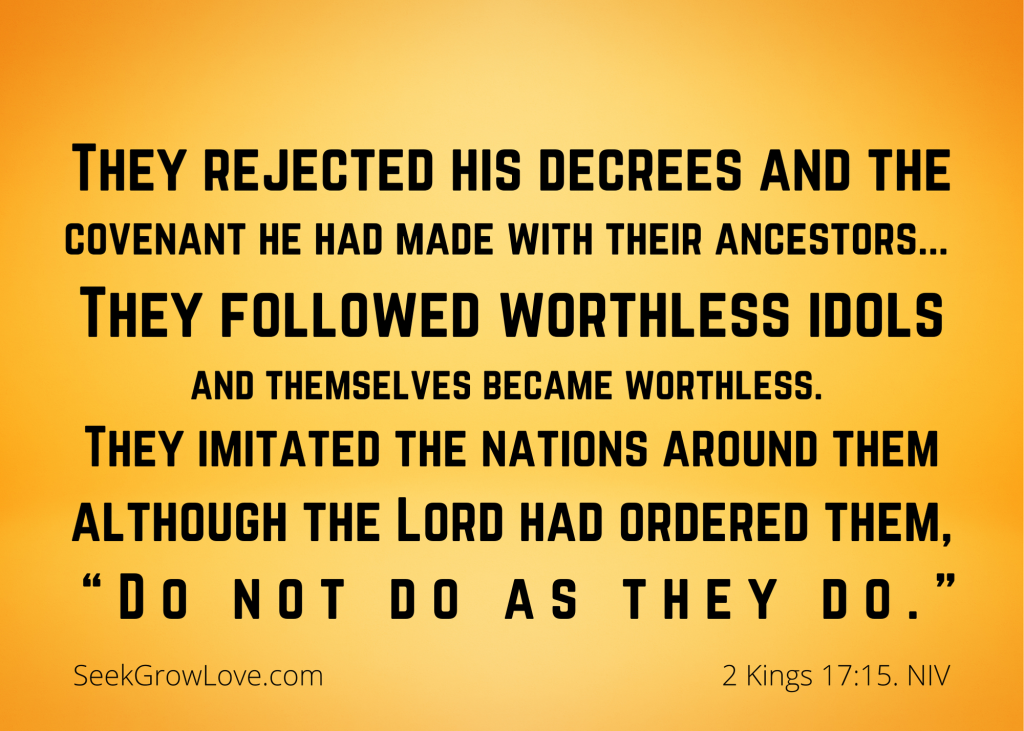
There seems to be a persistent theme when it comes to the kings of God’s people. There were kings who served Yahweh their God and kings who served false gods. In 2 Kings 17-18, we are told a tale of two kings. The first king, Hoshea, king over Israel in Samaria, did evil in the sight of Yahweh God. During Hoshea’s reign, the king of Assyria came up against him. Instead of relying on Yahweh for help in the time of trouble, Hoshea sought the help of foreign aid and made foreign gods.
He set pillars up and Asherim (wooden symbols of a female deity) on every high hill and under every green tree. He served Idols and worshiped stars. He made the people pass through the fire (sacrificed them to gods) and practiced divination and enchantments.
Over and over again, Yahweh God tells Israel to turn from their evil ways and keep his commandments and statutes, but they would not listen. They became stiff-necked and vain and did what Yahweh God commanded them not to do under Hoshea’s leadership. They put their trust in other gods and did not fear the one true God. The next and last king of Israel did accordingly. As a result, Israel was carried away into exile. God removed them from his sight.
Then there was Hezekiah, king over Judah. He did right in the sight of Yahweh. He removed pillars and cut down the Asherah. He trusted in Yahweh God and clung to him. He kept his commandments. Yahweh was with him and wherever he went he prospered. While all the nations surrounding him were taken into captivity, Hezekiah not only withstood the forces against him, but conquered them because he put his trust in Yahweh God, listened to his commandments, and removed the false gods from his kingdom.
In our times of trouble, will we despise the word of God and serve little self-made gods like Hoshea, or will we destroy the Asherah of our lives and serve the one true God like Hezekiah? We are told by our Lord Jesus that we will have trouble in this life but to take courage because he has overcome the world. In response to trouble, we have two choices to make that can lead to two very different outcomes. We can create and rely on our own Asherah or destroy it and rely on Yahweh God alone through his son Jesus Messiah.
We don’t live in a day and age when most people are physically making objects out of wood to worship or sacrificing their children to other gods. We may however worship and sacrifice to other “gods” that we’ve made priority in our lives over Yahweh God. If we’re not careful, we may find ourselves making our personal lives our priority. We can pursue a self-indulgent lifestyle that involves making ourselves happy, making ourselves financially secure, and making ourselves feel safe. We can sacrifice our time, energy, and focus on all things not God. We’ve got to stop doing this if our desire is to serve the one true God.
Idols can be hidden. There was a time when God ordained the bronze serpent in the wilderness as a symbol of the coming Messiah. It was to be held high for all Israel to look upon and live in the face of death. Yet, we find in 2 Kings that Hezekiah destroys it. Why? Because it had become a symbol of worship beyond what God intended for it to be. What once represented the Messiah who brings life became idol worship.
Have we set up idols of influence in our lives “on every high hill and under every green tree” without even realizing it? Have we become stiff-necked and vain with our priorities and done the very thing God commands us not to do? If we have, there’s hope! Thank God we have repentance and forgiveness through our Lord Jesus Messiah. Identify the Asherah in your life, repent, destroy it, and rely on God.
-Juliet Taylor
Hello brothers and sisters in Christ! I am thankful for this opportunity to write. I am a Biblical Unitarian and have been for life (although I didn’t know we had a name until recently). I grew up attending fellowship based off of the teachings of the Way International Ministries. There were some years I spent listening to church online from Living Hope International Ministries, until I found a local church that believed like me. I currently attend Higher Ground Church, now affiliated with The Church of God General Conference. I’ve been with my home church for about 14 years and attend with my husband and two boys.
We love Yahweh God, his son Jesus Messiah, and long to be with them in the Kingdom of God. Love to all and God Bless! -Juliet
Today’s Bible reading passages can be read or listened to at BibleGateway here – 2 Kings 17-18 and Proverbs 13

 Seek Grow Love