Poems Put to Music

Psalm 121, 123-125, 128-130

My husband used to be in sales and sometimes the leads he had were in the evening and a fair distance from home.  To stay awake while driving, in addition to opening his windows and turning the radio way up, he sometimes made up songs.  He’s quite clever and I thought some were pretty good.  Creativity can be fun.

Psalms are poems.  Songs are poems put to music.  They are often used to help the Israelites remember their content.  Only one of these Psalms is directly attributed to David.  We don’t know who wrote the others, but they are all titled A Song of Ascents and were sung by travelers, likely on their way to Jerusalem for one of the yearly feasts.  These musical poems prompted the Israelites to look at God from many perspectives.

121 – God is their helper and creator.  He doesn’t sleep, so He is always watching out for them.

123 – They recognize God is in heaven and they look to Him for mercy.

124 – They acknowledge God as their protector.

125 – They see that God surrounds them – he sees everything, all the time.  He brings peace to Israel.

128 – They understand that they need to fear the Lord, and that blessings come from His hand.

129 – They speak of God’s righteousness.  They speak of those who hate Zion (are against Israel) that they will be put to shame.

130 – They talk of His forgiveness and the hope Israel has through God’s love.  They know He will redeem them.

As they traveled, their focus was on God, whom they were going to worship.  These songs would have prepared their hearts, minds and attitudes to come before God.    

Get creative, and consider making up your own poem, set to music or not, to tell of what God means to you.  Which of His characteristics do you want to tell about?  Here’s an easy way to start – borrowing some of what we read today.

To you I lift up my eyes, O you who __________.  As __________ surrounds my home, so the Lord surrounds me.  Blessed is everyone who fears the Lord.  Lord, bless me with __________ and __________.  The Lord is righteous.  May all who harm your people, Lord, be __________.  O Lord, hear my voice; listen to my pleas for __________.  I wait for the Lord; I wait for _________.   My hope is in you, Lord!

Amy Blanchard

Reflection Questions

  1. Before you head off to church, take some time to prepare your heart, mind and attitude to come before your amazing God.  What will it look like for you to do that?  Spend some time in God’s word, or in prayer?  Sing some praise songs? 
  2. Which of God’s traits are you clinging to right now?  Is there someone you can reach out to who can offer support?

A Pattern to Follow for Faith over Fear

Psalm 56, 120, 140-142

Like Psalm 34, which we highlighted yesterday, Psalm 56 for today was also written when the Philistines had seized David in Gath.  And just like yesterday’s psalm, this one starts with David begging God for help.

Then, in verses 3 and 4, David says this, “When I am afraid, I will trust in you.  In God, whose word I praise, in God I trust; I will not be afraid. What can mortal man do to me?”

I see a pattern here that David liked to repeat:

  1. He acknowledged his fear, “When I am afraid.”  Fear is a natural reaction when in danger – either real or perceived.
  2. David then made a deliberate decision to trust God.  This is not a normal reaction, it is an intentional decision, flying in the face of the natural fear.
  3. David praised God for delivering him – before he had been delivered.  (In this case, David praised God’s word, but often, he just praised God.)  When David did this, he was stepping out on faith, believing God would answer his prayers.
  4. Finally, in the assurance God would help him, David banished his fear, “I will not be afraid.”.  Notice he chose to not fear what mortal man could do to him.

This reminds me of Jesus’ words in Matthew 10:28, “Don’t be afraid of those who want to kill your body; they cannot touch your soul.  Fear only God, who can destroy both soul and body in hell.”

This is a pattern I have also tried to follow in my own life.  Many times, I have cried out to God, confessing my fear. I have then made a deliberate decision to trust that whatever God has for me is best, whether I know it (or like it) or not.  Then praise God for his promise that all things work together for my good – because I love God. Finally, with God’s help, I let Him lift my burden off my shoulders, whether it is fear, or whatever else it is.

With the fears swirling around now, whether Covid-19, or unemployment, or difficulty finding what you want at the grocery store, or …  You have a choice. You can succumb to fear, or you can follow David’s example.

I challenge you to try this pattern with whatever makes you fearful today.  Then you can say, like David wrote in yesterday’s reading from Psalm 34:8, “Taste and see that the Lord is good; blessed is the man who takes refuge in him.” And from today’s reading in 56:11, “In God I trust; I will not be afraid.  What can man do to me?”

–Steve Mattison

(originally posted April 15, 2020 for SeekGrowLove)

Reflection Questions

  1. What have you been afraid about in the past? What has God already successfully brought you through?
  2. When is fear helpful? Do you have a healthy fear of God? Do you fear only God?
  3. What makes you fearful today (besides God)? Would you like to conquer this fear? Write out David’s steps to replace fear with faith and keep them in a place you will see often and practice working through the steps – over and over again.

The Mighty Almighty

Job 35-37

In this section today Elihu stops chastising Job and his friends and begins the transition to the next section by speaking for God. He begins to put a God-view perspective on all that has happened to Job and all that has been said.  He is still wresting with the question which is “how does man relate to a Just and Righteous God”.  Elihu absolutely schools us in the mind set we should have about the God that has created the heavens and the earth and all that is therein.  Read with me and we will learn of God’s great position, works, and power.

Job 35:4-8(NLT) “I will answer you
and all your friends, too.
5 Look up into the sky,
and see the clouds high above you.
6 If you sin, how does that affect God?
Even if you sin again and again,
what effect will it have on him?
7 If you are good, is this some great gift to him?
What could you possibly give him?
8 No, your sins affect only people like yourself,
and your good deeds also affect only humans.

Shows us what our works really are in our relationship with God compared to our trust in His Word.

Job 36:1-6(NLT)  Elihu continued speaking:
2 “Let me go on, and I will show you the truth.
For I have not finished defending God!
3 I will present profound arguments
for the righteousness of my Creator.
4 I am telling you nothing but the truth,
for I am a man of great knowledge.
5 “God is mighty, but he does not despise anyone!
He is mighty in both power and understanding.
6 He does not let the wicked live
but gives justice to the afflicted.

God wishes for all to be saved and come to a knowledge of the truth of His Word.

Job 36:22-24(NLT) “Look, God is all-powerful.
Who is a teacher like him?
23 No one can tell him what to do,
or say to him, ‘You have done wrong.’
24 Instead, glorify his mighty works,
singing songs of praise.

So we can only praise the name of the LORD our God.

Job 37:19-24(NLT) “So teach the rest of us what to say to God.
We are too ignorant to make our own arguments.
20 Should God be notified that I want to speak?
Can people even speak when they are confused?
21 We cannot look at the sun,
for it shines brightly in the sky
when the wind clears away the clouds.
22 So also, golden splendor comes from the mountain of God.
He is clothed in dazzling splendor.
23 We cannot imagine the power of the Almighty;
but even though he is just and righteous,
he does not destroy us.
24 No wonder people everywhere fear him.
All who are wise show him reverence.”

-Tom Siderius

Questions for Reflection:

Has this section changed your thinking about how to approach our God?

Will this change how you tell others about how to approach God?

Does evil in the world stop God from being truly just and righteous? Why?

Praise His Name – and Follow Him

OLD TESTAMENT: Nehemiah 12-13

POETRY: Psalm 149

NEW TESTAMENT: John 20:19-23

Just so you know how much of a rebel I am… I spent my tween years secretly dancing in my basement to the new DC Talk cassette tape, questioning why such a powerful kinesthetic connection with God was forbidden. At the church I attended at the time (not associated with our General Conference), dancing was considered a sinful act;  a few years later they started allowing limited choreography to Christian songs called “interpretive movement,” which was really just dancing with a much less scandalous name. While I definitely agree that mainstream secular dance is often inappropriate, there are so many ways we can glorify God through dance with these bodies he has given us, and Psalm 149 encourages us to dance and sing before the Lord! I love the story of King David’s wife Michal lashing out in anger because he was dancing in the streets, but his reply was simply, as the Crowder song paraphrases, “I’ll become even more undignified than this!” (see 2 Samuel 6:22). David unabashedly praised God by dancing with abandon because he loved God so much that he just couldn’t hold it in! 

I bet there was a lot of dancing and praise at the dedication of the new wall of Jerusalem, too! There were choirs and instruments, and “the sound of rejoicing in Jerusalem could be heard far away” (Nehemiah 12:43). Then Nehemiah returned to his work with the king. However, when Nehemiah returned a while later, he found many people straying from the laws they had so very recently vowed to keep. Among the offenses was that Tobiah (remember him? A sidekick to the antagonist Sanballat from earlier in this book?) had been allowed to live within the temple, occupying one of the sacred rooms. This could perhaps be likened to elevating Tobiah above God or allowing a wolf to dwell among the flock. Nehemiah took care of that problem when he returned! Then he purified everything and helped the people recognize the ways in which they were not – but should be – following God. 

I can’t help but wonder if Nehemiah felt like the people would never get it or that all his work was futile, like herding a hundred cats or tidying up a play room full of busy snacking toddlers. I wonder if Nehemiah felt defeated by the end of the book. And yet, he faithfully completed the work that God called him to do, so the rest was left in God’s hands. Likewise, sometimes it feels like a never-ending task to keep focused on God, to clear the impure thoughts and actions from our hearts and minds, to stay away from temptations that threaten to overpower us. But we must continue focusing on God and the work he has given us to do in this particular season while encouraging others to do the same (Hebrews 10:25)! 

The book of Nehemiah concludes abruptly with a simple plea, which can also be our supplication as we strive to live for God each day: “Remember me with favor, my God.” 

-Rachel Cain

Reflections: 


That temple-dwelling abomination seems foreign to us, but consider this: if our bodies are temples (I Corinthians 6:19-20), what unholy things are we permitting to occupy the sacred places of our hearts and minds? What Tobiahs are we allowing to influence us – those seemingly innocent thoughts or behaviors or relationships that will ultimately threaten our relationship with God, or are taking the place of God in our priorities and hearts? The reading in John today reminds us about the Holy Spirit, God’s power and guidance, that will help us follow Him; pray that God will show you what Tobiahs are in your life and that His Spirit will give you the power to make necessary changes. 

Here is a neat article that discusses the ending of Nehemiah, along with how the book could be a foreshadowing of the Messiah and more: https://jesusplusnothing.com/series/post/nehem13

Yours Truly…Nebuchadnezzar?

OLD TESTAMENT: Daniel 4

POETRY: Psalm 136

NEW TESTAMENT: John 8:31-47

Daniel is a strange book. It contains narratives like we have been reading over the last couple days. It contains visions that we will read in a few days. Today, however, we are treated to a very different kind of tale. It seems that the author of Daniel decided to insert someone else’s writing into his book. 

In chapter four, King Nebuchadnezzar himself writes about his encounter with the Almighty God. He extols God’s power, God’s virtue, his work through the interpretation of Daniel/Belteshazzar, his giving Nebuchadnezzar madness, and him undoing the madness after Nebuchadnezzar had learned his lesson. 

Now, if you are a regular reader of the Bible, you might think this makes perfect sense. God shows up and changes the lives of people, and it happens to King Nebuchadnezzar. If you are a new reader, you may think, “this is crazy nonsense who can believe it?” I am about to make both camps a little uncomfortable with some history and archaeology: In ancient Babylon, there is a prayer written by a king that reads this way : I “was afflicted [with an evil ulcer] for seven years, and far from [men] I [was driven, until I prayed to the most high God.] And an exorcist pardoned my sins. He was a Jew from [among the children of the exile of Judah, and said:] “Recount this in writing to glorify and exalt the name of [the most high God.”Then I wrote this:] “When I was afflicted for seven years [by the most high God] with an evil ulcer during my stay at Tayma, I prayed [to] the gods of silver and gold, [bronze and iron,] wood, stone and lime, because [I thought and considered] them gods […]”

That last ellipses (the “…”) shows that the rest of the prayer is lost. So nice and easy, case closed right? That sounds very similar to Nebuchadnezzar’s experience, so we have confirmation of the biblical story. It might be, if we hadn’t left off the first few lines. “Words of the prayer, said by Nabonidus, king of Babylonia, [the great] king, [when afflicted] with an ulcer on command of the most high God in Tayma: [“I, Nabonidus,] was afflicted…”

The similarities are striking, of course: afflicted for seven years/times, driven far from people, a Jew from the children of Judah, an exorcist, pardoned his sins and told him to praise the Most High God. But the differences are also clearly apparent: Nabonidus vs. Nebuchadnezzar, an ulcer vs. mental illness, warned of judgement as opposed healed to give glory, and the words of Nabonidus about the types of God are connected to Daniel 5, so bringing in Belshazzar and more questions. 

The Bible, the history of the Bible, and the relationship between the Bible and history are not *simple* questions. There are those who would deny the Bible’s truth based on the prayer of Nabonidus, but there is also reason to believe that the prayer of Nabonidus was written to explain the connection between Daniel 4 and Daniel 5, or maybe both are true accounts with God judging multiple kings of Babylon with seven years/times of judgement. The same kind of questions come up when we think about the anointing of Jesus with oil. Everyone agrees it was an extravagant act of love with costly oil. But was it in Bethany or not? Was it Mary, or a sinful woman? Was the woman being shown love by being forgiven, or was she anointing the body for burial? Did it only happen once, or were there two anointings of Jesus? (It would be weird for it to happen twice.)

This is the part of the devotion where you may expect me to clear up the confusion and say “here is the answer to all your questions.” I am not going to do that. I am going to instead give you four helpful ways to think about the Bible. The Bible is inspired, authoritative, true, and livable. 

  1. The Bible is inspired: Daniel 4 and the anointing(s) of Jesus and everything from Genesis to Revelation is inspired by God for the education, edification, encouragement, and empowerment of his people. The Bible is not just the nice thoughts of noble men and women, but God’s thoughts for God’s people. 
  2. The Bible is authoritative: Because the Bible is God’s word to humans, when the Bible tells God’s people how to live, then that is how we must live. If we are called to pick up our cross daily, if we are called to feed the hungry and clothe the naked, if we are called to live like Jesus (and we are!), then that is what we must do!
  3. The Bible is true: Because the Bible is God’s word to humans, then the Bible is not intending to deceive. Everything in the Bible is intending to lead us to the God of truth. Not everything will be literal (trees don’t have hands, a multiheaded monster won’t come out of the Atlantic) but everything will be true (nature will praise God, there are evil forces that work against God’s goodness). When we understand genre of books and individual stories, we will be able to know whether a story is literally true or figuratively true. 
  4. The Bible is understandable in order to be livable: The Bible TAKES time to understand, and it is deep. Yet, in the essential elements, the Bible is simple. The Bible is like a holiday at sea; children can begin by playing in the shallows, but experienced swimmers can go to depth where their feet do not touch the ground. You can be a new Christian and gain insight, knowledge, and joy from scripture. And when you are ready to go deeper into the Bible, into faith, there is always greater depth to be discovered. 

The author of Daniel 4 was inspired to write about the dream of Nebuchadnezzar and the judgment he faced as the King. It could be true even if the name “Nebuchadnezzar” is used in place of Nabonidus; but I think it makes more sense to see the Prayer of Nabonidus as responding to the book of  Daniel rather than vice versa. BUT, the bigger point than these minor historical notes is that we are called to be humble and praise God for his just and righteous ways. There is no need for us to get archeological degrees and engage in fancy philosophy to recognize that God is bigger than we are, and that we are called to praise and worship him. 

May we all do that together today. 

Questions:

  1. Would you describe the Bible as inspired, authoritative, true, and livable? Do you disagree with any or would you add in any? For example, you might say “the Bible is literally true”, but what do you do with the psalms? You might say “the Bible is simple”, but then what do we do about Revelation and Daniel?
  2. Do you find yourself drawn to disregard the Bible as superstition when archeology or science sounds like they disagree with the Bible? Or do you disregard archeology and science when it sounds like they disagree with the Bible? How can we see that God is the God of all truth, and that truth has nothing to fear?
  3. If you find yourself having a hard time trusting the Bible, or explaining why you trust it, I would encourage you to check out *The Disciple Collective* at https://www.disciplecollective.com/home. This online Christian learning platform offers high-quality self-paced courses for motivated students, and the first course, which is available now, is “Can I trust the Bible?” If you feel like you are leaving today’s devotion with some serious questions, that course may give you some serious, robust answers.

-Jake Ballard

Bless the Lord

OLD TESTAMENT: Ezekiel 43-45

POETRY: Psalm 134

NEW TESTAMENT: John 6:1-24

Our psalm for today, Psalm 134,  is one of the fifteen psalms labeled as “Psalm of Ascents” which in the Hebrew Bible are Psalms 120-134, so today’s reading finishes up this section of psalms.  The author of this one is not known, but it is believed that these psalms were written during the 70 years of Judah being exiled in Babylon (same period from Ezekiel’s prophecies we are also reading right now).

Whether or not this was necessarily the intent of these psalms, they were used later by Jewish people who would sing them as they traveled to Jerusalem for the appointed “Pilgrimage festivals” according to the instructions they had been given in Deuteronomy 16.  Looking back on this group of psalms, I can imagine they would be a wonderful source of encouragement on a long journey (heading uphill to Jerusalem!), and could also facilitate a spirit of giving praise and honor to the LORD.

I read some commentators noting how many phrases from these psalms were used in early/traditional hymns as well as how many continue to surface in contemporary worship songs. In fact, when I read today’s psalm, I had a song pop in my head using these words, and imagine others might have had the same happen but with completely different songs based on the many choices out there.  Personally, I also had a scene surface from the Sound of Music when I read Psalm 121! These psalms are certainly jam-packed with lots of beautiful references, lyrics, and thoughts on which to meditate.

We do not have to make the pilgrimage to Jerusalem anymore, and we do not currently live in Babylonian captivity. But, we live in a world whose messages and words are far different than the ones we read in the Psalms of Ascent. Sometimes the messages are blatant screams, and sometimes they are subtle whispers, but as they bombard us, it is easy to forget who deserves our praise, honor, and obedience. It is also easy to mindlessly sing familiar songs, recite familiar psalms, or get caught up in the razzle dazzle displays of “worship music” sometimes.  But, He deserves better.

“Come, bless the Lord, all you servants of the Lord. . .” (Psalm 134)

What does blessing the Lord mean though? Doesn’t He bless me?  Ahh….well, to give us a picture of how we are to be blessing Him here…..this Hebrew word in this context means to “praise and adore”.

This week, I’m guessing many of us could likely amp it up in the praise and adoration of God and Jesus.

-Jennifer Hall

Questions:

  1. How can psalms, hymns, verses, or worship songs encourage you on the difficult life journeys you face?
  2. How did the Psalms of Ascents make you feel as you were reading them?
  3. Consider some reasons God and His son Jesus are worthy of praise and adoration!

Rejoice in the God of Your Salvation

OLD TESTAMENT: Habakkuk 3

POETRY: Psalm 119:161-168

NEW TESTAMENT: Revelation 14

Habakkuk 3:17-19 (LEB):

“Though the fig tree does not blossom,

nor fruit be on the vines,

the produce of the olive fail

and the fields yield no food,

the flock be cut off from the fold

and there be no herd in the stalls,

yet I will rejoice in Yahweh;

I will take joy in the God of my salvation.

Yahweh, my Lord, is my strength;

he makes my feet like the deer’s;

he makes me tread on my high places.”

Psalm 119:161-168 (LEB):

“Princes persecute me without cause,

but my heart stands in awe of your words.

I rejoice at your word

like one who finds great spoil.

I hate and abhor falsehood,

but I love your law.

Seven times a day I praise you

for your righteous rules.

Great peace have those who love your law;

nothing causes them to stumble.

I hope for your salvation, O Yahweh,

and I do your commandments.

My soul keeps your testimonies;

I love them exceedingly.

I keep your precepts and testimonies,

for all my ways are before you.”

Revelation 14:1-3 (LEB):

“Then I looked, and behold, the Lamb was standing on Mount Zion,

and with him were one hundred forty-four thousand who had his name

and the name of his Father written on their foreheads.

And I heard a voice from heaven like the roar of many waters

and like the sound of loud thunder.

The voice I heard was like the sound of harpists playing on their harps,

and they were singing a new song before the throne

and before the four living creatures and before the elders.

No one could learn that song except the one hundred forty-four thousand

who had been redeemed from the earth.”

Habakkuk concludes his book with a powerful declaration of faith, despite the dire circumstances he outlines. He paints a vivid picture of loss and despair: the fig tree not blossoming, the fields yielding no food, and the flock cut off from the fold. Yet, even in the bleakest of situations, Habakkuk chooses to rejoice in Yahweh. This radical joy is rooted not in external circumstances but in the unchanging nature of God.

This passage challenges us to examine our own responses to adversity. Are we quick to rejoice in the Lord even when life is hard? Habakkuk’s resolve reminds us that true joy comes from our relationship with God. When we focus on who God is—our strength, our salvation—our hearts can remain anchored in hope, regardless of our circumstances.

The psalmist expresses a profound reverence for God’s word, even amidst persecution. Despite the challenges posed by those in authority, the psalmist finds joy and peace in God’s law. His love for God’s commandments fuels his praise and steadfastness.

This passage underscores the power of God’s word to provide stability and comfort during turbulent times. The psalmist’s commitment to praise God seven times a day illustrates the importance of a continuous relationship with Him. By immersing ourselves in scripture and seeking God’s guidance, we cultivate peace in our hearts. In doing so, we can stand firm against the chaos of the world around us.

In Revelation 14, we witness a scene of triumph and celebration in heaven. The Lamb stands on Mount Zion, surrounded by the redeemed, signifying victory over sin and death. The new song sung by the one hundred forty-four thousand is a testament to their redemption and unwavering faithfulness to God. This passage serves as a powerful reminder of the ultimate hope we have in Christ.

As believers, we are called to anticipate this glorious day when we will stand with the Lamb, rejoicing in his victory. The new song symbolizes the joy and gratitude we will express for our salvation. While we may face trials and tribulations on earth, this passage encourages us to keep our eyes fixed on the promise of eternal life with Christ.

-Jeff Ransom

Reflection Questions:

In what areas of your life are you struggling to rejoice in the Lord? How can you shift your focus from circumstances to God’s character?

How can you cultivate a deeper love for God’s word in your daily routine? What specific actions can you take to incorporate scripture into your life?

Reflect on the ultimate hope found in Revelation 14. How does the promise of redemption encourage you in your faith journey?

Consider the significance of singing a new song in your life. What is your personal testimony of God’s faithfulness that you can share with others?

Tremble!

OLD TESTAMENT: Isaiah 65 & 66

POETRY: Psalm 114

NEW TESTAMENT: 1 Peter 3

Isaiah 65:17-18 (LEB):

“For look! I am about to create new heavens and a new earth,

and the former things shall not be remembered,

and they shall not come to mind.

But rejoice and shout in exultation forever and ever

over what I am about to create!

For look! I am about to create Jerusalem as a source of joy,

and her people as a source of gladness.”

Isaiah 66:2 (LEB):

“For my hand made all these things,

and all these came to be,” declares Yahweh.

“But I look to this one: to the humble and the contrite in spirit,

and the one who trembles at my word.”

Psalm 114:7-8 (LEB):

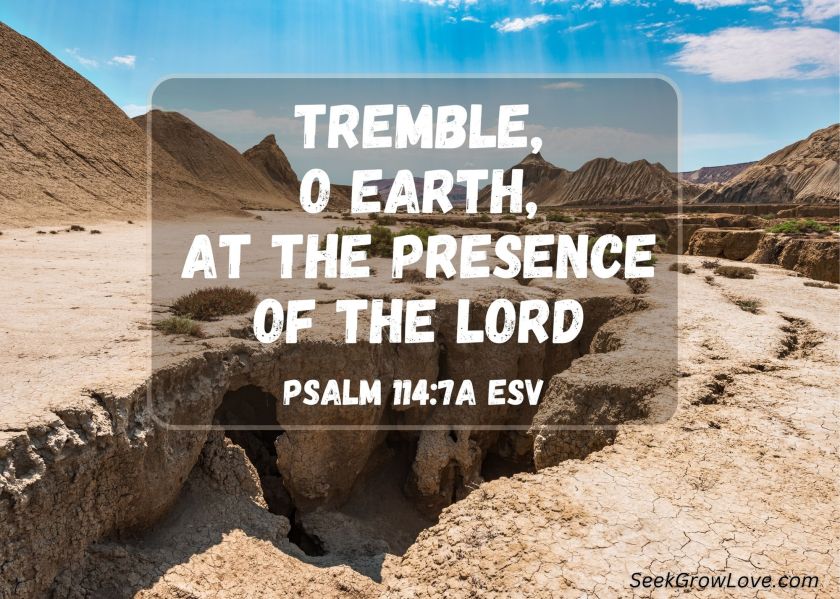
“Tremble, O earth, at the presence of the Lord,

at the presence of the God of Jacob,

who turns the rock into a pool of water,

the flint into a fountain of water.”

1 Peter 3:8-9 (LEB):

“Finally, all of you be like-minded, sympathetic,

showing mutual love, compassionate, humble,

not repaying evil for evil or insult for insult,

but on the contrary blessing others,

because for this reason you were called,

so that you could inherit a blessing.”

In Isaiah 65, God speaks of a future where He will create new heavens and a new earth, where the pain and sorrow of the former world will be forgotten. This promise is not only a vision of a restored creation but a source of deep joy for God’s people. Jerusalem, once marked by suffering and loss, will become a place of gladness, and its people will experience the fullness of God’s grace and redemption.

As we move into Isaiah 66, the prophet emphasizes the kind of people God looks to in this time of renewal: those who are humble, contrite in spirit, and who tremble at His word. This passage reminds us that God’s renewal is not just about external transformation but also about the transformation of the heart. God values a spirit that is humble and reverent before Him, acknowledging His greatness and responding in obedience to His word.

Psalm 114 recounts the mighty works of God during the Exodus, as He led Israel out of Egypt and through the Red Sea. The psalm paints a vivid picture of the earth trembling at God’s presence. The seas part, the mountains skip, and rocks turn into pools of water. This psalm highlights the awe-inspiring power of God over all creation, reminding us of His authority to transform not only nature but also our lives.

As the earth trembles at God’s presence, we are called to approach Him with reverence. Just as He turned the hard rock into flowing water, God can bring life and renewal to the hardest and most barren areas of our lives. In times of dryness or difficulty, we can trust in God’s power to transform our circumstances and bring about new life.

1 Peter 3 encourages believers to live in harmony with one another, showing compassion, humility, and love. Peter calls us to be sympathetic and humble, responding to evil and insult not with retaliation but with blessing. This instruction reflects the heart of Jesus’ teachings on loving our enemies and blessing those who persecute us (Matthew 5:44). As followers of Christ, we are called to embody a radical love that seeks peace and extends grace, even in the face of opposition.

Peter’s reminder that we are called to inherit a blessing is significant. As we bless others, we align ourselves with the heart of God, who has blessed us richly through Christ. Our identity as recipients of God’s mercy and grace empowers us to live in ways that reflect His love to the world.

This week, meditate on the renewal God promises in Isaiah, the power He displays in Psalm 114, and the call to humble, compassionate living in 1 Peter. Let these truths remind you of God’s ability to transform both your life and the world around you, as you seek to live in harmony with others and bless them in Christ’s name.

-Jeff Ransom

Reflection Questions:

How does the promise of a new heaven and new earth in Isaiah 65 inspire hope in your daily life, especially in the midst of challenges or sorrow?

What does it mean to you to have a “humble and contrite spirit” before God, as described in Isaiah 66? How can you cultivate this posture in your relationship with Him?

Reflect on the power of God over creation as seen in Psalm 114. How can you trust in His transforming power in areas of your life that feel difficult or barren?

In what ways can you embody the compassionate and humble living described in 1 Peter 3? How can you actively bless others, even when faced with opposition or insult?

God’s People and His Clay

OLD TESTAMENT: Isaiah 63 & 64

POETRY: Psalm 113

NEW TESTAMENT: 1 Peter 2

Isaiah 63:7 (LEB):

“I will make known the loyal love of Yahweh,

the praises of Yahweh,

according to all that Yahweh has done for us,

and the great goodness to the house of Israel

that he has done for them according to his compassion

and according to the abundance of his loyal love.”

Isaiah 64:8-9 (LEB):

“Yet, Yahweh, you are our father;

we are the clay, and you are our potter,

and we all are the work of your hand.

Do not be exceedingly angry, O Yahweh,

and do not remember iniquity forever!

Look! Behold, we all are your people.”

Psalm 113:3 (LEB):

“From the rising of the sun to its setting,

the name of Yahweh is to be praised.”

1 Peter 2:9-10 (LEB):

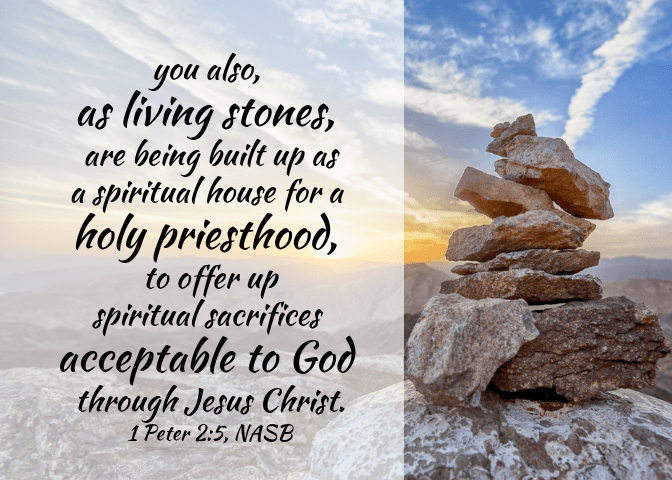
“But you are a chosen race, a royal priesthood, a holy nation, a people for his possession,

so that you may proclaim the virtues of the one who called you out of darkness into his marvelous light,

who once were not a people, but now are the people of God,

the ones who were not shown mercy, but now are shown mercy.”

Isaiah 63 begins with a reflection on God’s loyal love and compassion. Despite Israel’s history of rebellion, the prophet praises God for His great goodness and mercy. This loyal love is not based on Israel’s worthiness but on God’s steadfast character. The passage recounts how God delivered His people, bore their suffering, and worked for their redemption throughout history.

However, Isaiah 64 shifts to a cry for mercy and forgiveness. The people of Israel acknowledge their sin and unworthiness, likening themselves to clay in the hands of a divine potter. They plead with God not to remember their iniquity forever and ask for Him to show mercy once again. This chapter reminds us that no matter how broken or far from God we may feel, He remains our loving Father, and we are the work of His hands. He is able to mold us, forgive us, and restore us according to His mercy.

Psalm 113 calls all creation to praise the name of Yahweh from the rising of the sun to its setting. This psalm exalts God’s sovereignty, lifting Him high above all the nations. Yet, despite His greatness, the Lord cares deeply for the lowly. He raises the poor from the dust and lifts the needy from their affliction. God’s majesty and compassion are held together in perfect harmony, and His name is worthy to be praised at all times and in all circumstances.

This psalm challenges us to recognize God’s goodness, even in the midst of difficulty. From the moment the sun rises until it sets, His name deserves our praise. Whether in times of blessing or struggle, God’s compassion remains steadfast, and our response should be one of continuous worship and gratitude.

In 1 Peter 2, we are reminded of the incredible transformation we experience through Jesus Christ. We, who were once in darkness, have been called into God’s marvelous light. Peter describes believers as a “chosen race, a royal priesthood, a holy nation, a people for His possession.” These titles reflect our new identity in Christ and the purpose for which we were called—to proclaim the virtues of the One who saved us.

Peter contrasts our former state of not being a people with our new reality of being God’s people. Once, we were outside of mercy, but now we have received mercy. This passage is a powerful reminder that our identity is not defined by our past or our failures, but by God’s choosing and grace. As His chosen people, we are called to live in holiness, reflecting His light to the world.

This week, reflect on God’s mercy in Isaiah 63-64 and His greatness in Psalm 113. Let these truths shape your understanding of your identity in Christ, as Peter describes. As God’s chosen people, live in His light, praising His name, and proclaiming His goodness to the world around you.

-Jeff Ransom

Reflection Questions:

How does the imagery of God as a potter and us as clay in Isaiah 64 speak to your relationship with Him? In what areas of your life do you need to submit to His molding?

How can you live out the call to praise God from the rising to the setting of the sun, even when circumstances are difficult?

Reflect on your new identity as described in 1 Peter 2:9-10. How can understanding that you are a chosen and holy person shape the way you live and share your faith with others?

In what ways can you proclaim the virtues of the One who has called you out of darkness into His marvelous light in your daily life?

Consider the Great Love

OLD TESTAMENT: Isaiah 48-50

*POETRY: Psalm 107

NEW TESTAMENT: James 3:13-18

My family has a book at home called 52 Bible Words Every Kid Should Know by Carrie Mars, and this last week, we read about the word “Psalm.”

One thing that I appreciate about reading things like this with my children or putting together lessons for young kids (teaching preschool is my favorite), is just stopping to examine simply defined truths.  When I personally go to classes, or small group, I do feel I gain things from those – a deeper understanding of things, an opportunity for discussion to hear other viewpoints, etc., but sometimes I miss the simple wonder like I had mentioned earlier this week.

When I am working on kid lessons or readings, they aren’t filled with the in-depth explanations or discussions, they are just boiled down, trying to give kids a foundation to grow from, and circling back to those things as an adult often touches me in a simple way.

In reading this book last week, it talked about how the Psalms show us how we can share all of our feelings with God.  We feel lots of things at different times, and there are psalms that fit so many different feelings.  We don’t have to just bring our good feelings before God – we can bring absolutely everything to Him.  It ends with a simple prayer “God, I’m so glad I can tell You anything.  I praise You for being so wonderful!”  God is wonderful for so many things, and us being able to bring anything before Him is just one of those things.

So let’s look a little at this specific Psalm – the first verse is one that repeats in other psalms (and repeats slightly altered throughout this one), and is a popular (if somewhat older) song:

“Give thanks to the LORD, for he is good; his love endures forever.”

It is simple; it is basic.  But God is good!  And He isn’t good the way we might call someone a “good” person.  He is really, truly, and fully good, and one of the most amazing things is that He loves us and that love will last forever.  This isn’t a revolutionary concept if you have been a Christian for a while, but it is a simple truth that can astound you when you stop to think about that.

If you were going to teach that to a child, you would break it down, emphasize how God’s good far surpasses ours, and emphasize how amazing His love is – get them excited about it!  As adults, I find we have heard those things so many times that we often gloss over them, but stop and think.  The great, amazing, good God of the universe loves you, and that love is perfect, and lasts forever.

When I truly stop and think about that, it just blows my mind.  And thinking about that makes it so easy to give thanks to the LORD for who He is.

The psalm ends with this verse:

“Whoever is wise, let him heed these things and consider the great love of the LORD.”

So this is my suggestion to you – slow down, view it through the simplicity of a child’s eyes, and consider the great love of the LORD.

~Stephanie Fletcher

Reflection Questions

  1. What feelings will you bring before God today? Are there some feelings you have that you typically don’t bring to Him?
  2. Make a list of what God does in Psalm 107. In this psalm how do we see God displaying His love? Which ones apply to you? How else could you describe what God has done for you? How will you give thanks to God for His love and mercy?
  3. How many times does this Psalm tell us that the thankful redeemed tell others about God’s love and what He has done?
  4. How would you describe God’s love and mercy to a child you know? How would you describe His love to an adult? What and how can you share at church about God’s love? Outside of church, who and how can you tell about God’s love?