Tremble!

OLD TESTAMENT: Isaiah 65 & 66

POETRY: Psalm 114

NEW TESTAMENT: 1 Peter 3

Isaiah 65:17-18 (LEB):

“For look! I am about to create new heavens and a new earth,

and the former things shall not be remembered,

and they shall not come to mind.

But rejoice and shout in exultation forever and ever

over what I am about to create!

For look! I am about to create Jerusalem as a source of joy,

and her people as a source of gladness.”

Isaiah 66:2 (LEB):

“For my hand made all these things,

and all these came to be,” declares Yahweh.

“But I look to this one: to the humble and the contrite in spirit,

and the one who trembles at my word.”

Psalm 114:7-8 (LEB):

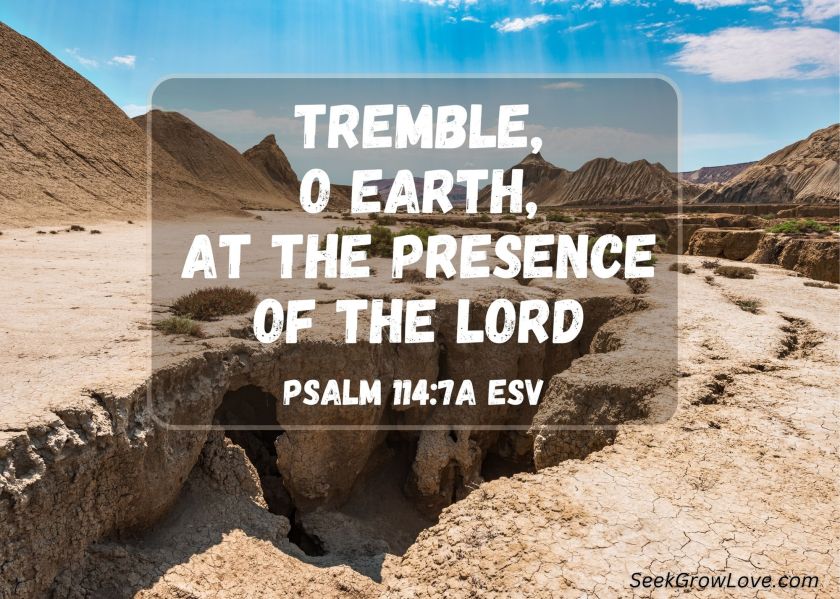
“Tremble, O earth, at the presence of the Lord,

at the presence of the God of Jacob,

who turns the rock into a pool of water,

the flint into a fountain of water.”

1 Peter 3:8-9 (LEB):

“Finally, all of you be like-minded, sympathetic,

showing mutual love, compassionate, humble,

not repaying evil for evil or insult for insult,

but on the contrary blessing others,

because for this reason you were called,

so that you could inherit a blessing.”

In Isaiah 65, God speaks of a future where He will create new heavens and a new earth, where the pain and sorrow of the former world will be forgotten. This promise is not only a vision of a restored creation but a source of deep joy for God’s people. Jerusalem, once marked by suffering and loss, will become a place of gladness, and its people will experience the fullness of God’s grace and redemption.

As we move into Isaiah 66, the prophet emphasizes the kind of people God looks to in this time of renewal: those who are humble, contrite in spirit, and who tremble at His word. This passage reminds us that God’s renewal is not just about external transformation but also about the transformation of the heart. God values a spirit that is humble and reverent before Him, acknowledging His greatness and responding in obedience to His word.

Psalm 114 recounts the mighty works of God during the Exodus, as He led Israel out of Egypt and through the Red Sea. The psalm paints a vivid picture of the earth trembling at God’s presence. The seas part, the mountains skip, and rocks turn into pools of water. This psalm highlights the awe-inspiring power of God over all creation, reminding us of His authority to transform not only nature but also our lives.

As the earth trembles at God’s presence, we are called to approach Him with reverence. Just as He turned the hard rock into flowing water, God can bring life and renewal to the hardest and most barren areas of our lives. In times of dryness or difficulty, we can trust in God’s power to transform our circumstances and bring about new life.

1 Peter 3 encourages believers to live in harmony with one another, showing compassion, humility, and love. Peter calls us to be sympathetic and humble, responding to evil and insult not with retaliation but with blessing. This instruction reflects the heart of Jesus’ teachings on loving our enemies and blessing those who persecute us (Matthew 5:44). As followers of Christ, we are called to embody a radical love that seeks peace and extends grace, even in the face of opposition.

Peter’s reminder that we are called to inherit a blessing is significant. As we bless others, we align ourselves with the heart of God, who has blessed us richly through Christ. Our identity as recipients of God’s mercy and grace empowers us to live in ways that reflect His love to the world.

This week, meditate on the renewal God promises in Isaiah, the power He displays in Psalm 114, and the call to humble, compassionate living in 1 Peter. Let these truths remind you of God’s ability to transform both your life and the world around you, as you seek to live in harmony with others and bless them in Christ’s name.

-Jeff Ransom

Reflection Questions:

How does the promise of a new heaven and new earth in Isaiah 65 inspire hope in your daily life, especially in the midst of challenges or sorrow?

What does it mean to you to have a “humble and contrite spirit” before God, as described in Isaiah 66? How can you cultivate this posture in your relationship with Him?

Reflect on the power of God over creation as seen in Psalm 114. How can you trust in His transforming power in areas of your life that feel difficult or barren?

In what ways can you embody the compassionate and humble living described in 1 Peter 3? How can you actively bless others, even when faced with opposition or insult?

God’s People and His Clay

OLD TESTAMENT: Isaiah 63 & 64

POETRY: Psalm 113

NEW TESTAMENT: 1 Peter 2

Isaiah 63:7 (LEB):

“I will make known the loyal love of Yahweh,

the praises of Yahweh,

according to all that Yahweh has done for us,

and the great goodness to the house of Israel

that he has done for them according to his compassion

and according to the abundance of his loyal love.”

Isaiah 64:8-9 (LEB):

“Yet, Yahweh, you are our father;

we are the clay, and you are our potter,

and we all are the work of your hand.

Do not be exceedingly angry, O Yahweh,

and do not remember iniquity forever!

Look! Behold, we all are your people.”

Psalm 113:3 (LEB):

“From the rising of the sun to its setting,

the name of Yahweh is to be praised.”

1 Peter 2:9-10 (LEB):

“But you are a chosen race, a royal priesthood, a holy nation, a people for his possession,

so that you may proclaim the virtues of the one who called you out of darkness into his marvelous light,

who once were not a people, but now are the people of God,

the ones who were not shown mercy, but now are shown mercy.”

Isaiah 63 begins with a reflection on God’s loyal love and compassion. Despite Israel’s history of rebellion, the prophet praises God for His great goodness and mercy. This loyal love is not based on Israel’s worthiness but on God’s steadfast character. The passage recounts how God delivered His people, bore their suffering, and worked for their redemption throughout history.

However, Isaiah 64 shifts to a cry for mercy and forgiveness. The people of Israel acknowledge their sin and unworthiness, likening themselves to clay in the hands of a divine potter. They plead with God not to remember their iniquity forever and ask for Him to show mercy once again. This chapter reminds us that no matter how broken or far from God we may feel, He remains our loving Father, and we are the work of His hands. He is able to mold us, forgive us, and restore us according to His mercy.

Psalm 113 calls all creation to praise the name of Yahweh from the rising of the sun to its setting. This psalm exalts God’s sovereignty, lifting Him high above all the nations. Yet, despite His greatness, the Lord cares deeply for the lowly. He raises the poor from the dust and lifts the needy from their affliction. God’s majesty and compassion are held together in perfect harmony, and His name is worthy to be praised at all times and in all circumstances.

This psalm challenges us to recognize God’s goodness, even in the midst of difficulty. From the moment the sun rises until it sets, His name deserves our praise. Whether in times of blessing or struggle, God’s compassion remains steadfast, and our response should be one of continuous worship and gratitude.

In 1 Peter 2, we are reminded of the incredible transformation we experience through Jesus Christ. We, who were once in darkness, have been called into God’s marvelous light. Peter describes believers as a “chosen race, a royal priesthood, a holy nation, a people for His possession.” These titles reflect our new identity in Christ and the purpose for which we were called—to proclaim the virtues of the One who saved us.

Peter contrasts our former state of not being a people with our new reality of being God’s people. Once, we were outside of mercy, but now we have received mercy. This passage is a powerful reminder that our identity is not defined by our past or our failures, but by God’s choosing and grace. As His chosen people, we are called to live in holiness, reflecting His light to the world.

This week, reflect on God’s mercy in Isaiah 63-64 and His greatness in Psalm 113. Let these truths shape your understanding of your identity in Christ, as Peter describes. As God’s chosen people, live in His light, praising His name, and proclaiming His goodness to the world around you.

-Jeff Ransom

Reflection Questions:

How does the imagery of God as a potter and us as clay in Isaiah 64 speak to your relationship with Him? In what areas of your life do you need to submit to His molding?

How can you live out the call to praise God from the rising to the setting of the sun, even when circumstances are difficult?

Reflect on your new identity as described in 1 Peter 2:9-10. How can understanding that you are a chosen and holy person shape the way you live and share your faith with others?

In what ways can you proclaim the virtues of the One who has called you out of darkness into His marvelous light in your daily life?

Consider the Great Love

OLD TESTAMENT: Isaiah 48-50

*POETRY: Psalm 107

NEW TESTAMENT: James 3:13-18

My family has a book at home called 52 Bible Words Every Kid Should Know by Carrie Mars, and this last week, we read about the word “Psalm.”

One thing that I appreciate about reading things like this with my children or putting together lessons for young kids (teaching preschool is my favorite), is just stopping to examine simply defined truths.  When I personally go to classes, or small group, I do feel I gain things from those – a deeper understanding of things, an opportunity for discussion to hear other viewpoints, etc., but sometimes I miss the simple wonder like I had mentioned earlier this week.

When I am working on kid lessons or readings, they aren’t filled with the in-depth explanations or discussions, they are just boiled down, trying to give kids a foundation to grow from, and circling back to those things as an adult often touches me in a simple way.

In reading this book last week, it talked about how the Psalms show us how we can share all of our feelings with God.  We feel lots of things at different times, and there are psalms that fit so many different feelings.  We don’t have to just bring our good feelings before God – we can bring absolutely everything to Him.  It ends with a simple prayer “God, I’m so glad I can tell You anything.  I praise You for being so wonderful!”  God is wonderful for so many things, and us being able to bring anything before Him is just one of those things.

So let’s look a little at this specific Psalm – the first verse is one that repeats in other psalms (and repeats slightly altered throughout this one), and is a popular (if somewhat older) song:

“Give thanks to the LORD, for he is good; his love endures forever.”

It is simple; it is basic.  But God is good!  And He isn’t good the way we might call someone a “good” person.  He is really, truly, and fully good, and one of the most amazing things is that He loves us and that love will last forever.  This isn’t a revolutionary concept if you have been a Christian for a while, but it is a simple truth that can astound you when you stop to think about that.

If you were going to teach that to a child, you would break it down, emphasize how God’s good far surpasses ours, and emphasize how amazing His love is – get them excited about it!  As adults, I find we have heard those things so many times that we often gloss over them, but stop and think.  The great, amazing, good God of the universe loves you, and that love is perfect, and lasts forever.

When I truly stop and think about that, it just blows my mind.  And thinking about that makes it so easy to give thanks to the LORD for who He is.

The psalm ends with this verse:

“Whoever is wise, let him heed these things and consider the great love of the LORD.”

So this is my suggestion to you – slow down, view it through the simplicity of a child’s eyes, and consider the great love of the LORD.

~Stephanie Fletcher

Reflection Questions

  1. What feelings will you bring before God today? Are there some feelings you have that you typically don’t bring to Him?
  2. Make a list of what God does in Psalm 107. In this psalm how do we see God displaying His love? Which ones apply to you? How else could you describe what God has done for you? How will you give thanks to God for His love and mercy?
  3. How many times does this Psalm tell us that the thankful redeemed tell others about God’s love and what He has done?
  4. How would you describe God’s love and mercy to a child you know? How would you describe His love to an adult? What and how can you share at church about God’s love? Outside of church, who and how can you tell about God’s love?

Taming the Tongue

OLD TESTAMENT: Isaiah 46-47

POETRY: Psalm 107

*NEW TESTAMENT: James 3:1-12

Reading this passage is powerful to me.  It’s only 12 verses, so take the time and read through it if you haven’t.

The imagery just really paints a picture in your mind of the kind of control being talked about.  And what has this control?  The tiny little tongue.

It is so small, yet so powerful.

The words you say have a powerful impact on others.  A kind word can lift someone from a valley, but a negative word can push someone down who may have already been knocked down.

My 3-year-old son made the joyful revelation when talking and making faces at his baby cousin this summer – “If I’m happy at her, she’s happy at me!”  Life isn’t quite always like this, but typically, if you speak kindly to someone, you are much more likely to get a positive response from them whether it is a kind word back or help in an area you are looking for.

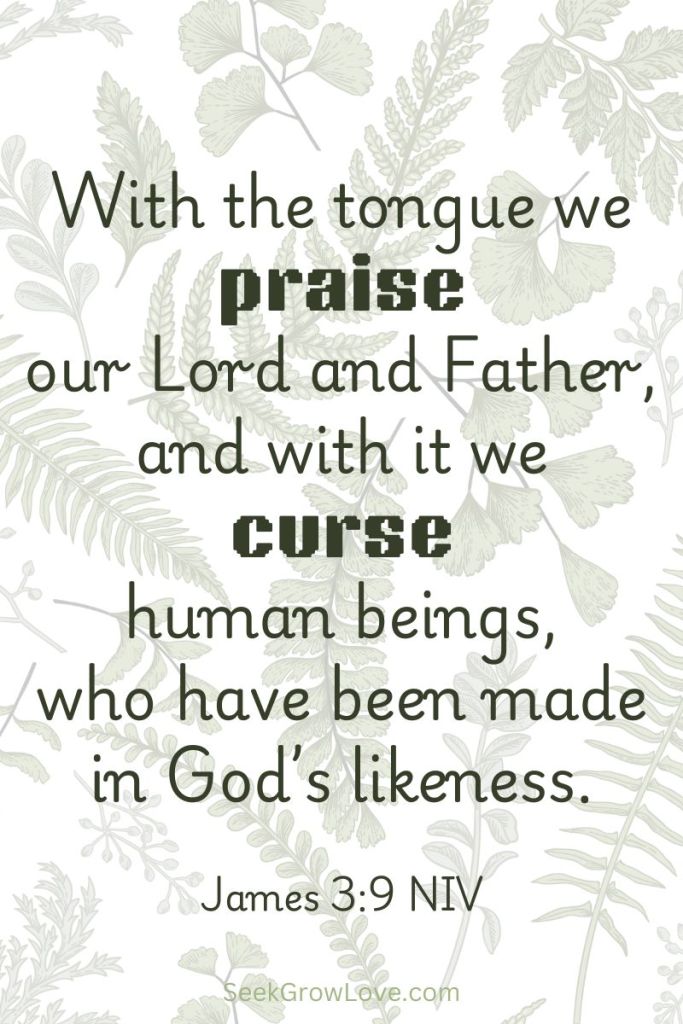
Verses 9-10 read: With the tongue we praise our Lord and Father, and with it we curse men, who have been made in God’s likeness.  Out of the same mouth come praise and cursing.  My brothers, this should not be.”

[italics added]

How can we curse someone made in God’s likeness with the same mouth we praise our God with?  Those ideas are so contradictory, yet it is easy to put people down.

For example, you may be aware that we have an election coming up soon.  There are so many negative things being said about politicians in all parties.  But how can we talk this way about someone made in the likeness of God?  I think what it boils down to is that is not how we are viewing them.  We are looking at them based on their actions or thoughts that we don’t agree with, but not looking at who they are as a person which is someone made in God’s likeness.

Let us try to view everyone in this way in order that we might better praise God. 

~Stephanie Fletcher

Reflection Questions

  1. What do you think God is thinking about those who praise Him and curse men?
  2. Watch your tongue today and see how many times you speak poorly of people – or catch yourself ABOUT to speak negatively of someone made in God’s likeness. Why do you think it is so common in the world?
  3. How can we be different? Is it possible to state your opinion about ideas without putting down people?

Do You Know?

OLD TESTAMENT: Isaiah 41-43

POETRY: Psalm 107 (the rest of this week)

NEW TESTAMENT: James 2:1-13

I want to jump back to Isaiah today.  Chapter 40 was actually the scheduled reading from yesterday, but it ends with some of my favorite verses – Isaiah 40:28-31

28 Do you not know?
    Have you not heard?
The Lord is the everlasting God,
    the Creator of the ends of the earth.
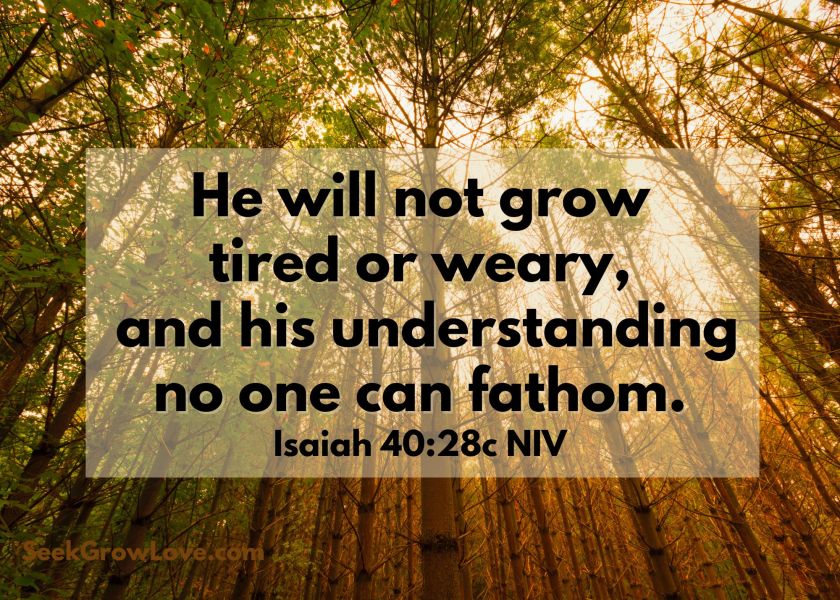
He will not grow tired or weary,
    and his understanding no one can fathom.
29 He gives strength to the weary
    and increases the power of the weak.
30 Even youths grow tired and weary,
    and young men stumble and fall;
31 but those who hope in the Lord
    will renew their strength.
They will soar on wings like eagles;
    they will run and not grow weary,
    they will walk and not be faint.

I don’t have much of a devotion for you, but here is my suggestion.

Read these verses again.  Let the amazingness, goodness, incredibleness of God wash over you.  Be in awe of Him.  And lean into the reminder that those who hope in Him will have their strength renewed.

Sometimes, we read large chunks of chapters or verses, and for me at least, I fall into a traditionally schooled trained pattern of just trying to absorb information to be able to answer questions.  But the wonder can pass me by when I do this. 

So stop.  Read this small section, and be amazed by the Creator.

~Stephanie Fletcher

Reflection Questions

  1. Do you know that the Lord your God is the Creator of the world? What does that mean to you? What does it mean to you that He is everlasting?
  2. What can you not fathom about the Lord God’s understanding? When has He given you strength when you were weary? How would you use His strength today? Pray for it. Thank God for it.
  3. Where do you put your hope?
  4. How many times can you read this passage today? Whatever number you said, can you read it 5-10 additional times beyond what you thought you could.

Take Your Child to Work Day

Old Testament: 2 Chronicles 27 & 28

Poetry: Psalm 103 (5th day)

New Testament: Titus 1

Today is our fifth and final day of our questioning look into Psalm 103. So far we have spent some time looking at God’s character, love, compassion, righteousness, justice, forgiveness and eternal qualities as well as mankind’s sin, gifts from God, frailty, brief existence, and duty to praise, fear and obey God. We have been looking at God’s relationship with man, and man’s relationship with God, here on earth, which is the view of God we are most familiar with. But today we have an interesting conclusion to Psalm 103 as the focus of our eyes shifts and looks up and up and up and up…

VERSE 19 – Where is God’s throne? How far is heaven above the earth? (Oh, never mind, we already covered that two days ago when David had us asking how deep is the Father’s love for those who fear Him.) What does the Bible teach us about heaven? What does the world tell us about heaven and how are the two views very different? (You might be interested in doing a word study on heaven in the Bible and see what you find.) Who established the Lord’s throne? What does God’s kingdom rule over? Have you ever participated in a Take Your Child to Work Day? Consider how it could open the eyes of the child to see this whole new side of Dad and what he can do, and does do, and the associates he works with, and who listens to him, and what he spends his day doing when he goes off to work. How could this same thought apply to you and I getting a glimpse of God in His heavenly throne room? How might your view of God change if you witnessed His throne room, everything He did at work, and the authority He has over the heavenly host?

VERSE 20 – Who is instructed to praise God in this verse? What does the Bible teach us about angels? What does the world tell us about angels and how are the two views very different? What description is used for the angels in this verse? What are the angels doing, besides being told to praise? What are some Biblical examples of angels doing God’s bidding? How often do you pause to consider what is going on in heaven right now? What jobs might God be handing out to His angels today? What other verses can you find about the work God’s angels do for God?

VERSE 21 – Do we have any new information in this verse or is David saying the same thing as the previous verse using different words? What is the parallel between mighty ones (in verse 20) and servants (in verse 21)? What is the parallel between obeying His word (in verse 20) and doing His will (in verse 21)? Do you think this applies to human servants of God and God’s will for humans as well as for angelic servants?

VERSE 22 – Who is told to praise the Lord in this verse? Who and what does that include? What are God’s works? Does it include you? What is His dominion? Does it include you? How does this psalm end? How did it begin? How will you praise the Lord today? What will you be envisioning as you praise the Lord? Why are you praising the Lord?

What thoughts and feelings or other questions do you have after reading verses 19-22? What is the value of picturing God in the heavens? Why do you think David included these 4 verses as the conclusion of Psalm 103?

What is your biggest take away from Psalm 103 as a whole? Have you gained anything from your time in Psalm 103? What might God want to show you in Psalm 104?

-Marcia Railton

Questions, Questions, Questions

Old Testament: Joel 1

Poetry: Psalm 103

New Testament: 2 Timothy 1

Some days do you feel like you have more questions than answers? Me, too. But, that’s okay. Because, actually, every educator knows that when we can ask and eventually start to answer some really good questions on our own we learn a lot more than if we just read someone else’s answers. So, today, I have NO answers for you. But instead, here’s a whole devotion full of some reflection questions to get us thinking more about Psalm 103, a beautiful psalm of David. In our Bible reading plan we are going to spend today and the next four days reading and re-reading Psalm 103 so today we will just include questions for the first 5 verses but go ahead and read the whole Psalm over and over this week.

So, let’s open up our Bibles and start to look at Psalm 103 verse by verse. Besides thinking about these questions below – what other great questions can you think of?

VERSE 1 – How many times is the word “praise” repeated in this Psalm? What is praise? What does it look like to praise God with “all my inmost being”? How deep does your praise go, or is it more often somewhat shallow? What would be needed to praise the Lord with your inmost being – and do it more regularly? What makes God’s name holy? Do you treat it in a holy manner?

VERSE 2 – What are at least ten (feel free to list more) of the “benefits” God has given you personally? Which ones do you often take for granted? How can we work at not forgetting them – or the God who gave them? What happens when people DO forget what God has done and given to them? What is the relationship between praising and thanking and remembering?

VERSE 3 – Have you asked for and accepted God’s forgiveness for ALL of your sins? How does asking for God’s forgiveness look different now compared to what it looked like when David wrote these words? Why does God want to forgive you of all of your sins? What would it be like to serve a god who loved but never forgave? What diseases (perhaps some physical and some not) has God healed?

VERSE 4 – What does the word “redeem” mean? What pit does God redeem you from? King David says that God “crowns you with love and compassion”. What does it mean to you to be crowned by God – with His unfailing love and compassion? How does it feel? Why do you think He does it? What would it be like to serve a god who forgave but never loved? How would you explain this verse to a kindergartener?

VERSE 5 – What desires have you had that God has already satisfied with good things – perhaps in the way you were imagining, perhaps in another way? What can we learn from David in a similar (but slightly expanded passage) about the desires of our heart – Psalm 37:3-5? What desires are you still waiting for God to satisfy? What do you do while you wait (see Psalm 37)? Might that change what you desire? What might King David be thinking of/imagining/feeling/experiencing when he writes about God satisfying desires, “so that your youth is renewed like the eagle’s”? It might depend on what your actual age is, but have you ever felt like God’s blessings were knocking years off your life, renewing you, or just plain, helping you soar? Where would you be without God’s goodness and generosity in your life? How do His blessings renew you?

What can we learn about God in His Word? What can we learn about our relationship with Him?

Thank you for trying something new with us today. Enjoy your time in Psalm 103! Is there someone you can start a conversation with today by asking them a question about Psalm 103?

-Marcia Railton

The Powerful Speech Before the Big Fight

Old Testament: 2 Chronicles 24

Poetry: Psalm 102

New Testament: 1 Timothy 6

When I’m writing these, I find a section or verse that stands out to me.  Today, 1 Timothy 6:11-16 particularly stood out.  I would encourage you all to reread it before reading this article. 

Whenever I read this I can’t help but hear a rallying voice, the type of speech given in a movie right before they enter the final battle for the fate of the universe or something equally important.  It just strikes me in that way.  In a way, that’s what this section is.  It’s written from a leader of the church to a member.   Like how a leader tells his troops an inspiring thing before the battle.  For Timothy and us, every day is a battle.  Paul in verse 12 writes: “Fight the good fight of the faith.” Sounds pretty similar to me.  So, let’s look at this through the lens of an inspiring speech given to us in our daily battles.  I’m gonna go through two verses here.

Do your best here to think about this in an inspiring way.  If you’re feeling ambitious, you could even speak it aloud.  If you’re having trouble imagining it think about an actor in an intense scene, and try to channel that energy.  Verse 11 reads: “But you, man of God, flee from all this, and pursue righteousness, godliness, faith, love, endurance and gentleness.” Right here, Paul is writing about what we are to do.  He calls us to pursue righteousness, godliness, faith, and love.  These are pretty straightforward things, but we all have room to improve on all accounts, so read each with the gravity they deserve. 

In verse 16, Paul is talking about God here: “who alone is immortal and who lives in unapproachable light, whom no one has seen or can see. To him be honor and might forever. Amen.” In the idea of a rallying speech, I think this is the best way to end one for a Christian.  It’s giving God the glory; it just feels right.  We learn in the Lord’s Prayer that a fair portion of our prayers should be giving glory and praise to God.  So, in this case, it seems right too.  I also like that this verse ends with ‘amen’.

Let me close this out with a challenge.  On days when you’re maybe a bit tired and are reading your Bible, envision in your mind it as a speech, an inspiring one.  It might not work for every verse, but maybe it’ll give you the energy to focus a bit more on what you’re reading. 

-Philip Kirkpatrick

Reflection Questions

  1. What do you think Paul was preparing Timothy for? What battles are you facing? How can Paul’s words motivate and inspire you to fight the good fight of the faith? What would that look like for you?
  2. What are your favorite verses in 1 Timothy 6?

Where God Lives

Old Testament: 2 Chronicles 20

Poetry: Psalm 99

New Testament: 1 Timothy 3

Did you go on vacation this summer?  Where did you go?  Perhaps you’re planning a late summer getaway before the arrival of Labor Day.

Whether you travel to a new destination or a familiar cabin on a lake, it is good to get away and take a break from work and school.  Time away can be refreshing and often you gain a new perspective on life.

But, vacations don’t last forever.  All too quickly, it’s time to come home.  The closer you get, the faster you want to arrive.  Finally, your home appears.  Carrying suitcases, backpacks, and bags of “stuff”, you walk through the door.  Big exhale!  You’re home!  Oh, it’s so good to be home.

Hopefully, when you think of your home, you think of comfort, security, safety, enjoyment.  It’s where you can be yourself, where you can relax.

Does God feel that way about His home?  Yes, He is in heaven, and yes, someday He will dwell with man on earth.  (Revelation 21:1-3) But, the Bible mentions another HOME for our Father God.  PRAISE.  God is “at home” in our praises. 

Psalm 22:3 KJV says, “But thou art holy, O thou that inhabitest the praises of Israel.”  The NASB version says simply, “Yet You are holy, O You are enthroned upon the praises of Israel.”

Jack R. Taylor says this in The Hallelujah Factor— “Praise is where God lives.  It is his permanent address.  While God is everywhere, he is not everywhere manifested.  He is at home in praise and, being at home, he manifests himself best as God!  When you or I choose to make God at home through praise, we invite him to act ‘at home.’  He is enthroned and liberated to act mightily in praise.”

One of the best examples of this in Scripture is our OT reading for today, II Chronicles 20. 

The sons of Moab and Ammon came to make war against Jehoshaphat, King of Judah.  Jehoshaphat was afraid, and he proclaimed a fast throughout Judah.  Then all of Judah gathered as Jehoshaphat addressed the Lord.  He recounted God’s power and previous protection.  Then Jehoshaphat stated the current problem, (vs 10-11), the powerlessness of the people, (vs 12a), and their concentration on God—“our eyes are on you.”  (vs. 12b)

The Spirit of God, through Jahaziel, gave God’s answer to Jehoshaphat and the people of Judah.  “Don’t fear, the battle is not yours but God’s.  You need not fight.  Stand and see the salvation of the Lord.”

The next morning, singers went out before the army, singing, “Give thanks to the Lord, for his lovingkindness is everlasting.”  WHEN they began singing and praising, the enemy was ambushed by one another.  No one escaped.  Jehoshaphat and his people found goods and garments among the enemies, and it took them 3 days to retrieve it all. 

The people’s praise prompted God to act.  No other recorded military battle compares to the miracle that happened that day. 

Psalm 8:2 says, “Through the praise of children and infants you have established a stronghold against your enemies, to silence the foe and the avenger.”

How marvelous is our God.  He hears us.  He fights for us.  He rewards us.

Did you start your morning in praise to God?  What a difference it can make.  God desires to move in your life, to guide you, to comfort you, to defend and protect you. 

Allow Him to reside each day in your praises.  And discover the joy He has planned for your life.

-Paula Kirkpatrick

Reflection Questions

  1. Is praise a regular part of your prayer life?
  2. Meditate on this phrase from II Chronicles 20:12b—“We do not know what to do, but our eyes are on You.”
  3. When things seem insurmountable in your life, will you begin your appeal to God with praise?

Will You Stand Firm or Topple?

Old Testament: 2 Chronicles 13-14

Poetry: Psalm 95

New Testament: 2 Thessalonians 2

            Psalm 95 encourages praise and worship to the LORD with joy and thanksgiving. When I was in upper elementary school, I was challenged to make note of three things I was thankful for every day. I gave the same challenge to those who attended Family Camp at the end of my sermon Sunday night. I challenge you today to find at least three things you are thankful for and lift them up to the LORD in praise. 

            In 2 Chronicles 13 and 14, you read about the reign of Abijah and Asa, kings of Judah. Unlike King Rehoboam who did evil in the eyes of the LORD, these two both pointed the people back to God, but in different ways. Abijah focused on the fact that the Levites were still faithfully serving and teaching in the temple. He recognized the faults of the king of Israel for having false priests who were not faithful to the LORD most high. King Abijah recognized who God was and the implications that had on the people of Judah. King Asa went farther than King Abijah by removing anything that was meant for idol worship. He also commanded the people to seek God and follow His law. Under both these kings, the nation of Judah was prosperous and had great success when defending their land. They recognized and encouraged truth among the nation. 

            2 Thessalonians 2 warns against a man of lawlessness who will say he is higher than God as well as encourage lawlessness and wickedness. This man is not like the kings you read about in 2 Chronicles. He will lead people away from God instead of towards God. Paul writes in verse 15 “So then, brethren, stand firm and hold to the traditions which you were taught, whether by word of mouth or by letter from us.” The way to combat this lawlessness is to stand firm in what you have been taught. Abijah stood firm in what he had been taught about God being with the people of Judah. Asa stood firm in what he had been taught by pointing people back to following God’s commands. Both successfully and literally fought off those who were against God. 

            This is going to look different within your own life. Instead of fighting a nation, you are fighting on an individual level. 1 Peter 5:8-9 says “Be alert and of sober mind. Your enemy the devil prowls around like a roaring lion looking for someone to devour. Resist him, standing firm in the faith, because you know that the family of believers throughout the world is undergoing the same kind of sufferings” (NIV). Temptation will come your way. Lawlessness approaches. Luckily, the Bible warns against that happening so you can be prepared to stand firm in your faith just like Abijah and Asa. One way you can be prepared to stand firm is doing what I challenged you to do at the beginning of this devotional. Finding the good in life that you can praise God for doing. Recognizing His presence and work within your life helps combat against the negativity of the world.

            Judy Hopps, from the movie Zootopia, is a good example of how your mentality can help you stand firm or be swayed. Judy is a small bunny whose childhood dream was to become a cop. She worked her hardest to pass from the police academy. She continued to work towards her strong desire to do good even when everyone around her didn’t think she could do it. When she ended up as a meter maid, she still tried to keep a positive attitude about her situation to stand firm in her convictions of doing good as a police officer. If you’ve seen in the movie she doesn’t always have that attitude and when she doesn’t, it doesn’t go well for her. Her joy and determination were completely gone so she ended up giving up. Judy lost her strong stance and fell. 

            The same can be true within our own lives. Not only should we know and understand the scripture in order to be firmly rooted in truth, we must also be firmly rooted in thanksgiving and praise. Recognizing God’s work in your life will help you stand firm. Having both knowledge and an attitude of thanksgiving, your foundation will be deeply rooted and ready for whatever comes. Like Paul warned against, a lawless one will come. He will spread lies and try to topple believers. You must stand firm in your faith like the good kings of 2 Chronicles. Knowing what is within the Word will help you stand firm, but having a heart of praise will keep you close to God and your attitude in a positive place. 

-Makenna Landry

Reflection:

1 – What are three things you can praise God for today?

2 – How has thankfulness helped you stand firm when the world seems bleak?

3 – What stood out to you the most in the lives of King Abijah and King Asa?