Fads Come to Church

Theme Week: Review of Paul – 2 Corinthians 11

Old Testament: Ecclesiastes 7-9

Poetry: Psalm 52

Tik Tok.  It’s a fad.  Fads are nothing new.  My grandparents probably said “23 skidoo”.  (I have not verified the spelling).  The generation right before me were really into hula hoops and they danced “the twist” and the “watoosi”.  My generation had pet rocks and mood rings.

Fads come to church too.  Anybody still have a WWJD wristband?  Are there any Prayer of Jabez plaques in your house. (Ask your parents about these fads).  Many religious fads can be innocuous.  Some fads can be pretty significant for good or for bad.  The Late Great Planet Earth promoted a view of the rapture that had vast societal and political implications.  A resurgence of Calvinism is impacting the way many Christians view the church’s role in society.  The recent trend of doing church online and eschewing in person worship which began during the Covid lockdown has continued for many and may be weakening many congregations. (Who needs to spend an hour or two at church when you can watch a 45 second tik tok sermon in your pajamas?)  But I digress.

What exactly do we mean by the term “fad”?  “Sociologists classify fads as a form of ‘collective preoccupations’  where many people over a relatively broad social spectrum engage in a similar behavior and interpret it in similar ways in order to identify their place in society” (See Pop Culture Christianity: What fad would Jesus follow” by Jim White). Another definition is: “An intense and widely shared enthusiasm for something, especially one that is short-lived and without basis in the object’s qualities; a craze.”  Fads are not a modern phenomenon.  It appears that even the Apostle Paul had to deal with the religious “flavor of the month” in his first century ministry.

As we have been reviewing Paul’s life and teachings this week we have seen how he was specifically met by and called by Jesus Christ to bring the good news of the Kingdom and the name of Jesus Christ to the Gentiles (everyone that wasn’t a Jew).  Paul traveled extensively presenting the Gospel to new groups of people and then following up to see how they were doing in the faith.  In today’s reading in 2 Corinthians 11 Paul is writing to the Church to offer correction to their following a new religious fad.  New teachers came in behind Paul who apparently were more slick and polished than Paul was and who had packaged a different message that was appealing and persuasive and was drawing the Corinthian disciples away from their “sincere and pure devotion to Christ” (vs. 3).

Paul goes on to use some very strong language to warn the Church against blindly following these fancy new teachers and their faddish preaching.  He uses words like: deceived, led astray, another Jesus, a different spirit, a different gospel, false apostles, disguised as preachers of righteousness just as Satan is disguised as an angel of light.  That’s a lot of clear, hard teaching.  It’s not always easy to hear clear, hard teaching, but it’s sometimes needed.  7 years ago I had a doctor who gave me some clear, hard teaching.  He diagnosed me with cancer.  The cancer needed treatment. I needed surgery or radiation or both (it ended up being both).  If I chose to ignore the doctor’s warning I probably wouldn’t still be around today.  Fortunately, he cared enough to tell me the hard truth and fortunately I received it and acted upon it, had the surgery and radiation along with a lot of prayers, and I’m still around.

I’m not sure how the Christians in the first century Church of Corinth responded to Paul’s hard teaching.  Did they accept it and act accordingly or did they ignore it and keep on doing what they were doing, following the latest fad instead of returning to their pure devotion to Christ?

Paul tried to appeal to his listeners by laying out his resume, his credentials.  He talked about his background and the foundation he received.  He talked about how his dedication to Christ was evident in his actions and his willingness to keep going amid so much opposition.  Paul recognized that when he went around preaching the gospel and telling people about God’s Kingdom and God’s chosen King, Jesus, he was involved in spiritual warfare.  The enemy or evil one tried to stop him wherever he went – that’s why he had so much opposition.

Do you ever run into opposition or challenges when you are trying to do what God told you to do?  500 years ago a teacher named Ignatius helped his students practice discernment of spirits.  I think he had some helpful teaching.  He said, rightly I believe, that when we are doing morally bad or sinful things, the evil spirit or enemy of God makes them look and feel pretty good.  I’m not going to lie, sometimes doing bad or sinful things feels good in the moment.  The devil wants you to feel good about doing bad so he “rewards” you with those temporary good feelings.  Meanwhile, God comes along and drops bad feelings like guilt or shame (what a buzz kill).  Just like my doctor- I’m enjoying life and he has to ruin my fun by telling me I have cancer.  But guess what, listening to him saved my life.  And listening to the guilt when we are doing things that bring us away from God can save our spiritual life by turning us away from sin back to God’s path for our lives.

Here’s the flip side to discernment.  When we are sold out on following Jesus Christ, when we are on fire for the Lord and willing to take up our cross and follow Jesus, the evil one comes along and tries to throw as many challenges and obstacles in our way to trip us up and get us to give up our faithful commitment to God.  But while the enemy is trying to destroy us, God will come along with his spirit and offer us his love, comfort and the promise that he is with us.  He might use a song, a scripture, a sermon, another Christian, a beautiful sunrise, a rainbow in the sky, who knows what God will do to let us know that he is with us?

For me, when I was diagnosed with cancer one of the things that helped get me through it was my Church family.  When I was going through 6 weeks of daily radiation every Sunday my Church prayed for me in worship.  When I was going in for surgery, my church filled the sanctuary with happy face balloons and signs of encouragement.  I was surrounded with love and encouragement.  That kept me going.  Now I try to return the favor and show love and encouragement to others when I sense the evil one is trying to trip them up.  Maybe someone reading this today has been under attack from the evil one.  Be encouraged!  God is with you.  Turn to Him, keep the faith.  And be sure to use good discernment when a new fad comes along.  Some may be harmless, but others might be a tactic that the enemy is using that might appear innocent but is actually turning your heart away from it’s sincere devotion of Christ.  The enemy has been doing this a long time and he’s pretty skilled… don’t let him trick you.

-Jeff Fletcher

Reflection Questions

  1. Can you think of examples of religious fads that might appear innocent but can be potentially dangerous?
  2. How might you use the tools of discernment to better evaluate things in your life, good and bad?
  3. How might God use you to lovingly warn or share hard truth with someone who might be on a path that’s leading them away from Christ?

God’s Fellow Worker

Old Testament: 1 Chronicles 25-27

Poetry: Psalm 148

* New Testament: 1 Thessalonians 3

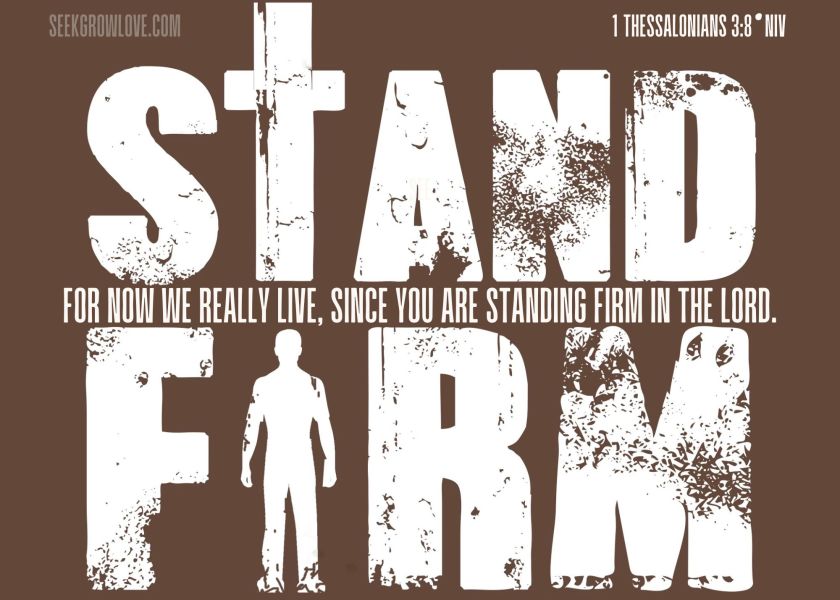
Have you even been introduced to someone as God’s fellow worker? It has a nice ring to it, doesn’t it? Paul described Timothy as, “our brother and God’s fellow worker in spreading the gospel of Christ, to strengthen and encourage you (the Thessalonians) in your faith” (1 Thessalonians 3:2). Could you be described as God’s fellow worker?

I am impressed in this chapter (1 Thessalonians 3) with Paul’s obvious heart for his fellow workers (there was a reason they were called brothers even though they had no blood relations) and his heart for the church – some of whom he had not known long and had only spent a short time with. And yet, with the good news Timothy brought of the Thessalonians’ strong faith and love Paul says, “For now we really live, since you are standing firm in the Lord” (1 Thess 3:8). You can hear his heart filled with joy. For now we really live!

Paul had been concerned that when he and his fellow workers moved on to carry the gospel message to other towns the tempter might be successful in tempting the young Thessalonian church away from true faith in God and love for Him and one another. It is a very real and powerful threat that is still active and alive today. It is why the armor of God is so important. Thankfully, the Thessalonians were standing strong.

Another way that Paul shows his heart is through his prayers – night and day – most earnestly – remembering the Thessalonians, praying they might see each other again, and praying that their faith would be strengthened even more. This is an important reminder to keep praying for our brothers and sisters in the church – even if they appear to be doing alright and don’t have any known health problems (often the most common needs on the church prayer list). The tempter is always looking for little cracks in the armor. Prayer is huge. Keep at it. Night and day. Most earnestly. Remember your extended church family in your prayers. Pray for their faith to be strong and growing – with any gaps filled in to present a stronger front against the tempter.

Healthy faith displays action and love. Pray also that love will be increased – love for each other (the church) and also for “everyone else” (vs. 12) including those outside who need to know God and His Son Jesus. Increasing love. Love is a beautiful thing – but increasing love is even so much better. Don’t be content being a loving person – strive and pray to have increasing love. Be a parent, a spouse, a neighbor, a boss, a co-worker, a missionary, one of God’s fellow workers with increasing love. Pray for increasing love for yourself, each other and everyone else.

AND – of course we have to end this devotion as Paul ends every chapter in 1 Thessalonians – REMEMBER – Jesus is coming back!! So live your life preparing for that day! As Paul says so well – “May he strengthen your hearts so that you will be blameless and holy in the presence of our God and Father when our Lord Jesus comes with all his holy ones.” This is my prayer for you – my fellow SeekGrowLove reader. Blameless and holy, I hope to see you there. Come, Lord Jesus, come!

-Marcia Railton

Reflection Questions

  1. Wh0 has been God’s fellow workers with you? What have they done for you and for God? Do they know how much you appreciate them?
  2. How is your faith and love doing – if someone were sent to give Paul a report on you and your church’s faith and love what would Paul hear back? Would he rejoice that you are standing firm? Where can your faith grow, filling in the gaps? How can your love increase?
  3. Pray the prayers of Paul in 1 Thessalonians 3 (for faith filled in, increasing love and blameless/holy people ready to stand/bow before God when Jesus returns) for yourself, and your church family and extended church family. Use specific names God brings to mind. Repeat night and day – most earnestly.

Sunday – June 19th, 2022

2 Corinthians 2

Growing up around a group of girls, I’ve definitely had my fair share of girl drama. You know the kind: Side eyes, lack of confrontation, passive aggressive comments, and lots of gossip. Basically, this drama is the basis for the movie Mean Girls and a lot of hurt and pain in young girls everywhere. Most of these conflicts were caused by a simple misunderstanding that snowballed into a big ol’ mess. But, in every instance, the only way that we were able to get over the issues and become friends again was to truly forgive each other. That forgiveness generally required one person to repent of what they had been doing – gossiping about someone else, for instance – and then another person to acknowledge their repentance and move on. We read about a similar, but more serious, situation in 2 Corinthians today.  

2 Corinthians is a letter written from a place of vulnerability as Paul defends his mission and apostleship to some who thought the grace he showed to them was a sign of weakness. The fourth letter written to the Corinthian church (see more info here), it is a letter filled with the personal pains and testimony of Paul. 

Today’s reading begins with Paul referencing a letter (lost in history) where he addressed some concerns that he had with the Corinthian church. Most of the issues that Paul is discussing in verses 5-11 are most likely about the man in 1 Corinthians 5 who was living immorally with his father’s wife (his stepmom). Pretty gross, right? In 1 Corinthians 5, Paul tells the church that they should not associate with this man anymore because he claimed to be a believer but was acting in a way that was totally opposite from that. By 2 Corinthians 2, the man had apparently repented, but the Corinthian church was refusing to associate with him still. In verses 7-8, Paul says, “Now instead, you ought to forgive and comfort him, so that he will not be overwhelmed by excessive sorrow. I urge you, therefore, to reaffirm your love for him.” After he had repented, Paul encouraged the people in the church to welcome the sinner back into their community. 

Even though the man had committed a serious sin, Paul recognizes what’s at stake in this conflict. In verses 10-11, he goes on to say, “Anyone you forgive, I also forgive. And what I have forgiven—if there was anything to forgive—I have forgiven in the sight of Christ for your sake, in order that Satan might not outwit us. For we are not unaware of his schemes.” Paul encourages them to forgive the man not just for the man’s sake, so he would be welcomed back into the family of God. He also encourages them to forgive so that ‘Satan might not outwit us. For we are not unaware of his schemes.’ When we deal with conflict in the church, we are not just working through the conflict for our own benefit. We are working to maintain the witness and effectiveness of the church. Conflict in the church is part of the spiritual battles that we face in this life (Eph. 6:10-11, 2 Cor. 10:4-5, James 4:7). When we work through our conflict towards forgiveness and unity with people who have truly repented from sin, we are working against Satan’s schemes. He comes to kill and destroy (John 10:10) and to cause divisions among believers. But, we can take heart and stand against it through the power of the Holy Spirit. 

~ Cayce Fletcher

Questions for Application: 

  1. When was the last time you faced a conflict? Did you try to resolve that conflict with the other person? How? 
  2. What is the meaning of true forgiveness? How should forgiveness characterize how we interact with our friends and family as believers in Jesus? 
  3. Are there situations where we should be hesitant to forgive? Look up the following verses to read more about forgiveness: Eph. 4:32, Matt. 6:14-15, Luke 17:3-4, Mark 11:25. 

2022 SeekGrowLove Bible Reading Plan DOWNLOAD

Battle Plans

2 Samuel 5

March 8

I hate war, but I’ve always been a sucker for a good war story. When I was a child, despite my mom’s protests, my dad would sometimes tuck me in at night with a long, drawn out retelling of a World War II battle. They were my favorite, so much better than those boring fairy tales. I still love the courage and suspense, sacrifice and schemes that make up a good battle plan. The Old Testament is chock full of great war stories. And I believe studying these ancient battle plans can actually better prepare us for the battles that we each face every day. Today’s reading of 2 Samuel 5 includes one of my favorite war stories, with some great lessons as well.

David is no longer a shepherd boy slaying giants. At the age of 30 he became King of Judah and 7 years and 6 months later he now reigned over all Judah and Israel in the newly captured capital city of Jerusalem. He has led many successful military campaigns against those who had not been conquered or driven out when Joshua first led the Israelites into the Promised Land. But the strong Philistines (those from Goliath’s tribes) were not giving up. When they heard David was made king of Israel they sought David and revenge. They were camped out in the valley below. What would David do?

David inquired of the Lord – is this even a battle you want me to fight? Is it the right time? Am I the right person? Is this what you want me to do? And he didn’t ask just once – it was a repeated question before making battle plans (2 Samuel 5:19 & 23). David knew it was useless entering a battle if it’s not a battle God wanted him in at that time.

And then he listened for the answer. God didn’t reply, “I’ve got this covered for you – you just stay home or hide or play a few more video games, watch a few more shows, put your feet up and relax.” God said GO! David went. And there was a great victory.

Before the next potential battle, David inquired again. The enemy was back, camped out in the valley, again. Sometimes the enemy doesn’t stay away too long. We are still celebrating one victory against the evil one when we find him camped out in our backyard again. Will there be another battle? If so, when? Where? What does God want us to do this time?

It was good that David asked again, because this time the answer was a little different. Yes, David was to attack – but not the same way as before. We can fall into the trap of assuming that because God gave us victory before, that is the same way we should continue to attack. Sometimes God might want us to change our approach. This time when David inquired, God said, “Do not go straight up, but circle around behind them and attack them in front of the poplar trees.” (2 Samuel 5:23 – different versions call them different types of trees – balsam or mulberry or poplar. Perhaps the ancient Hebrew language was a little blurry on tree identification. But the type of tree doesn’t matter, what God did with those trees does.) God’s new plan for this battle was going to take additional time and effort. David could have disregarded it and blazed straight into the valley. But he would have missed the chance to hear and see the way God was going to lead them and provide for them. If he would have attacked as before perhaps the Philistines would have had his head at the end of the day. But David listened. And more directions followed.

“As soon as you hear the sound of marching in the tops of the poplar trees, move quickly, because that will mean the Lord has gone out in front of you to strike the Philistine army.” (2 Samuel 5:24)

Wait – what’s that? I’ve heard lots of war stories and never-before-done daring battle plans – but none with the sound of marching in the tree tops! We don’t see an army in the tree tops. Who could be up there making all that noise? Oh, could it be God’s Angel Army? Pretty creative, God! And extremely reassuring as well! Thank you for sending us the sound of marching in the tree tops. Thank you for going out before us.

We are in a war today – the enemy is camped out in the backyard waiting to see how God’s people will react. There is a lot we don’t see with our eyes. Just doing it the way we’ve done it before (since it worked well once) could lead to a dismal defeat. Inquire of the Lord. Ask Him if this is where and when he wants you to fight? Ask him how He wants you to fight – with truth and love and boldness. Listen for the sound of marching in the tree tops. Then move quickly. And do as God commanded. Thank you for showing us that even when we can’t see you, you lead the way – when we do it YOUR way. Your battle plan is always best, God.

-Marcia Railton

Questions for Reflection and Discussion

  1. What is the difference between asking God to bless what we do or being blessed for following God where and how He leads? Can you think of an example from each in your own life, or in other Bible stories? What was the result?
  2. How can we tune in better to God’s battle plans – to hear his instruction and receive the reassuring sound of God’s angel army leading the way? How might God want us to change our approach, in order to follow Him better?
  3. Why did God want the Israelites to rid the land of the godless back then? (2 Samuel 5:21 gives a clue – and a little more detail is found in 1 Chronicles 14:12 where this same story is repeated for the benefit of the Israelites returning to Israel years later after being punished for disobedience.) What evidence do you see of being in a war against godlessness today? (Ephesians 6:10-20) How would God have us fight this war? What specific battle is He calling you to?

Let the World See

1 Timothy 1

Welcome!

Today’s passages seem to have some different main themes, so while all of these are valuable, we will be focusing mainly on 1 Timothy 1 for the purpose of keeping this devotional to a reasonable length 😊

1 Timothy 1 is written by a very dedicated and enthusiastic believer, Paul.  Paul is a very impressive man with an incredible testimony (that we get to see a little bit here) and clearly has a passion for the Kingdom.  This is why I sometimes have to re-read his messages to better comprehend just how deeply he cares for people and soak up all the energy for spreading the gospel he has!  Paul tells Timothy that God’s plan operates by faith (v. 4) and that our role as believers is to have love that comes from a pure heart, a good conscience, and a sincere faith (v. 5).  I LOVE that description of who Christians should be in the world!  Loving, Good, and Sincere.  Do you think the world today has that view of Christians? Or do you think that unfortunately, the world has the view of Christians who turn to fruitless discussions regarding the law (v.6-7)? 

It can be hard to swallow verses like 1 Timothy 1:9 where it says “the law is not for the righteous, but for the sinful”, if you are a sinner and know a Christian who has fruitless discussions about the law.  However, if more Christians today took their righteousness and expressed the “glorious gospel” that has been entrusted to them (v. 11), I have a feeling that it would be much easier to reach those who do not know the law!  The implied context in this passage is not expressing the idea that once you are a believer you don’t have to follow the law, but rather that once you are a believer your focus should shift off yourself and your “good works”, and move towards reaching others who need to know the law.  Paul models a great example of how to approach others about Jesus, by telling them that Christ came to save ALL sinners, including the worst of them all, which was himself! (v.15) When we openly share the impact Christ has in our lives and humbly recognize that we are all sinners, it becomes much easier to reach those who need salvation just as much as we do.

This is not to say that discussions of the law should not happen amongst believers!  Paul tells Timothy to strongly engage in battle to avoid having a shipwrecked faith (v. 18 -19).  To be prepared for battle, it’s important to know what you are up against and how to combat it!  What is key here is that our battle is not one meant to destroy arguments or put down people by boasting of our own righteousness, but rather our battle is against the evil one who is dedicated to keeping people out of the Kingdom.  Our battle is fighting for the citizenship of an eternal Kingdom, for ourselves and for everyone we meet.  The law is one tool we use to win that battle!  Another tool is our own testimony, another is the story and purpose of Jesus’ life, death, and resurrection, and yet another is simply sharing how amazing our God truly is.

Isaiah 40:28-31 provides a great passage to reach others with; I encourage you to memorize it for the sake of winning the battle!

“Do you not know?  Have you not heard?  Yahweh is the everlasting God, the Creator of the whole earth.  He never grows faint or weary; there is no limit to His understanding.  He gives strength to the weary and strengthens the powerless.  Youths may faint and grow weary, young men stumble and fall, but those who trust in the LORD will renew their strength; they will soar on wings like eagles; they will run and not grow weary; they will walk and not faint.”

-Sarah (Blanchard) Johnson

Today’s Bible reading plan passages can be read or listened to at BibleGateway.com here – Isaiah 39-40 and 1 Timothy 1

Identity in Christ: A Well-Dressed Knight

Ephesians 6

Last week, we talked about our identity in Christ, grounded and rooted in him and made new in his grace and mercy. Today, we have one last look at this identity, and I think it’s important to read Ephesians 5 and 6. In response to this new identity, we are called to a new and better way. 

First, husbands and wives are called to love and to submit to one another in reverence for Christ. (5:21-33) Children are called to honor their father and mother. (6:1-3) Fathers are called to train and instruct their children. (6:4) Relationships between slaves and masters were expressed to show a better way to treat common social relationships in that day, and that Christ makes slave and master equal. (6:5-9) Praise God that as we have expanded on the promises of Scripture, slavery has been eradicated in the US and is fought against around the world. 

BUT, what I really want us to look at is how we are called to dress. I really enjoy renaissance fairs. It’s great; enjoying nature, seeing people dressed in amazing costumes, laughing at jokes and enjoying fair food! Who doesn’t love gnawing on a GIANT turkey leg or getting ye olde bratwurst? But my favorite part is the jousting tournaments. Knights dressed in armor, charming on horseback. In most jousts, the joust is real : they don’t plan who will hit the other, who will unseat the other, and who will win. How cool is that?!

I know Paul was thinking about Roman armor, but when I think about the armor of God, I imagine a medieval knight. A shining breastplate, a broad and defensive shield, a powerful sword! But is God really calling us to dress with armor, Roman or medieval? He is using the armor as a metaphor. We are in a war, but we protect our heart with righteousness and our head with salvation. We run in peace and wrap ourselves up with truth. When it finally comes time to battle, we pull out the sword of the spirit, the word of God. This means both Scripture and the gospel message, the written and living word of God! 

God is calling you to live in response to your identity in Christ. In how you treat your family and friends, in how you fight your battles, your identity in Christ should define everything about you. 

May you allow your identity in Christ to better your relationships. 

May you fight your battles against Satan, evil, and sin in the power and grace of God. 

May you be more like Jesus, this day and every day. 

-Jake Ballard

Read or listen to today’s Bible reading plan passages at BibleGateway here – Isaiah 5-6 and Ephesians 6

Little Magic Screens

If you had told me as a youth, when I was attending FUEL, that there would be these little boxes you held and talked to and they could tell you anything, connect you to anyone, and navigate/track you anywhere, I would have thought that sounded as futuristic as the Jetsons. Yeah, I remember the Jetsons. On our little black and white antenna TV that required you walking over to turn the knob to channels A, B, D, and some numbers too I think.

If there is one thing that has changed the world over its history, it has been technological developments! I remember my Great Grandma, who died at 103 in Oregon, Illinois,  telling us that when she was a child there were still wars going on with the American Indians over land and people rode horses to church…. and by the end of her life, people were flying across the world, driving cars with all sorts of gizmos and gadgets, and going into space.  My family was really impressed to hear what had changed in her century. But, change has always been a part of life and always will be- just like Ecclesiastes tells us. Despite the advancements she saw, she never knew what a cell phone or the internet was, but when we went to visit her we didn’t bring work, Zoom meetings, social media, texts or ask her to take a selfie with us. She would have undoubtedly been fascinated with our magic screens and boxes and always loved to hear about current events. But, I think there is a very good chance if she told me them today amidst the stream of visual/auditory distractions and demands that are in front of me, I wouldn’t have truly heard them enough to remember them 30 years later.

There are pros and cons to technology and our culture/work/schools are built on technology which I am sure will continue to increase between now and Jesus’s return.  Technology isn’t inherently bad and I am grateful for many aspects of it. You are obviously reading this on some sort of device yourself. But, until the kingdom, we know there will continue to be deceit and intentional battles to draw us away from God and to the world, and those wars seem to be running rampant in our little magic screens and virtual worlds. We live amidst crafty deceivers. Enticing distractions. Ones sometimes masquerading as “neutral” when they are anything but, and instead are very effective at destroying spiritual minds and health.

As an occupational therapist, part of my job is working with children with sensory processing challenges. They are absolutely exploding in frequency, and the screen addictions, visual problems, learning/attention problems, and social/mental health challenges associated with too much technology/screen time are very very real. I am reading the book “12 ways your phone is changing you” by Tony Reinke and learned that the average American checks his/her phone every 4 minutes.   How often does the average American pray? Does the “average American” even pray? How often does the average follower of Christ spend time with God? Even think of God at all? The list of convicting questions could go on and on. As technology and culture continue to change, we have one source of constancy we are asked to hold onto. That can be very hard.  I don’t have the solution, but God does.  And we can be thankful that He never changes and doesn’t require an IT department to access.

“Come near to God and he will come near to you. Wash your hands, you sinners, and purify your hearts, you double-minded.”  James 4:8

“But Jesus often withdrew to lonely places and prayed.”  Luke 5:16

-Jennifer Hall

If you’ve been working on the SeekGrowLove Bible reading plan this year – keep it up! You can read or listen to today’s Bible reading passages at BibleGateway here – Job 15-16 and 2 Corinthians 9

A Captive in Sin

2 Chronicles 5-6

As much as I could go on and on repeating exactly what Paul says in Romans 2, I have much more to add and apply from the Chronicles passage, so focus your reading on those chapters. Mostly, I’ll be looking at chapter 6. Solomon has just built the amazing perfect temple that David definitely did not build (even if he prepared all the materials, drew the blueprints, and basically left only the annoying part of building a building to Solomon). And in chapter 6, Solomon is dedicating this temple to God. Take a look at verse 14, the opening of Solomon’s prayer where he addresses God. Notice, there’s almost a lesson in that God’s faithfulness is kept with those who “walk before [Him] with all their heart.” Of course, Deuteronomy 6:5 says more and Jesus even more of how much of you should be dedicated to God on a daily basis (hint: it’s literally all of who and what you are, Mark 12:28-31). But I mostly want to look at verses 36-39.

36 “When they sin against you—for there is no one who does not sin—and you become angry with them and give them over to the enemy, who takes them captive to a land far away or near; 37 and if they have a change of heart in the land where they are held captive, and repent and plead with you in the land of their captivity and say, ‘We have sinned, we have done wrong and acted wickedly’; 38 and if they turn back to you with all their heart and soul in the land of their captivity where they were taken, and pray toward the land you gave their ancestors, toward the city you have chosen and toward the temple I have built for your Name; 39 then from heaven, your dwelling place, hear their prayer and their pleas, and uphold their cause. And forgive your people, who have sinned against you.” – 2 Chronicles 6:36-39 – NIV

Reread those verses and think for a second… You may be saying “How does this apply? Isn’t this just an ironic prophecy about Israel’s inevitable collapse and occupation by Babylon?” And, yes, it probably is. But the beauty of the Bible is taking historical accounts and creating life lessons from them, so hear me out. When you’re buried in sin, and truly lost, it almost feels like you’re a captive in enemy land. And, in some spiritual sense, you are. Sin is the land of the world and of Satan, not of God. And you feel far and cut off from everyone, but look at 37. Then 38. Because if you pray to God, he will hear you, and if you truly wish to repent – to turn in your ways – and return to God in all of your heart (and soul, and mind, and strength) then God will forgive you.

“…Now, my God, please, let Your eyes be open and Your ears attentive to the prayer offered in this place…” – 2 Chronicles 6:40

-Liam Johnson

Today’s Bible reading passages can be read or listened to at BibleGateway here – 2 Chronicles 5-6 and Romans 2

Be Strong

1 Corinthians 15-16

Welcome back to our final chapters in 1st Corinthians!

Chapter 15 must be one of the most powerful and hopeful chapters that Paul has written.  There is no one that can leave this chapter feeling defeated with a message taunting Death asking “Where is your victory?  Where is your sting?” (15:55).  We have a victory in Christ that no one can stop, not even something that feels as permanent and powerful as death.

This year has brought many challenges.  People have experienced financial struggles, people have dealt with severe illnesses and deaths, people have experienced mental and emotional turmoil, people have disagreed with those they are closest to, people have felt betrayed, silenced, oppressed, offended, and defeated.  It is so easy this year to become discouraged, and no one would blame anyone if they did not focus on something as far away as the Kingdom.

But that focus on the Kingdom must be at the front of our minds daily, because without it, the darkness that is this world today will all too easily take over our own life.  Paul calls us to be steadfast, immovable, working enthusiastically for the Lord, and knowing that our work is not in vain (15:58). 

In a world where so often the struggles and challenges we face are in front of us due to someone else’s choices, it can be incredibly uplifting to remember that Jesus will abolish all of the rule and power on earth, God will put the enemies under his feet, and our world will be at peace for the first time since the fall of man.  There is a point where things will be made perfect, and those who have committed themselves to Christ will have an opportunity to experience that perfection.

What strikes me while reading these passages is how even when though this was written to a specific church however many hundreds of years ago, the message has never changed and is incredibly applicable in 2020.  Our God is unchanging, despite our world changing so rapidly away from Him.  In this changing world we must put our faith, trust, and hope in an unchanging God.  I don’t care how cheesy that sounds!

So where does Paul leave the church in this letter?  He doesn’t just finish with a message of hope.  True to form, Paul gives the church one more reality check in chapter 16.  Verse 13 says “Be alert, stand firm in the faith, be courageous, be strong.”  To me that message is one that you leave when you know something’s coming…  Paul wasn’t finishing on a happy-go-lucky victory note because he knows that the victory doesn’t come without a battle.  As we grow closer and closer to Christ’s return, we can expect our world to continue to fall.  Yes, we have a hope.  Yes, that hope should carry us through the hard times.  And yes, we should be ready for a spiritual fight. 

We shouldn’t be living in fear of the battle, because we already know the outcome.  We should be living with the intention of being on the winning side.  When we are confidently standing with the winner, we should be finding everyone else we can to bring them to victory as well.  That is our mission.

I am so excited to jump into 2nd Corinthians with you all tomorrow!  Until then, My love be with all of you in Christ Jesus.

-Sarah Blanchard

Today’s Bible passage can be read or listened to at BibleGateway here – 1 Corinthians 15-16

Tomorrow we will begin 2 Corinthians (chapters 1-4).

Tell the Next Generation

1 Chronicles 7-10

Psalm 78 4b NIV


I believe today’s reading will be the last of the genealogies for awhile.  There are a lot of names, a lot of generations.  Father to son.  Father to son.  Father to son – and sometimes a daughter.  Father to son. A whole lot of heritage.  A whole lot of passing along from one generation to the next.  It reminds us that our life is not just what we see and experience today.  We have a past that has shaped us and we (and our children) have a future for which to prepare.


I am reminded of a passage in Psalm 78 that we read last week but didn’t have time to discuss directly.


My people, hear my teaching;
listen to the words of my mouth.
I will open my mouth with a parable;
I will utter hidden things, things from of old—
things we have heard and known,
things our ancestors have told us.
We will not hide them from their descendants;
we will tell the next generation
the praiseworthy deeds of the Lord,
his power, and the wonders he has done.
He decreed statutes for Jacob
and established the law in Israel,
which he commanded our ancestors
to teach their children,
so the next generation would know them,
even the children yet to be born,
and they in turn would tell their children.
Then they would put their trust in God
and would not forget his deeds
but would keep his commands.
They would not be like their ancestors—
a stubborn and rebellious generation,
whose hearts were not loyal to God,
whose spirits were not faithful to him.

Psalm 78:1-8


I am thankful for a father who passed along to me the spiritual heritage he received from his father and grandfather.  Both of my parents brought their children up to seek and serve the Lord first – it is by far the most important life lessons that they taught.  In fact, today’s photo is a Bible timeline that I inherited from my dad, and one of my favorite treasures from him. He spent hours researching and meticulously drawing out this timeline to help illustrate for his Bible students (including his children) God’s faithfulness and plan for the ages.  And, he lived it out with his life, too.


So, now it is my turn to pass along what I have heard and learned.  How do I do that with the words I speak, with the priorities I set and with the life I live?  How do I help my children seek God, grow in faith and love Him more and more?


There are so many negative influences and evil that would love to help us and our children forget God’s great deeds, His law, His faithfulness and His plan for the ages.  But we must not forget.  Nor is it enough to just remember for ourselves.  We have a great responsibility to hand these truths down to the next generation so they can hand them down to the generation after them, etc…until Jesus returns.


Maybe you cannot celebrate an upright Godly spiritual heritage in your genetic past.  You don’t have the benefit of an antique family heirloom Bible timeline rolled up in your closet.  That’s okay.  Paper rips and ink fades, but if you have a love for the LORD you have priceless spiritual mentors you can call mom and dad.  And, then, we must in turn create a spiritual heritage rich in God’s goodness, laws, and plan for salvation for those around us: our children, grandchildren and those children of all ages and colors and countries who need to know what God’s Word says and who God is.


God’s genealogy doesn’t end here in 1st Chronicles.  It is continuing today, and into the future.  Will it be recorded that you passed along what is of the most importance to those that came after you?  Don’t let yourself, or your children, be listed as the ones that forgot.  Tell of His goodness.  Put God first.  Pass it on.

Marcia Railton


Too important to not mention: I love verse 6 in Psalm 78 (above) where we see the value and great worth of, “the children yet to be born”.  Whether the children are conceived or not, born or not, they were planned to play a part in God’s design of the passing along of family and faith.  How tragic that this link has been broken time and time again when the children yet to be born are killed for convenience before they even get a chance to hear, learn and share of their Creator.  Tell of His goodness.  And His Word and His law.  Do not forget.  And do not ignore the evil that rejoices when God is forgotten.  We need to speak louder since voices in the chain are silenced.


Today’s Bible reading can be read or listened to at https://www.biblegateway.com/passage/?search=1+Chronicles+7-10&version=NIV

Tomorrow’s reading will be Psalms 102-104 as we continue the 2020 Chronological Bible Reading Plan